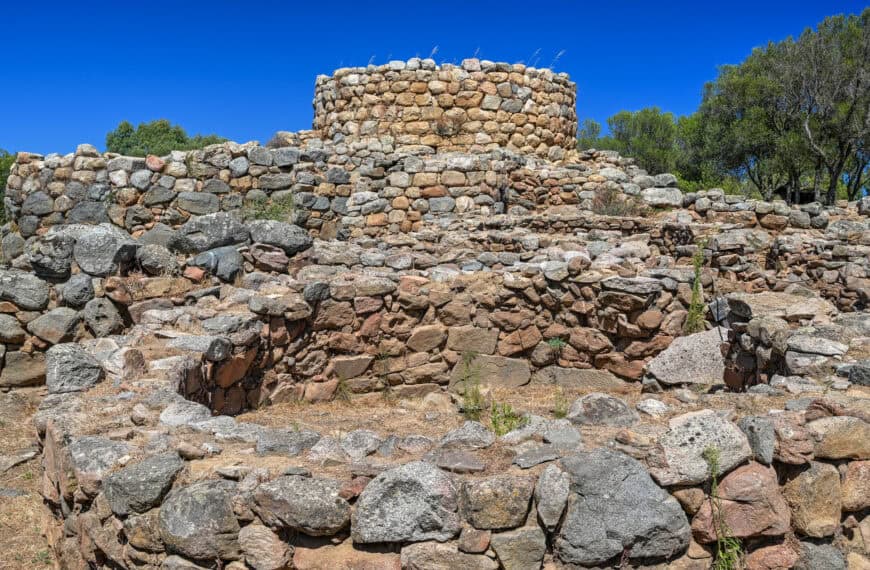
Nuraghe Santu Antine is one of the most impressive Nuragic sites in Sardinia and one of the best places to experience the island’s ancient tower-building culture up close. Unlike village-sanctuary nuragic sites, like Serra Orrios and Nuragic Complex Romanzesu, the main draw here is the fortress-like nuraghe itself: a massive stone tower complex with internal corridors, chambers, stairways, and a tunnel-like layout that you can actually walk through.
To help you plan your visit, we put together this guide to Nuraghe Santu Antine, which includes information on how to get there, what to expect inside the site, and why we think it makes for such a memorable visit.
Nuraghe Santu Antine – At a Glance
Location
Nuraghe Santu Antine is located near Torralba, in northwestern Sardinia, between Sassari and Macomer.
How to Get There
The easiest way to reach Nuraghe Santu Antine is by car. The site is located just off the main road near Torralba, making it a convenient stop if you are traveling between Alghero, Sassari, Bosa, or central Sardinia.
Site & Visit info
– Self-guided visit through one of Sardinia’s most impressive nuraghe complexes
– Time required: expect to spend about 30-45 minutes
– Main highlight: the central nuraghe tower, with internal corridors, chambers, stairways, and upper levels
– Entrance fees: €6 per adult (2026)
Good to know
– A Café/Restaurant, gift shop, and restrooms available across the street next to the ticket office
– We recommend wearing comfortable shoes, especially if climbing stairs or exploring the upper sections, and some interior sections are dark and narrow


Disclosure: This page (Nuraghe Santu Antine Guide) may contain product affiliate links. At no additional cost to you, we may receive a commission for purchases made through these links. More details can be found on our disclosure and policies page.
Nuraghe Santu Antine: Location, Map, and How to Get There
Nuraghe Santu Antine is located near the town of Torralba, in northwestern Sardinia. It sits in the Logudoro-Meilogu region, an inland area known for rolling countryside, small towns, and several important archaeological sites.
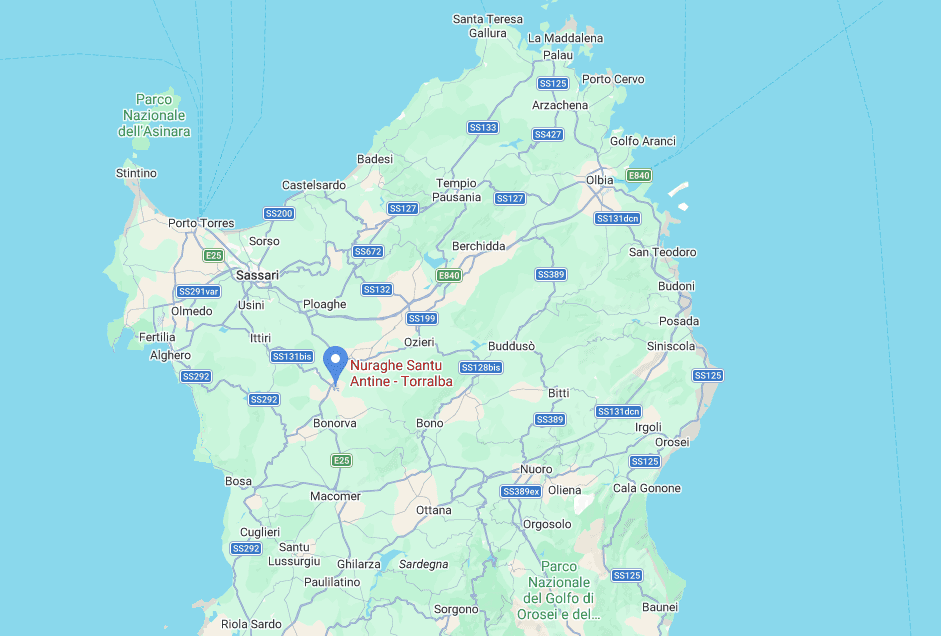
Getting to Nuraghe Santu Antine
Driving is by far the most practical way to reach Nuraghe Santu Antine. The site is located close to the main road network, making it much easier to access than some of Sardinia’s more remote Nuragic sites.
Typical driving times:
From Macomer: 20 minutes (30 km)
From Sassari: 30 minutes (40 km)
From Bosa: 45 minutes (45 km)
From Alghero: 50 minutes (70 km)
If you need to book a rental vehicle for your travels, we highly recommend using Discover Cars to get the best rates on your rental in Sardinia.
We also highly recommend Airalo (eSIM card) for your connectivity needs when travelling abroad. Airalo is the world’s first and largest eSIM store with eSIM plans for 200+ countries and regions worldwide.
Nuraghe Santu Antine: Entrance Fees and Opening Hours
Entrance Fee
Entrance to Nuraghe Santu Antine costs €10 for adults, with reduced rates available for children.
Tickets are purchased at the gift shop next to the car park, just across the street from the nuraghe itself. The ticket also includes entry to the Museo della Valle dei Nuraghi in Torralba, located about 4 km north of the archaeological site. If you have time, this can be a useful add-on for more context on the area and its Nuragic heritage.
Guided tours are often offered on the half-hour mark, though to our knowledge these are generally in Italian only.
Operating Hours
Nuraghe Santu Antine generally has two seasonal schedules:
- April 1 to September 30: 9:00 AM to 8:00 PM daily
- October 1 to March 31: 9:00 AM to 5:00 PM daily
For up-to-date visiting schedules and information, see the nuraghe’s official website.
Facilities
There are visitor facilities near the entrance area. Next to the car park and gift shop, you’ll find restrooms as well as a café/restaurant with indoor and outdoor seating.
Good to Know
Bring a small flashlight or make sure your phone has enough battery to use as a light. While some interior corridors areas are naturally lit, the concentric galleries and inner tholos chambers are built from dry-laid basalt blocks and have very few openings. Some corridors can be extremely dark, and having your own light makes the interior much easier and safer to explore.
Comfortable shoes are also a good idea, especially if you plan to climb stairs or explore the darker interior passages.
Nuraghe Santu Antine – A quick history
Nuraghe Santu Antine is one of the largest and most sophisticated megalithic fortresses built by the Nuragic civilization. The complex was constructed and developed in several phases between the Middle Bronze Age and the Iron Age, roughly from the 16th to the 9th century BCE.
The central keep is generally considered the oldest part of the structure. Built using large basalt blocks laid without mortar, it originally reached an estimated height of around 23–24 meters, making it one of the tallest Nuragic towers in Sardinia. The dry-stone construction relied on the careful placement and weight of the stones themselves to hold the structure together.
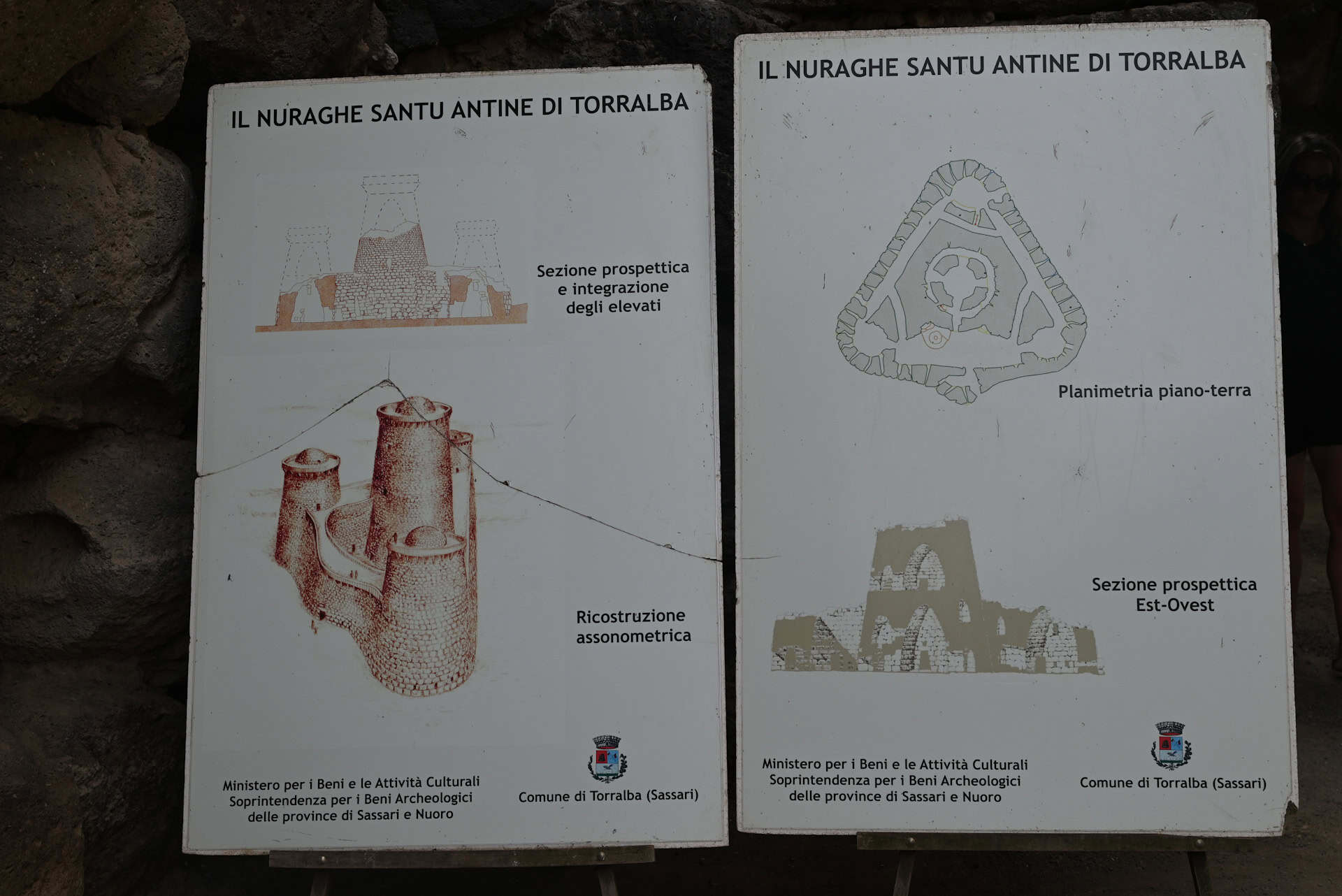
Between the 15th and 13th centuries BCE, the complex was expanded and fortified with a trilobed bastion, connecting the central tower to three smaller towers. Around the fortress, a Nuragic village developed, with circular stone huts that would have housed the local population. Most of this surrounding settlement is now in ruins, but it helps show that Santu Antine was not an isolated monument.
The site continued to be used long after the main Nuragic period. During the Roman era, square-shaped dwellings were built on and around parts of the prehistoric settlement. Modern archaeological work began in the 20th century, with the first excavations carried out by Antonio Taramelli in 1935, followed by later excavation and restoration campaigns in the decades that followed.
Nuraghe Santu Antine – What to Expect During Your Visit
After buying your ticket at the gift shop near the car park, you’ll cross the road and walk about 2–3 minutes to reach the archaeological site. Along the way, you may pass a more recent circular stone structure with a full roof, which sits separately from the main Nuragic remains.

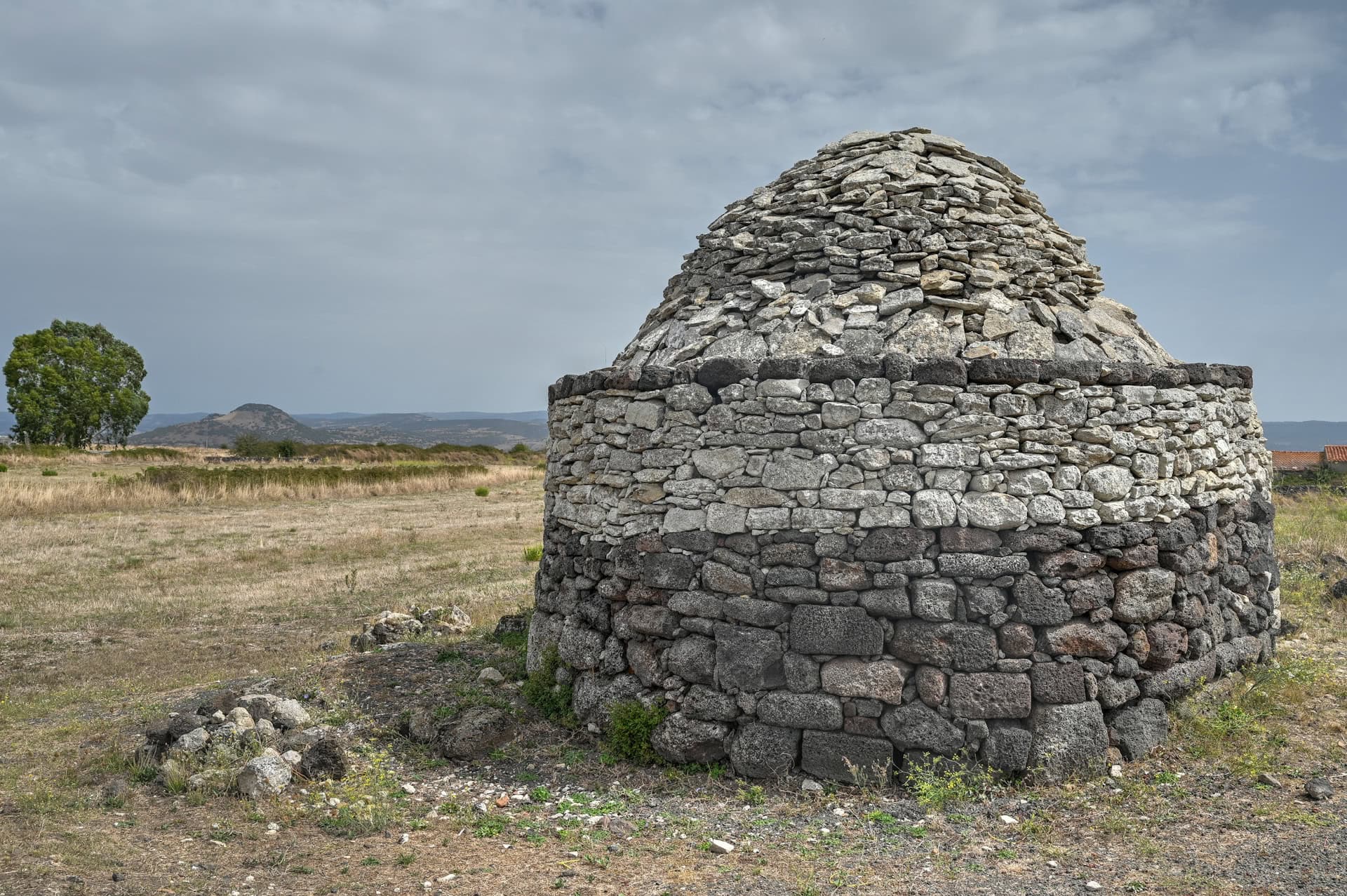
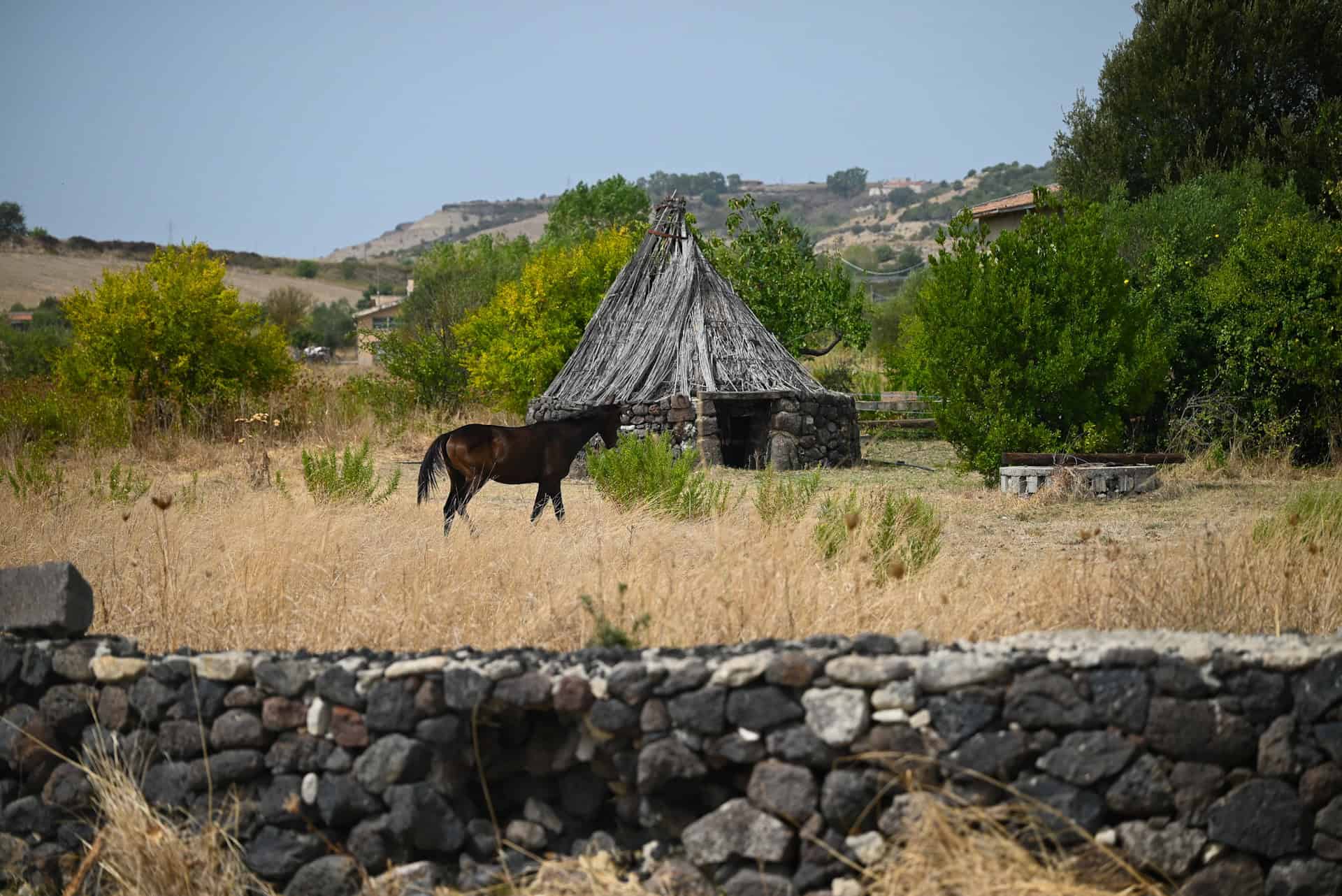
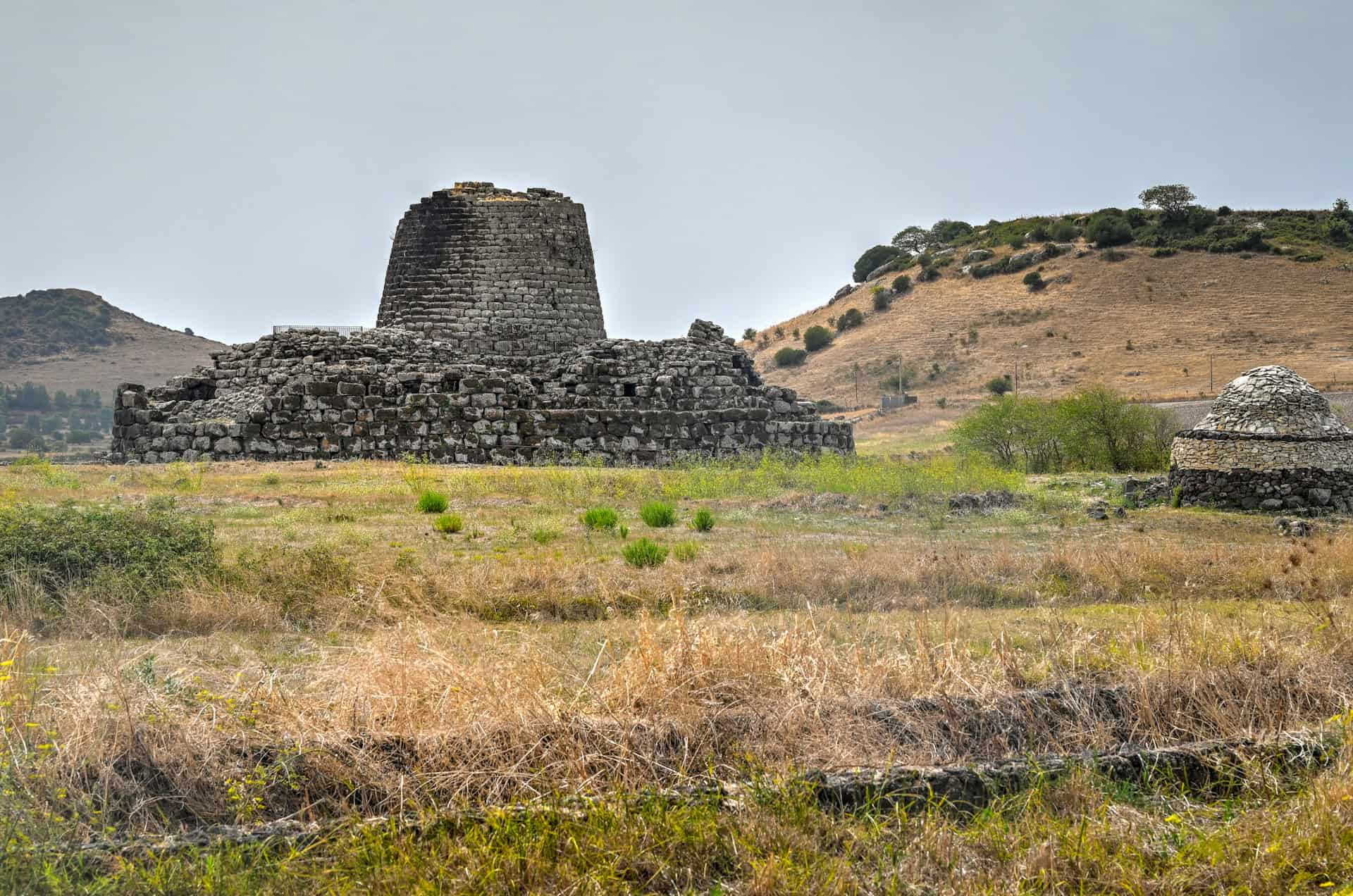
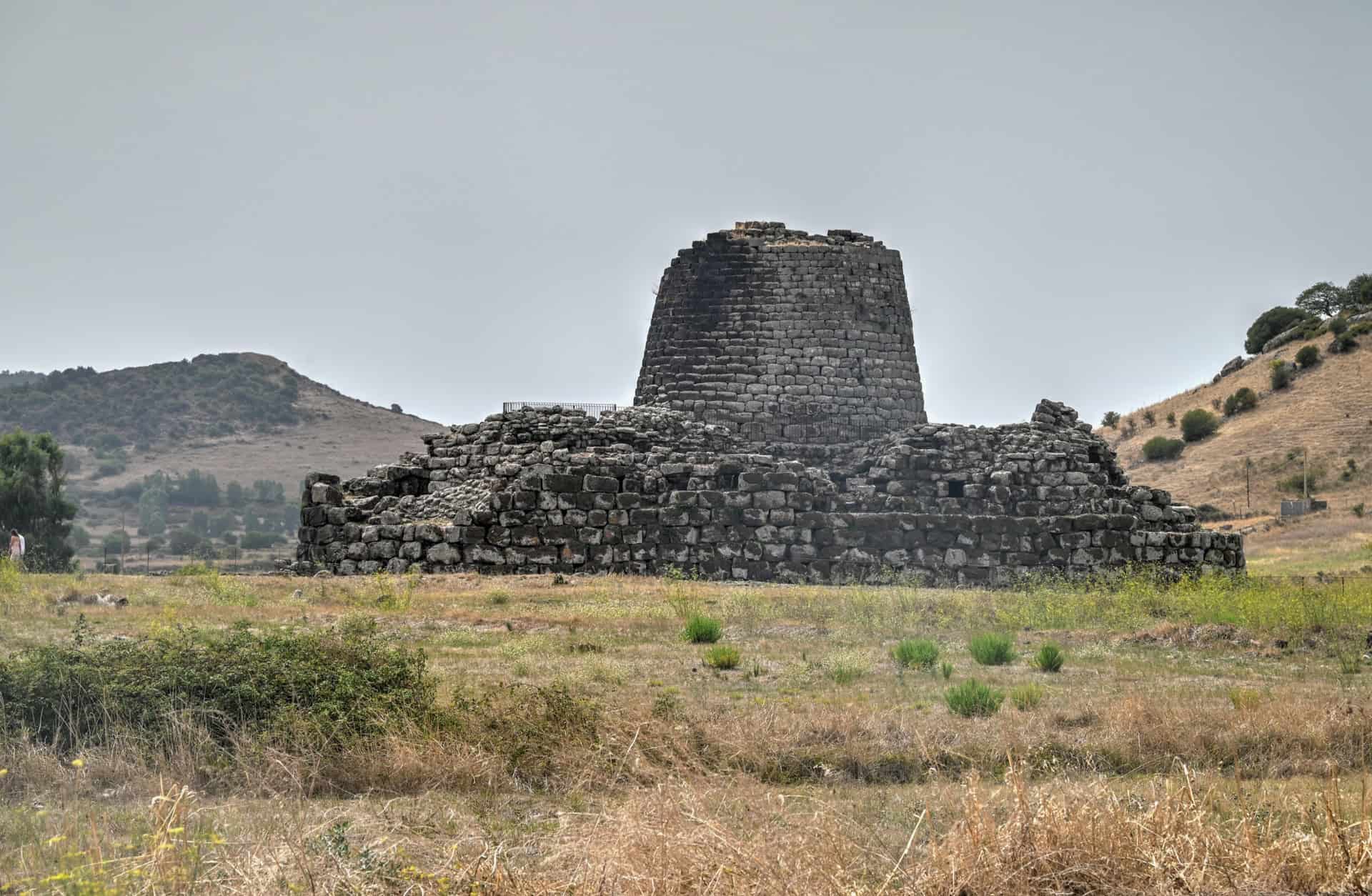
The surrounding village area is mostly in ruins today. You can still see the outlines of circular huts and low stone walls, with a few structures rising several feet above ground level.
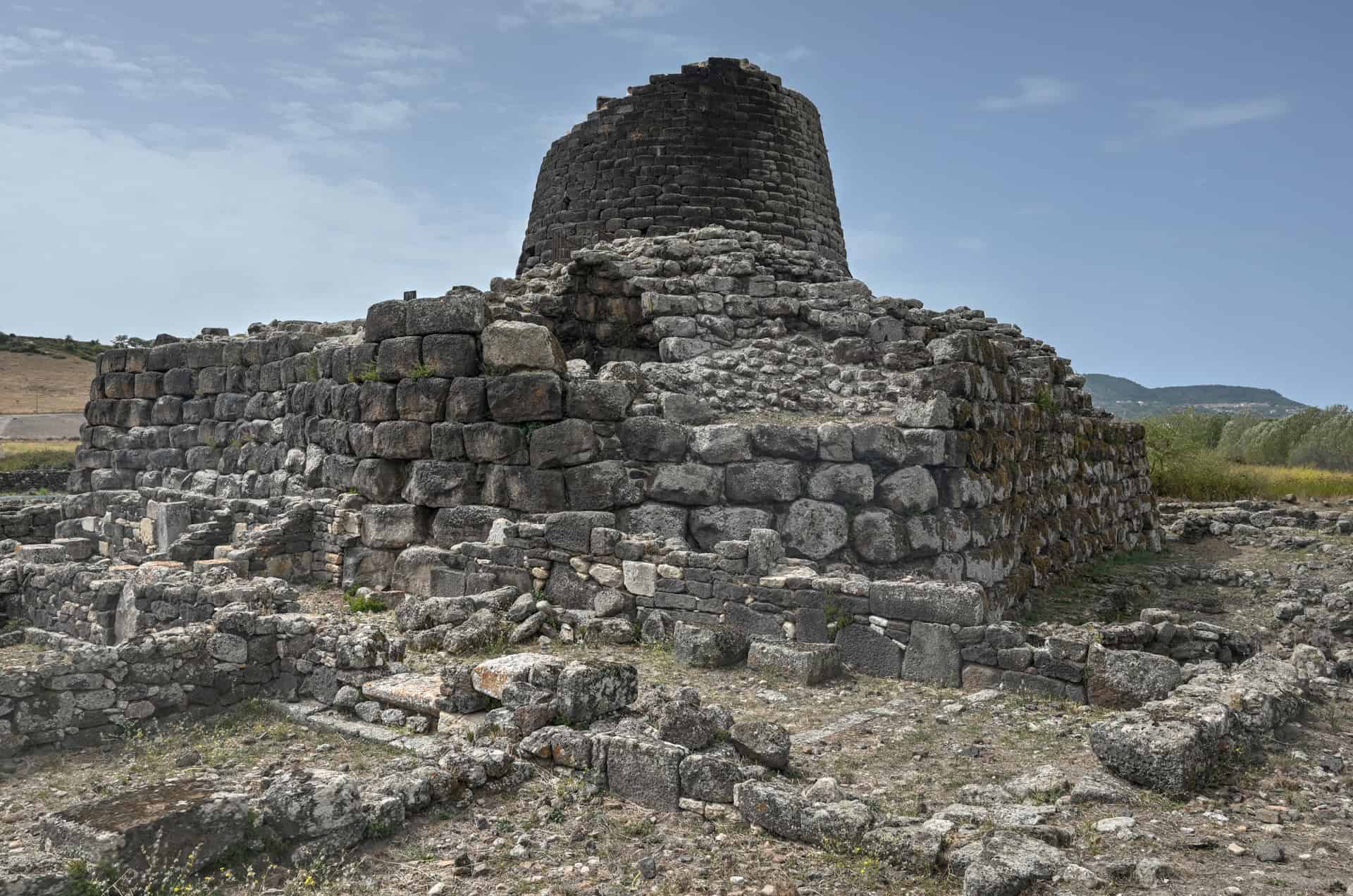


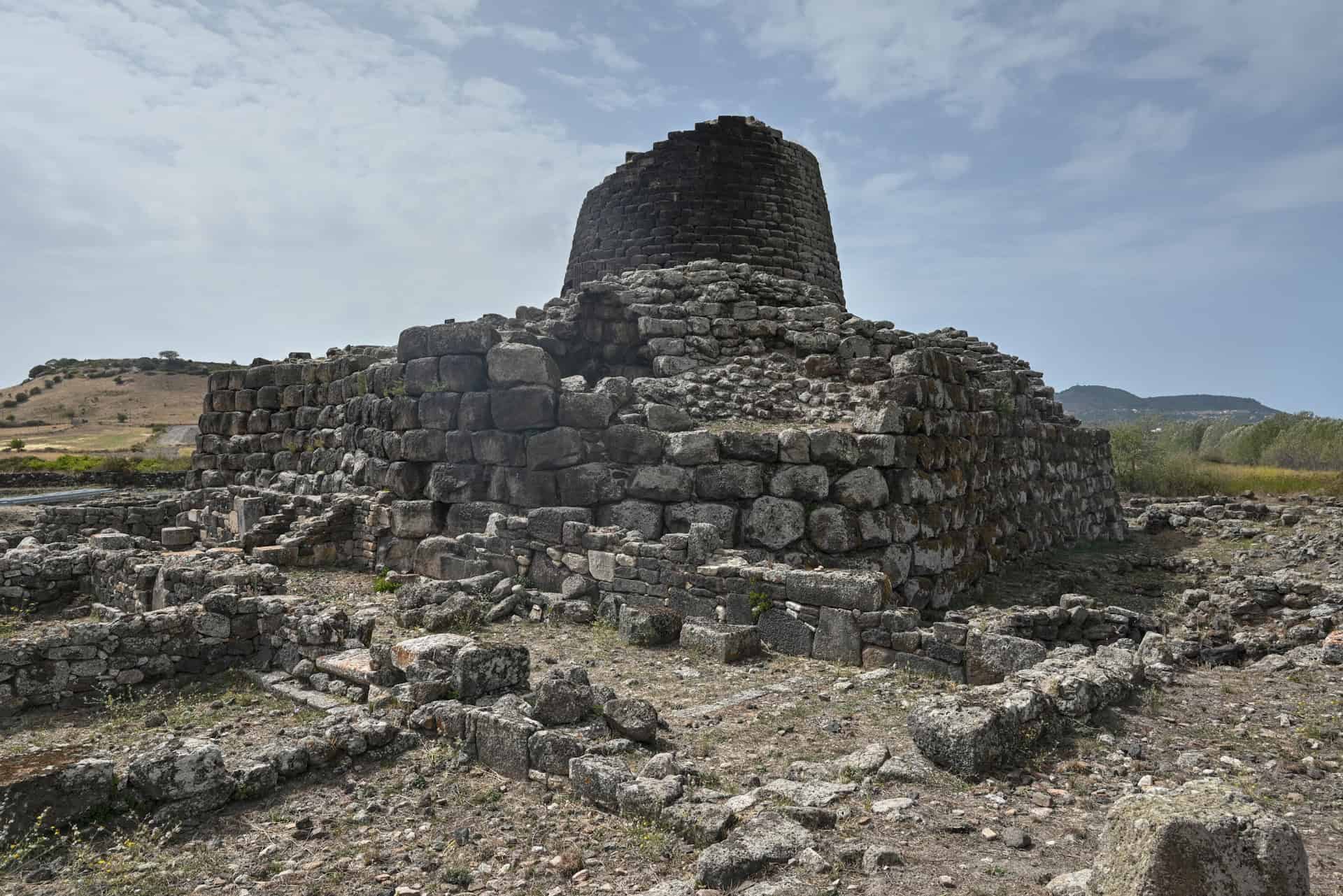
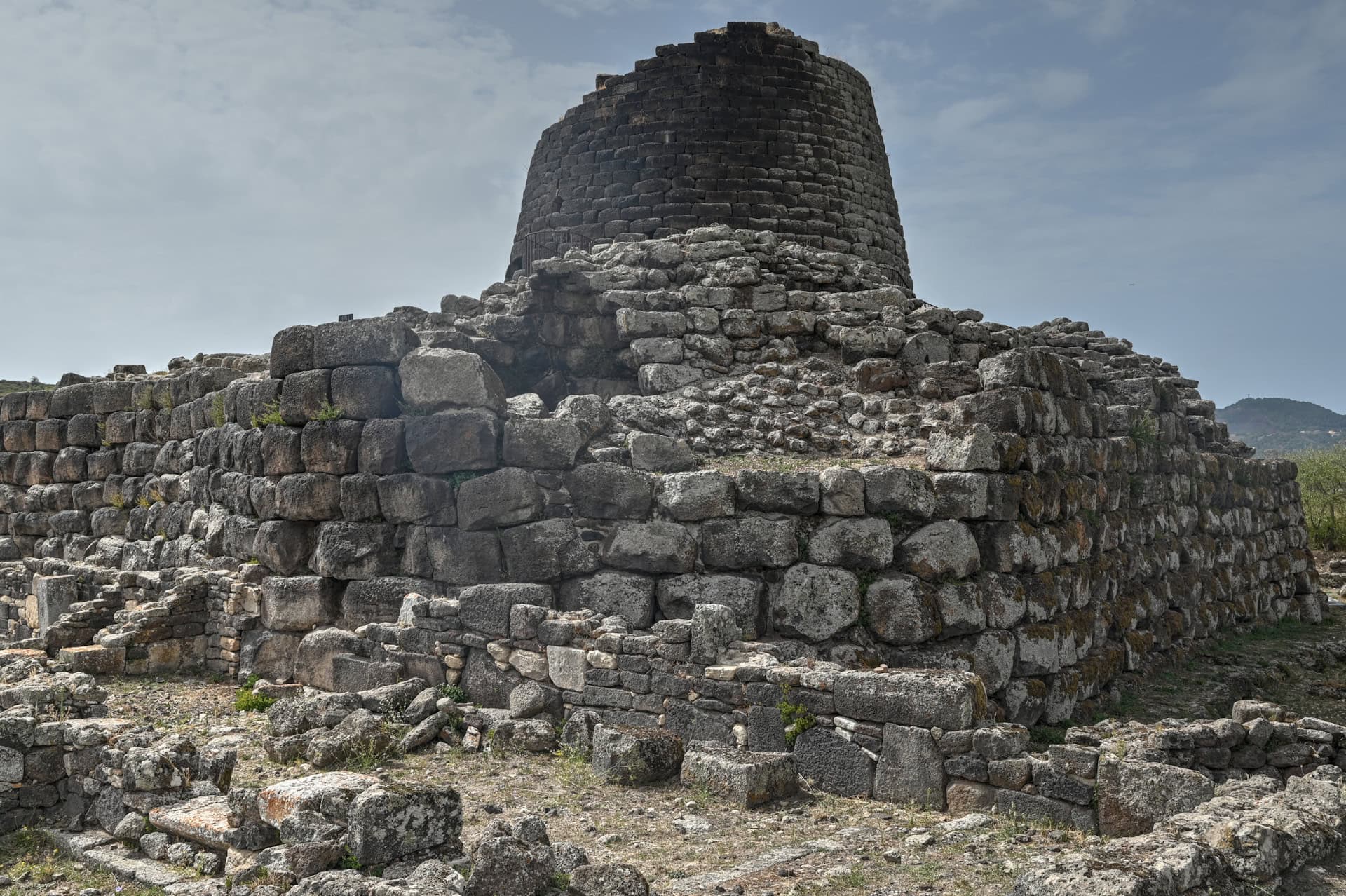
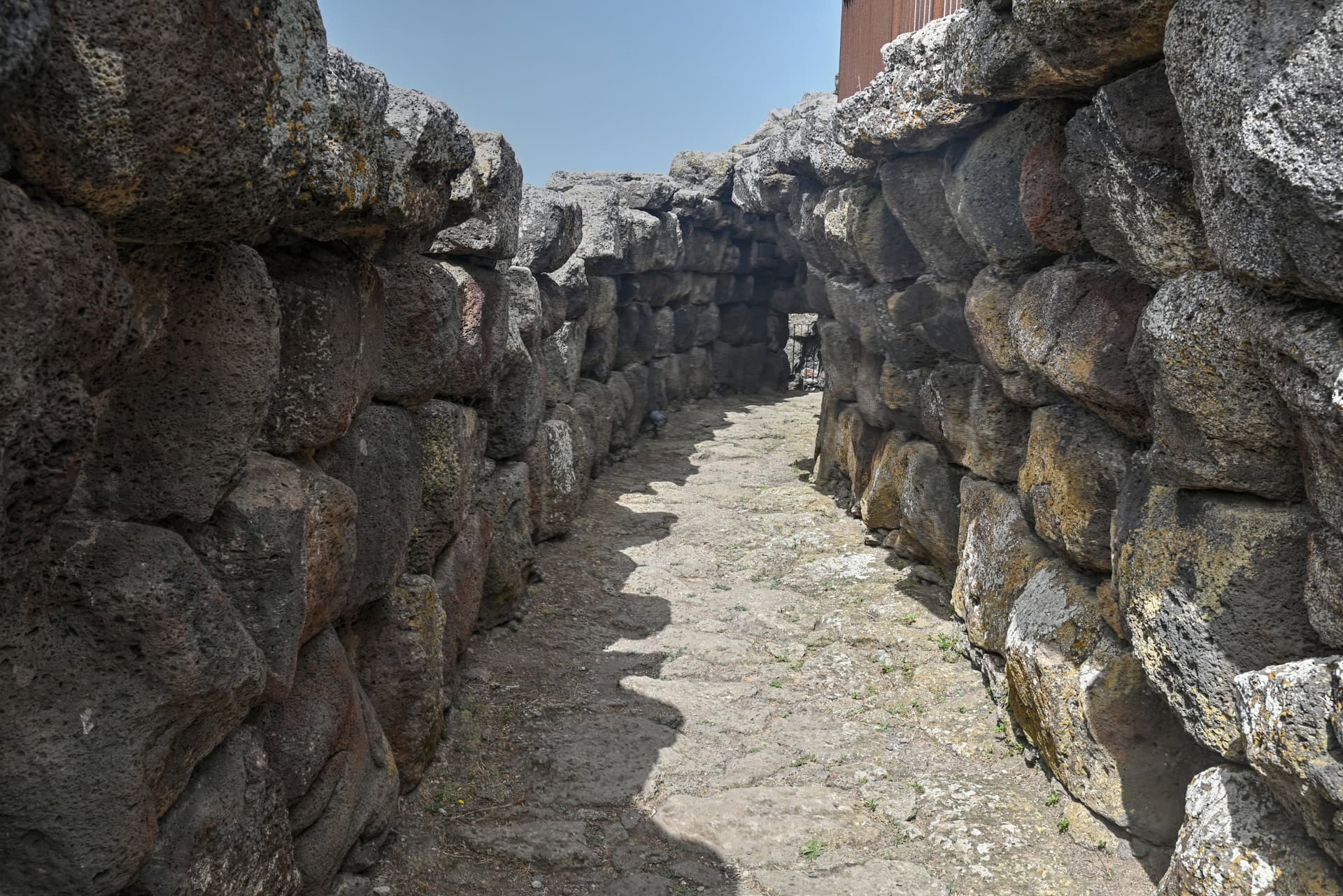
The central tower is the highlight of the visit. From the outside, it already feels imposing, but the real experience is stepping inside and exploring its network of corridors, chambers, staircases, and narrow passageways. Some sections are naturally dark, while others are atmospherically lit.


What makes Santu Antine especially memorable is how much of the interior you can actually explore, especially when compared to most of the other nuragic sites across Sardinia which have more of an open-air archaeological site feel.


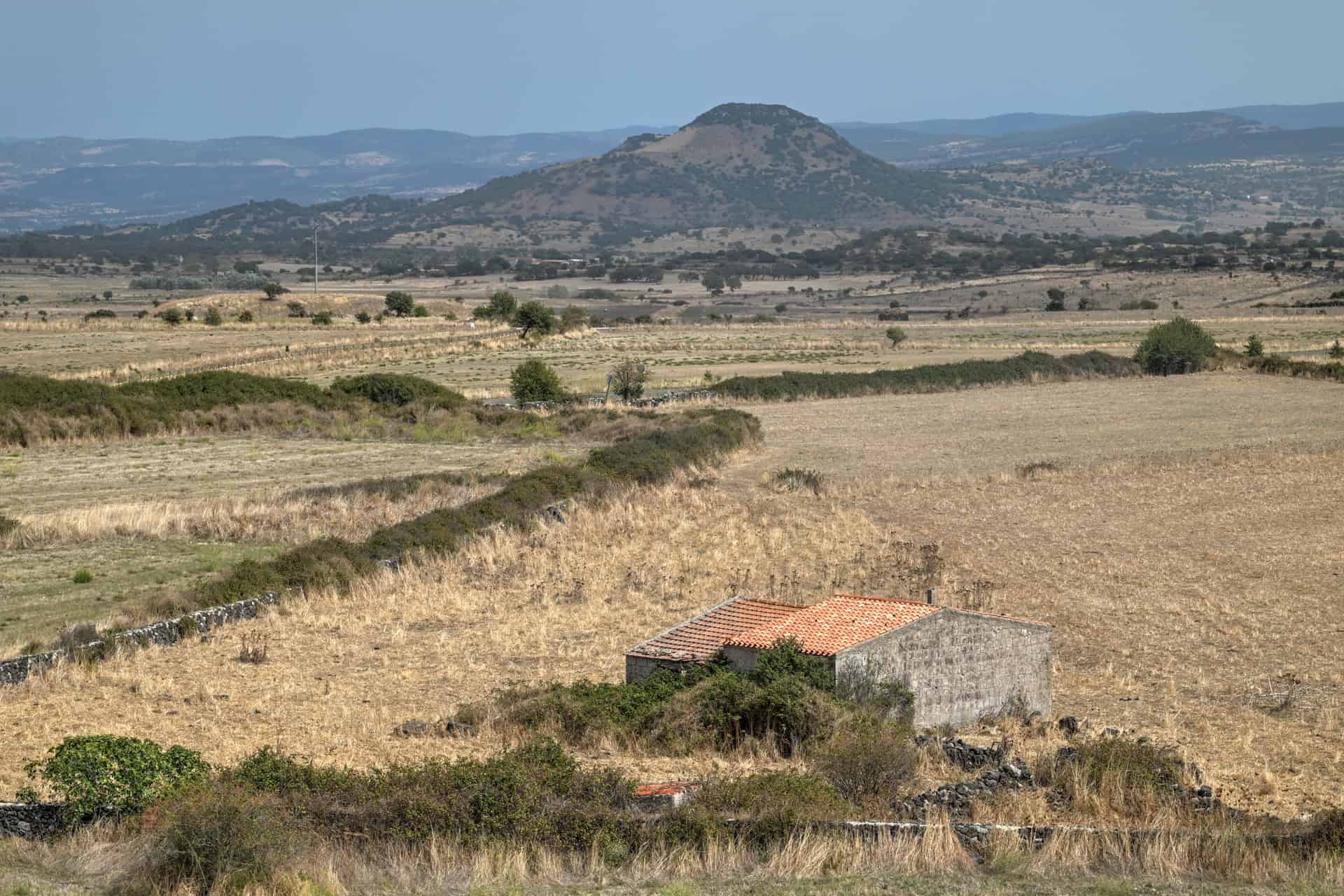
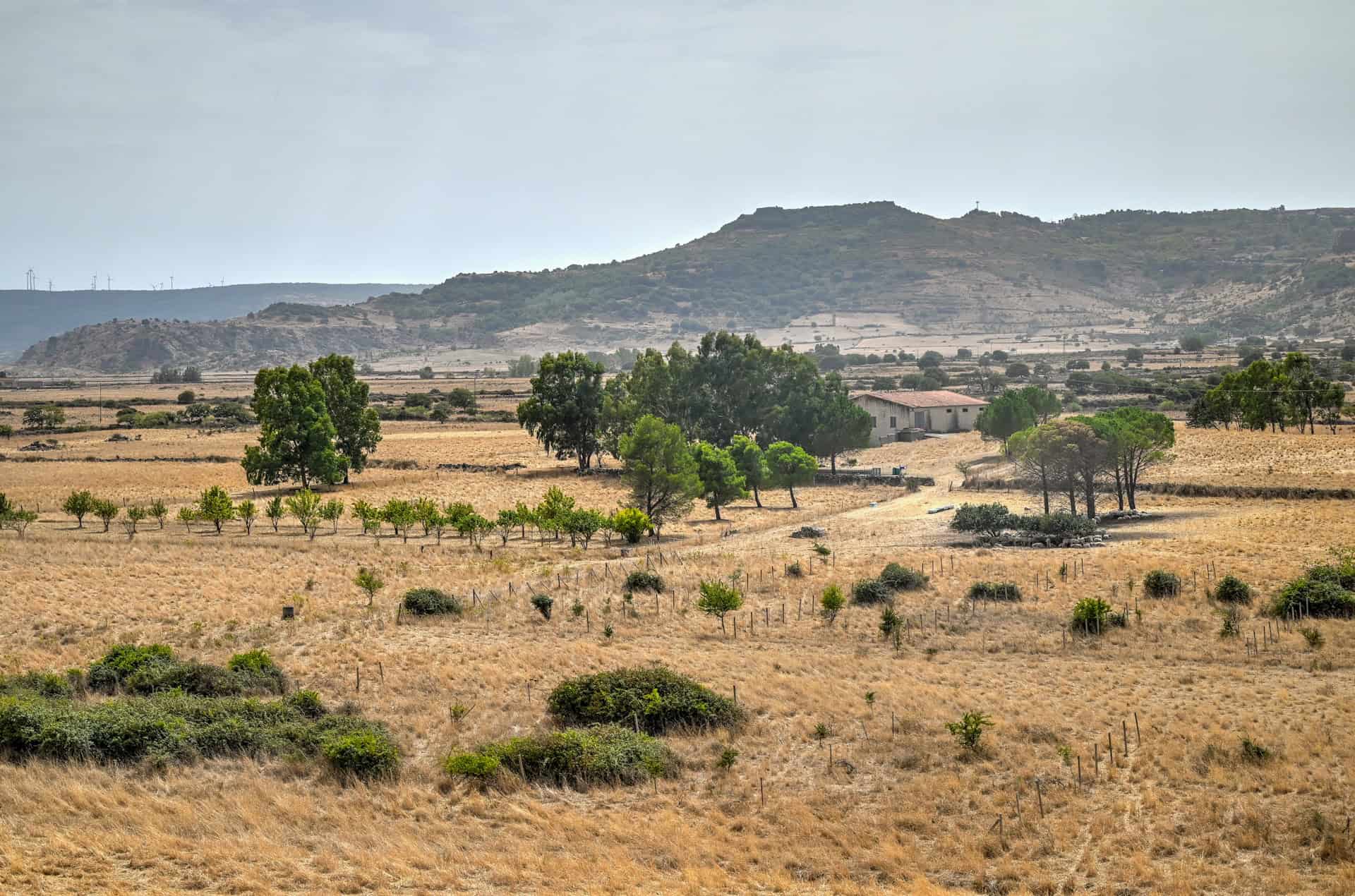
Another fun part of the visit is climbing up to the second level, where you get distant views over the beautiful surrounding countryside.




Nuraghe Santu Antine – Is it Worth it?
Yes, we think so. Of the many Nuragic sites we visited in Sardinia, Santu Antine was one of our favorites.
Why You Might Enjoy It:
– One of the largest and most impressive nuraghe in Sardinia
– You can explore the interior corridors, staircases, chambers, and upper levels
– The second level offers views over the surrounding countryside
– Easy to visit as a stop between Alghero, Sassari, Bosa, and central Sardinia
Why It Might Not Be for You:
– The surrounding village remains are mostly low ruin
– The site is more about architecture and structure than a broad village layout such as in other nuragic sites.
Bottom line: Nuraghe Santu Antine is worth visiting if you want one of the most memorable examples of Nuragic tower architecture in Sardinia.
How Long Do You Need to Visit Nuraghe Santu Antine
We think that 20–30 minutes is a good amount of time to explore the site properly at a slow pace. The nuragic site isn’t very large, and it’s more about exploring the tower’s interior corridor than anything else.
Best Time to Visit Nuraghe Santu Antine
Best Time of Year
Nuragic Complex Romanzesu can be visited at any time of year. That said, summer visits can feel hot, so shoulder season tends to be ideal (May-June, September-October).
Best Time of Day
We typically recommend early morning or late afternoon visits to avoid the heat and the crowds. But since this nuragic site doesn’t get the amount of visitors seen at other sites, and because most of the visit takes place inside the tower, where it stays suprisingly cool, the actualy timing of your visit matters less at Nuraghe Santu Antine.
Other Nuragic Sites You Might Want to Visit
If you are interested in exploring more of Sardinia’s Nuragic history, Serra Orrios is one of the best sites to visit next. Located near Dorgali and Cala Gonone, it is easier to reach than Romanzesu and offers a different type of experience. Instead of a forested sanctuary setting, Serra Orrios feels more like an open Nuragic village, surrounded by dense Mediterranean scrub, with wild olive trees, and low vegetation growing throughout the site.


Nuragic Complex Romanzesu is one of the most atmospheric sites we visited. It is somewhat more remote and more off the beaten path than Serra Orrios, but that is part of its appeal. The ruins are scattered through an enchanting forest setting, with temples, stone structures, and ritual areas that makes the visit feel quiet, immersive, and very different from more heavily visited archaeological sites.


Other Places to Visit Near Nuraghe Santu Antine
Bosa
Bosa is one of the most colorful towns in Sardinia and makes a great stop if you are traveling between the west coast and inland northern Sardinia. The town is known for its pastel-colored houses, riverside setting, medieval castle, and relaxed historic center
For more details, tips, and activity suggestions, see our detailed Bosa Guide (coming soon).
Alghero
Alghero is one of the best bases in northwestern Sardinia, known for its historic old town, sea walls, Catalan heritage, and nearby beaches. The town itself is also worth time for its beautiful waterfront, large selection of restaurants, and sunset views, while nearby places like Capo Caccia and Grotta di Nettuno provide even more great activitys to do in the area.
For more details, tips, and activity suggestions, see our detailed Alghero Guide (coming soon).
San Pietro di Sorres
San Pietro di Sorres is one of the closest worthwhile stops near Nuraghe Santu Antine. Located near Borutta, this former Benedictine monastery is best known for its striking Romanesque church, built with alternating bands of dark basalt and pale limestone. The setting is peaceful and slightly elevated, with views over the surrounding countryside.
Nuraghe Santu Antine Frequently Asked Questions (FAQ)
What is Nuraghe Santu Antine?
Nuraghe Santu Antine is a large Nuragic fortress near Torralba in northwestern Sardinia. The site includes a central tower, additional towers, internal corridors, chambers, stairways, and the remains of a surrounding village.
How do you get to Nuraghe Santu Antine?
The easiest way to reach Nuraghe Santu Antine is by car. It is located near Torralba, about 35–40 minutes from Sassari, 50–60 minutes from Alghero, 35–40 minutes from Macomer, and around 1h15–1h30 from Bosa.
Do you need to buy tickets in advance?
In most cases, you should not need to buy tickets in advance. Tickets are purchased at the gift shop next to the car park, just across the street from the nuraghe.
Are guided tours available?
Guided tours are often offered on the half-hour mark, though to our knowledge they are generally in Italian only. If you are interested in joining one, ask about the next available tour when buying your ticket.
Is Nuraghe Santu Antine worth visiting?
Yes, we think Nuraghe Santu Antine is worth visiting, especially if you want to experience one of Sardinia’s most impressive Nuragic tower complexes. The ability to walk inside the structure, explore corridors, climb staircases, and see the inner chambers makes it one of the most memorable Nuragic sites we visited.
Can you go inside Nuraghe Santu Antine?
Yes. This is one of the main reasons to visit. You can walk inside the tower, explore dark corridors, climb staircases, and enter internal chambers, which makes the site feel much more immersive than many open-air ruins.
Do you need a flashlight?
Yes, we recommend bringing a small flashlight or using your phone light. Some interior corridors and chambers are very dark, and having your own light makes the visit easier and safer.
Are there facilities at Nuraghe Santu Antine?
Yes. Near the car park and gift shop, you’ll find restrooms as well as a café/restaurant with indoor and outdoor seating.
Photography Gear
If you like our photography, you might be interested in some of the gear we use to shoot our travel and hiking destinations.
Camera Body – Nikon Z 6ii Fx-series Mirrorless Body
Main Lens – NIKON 24-120mm F/4G ED VR AF-S
Zoom Lens – Sigma 745-306 150-600mm f/5-6.3
Polarizing filters – Urth Circular Polarizing (CPL)
Camera Tripod – K&F Concept 64-inch Camera Tripod
Mini-tripod – Lammcou Flexible Camera Tripod
Camera/hiking backpack – Vanguard Alta Rise 48 Backpack
Universal Travel Adapter – VYLEE Universal International Power Travel Plug
Other Travel Essentials
Travel Insurance
SafetyWing is a travel insurance company that offers comprehensive coverage for travellers. Includes Medical Insurance and Travel Insurance. Primarily geared towards long-term travellers, digital nomads, and expats.
e-Sim cards
Airalo is the world’s first and largest eSIM store with eSIM plans for 200+ countries and regions worldwide. With Airalo eSIMs, travellers can get connected the moment they land at their destination and avoid nasty data roaming charges
eSIMS are a sustainable alternative to single-use SIM cards – they are 100% digital, require less energy to produce and be re-used rather than disposed of.
Car Rentals
Discover Cars is our go-to website for car rentals. We almost always find our preferred rate there.
Transfer from Airport
Welcome Pickups is our favourite private transfer service, which you can pre-book at a fixed price. Currently available in 220 cities all over the world (mostly in Europe, but with several major cities in Asia, the Middle East and the US).
Kiwitaxi is another private transfer service – we haven’t tried it yet, but it’s currently available in a few more countries (102 as of 2024).
Hotels and Accommodations (coming soon)
Photography Prints
If you found this blog useful, you can help support our blog by purchasing low-cost digital prints. Printed physical prints are also available for purchase.


—–
Well, that wraps it up! We hope you enjoyed our Nuraghe Santu Antine Guide and that it will prove useful for planning your trip to Sardinia.
—–
You might also be interested in these related pages: