The Devil’s Staircase is one of the most recognizable climbs on the West Highland Way, and one of the most direct ways to gain elevation in Glen Coe. This short but steep section ascends roughly 400 metres over just a few kilometres, leading to wide, panoramic views from Stob Mhic Mhartuin, the highest point along the route.
While the climb is sustained and can feel demanding, the payoff comes quickly, with open views across the surrounding Highlands that rank among the best in this part of Scotland. This guide covers what to expect from the ascent, how difficult it feels in practice, and how to plan your hikr as part of a visit to Glen Coe.
Devil’s Staircase Trail – At a Glance
A short but steep climb on the West Highland Way
This section of the West Highland Way gains significant elevation over a relatively short distance, making it one of the most physically demanding parts of the route despite its length.
Leads to one of the highest viewpoints on the route
The climb tops out at Stob Mhic Mhartuin, offering wide, open views across the surrounding Highlands and back toward Glen Coe.
Consistent ascent with no technical sections
The trail is well-defined and non-technical, but the sustained gradient can feel demanding, especially in poor weather or strong winds.
Easy to access as a standalone trail
Although part of a long-distance trail, this section can be hiked independently as an short out-and-back from the roadside near Altnafeadh.
Trail difficulty: Moderate to moderately challenging (due to steep ascent)
Time required: 2h–2h30 round trip


Disclosure: This page (Devil’s Staircase Trail Hiking Guide) may contain product affiliate links. At no additional cost to you, we may receive a commission for purchases made through these links. More details can be found on our disclosure and policies page.
the Devil’s Staircase – Location and Map
The Devil’s Staircase is located in the eastern portion of the Glen Coe Valley, one of Scotland’s most beautiful and dramatic valleys.

How To Get to The Devil’s Staircase Trail
By Car: Getting to the Devil’s Staircase trailhead is simplest with your own vehicle. The trailhead is about a 40 km drive from Fort William (35 min) or a 70 km drive from Oban (just over an hour). Getting here from Glasgow or Edinburgh will take a bit longer, roughly 2h and 2h30, respectively. If you are staying in Glencoe village, it’s only a short 15-minute drive to the trailhead.
For advice and tips on how to drive in Scotland, check out our Scotland Roadtrip Driving Guide.
If you haven’t booked your rental vehicle yet, we highly recommend using Discover Cars to get the best rates on your rental in Scotland.
We also highly recommend Airalo (eSIM card) for your connectivity needs when travelling abroad. Airalo is the world’s first and largest eSIM store with eSIM plans for 200+ countries and regions worldwide.
Arrival, Parking and Devil’s Staircase Trail Access Fees
Parking lot: The Devil’s Staircase parking lot (link to Google Maps) is just a small roadside lay-by with a few spots. If it is full, there is a larger car park (Buachaille Etive Mòr Car Park – link to Google Maps ) just across the road.
Hours: The trail is also open 24 hours a day, 7 days a week so you can visit any time you like.
Costs: Hiking the trail is free, as is the car park (2025).
Facilities: The nearest public toilets are near the Kinghouse Hotel (link to Google Maps), a 5-minute drive away.
About the West Highland Way and the Devil’s Staircase
The West Highland Way is a 96-mile (154 km) route that starts in Milngavie (a suburb of Glasgow) and ends in Fort William. The path was originally built by soldiers. The trail, which opened in 1980, was Scotland’s first officially designated long-distance route. The path uses many ancient roads, including ancient drovers’ roads, military roads dating to the Jacobite uprisings and old coaching routes. The West Highland Way is usually walked from south to north, making it a journey from the Lowlands to the Highlands, and is commonly walked in seven to eight days (though the seemingly impossible current record is 13 h 41 m 8 s). A walk along the Way is typically broken up into specific sections, each of which will typically be completed in a day.
The Devil’s Staircase is part of the 7th of 8 sections, connecting Glen Coe to Kinlochleven. The full Glen Coe-Kinlochleven section runs for 14 km (one way), whereas the Devil’s Staircase consists of the most challenging 2 km portion of this section that reaches the highest point of the West Highland Way. The Devil’s Staircase hike presented in this guide covers this staircase portion in addition to another short trail section that ascends to the summit of Stob Mhic Mhartuin, reaching an elevation of nearly 550 meters (1800 feet).
The Devil’s Staircase Trail Details and Map
Distance: 5.1 km
Route Type: Out & back
Elevation gain: 400 m
Start point: Devils Staircase car park
AllTrails rating: (4.7, 177 ratings (2025))
Duration: Most people complete the trail in about 2h – 2h30
Not an AllTrails member yet? We highly recommend signing up for either their free or paid membership plans. The free plan allows you to find new trails and plan routes but it can only be used while hiking if you have access to mobile data. The paid membership plan (AllTrails+) allows you to download trail maps for offline use and provides live progress updates and off-route notifications.
If you are still uncertain – you should know that the All Trails mobile application was voted the 2023 iPhone App of the Year by Apple.
We find that AllTrails is a great tool to have when hiking, particularly for assisting with navigation when the trail is hard to locate and to help monitor your progress along the trail, which helps estimate how much time you’ll need to complete the trail.
Other Devil’s Staircase Trail Details
– Canine companions: Dogs are permitted on leashes.
– Summit: Stob Mhic Mhartuin, an elevation of 550 meters.
– Trail environment: Open moorland.
– Number of viewpoints: The trail offers an endless supply of viewpoints due to the open nature of the trail and the surrounding landscapes.
– Trail Surface / Technical Trail: The Devil’s Staircase isn’t a very technical trail, as the surface is relatively flat and easy to walk along. The path is mostly made up of loose stones and gravel, and some occasional stone steps rocks.
– Average trail slope grade: 16%, which is considered quite steep.
– Trail difficulty level assessment: Moderately Challenging.
(based on our personal assessment, taking into account the trail length, slope grade and trail surface – 5-point difficulty scale: Very easy, Easy, Moderate, Moderately Challenging, Challenging)
While quite short with easy-to-walk terrain, the Devil’s Staircase is an extremely steep trail with a very pronounced slope grade.
Devil’s Staircase Trail Summary
The Devil’s Staircase trail starts in Altnafeadh, which refers to the specific region in Glen Coe where the trailhead is located, though there isn’t much here other than the car park and a small cottage.
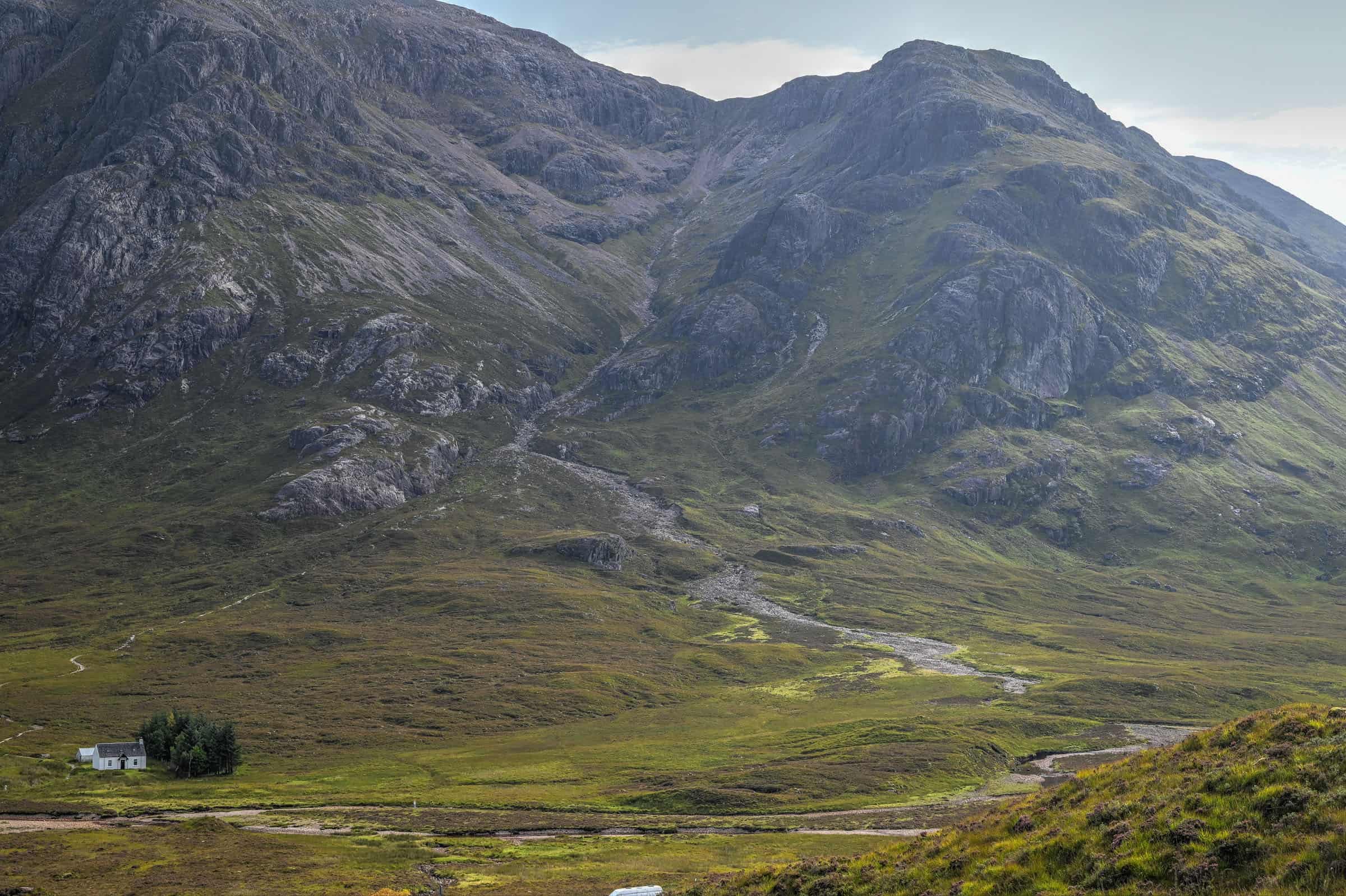
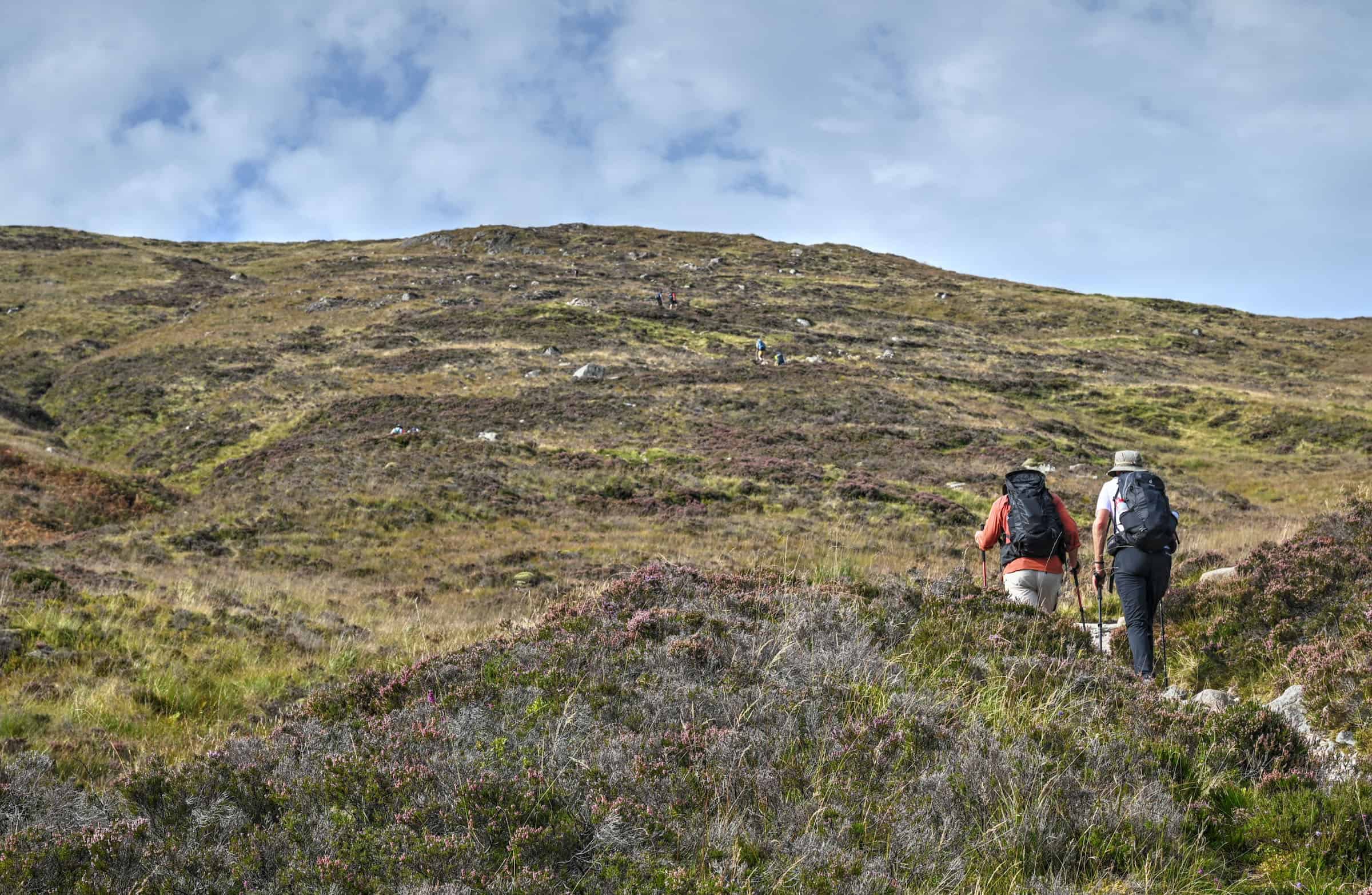
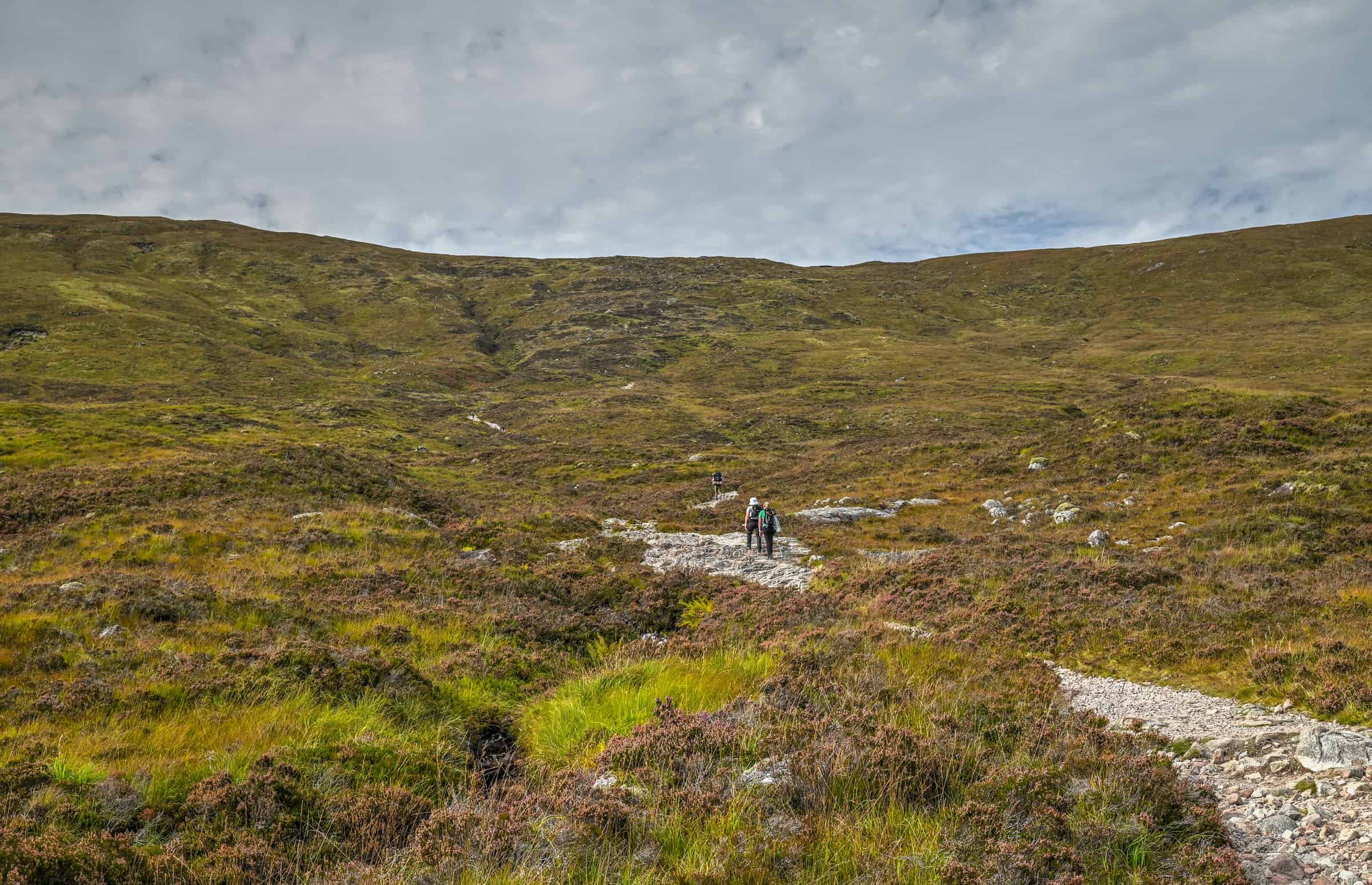
The trail up the Devil’s Staircase to Stob Mhic Mhartuin can roughly be divided into three sections, with the first two being part of the West Highland Way trail. 1) A section of steady-but-not-too-intense ascent, 2) a short section of seemingly relentless switchbacks, and 3) a third section deviates from the West Highland Way trail – when you come across a clear trail intersection after the path starts to plateau, take the left fork (it’s clearly the only path available that continues to ascend towards the Stob Mhic Mhartuin summit).
First section
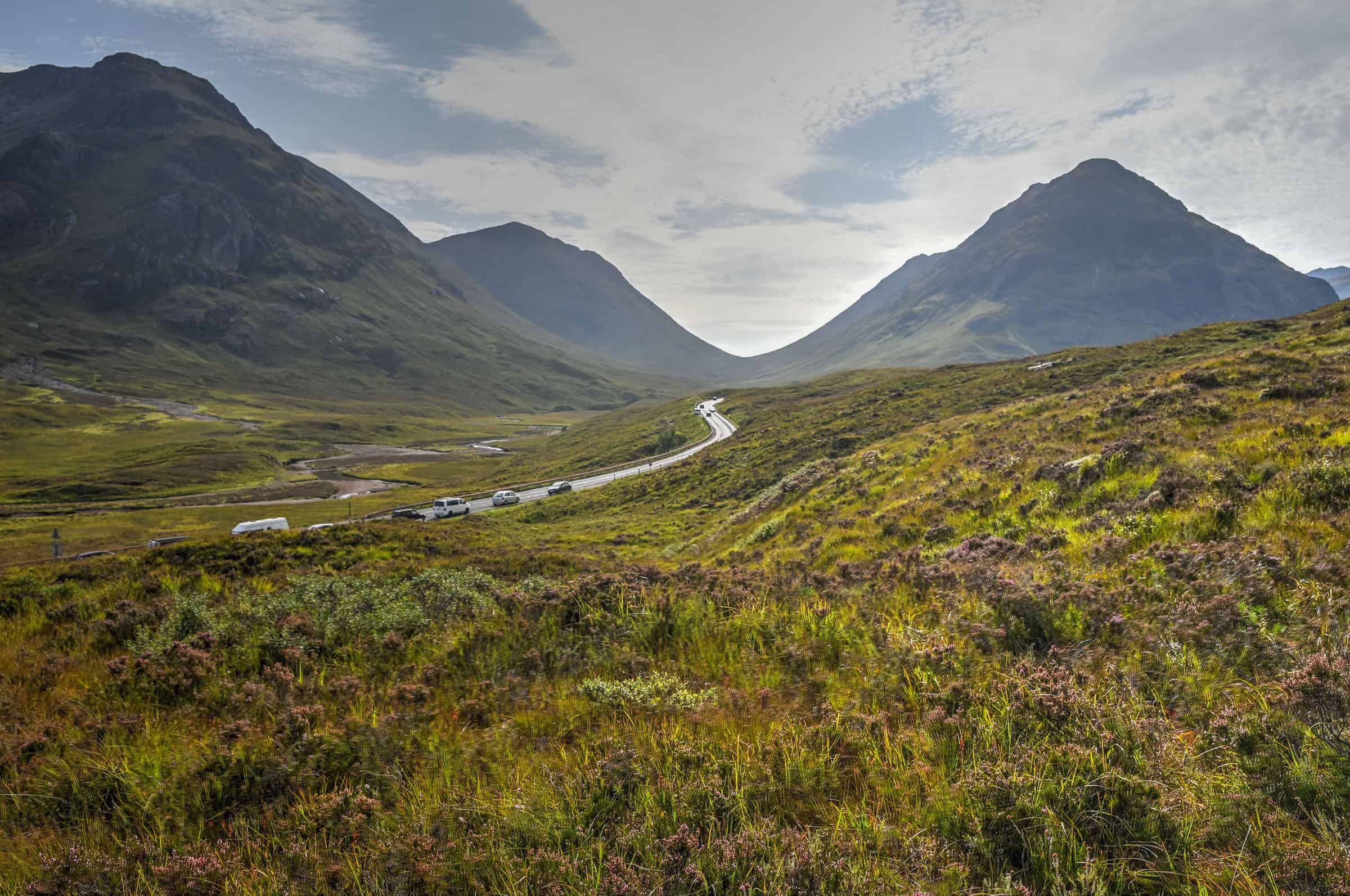
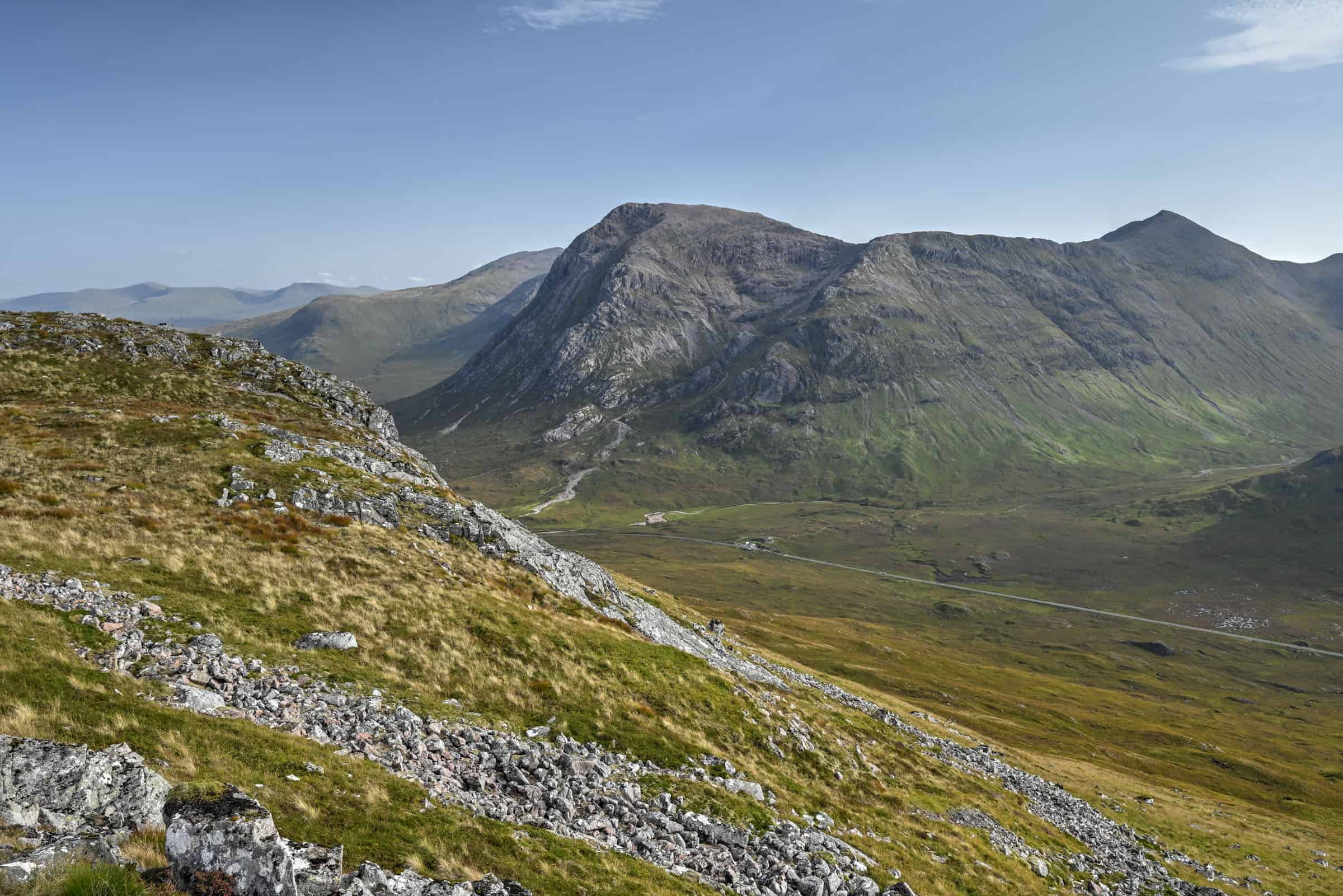
From the car park, the trail is easily visible and begins a steady climb up Stob Mhic Mhartuin’s eastern face. We do recommend occasionally turning back towards the trailhead, as the views of Buachaille Etive Mòr (along with the White House of Glencoe at its base) on the other side of the road are quite stunning.
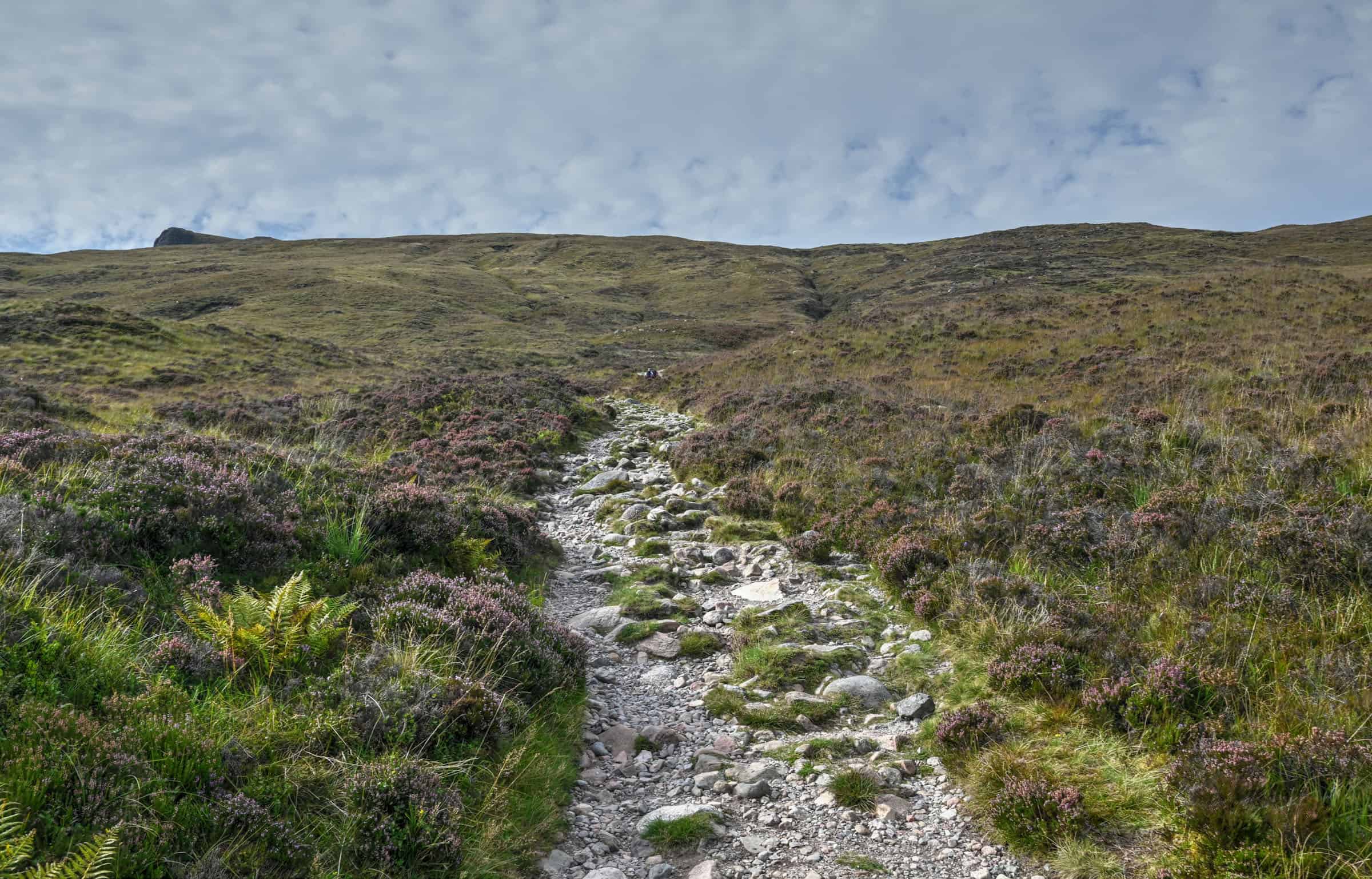
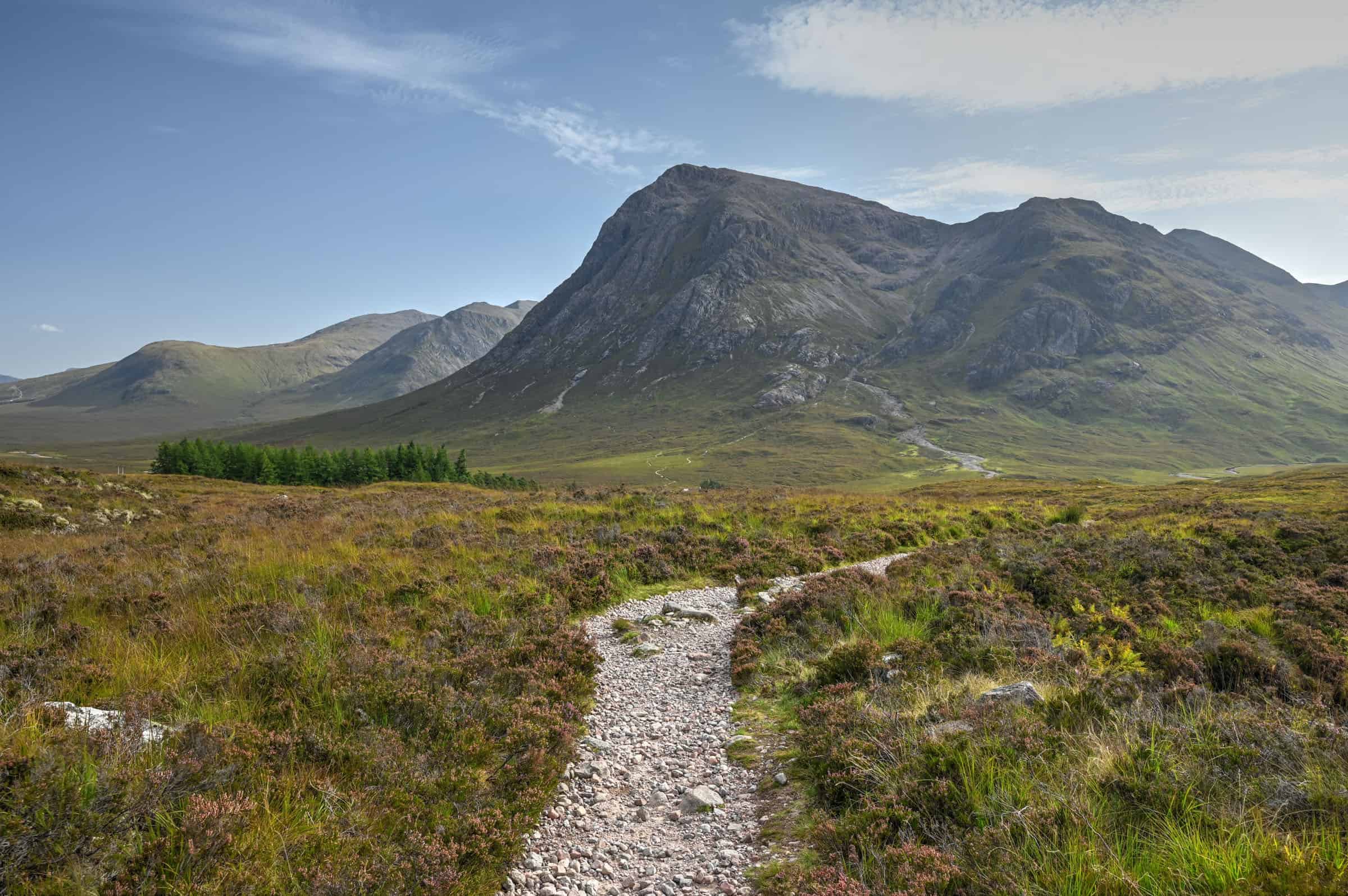
Even though you will have just started your climb, you will already be rewarded with stunning scenery.
Second section
This is the part where the trail is fully deserving of its name: the Devil’s Staircase. Just as you are starting to tire a little bit, the trail becomes even steeper and goes through a series of relentless and steep switchbacks (for about 0.8 km) until you finally reach an open plateau. Aside from the steep ascent, this section presents no real difficulty in terms of difficult terrain.

Third and final section
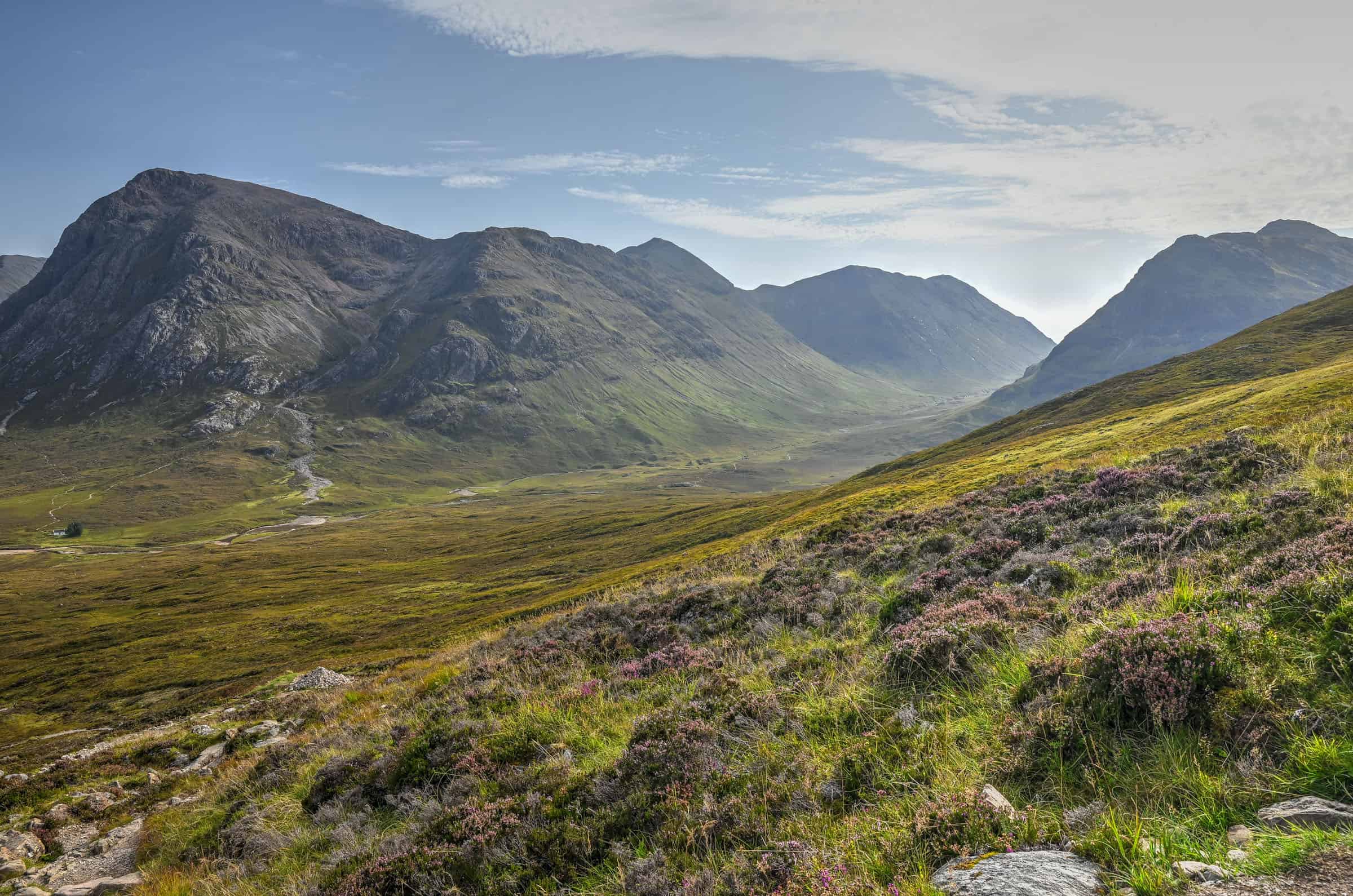
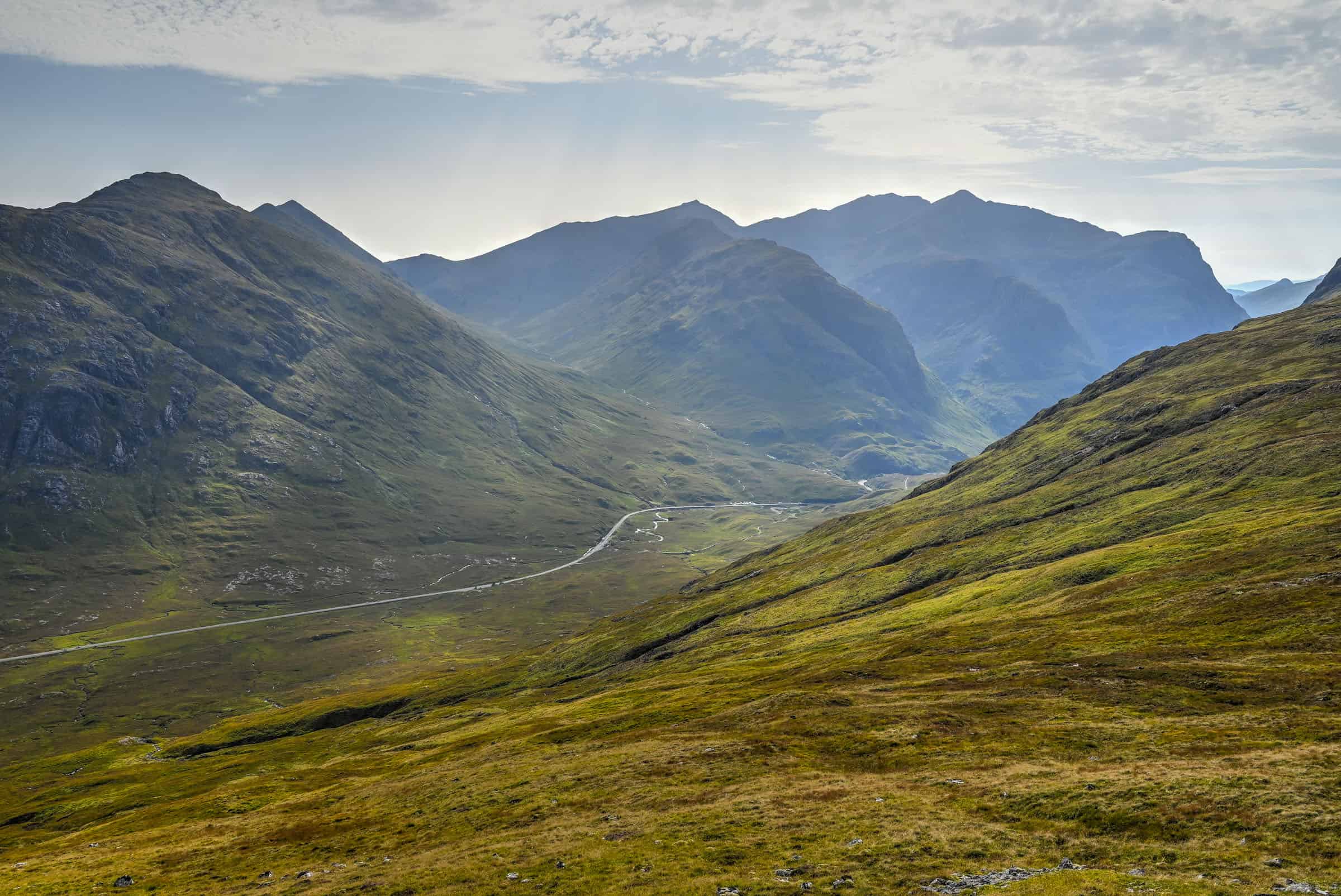
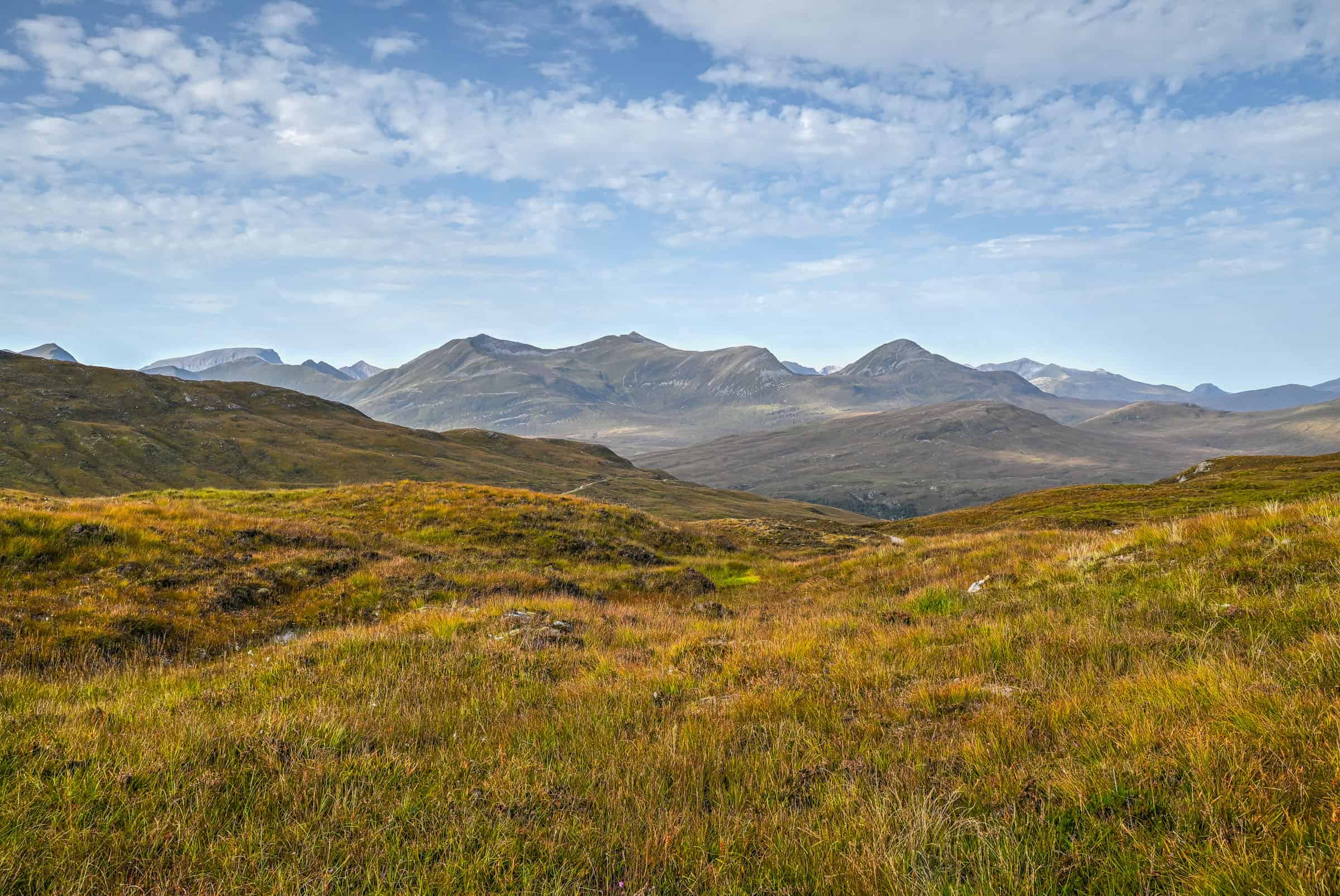
Soon after you have reached the plateau, you will come across a trail intersection, near several man-made rock piles, as this is a popular place to rest for those continuing onwards on the West Highland Way. Go straight and you will continue along the West Highland Way trail towards Kinlochleven. Go right and you’ll reach a lesser summit (Beiin Bheag) offering northeasterly views (though this path isn’t particularly obvious to spot). Where you want to go is left, towards Stob Mhic Mhartuin, where you will be rewarded with stunning views of the Glen Coe Valley.
From the intersection, the trail climbs fairly steadily and quite steeply in more or less of a straight line (no switchbacks) toward the summit; the actual path to follow is occasionally less obvious (less of a beaten path) and has the potential to be more boggy (muddy) than the previous sections. If in doubt, you can simply follow your progress on the AllTrails app.
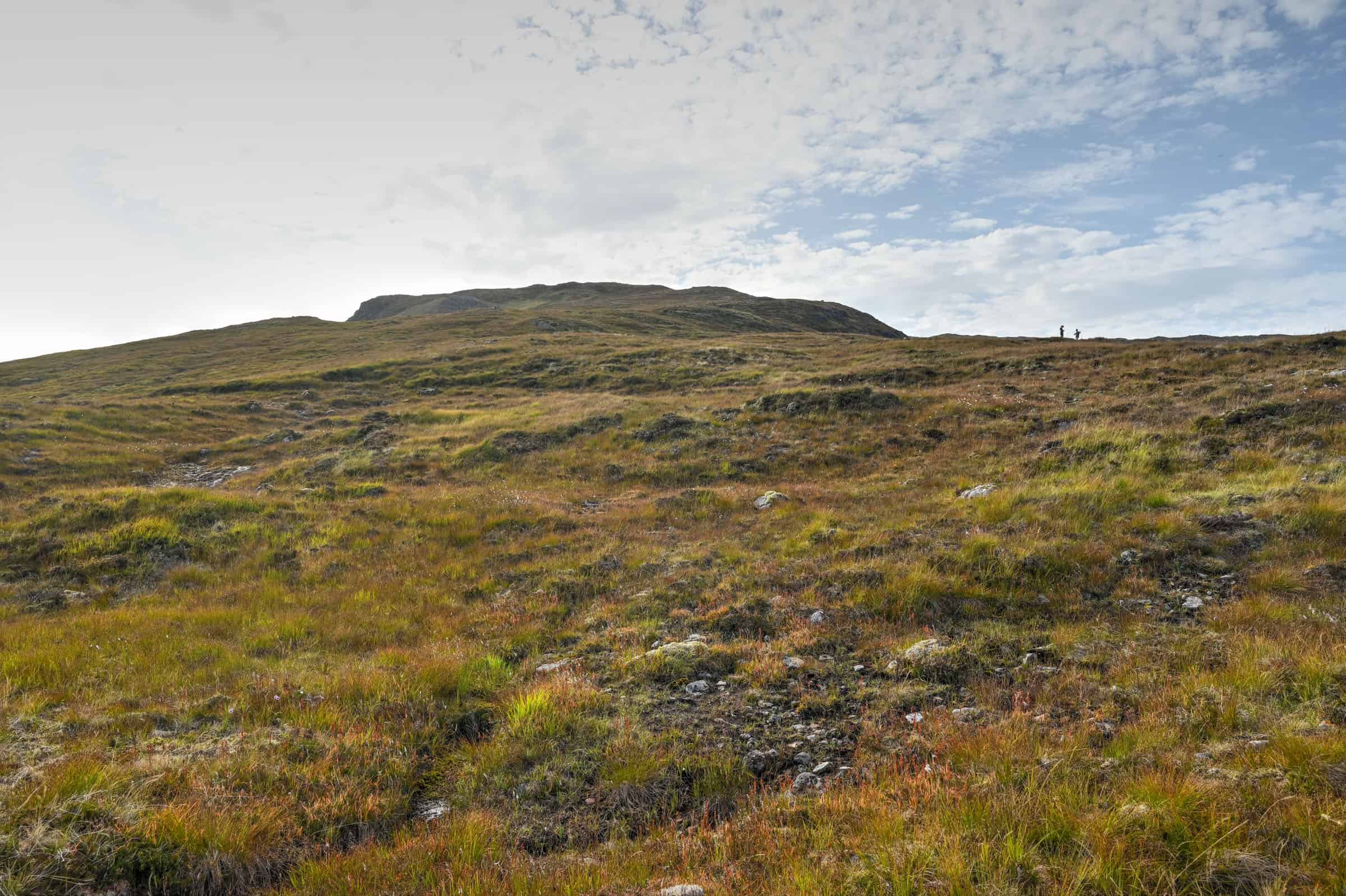
When we did this epic Highland walk, most people skipped this third section and continued onward towards Kinlochleven along the West Highland Way, which meant that we had the Stob Mhic Mhartuin summit to ourselves, with these beautiful and stunning views of the Glencoe Valley.


Is the Devil’s Staircase Trail Worth it?
Why you might like the Devil’s Staircase Trail
-There’s definitely a strong wow factor throughout the entire hike, particularly once you reach the summit.
-Aside from the rapid and intense elevation gain, the trail isn’t overly difficult and doesn’t require any scrambling.
-The trail doesn’t take too long to complete, leaving you time to do a second trail in the area if that’s something you would be interested in.
Why you might not like the Devil’s Staircase Trail
-It’s a real workout. If you don’t like trails that feel like you’re working out on a stairclimber or prefer more leisurely walks, this trail might not be for you. You can expect to climb steeply, almost non-stop, for anywhere between 45 min to 1h15, depending on your pace.
Best Time to Hike the Devil’s Staircase Trail
Best Time of the Year
We highly recommend shoulder season (May, June, September and early October). The weather will still be relatively warm and ideal for hiking. Moreover, the trails won’t be as crowded as during the peak summer months, and you will also be outside the peak midge period.
Best Time of Day
From May to October, the best times to do the trail are either early in the morning or in the late afternoon. These are times when the trail is less likely to be busy and, perhaps more importantly, are times when you are less likely to struggle to find parking. You can expect the Devil’s Staircase trail to be very busy between 9 am and 4 pm, particularly on weekends.
Other Tips for Hiking the Devil’s Staircase Trail
- Check the weather before heading out. Our favourite weather app for the area is the Met Office app.
- As this is Scotland, the trail can get boggy and slippery after rain, so do wear appropriate footwear.
- For more information on the West Highland Way trail, check out their website.
- If coming during the summer months, beware of the pesky little midges (tiny little mosquitoes). You can check the midge forecast beforehand.
- Stick to the designated path to protect the surrounding environment.
Hiking Packing List
All Trails subscription – This comes in really handy for areas with little or no cell reception, as the annual subscription allows you to download trail maps for offline use.
External Battery – If you are using your phone to track your progress along the trail or to help with navigation, you certainly don’t want your phone to die on you. That’s especially true in the unlikely event that you might get hurt or need assistance.
Hiking poles – These can be particularly useful in steep trails or muddy/boggy trail conditions.
Water Filter Bottle – The Life Straw bottle is an advanced water bottle with a filter that not only improves water taste but more importantly filters out bacteria and parasites, chemicals and microplastics.
Headlamp – very practical and a smart choice if you plan to start your hike before sunrise or finish it after sunset.
Looking for another trail to do in Glen Coe?
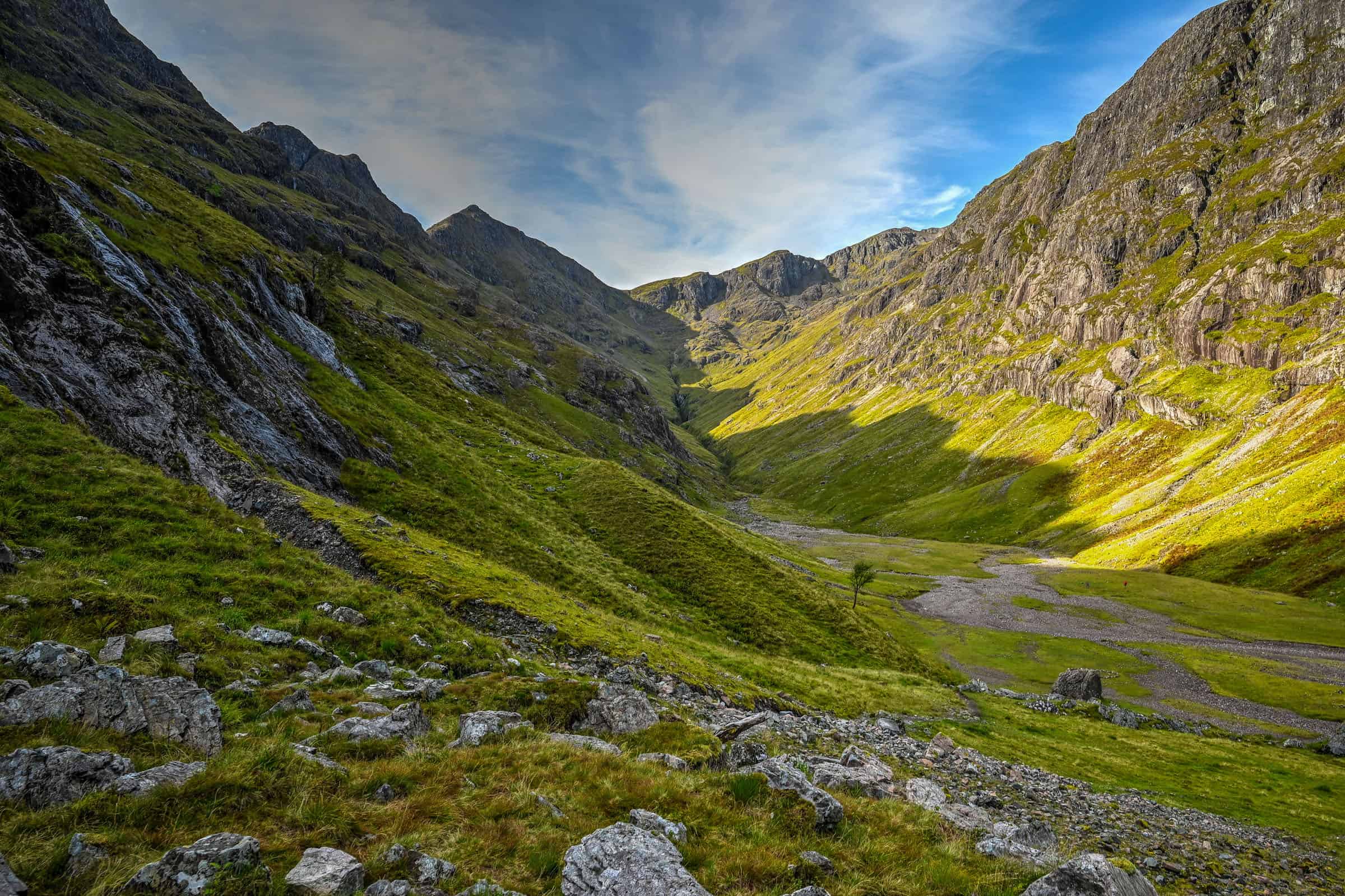
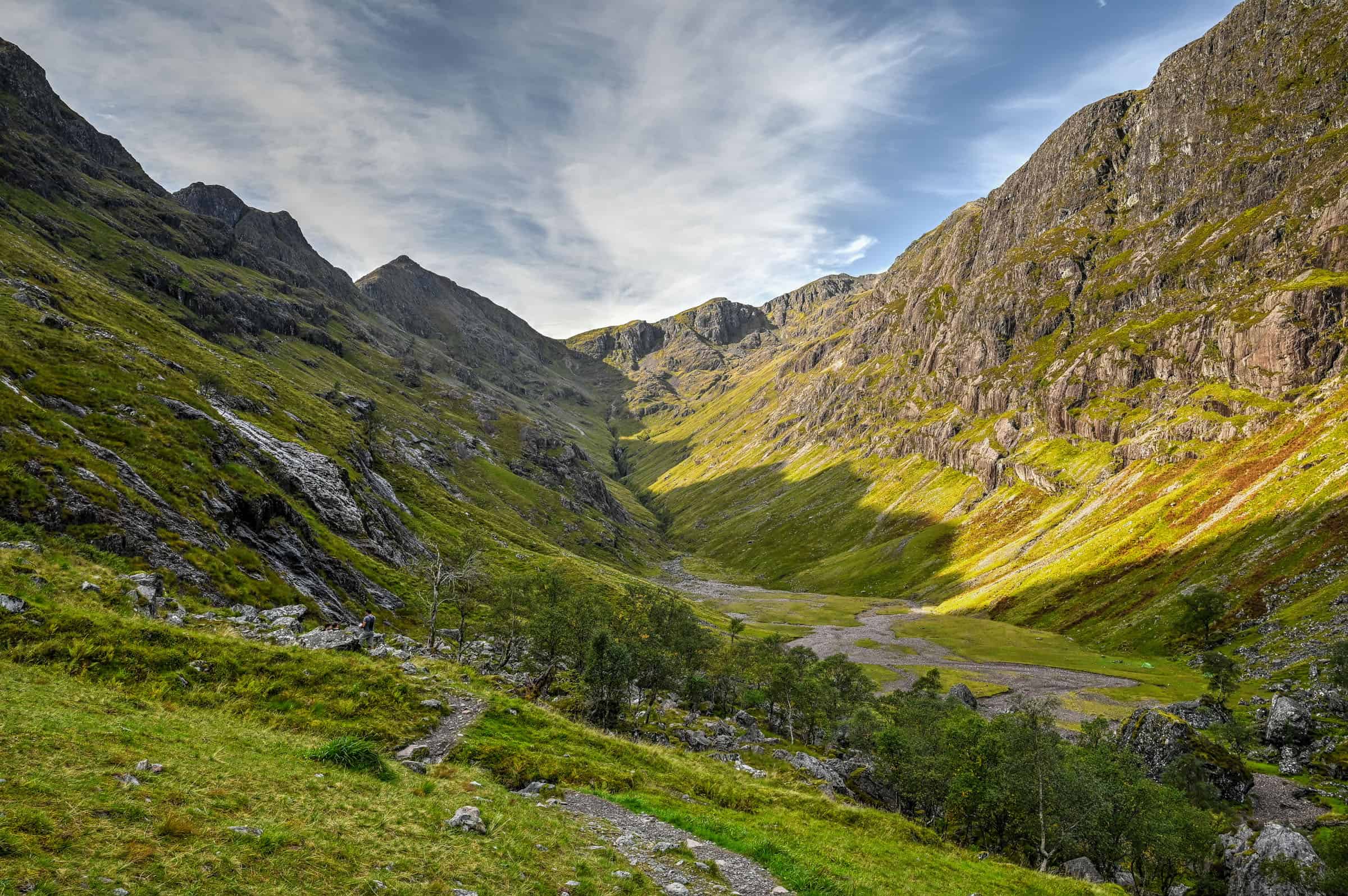
The Devil’s Staircase was one of two favourite trails to do in Glencoe. The other was the Lost Valley Trail (also known as the Hidden Valley Trail). It’s also a great complement to the Devil’s Staircase, as both the scenery and the type of challenge are very different.
Whereas the scenery seen from the Devil’s Staircase is very panoramic, the Lost Valley trail takes you deep into a gorgeous, narrow glacier valley, after having gone through a forest section of the trail that follows a narrow, serene river. In terms of difficulty, the Lost Valley trail isn’t as steep but does present more terrain-based challenges that require some light scrambling at times. If you have the time, we highly recommend you do both of these trails during your time in Glen Coe. For more information, be sure to check out our Lost Valley Hiking Guide.
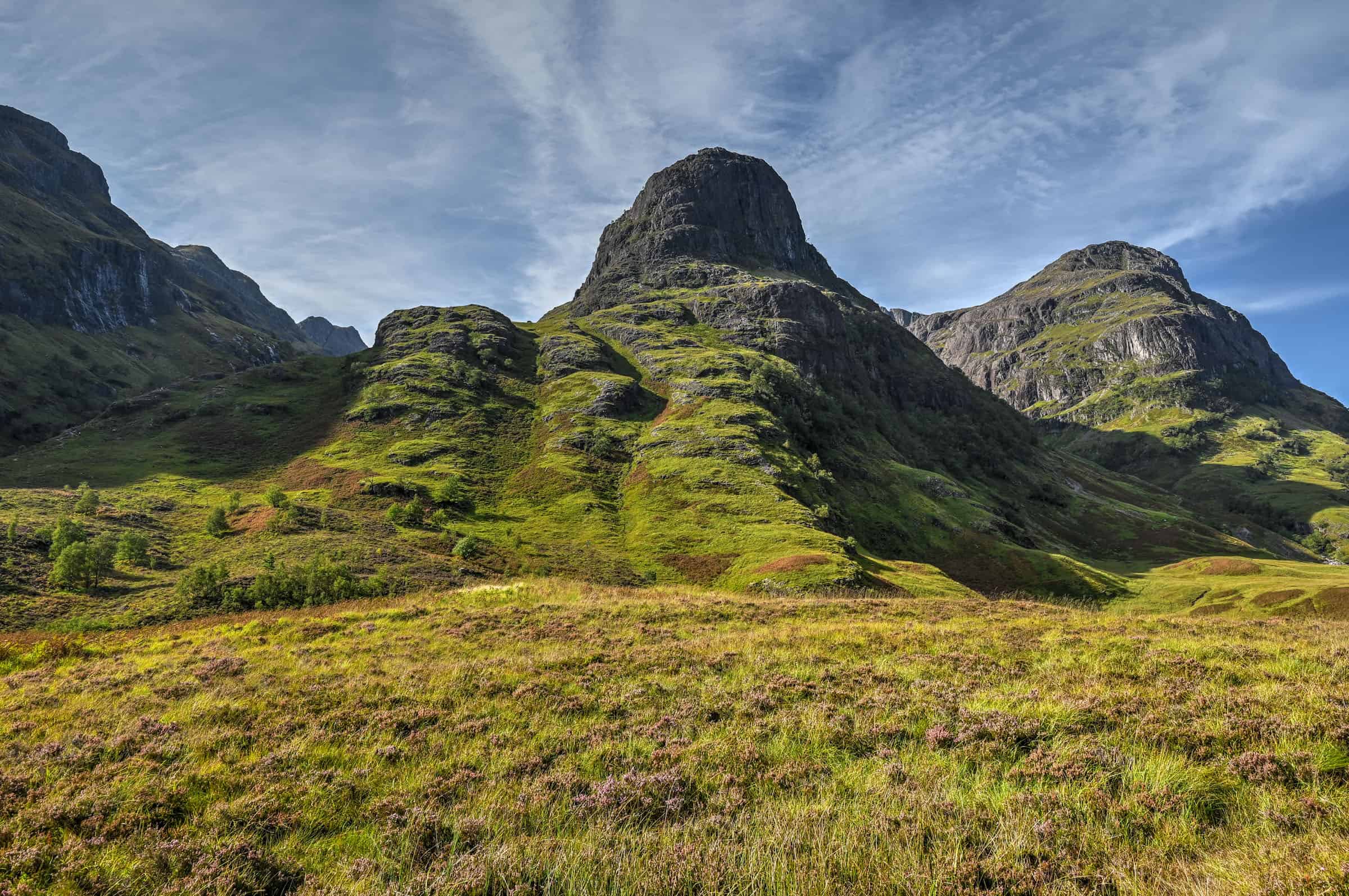
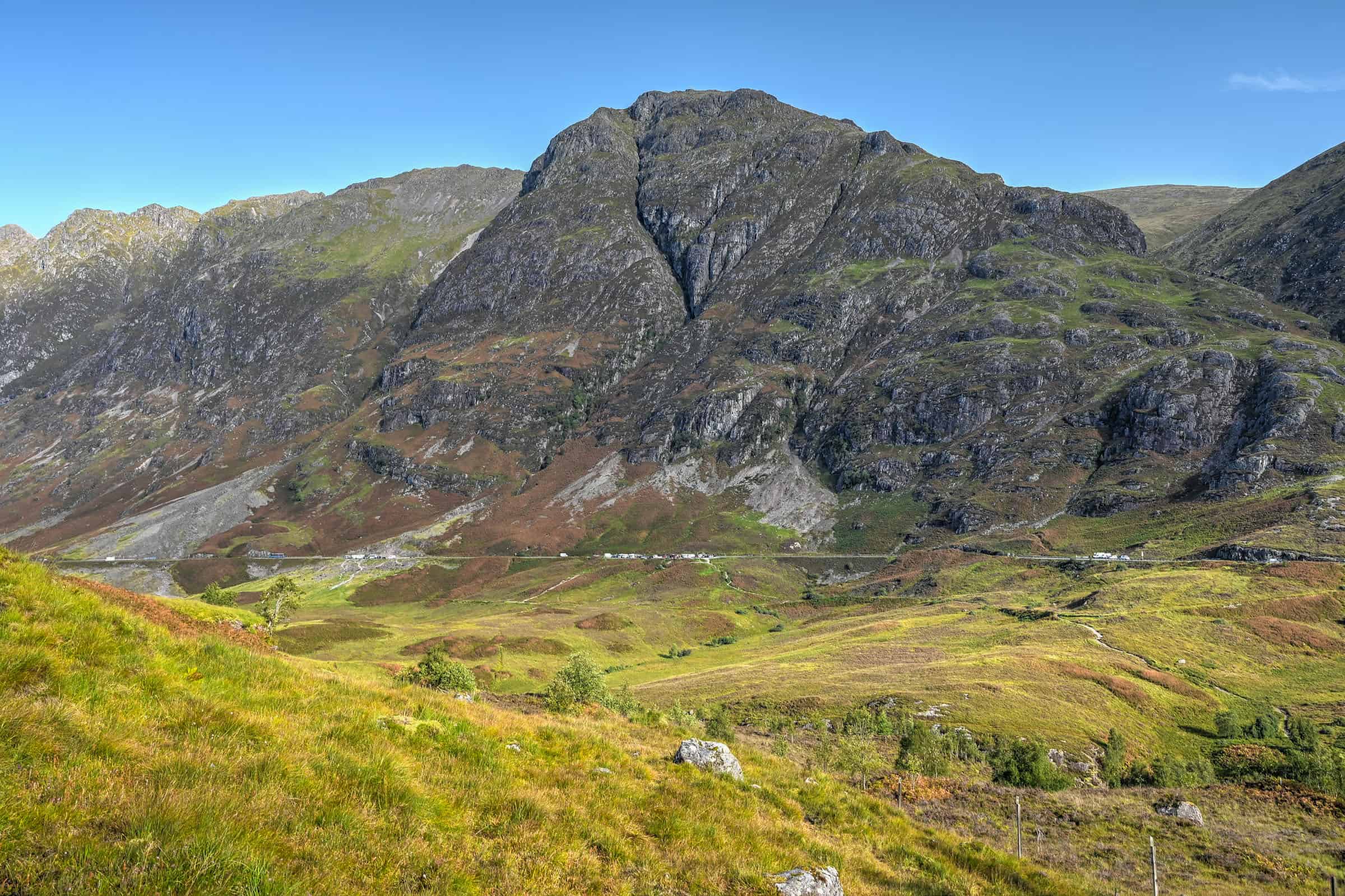
Where to Stay Near Glen Coe and the Lost Valley Trail
Glencoe village and Fort William are the two most popular places to overnight when exploring the Glen Coe hiking trails. These are two of the better mid-range accommodation options in the Glen Coe and Fort William areas.
The Glencoe Inn (Glencoe)


The Garrison (Fort William)

Alternatively, we’ve also enjoyed using Oban as a base to explore Glen Coe and the surrounding area (a very scenic 45-50 minute drive away.
Some of Our Other Favorite Trails in Scotland
The Quiraing (Isle of Skye)
Located in the northern part of Skye’s Trotternish Peninsula, no area best depicts Skye’s otherworldly landscapes as much as the Quiraing. Shaped by a never-ending landslide lasting millennia, the landscape formations of the Quirang are unlike any other you’ve probably ever seen, so odd-shaped and yet so vividly colorful. What makes the Quirang particularly appealing for some is that you don’t even need to walk very far to get some of the best views the trail has to offer, as many are satisfied with what they see barely a few hundred feet beyond the parking lot. But we highly recommend walking the full trail, as this was our favorite one in Skye. For more information on exploring the Quiraing, check out our Quiraing Trail Guide.


The Old Man of Storr (Isle of Skye)
The Old Man of Storr, a towering pinnacle and an iconic landmark of the Isle of Skye, is where you can experience one of Scotland’s most spectacular hiking trails. Although you have probably seen many pictures of the area before, there is definitely something special about seeing it with your own two eyes. The trail is located, like the Quiraing trail, in the Trotternish Peninsula, not far from Portree. The trail leading up to the iconic Old Man of Storr was one of our favorites in Scotland, let alone Skye. Although a moderately challenging uphill trail, the walk up to the main viewpoints isn’t particularly long. The walk and views of the surrounding landscape are particularly beautiful in the early morning around sunrise. For more information on exploring this iconic trail, check out our Old Man of Storr Guide.


Camanusary Bay (Isle of Skye)
Of the many walks and hikes we did on Skye, Camasunary Bay is probably the one that surprised us the most. It starts by meandering through fields filled with grazing sheep and then slowly goes up and down through rolling hills with beautiful views of the nearby Cuillin mountains, until a final ascent takes you to a plateau where a stunning coastal and beach vista awaits. It’s a moderately long trail, but not particularly difficult in terms of elevation gain. The trailhead is located in southern Skye, near the town of Elgol, 60km south of Portree. We were very surprised by how few other people we saw on this trail, given how beautiful the scenery is. For more information on exploring this Skye hidden gem, check out our Camanusary Bay Guide.


The Isle of Kerrera (near Oban)
Although its Hebrides Isle neighbours of Mull, Iona, Jura and Islay are more famous and well-known, Kerrera should definitely not be overlooked when visiting Oban. It’s a land of lush and green rolling hills with a beautiful walking trail from which to admire it, and there’s also a stunning hilltop castle ruin to visit and a delightful tea garden from which you can relax and enjoy the beautiful island scenery. Located less than a mile from the shores of Oban, a walk on the Isle of Kerrera is truly a wonderful way to spend a day in the Oban area. For more information on visiting Kerrara, check out our Isle of Kerrera hiking guide.


Glenfinnan Viaduct Loop (west of Fort William)
Easily one of the most beautiful railway bridges in the world, let alone the UK, the Glenfinnan Viaduct has skyrocketed to the top of many travel bucket lists since appearing in the Harry Potter films and makes for an excellent day trip from Fort William. The setting becomes even more spectacular when the Jacobite steam train (a.k.a. the Harry Potter train or the Hogwarts Express) passes over the viaduct. There’s more to see and do in Glenfinnan besides the viaduct, including a lovely church and a great short hiking trail offering stunning views of Loch Shiel. For more information on visiting the Glenfinnan Viaduct, check out our Glenfinnan Viaduct Travel Guide.


Preparing a trip to the Highlands?
You might be interested in these pages:
Top Things to See and Do in Glen Coe
Best Hikes and Walks in Glen Coe
Glenfinnan Viaduct and Jacobite Steam Train Travel Guide
Top Things to See and Do on Skye
Skye’s Best Hiking and Walking Trails
Preparing a trip to Scotland?
You might be interested in these Scotland pages:
10-Day Scotland Roadtrip Itinerary (Edinburgh and Highlands)
Scotland Driving Guide and Tips
7 of the Best Castles to Visit in Scotland
Best Things to See in the Scottish Highlands
Best Hikes to do in the Scottish Highlands
We also highly recommend these guidebooks:
Rick Steves Scotland
Lonely Planet Scotland’s Highlands
Photography Gear
If you like our photography, you might be interested in some of the gear we use to shoot our travel and hiking destinations.
Camera Body – Nikon Z 6ii Fx-series Mirrorless Body
Main Lens – NIKON 24-120mm F/4G ED VR AF-S
Zoom Lens – Sigma 745-306 150-600mm f/5-6.3
Polarizing filters – Urth Circular Polarizing (CPL)
Camera Tripod – K&F Concept 64-inch Camera Tripod
Mini-tripod – Lammcou Flexible Camera Tripod
Camera/hiking backpack – Vanguard Alta Rise 48 Backpack
Universal Travel Adapter – VYLEE Universal International Power Travel Plug
Other Travel Essentials
Travel Insurance
SafetyWing is a travel insurance company that offers comprehensive coverage for travellers. Includes Medical Insurance and Travel Insurance. Primarily geared towards long-term travellers, digital nomads, and expats.
e-Sim cards
Airalo is the world’s first and largest eSIM store with eSIM plans for 200+ countries and regions worldwide. With Airalo eSIMs, travellers can get connected the moment they land at their destination and avoid nasty data roaming charges
eSIMS are a sustainable alternative to single-use SIM cards – they are 100% digital, require less energy to produce and be re-used rather than disposed of.
Car Rentals
Discover Cars is our go-to website for car rentals. We almost always find our preferred rate there.
Transfer from Airport
Welcome Pickups is our favourite private transfer service, which you can pre-book at a fixed price. Currently available in 220 cities all over the world (mostly in Europe, but with several major cities in Asia, the Middle East and the US).
Kiwitaxi is another private transfer service – we haven’t tried it yet, but it’s currently available in a few more countries (102 as of 2024).
Hotels and Accommodations (coming soon)
Photography Prints
If you found this blog useful, you can help support our blog by purchasing low-cost digital prints. Printed physical prints are also available for purchase.


—–
—–
Well, that wraps it up! We hope you enjoyed our Devil’s Staircase Hiking Guide and that it will prove useful for planning your trip to the beautiful Scottish Highlands.
—–
You might also be interested in these related pages: