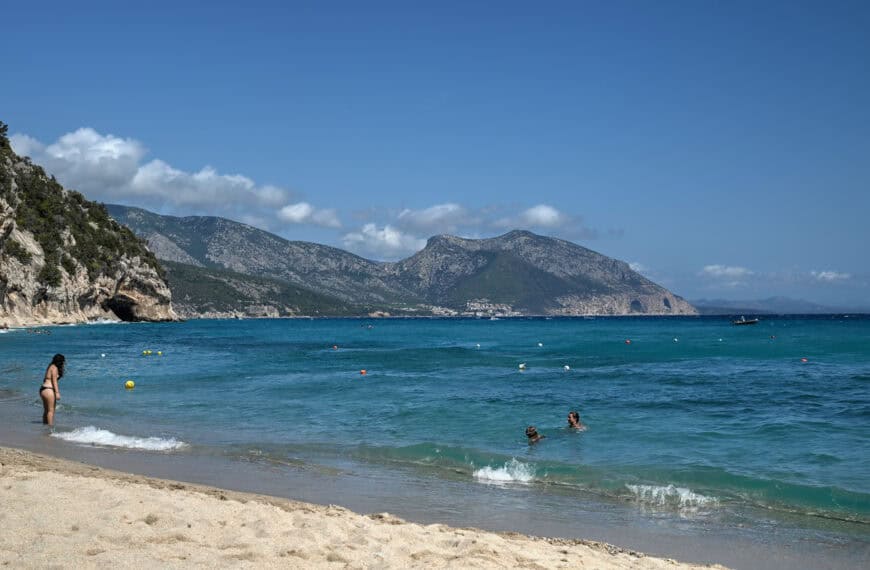
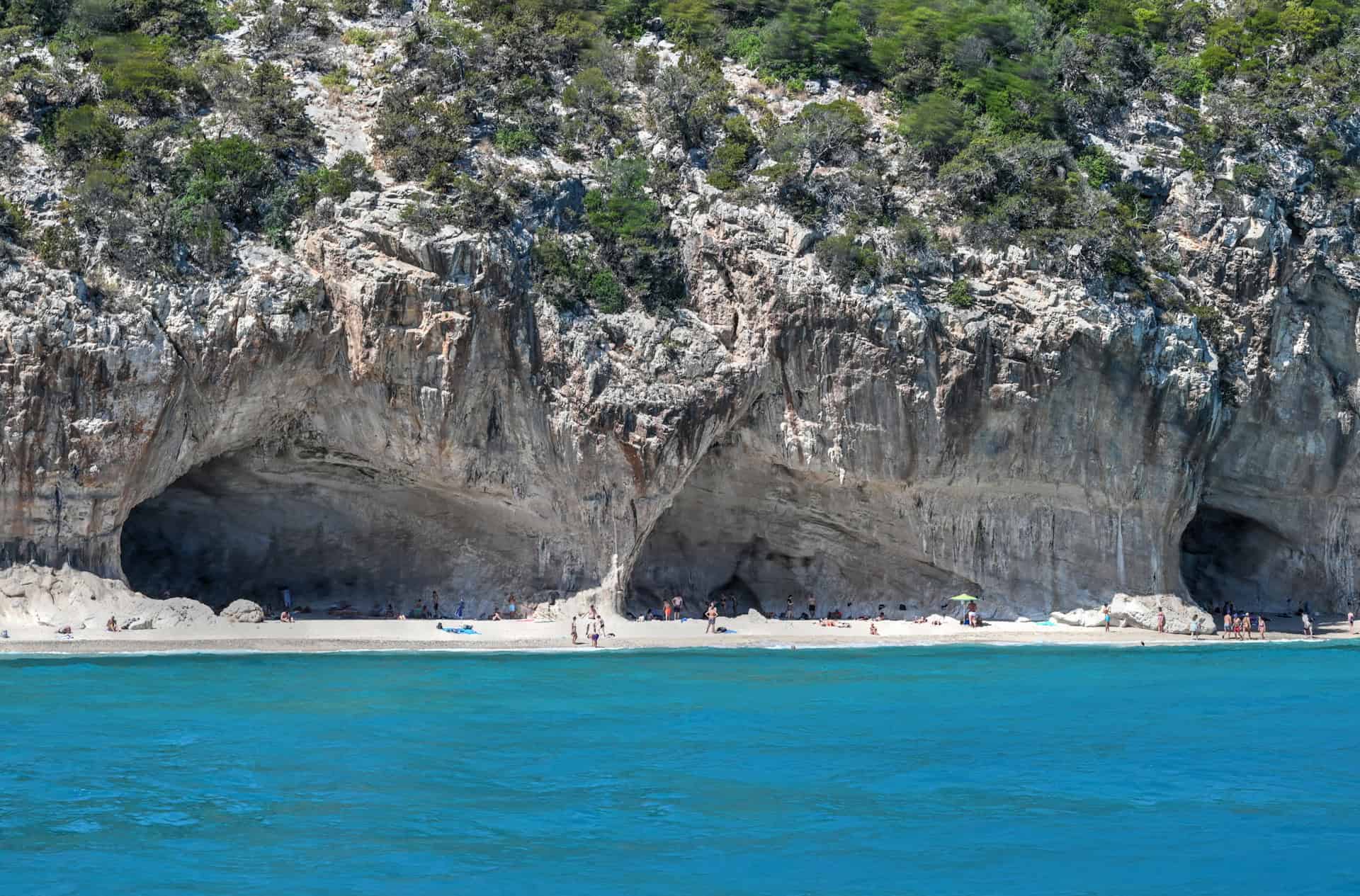
Cala Luna is one of the most iconic beaches along Sardinia’s Gulf of Orosei, near Cala Gonone, known for its turquoise water, dramatic limestone scenery, and large sea caves that line the back of the beach. The impressive caves made it one of the most unique beaches we visited in Sardinia.
Cala Luna can be reached either by boat or via a hiking trail through the rugged coastal landscapes of eastern Sardinia. Although the hiking trail isn’t the most scenic, if you don’t mind a moderately challenging trail, we recommend combining both experiences by hiking to Cala Luna and returning by boat. This allows you to enjoy the coastal scenery and hiking experience without having to complete the return hike during the hottest part of the day.
To help you plan your visit, we put together this guide, which covers the best ways to reach Cala Luna, what the hike is like, how boat access works, and what to expect when visiting one of Sardinia’s most spectacular beaches.
Cala Luna – At a Glance
Location
Gulf of Orosei, just south of Cala Gonone
Beach access options
1) Boat from Cala Gonone or other nearby coastal towns
2) Hike from Cala Fuili (near Cala Gonone)
–> A popular option is to hike to the beach and return by boat
Hiking trail
– Trailhead: By Cala Fuilli, a 10-minute drive south of Cala Gonone
– Time: 1h30-2h (one way)
– Distance: 5.5 km (one way)
– Elevation: 200 m (one way, cumulative elevation gain, lots of ups and downs)
– Difficulty: Moderately challenging (mostly due to the rocky terrain), this is not an easy coastal walk
– No booking required (unlike for Cala Goloritzé)
Boat access
– Regular boat shuttles and tours run from Cala Gonone in season (30-minute trip)
– Boats can dock directly at Cala Luna
– Sea conditions can affect boat service
Best time to visit
– Morning if arriving by boat, before the beach gets busier)
– Morning also if hiking for cooler temperatures
Good to know
– The beach is backed by large sea caves that provide some natural shade
– The caves themselves are one of Cala Luna’s most striking and unique features
– Bring water, sun protection, and sturdy shoes if hiking
– No facilities & no toilets: bring water, food, and sun protection
– The beach is a mix of sand, pebbles, and rocky sections


Disclosure: This page (Cala Luna Guide) may contain product affiliate links. At no additional cost to you, we may receive a commission for purchases made through these links. More details can be found on our disclosure and policies page.
Cala Luna: Location, Map, and How to Get There
Cala Luna is located along Sardinia’s eastern coast, within the Gulf of Orosei, one of the island’s most dramatic stretches of coastline. The beach sits between Cala Gonone and the Baunei coast, surrounded by limestone cliffs, sea caves, and rugged coastal terrain.
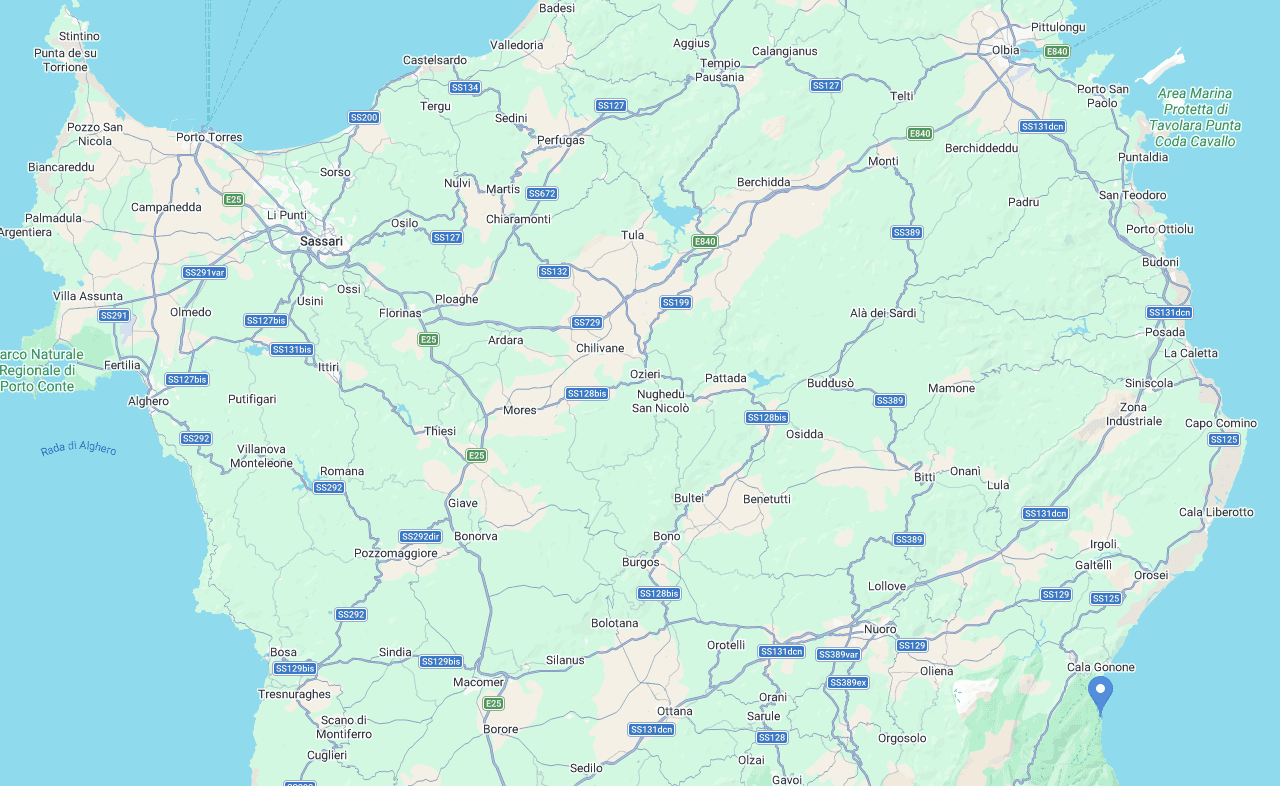
Like many beaches in this part of Sardinia, Cala Luna cannot be reached directly by road. To visit, you’ll need to either arrive by boat (departures mostly from Cala Gonone), hike in from Cala Fuili (a short drive from Cala Gonone), or combine both by hiking one way and returning by boat.
By Boat from Cala Gonone
Boat access is the easiest and most popular way to reach Cala Luna, but it does come with a few limitations. Schedules are seasonal, sea conditions can affect service, and the beach tends to feel busiest around the main boat arrival times.
Regular boat shuttles and organized excursions depart from Cala Gonone during the main visitor season.
Depending on the type of boat trip you choose, Cala Luna may be visited as a standalone beach stop (unlike Cala Goloritzé, boats are allowed to land directly at Cala Luna) or as part of a wider Gulf of Orosei boat tour, often combined with nearby coves, sea caves, or Grotta del Bue Marino.
You can book a boat shuttle to Cala Luna in advance here (35€ /person (2026), including return):
There are generally multiple morning departure times to choose from (depending on the season). The return trip back to Cala Gonone typically departs 4h30 after your morning departure, so if you were on the 9 am boat to Cala Luna, the departure time for your return trip will likely be at 12:30 pm.
The boat trip itself lasts about 30 minutes each way, meaning that you’ll get to spend about 3 hours at the beach.
In terms of boat tours, there are tons of options, depending on how many stops you’ll want to make (the more stops, the less time you’ll spend at each beach)
One of the most popular tours is this full-day tour stopping at 4 different beaches along the Gulf of Orosei:
Alternatively, this tour focuses only on two stops: Cala Luna (free beach time) and the stunning Bue Marino caves (guided tour):
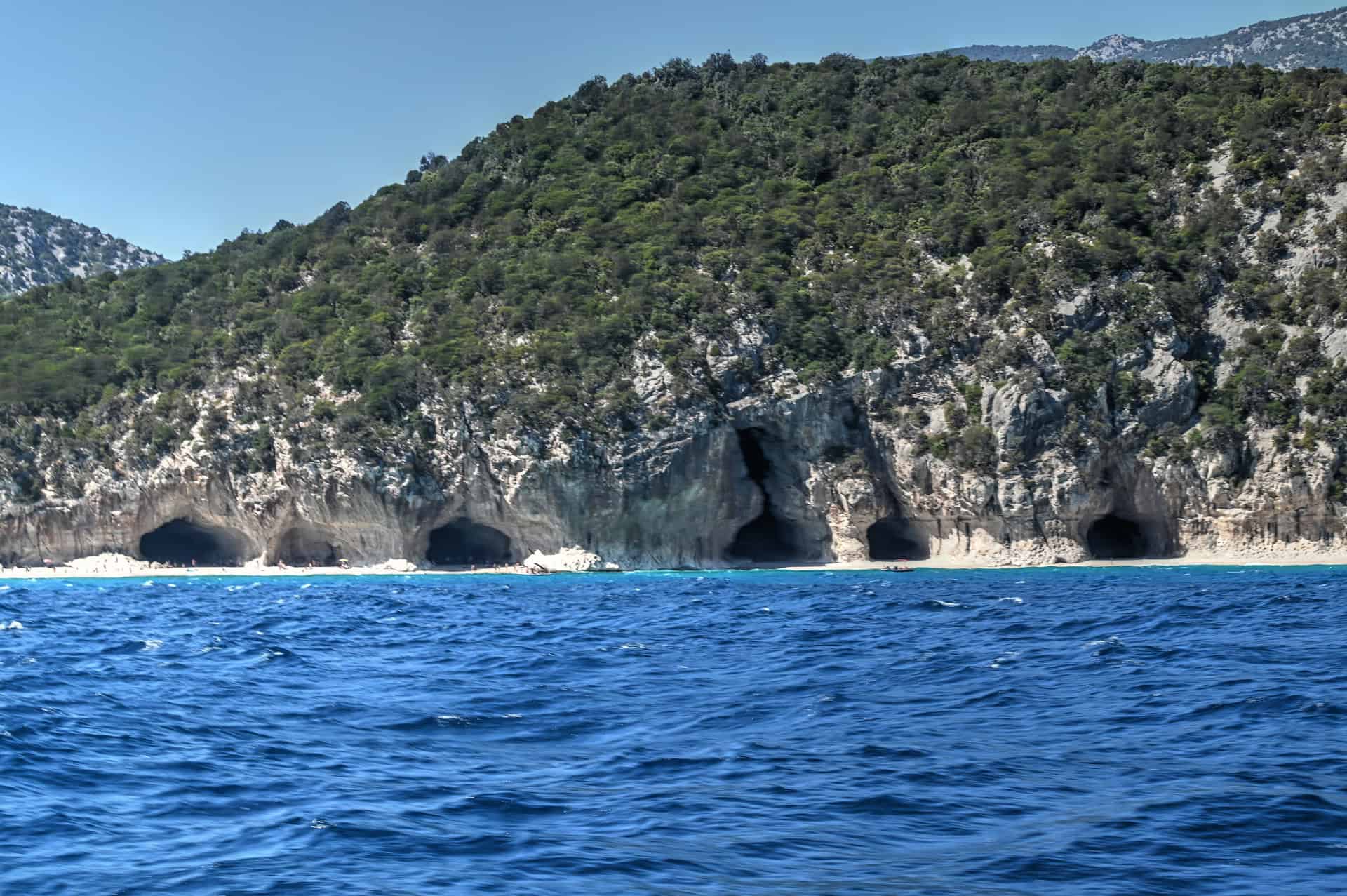
Regardless of the boat option you pick, you’ll get to enjoy some fantastic views of the coastline and the caves that back Cala Luna.




Hiking to Cala Luna: Getting to the Trailhead at Cala Fuili
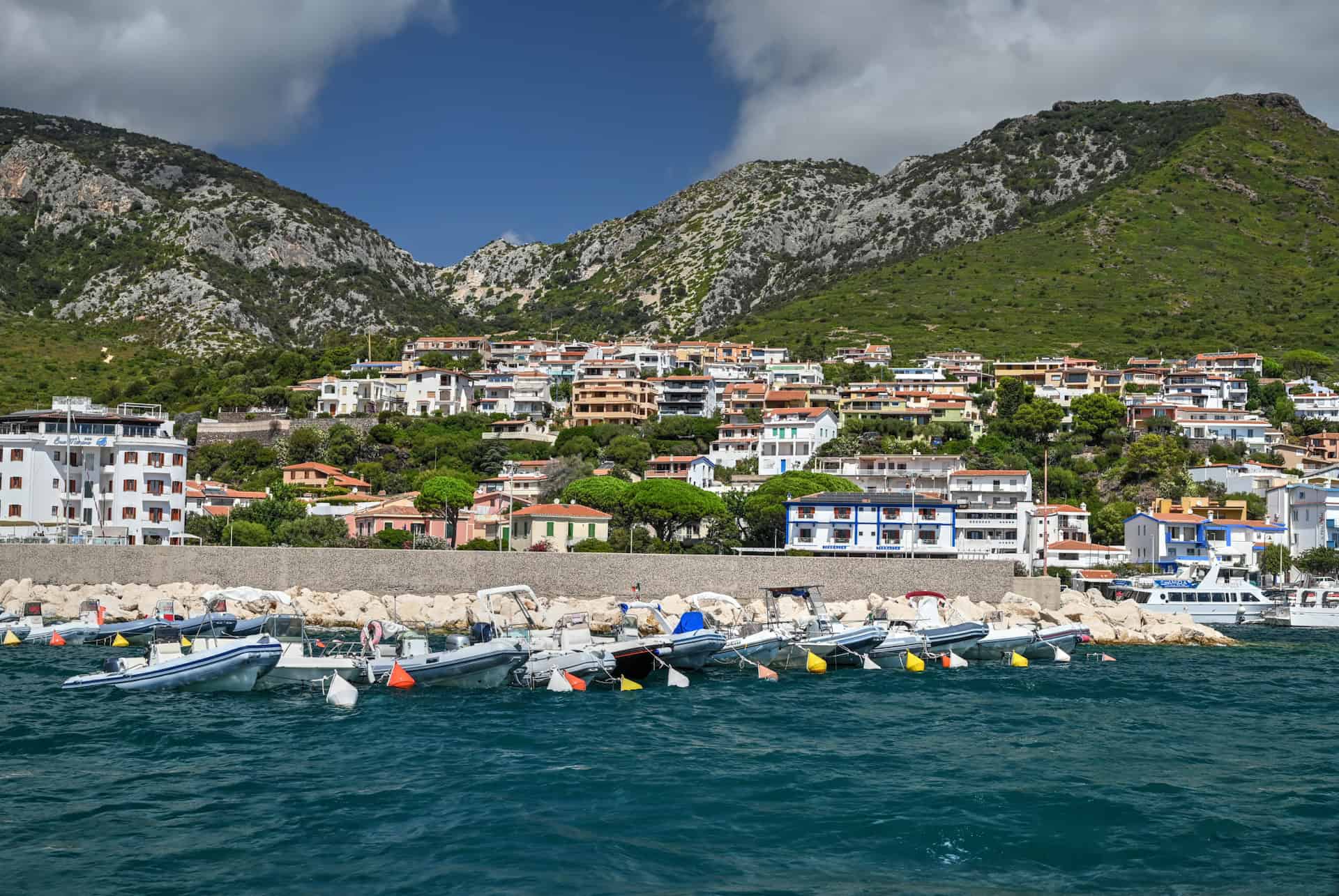
The main hiking route to Cala Luna starts at Cala Fuili, a small cove located just south of Cala Gonone.
Most visitors reach Cala Fuili by car from Cala Gonone. The drive is short and straightforward, following the coastal road south until it ends near the beach and trailhead.
Typical driving times:
From Cala Gonone: 10 minutes
From Dorgali: 25–30 minutes
From Orosei: 40–50 minutes
From Olbia: 1h15-1h30
If you need to book a rental vehicle for your travels, we highly recommend using Discover Cars to get the best rates on your rental in Sardinia.
We also highly recommend Airalo (eSIM card) for your connectivity needs when travelling abroad. Airalo is the world’s first and largest eSIM store with eSIM plans for 200+ countries and regions worldwide.
Parking is available along the road near Cala Fuili (link to Google Maps), but spaces can fill quickly in summer. Because it’s exclusively roadside parking, the later you arrive, the further back you’ll be from Cala Fuili and the trailhead to Cala Luna. We highly recommend arriving no later than 9 am (ideally even earlier than that if visiting during the peak summer season).
It’s also very important to park entirely inside the white lines to avoid high fines. We saw several cars with tickets when we returned from Cala Luna.


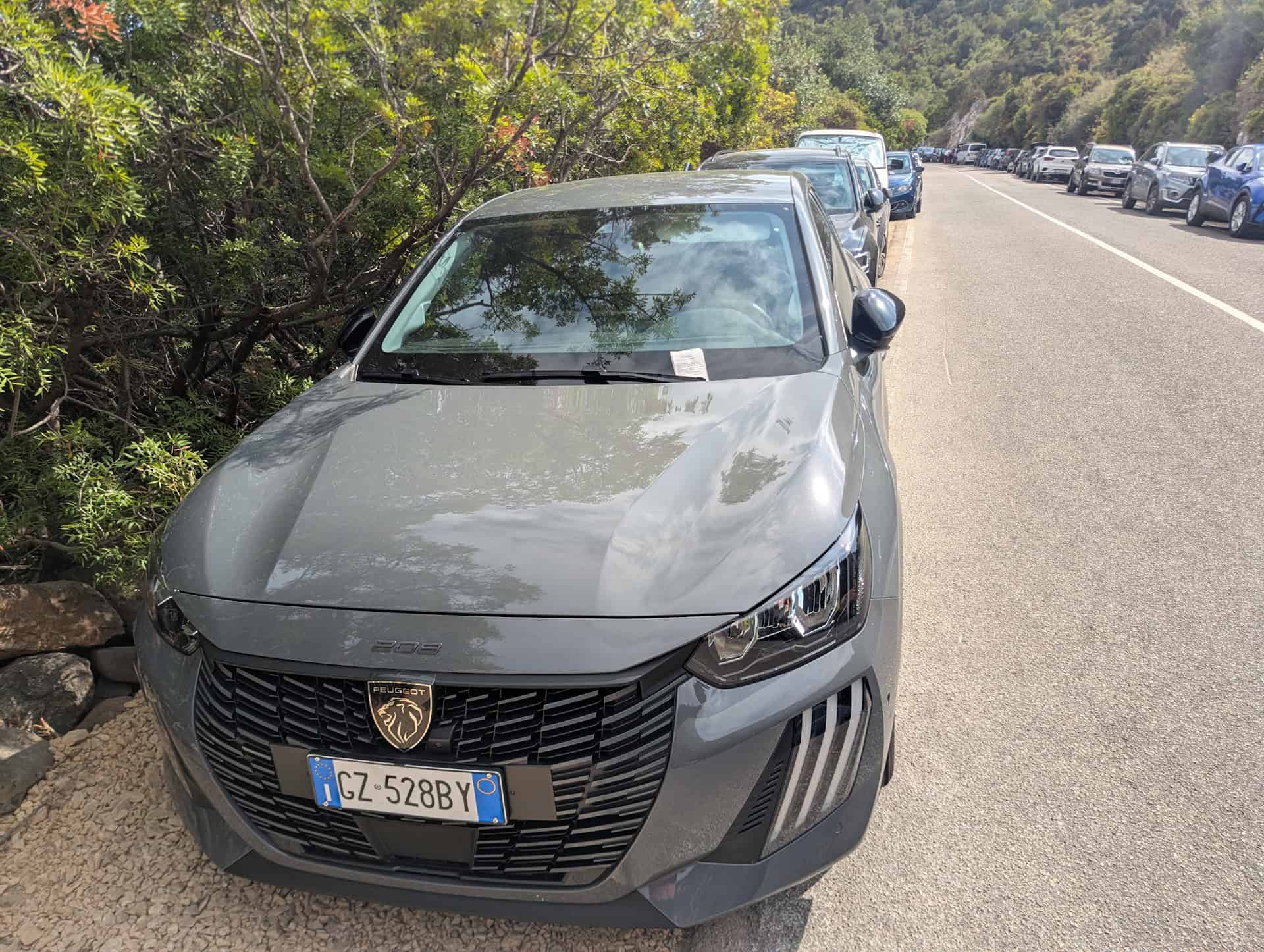
From the road, the trail begins near the access point down to Cala Fuili and continues south through rocky coastal terrain toward Cala Luna (see further below for more details on the hiking trail and what to expect).
Boat vs Hike: Which Option Is Better?
The best way to visit Cala Luna depends on how much effort you want to put into the day.
Arriving by boat is the easiest and most relaxed option. It’s best if your priority is swimming, beach time, and seeing the Gulf of Orosei coastline. Since boats can land directly at Cala Luna, this is also the most practical choice for anyone who doesn’t want to deal with rocky trail conditions.
Hiking to Cala Luna can be rewarding if you want the full outdoor experience. However, the trail is moderately challenging, particularly due to the rocky and uneven nature of the trail surface (see further below for more details and pictures), and the return hike can feel long after several hours at the beach.
For some, the best compromise is to 1) hike to Cala Luna and 2) return by boat to Cala Gonone. This gives you the scenic approach on foot without having to repeat the full trail in the afternoon heat. This is specifically the approach we chose to take when visiting Cala Luna.
If you choose this option, go straight to the beachside kiosk that sells boat tickets (typically 15€/pers) when you arrive at Cala Luna to guarantee a spot for your preferred departure time (a shuttle boat typically departs every hour, starting at 12:30 pm).
There’s generally a shuttle service (for a few euros) connecting the Cala Gonone marina (where the boats from Cala Luna arrive) and Cala Fuili to bring you back to your car. Alternatively, it’s about a 4 km mostly flat walk between the two.
Cala Luna: What Makes It So Special & Is It Worth It?
Cala Luna is one of the most famous beaches on Sardinia’s Gulf of Orosei, and what makes it stand out is the combination of scenery and accessibility.
The beach is backed by a series of large limestone caves, which give the cove a very distinctive look and provide some natural shade throughout the day. In front of the caves, the shoreline opens onto clear turquoise water, with limestone cliffs rising around the bay and rugged coastal terrain stretching in both directions.
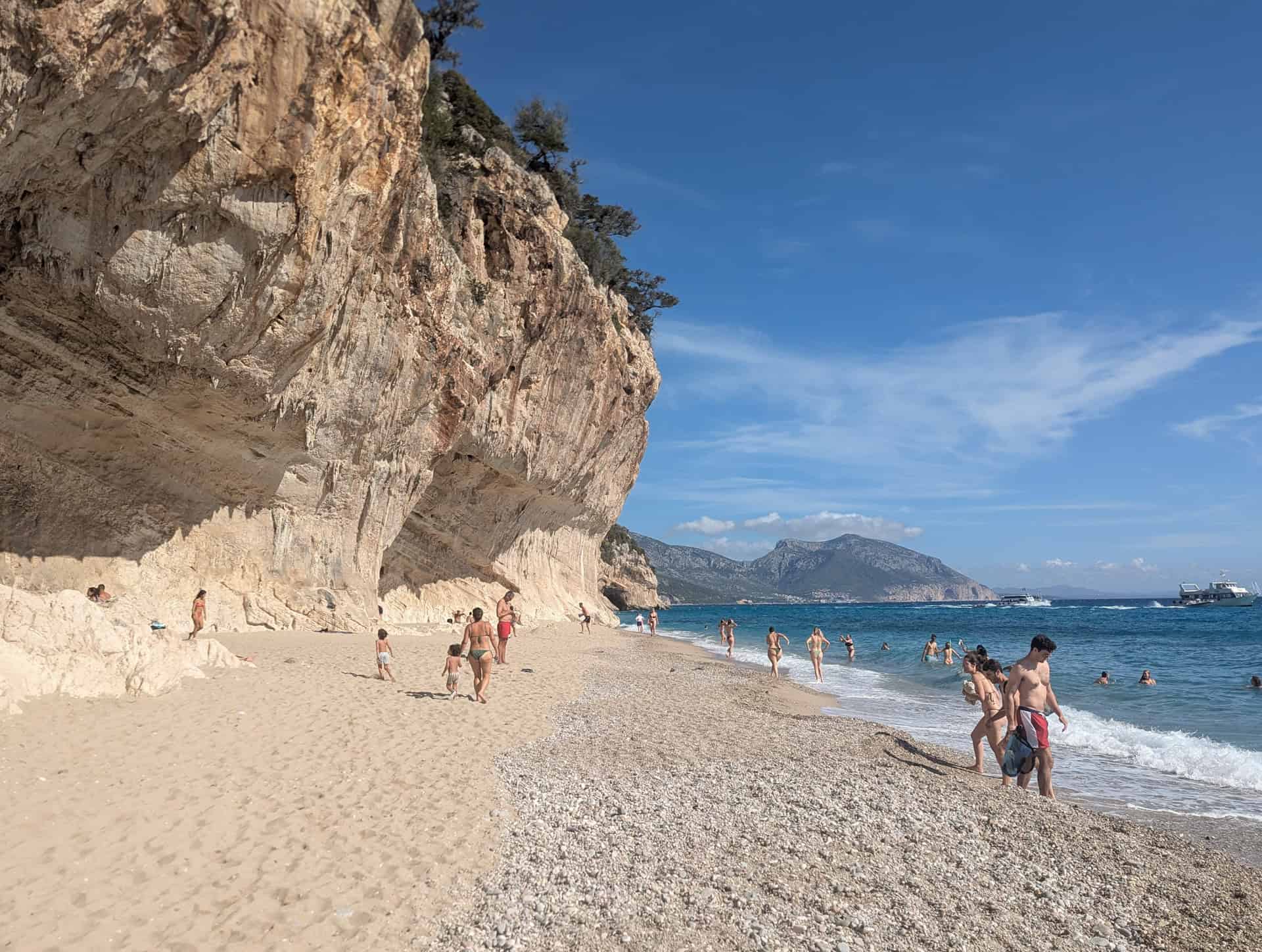
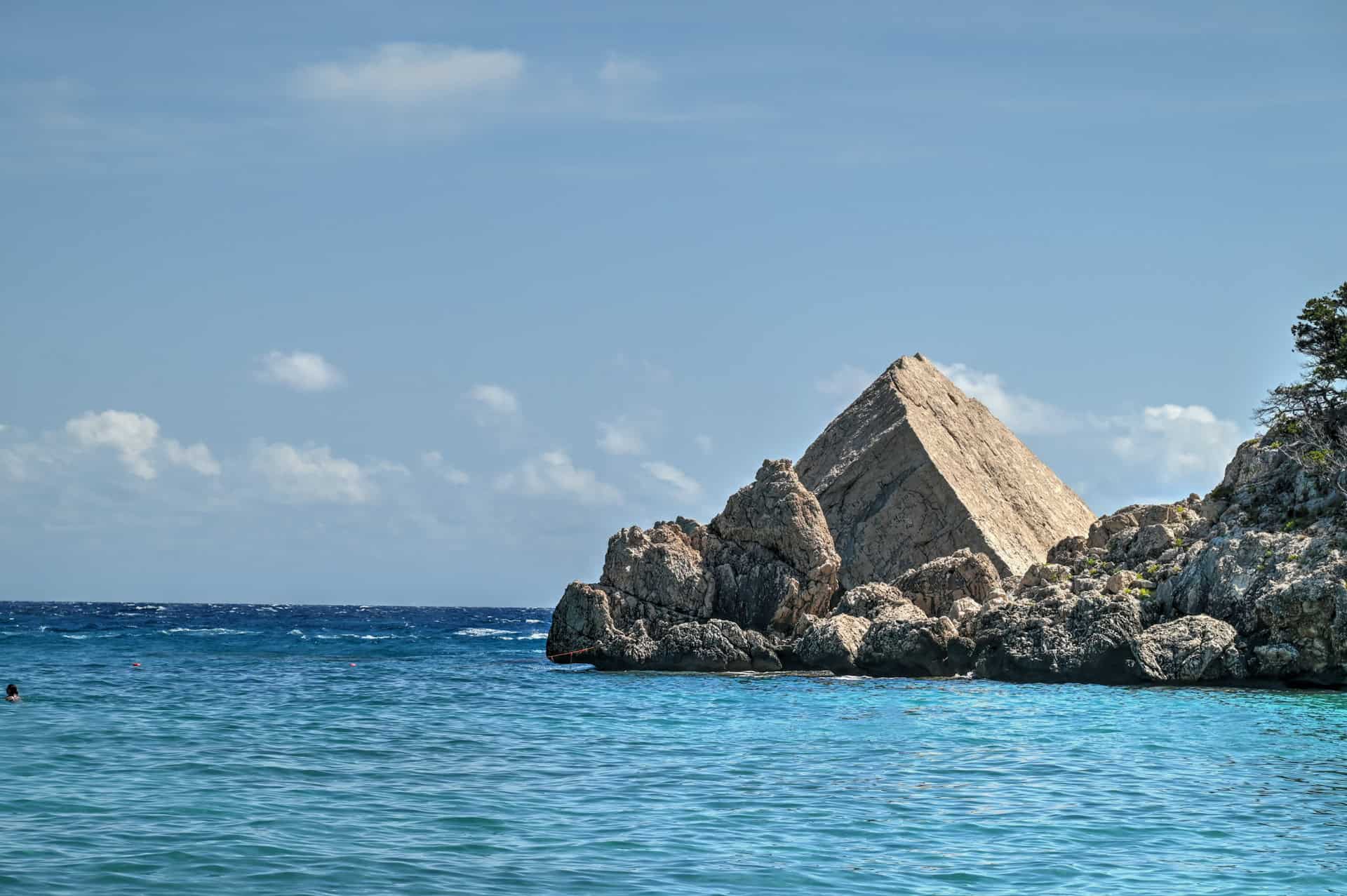
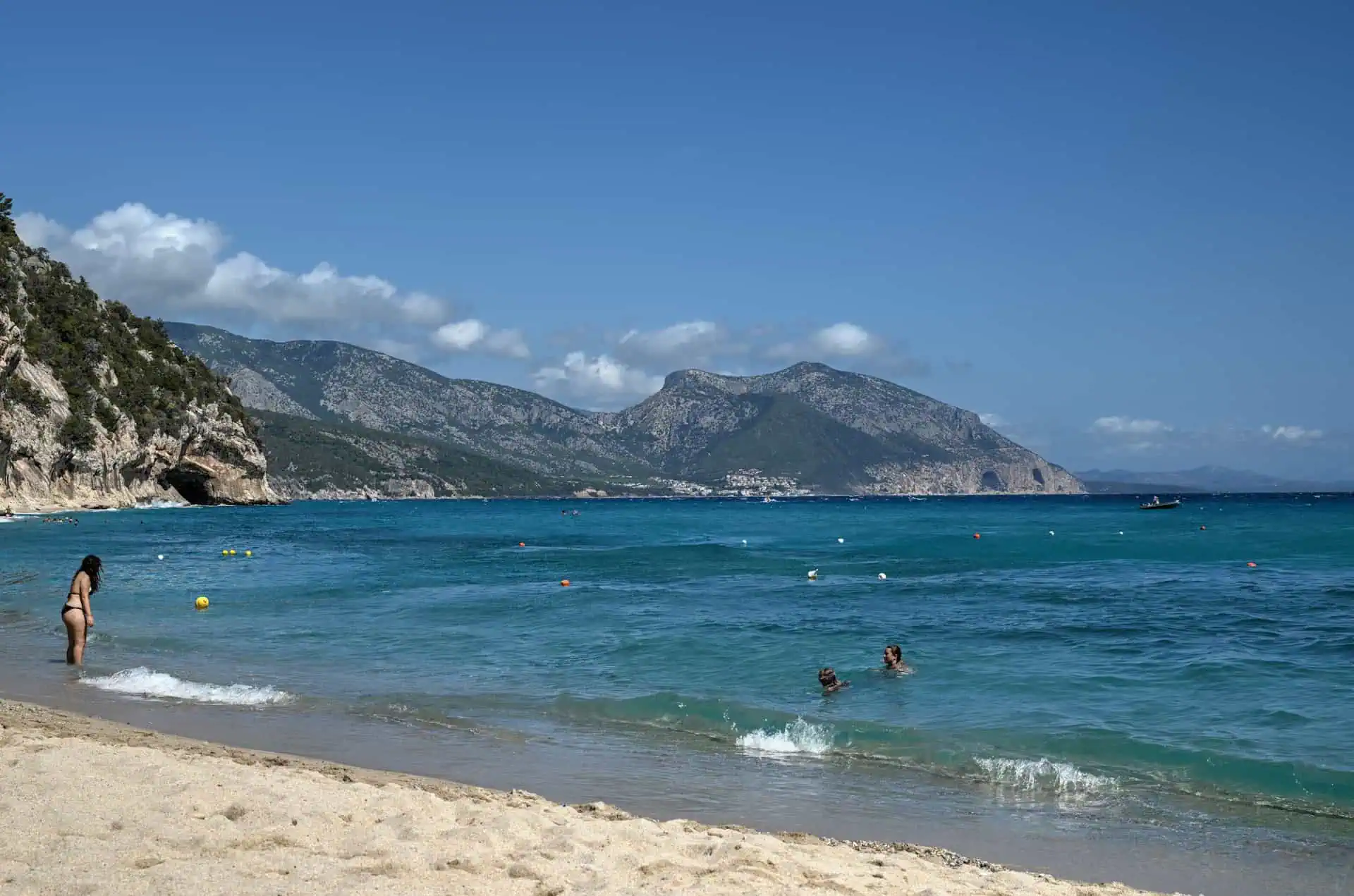
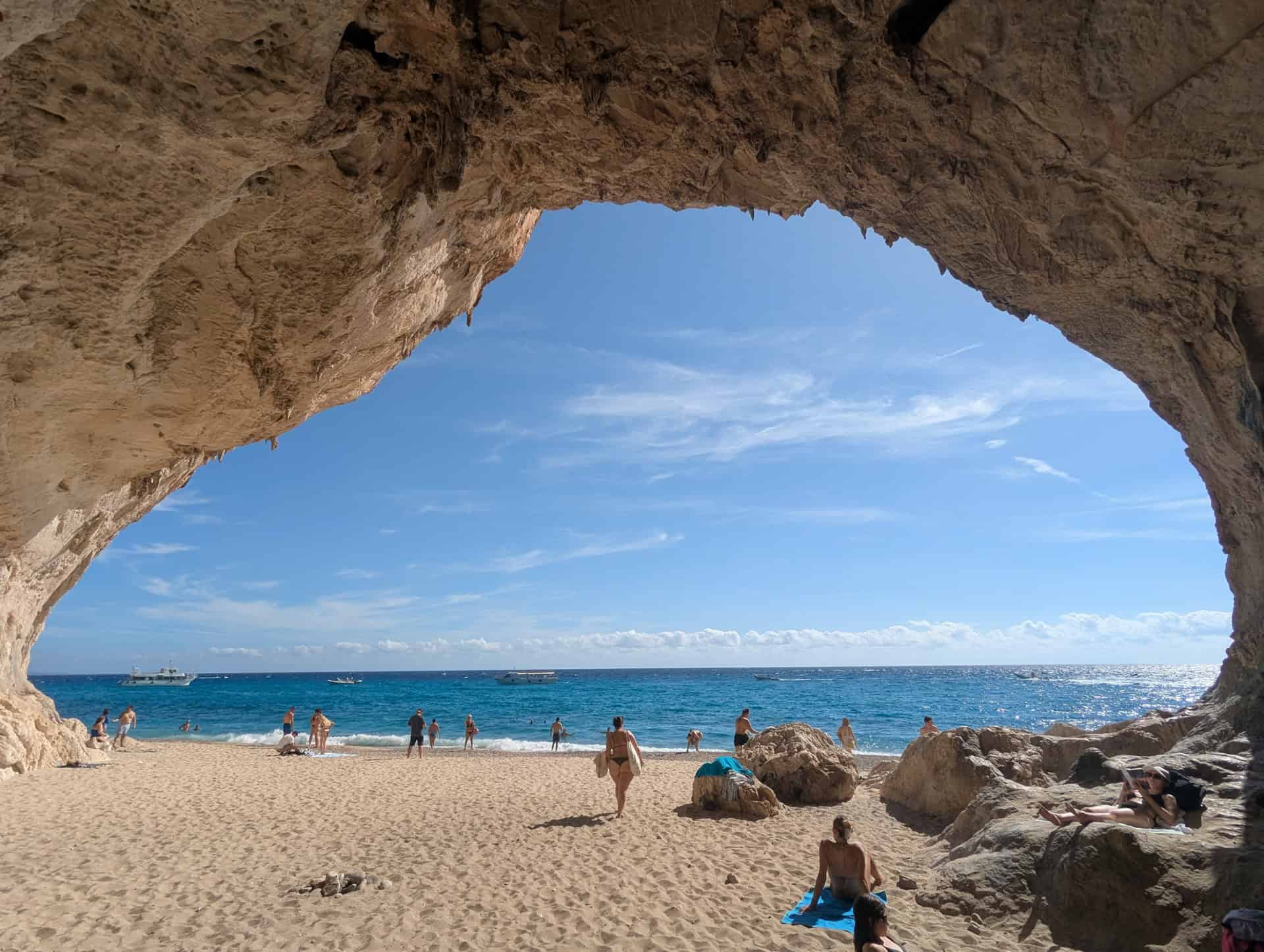


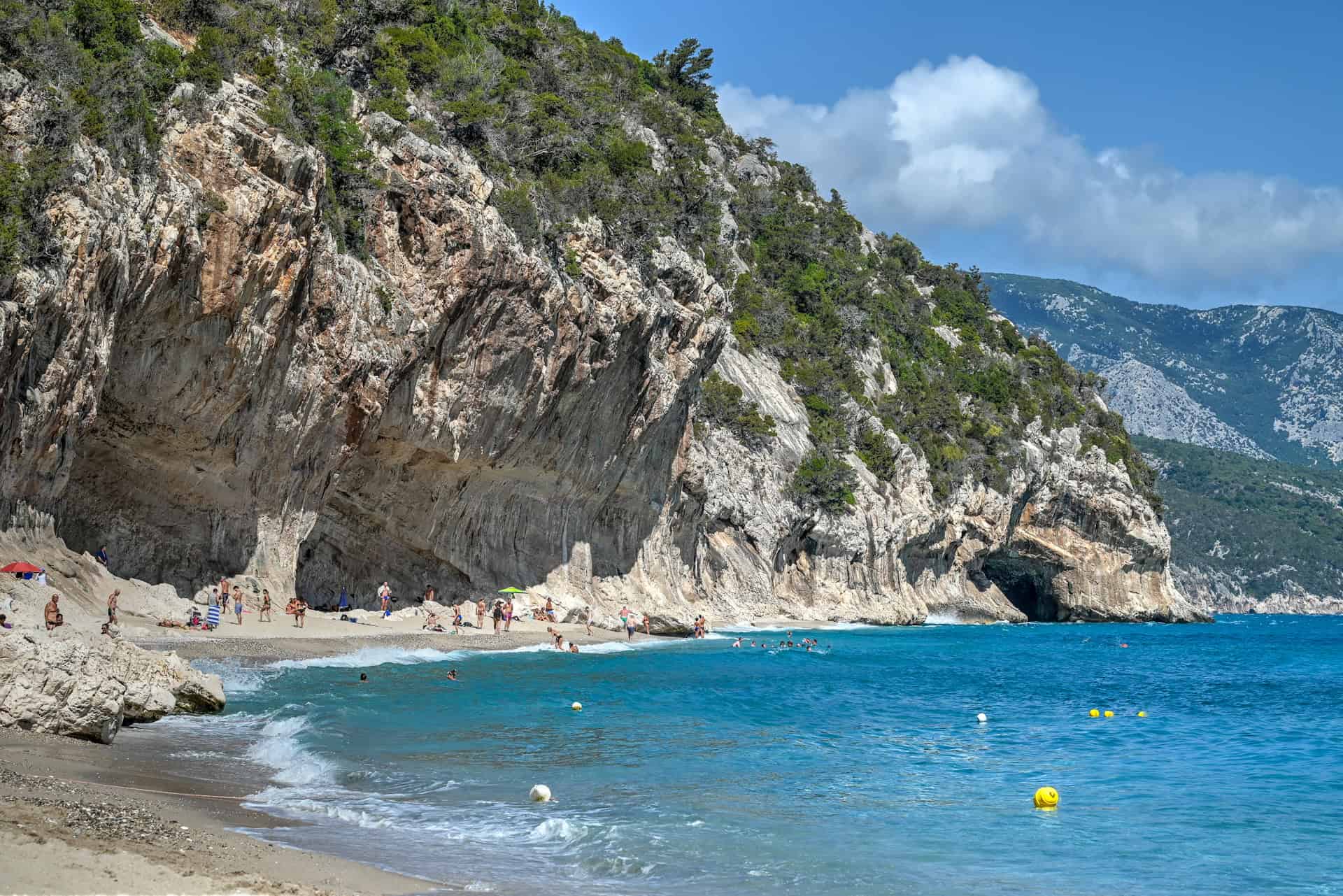
That said, the easy access also means Cala Luna is not exactly remote or quiet in peak season. Boat traffic, day tours, and summer crowds are part of the experience, especially around midday.
Is Cala Luna worth it?
Yes, especially if you want a Gulf of Orosei beach that combines dramatic scenery with more practical access.
For hikers, Cala Luna is one of the best beach-hike combinations in eastern Sardinia, particularly if you hike in and return by boat. For non-hikers, it’s still a very worthwhile boat trip from Cala Gonone, with impressive coastal scenery along the way.
Cala Luna Hiking Trail
Access Hours
The Cala Luna hiking trail (from Cala Fuili) is generally accessible 24/7 as it is a natural, public coastal path rather than a gated facility. However, hiking in the dark is strongly discouraged due to the difficult and challenging rocky terrain.
Trail Start Point
The hike begins at the Cala Fuili roadside parking area (link to Google Maps), located inland from the Baunei coast.
Trail Stats & Difficulty
Distance: 5.5 km (one way)
Route Type: Point to Point
Elevation gain: 200m (cumulative elevation gain)
Duration: Most people complete the one-way trail in 1h30-2h
Trail difficulty level assessment:
Very Easy | Easy | Moderate | Moderately Challenging | Challenging
Overall, the Cala Luna Hiking Trail is best described as Moderately Challenging. Although short, the trail has a fair amount of cumulative elevation gain, but the main challenge is the rocky nature of the terrain, which makes for a constant uneven trail surface.
Don’t the distance and elevation gain fool you – this is not a straightforward walk. We’ll show plenty of pictures of the uneven terrain, and it was definitely more challenging than we anticipated.
Note that the distance in the AllTrails map reflects the total out-and-back distance.
Not an AllTrails member yet? We highly recommend signing up for either their free or paid membership plans. The free plan allows you to find new trails and plan routes but it can only be used while hiking if you have access to mobile data. The paid membership plan (AllTrails+) allows you to download trail maps for offline use and provides live progress updates and off-route notifications.
If you are still uncertain – you should know that the All Trails mobile application was voted the 2023 iPhone App of the Year by Apple.
We find that AllTrails is a great tool to have when hiking, particularly for assisting with navigation when the trail is hard to locate and to help monitor your progress along the trail, which helps estimate how much time you’ll need to complete the trail.
Trail Description and What to Expect
The hike to Cala Luna begins directly from the roadside parking area above Cala Fuili.
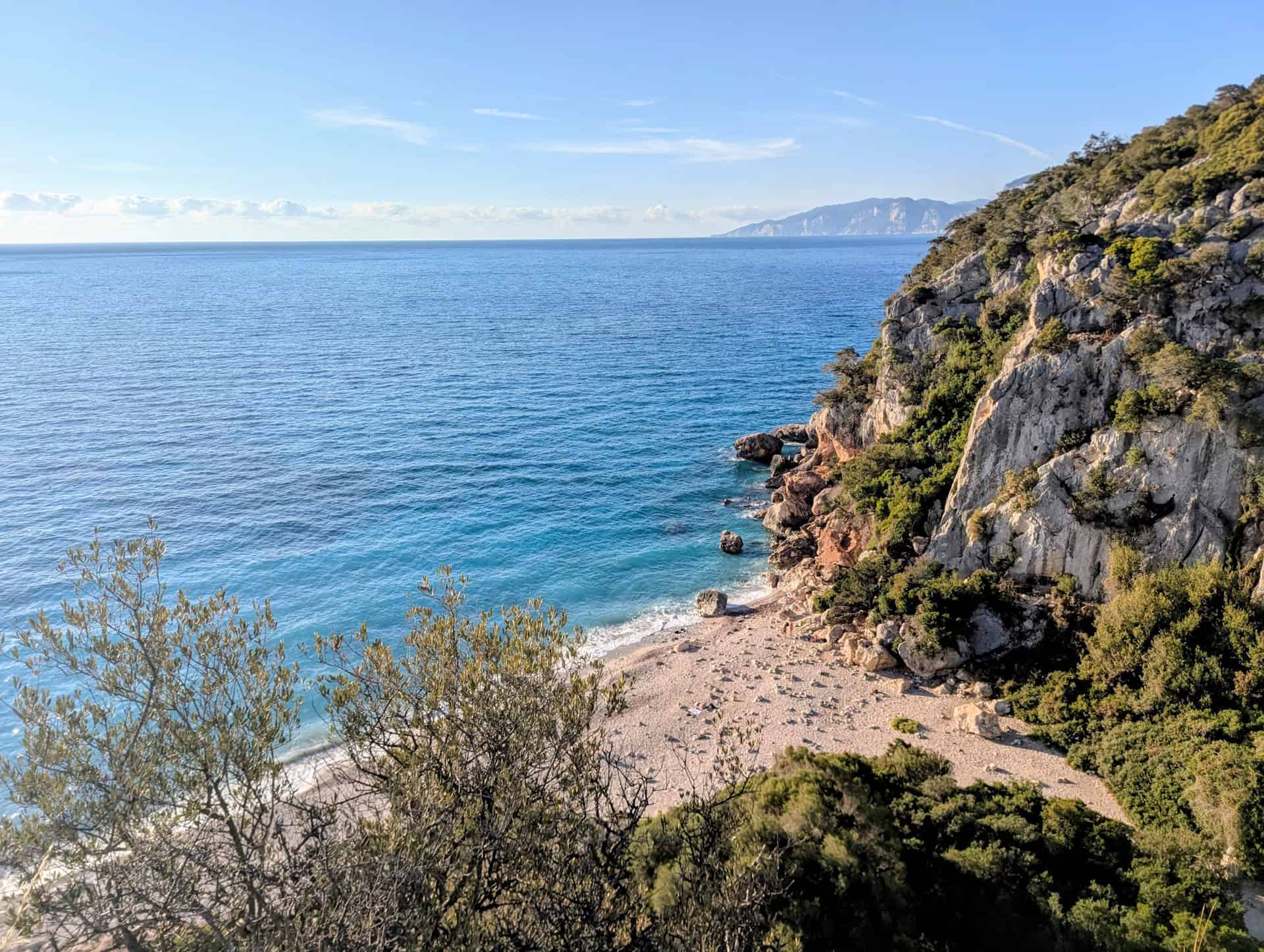


From here, the trail first descends a series of twisting stone steps and staircases toward sea level. Once you reach the bottom, the path splits: one way leads down to Cala Fuili itself, while the main trail continues toward Cala Luna.


From this point, the hike begins with its steepest section. You’ll climb roughly 120 meters of elevation in less than 1 km, following a rocky uphill path away from the coast.


After this initial climb, the trail gradually works its way toward Cala Luna, but it is not a simple downhill walk. Instead, the route alternates constantly between short climbs, descents, and flatter stretches.
Unfortunately, the flatter sections do not always feel like much of a break, as the terrain remains very rocky and uneven for most of the hike. Footing is one of the main challenges on this trail, even when the elevation profile looks relatively manageable.


Along the way, you may pass signs pointing toward a cave or alternate routes down to the coast. For most visitors, these are best ignored. The cave detour is not especially worthwhile, and the alternate coastal paths can be harder to navigate than the main trail.


Despite hiking close to the coastline, this is not a trail with constant sea views. Much of the route is set back slightly inland, with coastal sightlines often blocked by vegetation, rock, or terrain. That said, there are a few points where the views open up, giving you brief but beautiful glimpses of the Gulf of Orosei and the cliffs below.
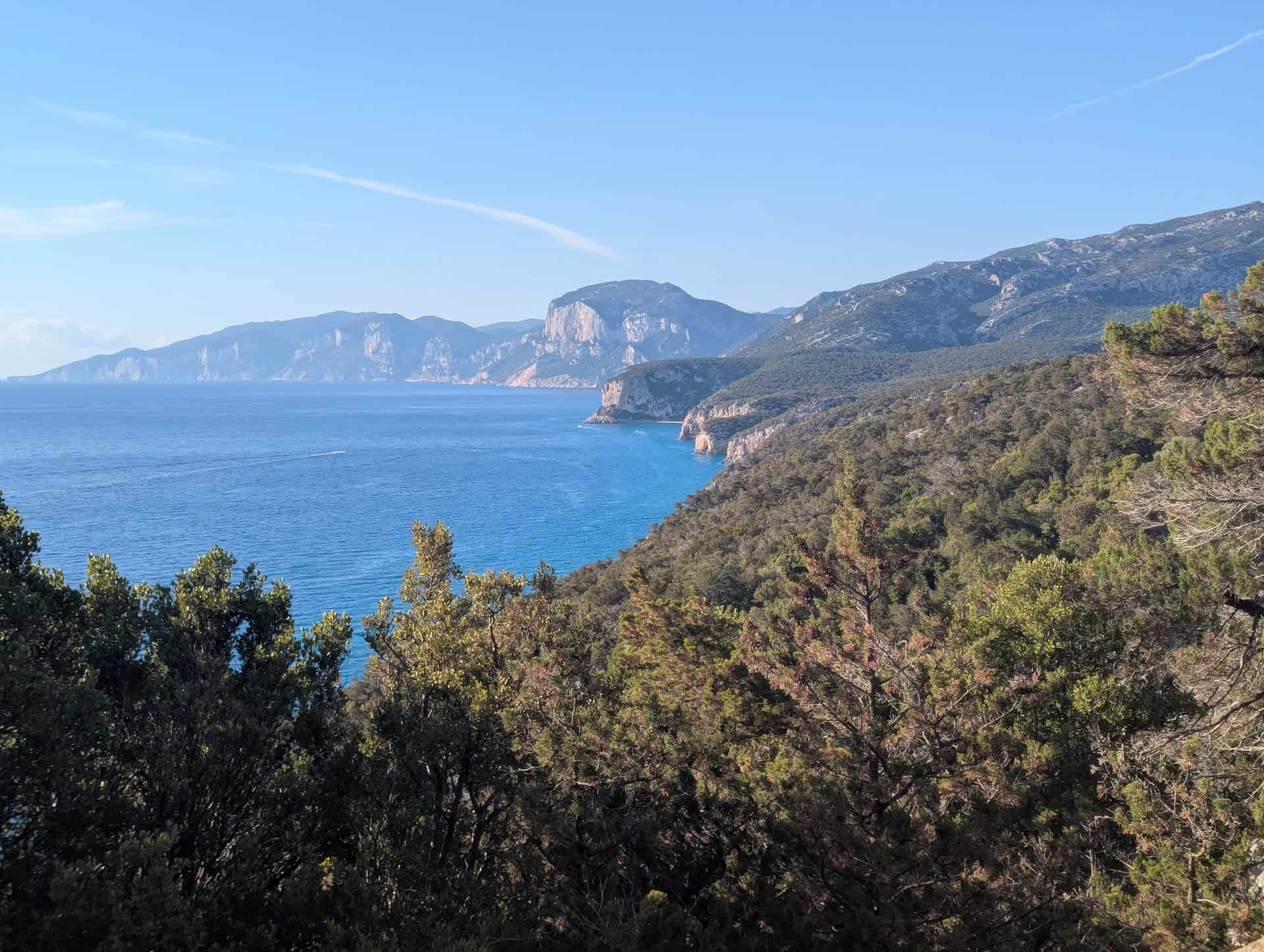
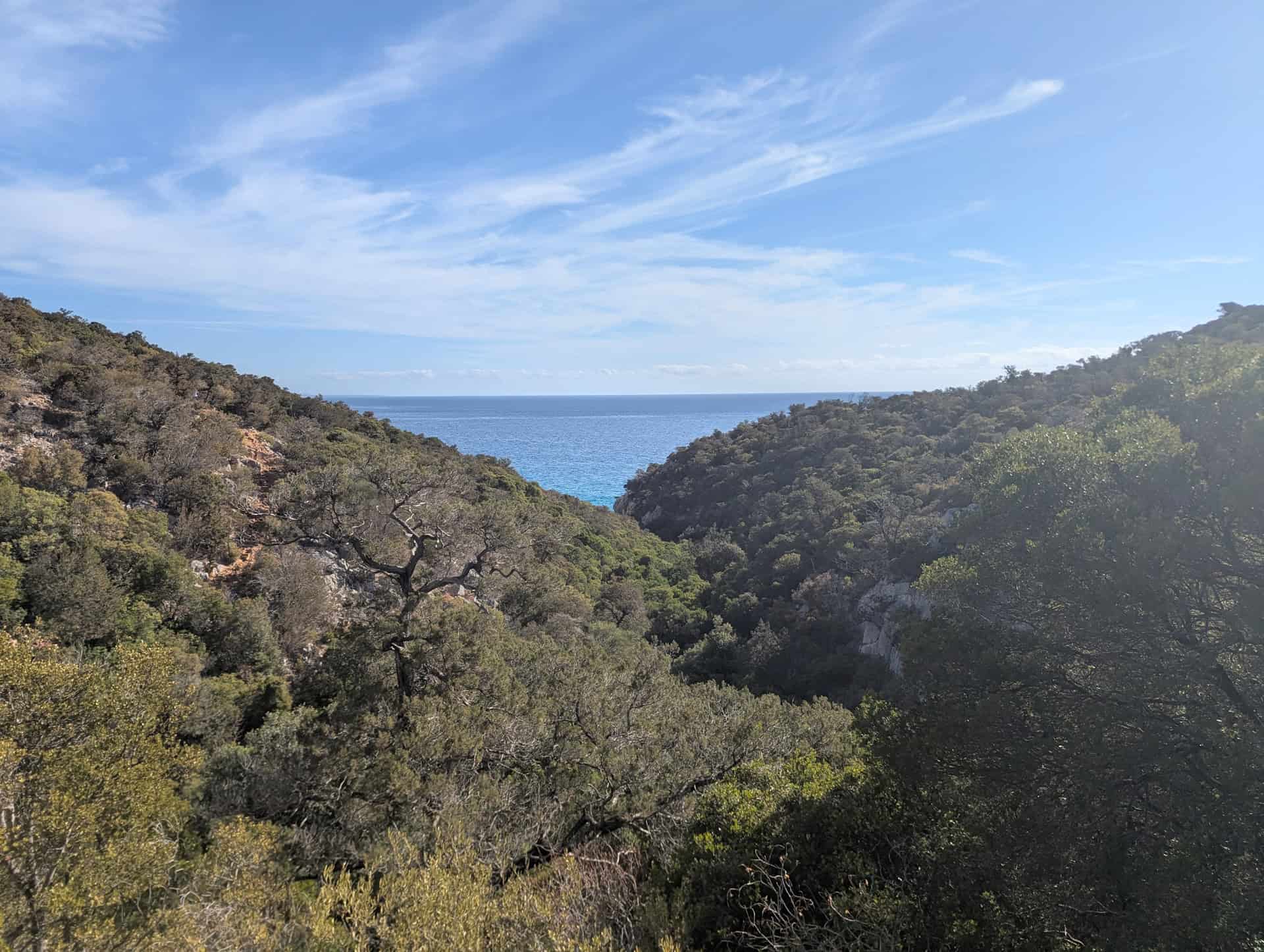
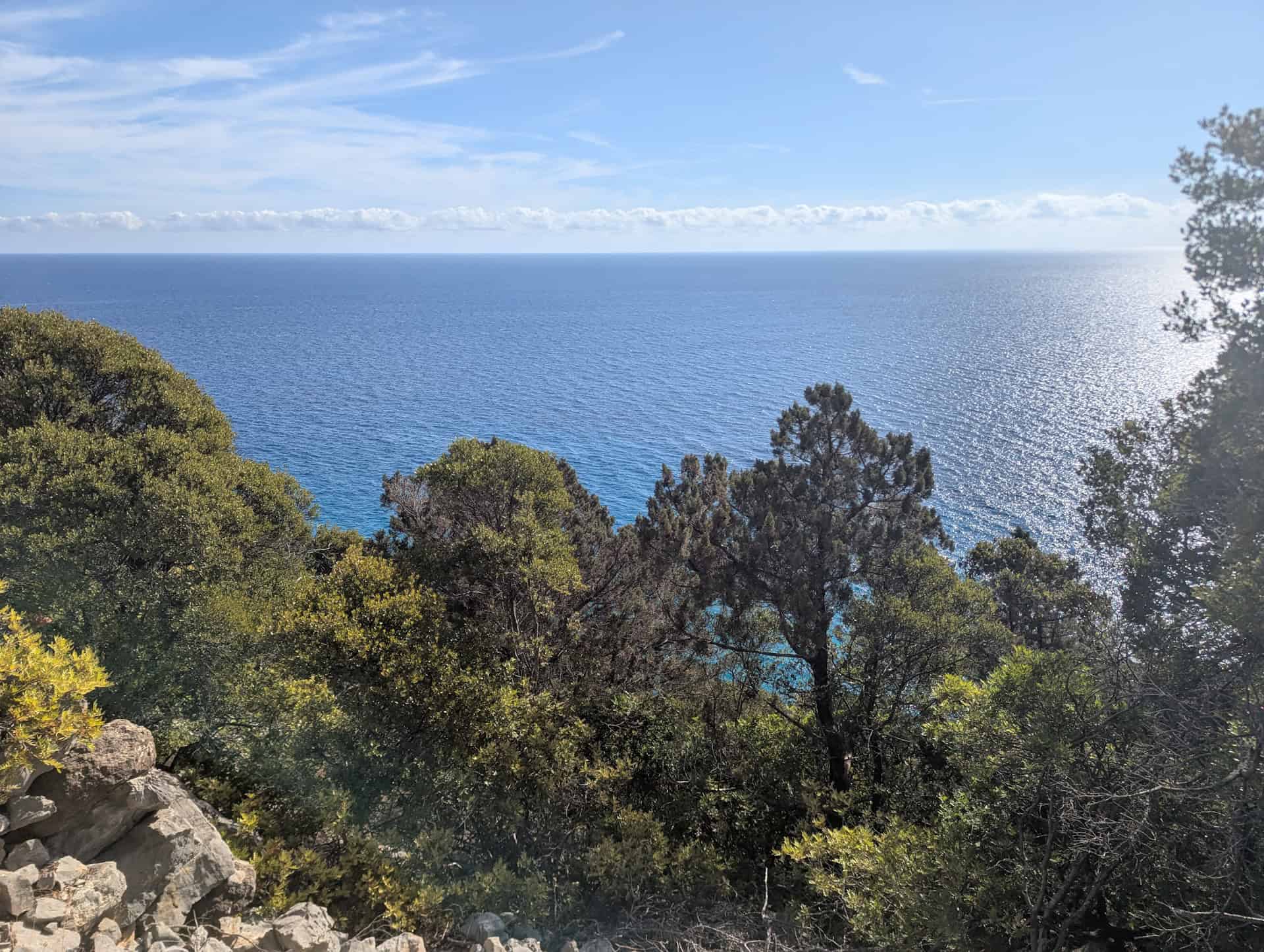
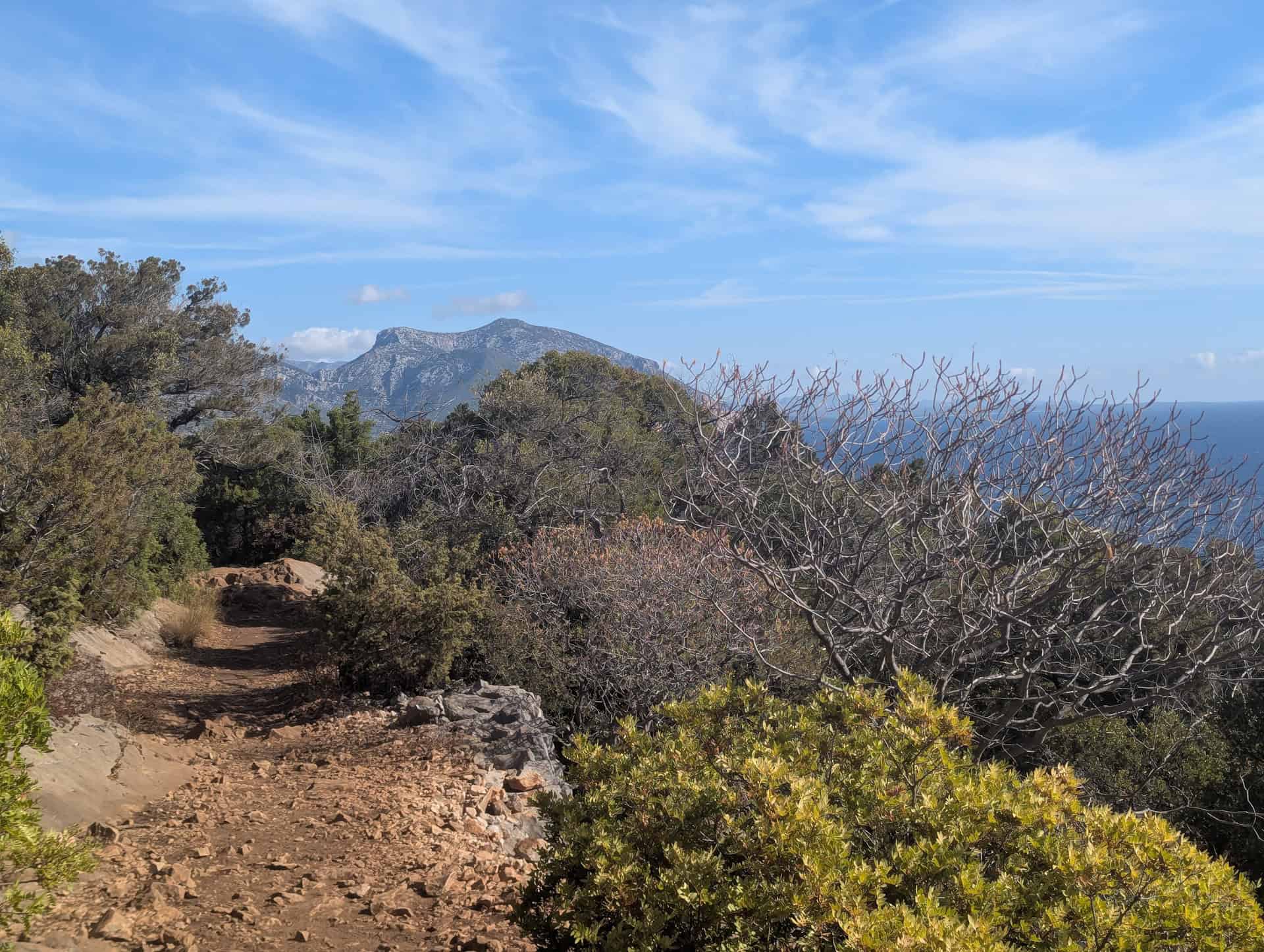
The final descent begins roughly 200 meters before the beach. Near the bottom, the terrain changes, and you’ll cross a marshier area before passing the only real facility near Cala Luna: Ristorante Punto di Ristoro Su Neulagi.


The restaurant itself is not especially well rated, but it is useful to know about because this is where you’ll find restrooms during your time at the beach.
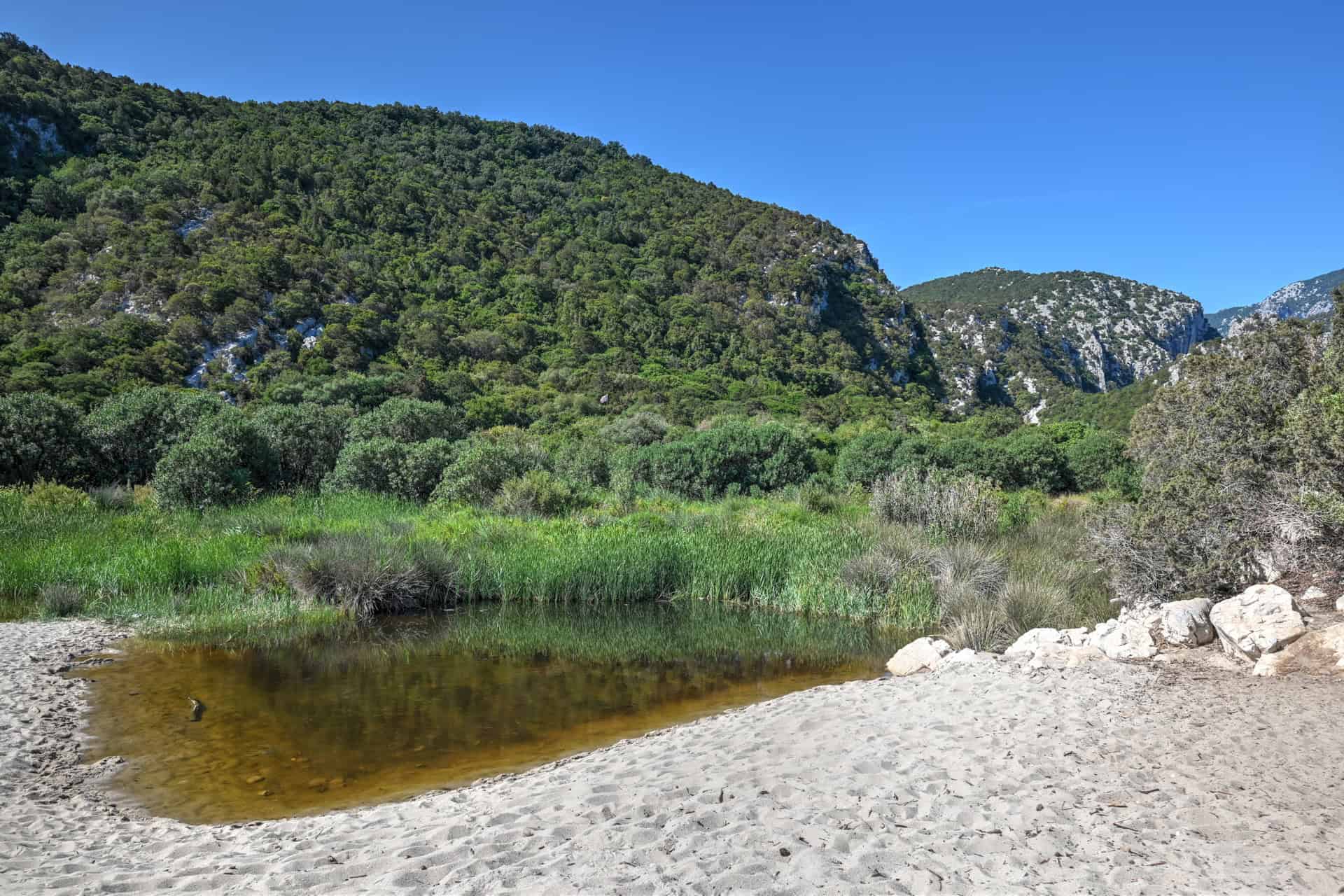
Shortly after passing the restaurant, the trail reaches Cala Luna, where the landscape opens onto the beach, the sea caves, and the turquoise water of the cove.
Additional Details and Hiking Tips
Canine companions: Dogs are generally permitted on the Cala Luna trail, but this is not an ideal hike for all dogs. The rocky terrain, heat, limited shade, and longer distance can make the route demanding, especially in summer. If bringing a dog, start early and bring enough water for both you and your pet.
Trail environment: The trail from Cala Fuili to Cala Luna crosses rugged limestone terrain, Mediterranean scrubland, and dry, rocky slopes above the Gulf of Orosei. Although the route follows the general direction of the coast, it often feels more inland than coastal, with sea views appearing only occasionally along the way. Shade is limited for much of the trail.
Route signage: The main trail to Cala Luna is generally marked and fairly easy to follow, but there are a few side paths and signs pointing toward caves or alternate routes to the coast. For most visitors, it is best to stay on the main route, as the side trails can be less obvious and harder to navigate.
Trail surface / Technical aspects: The trail is very rocky and uneven for most of its length. Expect loose stones, limestone steps, rough descents, and sections where careful footing is needed, even on flatter ground. No technical climbing is required, but the terrain is slow-going and can be tiring over several kilometers.
Slope and effort: The hike begins with a steep climb after descending to Cala Fuili, gaining roughly 120 meters in less than 1 km. After that, the route continues with a constant mix of ups, downs, and flatter sections rather than one long continuous climb. The trail is not extremely steep overall, but the distance, heat, and rocky footing make it more demanding than it may appear on paper.
Previous Hiking Experience: The hike is suitable for most visitors with moderate fitness and some comfort on uneven terrain. It does not require technical hiking experience, but it is better suited to people used to rocky trails than to visitors expecting a casual coastal walk.
Cell Service: Cell reception can be unreliable along the trail and near Cala Luna. You may have some signal near Cala Fuili or in open sections, but coverage is not something to rely on. Download maps or route information before starting.
Leave No Trace: Stay on the established trail, avoid taking informal shortcuts, and pack out all trash. Cala Luna receives a lot of visitors during the main season, so keeping the area clean and respecting the fragile coastal environment is especially important.
Bugs: Insects are usually not a major issue on the hike, though flies can be present during hotter months or around shaded/rest areas. Near the marshier section close to Cala Luna, mosquitoes may be more noticeable at certain times of year.
Equipment: Sturdy hiking shoes or trail runners with good grip are strongly recommended. The trail is too rocky and uneven to be enjoyable in flimsy sandals. Bring plenty of water, sun protection, snacks, swimwear, and a towel. If you plan to return by boat, keep your belongings light and easy to carry.
Weather and Exposure: The trail is exposed for long stretches and can become very hot in summer, especially once the sun is high. An early start is strongly recommended. After rain, rocky sections can become slippery, and boat service back from Cala Luna may be affected by sea conditions, so check the forecast before committing to a one-way hike.
Cala Luna Beach – What to Expect
Cala Luna is divided into two main sections, each with a slightly different feel.
The southern section is the wider and sandier part of the beach. This is where you’ll generally find more room to set up, especially if you arrive after the first wave of visitors. The backdrop here is less dramatic than the northern end, as it sits closer to the marshy area behind the beach, but it is usually the more practical option if you want space to lie down a towel and spend a few hours by the water.
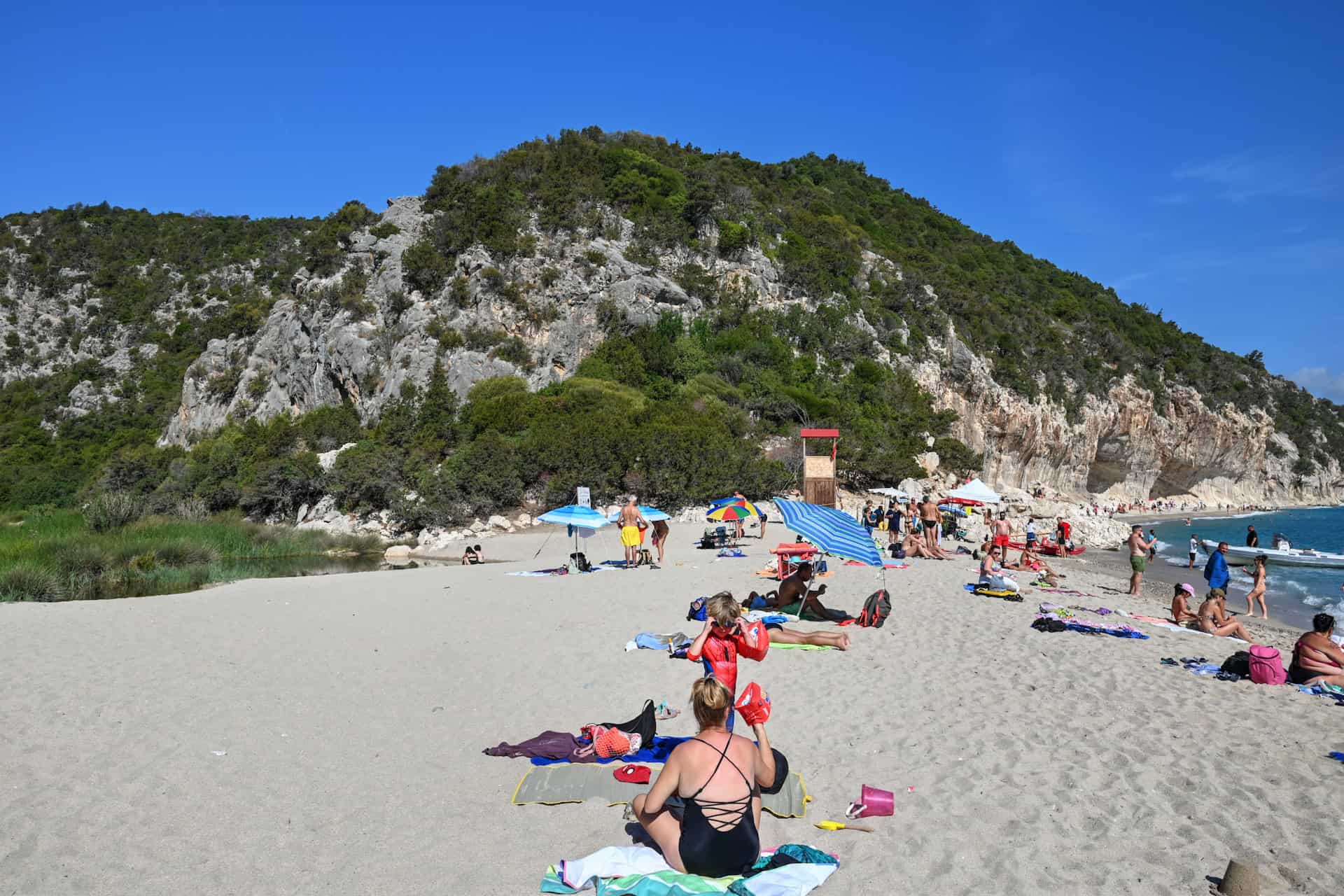
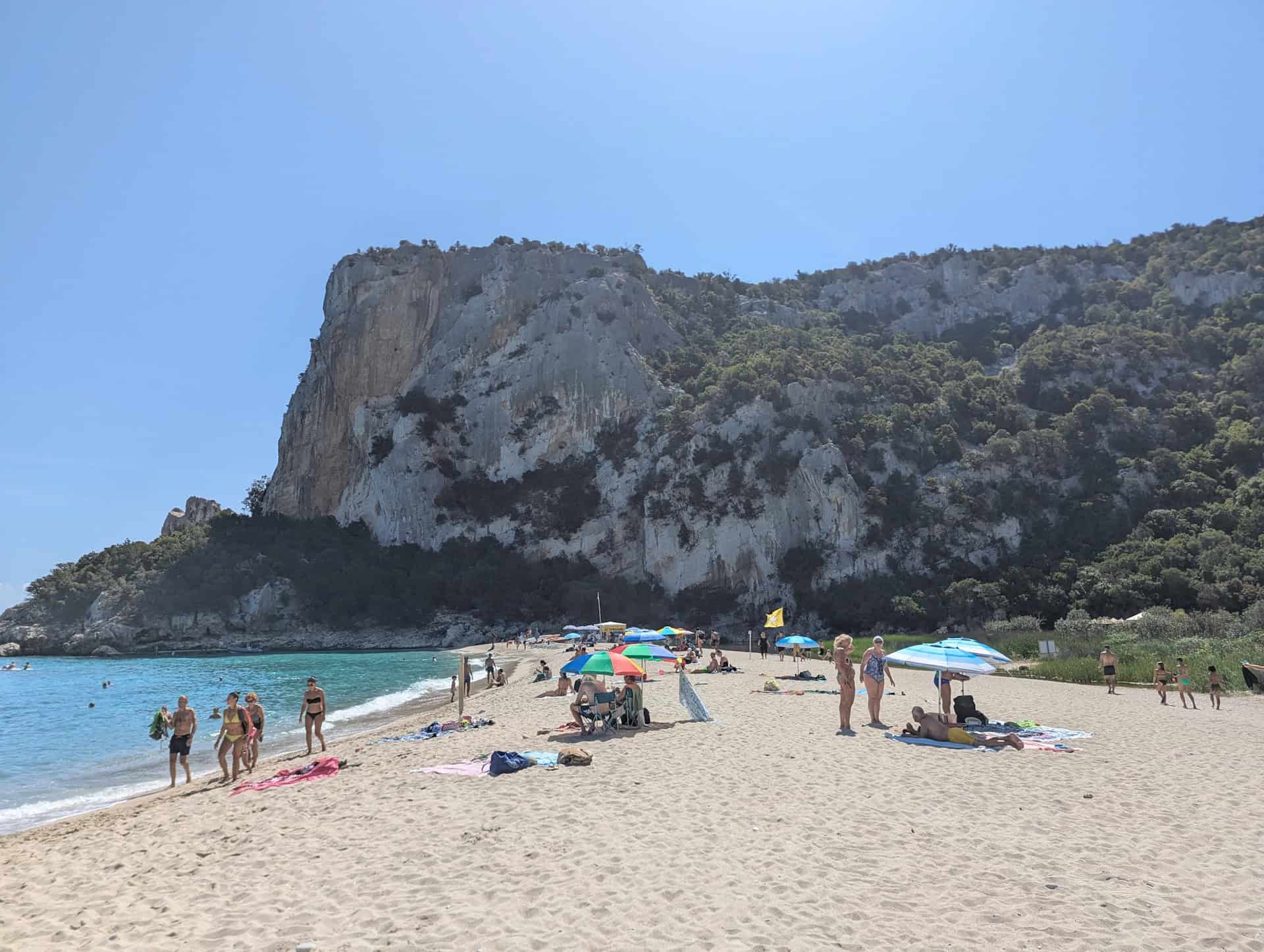
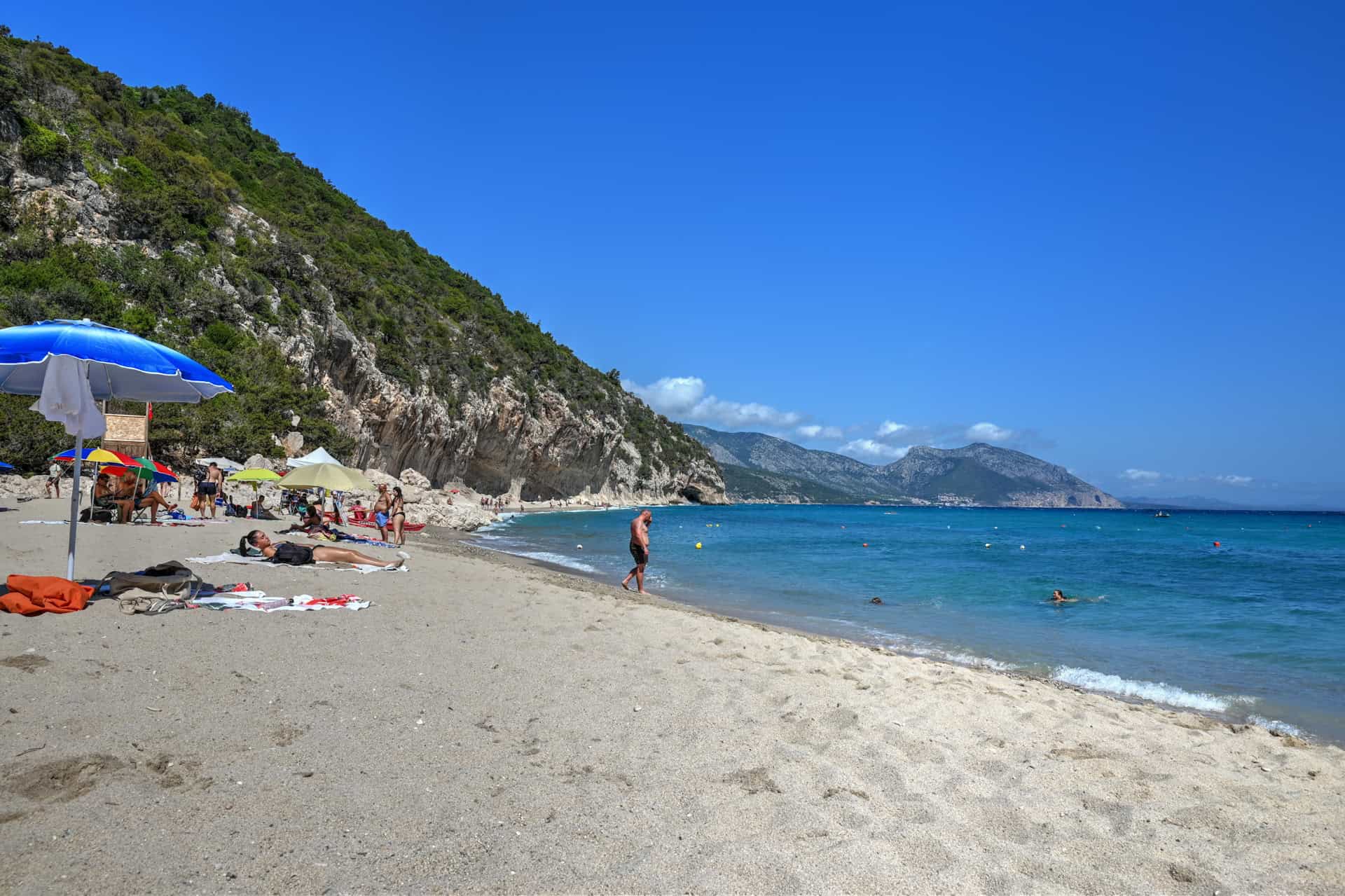
The northern section is narrower and more scenic, with direct access to Cala Luna’s famous sea caves. This is the part of the beach most people picture when they think of Cala Luna, and it’s also where early arrivals tend to go first. The caves provide a striking backdrop and some natural shade, but space here is more limited.
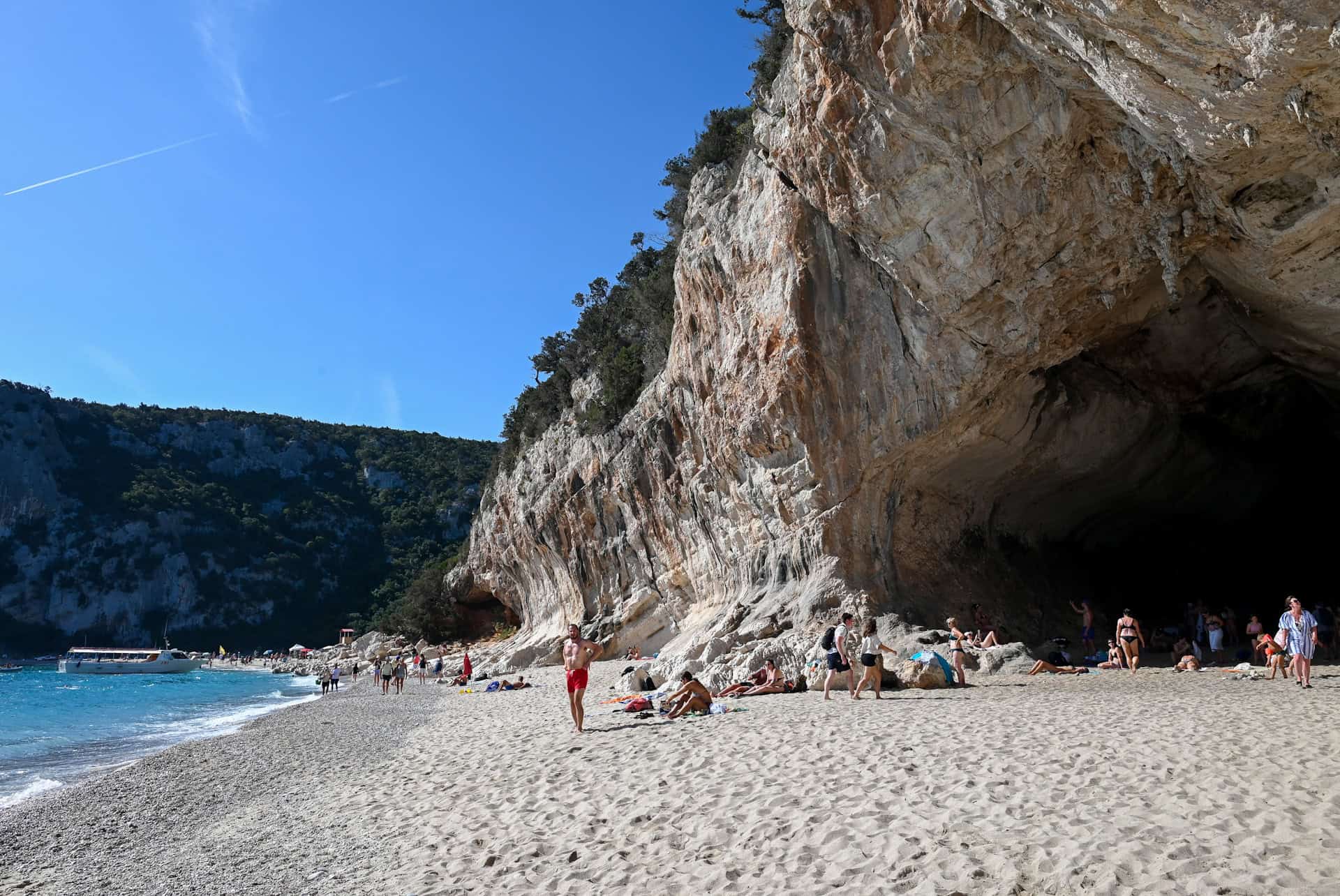
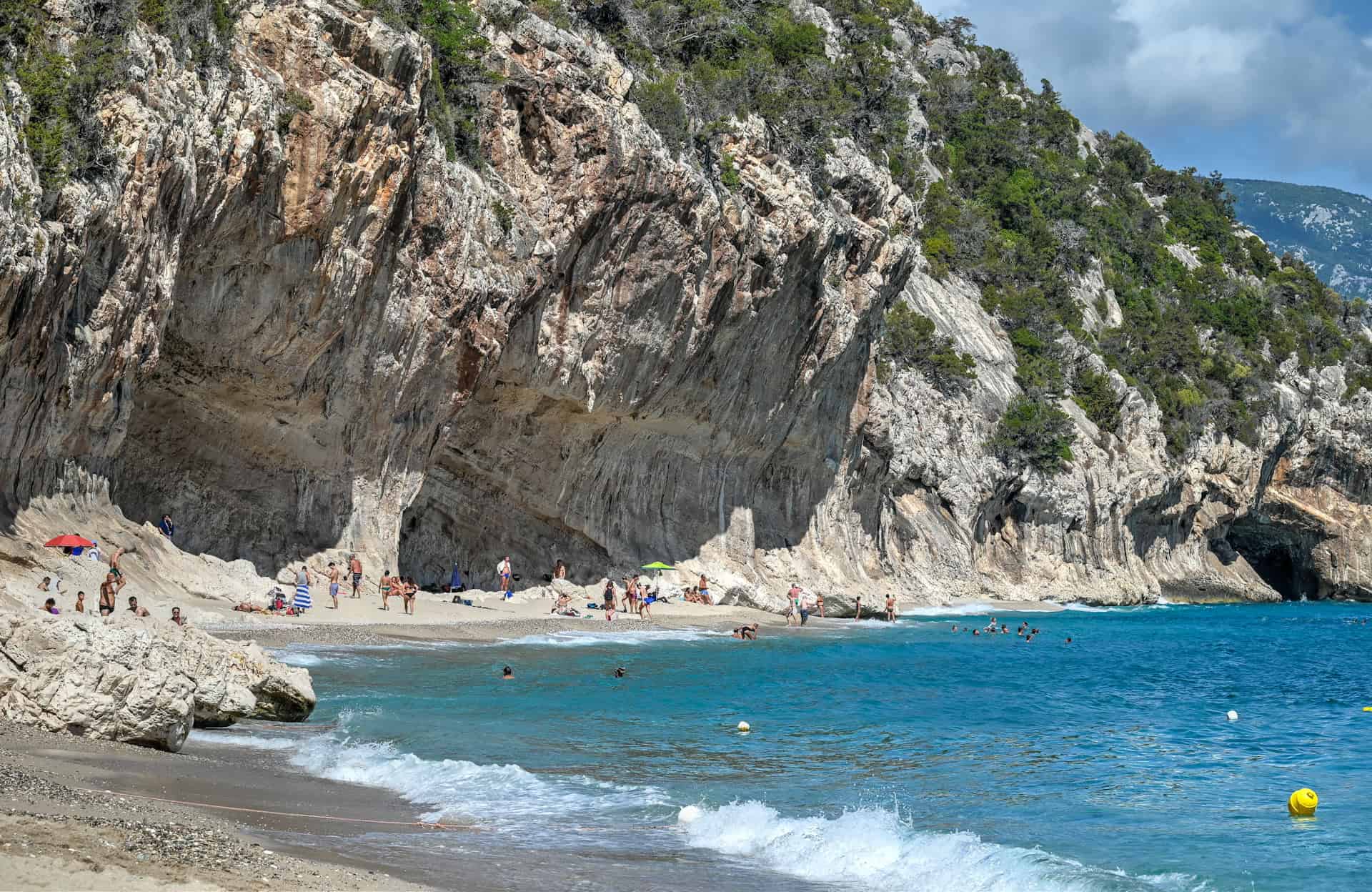
Between the two sections, there is a short, rocky stretch that can be a little awkward to cross, especially if you’re carrying beach gear or walking barefoot.
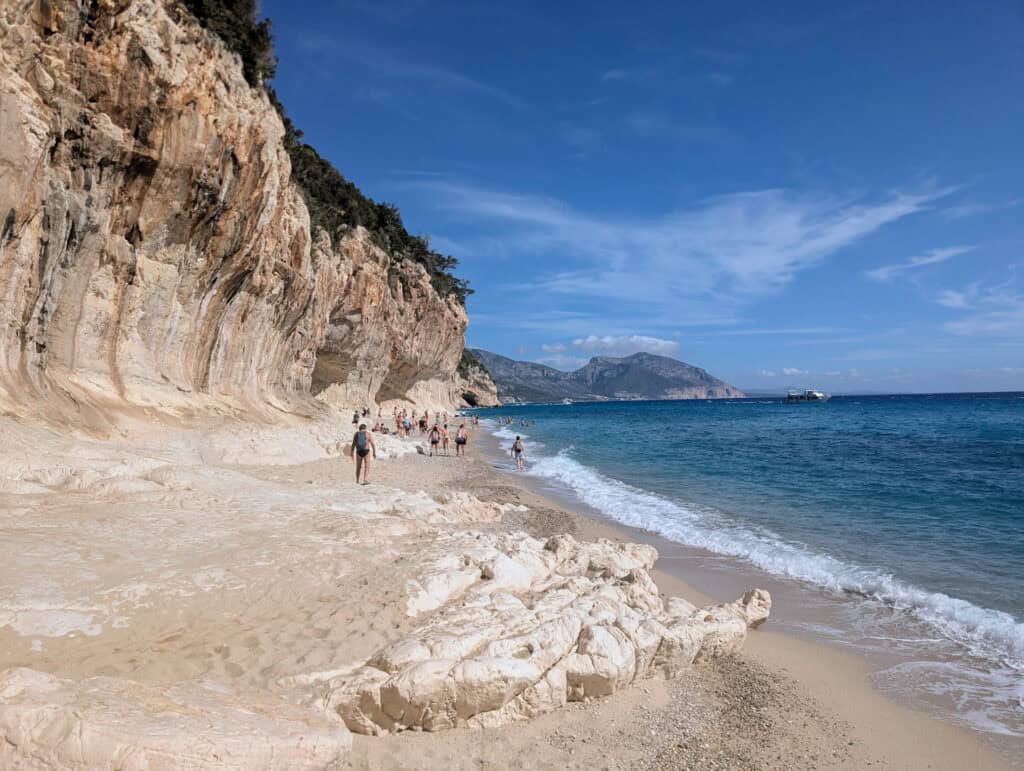
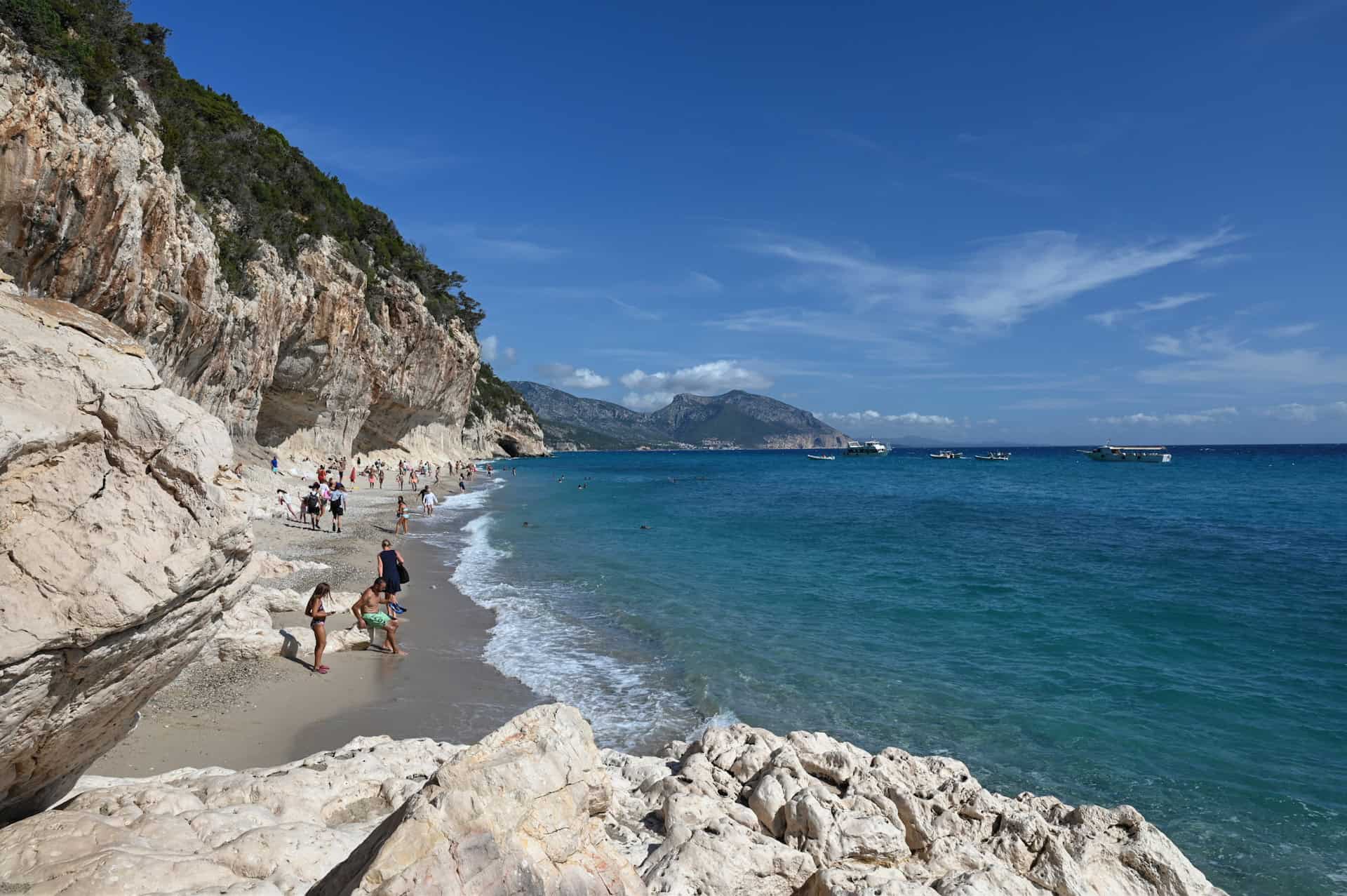
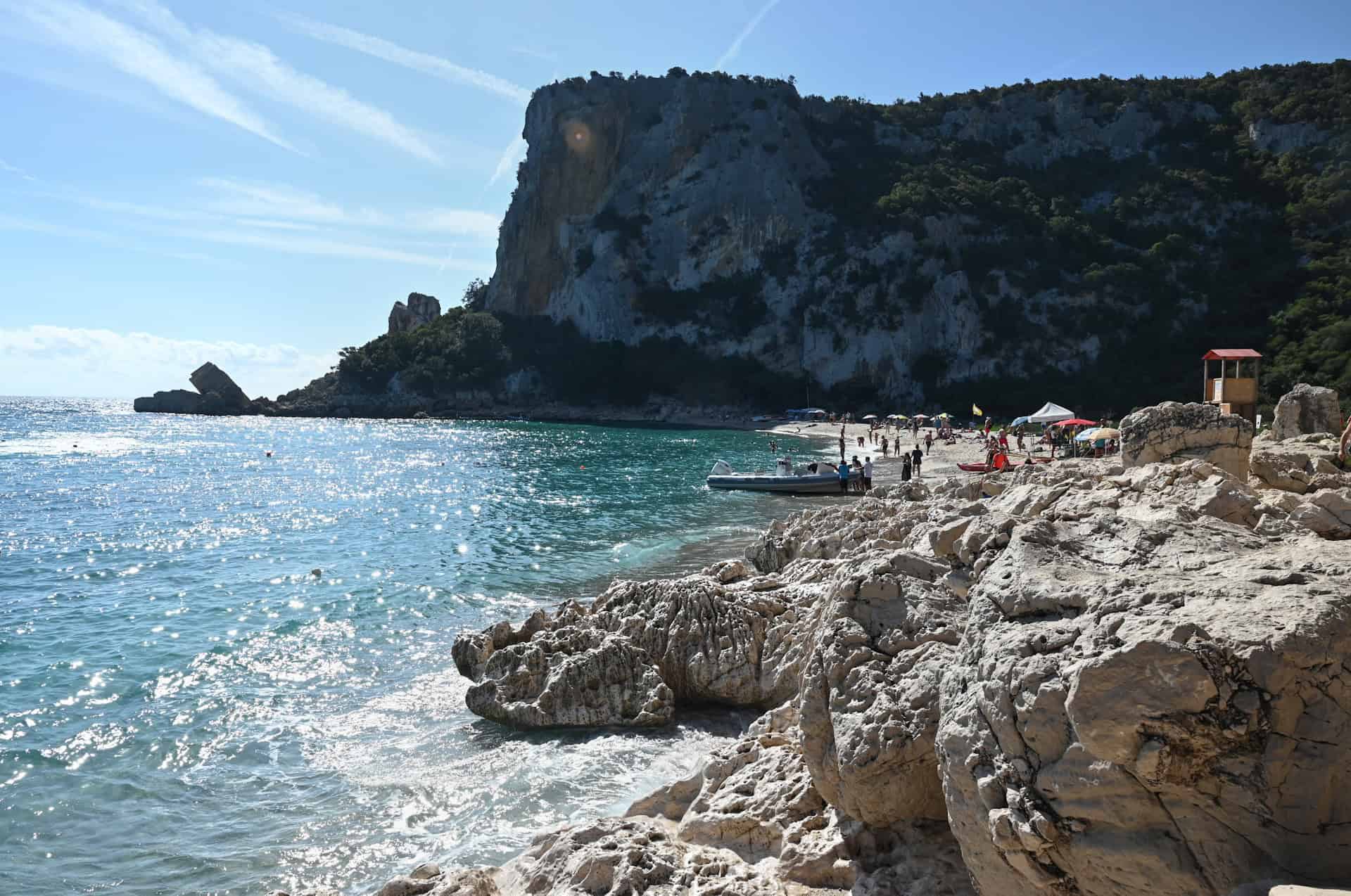
Because the cave side is the most popular area, it fills up quickly. If you don’t arrive very early, your best bet is usually to set up on the wider southern sandy section, then walk over to explore the caves once you’re settled.
Best Time to Visit Cala Luna
Best Time of Year
The best time to visit Cala Luna is from late spring to early fall, when boat services run more regularly, and the weather is warm enough to enjoy the beach.
May to June is one of the best periods overall. Temperatures are usually comfortable for hiking, and the beach is less crowded than in peak summer.
July and August offer the warmest sea temperatures and the most reliable beach weather, but they are also the busiest and hottest months. If you’re hiking, the exposed rocky trail can feel much more demanding in the heat, especially if you plan to return on foot.
September to early October is another excellent time to visit. The sea is usually still warm, crowds begin to ease, and hiking conditions become more comfortable again.
Outside the main season, Cala Luna can still be beautiful on clear days, but boat schedules may be reduced or unavailable, and cooler weather makes it less appealing as a beach day.
Best Time of Day
Morning is the best time to visit Cala Luna. If you’re arriving by boat, going early gives you a better chance of finding space before the beach fills up, especially near the cave side. The southern sandy section usually remains easier to settle into later, but the more scenic northern end can fill quickly.
If you’re hiking from Cala Fuili, an early start is even more important. The trail is rocky, exposed, and longer than it may look on paper, so starting early helps you avoid the strongest heat of the day.
If you are interested in combining both options, we recommend hiking to Cala Luna in the morning and returning by boat in the afternoon. This lets you enjoy the trail before temperatures peak, spend several hours at the beach, and avoid hiking back during the hottest part of the day.
Other Places to Visit Near Cala Luna
Grotta del Bue Marino
Located along the Gulf of Orosei coastline, Grotta del Bue Marino is one of Sardinia’s most famous sea caves and one of the most popular excursions in the area. The cave is known for its large chambers, freshwater pools, limestone formations, and underground passages carved into the cliffs along the coast. Guided visits take visitors through a portion of the cave system via elevated walkways, with boat access typically departing from nearby coastal towns such as Cala Gonone. Because the cave can only be reached by sea, it’s often combined with boat tours exploring the Gulf of Orosei’s beaches and coves.


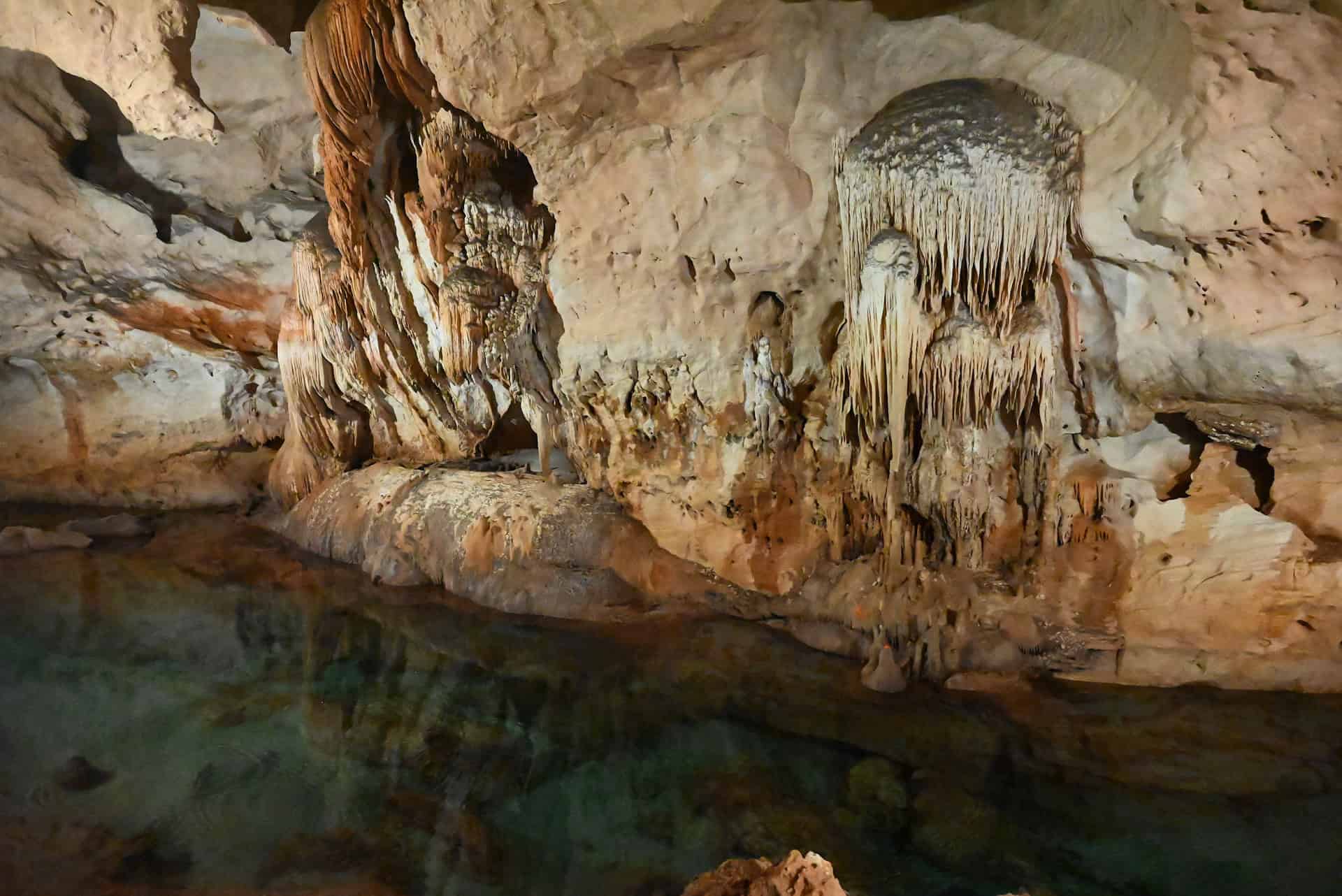
For more details, tips, and boat tour suggestions, see our Grotta del Bue Marino Guide.
Cala Goloritzé
Cala Goloritzé is one of the most striking beaches along Sardinia’s Baunei coast. While Cala Luna is easier to access by boat and offers more space for a beach day, Cala Goloritzé feels more remote and tightly controlled. The beach is smaller, rockier, and reached primarily by a hiking trail from Su Porteddu, with mandatory advance reservations and a daily visitor cap.
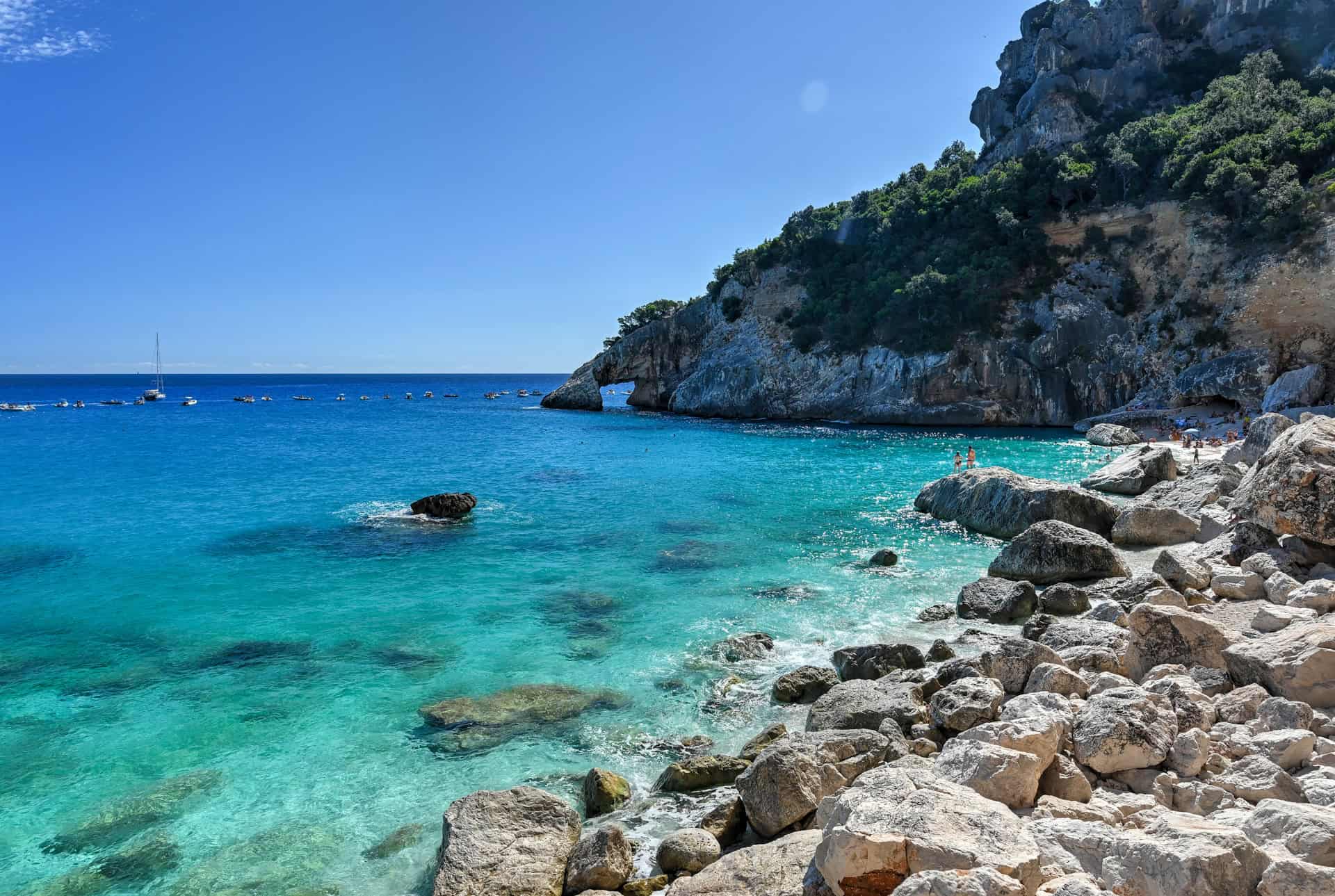


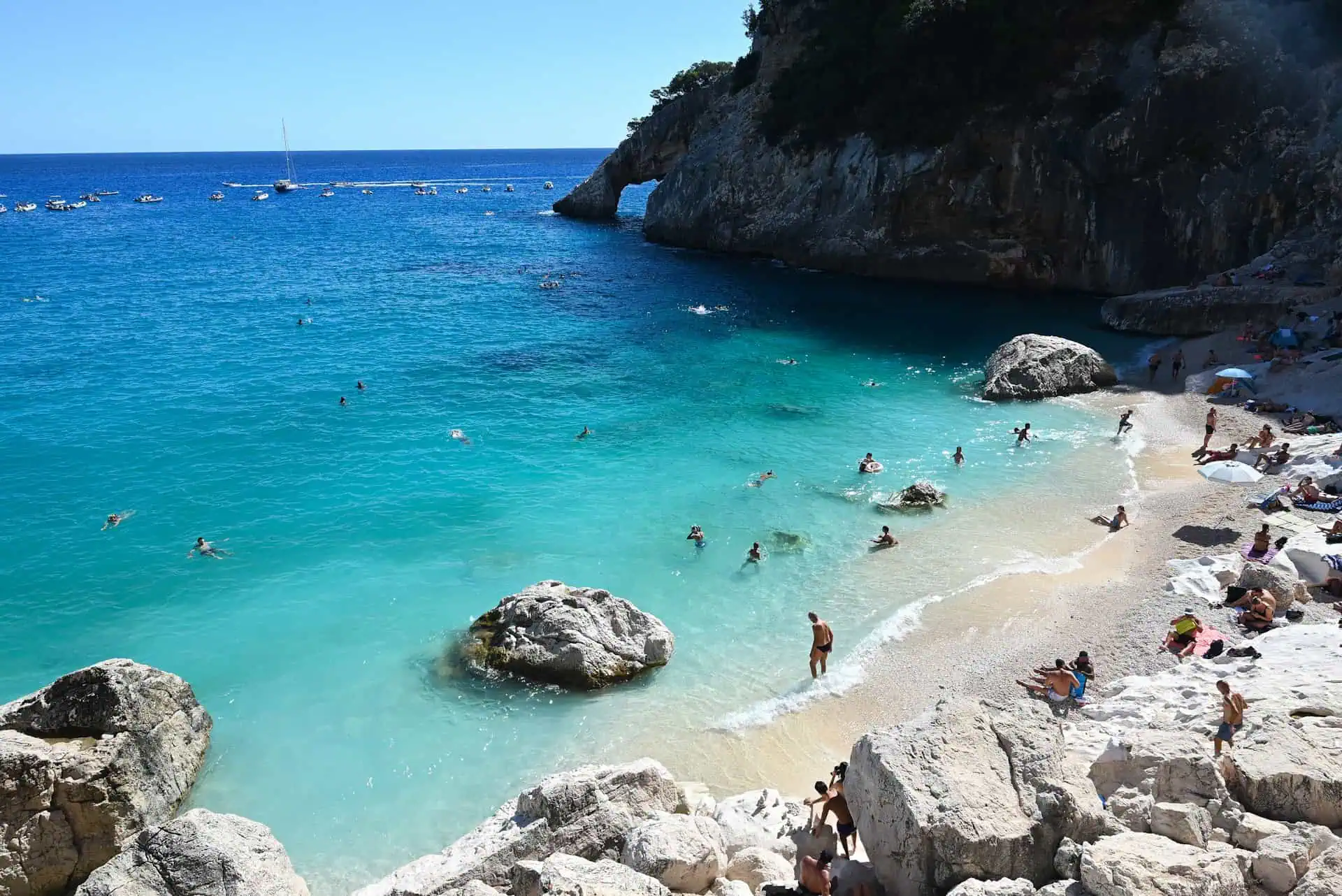
For more details and hiking tips, see our Cala Goloritzé Guide.
Cala Gonone
Cala Gonone is the main tourist hub along this section of Sardinia’s east coast and one of the most practical bases for exploring the Gulf of Orosei.


From here, you can:
- Join boat tours to beaches like Cala Luna and Cala Goloritzé
- Visit Grotta del Bue Marino
- Arrange kayaking or snorkeling excursions
- Get direct access to some beautiful sandy beaches
Compared to smaller coastal villages farther south, Cala Gonone offers a wider range of accommodations, restaurants, and services, making it a convenient base for several days of exploring the coastline.
For more details, tips, and boat tour suggestions, see our Cala Gonone Guide.
Where to Stay Near Cala Luna
When visiting Cala Luna, most travelers stay in Cala Gonone, which is the most practical and enjoyable base for exploring the area.
Staying in Cala Gonone
A modern and well-rated stay located close to the waterfront, offering comfortable rooms and easy access to Cala Gonone’s beaches, restaurants, and boat departures. Its location makes it particularly convenient for visitors planning multiple excursions along the Gulf of Orosei.
A stylish adults-oriented hotel located near the seafront, known for its clean contemporary design and excellent location within walking distance of the harbor and town center. A good option for travelers looking for a quieter and more relaxed stay in Cala Gonone.
Cala Luna Frequently Asked Questions (FAQ)
Can you reach Cala Luna by boat?
Yes. Cala Luna is one of the easiest Gulf of Orosei beaches to reach by boat, with seasonal boat shuttles and tours departing mainly from Cala Gonone.
Can you hike to Cala Luna?
Yes. The main hiking route starts from Cala Fuili, just south of Cala Gonone. The trail is scenic but rocky, with a mix of climbs, descents, and uneven terrain before reaching the beach.
Can you hike to Cala Luna and return by boat?
Yes, and this is one of the best ways to visit. Hiking lets you experience the coastal trail, while returning by boat avoids repeating the hike during the hottest part of the day. Just make sure to check the return boat schedules in advance.
How long is the hike to Cala Luna?
The hike from Cala Fuili to Cala Luna usually takes around 1.5 to 2 hours one way, depending on pace, heat, and trail conditions.
Is the Cala Luna hike difficult?
The hike is moderate to moderately challenging. It is not technical, but the trail is rocky, uneven, exposed, and longer than many visitors expect. The first major climb after Cala Fuili is one of the steepest parts.
Where does the Cala Luna hike start?
The main trail starts from Cala Fuili, a small cove at the end of the road south of Cala Gonone. Parking is available along the roadside near the beach access, though spaces can fill quickly in summer.
Is Cala Luna better by boat or hiking?
Boat access is easier and better if your main goal is a relaxed beach day. Hiking is more rewarding if you want a more active experience. For many visitors, the best compromise is to hike to Cala Luna and return by boat.
Are there facilities at Cala Luna?
Facilities are limited. There is a seasonal restaurant/bar near the beach area, which is also where you’ll find restrooms, but you should still bring your own water, snacks, and sun protection.
Is Cala Luna a sandy beach?
Partly. Cala Luna has a wider sandy section, especially toward the southern side, but other areas are rockier or mixed with pebbles. The northern side near the caves is narrower and more rugged.
Where are the caves at Cala Luna?
The large sea caves are located along the northern side of the beach. This is the most scenic and popular area, so it tends to fill up quickly with early arrivals.
Is there shade at Cala Luna?
There is some natural shade inside or near the caves, but the space there is limited and fills quickly. The wider southern part of the beach is more open and exposed, so sun protection is still important.
What is the best time to visit Cala Luna?
Morning is usually best, especially in summer. Early arrival gives you a better chance of finding space near the caves and avoids the strongest heat if you are hiking.
Do you need to book Cala Luna in advance?
You do not need a hiking permit like Cala Goloritzé, but boat tickets should usually be arranged in advance during the main season, especially in July and August.
Can you visit Cala Luna and Cala Goloritzé on the same day?
It is possible by boat tour, depending on the itinerary, but visiting both properly in one day can feel rushed. If you want to hike to either beach, it is better to treat them as separate day trips.
Photography Gear
If you like our photography, you might be interested in some of the gear we use to shoot our travel and hiking destinations.
Camera Body – Nikon Z 6ii Fx-series Mirrorless Body
Main Lens – NIKON 24-120mm F/4G ED VR AF-S
Zoom Lens – Sigma 745-306 150-600mm f/5-6.3
Polarizing filters – Urth Circular Polarizing (CPL)
Camera Tripod – K&F Concept 64-inch Camera Tripod
Mini-tripod – Lammcou Flexible Camera Tripod
Camera/hiking backpack – Vanguard Alta Rise 48 Backpack
Universal Travel Adapter – VYLEE Universal International Power Travel Plug
Other Travel Essentials
Travel Insurance
SafetyWing is a travel insurance company that offers comprehensive coverage for travellers. Includes Medical Insurance and Travel Insurance. Primarily geared towards long-term travellers, digital nomads, and expats.
e-Sim cards
Airalo is the world’s first and largest eSIM store with eSIM plans for 200+ countries and regions worldwide. With Airalo eSIMs, travellers can get connected the moment they land at their destination and avoid nasty data roaming charges
eSIMS are a sustainable alternative to single-use SIM cards – they are 100% digital, require less energy to produce and be re-used rather than disposed of.
Car Rentals
Discover Cars is our go-to website for car rentals. We almost always find our preferred rate there.
Transfer from Airport
Welcome Pickups is our favourite private transfer service, which you can pre-book at a fixed price. Currently available in 220 cities all over the world (mostly in Europe, but with several major cities in Asia, the Middle East and the US).
Kiwitaxi is another private transfer service – we haven’t tried it yet, but it’s currently available in a few more countries (102 as of 2024).
Hotels and Accommodations (coming soon)
Photography Prints
If you found this blog useful, you can help support our blog by purchasing low-cost digital prints. Printed physical prints are also available for purchase.


—–
Well, that wraps it up! We hope you enjoyed our Cala Luna Guide and that it will prove useful for planning your trip in Sardinia.
—–
You might also be interested in these related pages: