Grotta del Bue Marino is a stunning sea cave in Sardinia and one of the most popular excursions from Cala Gonone. It was also one of our favorite things to do in the area. In fact, of the three caves we visited in Sardinia, Bue Marino was our favorite.
Located along Sardinia’s eastern coast, the cave can only be reached by sea, with boats departing from the port of Cala Gonone. The boat ride is short, usually around 15–20 minutes, and cave visits are guided once you arrive.
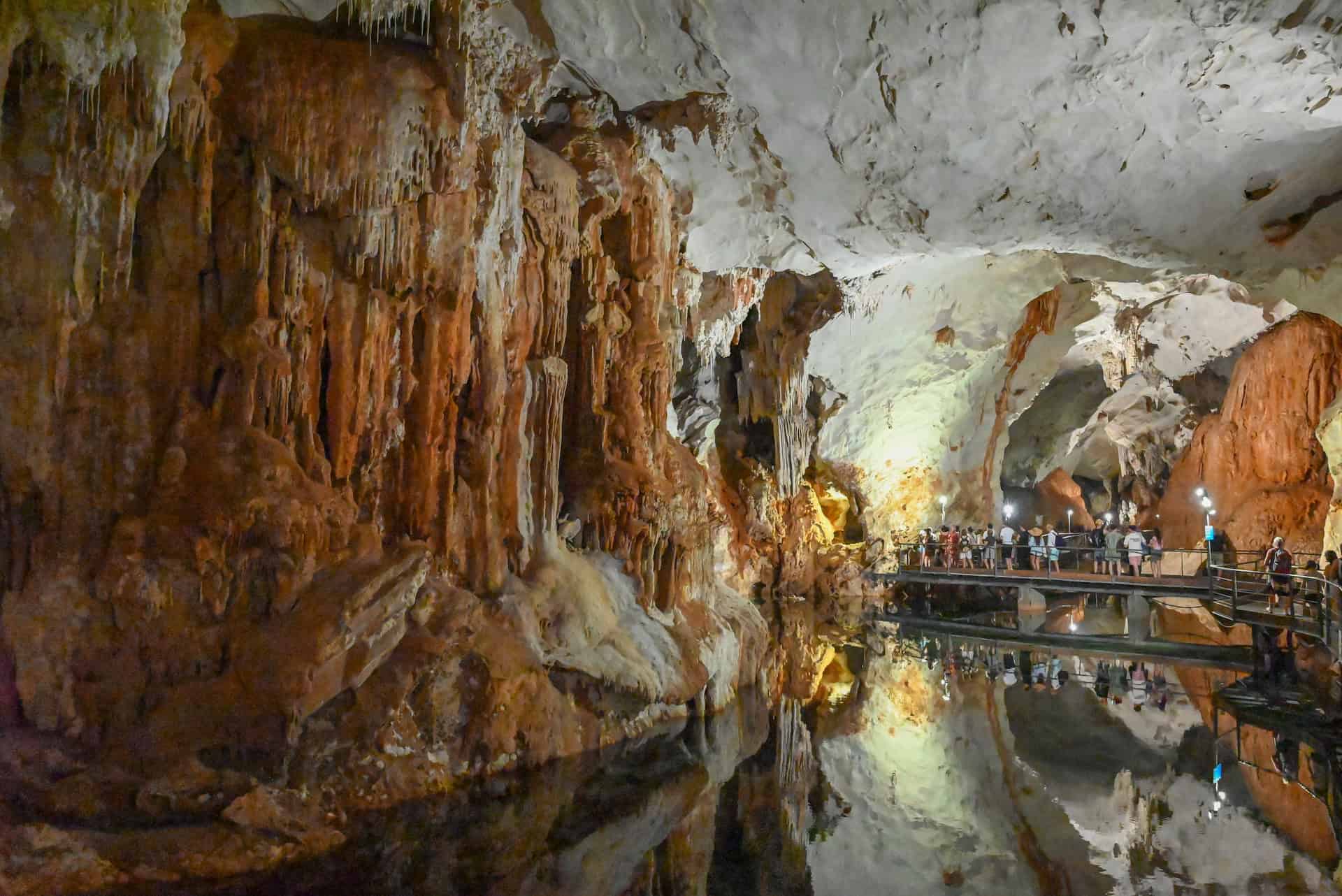
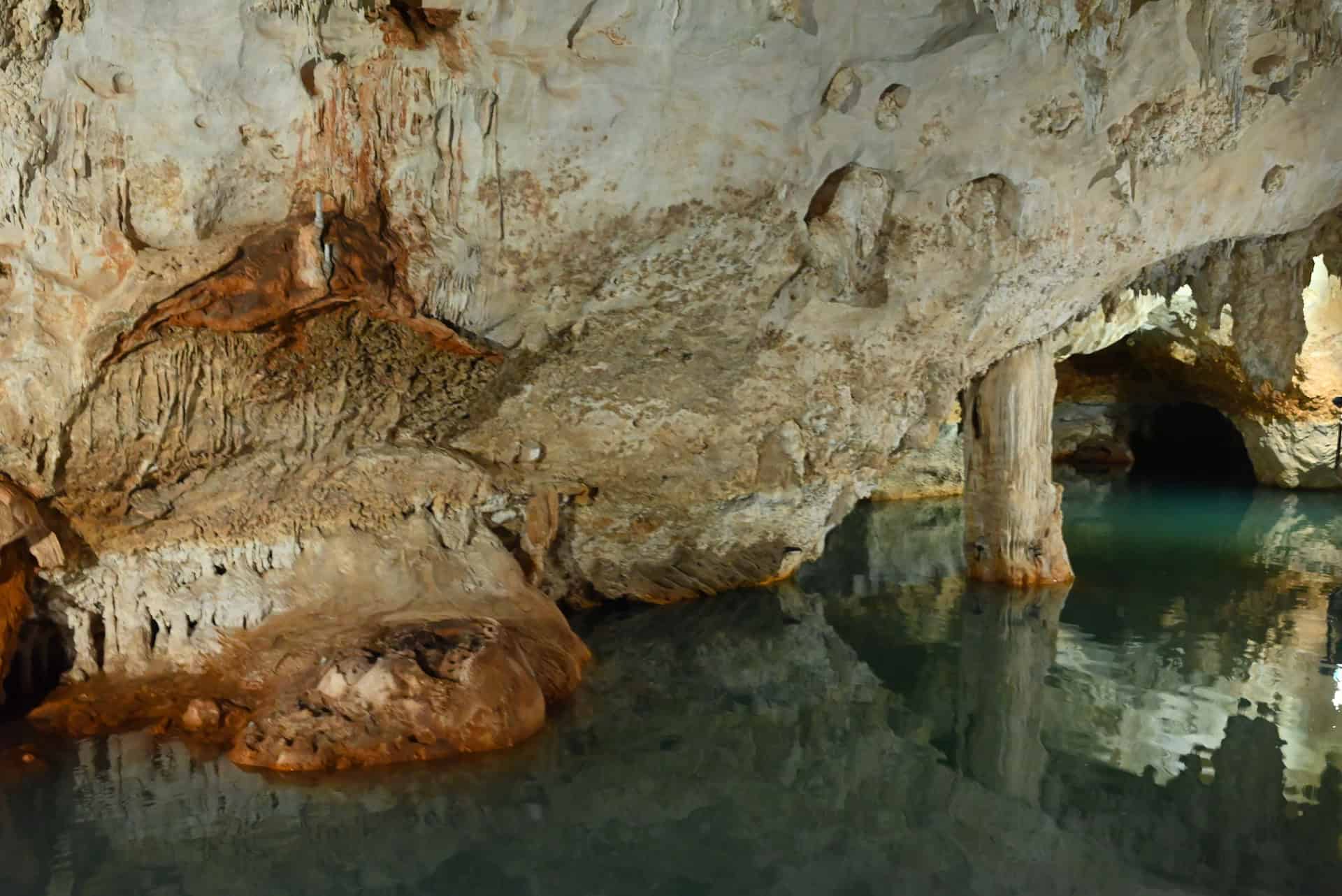
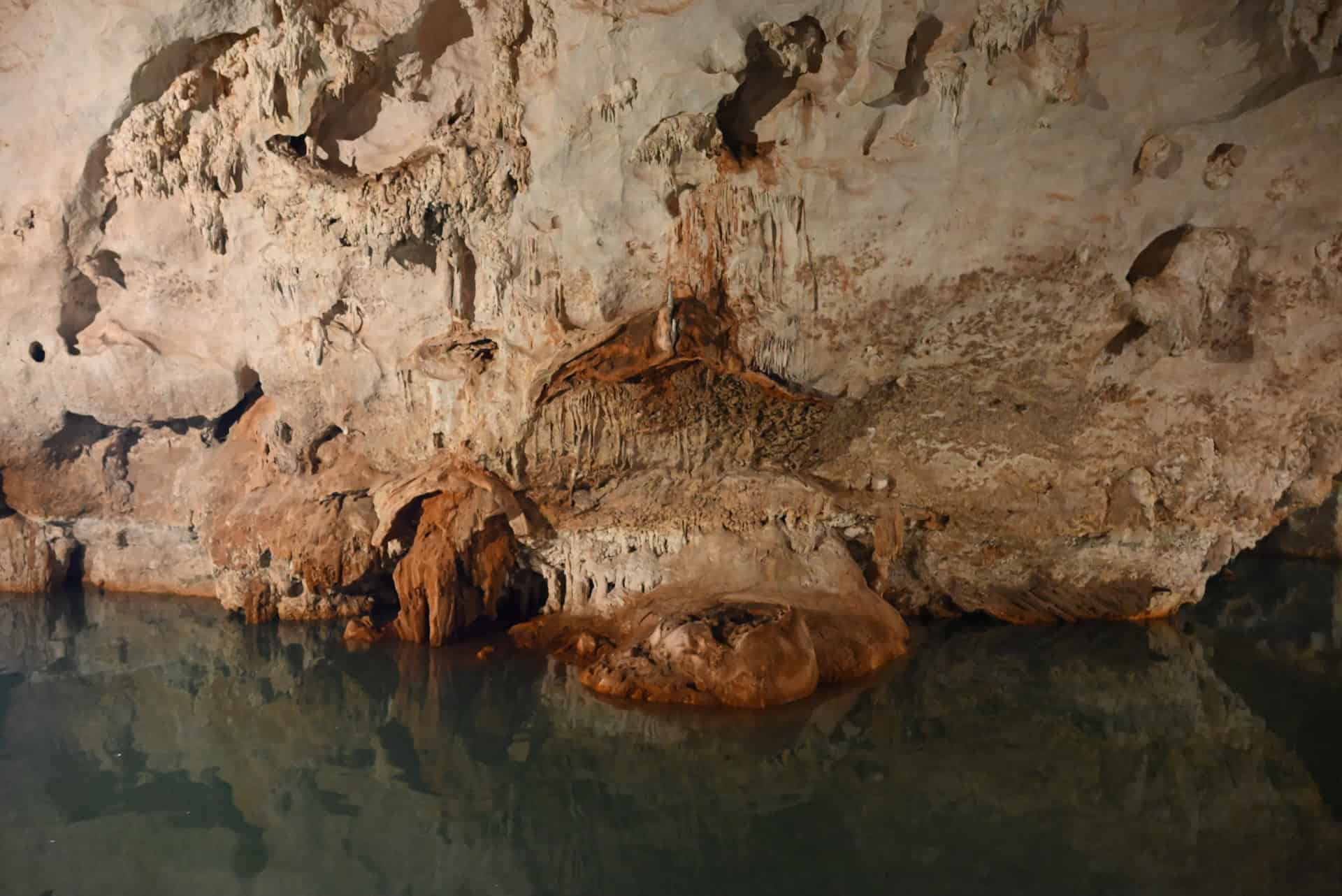
Once inside, the visit follows a walking route through a limestone cave system with large chambers, stalactites, stalagmites, underground water, and reflections created where fresh and salt water meet.
We put together this guide to help you plan your visit, including how to reach Grotta del Bue Marino from Cala Gonone and what to expect inside the cave.
Grotta del Bue Marino – At a Glance
Location
Gulf of Orosei, just south of Cala Gonone
How to Get There
By boat from Cala Gonone, the trip takes around 20 minutes each way.
Visit Type
– Guided walking tour inside the cave, mostly along an elevated boardwalk
– Tour lasts around 50–60 minutes
– Tours are typically offered in Italian and English
– You’ll need to walk a total of about 2 km along an elevated boardwalk
Good to know
– Boat transport and cave entry often have to be booked separately, depending on the operator or ticket type.
– You can generally visit Grotta del Bue Marino as a stand-alone trip or as part of a larger boat excursion that stops at nearby beaches, including Cala Luna
– The temperature inside the cave is between 16°C and 18°C year-round


Disclosure: This page (Grotta del Bue Marino Guide) may contain product affiliate links. At no additional cost to you, we may receive a commission for purchases made through these links. More details can be found on our disclosure and policies page.
Grotta del Bue Marino: Location, Map, and How to Get There
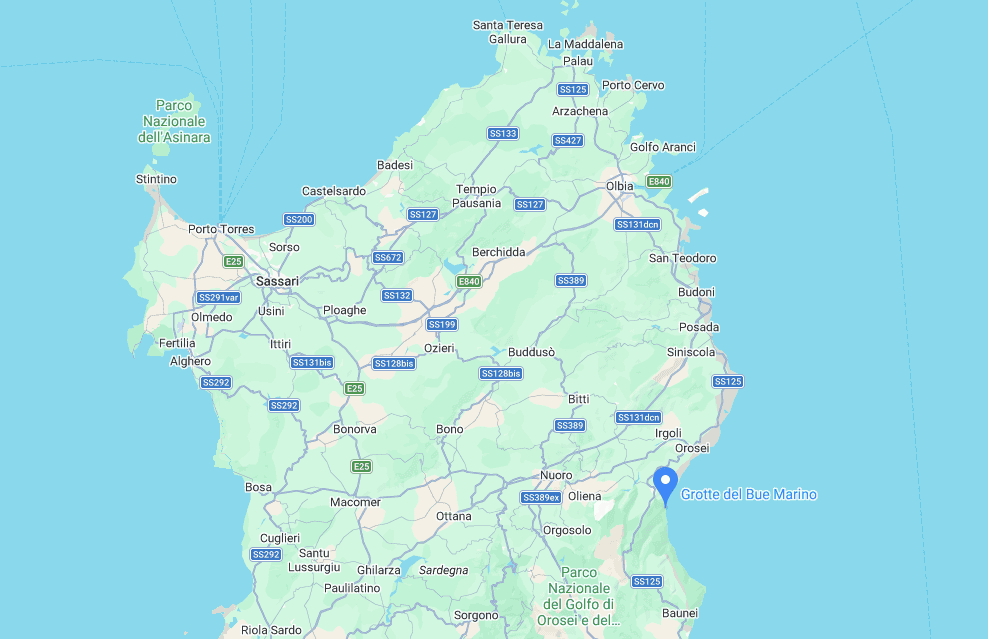
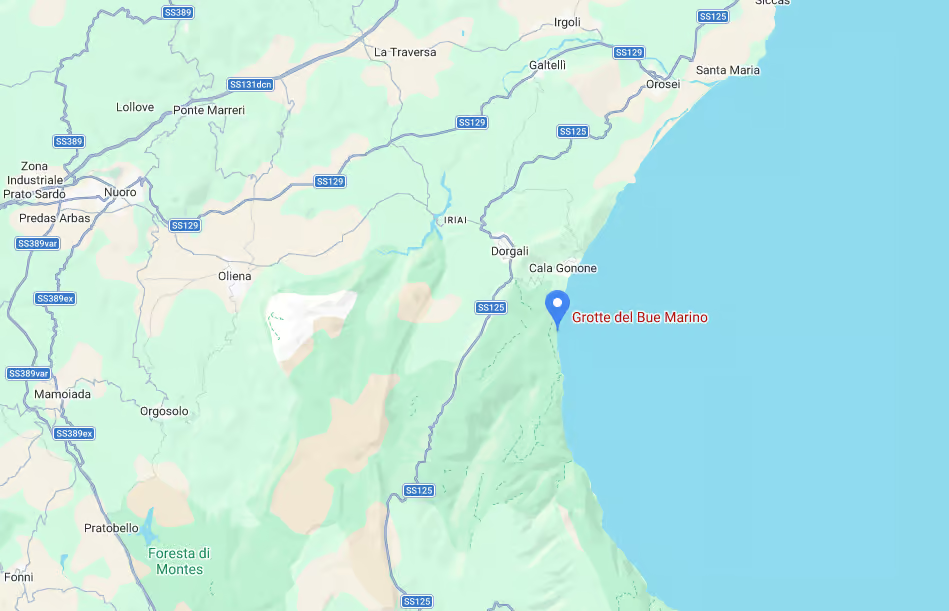
Grotta del Bue Marino is located along Sardinia’s eastern coast, within the Gulf of Orosei, just south of Cala Gonone.
Getting to Cala Gonone
Driving is by far the most practical way to reach Cala Gonone.
Typical driving times:
From Olbia: 110 km / 1h30
From Orosei: 30 km / 35–40 minutes
From Santa Teresa Gallura: 160 km / 2h30–3 hours
From Alghero: 190 km / 2h45–3h15
From Cagliari: 220 km / 2h45–3h15
The final approach to Cala Gonone descends from Dorgali along a safe but winding mountain road. It is fully paved and commonly driven by visitors and locals, but expect curves and slower speeds.
If you need to book a rental vehicle for your travels, we highly recommend using Discover Cars to get the best rates on your rental in Sardinia.
We also highly recommend Airalo (eSIM card) for your connectivity needs when travelling abroad. Airalo is the world’s first and largest eSIM store with eSIM plans for 200+ countries and regions worldwide.
Getting to Grotta del Bue Marino
The only way to reach the cave is by boat. Several boat operators from Cala Gonone and they all offer roughly the same service options (stand-alone trip or larger boat excursion with multiple stops).
Getting tickets to visit Grotta del Bue Marino:
Boat transport and cave entry typically have to be booked separately.
1. You can advance purchase your tickets for the Bue Marino guided tour here. You’ll have to pick a specific tour start time (typically on the hour, several times per day), as this will be important to know for subsequently booking your boat transfer from Cala Gonone.
2. For the boat tour, you can choose between several different options. We can recommend this boat option with Get Your Guide (starting from €30 per person, which includes transport to and from the caves, about 20 minutes each way). You will want to select the same timeslot you did for the tour (e.g., 10 am). The cave operators and boat companies coordinate directly: the boat leaves Cala Gonone around the selected time, takes roughly 15–20 minutes to reach the cave, and the cave group enters once the corresponding boats have arrived. The official cave website also notes that its listed guided-tour times refer to boat departures from Cala Gonone, with navigation taking approximately 15–20 minutes.
Total trip time: For a stand-alone visit, plan on around 2 hours total, including the boat ride to the cave, the guided visit inside, and the return to Cala Gonone.
You may not always need to book far in advance, but we recommend doing so if you want a specific time slot, especially in summer. Morning departures are often preferable, both because they fit better with other plans and because sea conditions can be calmer earlier in the day.
Visiting Grotta del Bue Marino as Part of a Longer Boat Trip
If you want to turn the cave visit into a longer outing, you can also choose a Gulf of Orosei boat excursion that combines Grotta del Bue Marino with nearby beaches.
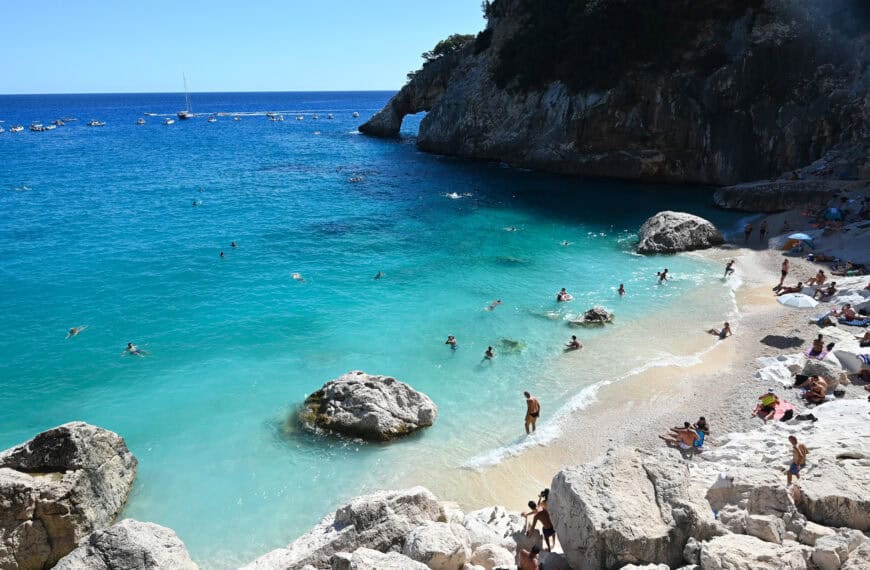
One of the most popular combinations is Grotta del Bue Marino + Cala Luna, since Cala Luna is close to the cave and is known for its turquoise water, limestone cliffs, and large beach caves.
Grotta del Bue Marino Visit & What to Expect
The boat ride itself towards the cave is both fun and scenic, with beautiful views of the coast.


Because several boat operators bring visitors to Grotta del Bue Marino, everyone booked on a specific guided cave tour will not necessarily arrive on the same boat or at exactly the same time.
After arriving at the cave entrance, visitors are typically ushered into a large opening chamber while the boats finish dropping everyone off. Once the group has gathered, the guides give a short introduction and split visitors into two groups: one for the Italian guided tour and one for the English guided tour.
From there, the visit follows an elevated wooden boardwalk with guardrails, passing above the cave’s tidal pools, underground water channels, and limestone formations. The boardwalk is about 900 meters long, which means you’ll walk close to 2 km in total once you include the return route.
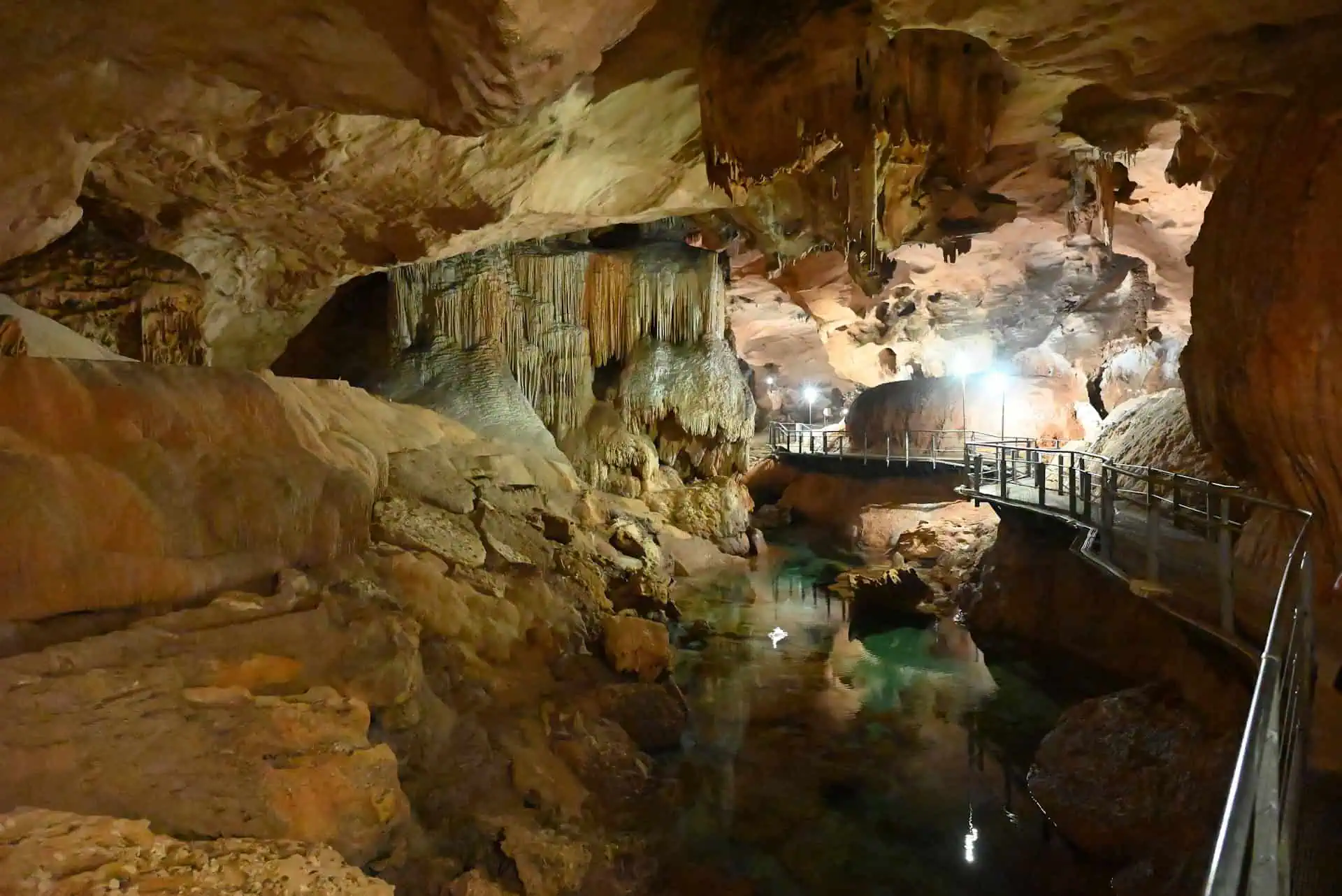


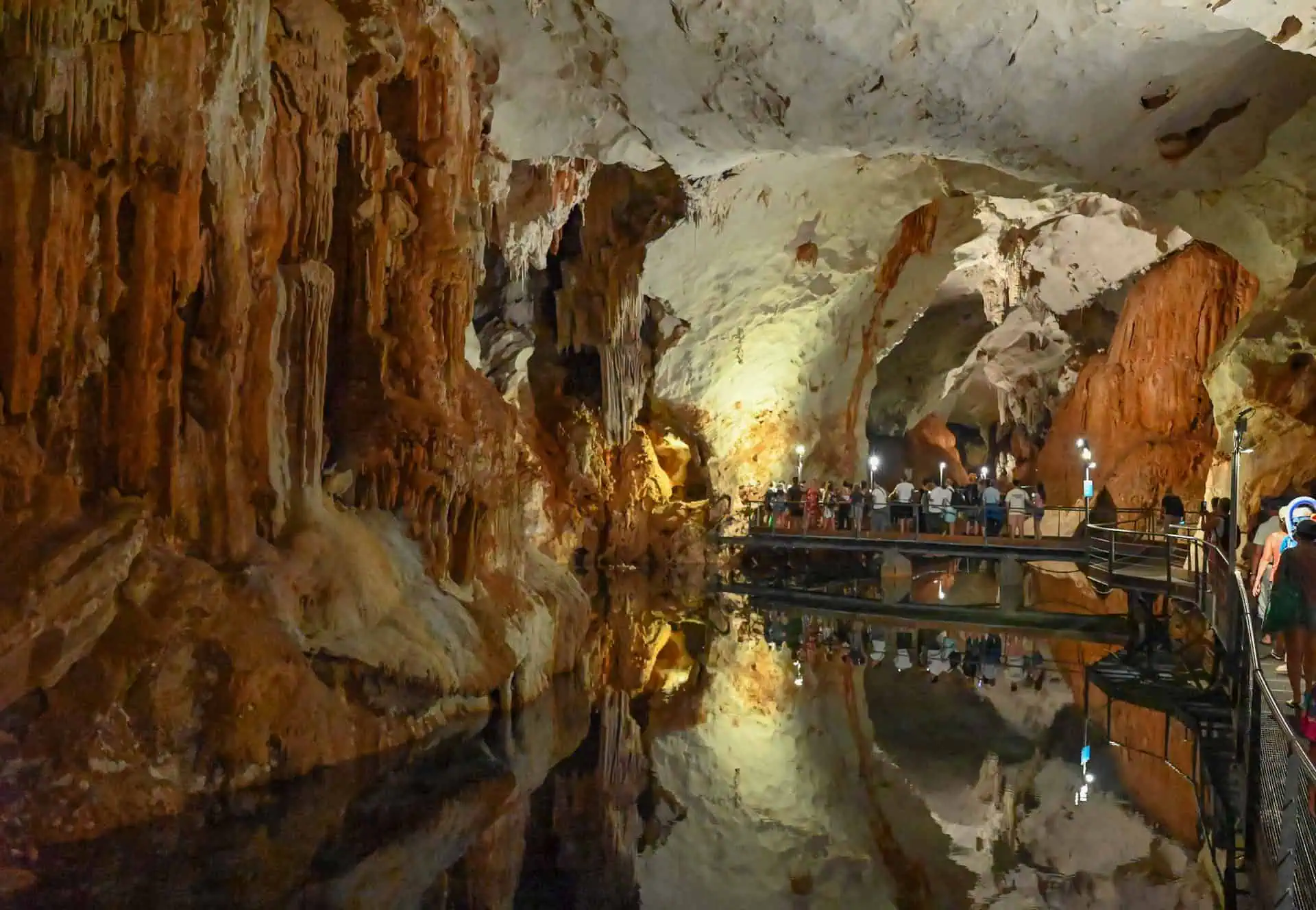
During the tour, visitors pass through four main chambers. The Italian and English groups may visit them in a different order, which helps space people out and prevents the narrower sections of the boardwalk from becoming too crowded.
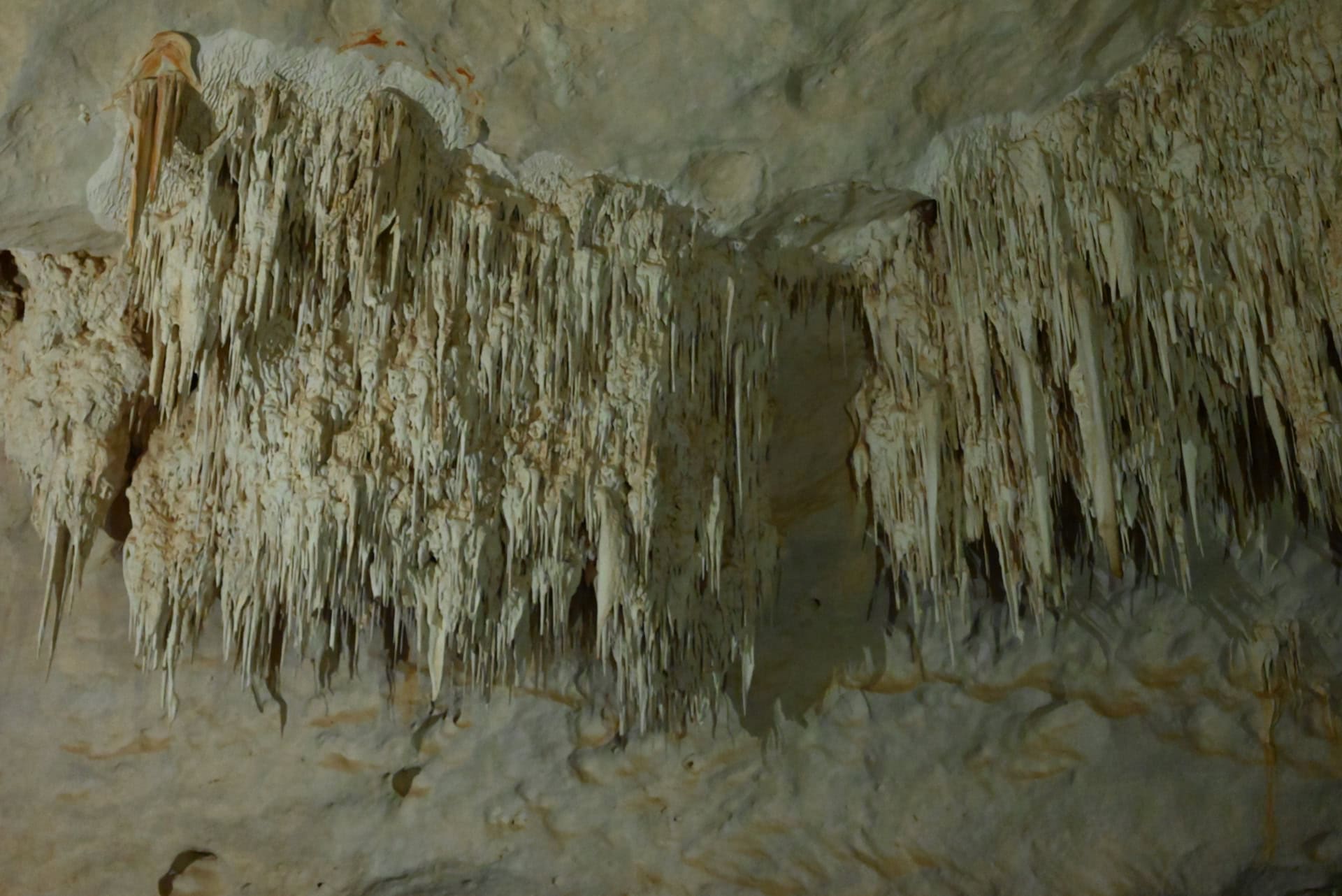
Hall of the Candelabra (Sala dei Candelabri): Named for its tall, candle-like stalagmite and stalactite formations, this chamber is one of the most visually striking parts of the cave. The formations rise and hang from the cave vault in dramatic shapes, giving the room its name.

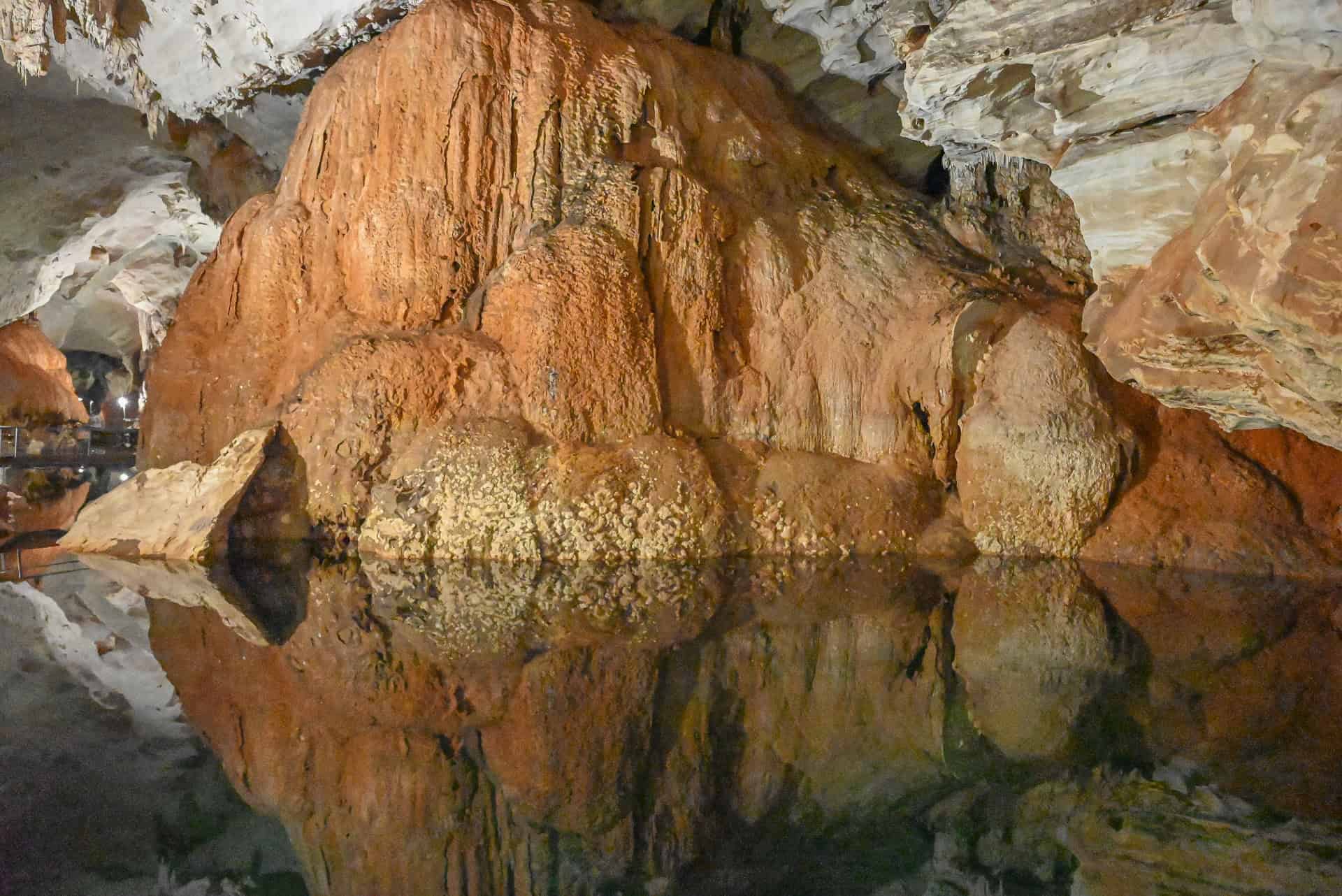
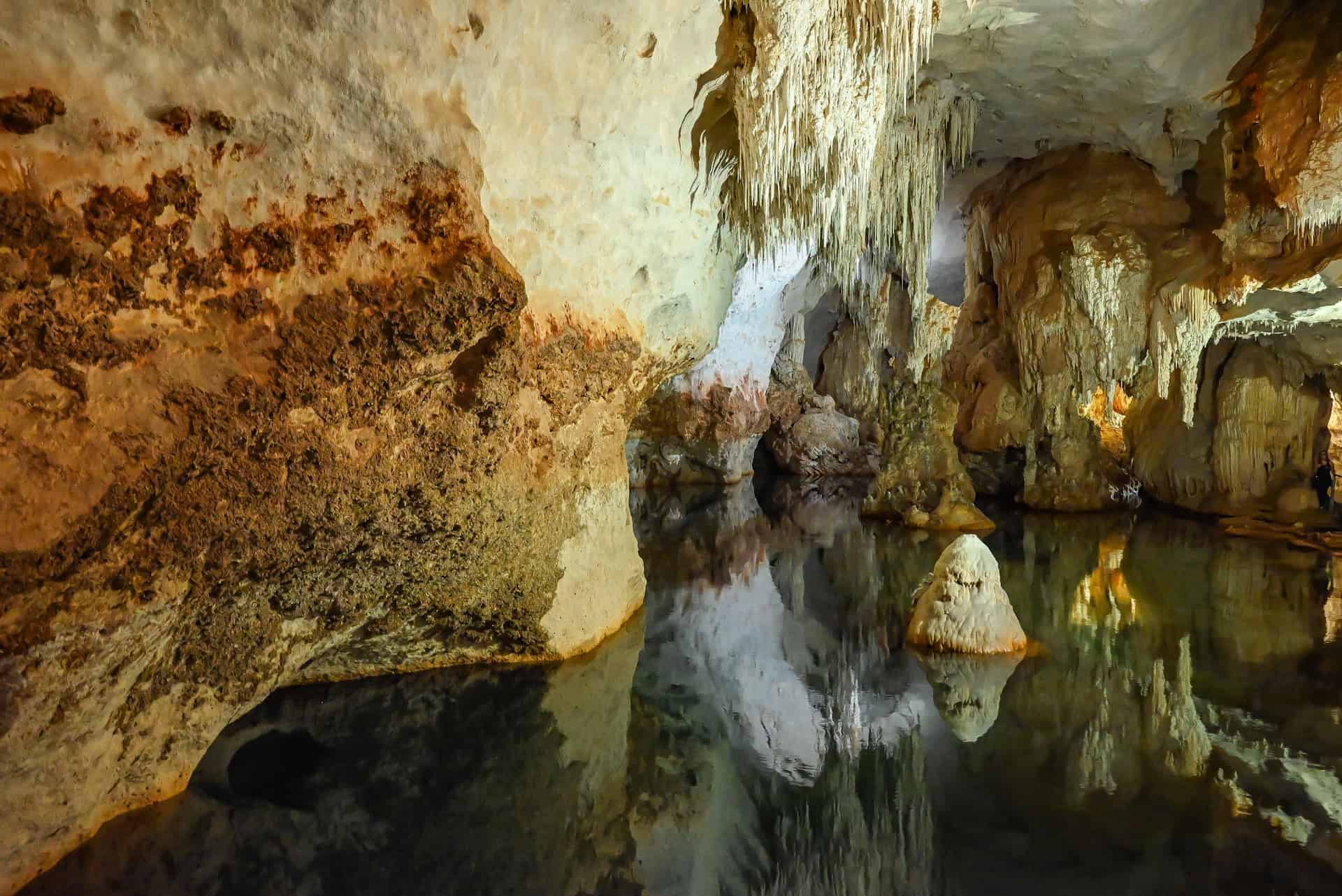
Hall of Mirrors (Sala degli Specchi): This was one of our favorite sections of the visit. Here, still underground pools create beautiful reflections of the surrounding rock formations. When the water is calm, the surface acts almost like a mirror, making it one of the most photogenic parts of the cave.


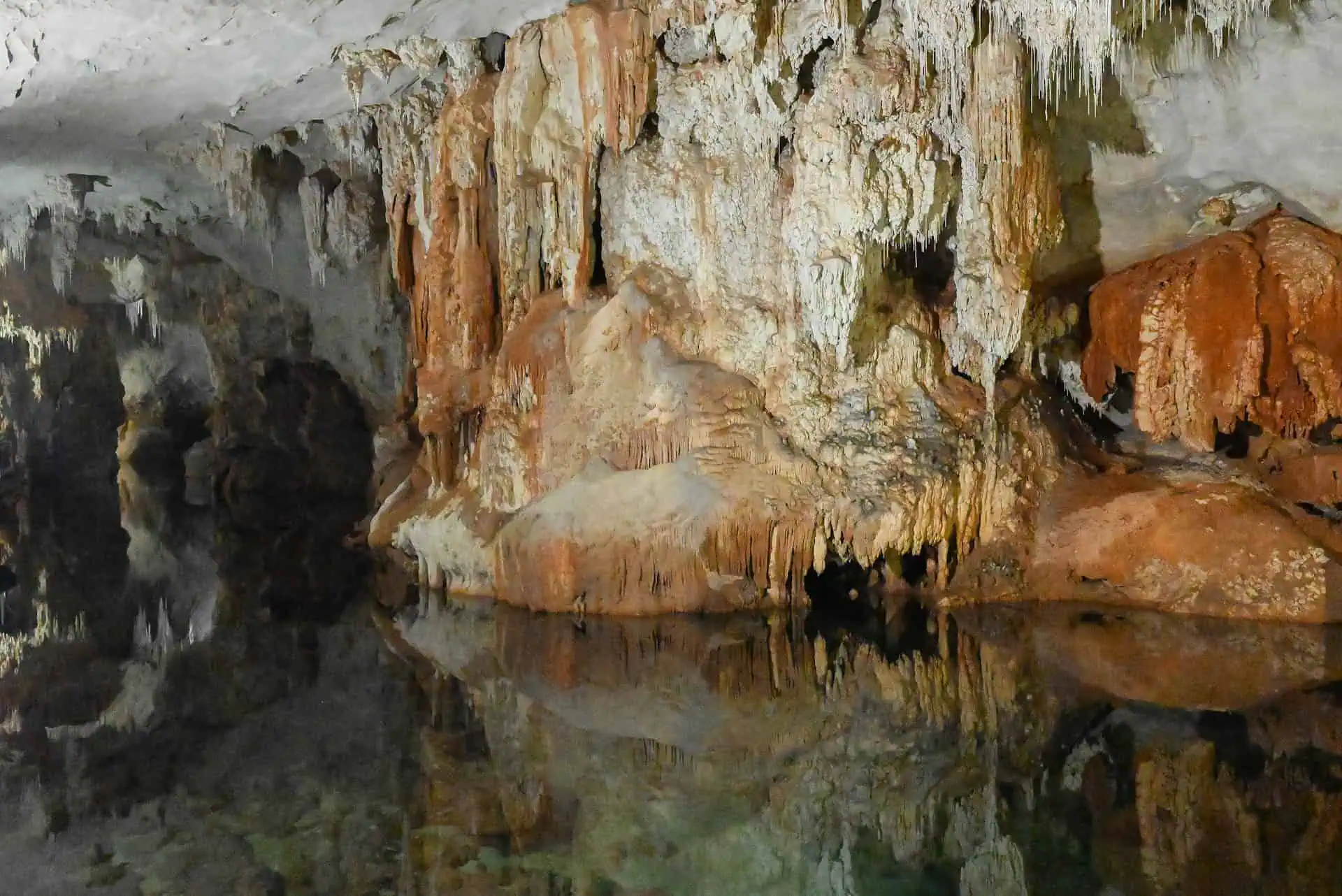
Organ Hall (Sala dell’Organo): This large chamber is named for its tightly packed vertical limestone formations, which resemble the pipes of a giant church organ. It’s a good example of how varied the cave scenery is, with each chamber having a noticeably different character.
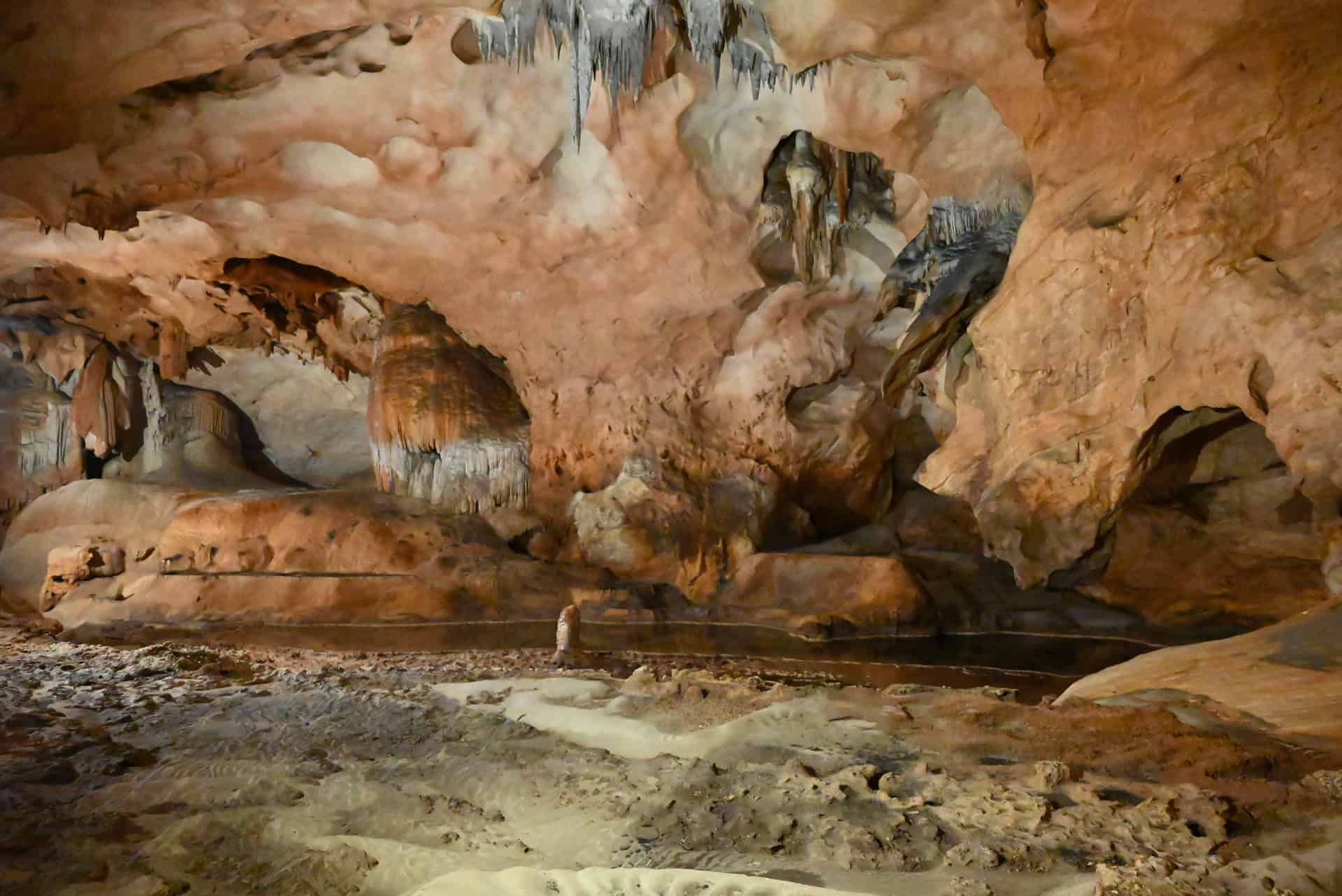
Seal Hall / Monk Seal Beach (Sala della Foca / Spiaggia delle Foche): The final stop of the tour is one of the most memorable areas inside the cave. This chamber features an underground sandy beach and a freshwater stream, and it is closely tied to the cave’s name. “Bue Marino” refers to the Mediterranean monk seal, which once used this part of the cave as a shelter and breeding area.


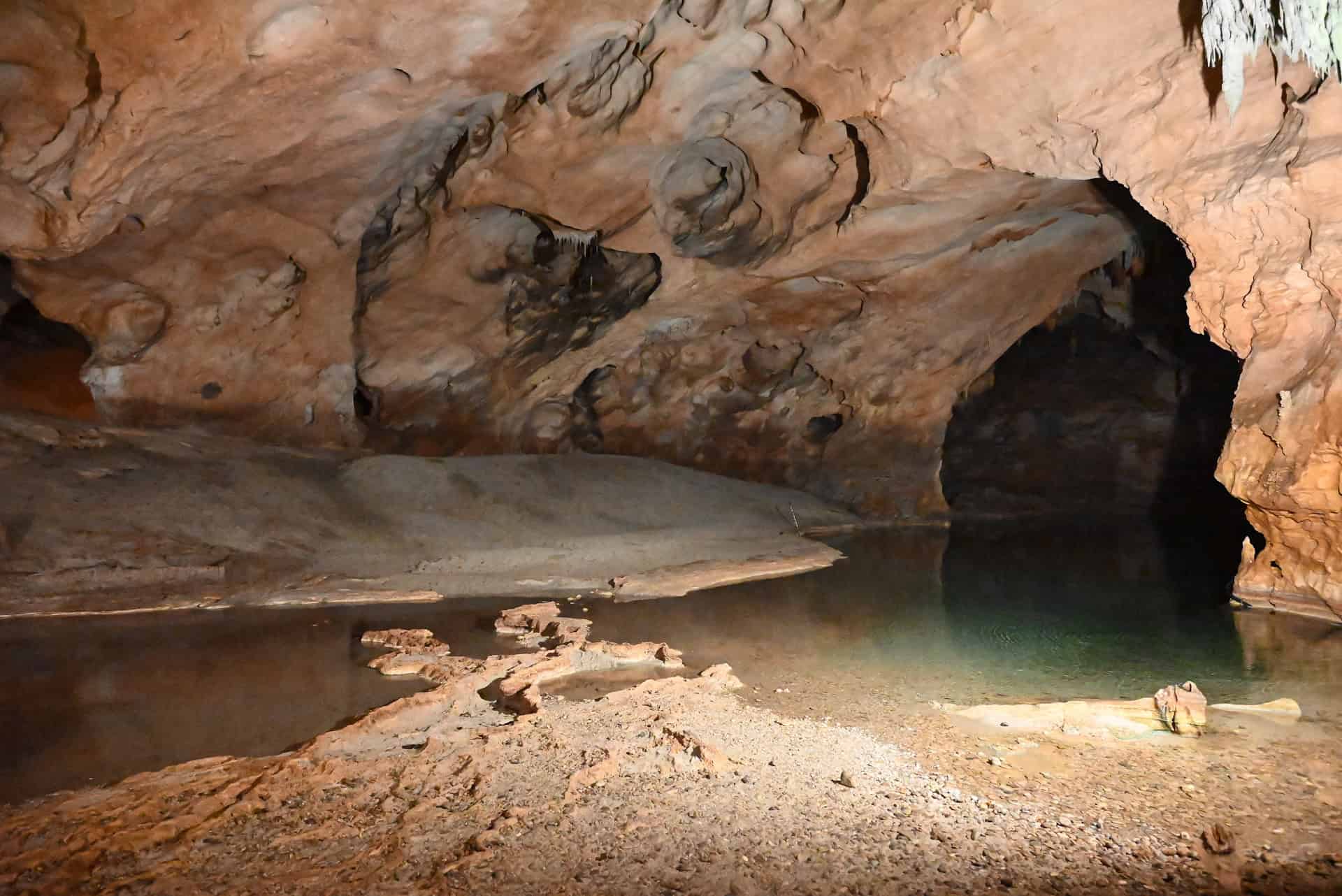
Good to know
– Although the boardwalk isn’t particularly slippery, we do recommend wearing comfortable walking shoes.
– Bringing extra layers even in mid-summer is generally a good idea, the temperature inside the cave is between 16°C and 18°C year-round
About Grotta del Bue Marino
The Grotta del Bue Marino is truly a massive subterranean wonderland, but casual visitors only see a tiny fraction of it. While the standard guided tour follows a flat, 1-kilometre wooden boardwalk, the full interconnected cave system spans a staggering 70 kilometres, making it one of the largest underground networks in Italy.
Beyond Seal Hall, the cave’s hidden world is reserved entirely for advanced cave divers who navigate a labyrinth of completely submerged tunnels, often plunging over 50 metres deep.
Grotta del Bue Marino – Is it Worth it?
Yes, we definitely think so. Of the three caves we visited in Sardinia, Grotta del Bue Marino was probably our favorite.
The other caves were impressive too, but the visits themselves had a few drawbacks. Grotta di Ispinigoli, also near Cala Gonone, features one of the tallest stalactite-stalagmite columns in Europe, but the visit felt quite short. Grotta di Nettuno, near Alghero, is also spectacular, but it felt much more crowded during our visit.
Why You Might Enjoy It:
– Easy excursion from Cala Gonone
– Includes a short boat ride with coastal views
– Great if you enjoy cave visits, limestone chambers, stalactites, and stalagmites
– The still reflective pools make for beautiful photography, even in the low light
Why It Might Not Be for You:
– The visit is structured and guided, not an independent cave exploration
– It can still feel busy in peak season, though we found it less overwhelming than Grotta di Nettuno
Bottom line: Grotta del Bue Marino is worth visiting if you’re based in Cala Gonone and enjoy impressive cave systems.
Best Time to Visit Bue Marino
Best Time of Year
The best time to visit Grotta del Bue Marino is during the shoulder season, especially May, June, and September. These months usually offer the best balance of pleasant weather, active boat services, and reduced crowds compared to peak summer.
Visits typically run from early April until late October, though schedules can vary by season and weather conditions. April and October can also be good months to visit if you want a quieter experience, but there is a greater risk of cooler weather, rougher seas, or cancellations.
July and August offer the most frequent departures, but they are also the busiest months, so booking ahead is especially recommended.
Best Time of Day
Morning is generally the best time to visit Grotta del Bue Marino.
The boat ride from Cala Gonone is short, but access still depends on sea conditions. Winds and sea swell are more likely to build later in the day, which can increase the risk of delays or cancellations. Morning visits also make it easier to combine the cave with Cala Luna or a longer Gulf of Orosei boat trip afterward.
Other Places to Visit Near Bue Marino
Cala Luna
Cala Luna is one of the most iconic beaches along Sardinia’s Gulf of Orosei, near Cala Gonone, known for its turquoise water, dramatic limestone scenery, and large sea caves that line the back of the beach.
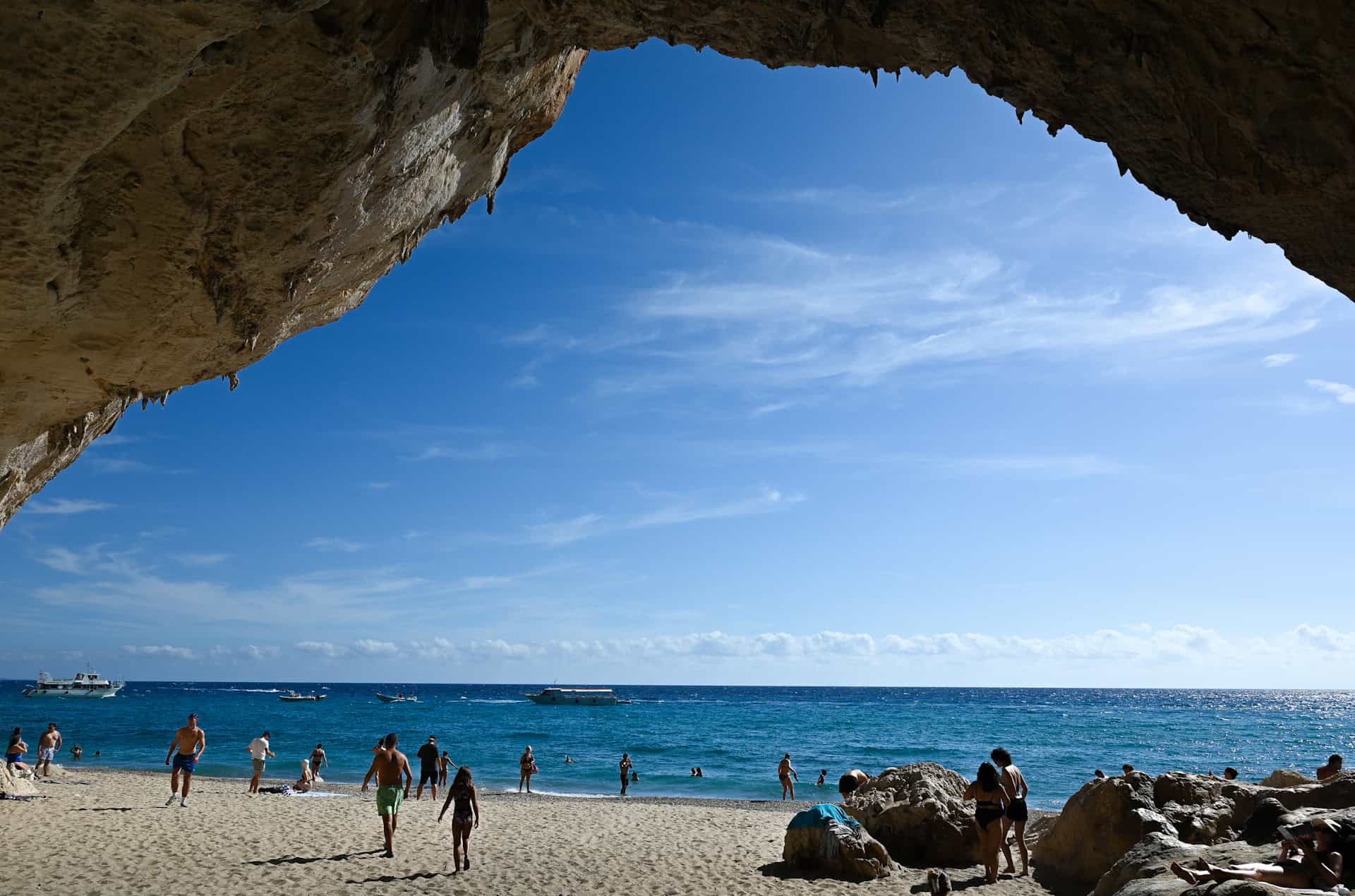
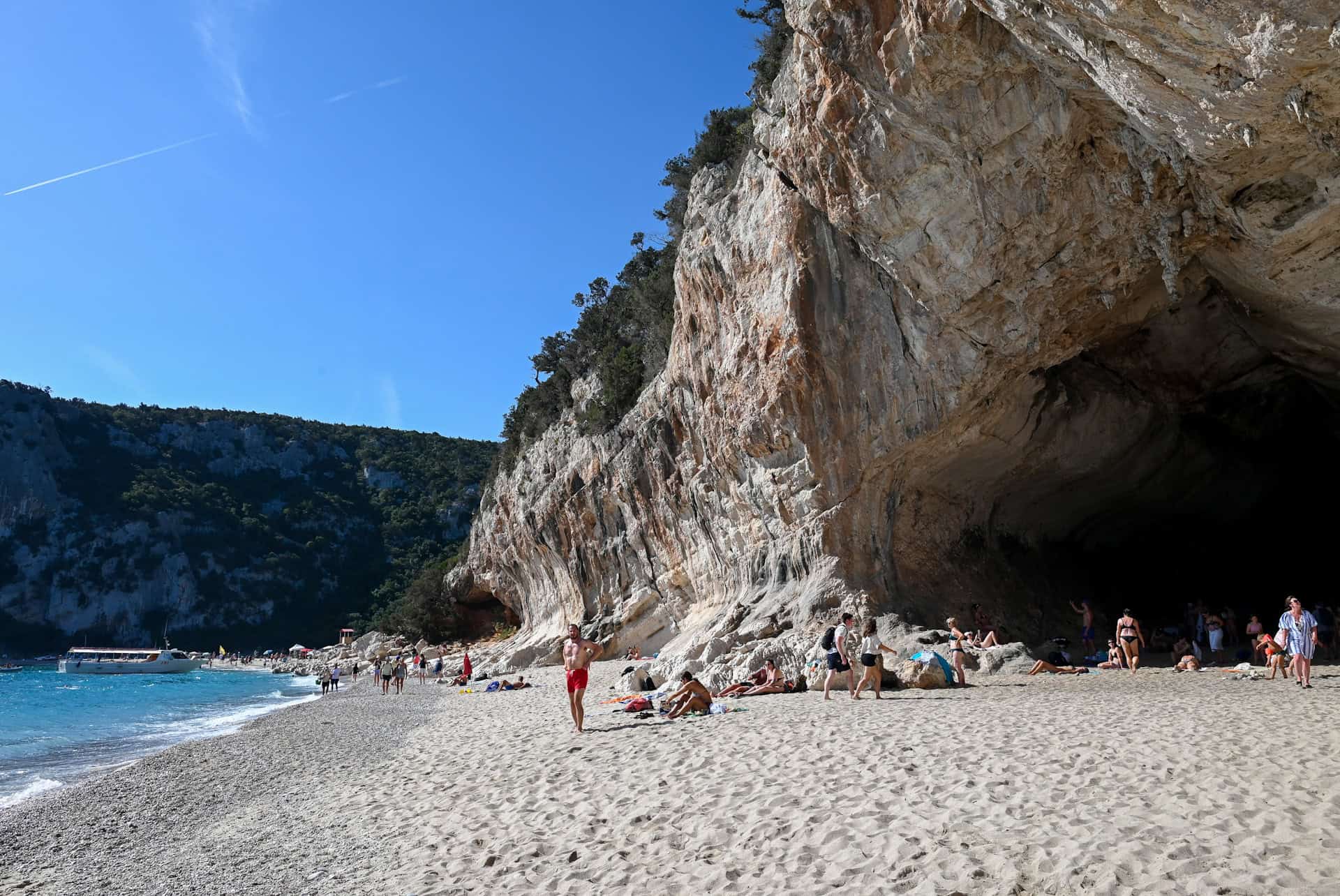


The beach can be reached:
- by boat from Cala Gonone
- or via a moderately challenging hiking trail from Cala Gonone
For more details and hiking tips, see our Cala Luna Guide.
Cala Goloritzé
Cala Goloritzé is one of the most striking beaches along Sardinia’s Baunei coast. While Cala Luna is easier to access by boat and offers more space for a beach day, Cala Goloritzé feels more remote and tightly controlled. The beach is smaller, rockier, and reached primarily by a hiking trail from Su Porteddu, with mandatory advance reservations and a daily visitor cap.
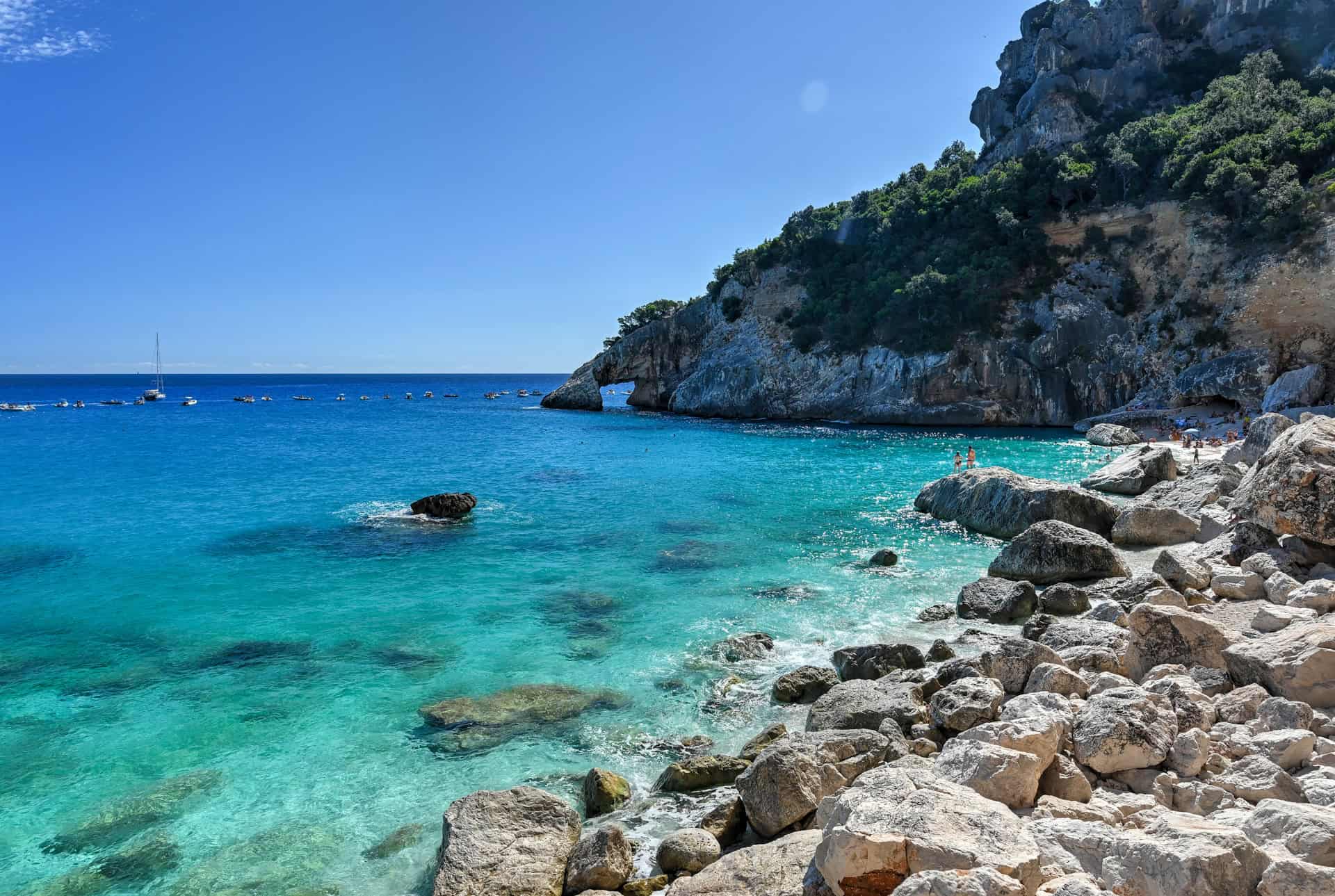


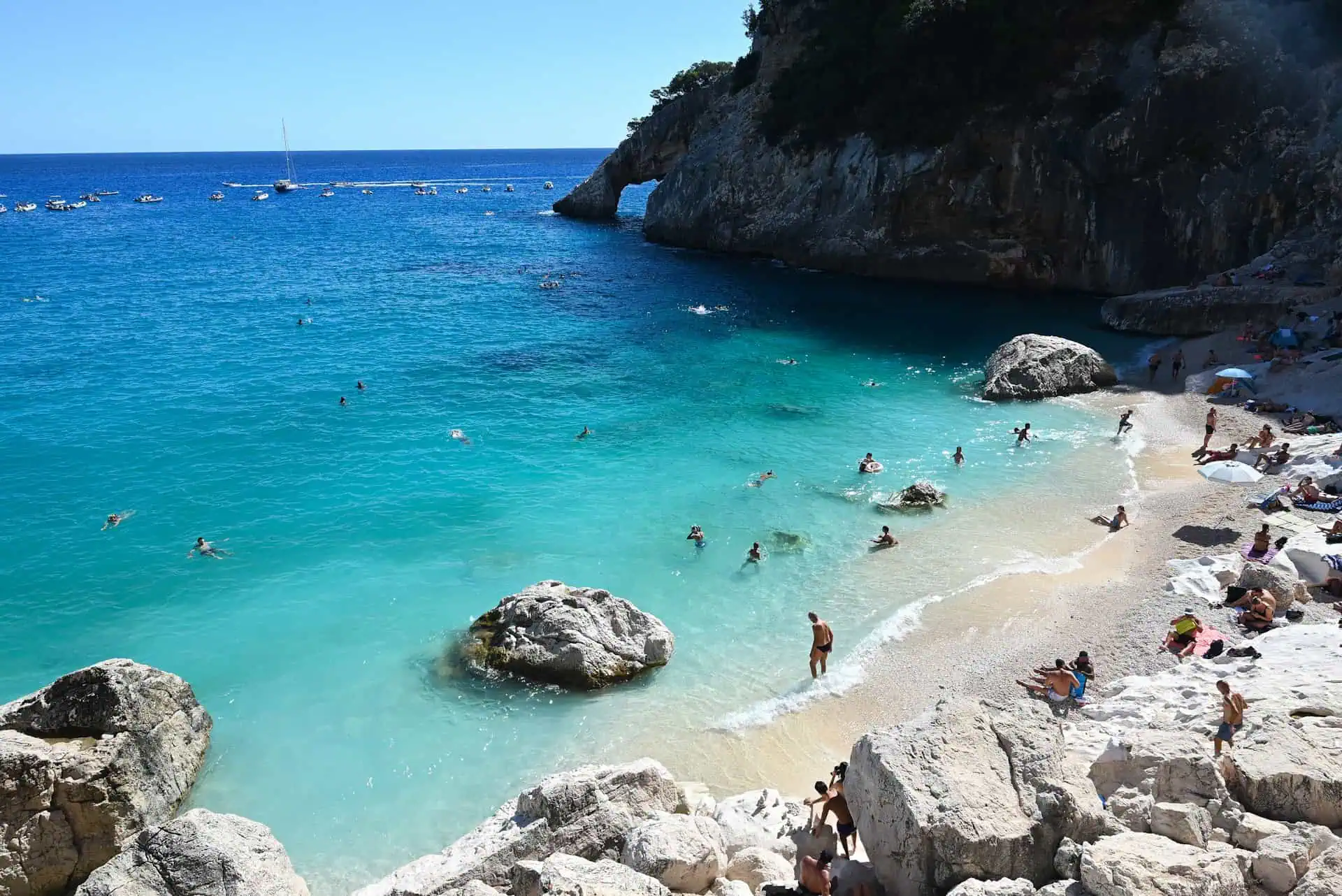
For more details and hiking tips, see our Cala Goloritzé Guide.
Cala Gonone
Cala Gonone is the main tourist hub along this section of Sardinia’s east coast and one of the most practical bases for exploring the Gulf of Orosei.


From here, you can:
- Join boat tours to beaches like Cala Luna and Cala Goloritzé
- Visit Grotta del Bue Marino
- Arrange kayaking or snorkeling excursions
- Get direct access to some beautiful sandy beaches
Compared to smaller coastal villages farther south, Cala Gonone offers a wider range of accommodations, restaurants, and services, making it a convenient base for several days of exploring the coastline.
For more details, tips, and boat tour suggestions, see our Cala Gonone Guide.
Where to Stay Near Bue Marino
When visiting Bue Marino, most travelers stay in Cala Gonone, which is the most practical and enjoyable base for exploring the area.
Staying in Cala Gonone
A modern and well-rated stay located close to the waterfront, offering comfortable rooms and easy access to Cala Gonone’s beaches, restaurants, and boat departures. Its location makes it particularly convenient for visitors planning multiple excursions along the Gulf of Orosei.
A stylish adults-oriented hotel located near the seafront, known for its clean contemporary design and excellent location within walking distance of the harbor and town center. A good option for travelers looking for a quieter and more relaxed stay in Cala Gonone.
Bue Marino Frequently Asked Questions (FAQ)
Can you visit Grotta del Bue Marino without a boat?
No. Grotta del Bue Marino can only be reached by sea, with boats departing from Cala Gonone.
How long is the visit to Grotta del Bue Marino?
The guided cave tour usually lasts around 50–60 minutes. If you are doing a stand-alone visit from Cala Gonone, plan for about 2 hours total, including the boat ride to the cave, the guided visit, and the return trip.
Where do boats to Grotta del Bue Marino leave from?
Most boats leave from the port of Cala Gonone. The boat ride to the cave is short, usually around 15–20 minutes each way.
Can you combine Grotta del Bue Marino with Cala Luna?
Yes. Grotta del Bue Marino is often combined with Cala Luna, either as part of a larger Gulf of Orosei boat tour or a shorter excursion focused on the cave and beach. This is one of the easiest ways to visit both places on the same day.
Is Grotta del Bue Marino suitable for kids?
Yes, for most families. The visit follows a guided route along an elevated boardwalk with guardrails, so it is not physically demanding. Just keep in mind that the route is structured, the cave lighting is low, and younger children may need supervision near the railings and during the boat ride.
Do you need to book Grotta del Bue Marino in advance?
You may not always need to book far in advance, but it is strongly recommended in summer or if you want a specific time slot. Morning visits are especially worth booking ahead, as they tend to be more popular and are generally better for sea conditions.
Is Grotta del Bue Marino worth visiting if you’ve seen other caves?
Yes, especially if you are already staying in Cala Gonone. What makes Grotta del Bue Marino stand out is the combination of the short boat ride, large cave chambers, elevated boardwalk, underground water, and reflective pools.
Can you swim in Grotta del Bue Marino?
No. The visit is a guided walking tour inside the cave, and swimming is not allowed.
Photography Gear
If you like our photography, you might be interested in some of the gear we use to shoot our travel and hiking destinations.
Camera Body – Nikon Z 6ii Fx-series Mirrorless Body
Main Lens – NIKON 24-120mm F/4G ED VR AF-S
Zoom Lens – Sigma 745-306 150-600mm f/5-6.3
Polarizing filters – Urth Circular Polarizing (CPL)
Camera Tripod – K&F Concept 64-inch Camera Tripod
Mini-tripod – Lammcou Flexible Camera Tripod
Camera/hiking backpack – Vanguard Alta Rise 48 Backpack
Universal Travel Adapter – VYLEE Universal International Power Travel Plug
Other Travel Essentials
Travel Insurance
SafetyWing is a travel insurance company that offers comprehensive coverage for travellers. Includes Medical Insurance and Travel Insurance. Primarily geared towards long-term travellers, digital nomads, and expats.
e-Sim cards
Airalo is the world’s first and largest eSIM store with eSIM plans for 200+ countries and regions worldwide. With Airalo eSIMs, travellers can get connected the moment they land at their destination and avoid nasty data roaming charges
eSIMS are a sustainable alternative to single-use SIM cards – they are 100% digital, require less energy to produce and be re-used rather than disposed of.
Car Rentals
Discover Cars is our go-to website for car rentals. We almost always find our preferred rate there.
Transfer from Airport
Welcome Pickups is our favourite private transfer service, which you can pre-book at a fixed price. Currently available in 220 cities all over the world (mostly in Europe, but with several major cities in Asia, the Middle East and the US).
Kiwitaxi is another private transfer service – we haven’t tried it yet, but it’s currently available in a few more countries (102 as of 2024).
Hotels and Accommodations (coming soon)
Photography Prints
If you found this blog useful, you can help support our blog by purchasing low-cost digital prints. Printed physical prints are also available for purchase.


—–
Well, that wraps it up! We hope you enjoyed our Gotta del Bue Marino Guide and that it will prove useful for planning your trip to Sardinia.
—–
You might also be interested in these related pages: