Nuragic Complex Romanzesu, a large Nuragic village-sanctuary spread across roughly seven hectares, is one of the most atmospheric archaeological sites we visited in Sardinia, and definitely one of our favorites along with Serra Orrios. Set within a quiet cork oak forest near Bitti, Romanzesu is filled with the remains of circular huts, ritual areas, and ceremonial spaces connected to water worship. The site feels more remote and off the beaten path than many of the island’s better-known Nuragic ruins.
To help you plan your visit, we put together this guide for the Nuragic Complex Romanzesu, which includes information on how to get there and what to expect inside this stunning archeological site.
Nuragic Complex Romanzesu – At a Glance
Location
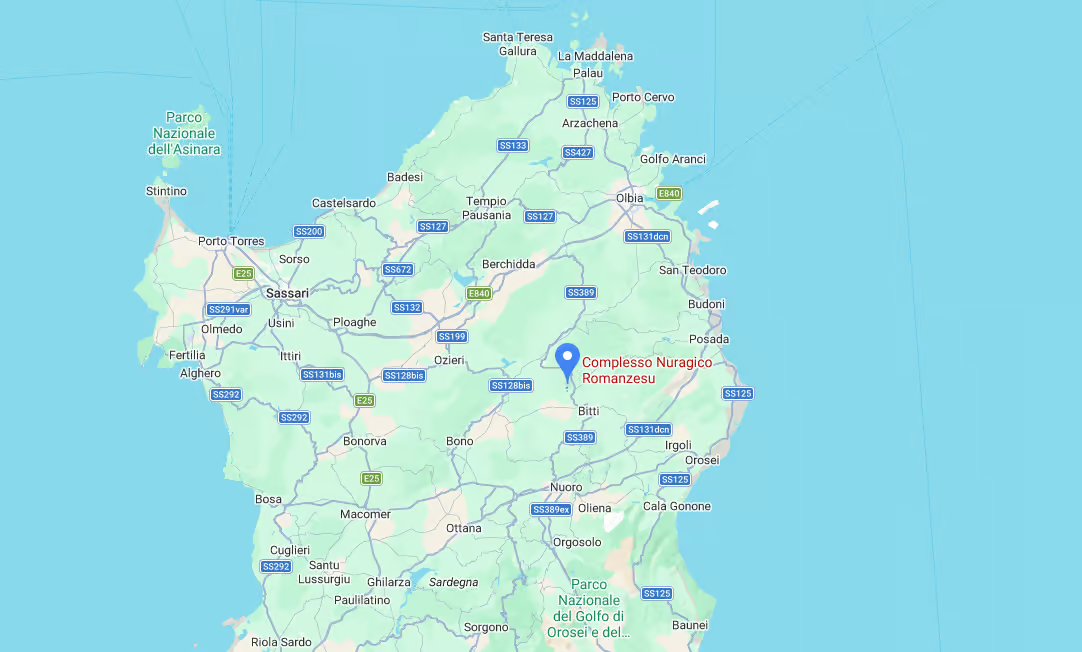
Nuragic Complex Romanzesu is located near Bitti, in inland northeastern Sardinia.
How to Get There
The easiest way to reach Romanzesu is by car. The site is more remote than many other Nuragic sites, so it works best as part of a road trip through inland Sardinia.
Site & Visit info
– Self-guided visit through a large forested archaeological site
– Time required: expect to spend about 45-60 minutes
– Entrance fees: €6 per adult (2026)
Good to know
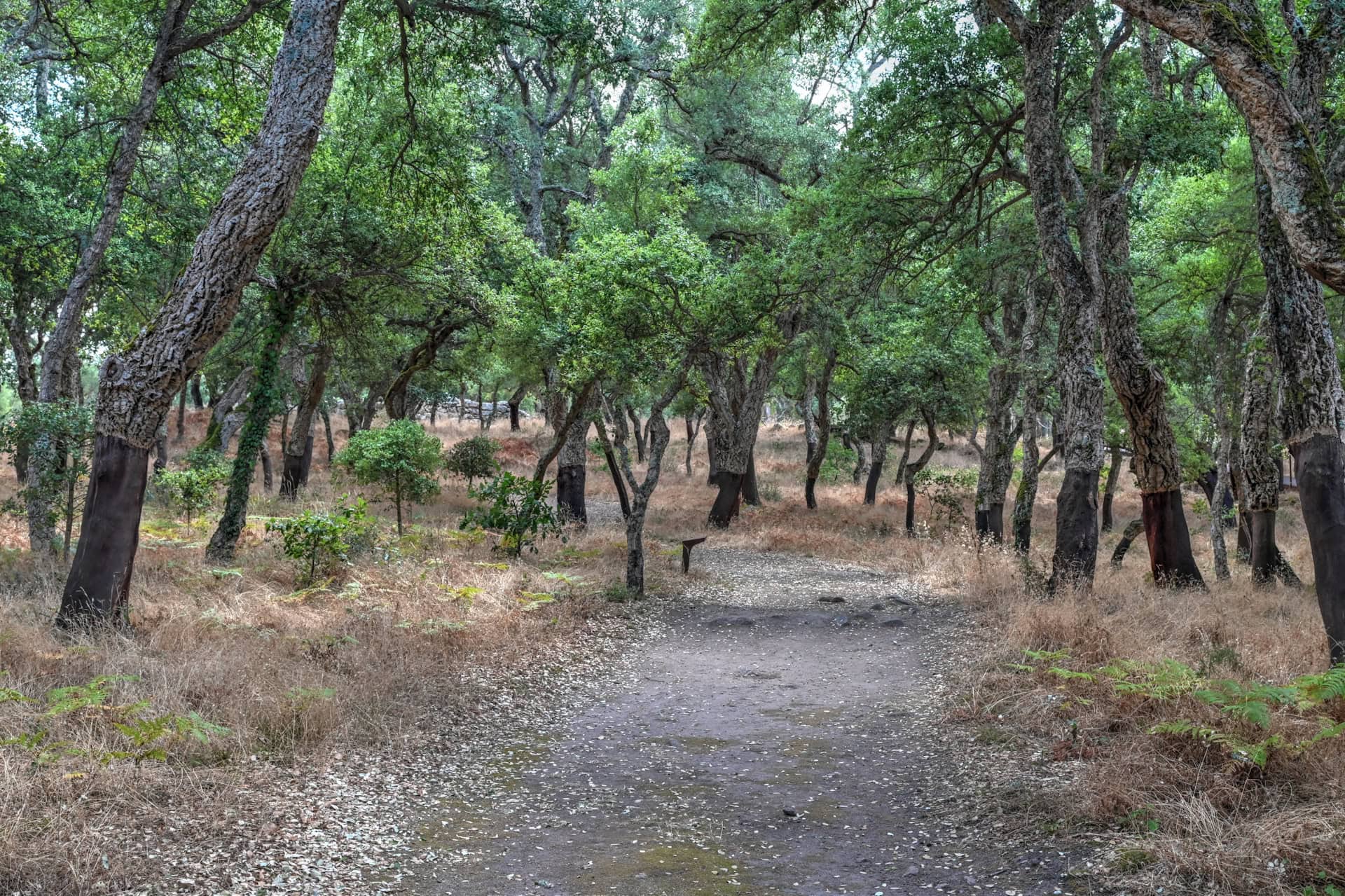
– The atmospheric forest setting is one of the main reasons to visit
– Romanzesu is more spread out than many Nuragic sites, so expect more of a walk through forest paths than a quick monument visit
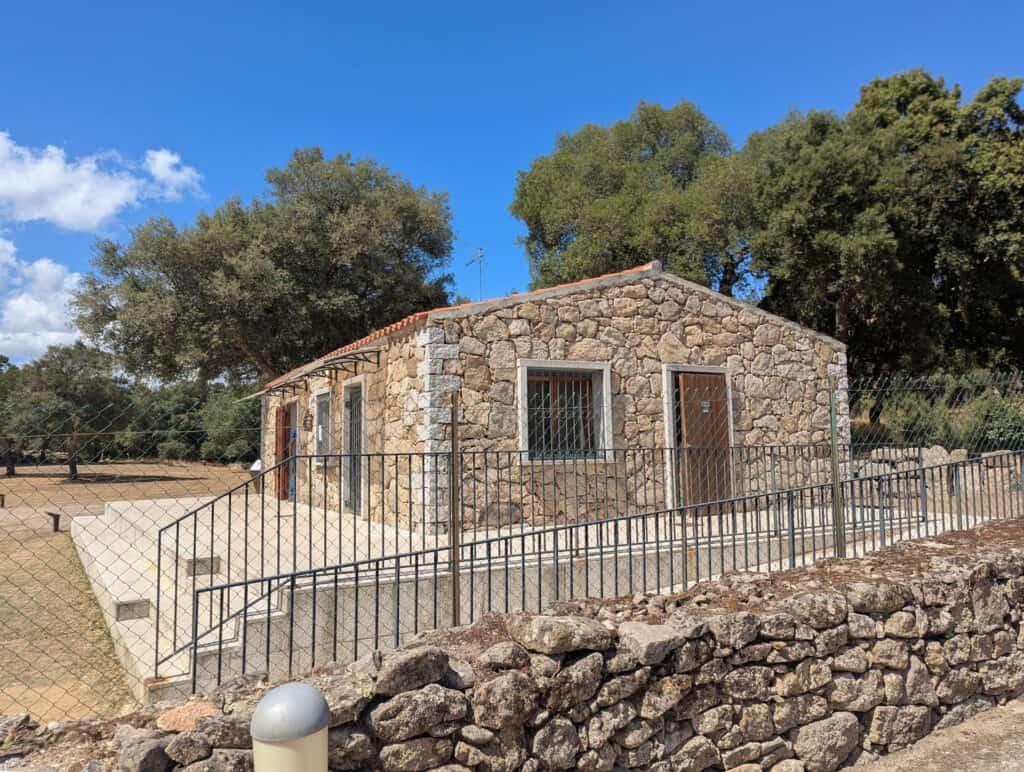
– Washrooms are located by the ticket shop


Disclosure: This page (Nuragic Complex Romanzesu Guide) may contain product affiliate links. At no additional cost to you, we may receive a commission for purchases made through these links. More details can be found on our disclosure and policies page.
Nuragic Complex Romanzesu: Location, Map, and How to Get There
Nuragic Complex Romanzesu is located in inland northeastern Sardinia, near the town of Bitti. It sits in a quiet forested area, away from the coast and farther off the main tourist route.
Getting to Nuragic Complex Romanzesu
Driving is by far the most practical way to reach Romanzesu as public transit options are limited to non-existent.
The last 2 km stretch before arriving at the site is on a narrow but paved rural road, so we recommend driving more slowly during this final stretch.
Typical driving times:
From Dorgali: 50 minutes (50 km)
From Orosei: 50 minutes (50 km)
From Cala Gonone: 60 minutes (60 km)
From Olbia: 70 minutes (75 km)
If you need to book a rental vehicle for your travels, we highly recommend using Discover Cars to get the best rates on your rental in Sardinia.
We also highly recommend Airalo (eSIM card) for your connectivity needs when travelling abroad. Airalo is the world’s first and largest eSIM store with eSIM plans for 200+ countries and regions worldwide.
Nuragic Complex Romanzesu: Entrance Fees and Opening Hours
Entrance Fee
Entrance to Nuragic Complex Romanzesu costs €6 for adults (2026) for a standard self-guided visit, with reduced rates available for children.
There is also a combined ticket that includes Romanzesu and the museums in Bitti (which can be a good option if you are planning to spend more time in the area).
Guided tours are typically offered several times per day, with schedules varying between summer and winter. If you are interested in a guided visit, it is worth checking the current schedule in advance or confirming at the ticket office when you arrive.
Operating Hours
Nuragic Complex Romanzesu generally opens at 8:30/9:00 AM throughout the year, but closing times vary depending on the season. As a general rule, the site closes between 5:00 PM and 7:00 PM, with the latest closing times during the summer.
Important to know: The site also typically closes for a 1-3 hour midday break, usually from 1:00 PM to 2:00 PM (when it closes at 5 PM), or 3:00 PM (when it closes at 7 PM), depending on the time of year.
Facilities
There are washrooms by the ticket office.
Good to Know
The site is also more spread out than a typical nuragic site built around a central tower. Expect to walk more than usual between the different archaeological structures, ritual areas, and forested sections.
On the plus side, most of the site offers good shade throughout thanks to the dense cork oak forest surrounding the site.
Nuragic Complex Romanzesu – A quick history
Nuragic Complex Romanzesu dates back to the Nuragic period, a prehistoric civilization that developed in Sardinia beginning around 1800 BCE, nearly 4,000 years ago. The site itself is generally associated with the Bronze Age and is often dated as far back as the 14th century BCE.
Romanzesu was not just a residential village, but a large sanctuary-village where people lived, gathered, and carried out ritual activities. The site includes around one hundred huts, several worship buildings, megaron temples, a sacred well, and ceremonial spaces closely linked to water worship. This makes it one of the most important Nuragic religious complexes in Sardinia.
The site was first documented in 1919 by archaeologist Antonio Taramelli. Its name likely comes from later Roman activity in the area, as “Romanzesu” is connected to the presence of Roman remains dating to the 2nd–3rd centuries AD. Today, the site is one of the most atmospheric Nuragic complexes to visit, thanks to its mix of archaeological remains and quiet forest setting.
Nuragic Complex Romanzesu – What to Expect during your Visit
Once you arrive at Nuragic Complex Romanzesu, you are free to explore the archaeological site at your own pace. There is no forced circuit, so you can wander through the ruins in whichever order you prefer.
Well-marked paths wind through the forest between the dwellings, temples, and ceremonial areas, with information panels placed near the most important structures. Many of the signs include explanations in Italian, French, and English, and additional context on the site’s layout and history is usually provided through pamphlets available at the ticket office


One of the things that makes Romanzesu so memorable is its setting. The ruins are scattered through a quiet cork oak forest, with many of the granite structures partly hidden beneath the trees. Walking through the filtered shade gives the site an almost Indiana Jones-esque feel, and it was easily the most atmospheric archaeological site we visited in Sardinia.
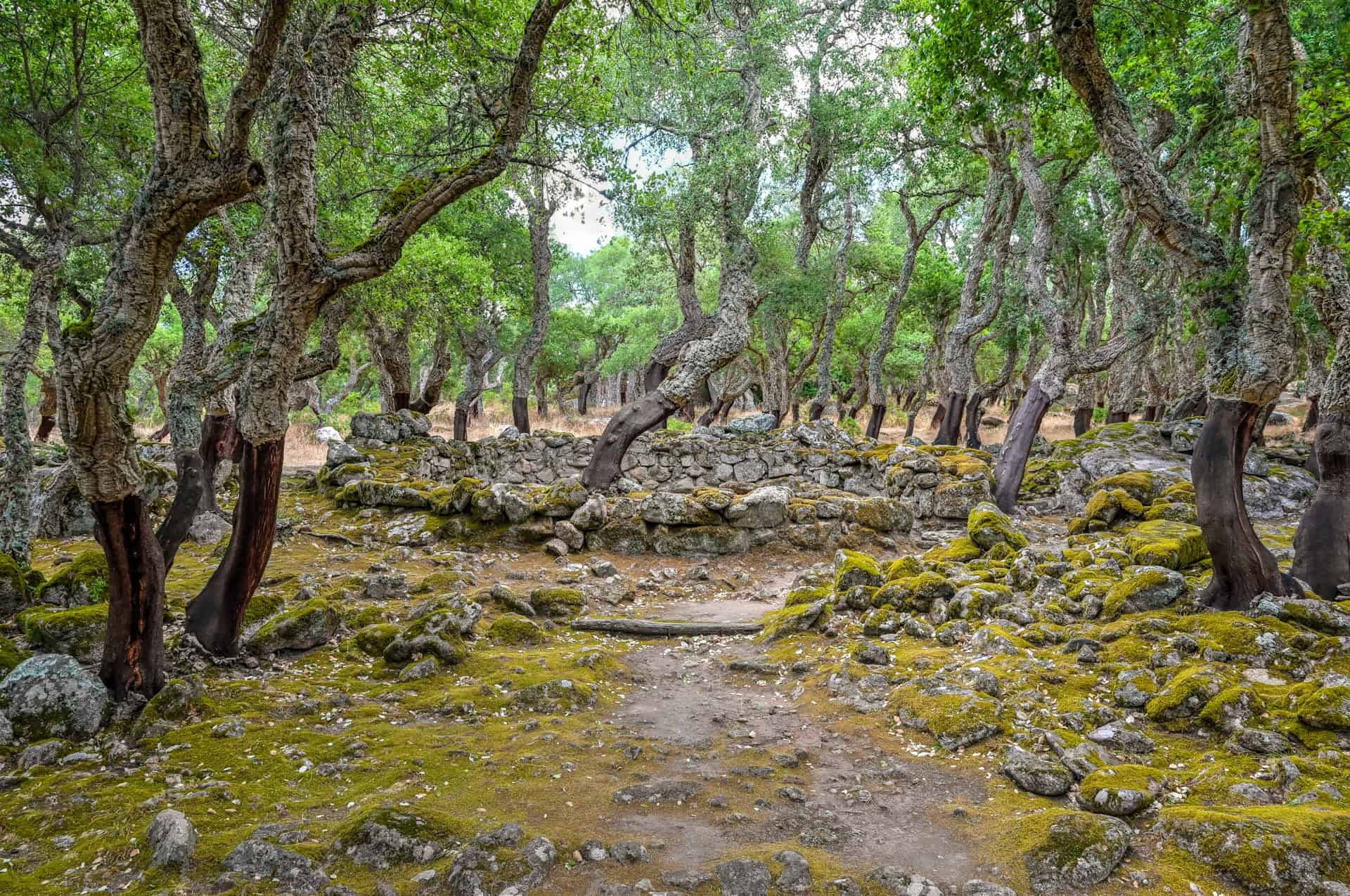


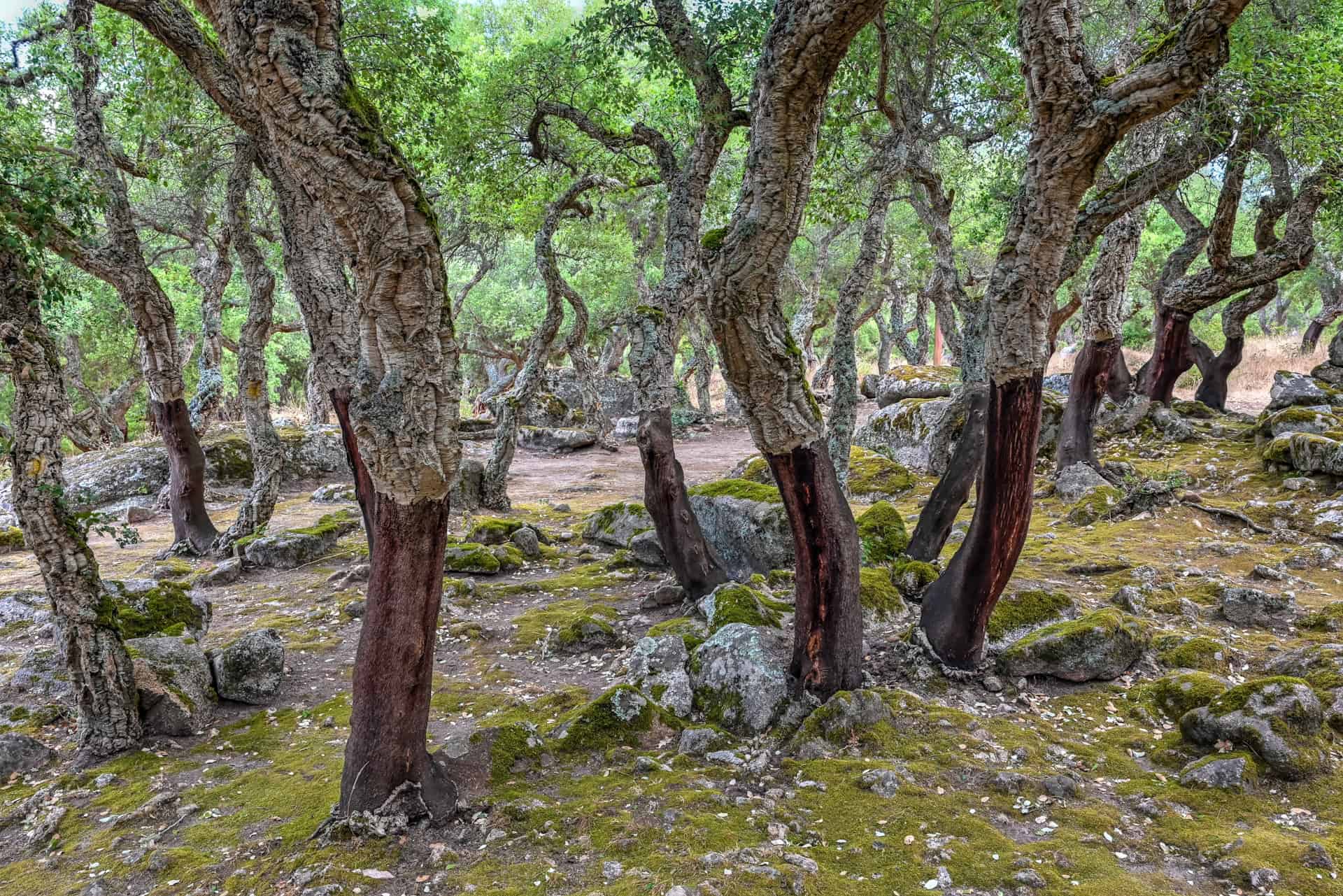
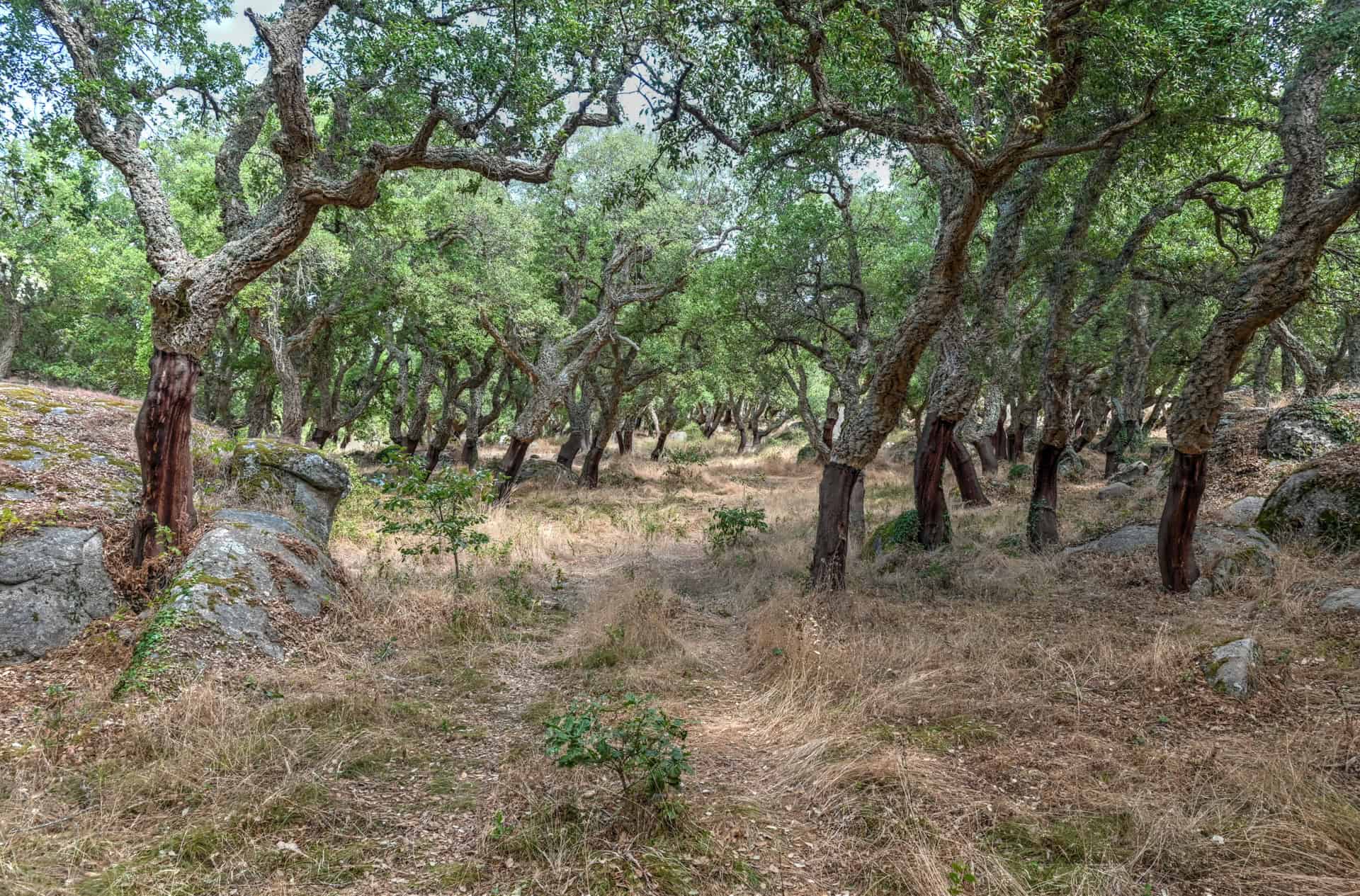
Romanzesu is also more varied than many Nuragic sites. The complex spreads across a wide area and includes residential spaces, ritual buildings, ceremonial enclosures, and water-related sacred structures. Visitors can walk among the foundations of roughly 100 round and ovoid huts, which would once have had stone bases, insulation materials such as cork, and wooden conical roofs.


Near the beginning of the visit, two of the first major structures you’ll likely encounter are the ceremonial enclosure, sometimes described as a labyrinth-like ritual space, and Megaron Temple A (“megaron” refers to a rectangular temple layout, and this type of building is associated with sacred Nuragic architecture), immediately highlighting Romanzesu not only as a place where people lived, but also a major sanctuary where ritual activities took place.
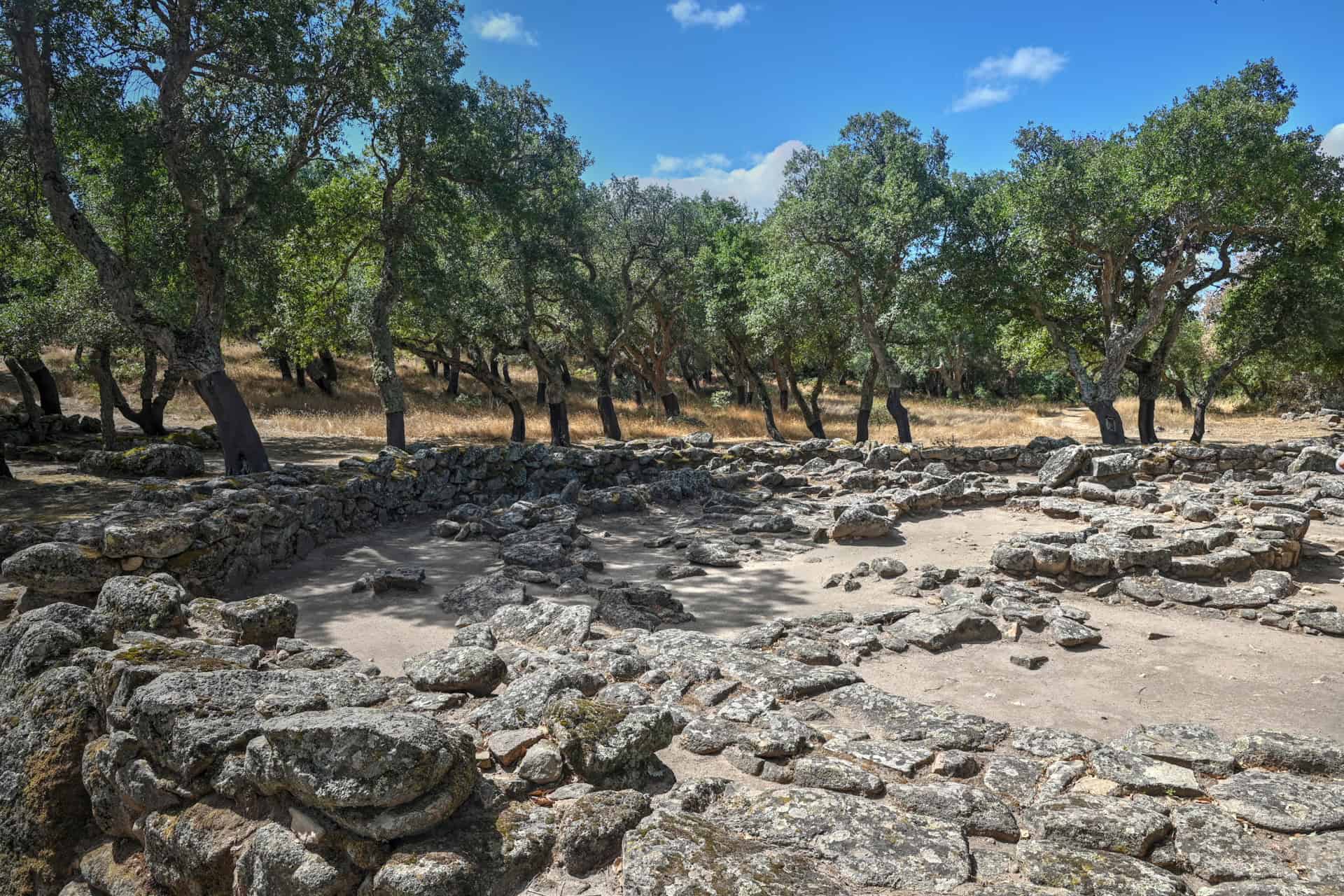
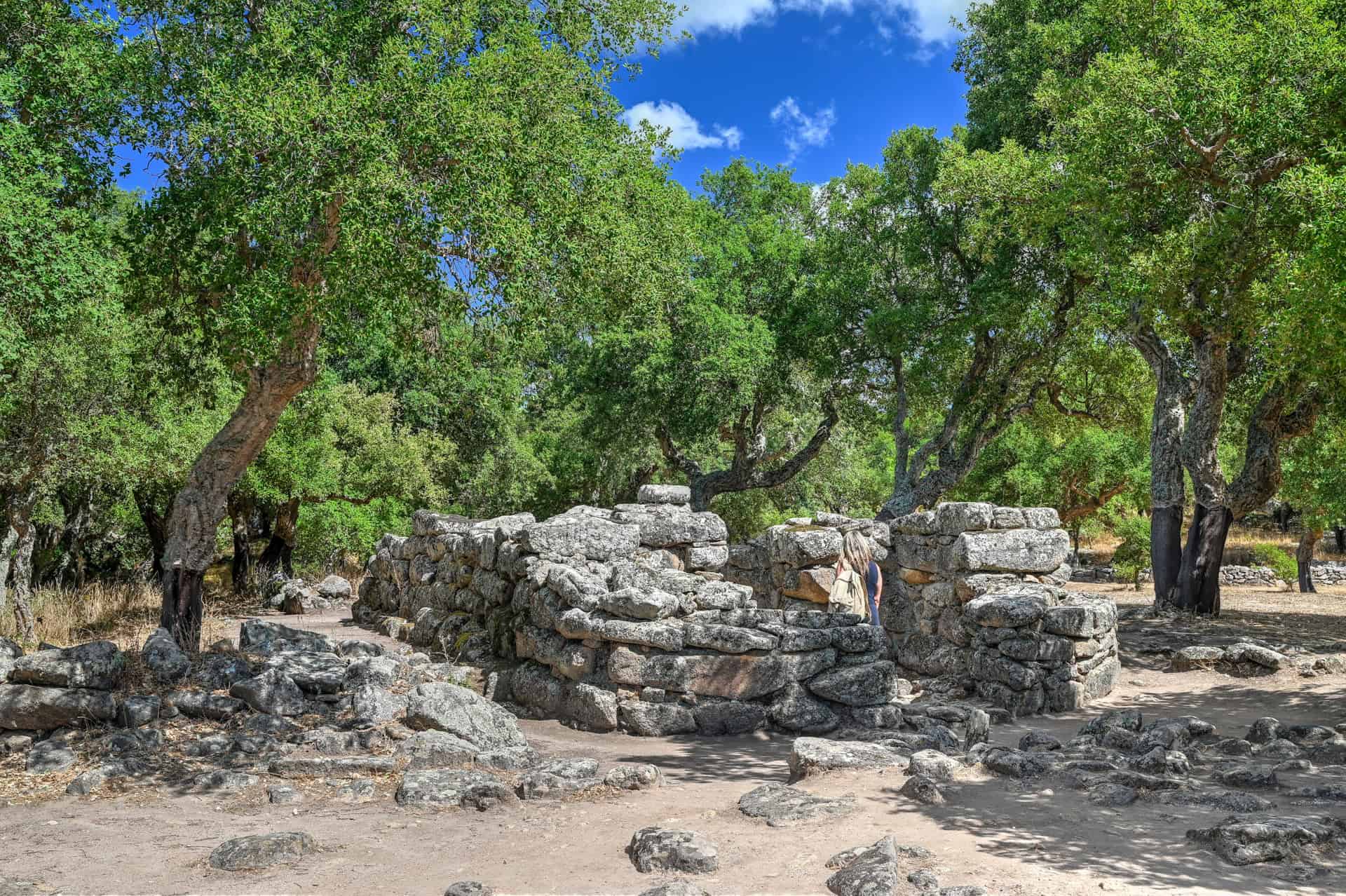


Probably the main highlight is the sacred well and ceremonial basin, one of the most distinctive features of the complex. This area is linked to water worship and ritual gatherings, with a sacred spring, stone channels, and a ceremonial basin that would have played an important role in the religious life of the site. The structure is especially interesting because it combines practical water management with ritual architecture, which is one of the recurring themes at Romanzesu.
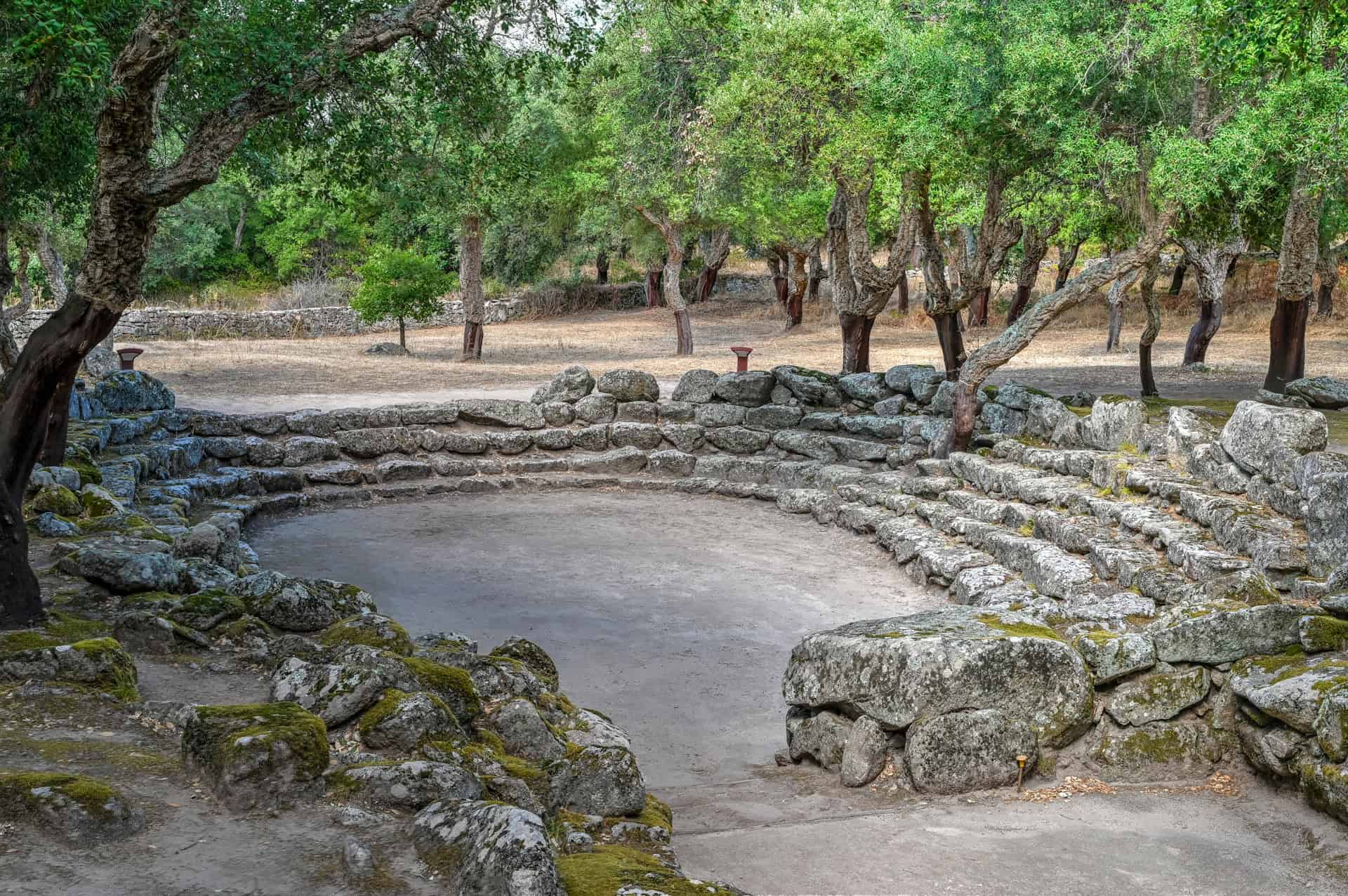


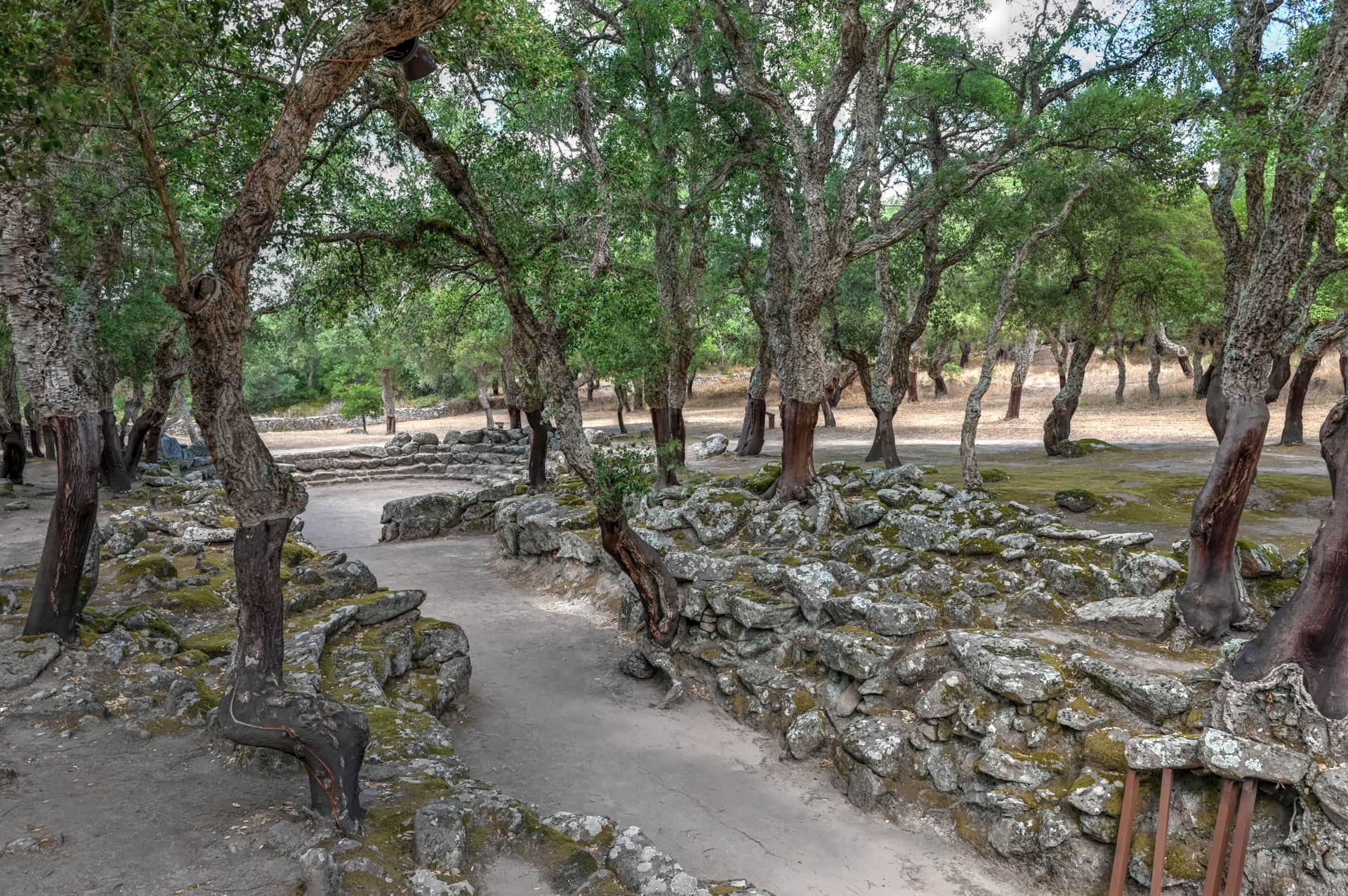
Overall, Romanzesu is not a site where one single monument draws you in, rather, we feel that its appeal primarily comes from the combination of its scattered ruins, sacred structures, and atmospheric forest paths.
Nuragic Complex Romanzesu – Is it Worth it?
Yes, we definitely think Nuragic Complex Romanzesu is worth visiting, especially if you are interested in Sardinia’s Nuragic history and enjoy archaeological sites with a strong sense of atmosphere.
Why You Might Enjoy It:
– One of the most atmospheric Nuragic sites we visited in Sardinia
– Beautiful forest setting that makes the site feel quiet and off the beaten path
– More varied than many sites, with huts, megaron temples, a sacred well, and ceremonial areas
– Easy self-guided visit with information panels in English
Why It Might Not Be for You:
– It is more remote and requires a deliberate detour compared to other major sites
– It may feel too low-key if you prefer large, visually dominant monuments
Bottom line: Nuragic Complex Romanzesu is worth visiting if you want to experience one of Sardinia’s most atmospheric Nuragic sites. It is not the easiest archaeological stop to reach, but the quiet forest setting, ritual structures, and off-the-beaten-path feel made it one of our favorite Nuragic visits on the island.
How Long Do You Need in the Nuragic Complex Romanzesu
We think that 45–60 minutes is a good amount of time to explore the site properly at a slow pace, though you may want to stay a little longer if you enjoy archaeology, photography, or simply want to linger in the beautiful atmospheric setting of the nuragic site.
Best Time to Visit the Nuragic Complex Romanzesu
Best Time of Year
Nuragic Complex Romanzesu can be visited at any time of year. That said, summer visits can feel hot, but fortunately there’s ample shade available throughout the site.
Best Time of Day
We typically recommend early morning or late afternoon visits to avoid the heat and the crowds. But the combination of Romanzesu’s slightly remote location and ample shade means that any time of day will do. In fact, we visited in the early afternoon, and the site felt fairly empty (a dozen other people were exploring, but the site is quite large and spacious). There’s also only space for a dozen cars or so in the car park, so large crowds are likely quite rare here.
Other Nuragic Sites You Might Want to Visit
If you are interested in exploring more of Sardinia’s Nuragic history, Serra Orrios is one of the best sites to visit next. Located near Dorgali and Cala Gonone, it is easier to reach than Romanzesu and offers a different type of experience. Instead of a forested sanctuary setting, Serra Orrios feels more like an open Nuragic village, surrounded by dense Mediterranean scrub, with wild olive trees and low vegetation growing throughout the site.


Nuraghe Santu Antine offers a completely different experience. Instead of a spread-out village-sanctuary, the highlight here is an imposing central nuraghe tower, one of the most impressive in Sardinia. Inside, you can explore stone corridors, stairways, chambers, an impressive tunnel-like network, and an upper level providing stunning views of the countryside.


Other Places to Visit Near Romanzesu
Cala Gonone
Cala Gonone is the main tourist hub along this section of Sardinia’s east coast and one of the most practical bases for exploring the Gulf of Orosei.


From here, you can:
- Join boat tours to beaches like Cala Luna and Cala Goloritzé
- Visit Grotta del Bue Marino
- Arrange kayaking or snorkeling excursions
- Get direct access to some beautiful sandy beaches
Compared to smaller coastal villages farther south, Cala Gonone offers a wider range of accommodations, restaurants, and services, making it a convenient base for several days of exploring the coastline.
For more details, tips, and boat tour suggestions, see our Cala Gonone Guide.
Nuragic Complex Romanzesu Frequently Asked Questions (FAQ)
What is Nuragic Complex Romanzesu?
Nuragic Complex Romanzesu is a large Nuragic village-sanctuary near Bitti, in inland northeastern Sardinia. The site includes circular huts, megaron temples, a sacred well, ceremonial areas, and ritual spaces linked to water worship.
How old is Nuragic Complex Romanzesu?
Romanzesu dates back to the Nuragic period, a prehistoric civilization that developed in Sardinia nearly 4,000 years ago. The site is often associated with the Bronze Age and is commonly dated as far back as the 14th century BCE.
How do you get to Nuragic Complex Romanzesu?
The easiest way to reach Romanzesu is by car. The site is located near Bitti and is more remote than many other Nuragic sites, so it works best as part of a road trip through inland Sardinia.
How long do you need to visit Romanzesu?
Most visitors should plan on about 45–60 minutes to explore the site. If you are not especially interested in archaeology, you could walk through more quickly, but the setting is worth taking some time to enjoy.
Are there facilities at Romanzesu?
Yes, but they are located near the ticket office, not inside the archaeological site itself. You’ll find washrooms and a small gift shop near the entrance area.
Photography Gear
If you like our photography, you might be interested in some of the gear we use to shoot our travel and hiking destinations.
Camera Body – Nikon Z 6ii Fx-series Mirrorless Body
Main Lens – NIKON 24-120mm F/4G ED VR AF-S
Zoom Lens – Sigma 745-306 150-600mm f/5-6.3
Polarizing filters – Urth Circular Polarizing (CPL)
Camera Tripod – K&F Concept 64-inch Camera Tripod
Mini-tripod – Lammcou Flexible Camera Tripod
Camera/hiking backpack – Vanguard Alta Rise 48 Backpack
Universal Travel Adapter – VYLEE Universal International Power Travel Plug
Other Travel Essentials
Travel Insurance
SafetyWing is a travel insurance company that offers comprehensive coverage for travellers. Includes Medical Insurance and Travel Insurance. Primarily geared towards long-term travellers, digital nomads, and expats.
e-Sim cards
Airalo is the world’s first and largest eSIM store with eSIM plans for 200+ countries and regions worldwide. With Airalo eSIMs, travellers can get connected the moment they land at their destination and avoid nasty data roaming charges
eSIMS are a sustainable alternative to single-use SIM cards – they are 100% digital, require less energy to produce and be re-used rather than disposed of.
Car Rentals
Discover Cars is our go-to website for car rentals. We almost always find our preferred rate there.
Transfer from Airport
Welcome Pickups is our favourite private transfer service, which you can pre-book at a fixed price. Currently available in 220 cities all over the world (mostly in Europe, but with several major cities in Asia, the Middle East and the US).
Kiwitaxi is another private transfer service – we haven’t tried it yet, but it’s currently available in a few more countries (102 as of 2024).
Hotels and Accommodations (coming soon)
Photography Prints
If you found this blog useful, you can help support our blog by purchasing low-cost digital prints. Printed physical prints are also available for purchase.


—–
Well, that wraps it up! We hope you enjoyed our Nuragic Complex Romanzesu Guide and that it will prove useful for planning your trip to Sardinia.
—–
You might also be interested in these related pages: