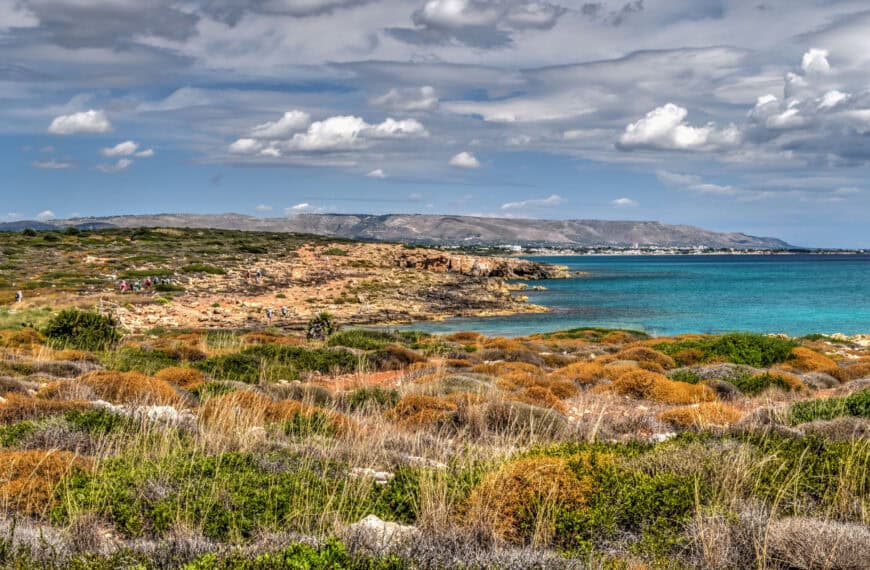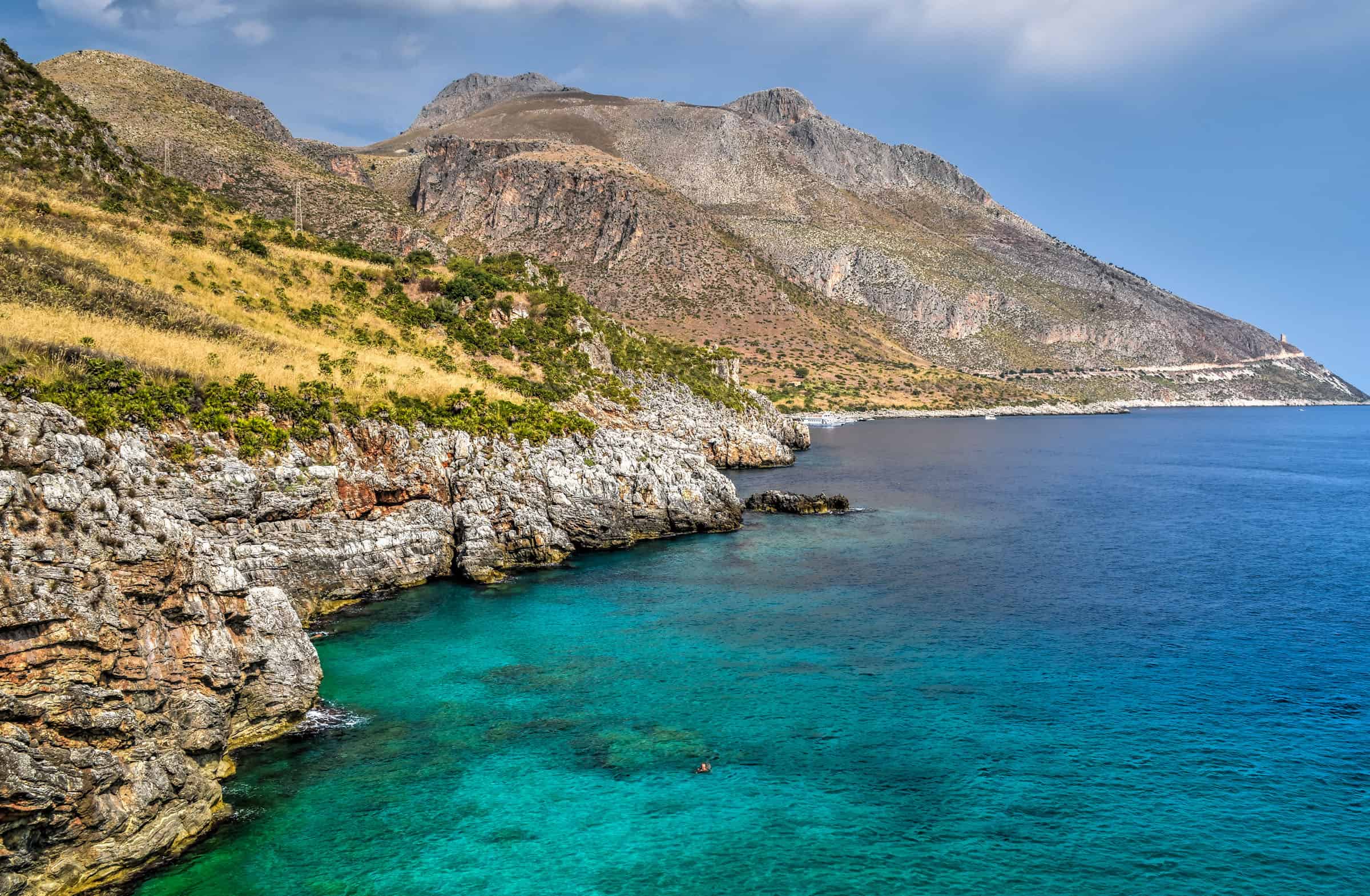
The Riserva Naturale dello Zingaro is one of the best places in Sicily to combine coastal hiking with swimming, with a network of trails running along a rugged stretch of coastline dotted with small, secluded coves.
The main trail follows the coastline between the southern entrance near Scopello and the northern entrance near San Vito Lo Capo, offering continuous views and multiple access points to the water along the way.
Visiting Zingaro involves some walking: there’s no road access inside the reserve, but the combination of scenic trails and clear turquoise water makes it one of the most rewarding outdoor experiences in the region.
This guide covers how to plan your visit, including which entrance to use, how much time you’ll need, and what to expect from the trails and beaches.
Zingaro Nature Reserve Guide – At a Glance
Highlights
– Coastal hiking: Scenic trail running along a rugged stretch of coastline
– Secluded beaches: Small coves with clear turquoise water, accessible from the trail
– Swimming stops: Multiple opportunities to swim along the route
– Natural setting: One of the most unspoiled coastal areas in Sicily
Good to Know: Hiking
– Hiking Trails: Zingaro has 3 different trails; the Coastal Trail is the best in our opinion, and provides direct access to many of the beaches and coves
– Trail type: Linear coastal trail
– Trail difficulty (Coastal Trail): Easy to Moderate (most dependent on how far you go); there are some ups and downs, but no sustained elevation gain.
– Distance (Coastal Trail): ~7 km one way (14 km round trip if walking end-to-end)
– Flexible visit: No need to complete the full trail, spectacular scenery and secluded coves can be enjoyed by walking just half the trail, or less
Good to Know: Beaches, Coves & Swimming
– Beaches: are mostly small, pebbly coves rather than sandy beaches (water shoes are recommended)
– Waters: calm and clear, great for swimming
– Most scenic coves/swimming spots: Cala Capreria & Cala Marinella
Good to Know: Practicalities
– Time required: Ideally a half day, but 1-2h is sufficient to appreciate the scenery
– No road access inside the reserve
– Entrances:
South (near Scopello) – our recommended entrance
North (near San Vito Lo Capo)


Disclosure: This page (Sicily’s Zingaro Nature Reserve – A Beach and Hiking Guide) may contain product affiliate links. At no additional cost to you, we may receive a commission for purchases made through these links. More details can be found on our disclosure and policies page.
Zingaro Nature Reserve: Location & Map
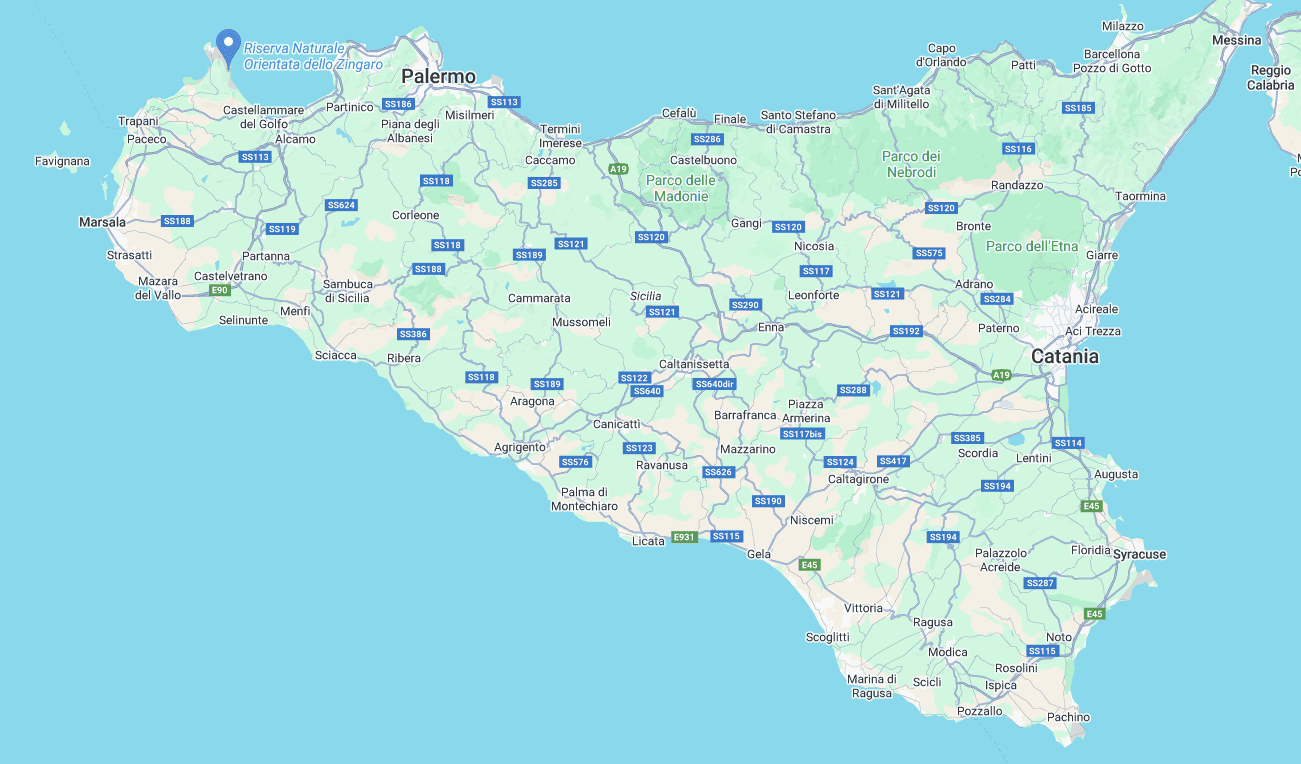
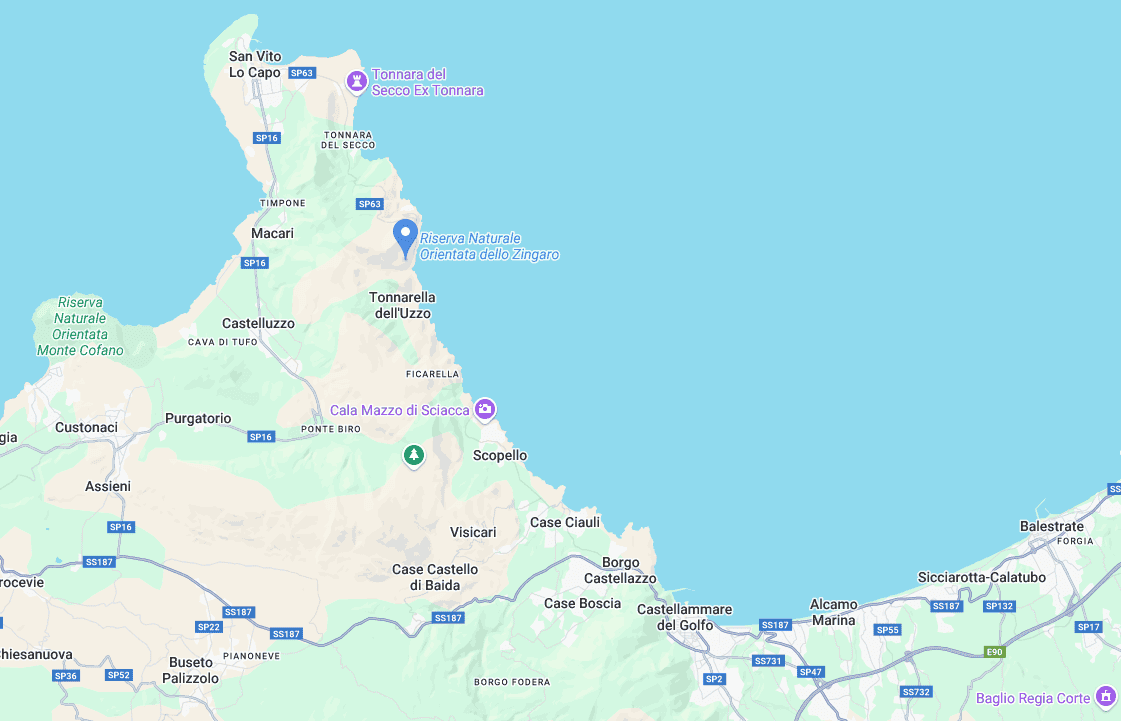
Zingaro Nature Reserve (link to Google Maps) is located in Northwest Sicily, between the hamlet of Scopello and the town of San Vito Lo Capo. The nature reserve is about 40 km west of Palermo and 20 km northeast of Trapani.
Zingaro Main Entrances
The Zingaro Nature Reserve has two main entrances/access points:
–North Entrance (near San Vito lo Capo) – (Link to Google Maps)
–South Entrance (near Scopello) – (Link to Google Maps)
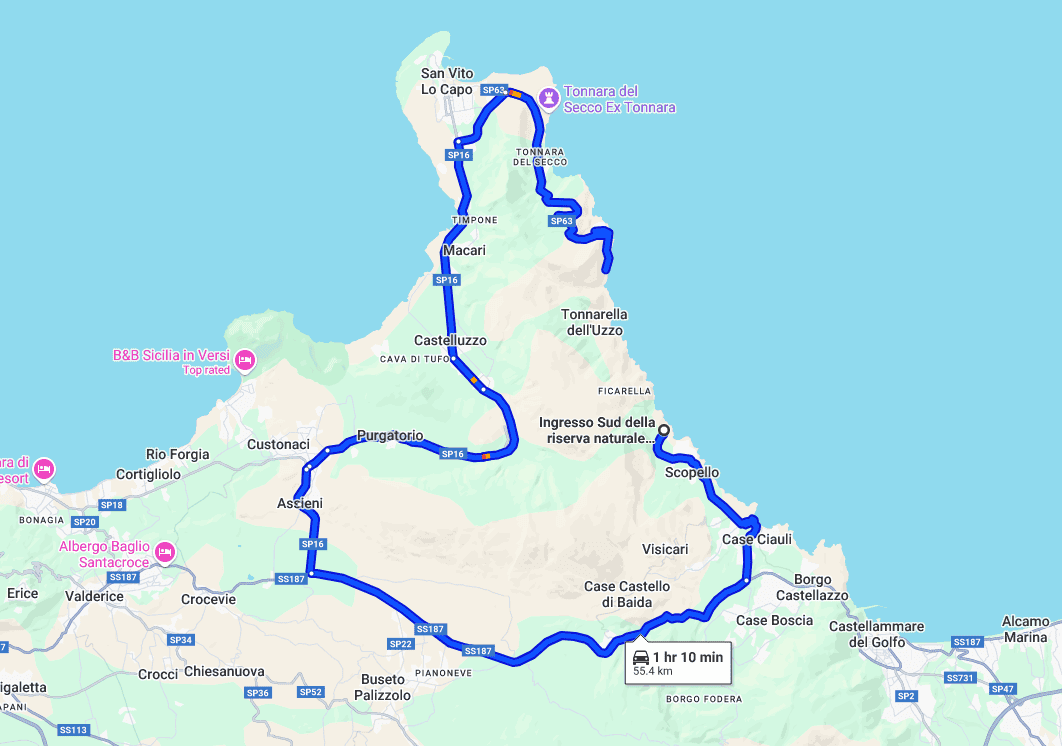
Although the hike between the two entrances takes about 2h (7km) each way, the drive between the two entrances takes over an hour, over 55 km of roads.
How to get to Zingaro Nature Reserve
By Car: By far the easiest way to reach the nature reserve is by driving there.
South Entrance (Link to Google Maps)
From Scopello: 2 km (5 minutes)
From Castellammare del Golfo: 12.5 km (20 minutes)
From Trapani: 40 km (50 minutes)
From Palermo: 75 km (1h15)
From Marsala: 80 km (1h15)
North Entrance (Link to Google Maps)
From San Vito Lo Capo: 13 km (25 minutes)
From Castellammare del Golfo: 55 km (20 minutes)
From Trapani: 50 km (1h)
From Palermo: 120 km (2h)
From Marsala: 85 km (1h40)
As you can see from the above distance and drive times, it is generally easier to reach the Zingaro’s South Entrance from most destinations in Sicily, except if you are in San Vito Lo Capo, which is closer to the North Entrance.
If you need to book a rental vehicle for your travels, we highly recommend using Discover Cars to get the best rates on your rental in Sicily.
We also highly recommend Airalo (eSIM card) for your connectivity needs when travelling abroad. Airalo is the world’s first and largest eSIM store with eSIM plans for 200+ countries and regions worldwide.
By Public Transit: It’s honestly difficult to get to Zingaro Nature Reserve by public transit. Most options only run during the summer months, and the services offered tend to change from year to year.
If you are staying in San Vito Lo Capo, there is a shuttle service that runs to the North Entrance. You can pre-book the I Tre Golfi shuttle service here.
For the south entrance, Russo Buses has buses that connect Castellammare del Golfo, Palermo, with Scopello and Zingaro Nature Reserve, but it’s unclear if this route is still in service as Russo recently merged with another provider. Alternatively, you can catch a bus from either Castellammare del Golfo or Trapani to Scopello and walk the 2 km that separates the town from the nature reserve.
By Boat Tour: For a different experience, you can visit Zingaro Nature Reserve via a boat tour from either San Vito Lo Capo, Castellammare del Golfo, or Palermo. Instead of hiking, you’ll explore the coastline from the sea, and make several stops to enjoy a swim at one of the reserve’s stunning beach coves.
Boat tour from San Vito Lo Capo:
Boat tour from Castellammare del Golfo:
Which is the Best Entrance: the North Entrance or South Entrance?
In our opinion, the South Entrance is typically the best entrance to go for:
– It’s easier to reach from most towns in Sicily (you can walk there from Scopello)
– If travelling by public transport, it’s pretty much your only option.
– If travelling by car, the parking lot is significantly larger by the South Entrance
The only exception is if you are staying in San Vito Lo Capo, where it makes most sense to enter via the North Entrance.
Zingaro Nature Reserve – Ticket Price and Operating Hours
Entrance Fee
Entrance to the Zingaro Nature Reserve costs 5 EUR for a day pass. (2026)
(3 EUR for children 11 to 14) -(Free for kids under 11 and Italian citizens over 65).
Note that dogs are not allowed to enter the Reserve.
Opening Hours
Zingaro Nature Reserve’s opening hours are 7 AM to 7 PM from April to September
and 8 AM to 4 PM from October to March.
Facilities
Toilets and picnic areas are found near both reserve entrances.
The only places where you can buy snacks are at small kiosks found near both entrances.
There are no trash or recycling bins within the reserve, so please make sure you take everything back out with you.
What to Bring and What to Wear
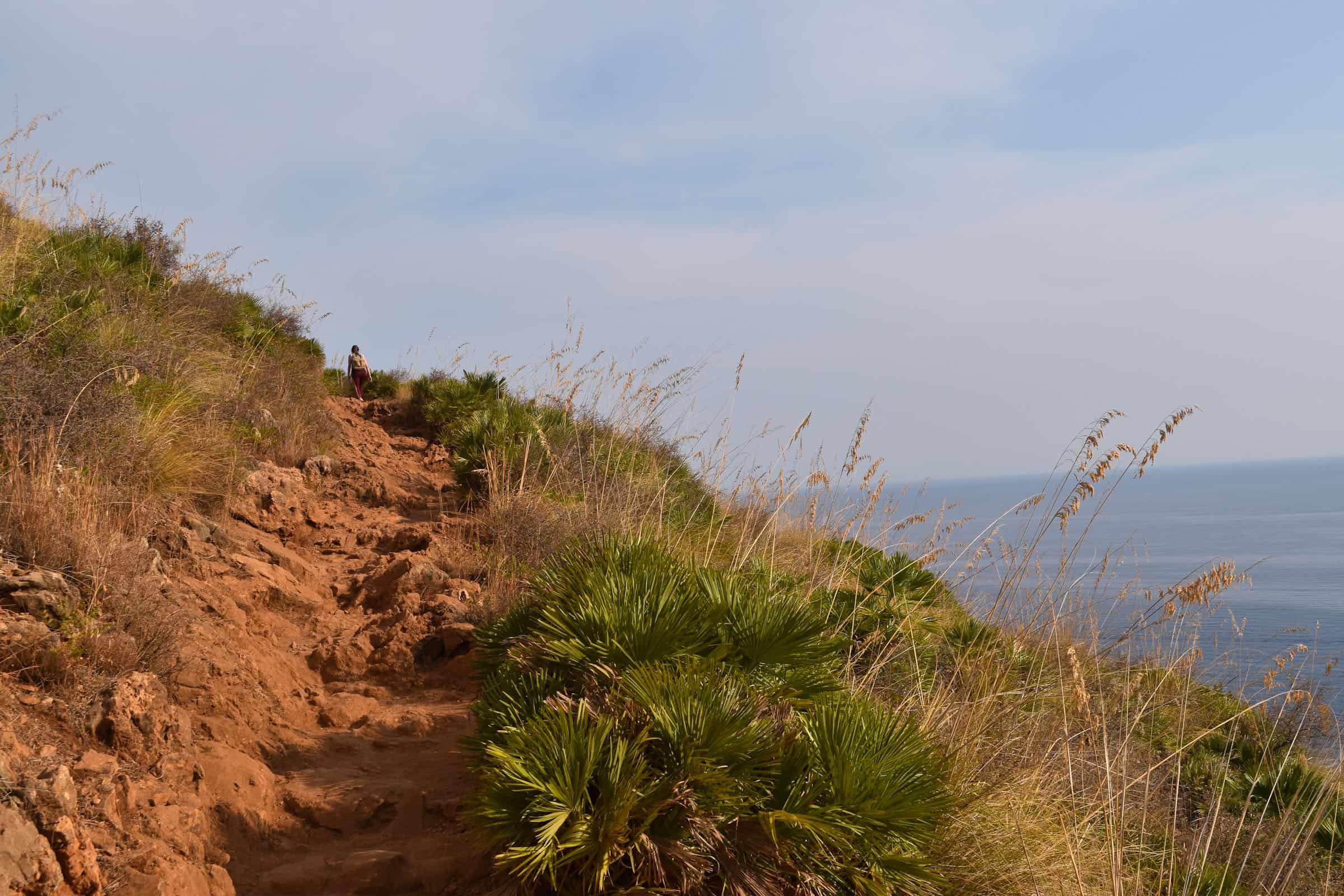
– Wearing proper footwear (hiking shoes) is highly recommended. Though the main hiking trail isn’t that difficult, there are many uneven sections and rocky surfaces along the way, particularly in sections where staircases lead down to the beaches. There are also a few steeper sections.
– Bring (or wear) a bathing suit if you want to swim in some of the beaches and coves (we highly recommend it). A towel would also be handy.
– Note that there is very little shade to be found, so applying sunscreen and/or wearing a hat is a good idea. Bringing LOTS of water (or some other form of hydration) with you is also a good idea.
Hiking Packing List
All Trails subscription – This comes in really handy for areas with little or no cell reception, as the annual subscription allows you to download trail maps for offline use.
External Battery – If you are using your phone to track your progress along the trail or to help with navigation, you certainly don’t want your phone to die on you. That’s especially true in the unlikely event that you might get hurt or need assistance.
Hiking poles – These can be particularly useful in steep trails or muddy/boggy trail conditions.
Water Filter Bottle – The Life Straw bottle is an advanced water bottle with a filter that not only improves water taste but more importantly filters out bacteria and parasites, chemicals and microplastics.
Headlamp – very practical and a smart choice if you plan to start your hike before sunrise or finish it after sunset.
About Zingaro Nature Reserve: A Brief History
Sicily’s first nature reserve, Zingaro, was established in 1981. It stretches for seven kilometres along the island’s north-western coastline, between San Vito Lo Capo and Scopello, and is one of the few untouched stretches of coast in Sicily, with no roads to ruin the landscape. But did you know that a road was almost built here?
It was thanks to the work of a few forward-thinking environmentalists and the heartfelt participation of the local population that this area escaped the fate of overdevelopment. In 1980, a protest march and a petition signed by several thousand local citizens prevented the construction of the Scopello-San Vito coastal road, which was soon followed by the establishment of the natural reserve in 1981, recognizing Zingaro as an area of great environmental interest.
Today, the Zingaro Nature Reserve is also a gorgeous sea-nature destination, with its network of walking paths, steep cliffs overlooking the azure and green waters, and tiny bays where you can relax and take a dip. It is also home to a large variety of rare and endemic plants, in addition to a rich fauna, giving it a great diversity not found in other parts of the island.
The reserve also has a rich archaeological past, and evidence suggests that it was one of the first prehistoric settlements in all of Sicily. Within the reserve boundaries, you will also find four museums and education centers: the Naturalistic Museum and the Centre of Environmental Education (by the South Entrance), the Museum of Marine Activities (along the coastal trail), and the Museum of Rural Civilization (near the North Entrance).
Zingaro Nature Reserve – The Hiking Trails
There are three main hiking trails in the reserve that run along the length of the coast: The Coastal Trail, the Central Trail, and the High Trail. There are also several short connector trails that allow you to go from one of three main trails to the others.
The Coastal Trail hugs the coastline with lots of short ups and downs and provides direct access to the various beach coves along the coast. If you are not interested in swimming or dipping your toes in the water, you might enjoy the Central Trail (Sentiero di Mezza Costa) better, which provides a higher vantage point of the spectacular coastal scenery. The High Trail (Sentiero Alto) is mostly for those who want to hike for longer and get a good workout.
However, only the Coastal Trail is directly accessible from the South and North Entrances. The other main trails require the use of one or several of the connector trails to reach them.
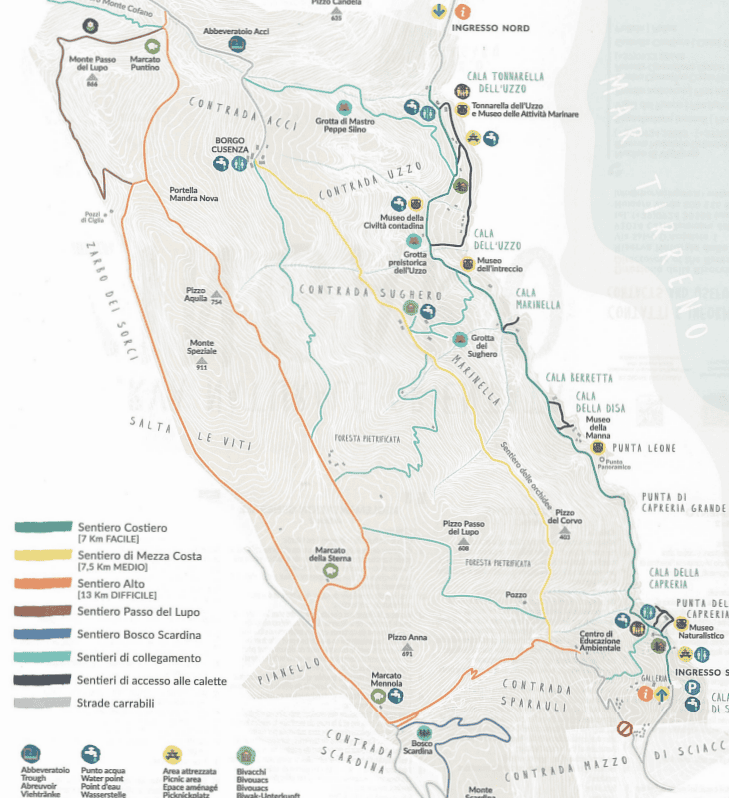
You can also create all sorts of loop trail combinations by using one trail for the outgoing leg and a different one for the return leg. For instance, a popular loop trail, known on All Trails as the Path of the Orchids, follows the coastal trail for about half its length before looping back along the central trail, running for 9.8 km in total distance (compared to almost 14 km if you were to do the entire coastal trail, including the return).
An even longer loop is showcased on All Trails that runs the full length of the coastal trail and returns via a series of connector trails (16.3 km in length, with over 600 m of elevation gain).
In the following section, we will focus specifically on the Coastal Trail, as it’s the best trail in our opinion (it’s also the most popular). The views are more spectacular given the proximity to the water, and the several beach coves you’ll cross along the way make for very scenic spots to either take a break or go for a swim. Having access to the water is a great plus during the warm summer months when the temperature is often above 30 °C.
The Coastal Trail – Details
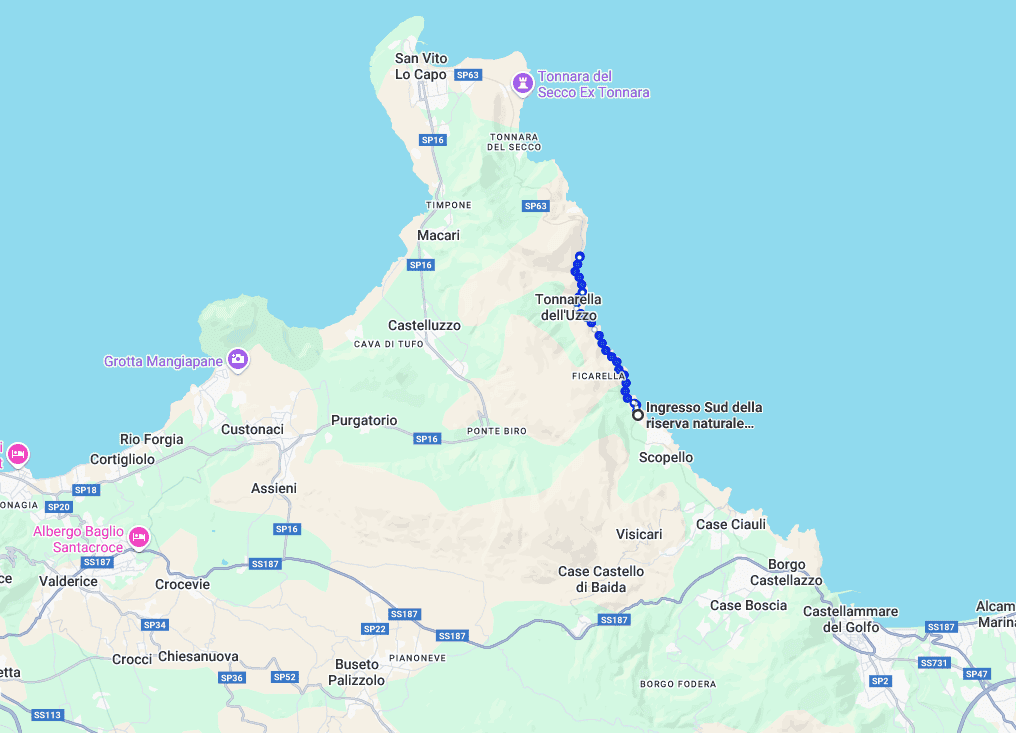
Although the official Zingaro website lists the trail as being 7 km long, it’s actually a bit less, closer to 6.7 km.
Distance: 13.4 km (including return)
Route Type: Out and Back
Elevation gain: 105 m (cumulative elevation gain: 477 m)
Start point: North or South Entrance
All Trails rating: (4.7, 172 ratings (2025))
Duration: Most people complete the trail in about 3h45-4h15 (not including beach stops)
– Trail difficulty: Easy to Moderate (most dependent on how far you go); there are some ups and downs, but no sustained elevation gain.
*Note that the All Trails map below starts the trail from the North Entrance, but you can still use the map to track your trail progress from the South Entrance, which is what we did.
Not an AllTrails member yet? We highly recommend signing up for either their free or paid membership plans. The free plan allows you to find new trails and plan routes but it can only be used while hiking if you have access to mobile data. The paid membership plan (AllTrails+) allows you to download trail maps for offline use and provides live progress updates and off-route notifications.
If you are still uncertain – you should know that the All Trails mobile application was voted the 2023 iPhone App of the Year by Apple.
We find that AllTrails is a great tool to have when hiking, particularly for assisting with navigation when the trail is hard to locate and to help monitor your progress along the trail, which helps estimate how much time you’ll need to complete the trail.
It’s important to note that you don’t need to do the full length of the trail to enjoy Zingaro. The scenery is spectacular all over, and you don’t need to feel like you missed out if you turn back early. Any of the central beaches (described in the next section) make for excellent turning points.
Note that the total listed distance, 13.4 km, doesn’t include any of the short detours needed to reach the beach coves. If you were to visit them all, you would add about 2 km to the total distance, which would bring the total distance hiked closer to 15-15.5 km.
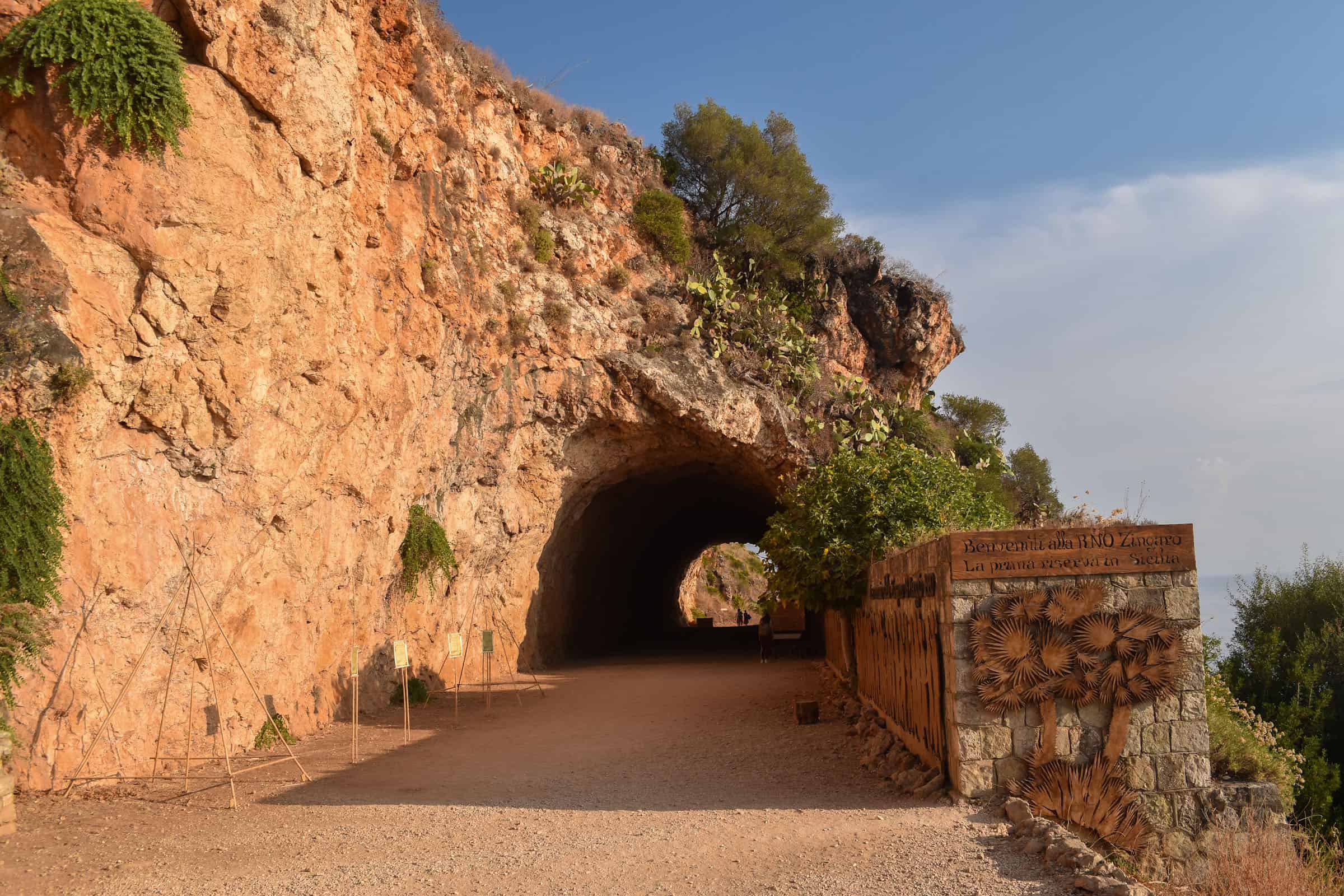
From the South Entrance car park, you’ll first go through a short tunnel before embarking on the trail.
Other Important Coastal Trail Details
– Canine companions: Dogs are NOT permitted.
– Summit: The highest point of the trail is at 105 m above sea level (the lowest point is at sea level).
– Trail environment: Short coastal vegetation (shrubland) and the occasional olive tree, offering very little opportunity for shade.
– Number of viewpoints: Infinite… you essentially have unobstructed views of the coastline the entire trail.
– Trail Surface / Technical trail: The trail is well-marked and well-maintained. Though flat for the most part, several sections are more uneven and run over rocky terrain.
– Average trail slope grade: 7% (not a very steep slope on average, but there are a few short sections that are somewhat steep).
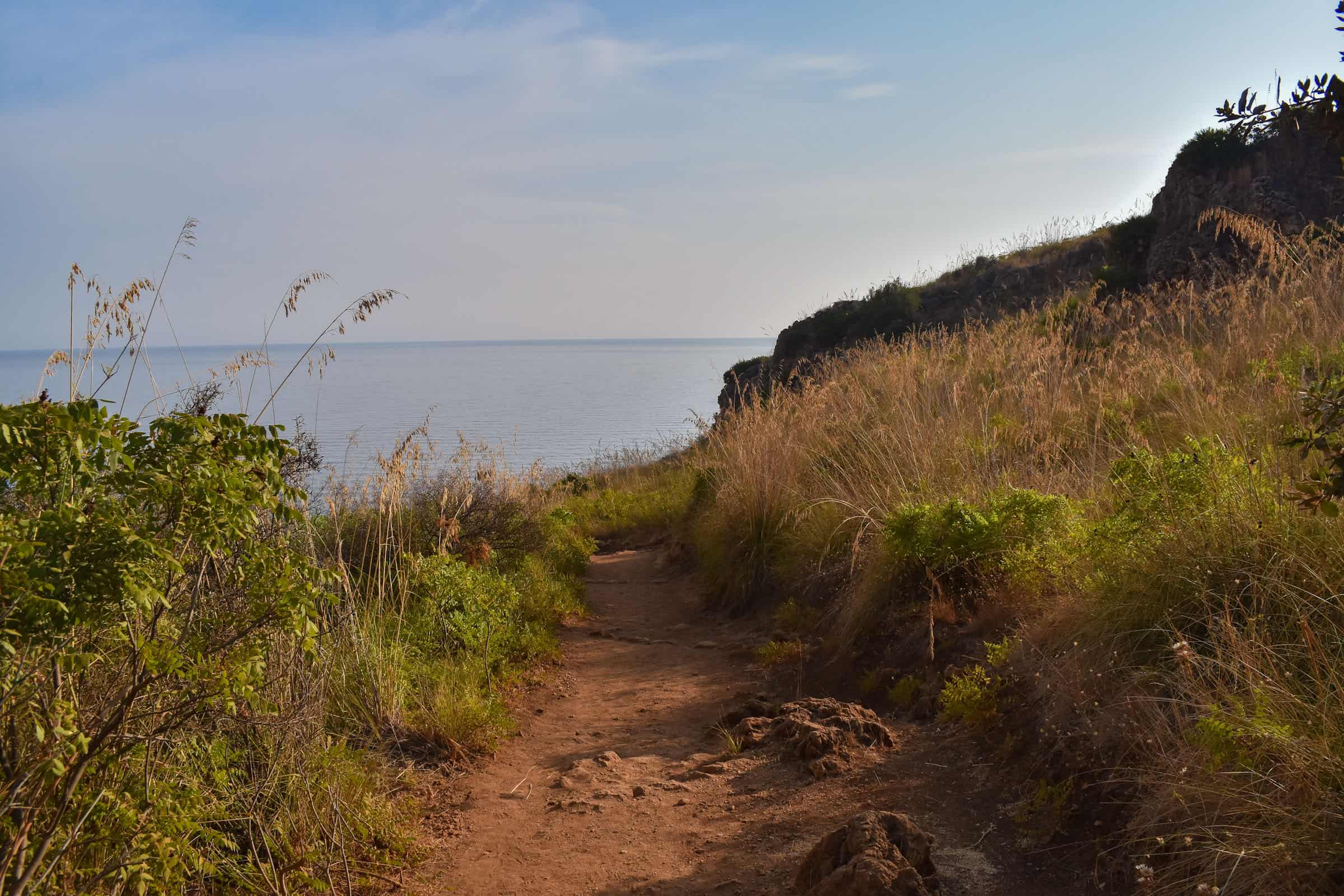
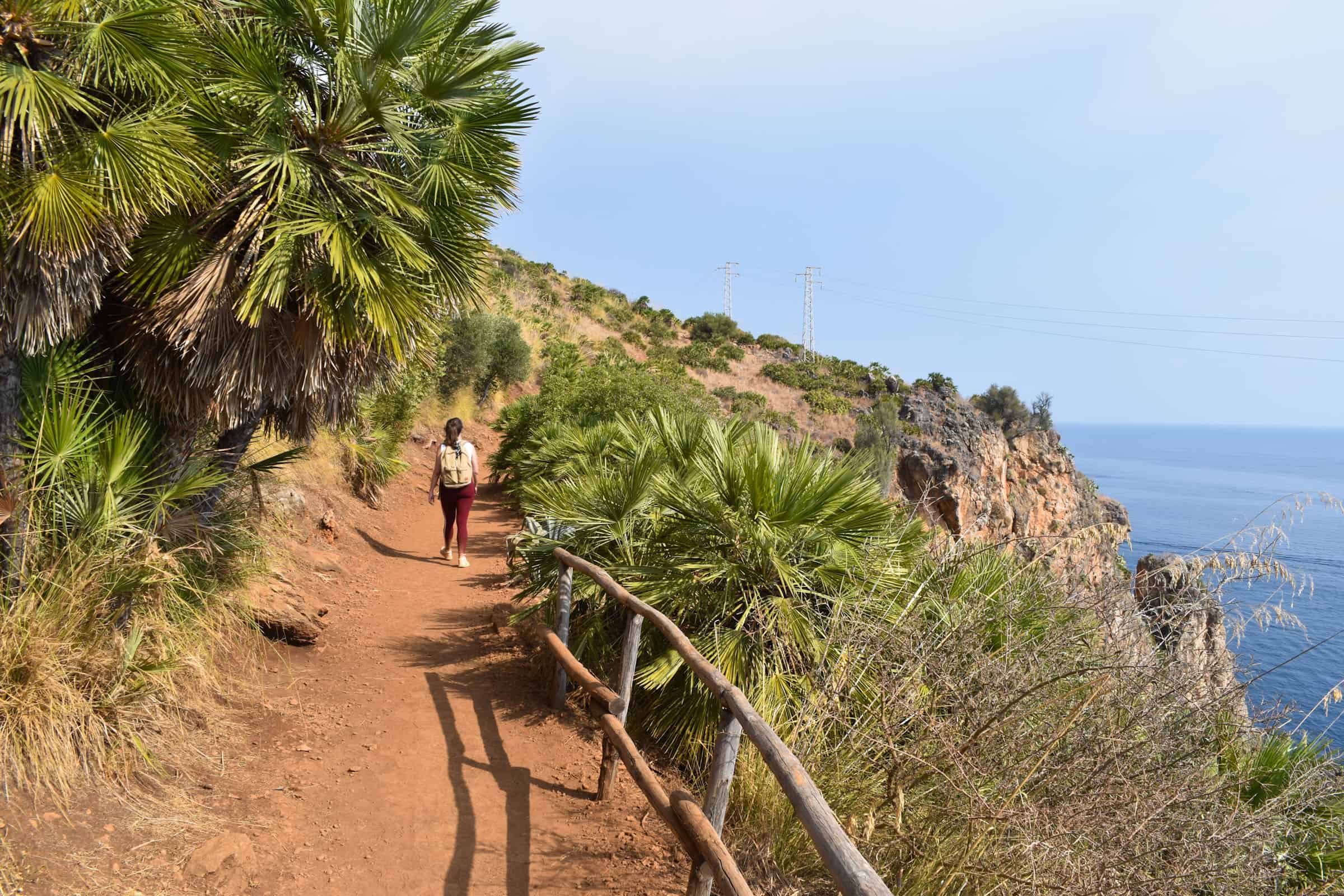
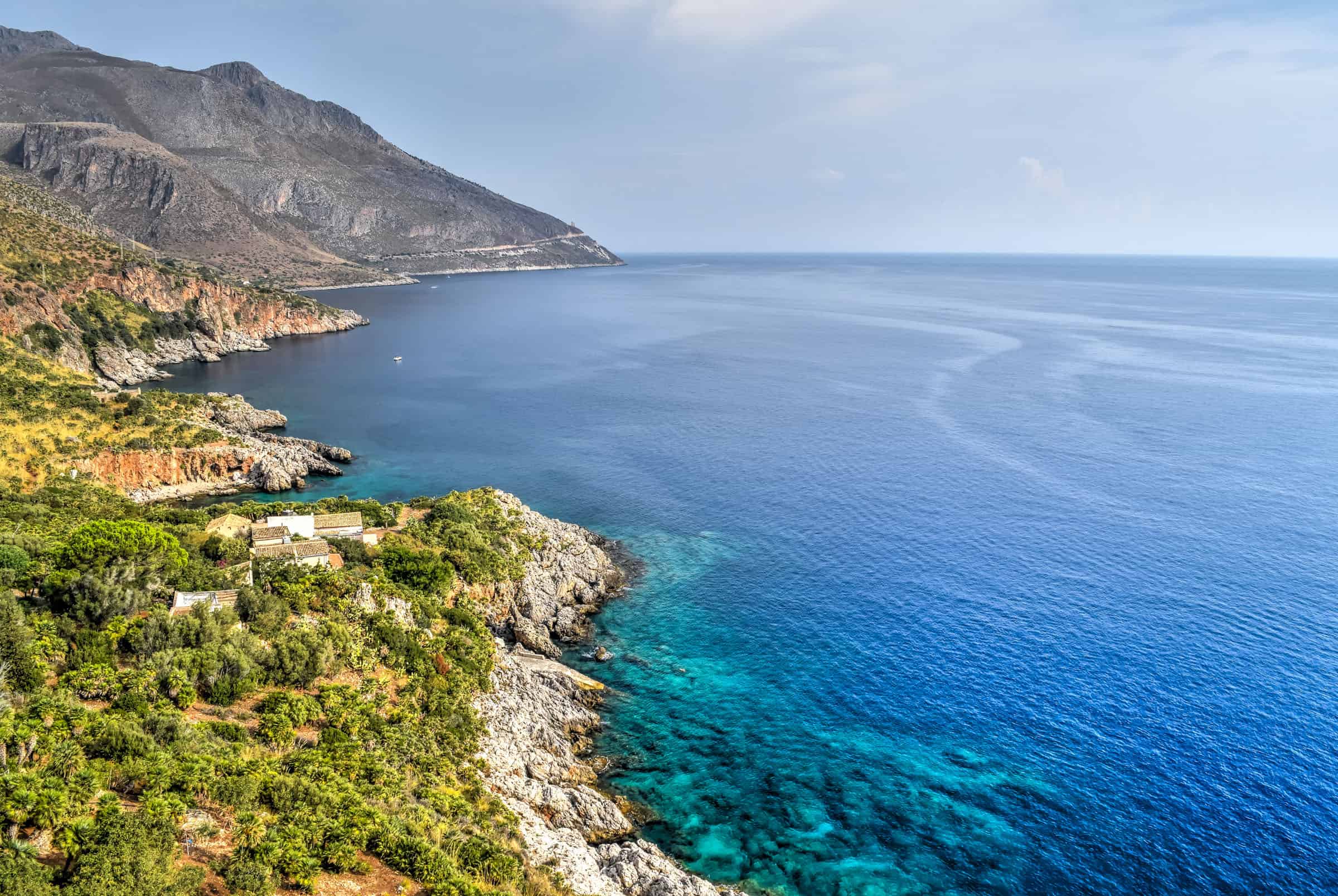
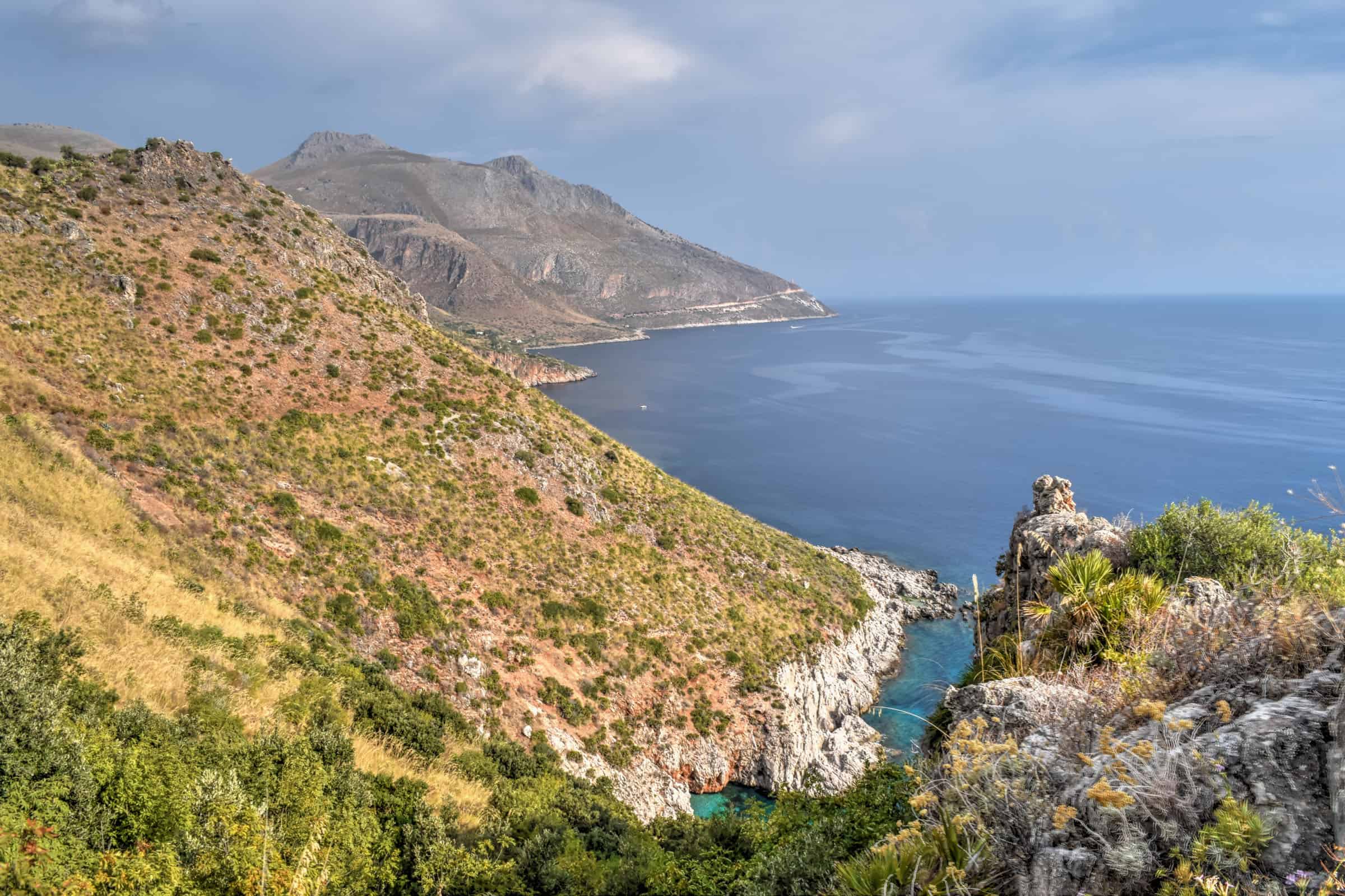
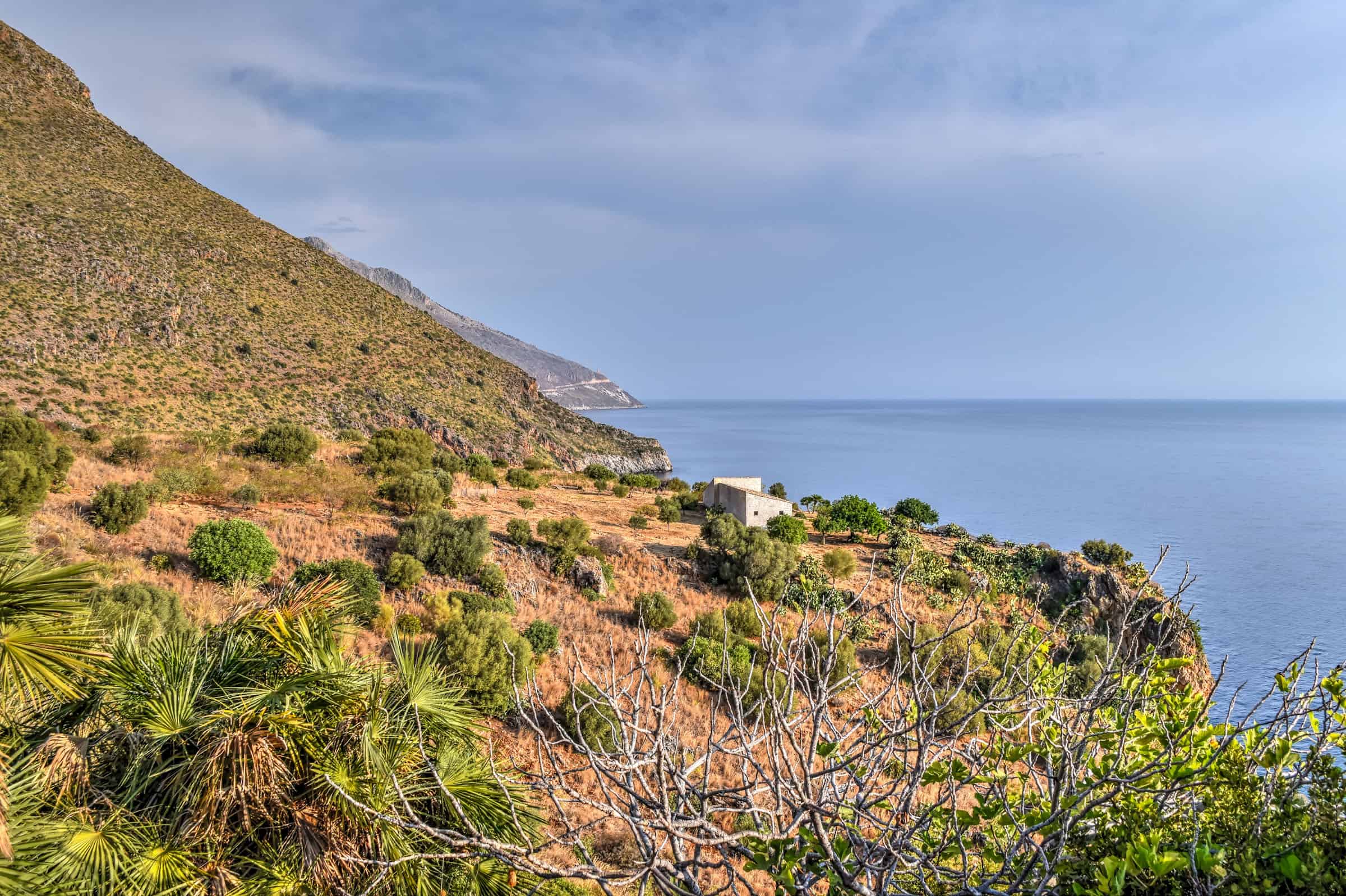
The Coastal Trail – The Scenery
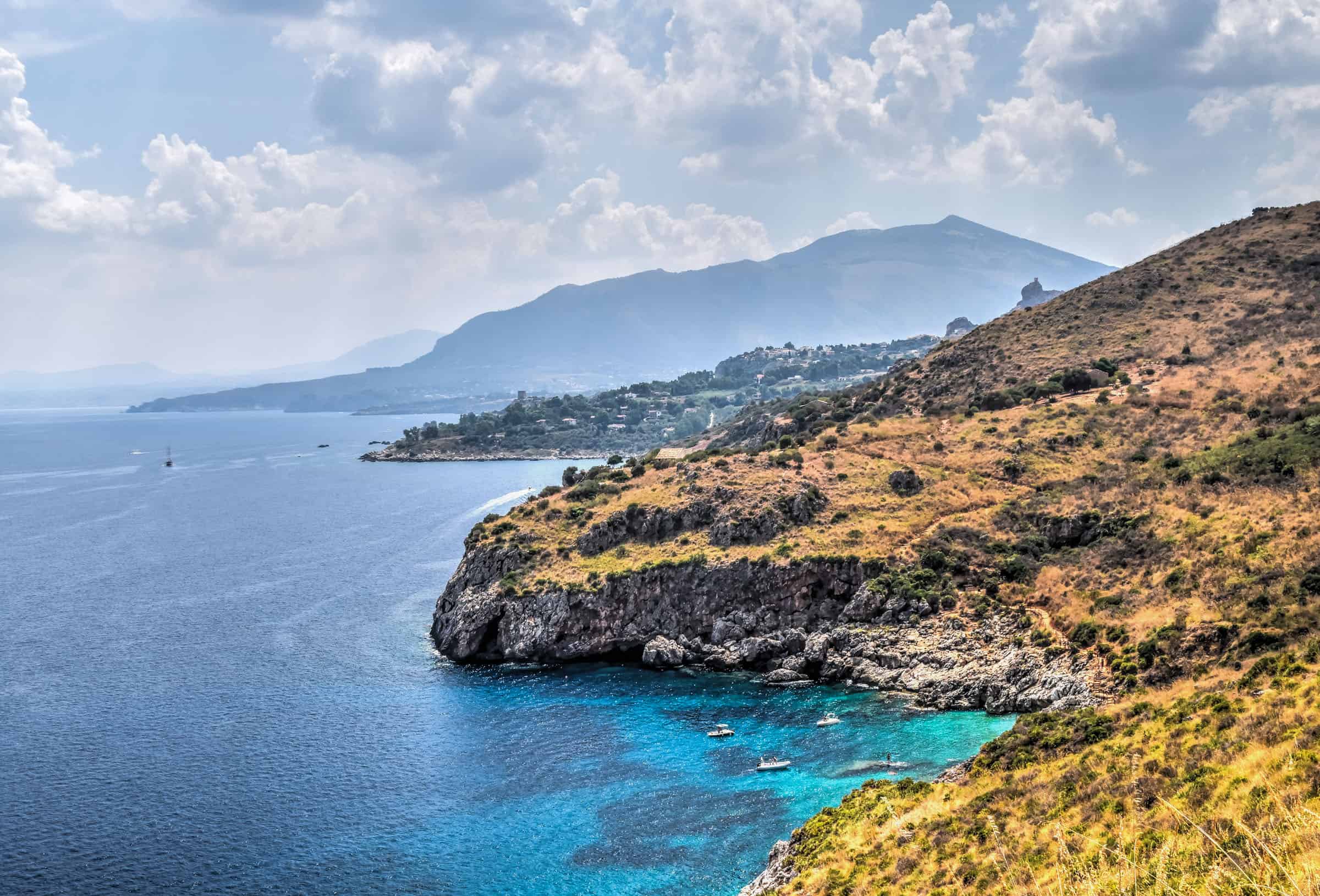
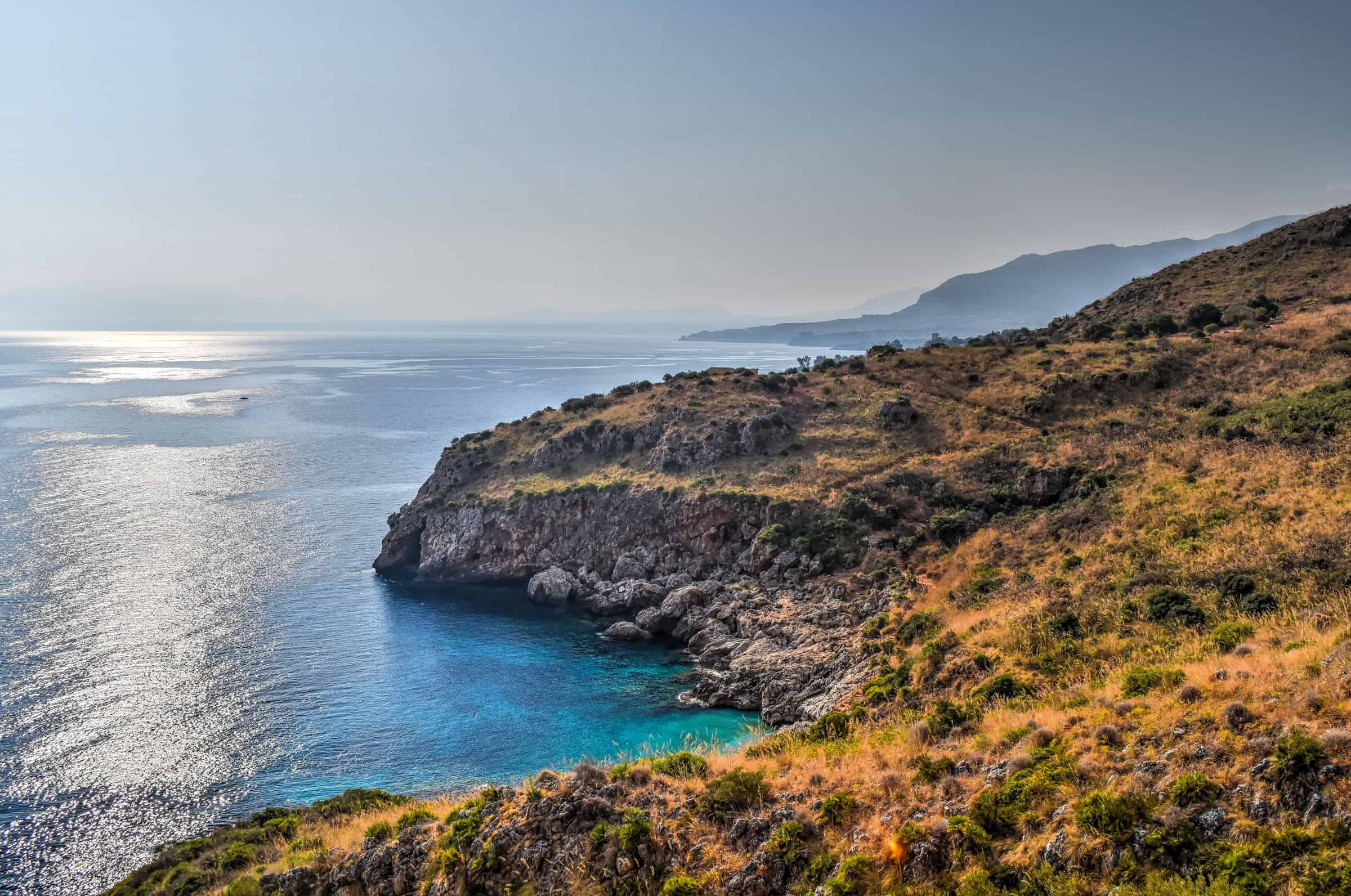
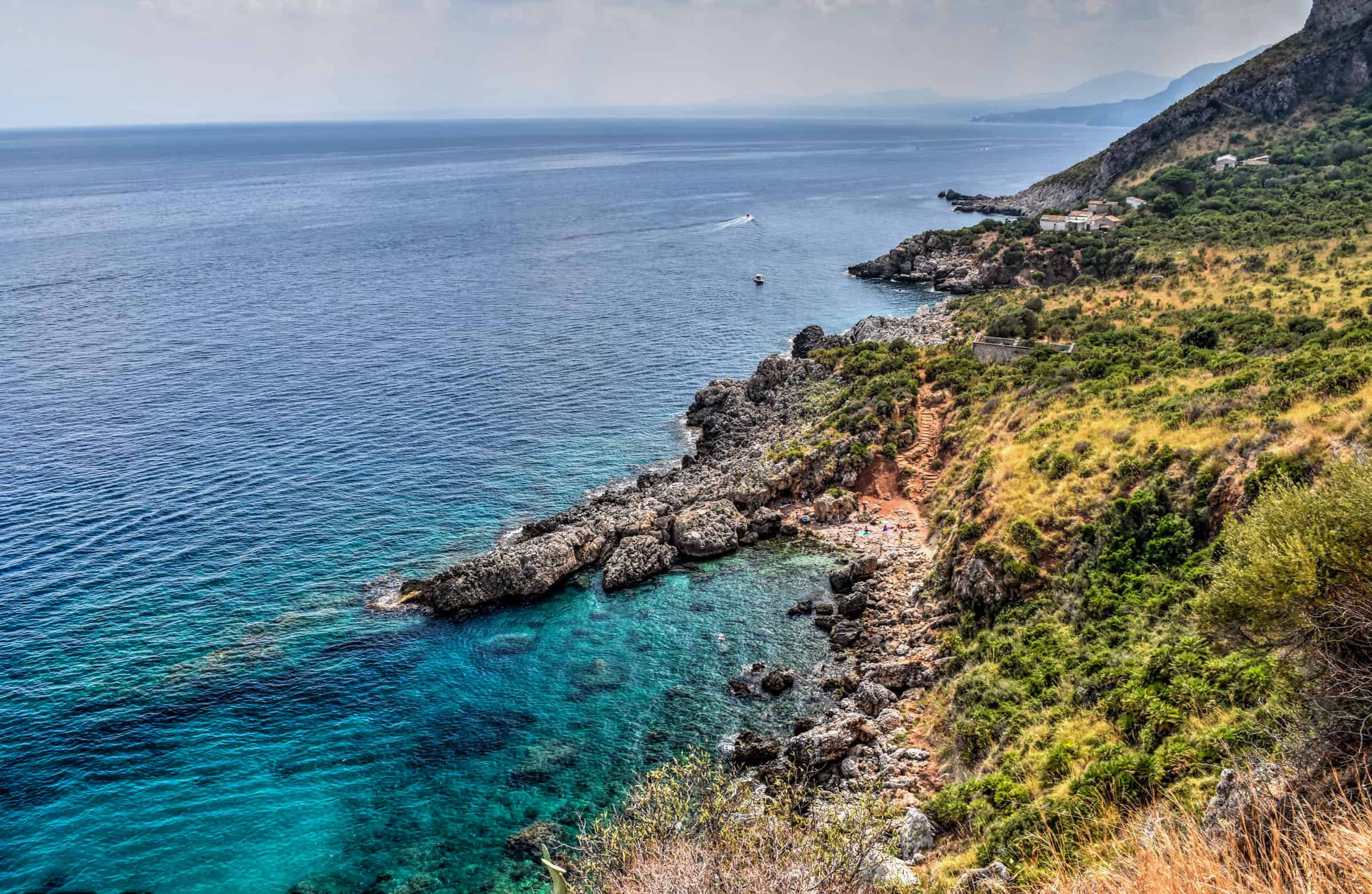
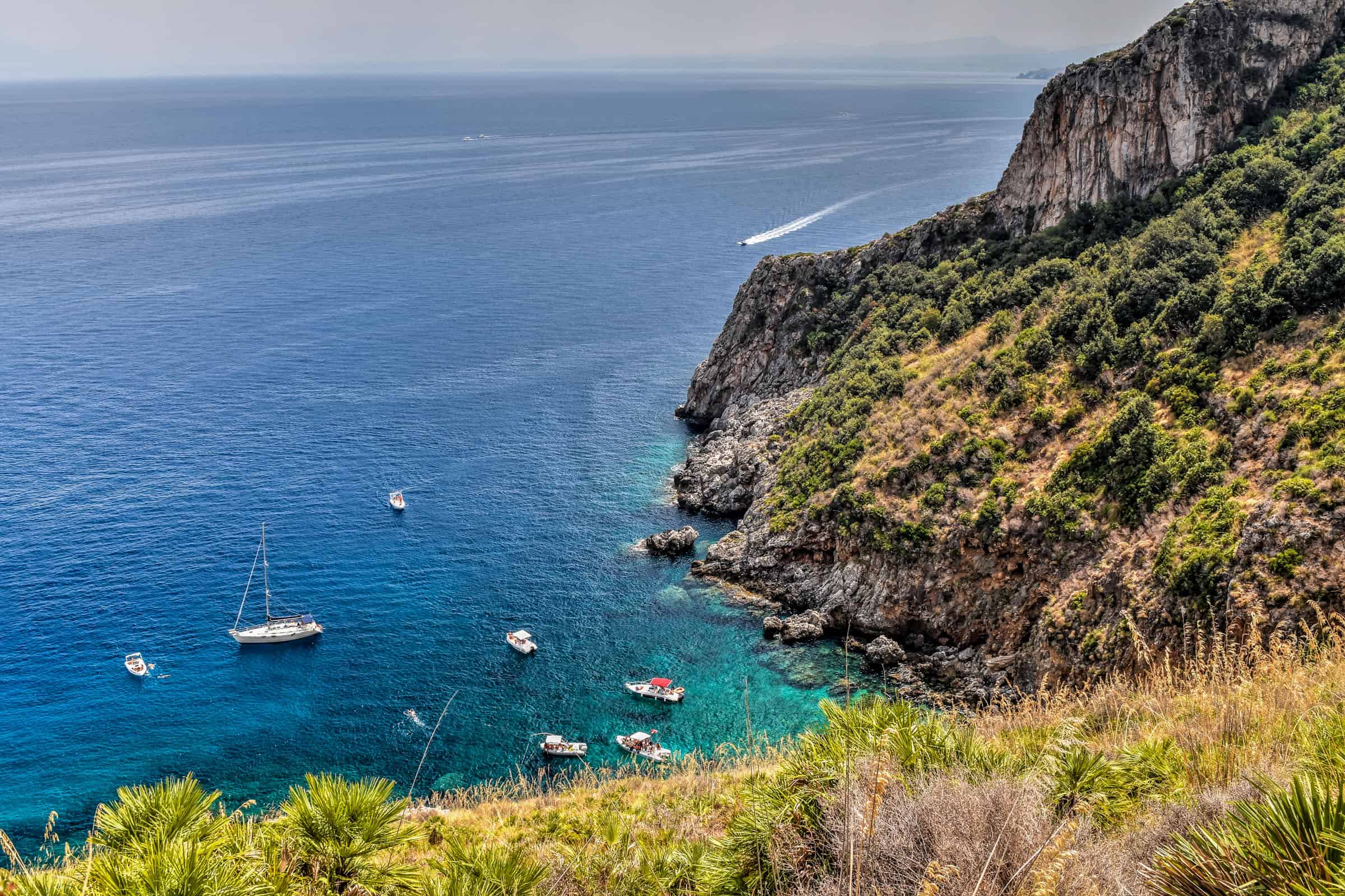
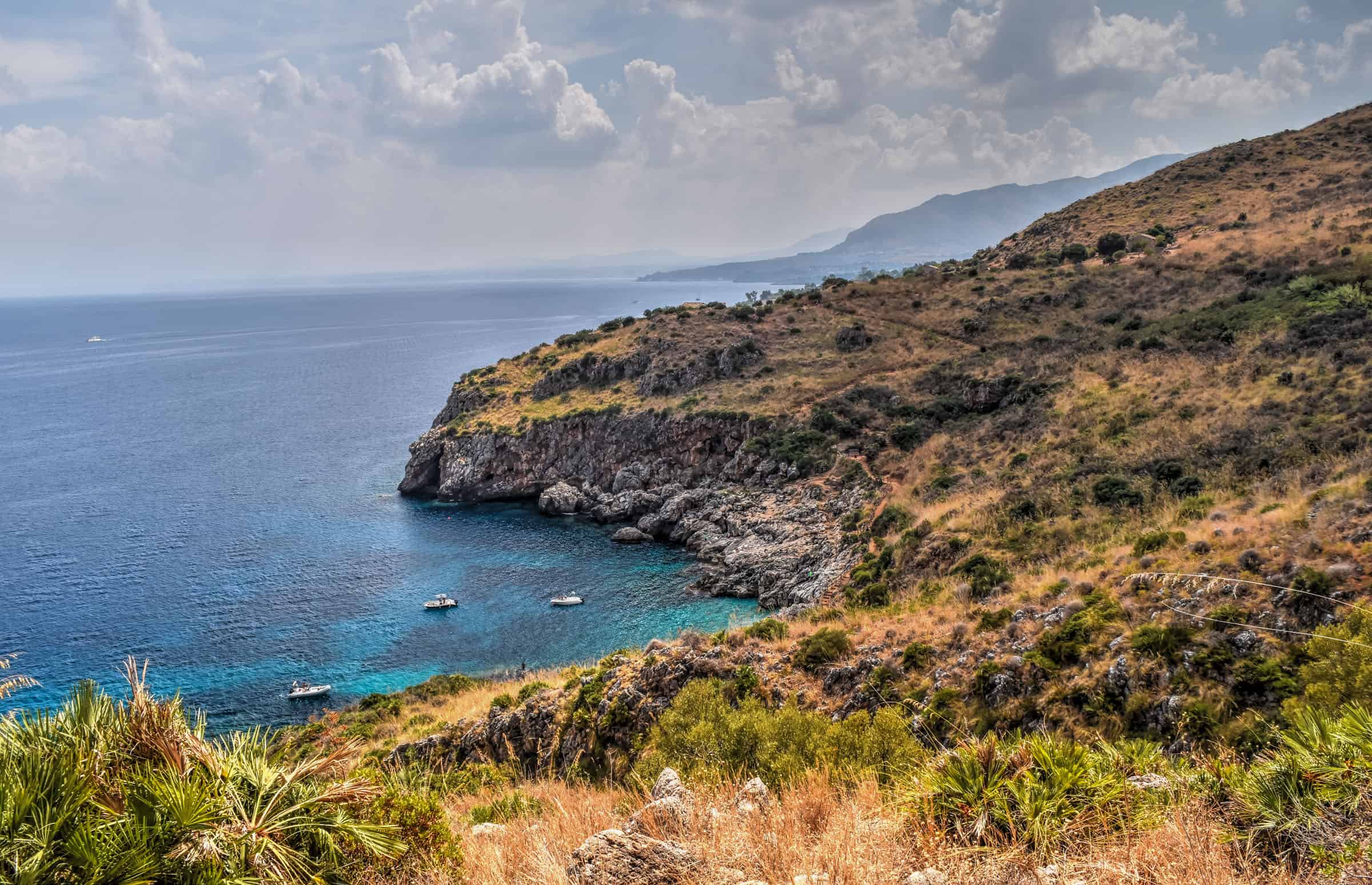
Here, we will let the pictures do most of the talking. Zingaro is just such a beautiful coastal paradise. Clear blue and turquoise waters as far as the eye can see.




Zingaro Nature Reserve – The Best Beaches
Zingaro is home to 6 stunning beach areas, all of which are located within small coves, which are known as “Cala” in Italian. Due to their locations within coves, none of the beaches is particularly large or expansive; in fact, they are rather quite tiny, so the earlier you arrive, the more likely you are to secure a spot. We will present the beach coves in the order that you will cross them when starting from the South Entrance.
Most beaches are a mix of sand and pebbles. Even though many have easy and straightforward access to the water, we recommend wearing water shoes for better comfort since there are often many large rocks underwater to go over before you reach a swimmable depth.
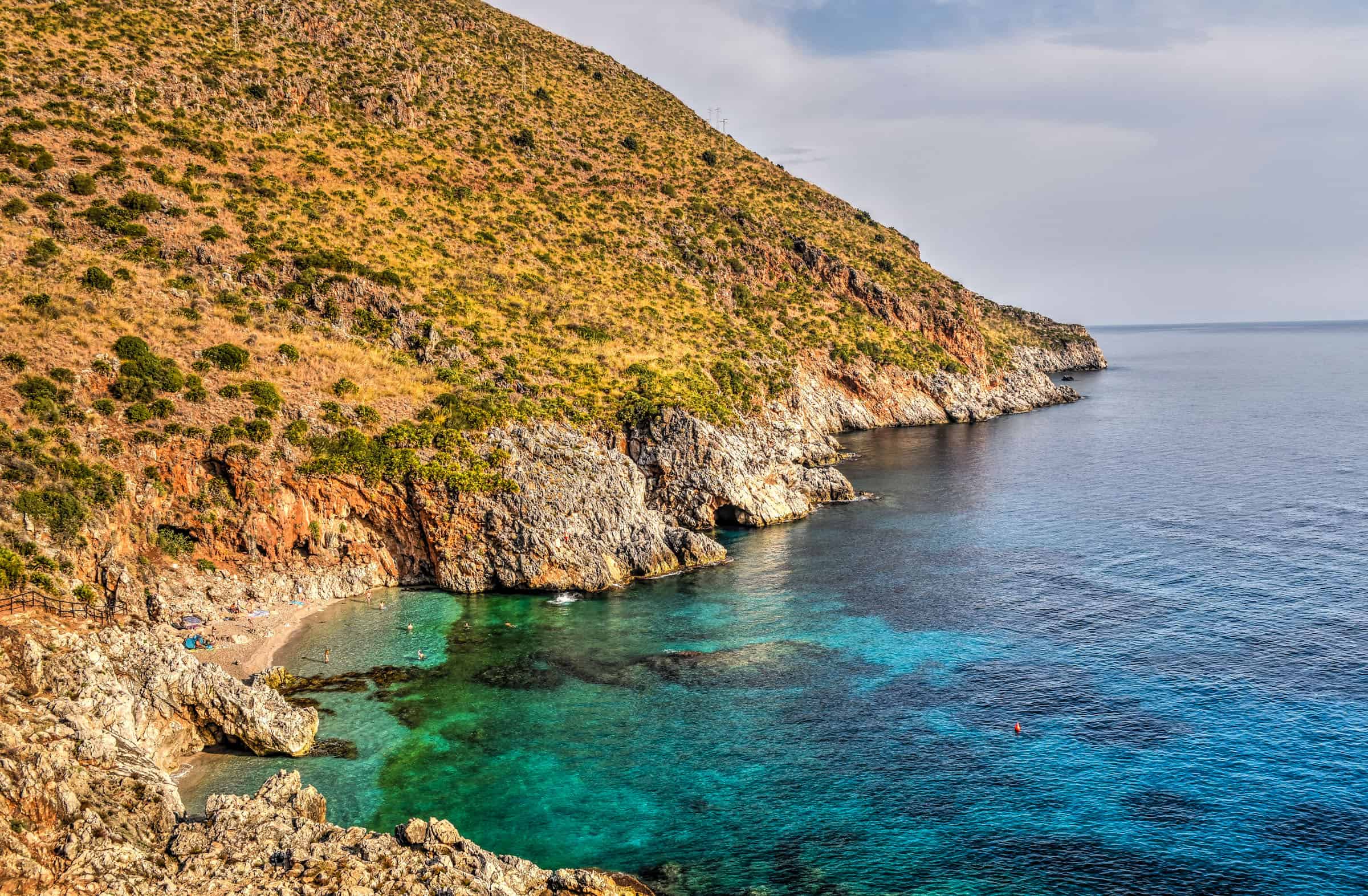
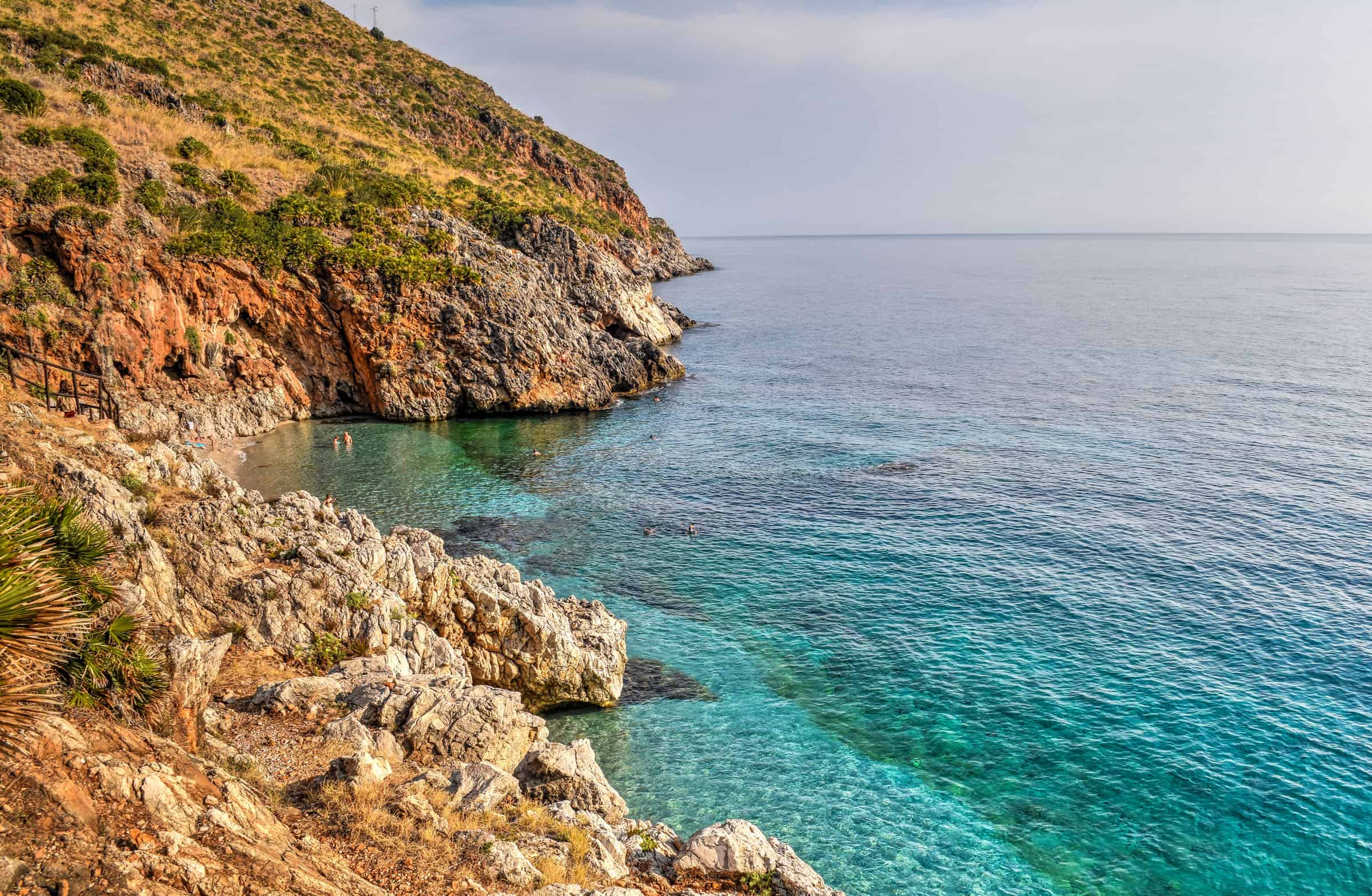
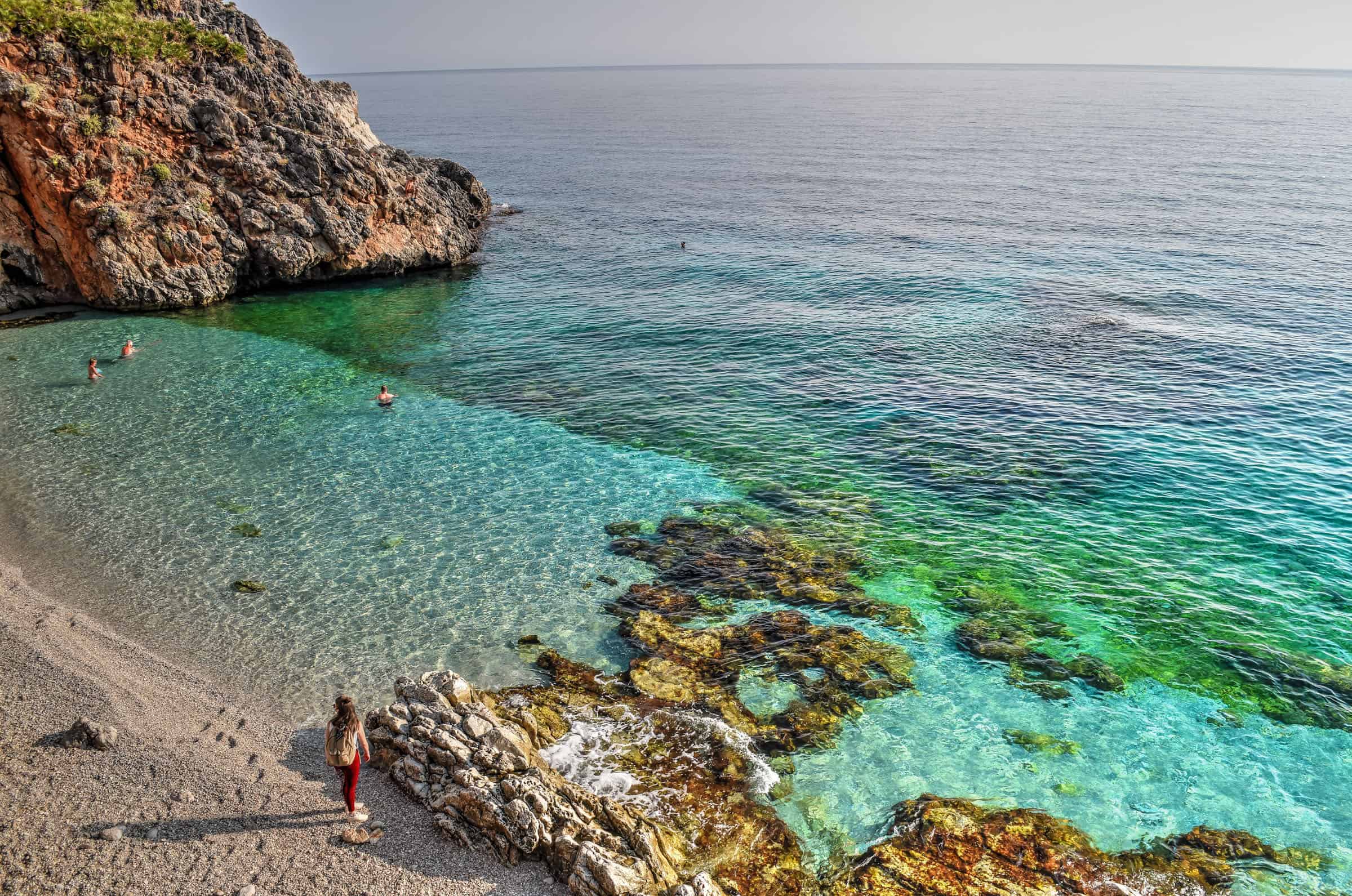
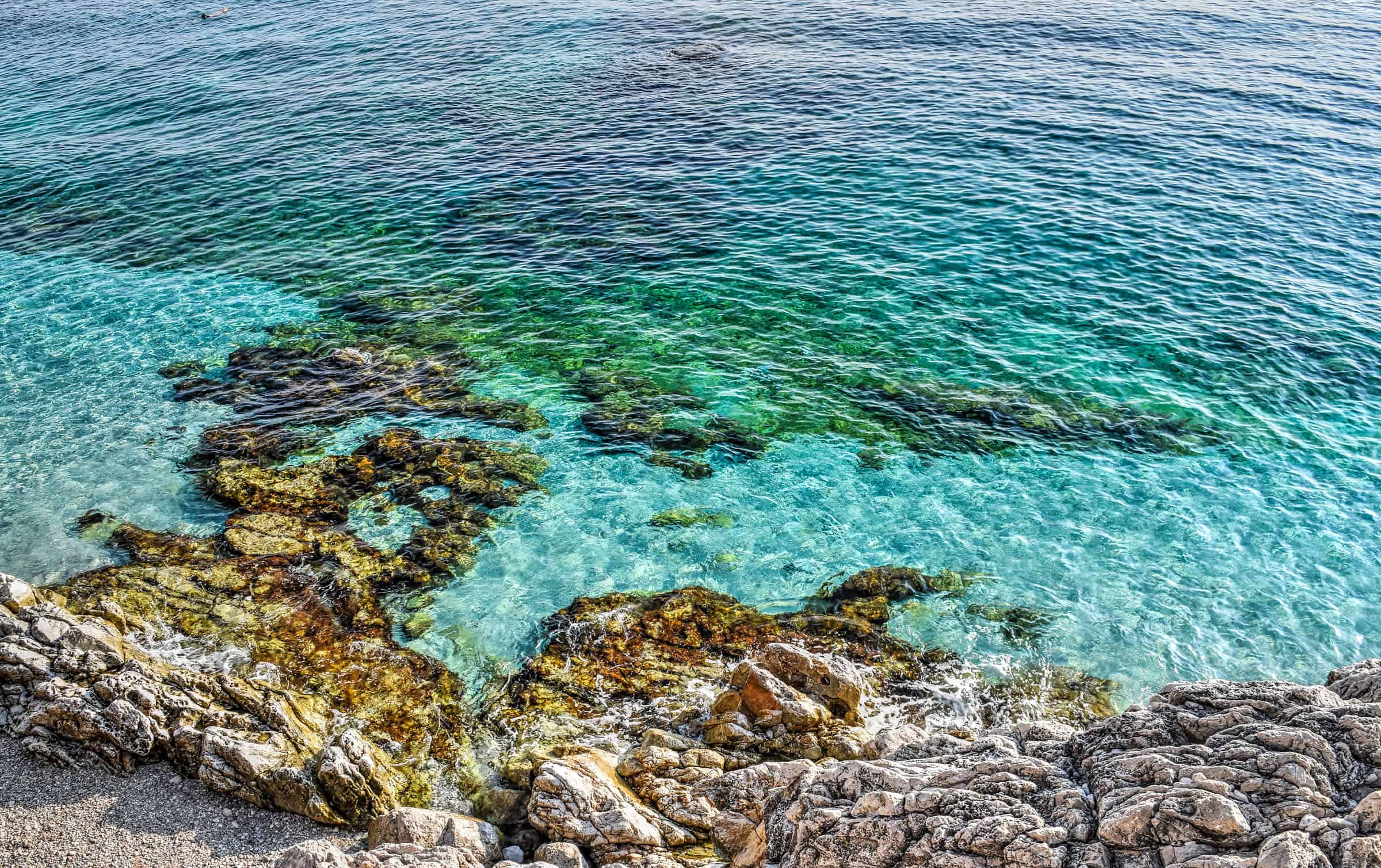
1. Cala Capreria (1 km from South Entrance)
Here, dreamy turquoise waters meet the largest beach of Zingaro, which at 150m in length isn’t all that long. It can fill up quickly during mid-summer, but if you can come early in the morning or during shoulder season, it can be a pleasant place to be, as the cove is one of the most scenic and beautiful.
Getting to the beach requires a short detour from the Coastal Trail; going down to the beach adds about 400m (each way) to the trail length.


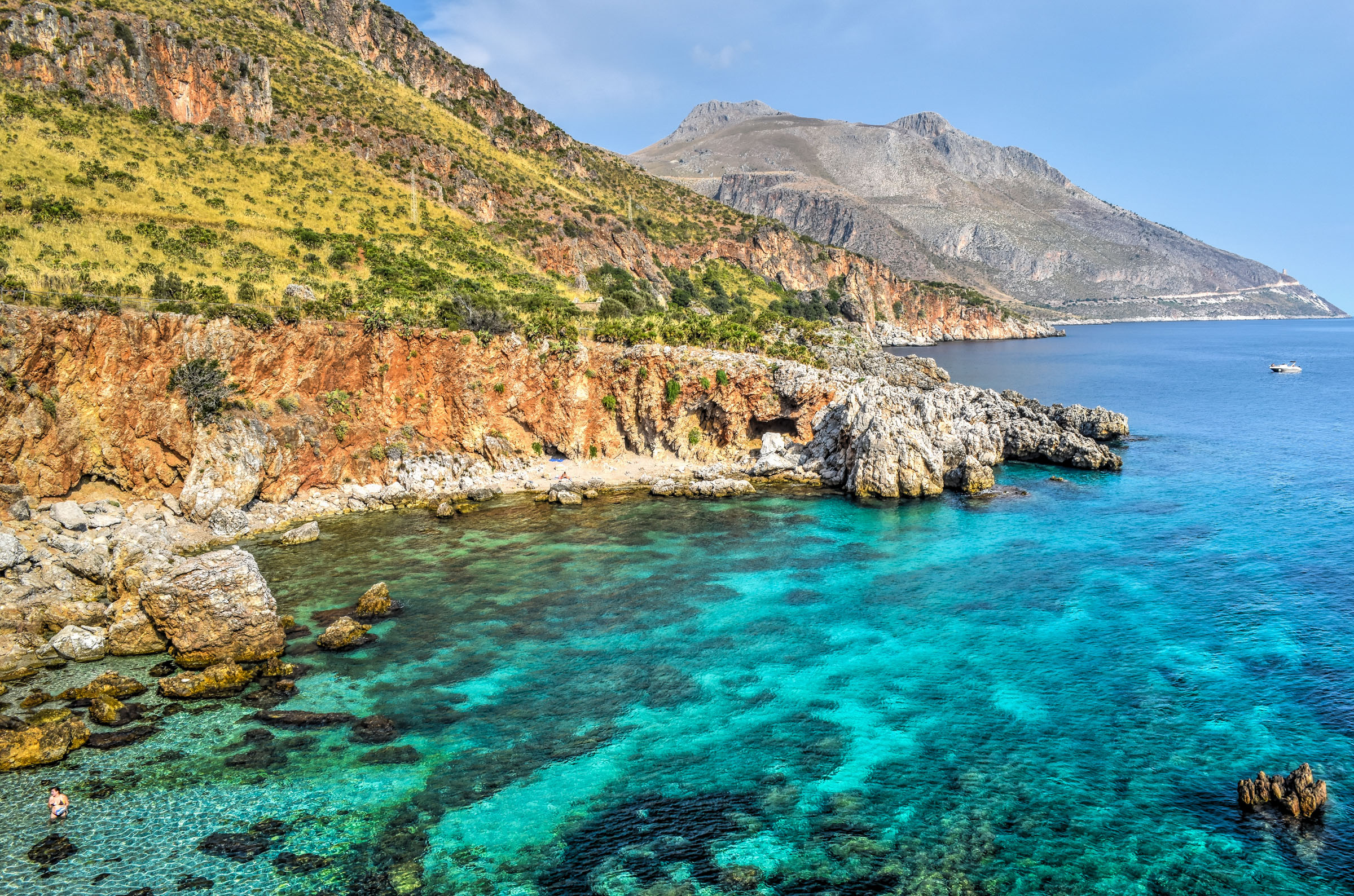
2. Cala della Disa (2.5 km from South Entrance)
This is a small and narrow beach, with room for a maximum of about 50 people. There are also large rocks that split the beach into smaller sections.
Getting to the beach requires only a short 150m detour from the main Coastal Trail.

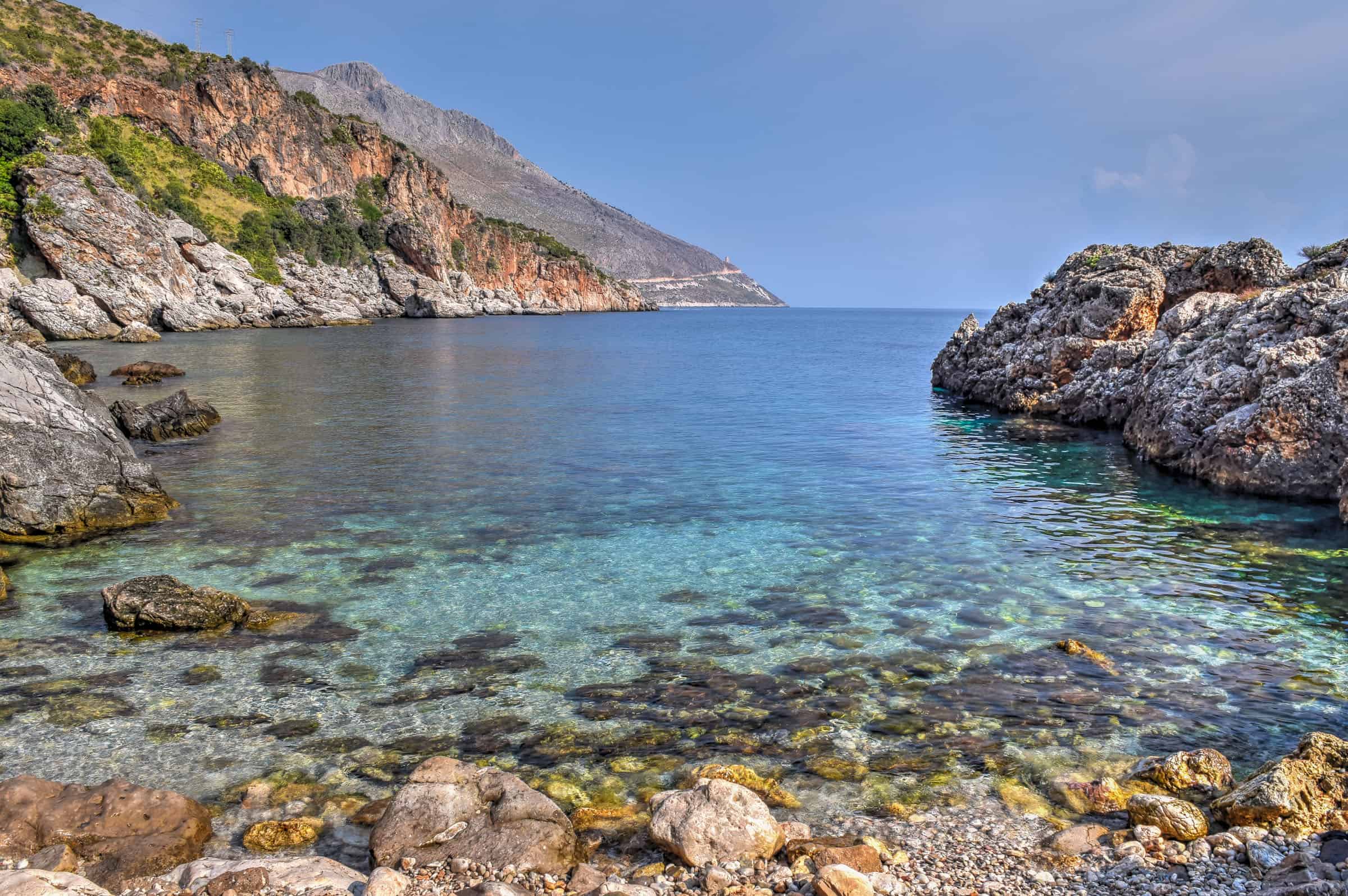
3. Cala Barreta (3 km from South Entrance)
This is a tiny but picturesque cove, one of the reserve’s smallest beaches. Here, people tend to set up on the various rocky outcrops around the beach. The beach itself fills up quite quickly.
Getting to the beach requires only a short 150m detour from the main Coastal Trail.
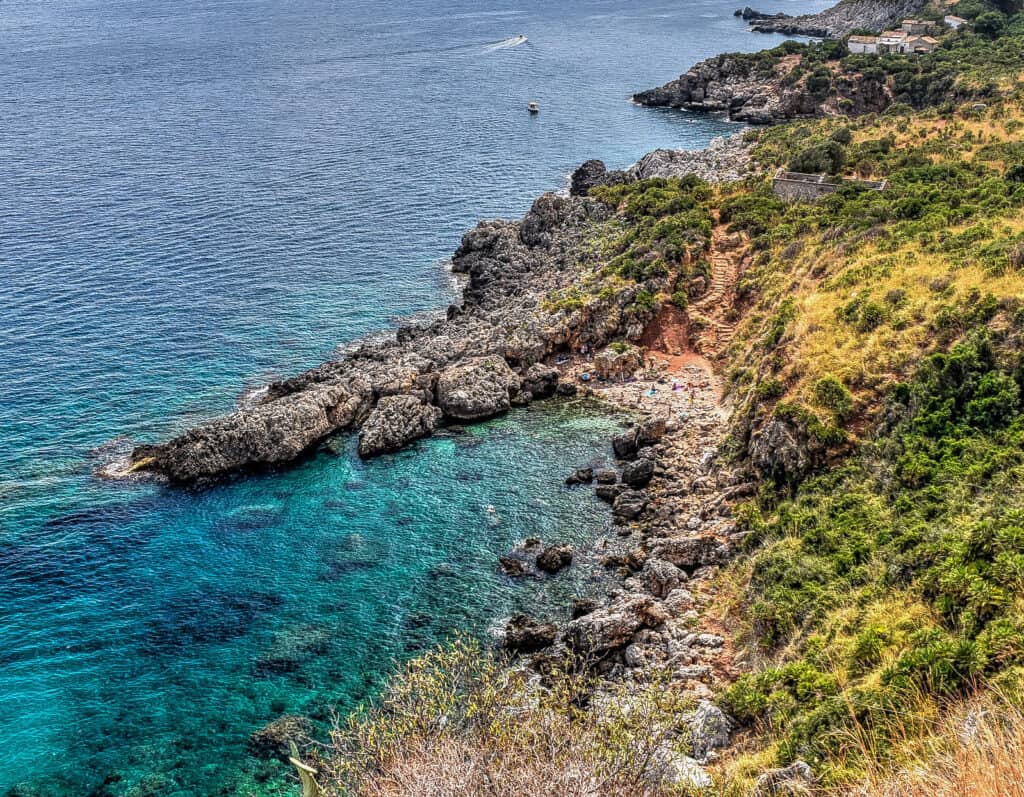
4. Cala Marinella (3.5 km from South Entrance)
This is a picturesque cove with a tiny beach, but one where you have to jump into the water to be able to reach. Here, people mostly gather on some of the rocky outcrops that are around the cove. There are various spots from which you can get into the water; some have rocky steps that you can climb down (best to have water shoes), or you can dive off higher sections.
This cove isn’t ideal for small children or people with mobility issues, as getting into the water can be challenging, but otherwise it’s a fantastic place to relax and enjoy the spectacular scenery, because Cala Marinella is roughly in the middle of Zingaro, meaning that few people make it to this cove than the others.
Getting to the beach requires only a short 150m detour from the main Coastal Trail.


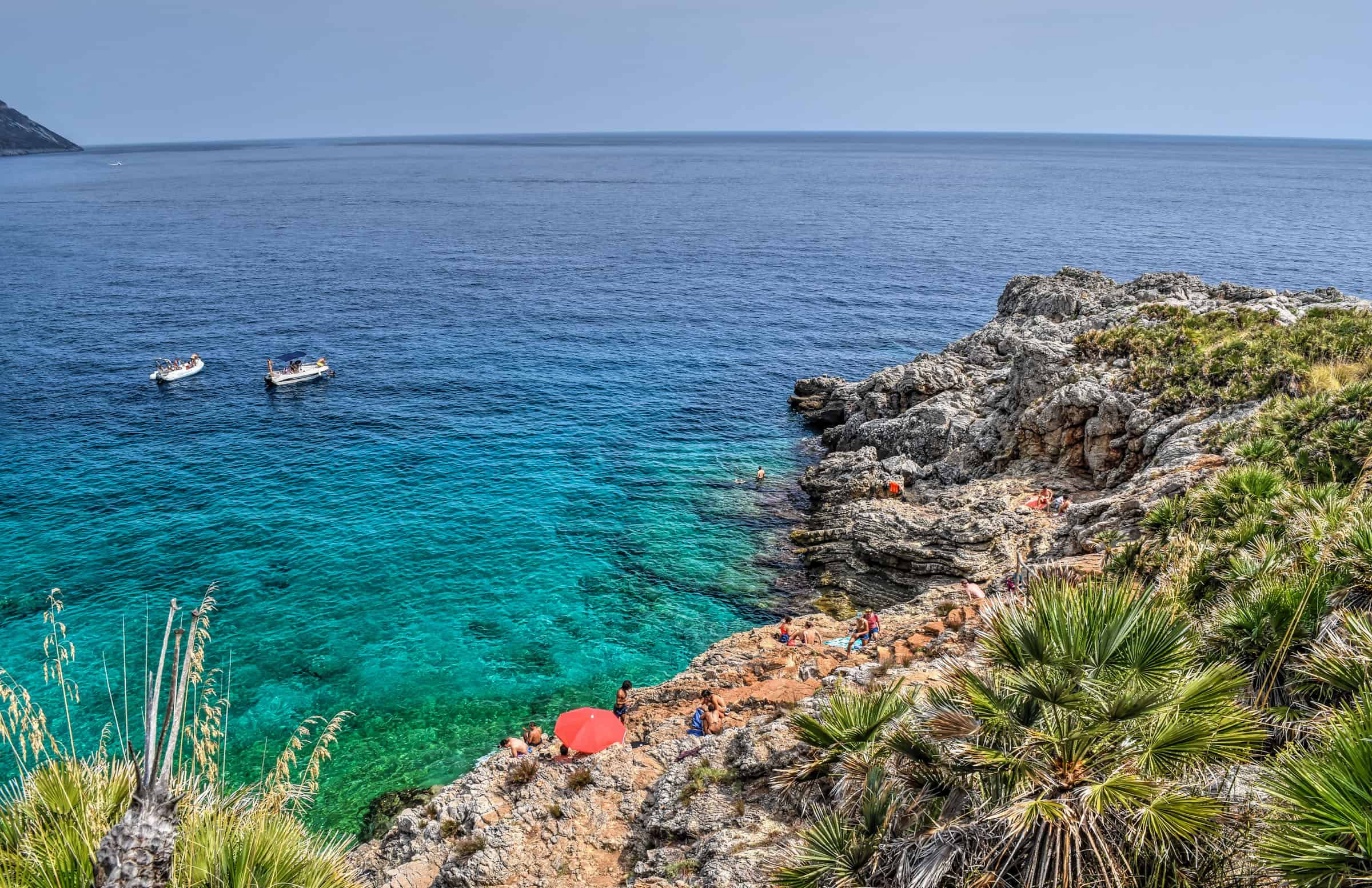
5. Cala dell’Uzzo (4.5 km from South Entrance)
Cala dell’Uzzo is one of the large beaches in Zingaro, comparable in size to Cala Capreria (the first beach). Access to the water here is straightforward.
Just before veering towards the beach on the main Coastal Trail, you’ll cross a large cavern, Grotta dell’Uzzo (Link to Google Maps), which is one of the most significant prehistoric sites in Sicily. There are several engravings on the cavern walls, with traces of burials dating from several millennia ago, that denote the funerary use of the cave.
6. Cala Tonnarella (5.5 km from South Entrance)
Cala Tonnarella is quite similar in appearance to Cala dell’Uzzo, but is a bit smaller.
The two busiest Zingaro beaches are Cala Capreria and Cala Tonnarella, due to their proximity to the South and North Entrances, though Cala dell’Uzzo also gets quite busy. However, outside of the peak summer months, they rarely get overcrowded, except perhaps on weekends.
There’s a seventh beach that we didn’t mention yet, Cala Varo, located between the first and second beaches listed above. That’s because it’s only accessible by boat – no trails lead down to the beach.
Other Beach Details
– Most beaches do not have toilets. One exception is Cala Tonnarella near the Northern Entrance.
– That there are no umbrellas or sunbeds for rent in the reserve, which is a good thing as it prevents the beaches from getting overcrowded.
– There is a large picnic area between Cala Tonnarella and Cala dell’Uzzo (Link to Google Maps).
How Long Do You Need at the Zingaro Nature Reserve
To fully appreciate how beautiful Zingaro Nature Reserve is and to experience most of what it has to offer, we recommend spending at least half a day here (4-5 hours). Whether that’s spent hiking the entire time, or split between hiking and relaxing/swimming within the reserve’s beautiful beach coves, that’s really up to you. We recommend that you visit at least 2-3 of Zingaro’s beaches/coves to experience their beauty. Our favorites were Cala Capreria, Cala della Disa, and Cala Marinella.
If you were to spend 30-45 minutes at each of those three beaches, and not continue beyond Cala Marinella, you would need about 4 hours: 2 hours of hiking (including return to South Entrance) and 1h30-2h of beach time. If you would like to visit some of the museums listed above or stop for a picnic, you might want to plan for some extra time.
Best Time to Visit the Zingaro Nature Reserve
Best Time of the Year
Overall, the best time to visit is anywhere between March and October. You can definitely visit Zingaro outside these months, but the weather is much more unpredictable, and the sea might be too cold to comfortably swim in.
Spring: (March-May): Typically has great weather with cooler temperatures and very few crowds at the beaches. The sea might be a bit chilly, but it’s also a great time to see wildflowers blooming.
Peak Summer (June – August): If possible, we would avoid these months. It gets really hot, and the beaches can get overcrowded, particularly in August. If you plan on visiting during these months, try to visit as early as possible during the day and avoid weekends.
Early Fall (September-October): Generally warmer than in the spring, but with similarly fewer crowds. The sea is still likely to be comfortably warm and great for swimming.
We did most of our exploring in this area in early September, and it was still noticeably hot with daytime temperatures near 30 °C.
Regardless of when you visit, weekends tend to be more crowded as many local Sicilians come to spend some time at the Zingaro beaches.
Best Time of Day
The best time to visit is definitely in the early morning when it’s cooler and when there a far fewer other visitors (ideally starting your hike somewhere between 8 am and 9 am). It can get very hot here in the reserve by midday, and there is no shade along the trails to hide from the sun.
You’ll probably be able to find some shade in some of the deeper coves by midday, but you will still be very exposed to the sun on the trails until the late afternoon.
Is the Zingaro Nature Reserve Worth Visiting?
A resounding yes! The Riserva Naturale dello Zingaro is one of the most rewarding outdoor experiences in Sicily, especially if you enjoy combining hiking with swimming.
Why You Might Enjoy It:
– Scenic coastal trail with continuous views along the route
– Access to multiple secluded coves with clear turquoise water
– One of the most unspoiled and natural stretches of coastline in Sicily
– Flexible visit: you can explore part of the trail without committing to the full distance
Why It Might Not Be for You:
– Requires a lot of walking; no road access inside the reserve
– Limited shade and exposure to heat, especially in summer
– Pebbly and rocky beaches rather than sandy ones
– Not ideal if you’re looking for an easy-access beach
Bottom line: Zingaro is well worth the visit if you’re looking for a more active and scenic coastal experience. While it requires some effort, the combination of hiking and swimming makes it one of the standout natural attractions in western Sicily.
Things to Do Near the Zingaro Nature Reserve
Visit Scopello
Until now, Scopello has been referred to in this guide as the gateway to Zingaro’s South Entrance. Much more than this, it is a quaint and picturesque village along Sicily’s Northwestern Coast. One of its most iconic sights is its 15th-century tonnara (tuna factory) sitting across from the stunning Faraglioni di Scopello (jagged sea stacks jutting out of the sea).


For more information, check out our guide on the Best Things to See and Do in Scopello.
Visit San Vito lo Capo
Until now, San Vito lo Capo has been referred to in this guide as the gateway to Zingaro’s North Entrance, but this scenic seaside town is mostly known for its beautiful, expansive sandy beach, which is on a sheltered bay overlooked by Mount Monaco.


Visit Segesta Archaeological Park
A short 30-minute drive from Scopello lies one of Sicily’s most stunning Archaeological Parks, where you’ll find a superb Doric temple dated back to the fifth century BC, which is surrounded by beautiful rolling hills, and a hilltop amphitheatre providing visitors with fantastic views of the surrounding countryside scenery.


For more information on visiting this fascinating place, check out our Segesta Archaeological Park Guide.
Visit Trapani and Erice
Trapani is one of the largest towns on Sicily’s western coast and is particularly known as the gateway to the Egadi Islands, lying just below the mountain-top medieval village of Erice. Though Trapani doesn’t have many “must-see” attractions of its own, its historic old town, lined with cobblestone streets and Baroque buildings, nonetheless deserves to be explored slowly. It is also home to several scenic beaches and a nature reserve that includes a salt museum in an old salt mill.


For more information, check out our guide on the Best Things to See and Do in Trapani.
Where to Stay Near the Zingaro Nature Reserve
The best place to stay when visiting the Riserva Naturale dello Zingaro depends on which entrance you plan to use and the type of experience you’re looking for.
Staying in Scopello (South Entrance)
Scopello is the closest base to the southern entrance and the best option if your main focus is visiting Zingaro. Its quiet setting and proximity to the trailhead make it ideal for an early start.
Baglio Dello Zingaro
A well-reviewed option close to the reserve, offering a more secluded and relaxed setting.
Staying in Castellammare del Golfo
A larger town with more accommodation and dining options, while still being within a short drive of the southern entrance. This is a good middle ground between convenience and variety.
Staying in San Vito Lo Capo (North Entrance)
If you’re looking for a larger beach destination, San Vito Lo Capo is a good option near the northern entrance, with a long sandy beach and more resort-style accommodation.
Zingaro Nature Reserve Frequently Asked Questions (FAQ)
Is the Zingaro Nature Reserve worth visiting?
Yes, Riserva Naturale dello Zingaro is one of the best places in Sicily to combine hiking with swimming, offering scenic coastal trails and access to secluded coves.
How long do you need in Zingaro?
Plan for 2–3 hours for a shorter visit, or 4–6+ hours if you want to explore multiple beaches. There’s no need to hike the full trail to enjoy the reserve.
Do you have to hike the entire trail?
No. Many of the best viewpoints and beaches can be reached within the first section of the trail from either entrance.
Which entrance is better: north or south?
The southern entrance near Scopello is often more convenient and popular, while the northern entrance near San Vito Lo Capo can be a good option if you’re staying nearby.
Is Zingaro suitable for beginners?
Yes, but it requires some effort. The trail is not technically difficult, but distance, heat, and limited shade can make it more demanding.
Are there beaches in Zingaro?
Yes, but they are mostly small, pebbly coves rather than sandy beaches. They are known for their clear water and more secluded setting.
Do you need to bring food and water?
Yes. There are very limited facilities inside the reserve, so it’s important to bring water, snacks, and sun protection.
Photography Gear
If you like our photography, you might be interested in some of the gear we use to shoot our travel and hiking destinations.
Camera Body – Nikon Z 6ii Fx-series Mirrorless Body
Main Lens – NIKON 24-120mm F/4G ED VR AF-S
Zoom Lens – Sigma 745-306 150-600mm f/5-6.3
Polarizing filters – Urth Circular Polarizing (CPL)
Camera Tripod – K&F Concept 64-inch Camera Tripod
Mini-tripod – Lammcou Flexible Camera Tripod
Camera/hiking backpack – Vanguard Alta Rise 48 Backpack
Universal Travel Adapter – VYLEE Universal International Power Travel Plug
Other Travel Essentials
Travel Insurance
SafetyWing is a travel insurance company that offers comprehensive coverage for travellers. Includes Medical Insurance and Travel Insurance. Primarily geared towards long-term travellers, digital nomads, and expats.
e-Sim cards
Airalo is the world’s first and largest eSIM store with eSIM plans for 200+ countries and regions worldwide. With Airalo eSIMs, travellers can get connected the moment they land at their destination and avoid nasty data roaming charges
eSIMS are a sustainable alternative to single-use SIM cards – they are 100% digital, require less energy to produce and be re-used rather than disposed of.
Car Rentals
Discover Cars is our go-to website for car rentals. We almost always find our preferred rate there.
Transfer from Airport
Welcome Pickups is our favourite private transfer service, which you can pre-book at a fixed price. Currently available in 220 cities all over the world (mostly in Europe, but with several major cities in Asia, the Middle East and the US).
Kiwitaxi is another private transfer service – we haven’t tried it yet, but it’s currently available in a few more countries (102 as of 2024).
Hotels and Accommodations (coming soon)
Photography Prints
If you found this blog useful, you can help support our blog by purchasing low-cost digital prints. Printed physical prints are also available for purchase.


—–
Well, that wraps it up! We hope you enjoyed our travel guide on Sicily’s Zingaro Nature Reserve and that it will prove useful for planning your trip.
—–
You might also be interested in these related pages: