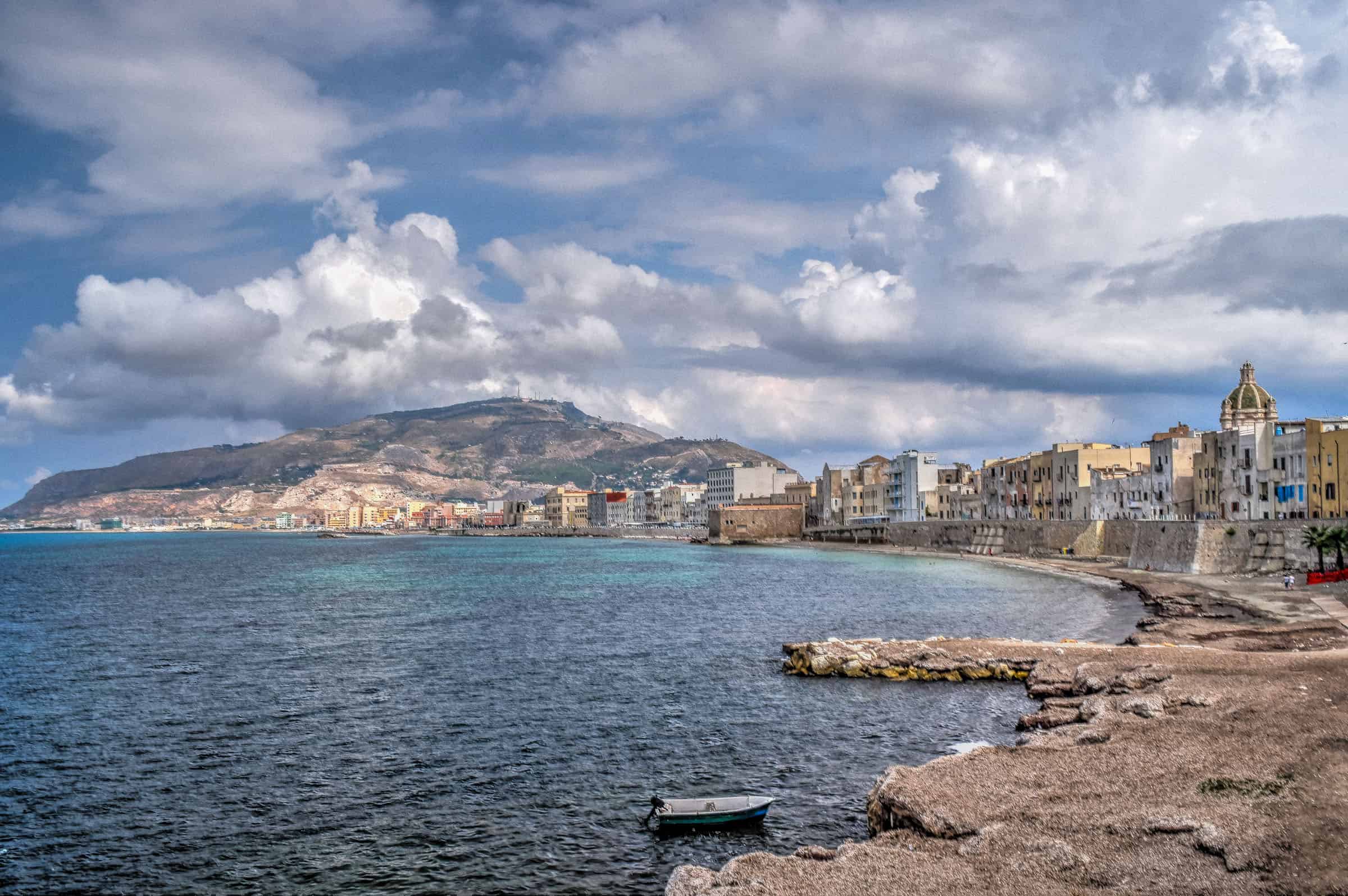
Trapani is one of the best bases for exploring northwestern Sicily, with easy access to nearby highlights such as Erice, the Egadi Islands, and the Segesta Archaeological Park.
While Trapani doesn’t have many “must-see” attractions of its own, its historic center is a pleasant place to explore, with narrow streets, Baroque buildings, and a lively local atmosphere. The city is also very walkable, with easy access to the port, beaches, and the cable car to Erice.
Combined with a wide range of restaurants and accommodation options, Trapani works particularly well as a base for a few days, allowing you to combine day trips with relaxed time in town.
This guide covers the best things to do in Trapani, along with how to use it as a base to explore the surrounding region.
Trapani Highlights – At a Glance
Why Visit Trapani
– Historic center: Compact old town with narrow streets, Baroque buildings, and a relaxed atmosphere
– Coastal setting: Seafront promenade and nearby beaches along the northern coastline
– Salt flats: Unique landscapes of windmills and salt pans just outside the city
– Easy day trips: Direct access to Erice via cable car and ferries to the Egadi Islands from the port
Good to Know
– Ideal stay: 2–3 days to combine Trapani, Erice, and the Egadi Islands
– Great base: One of the most practical bases for exploring northwestern Sicily
– Getting around: Walkable city; a car is recommended for reaching places like Segesta Archaeological Park, Riserva Naturale dello Zingaro, and Scopello


Disclosure: This page (Best Things to See and Do in Trapani) may contain product affiliate links. At no additional cost to you, we may receive a commission for purchases made through these links. More details can be found on our disclosure and policies page.
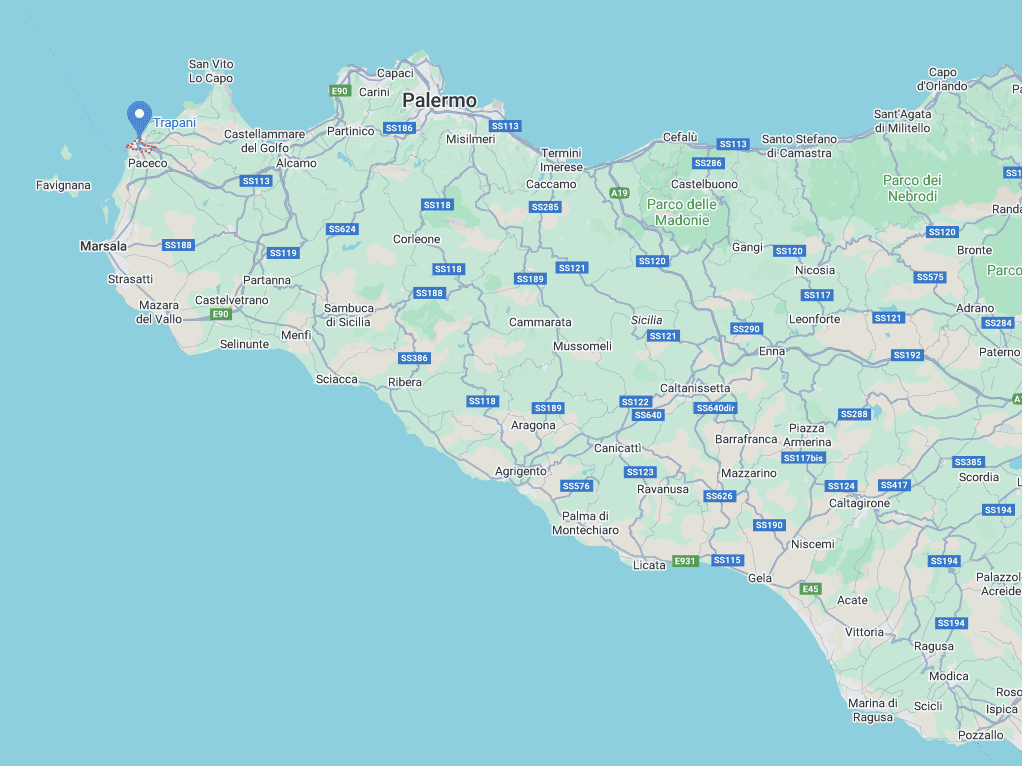
Trapani: Location & Map
Trapani is located in Northwest Sicily (link to Google Maps), west of Palermo, Sicily’s capital city, and the nearest international airport.
How to get to Trapani
By Car: It’s generally easier to travel through Sicily with your own car, and Trapani is no exception, especially if you want to use the town as a base from which you can make several day trips. Driving to and from Trapani is relatively straightforward, as the large 4-lane E933 highway takes you just outside the town center.
From Marsala: 30 km (40 minutes)
From Parlemo: 105 km (1h15)
From Agrigento: 175 km (2 hours)
From Catania: 315 km (3h30)
If you need to book a rental vehicle for your travels, we highly recommend using Discover Cars to get the best rates on your rental in Sicily.
We also highly recommend Airalo (eSIM card) for your connectivity needs when travelling abroad. Airalo is the world’s first and largest eSIM store with eSIM plans for 200+ countries and regions worldwide.
Parking in Trapani
If you are staying in Trapani, hopefully your accommodation will provide you with parking, or at the very least provide you with information about the nearest available parking options.
If you are coming from out of town to visit for the day, the best public car lots are located near the port where the ferries depart towards the Egadi Islands, such as this one (link to Google Maps), which is located just outside the historic city center. You can actually get reduced parking rates by booking your spot in advance on the car park website (€12 per day; 2025 rates).
If this first lot is full, a second lot is available, further east, about a 10-minute walk from the first car lot mentioned above (link to Google Maps). A third car park is located a similar distance from the historic center, but along the town’s northern coast (link to Google Maps).
Driving in Trapani: ZTL areas (restricted traffic)
Like many old towns in Sicily, Trapani has a ZTL area (Zona Traffico Limitato) – the historic center is closed to car traffic during certain times of the day. During those times, usually displayed on a sign near the ZTL area, access is restricted to local residents and authorized vehicles only. Avoid entering the ZTL area with your vehicle, as it is prohibited, and you will likely incur a hefty fine.
The map below provides a rough estimate of the ZTL area in Trapani, which roughly overlaps with the town’s historic center. If you are staying in Trapani and your hotel accommodation is within that zone, your hotel should be able to provide you with guidance as to where you can drive and park (some hotels also have permits for guests). All of the car park lots we described above are located just outside the Trapani ZTL area.
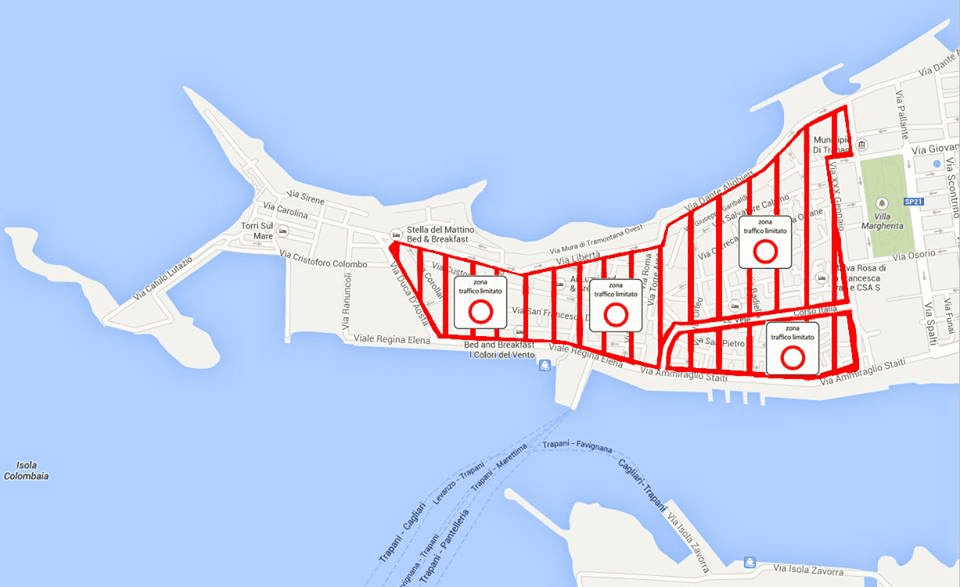
That being said, and as you will discover further below, you really don’t need a car to visit Trapani. The historic center is compact and very walkable. Having a car is ideal if you intend on exploring the surrounding area while using Trapani as a home base for western Sicily, which is what we recommend.
Other Transport Options to Trapani
By Public Transit: Both Palermo and Agrigento have bus lines with direct connections to Trapani. To get to Trapani by bus from the Palermo bus station, you can buy tickets online with Segesta Autolinee. Segesta Autolinee also offers a direct route from Palermo Airport to Trapani.
From Agrigento, buses to Trapani are operated by Autolinee Salvatore Lumia and FlixBus.
By Plane: Trapani’s Birgi Airport (TPS) has a few connections around Italy (including Rome, Milan, and Venice) and seasonal connections across Europe (including Frankfurt, Paris, Amsterdam, Munich, Madrid, Barcelona, and London Heathrow).
TPS airport is located 15km south of Trapani. Local taxis have a €30 fixed rate to take you to downtown Trapani (including the historic center).
—
Most people flying into Sicily will typically fly into Catania (300 km away from Trapani) or Palermo (100 km away) international airports.
By Ferry: Trapani’s port serves as a hub for ferry services to the Aegadian Islands (Egadi Islands), mainland Italy, Malta, and Tunisia. We typically recommend using Ferry Hopper for all of your ferry needs.
About Trapani: A Brief History
Historically, Trapani developed a thriving economy based on the extraction and trade of salt, evidenced by the salt pans and windmills in the Natural Reserve of Saline di Trapani and Paceco.
A city was first founded in Trapani’s location by the Elymians around 1100 BC, the same people who founded cities in Segesta and Erice. Since then, nearly every Mediterranean culture has left a trace on Trapani by affecting the culture and development of the city. The Carthaginians established Trapani as a naval base during the Punic Wars (a series of conflicts between Rome and Carthage in the 3rd and 2nd centuries BC). Following the wars, Trapani fell under Roman control for several centuries. In the 9th century, the Arabs fortified the town walls, and in the 11th century, the Normans (descendants of Norse Vikings who settled in Normandy, France) further developed the port and maritime trade. Later on, the Spanish also had a foothold in Trapani for several decades, and sadly, the town suffered heavy damage during WWII.
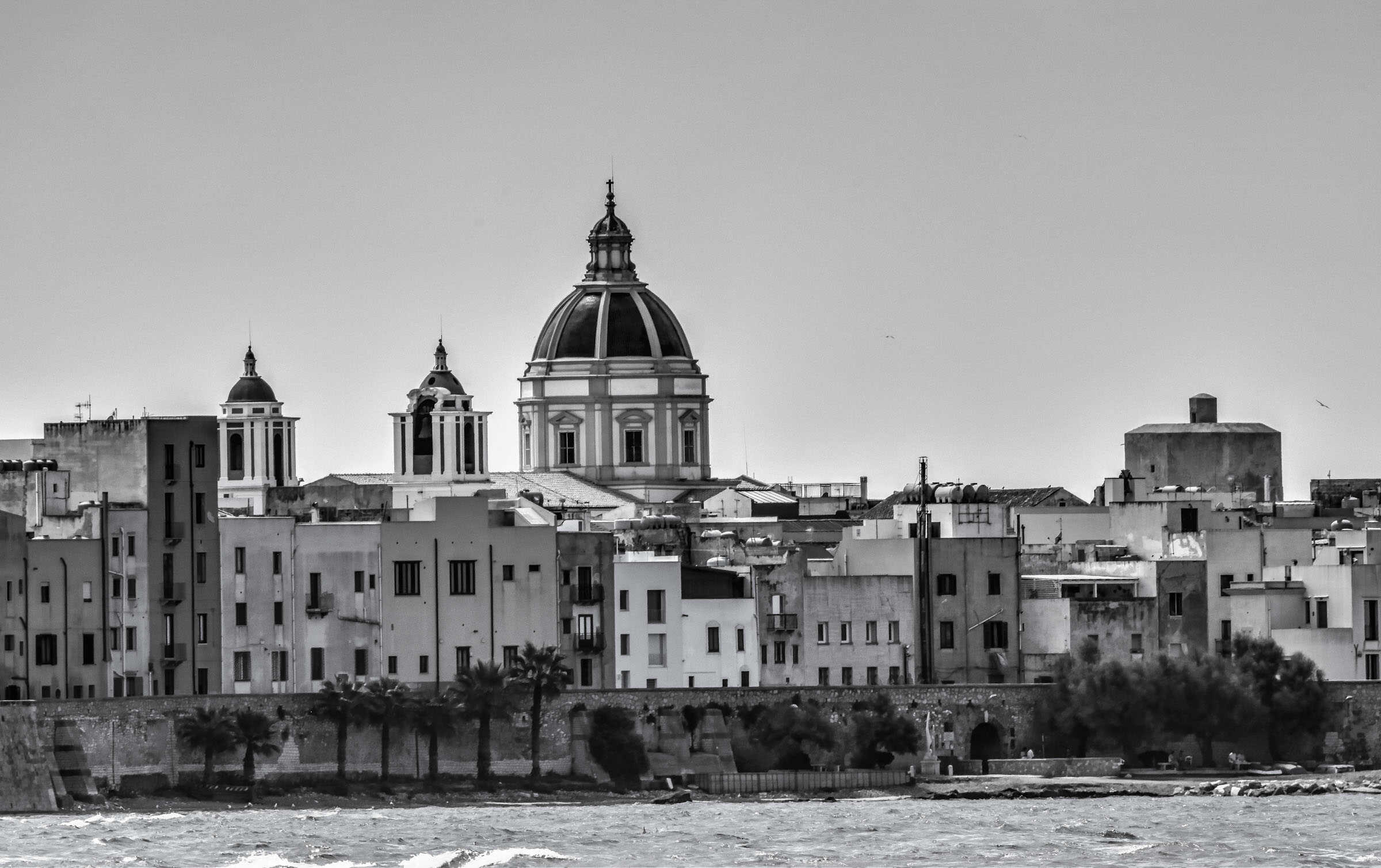
Most of what you see today in Trapani’s historic center dates from late medieval times (between the 14th and 17th centuries), and most historic buildings are designed in the Baroque style. Trapani today boasts a population of about 70,000 people, and the city is still an important fishing port and the main gateway to the nearby Egadi Islands.
Best Things to See and Do in Trapani
Wander Through the Historic Center (Centro Storico)
Trapini’s historic center is located towards the western end of the city, within an elongated peninsula, meaning that you are rarely more than a few blocks away from the sea.
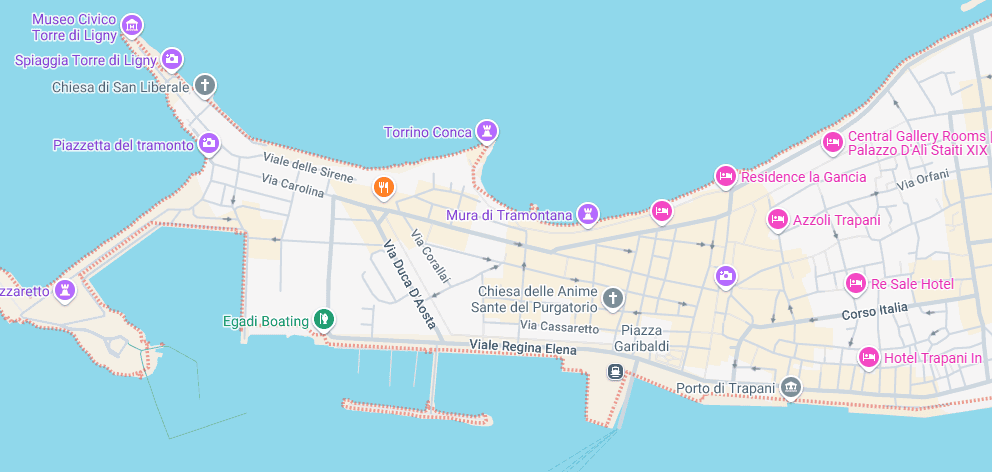
Several beaches and a promenade line the historic center’s northern edge (see next section below), whereas the city’s harbour and ferry port can be found along the southern edge.
The historic center itself is filled with beautiful Baroque architecture, an eclectic mix of shops, a labyrinth of cobblestone streets, delightful cafes, picturesque piazzas, and loads of restaurants serving delicious Italian and Sicilian specialties. The historic center is also the perfect size for sightseeing: it’s compact enough that you can easily walk everywhere but large enough to keep you busy for many, many hours, if not for a few days.
Some of the more notable places in his historic center include:
-The 16th-century Cattedrale di San Lorenzo (Trapani Cathedral – link to Google Maps)
-The Palazzo Cavarretta – a three-tiered Baroque palace featuring marble columns (link to Google Maps)
-The Porta Oscura – Torre dell’Orologio – which boasts one of Europe’s oldest astronomical clocks dating back to 1596 (link to Google Maps)
–The Fontana di Saturno – Trapani’s statue centrepiece, which dates from the mid-14th century (link to Google Maps)
–Corso Vittorio Emanuele – Trapani’s main pedestrianized street, cutting through the historic center, features elegant buildings, churches, and numerous shops, restaurants, and bars.
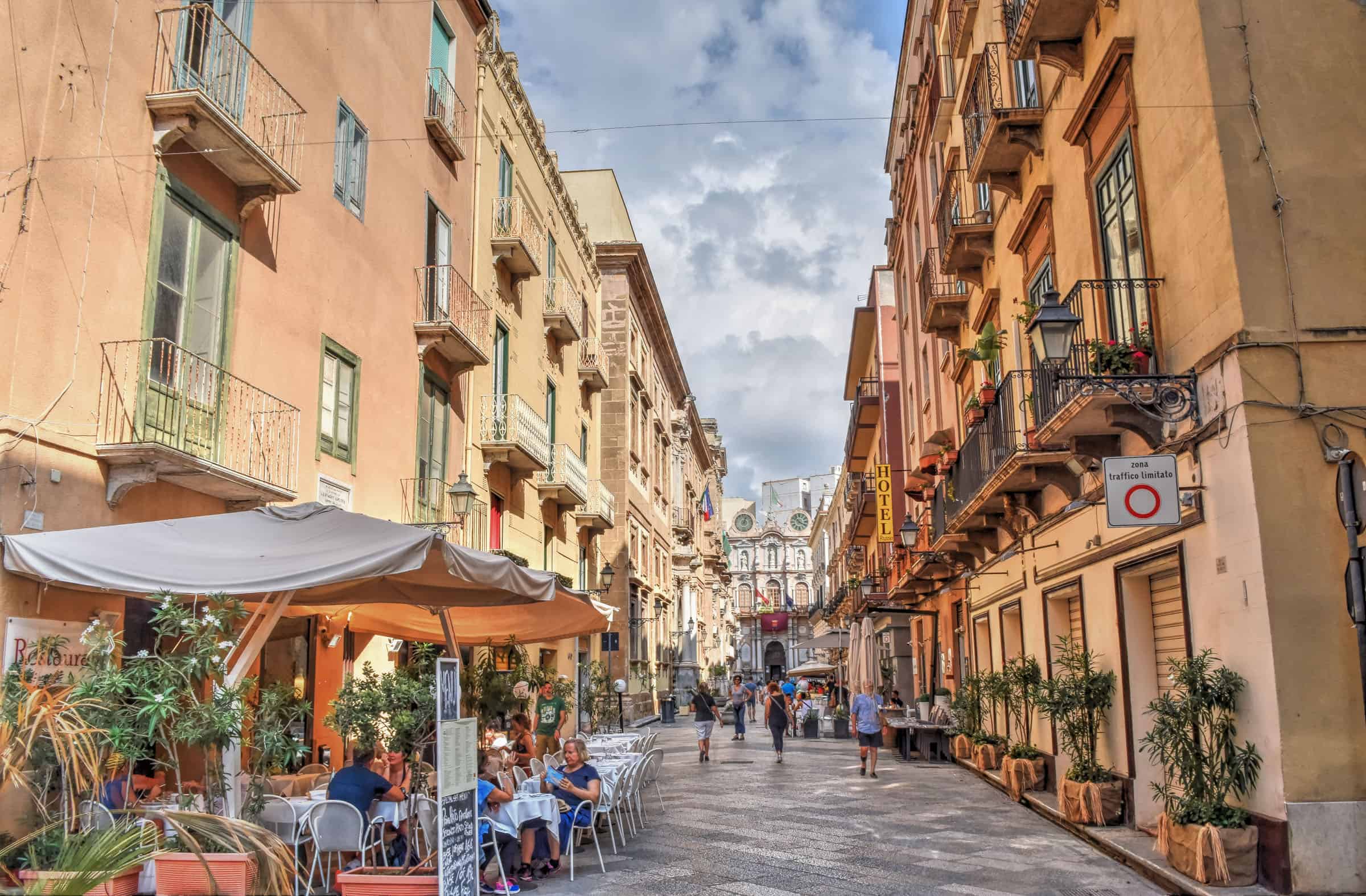
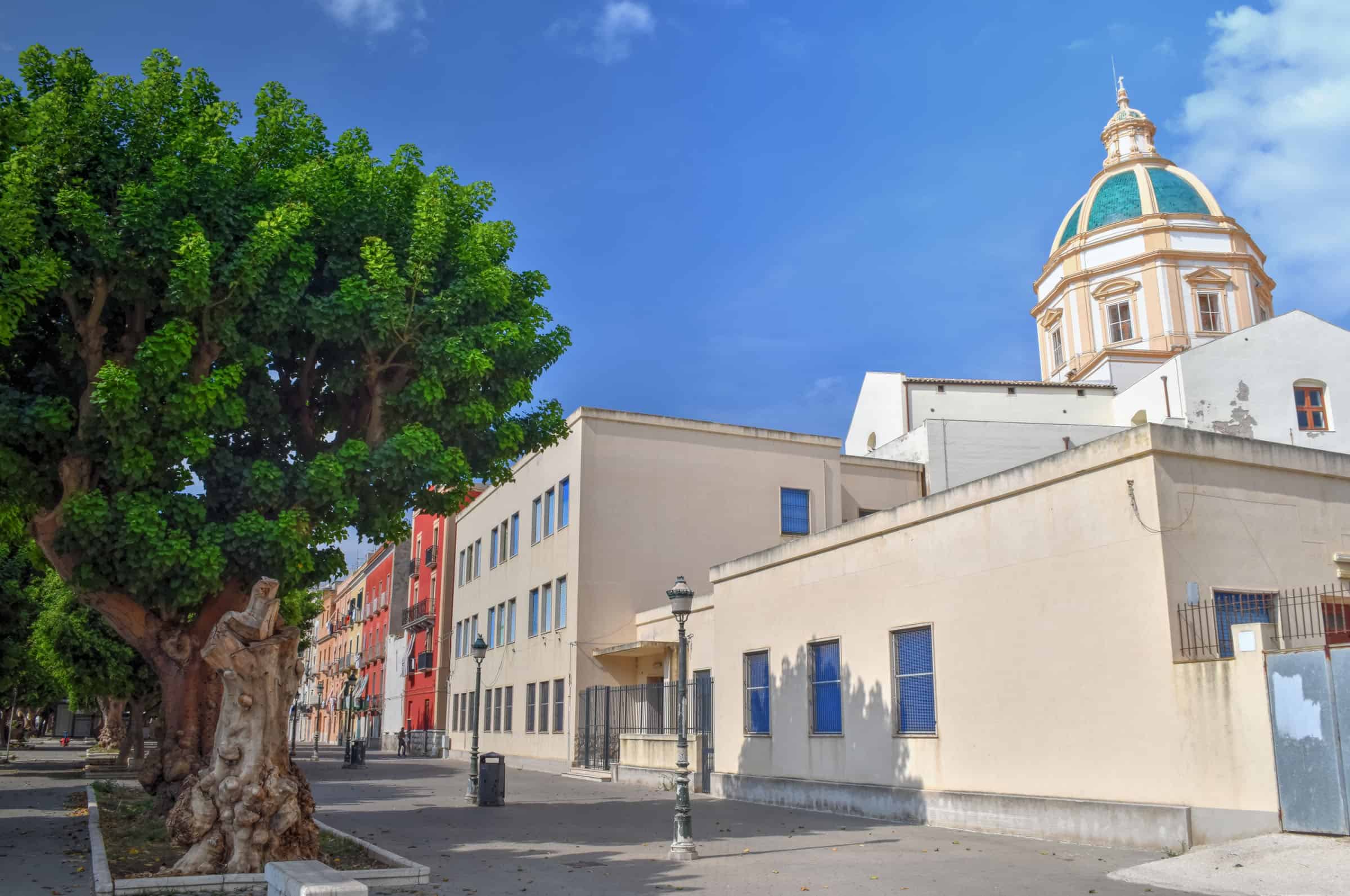
The historic center isn’t overrun by tourism like in other Sicilian towns such as Taormina or Palermo, providing visitors with a more authentic atmosphere, which makes Trapani’s exploration much more pleasant. In fact, the entire area can appear quite sleepy and quiet during the day. But come happy hour, the town becomes lively and atmospheric during the evening hours.
Walk Along the City Promenade
For a nice morning or evening stroll, head to the Mura de Tramontana (link to Google Maps) – a one-kilometre stretch of the old Spanish City Walls – where you can walk to the end of Trapani’s western tip and find the Torre di Ligny (link to Google Maps), a coastal watchtower built in 1671 that today houses a small archeological museum.
The old Spanish City Walls are also the perfect place to enjoy a gelato on a warm sunny day.
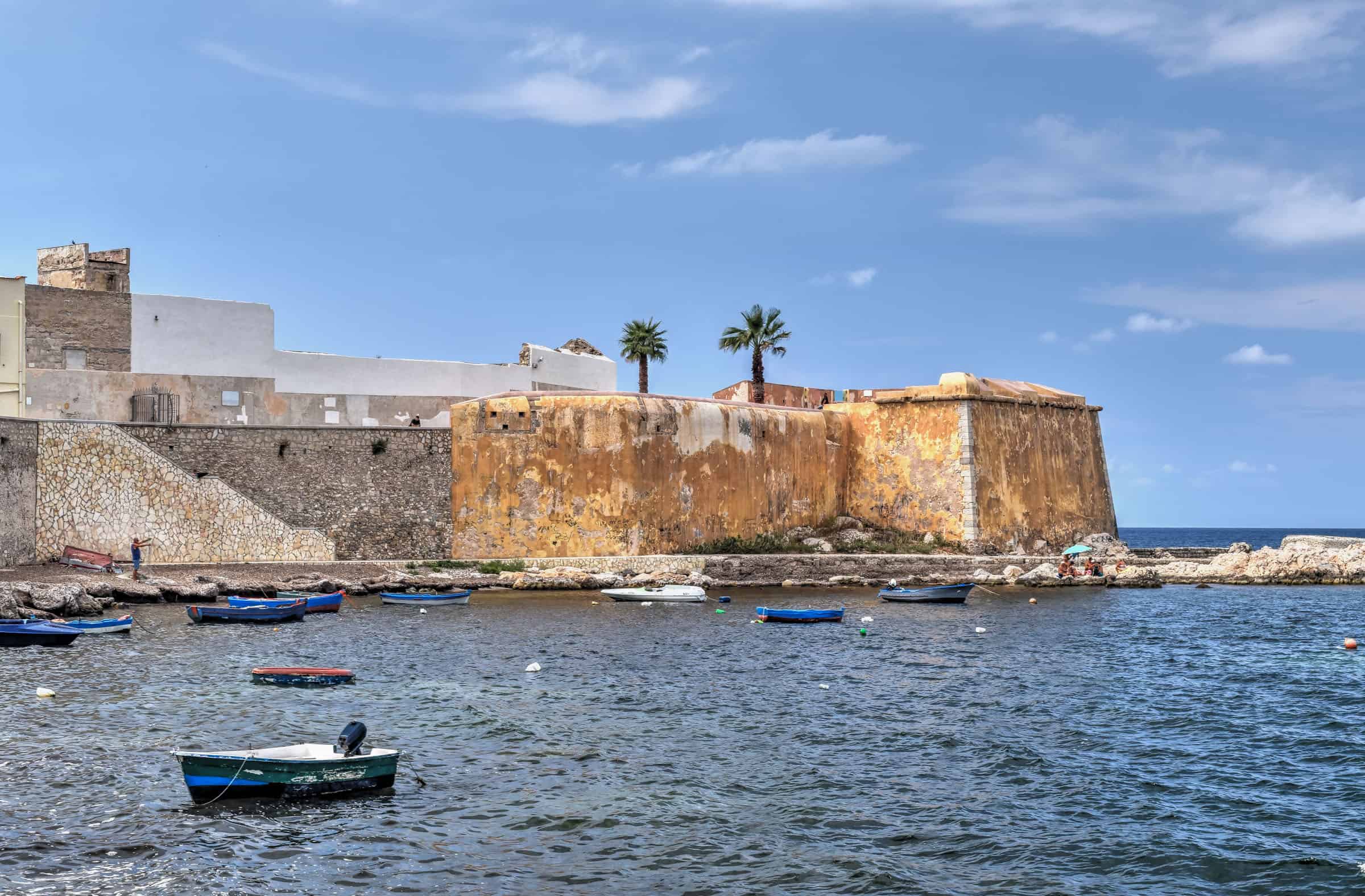
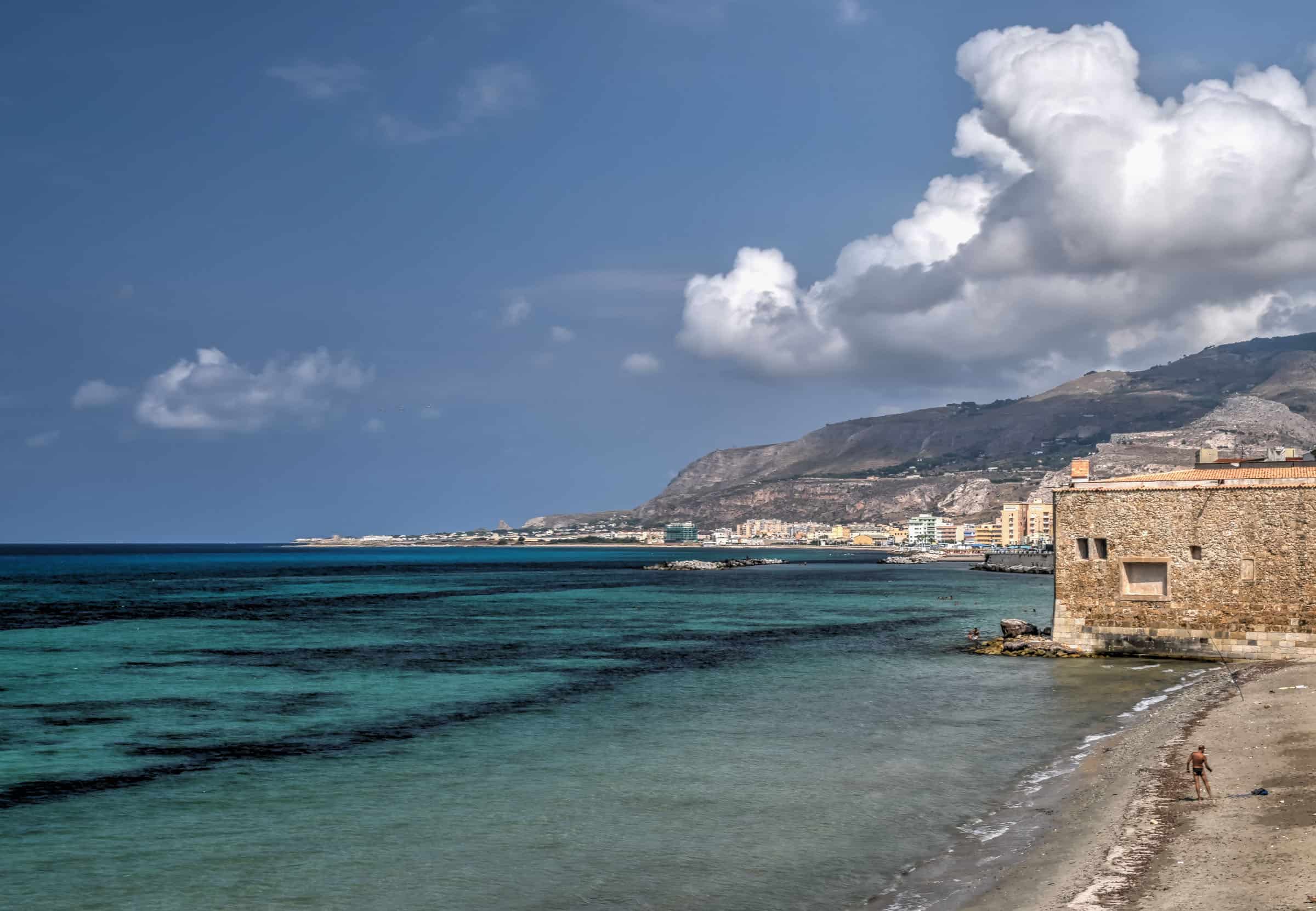
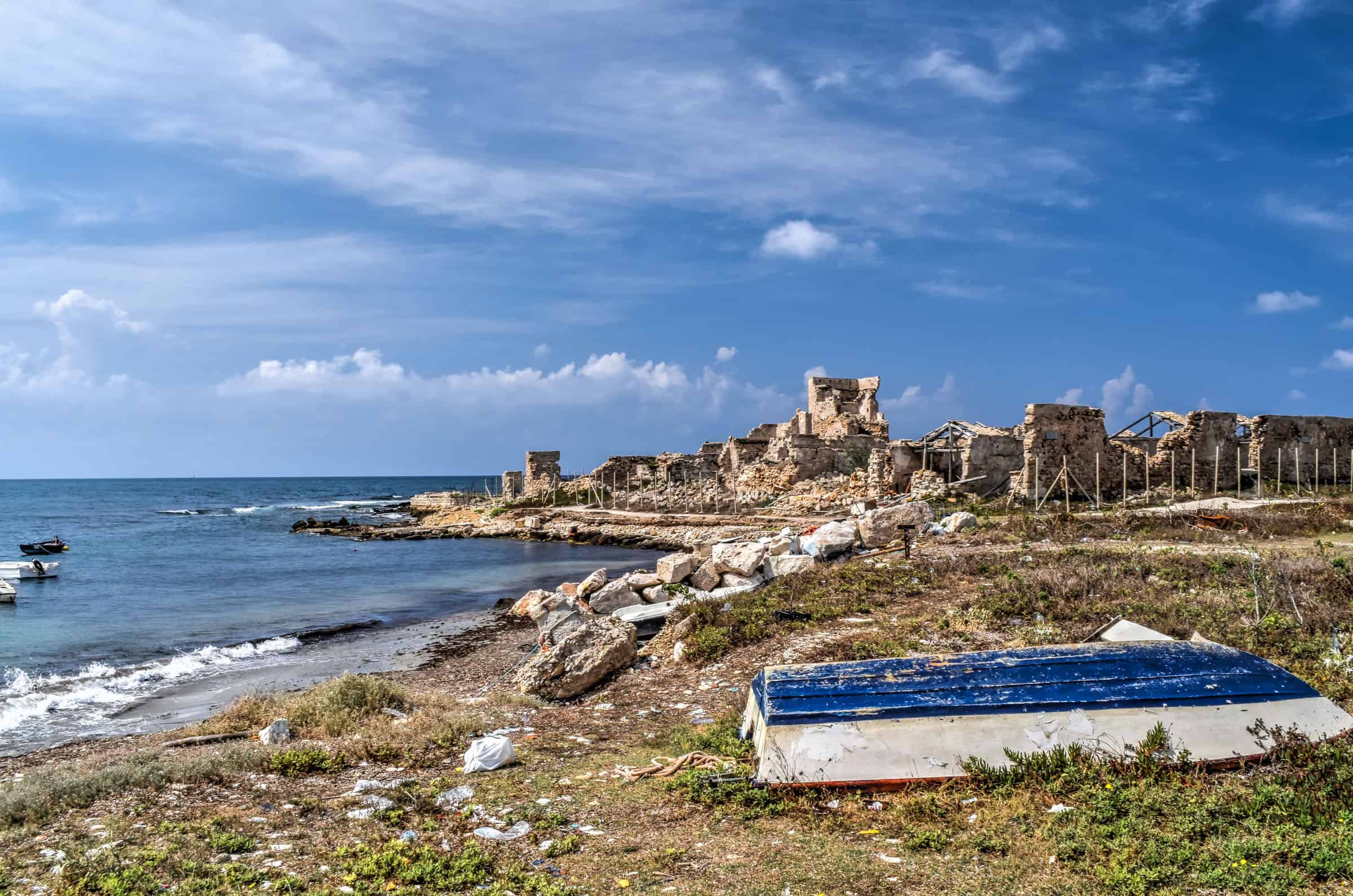
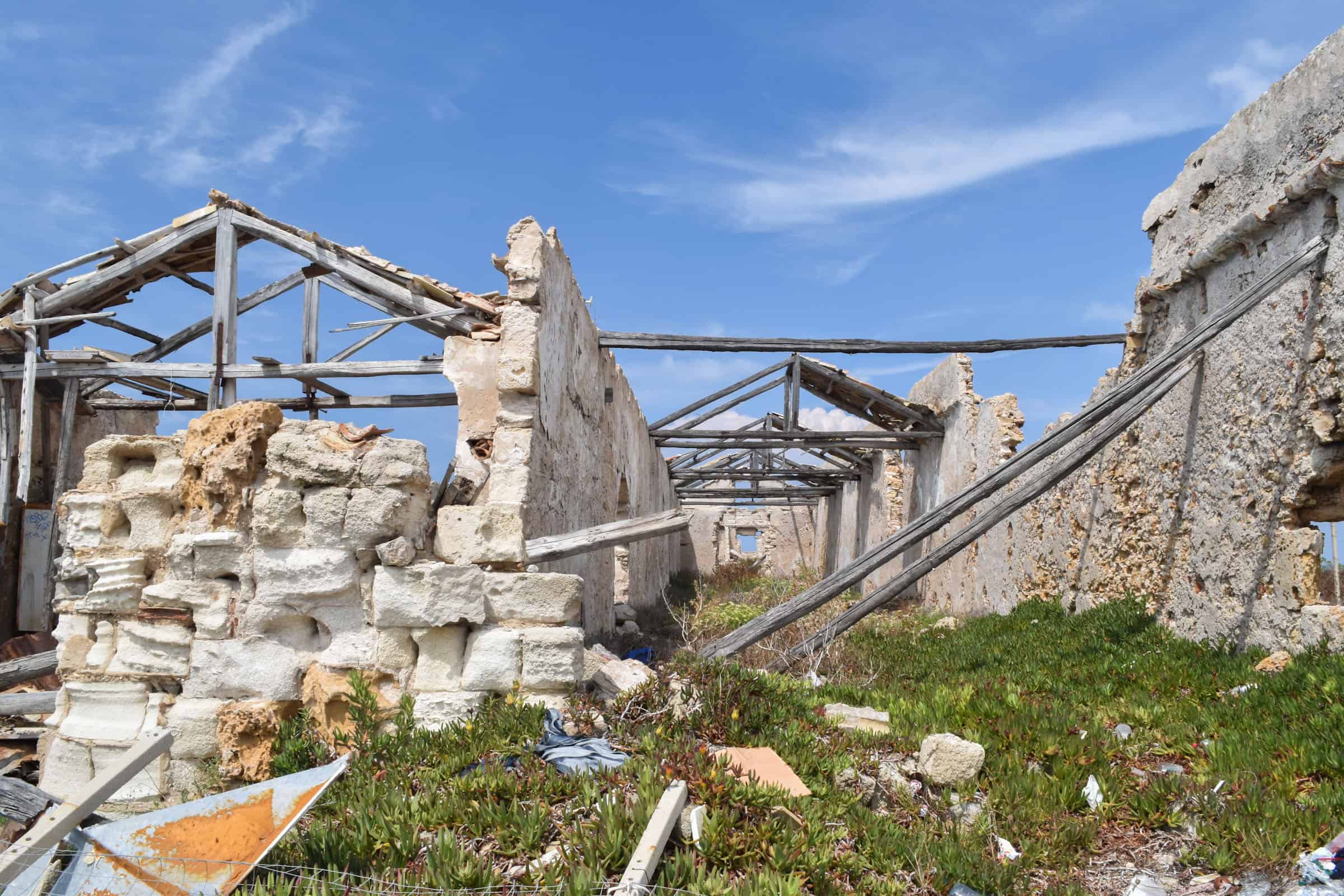
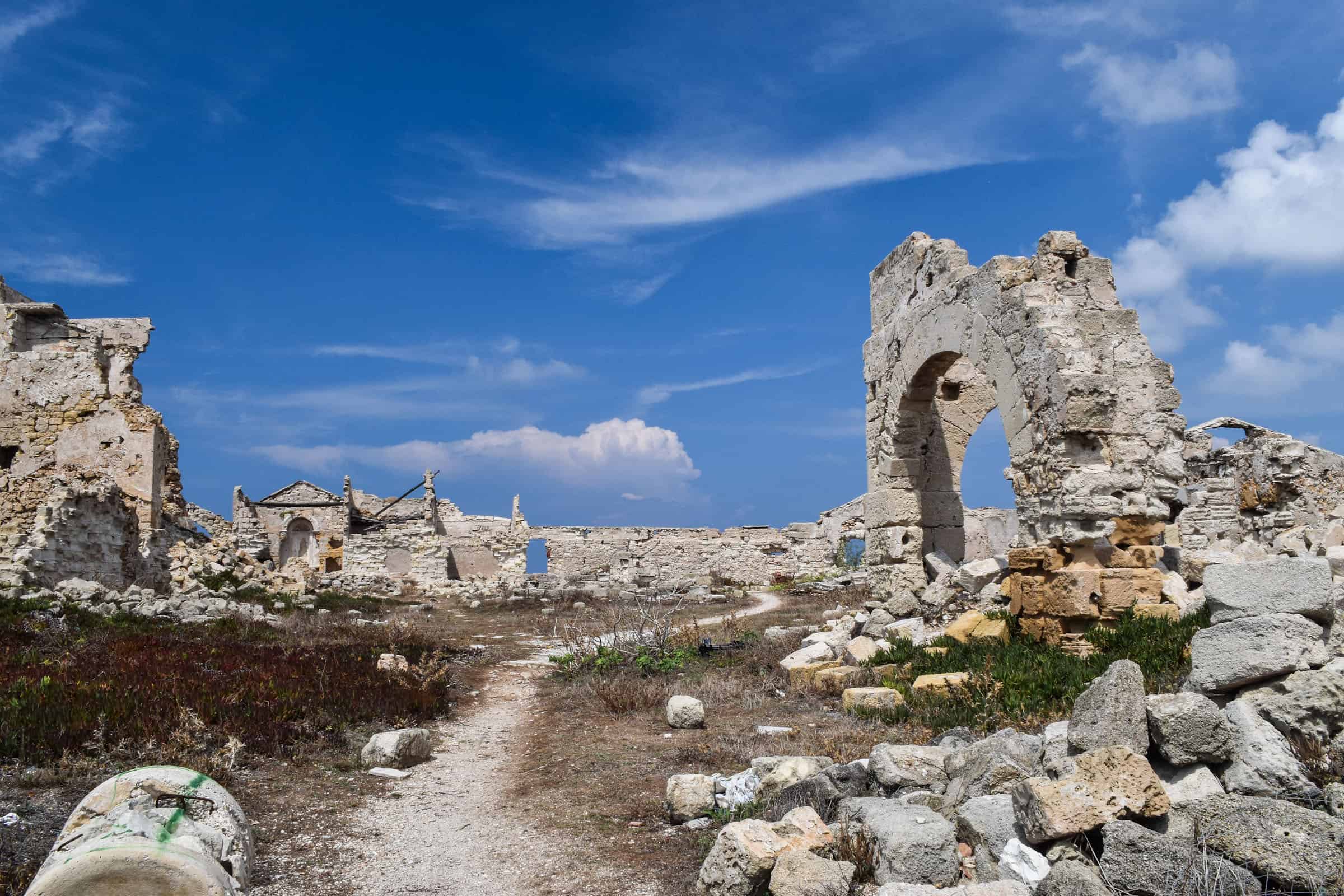
Beyond the old city walls, a walking path continues further east for another kilometer or two, with nothing but beach and sea to one side, where eventually you will reach the ruins of an old tonnara (tuna factory – link to Google Maps). There isn’t anything specific to see at the site of the old tonnara, but it makes for a nice area to explore after a coastal walk.


Hit Some of the City Beaches
From the Old Spanish City Walls, you can see two of Trapani’s most popular beaches. These aren’t the best beaches in the area (we will present some better ones further below), but these are the only ones within walking distance of the town center.
The closest is Spiaggia delle Mura di Tramontana (link to Google Maps), a tiny rocky beach (with a small stretch of sand) under the old Spanish walls encircling the city.


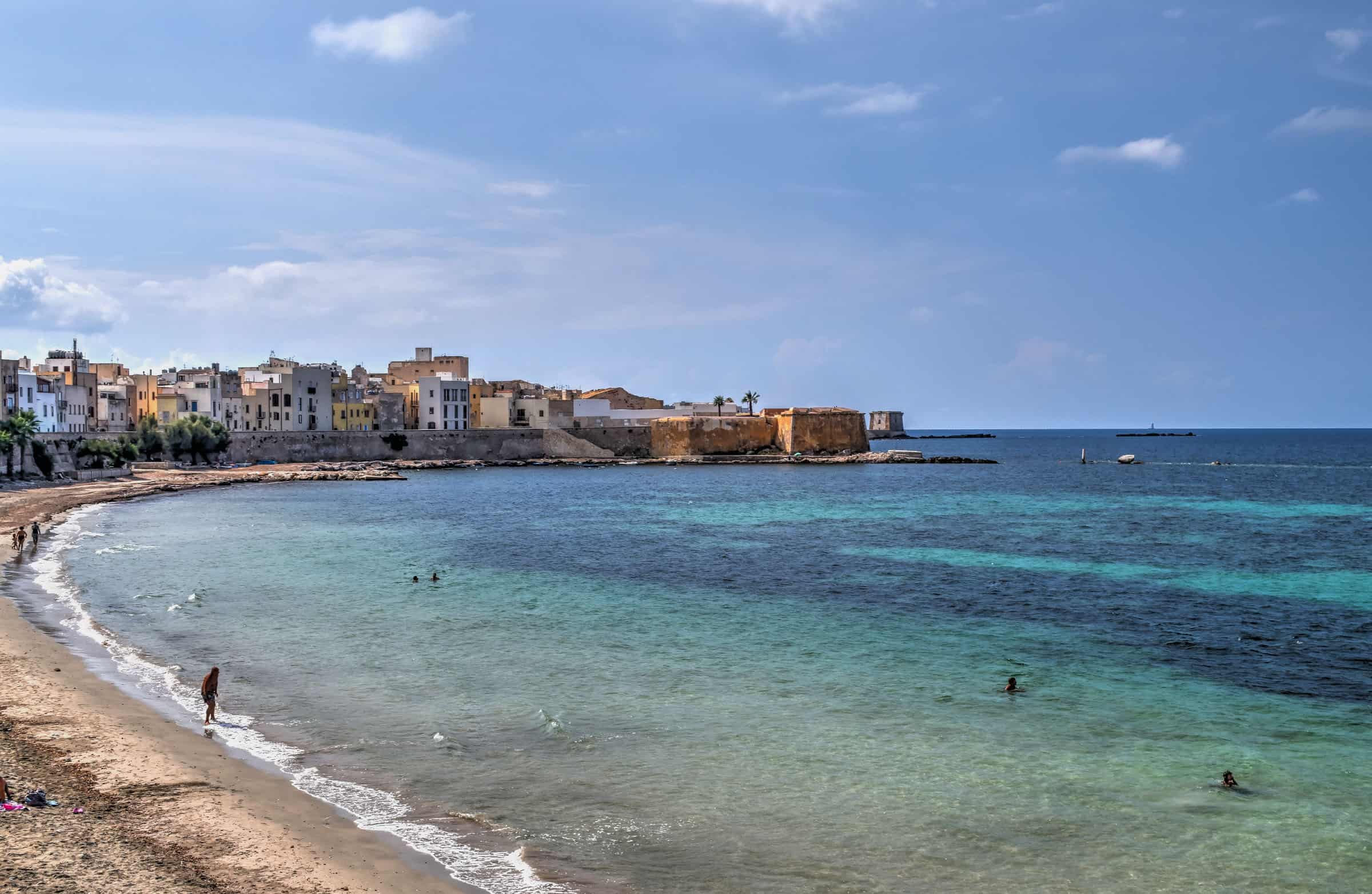
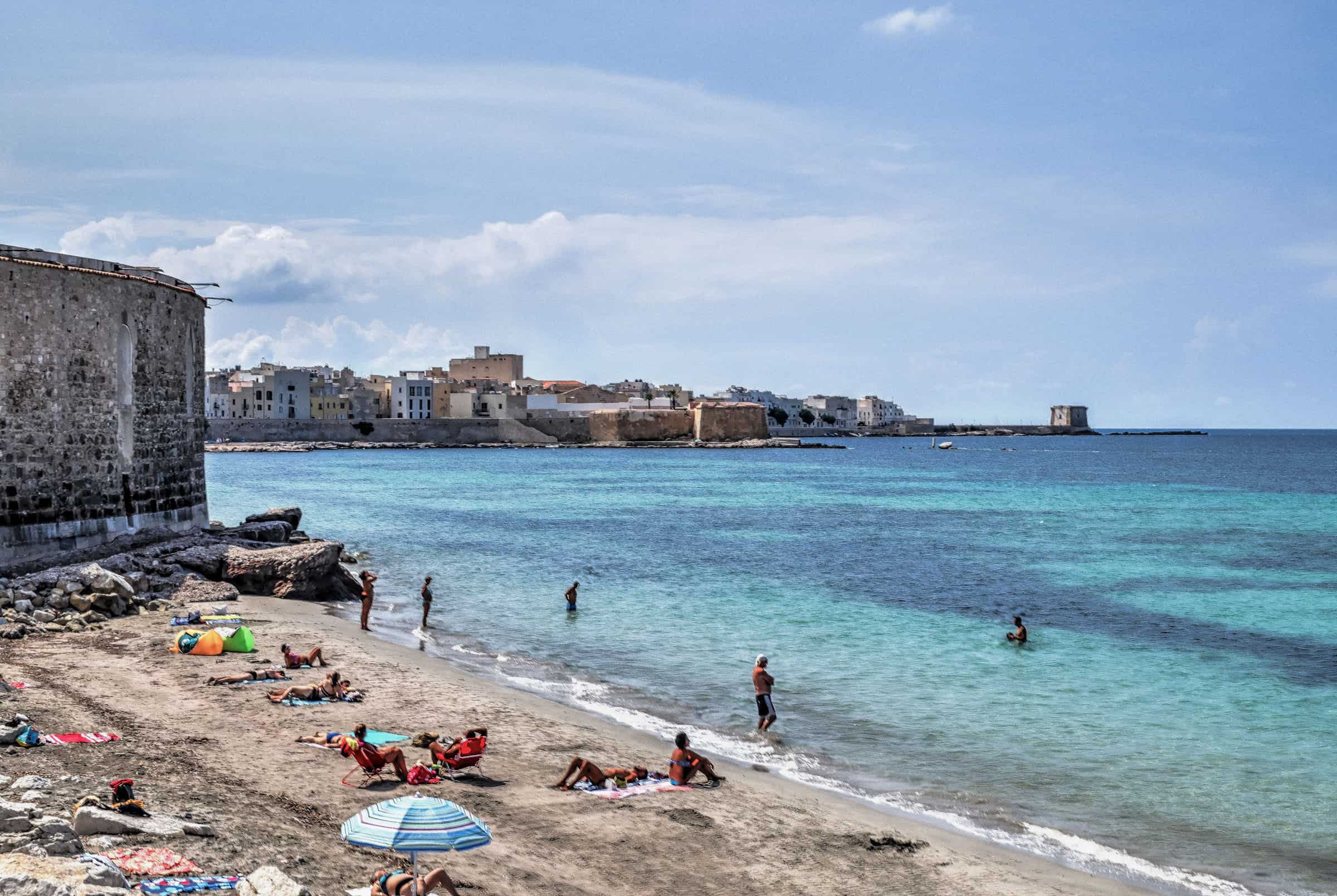
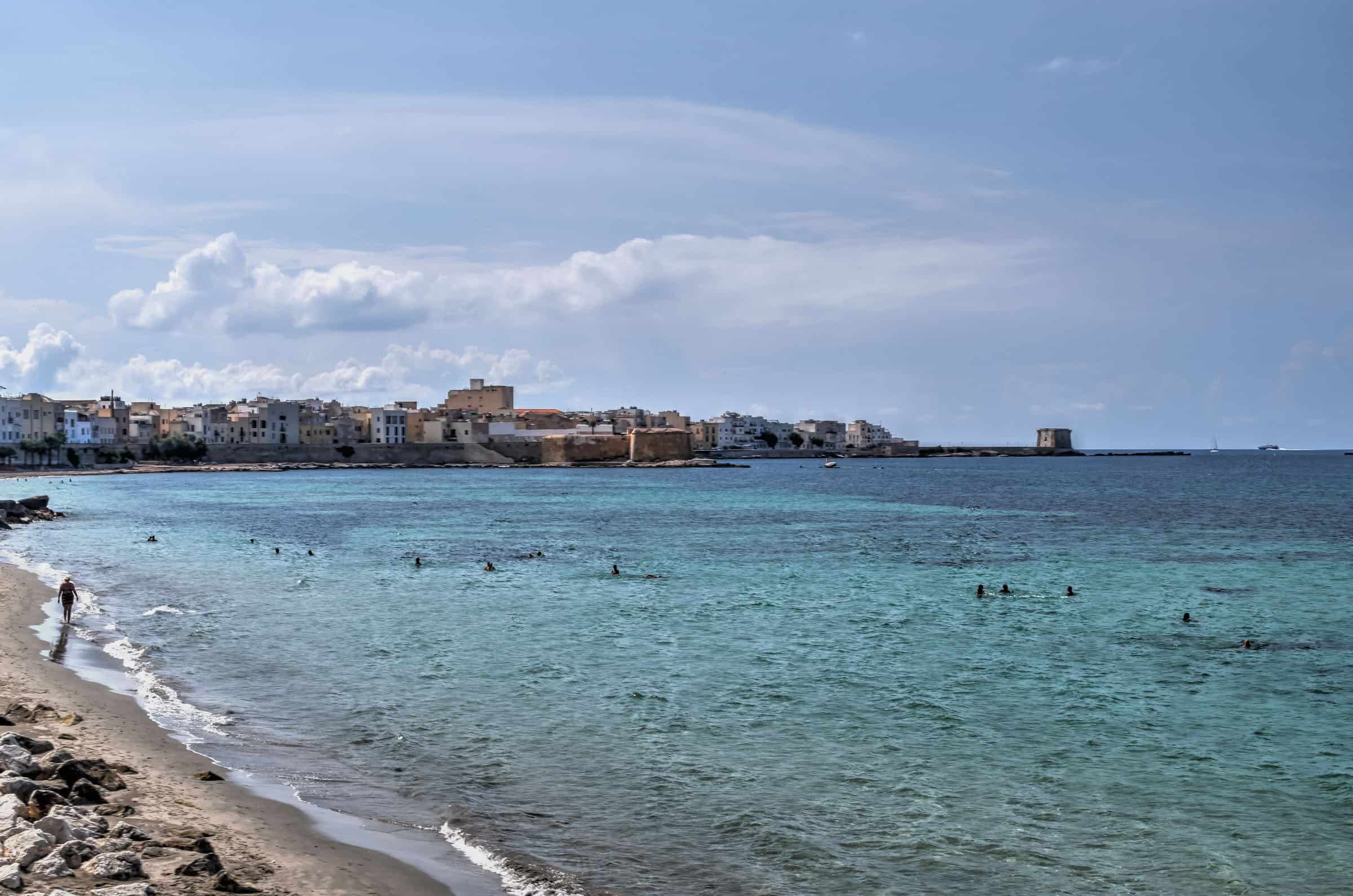
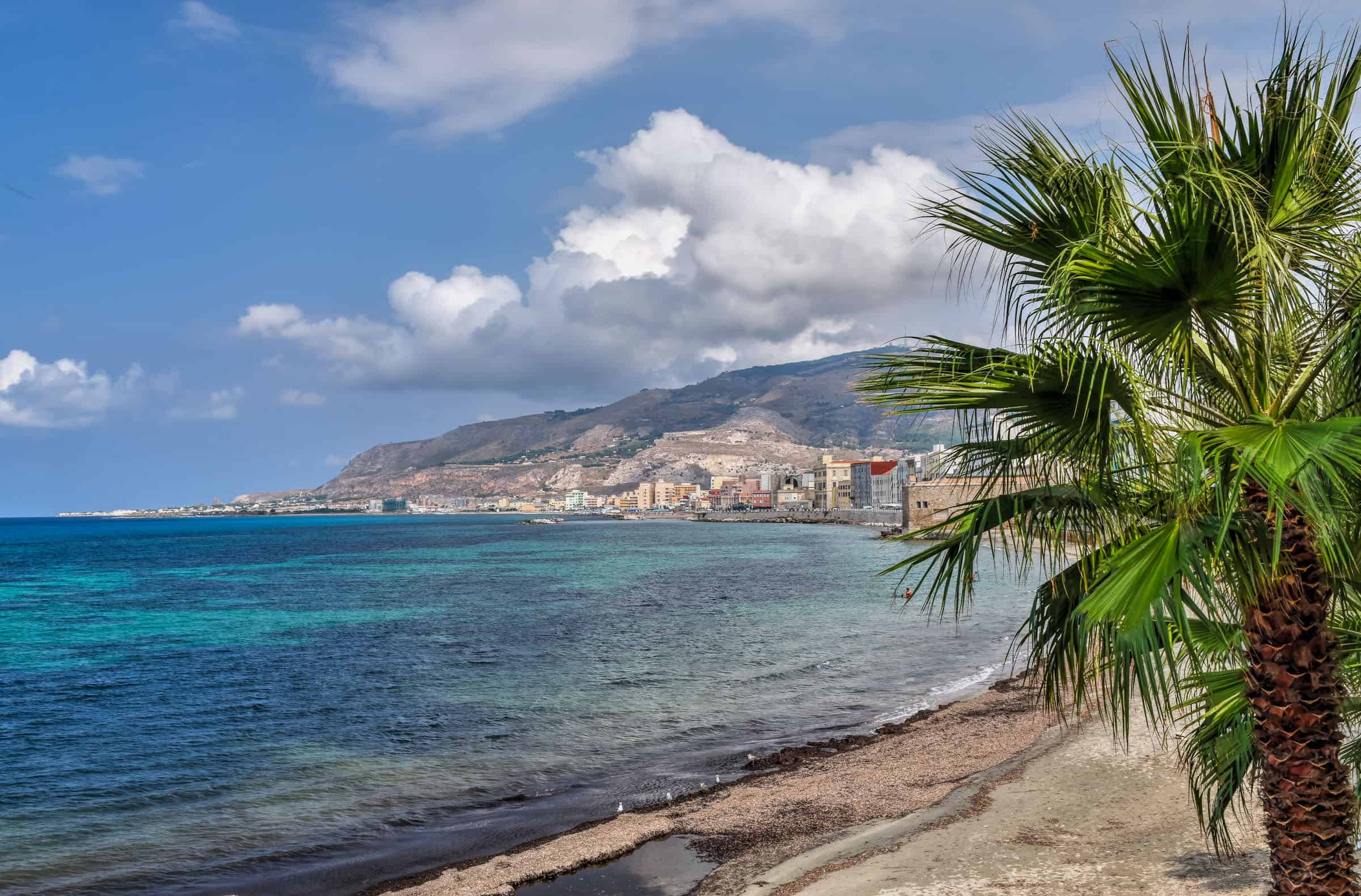
A bit further east, there’s a long stretch of narrow sandy beach with some rocky sections. It’s more of a scenic beach than a pleasant place to go for a swim.
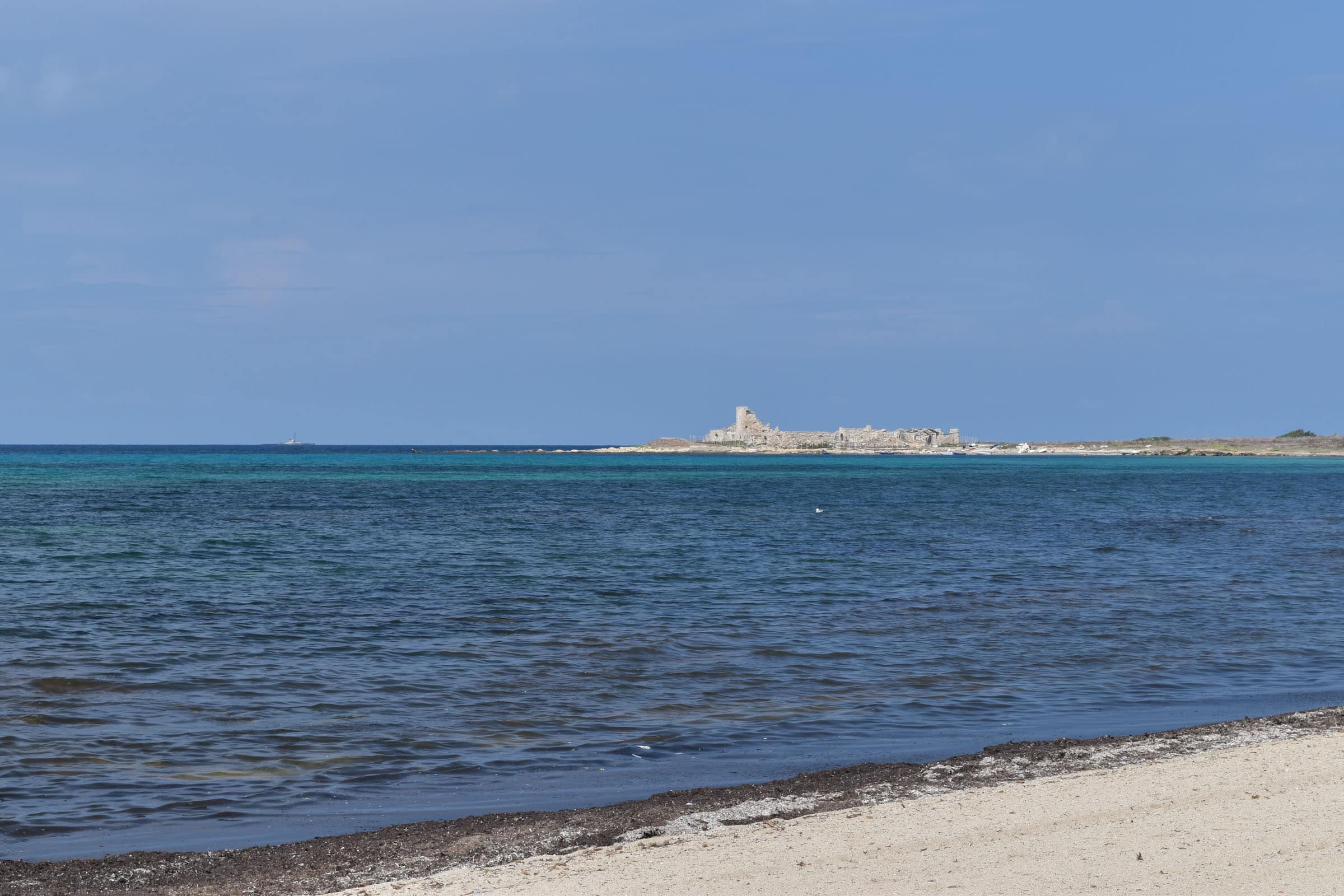
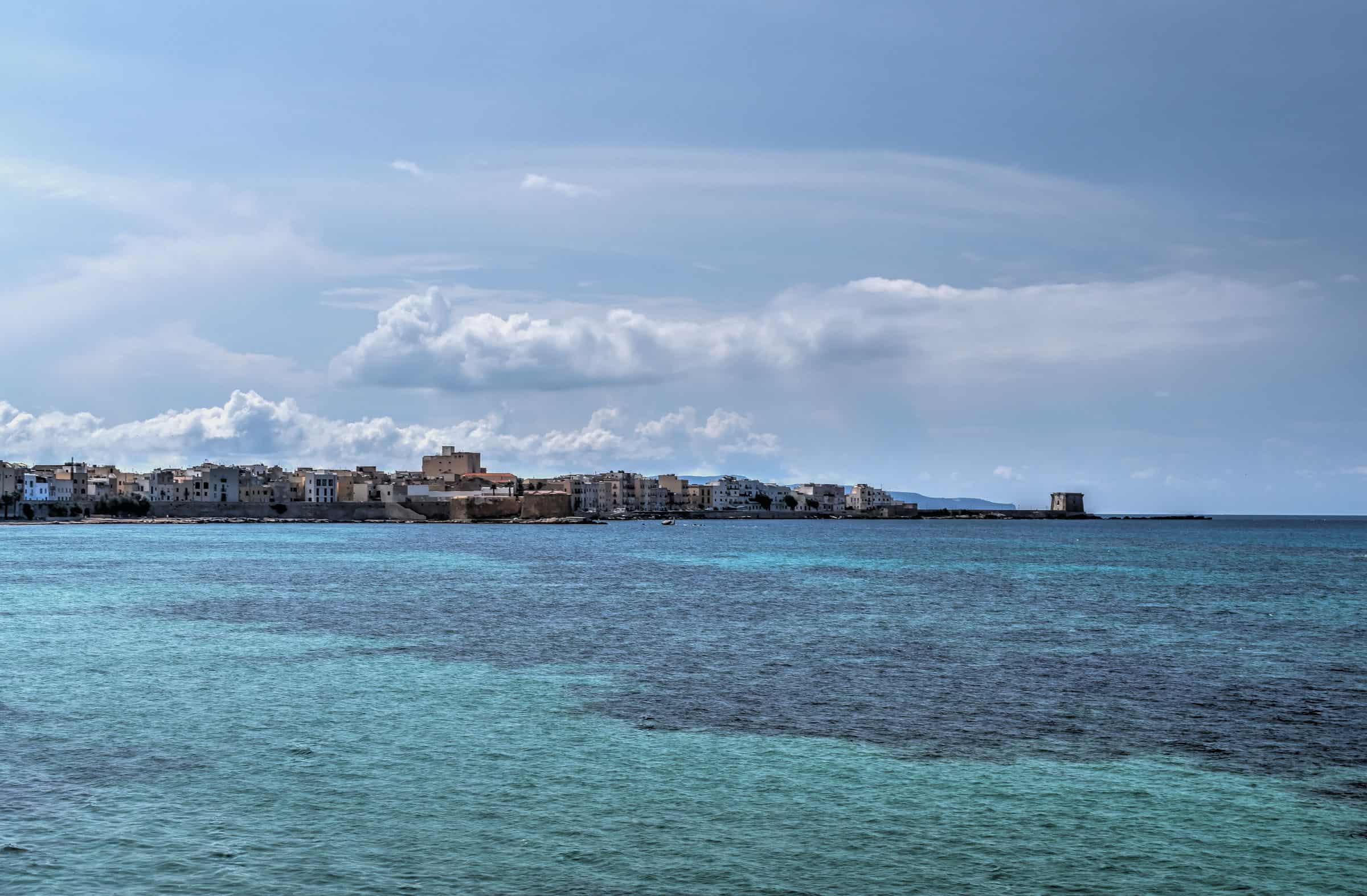
Finally, continuing eastward (about 3 km from the historic center and just beyond the tonnara ruins), you’ll find Spiaggia di San Giuliano (link to Google Maps), a much more expansive stretch of sand and Trapini’s most popular beach.
Visit the Natural Reserve of Saline di Trapani e Paceco (Trapani Salt Flats)
The Natural Reserve of Saline di Trapani e Paceco (link to Google Maps), which is a collection of very scenic and photogenic salt flats, is located a few kilometres south of the city, a short 10-minute drive from central Trapani.
The area is quite expansive, so if you are short on time, we recommend heading in the direction of the Museo del Sale near the town of Nubia (Salt Museum – link to Google Maps), which is about a 15-minute drive from the central Trapani. The scenery here is quite spectacular, particularly around sunset, where you’ll be surrounded by multicoloured salt pans and well-preserved windmills that once pumped seawater.


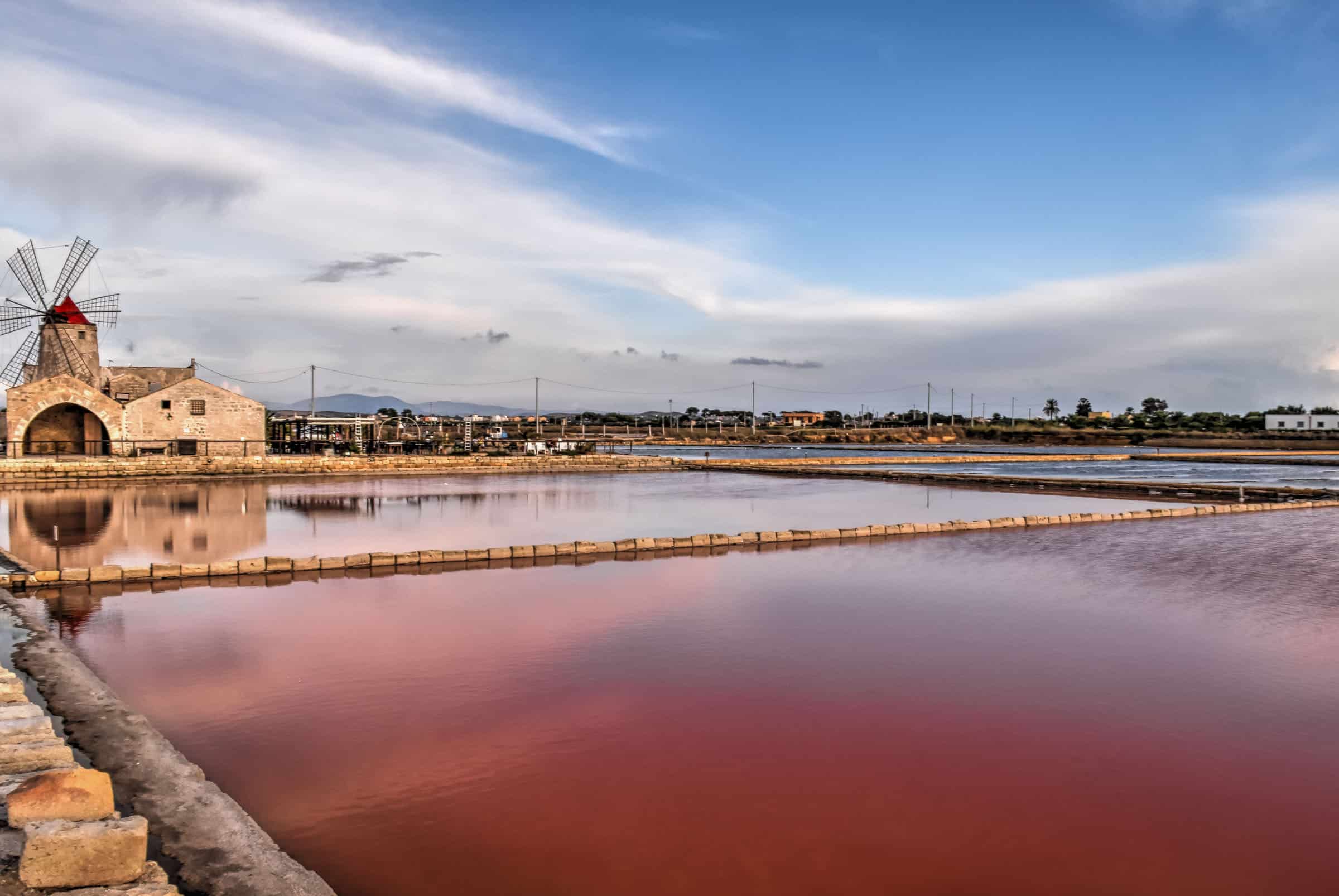
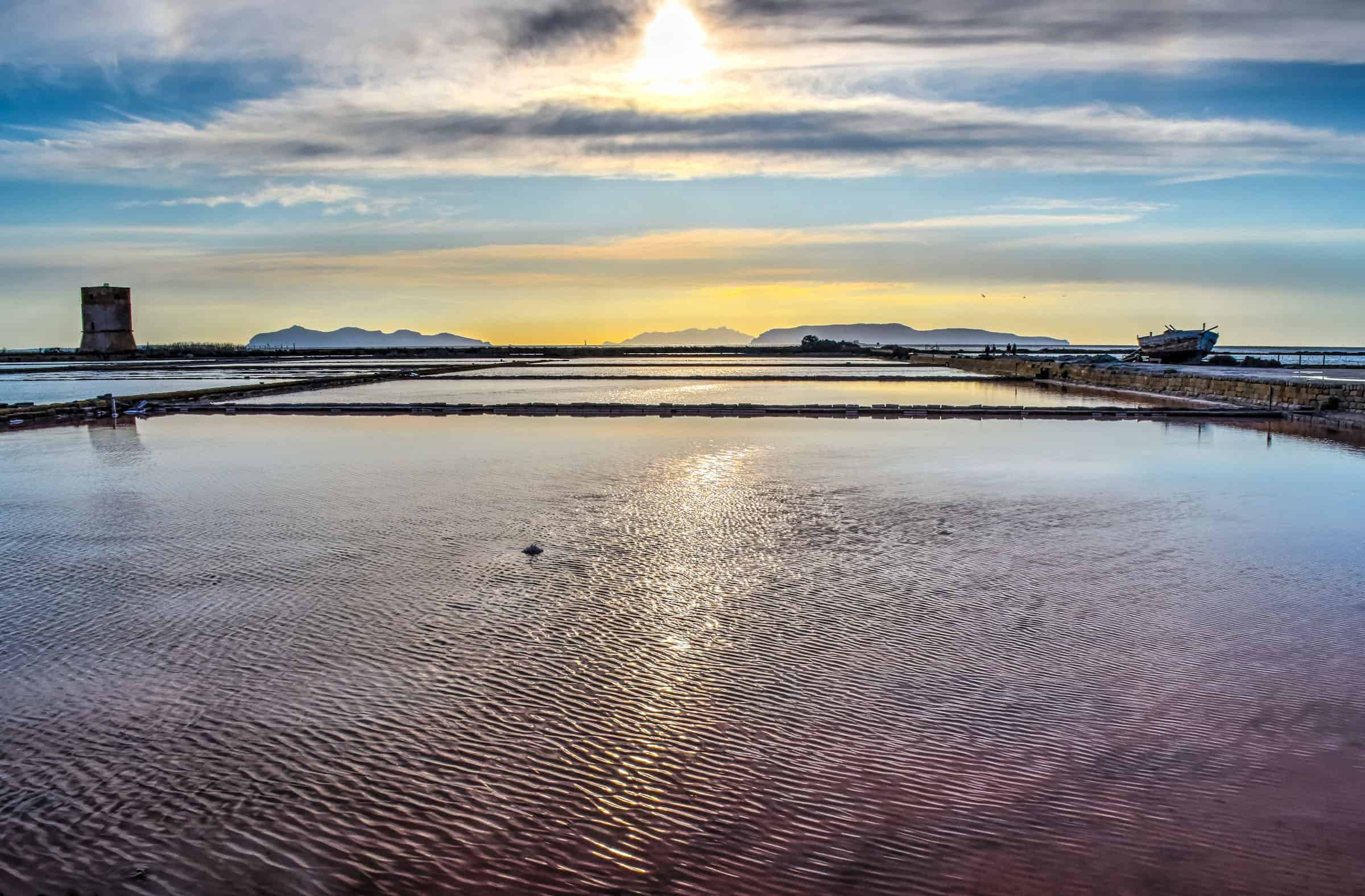
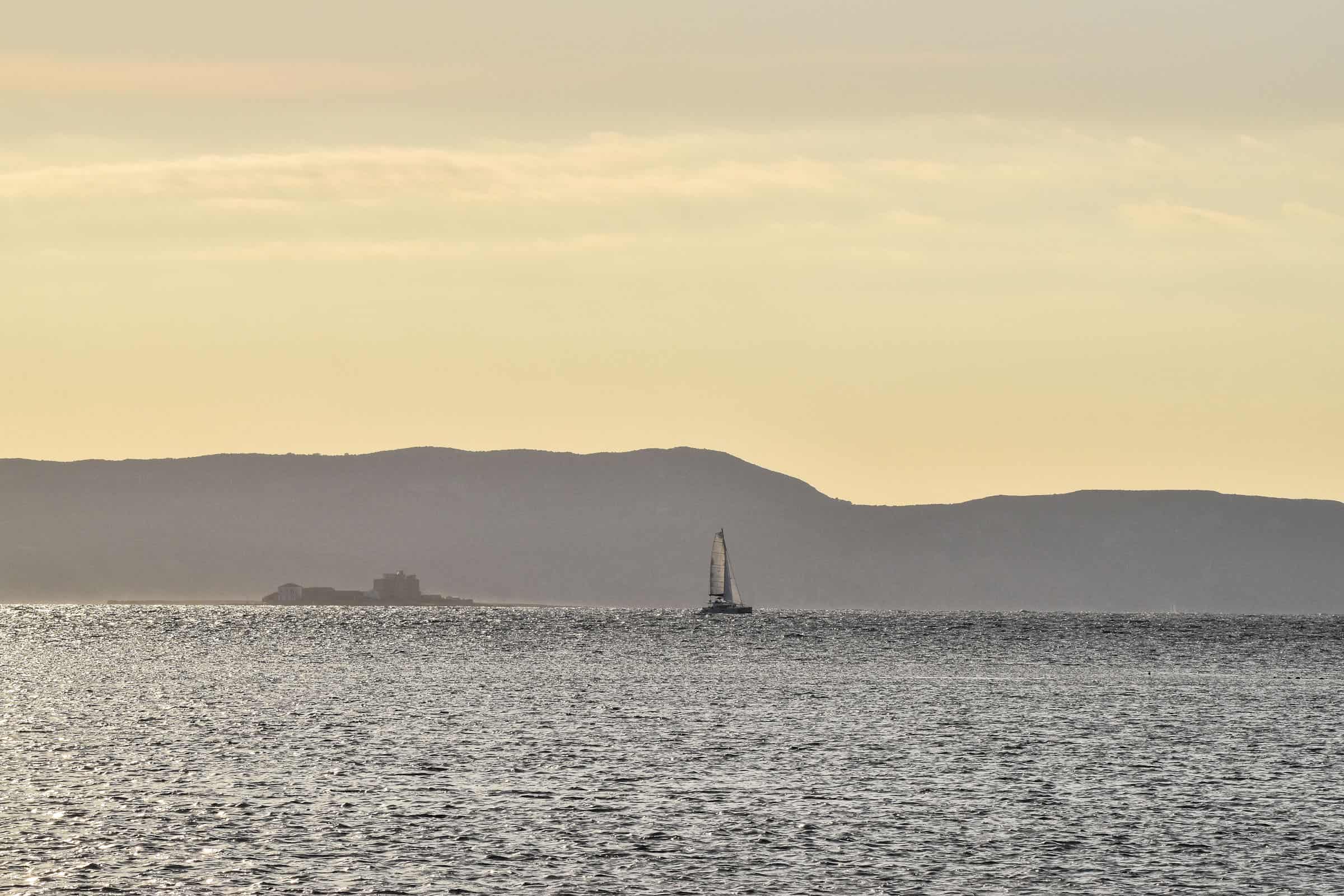
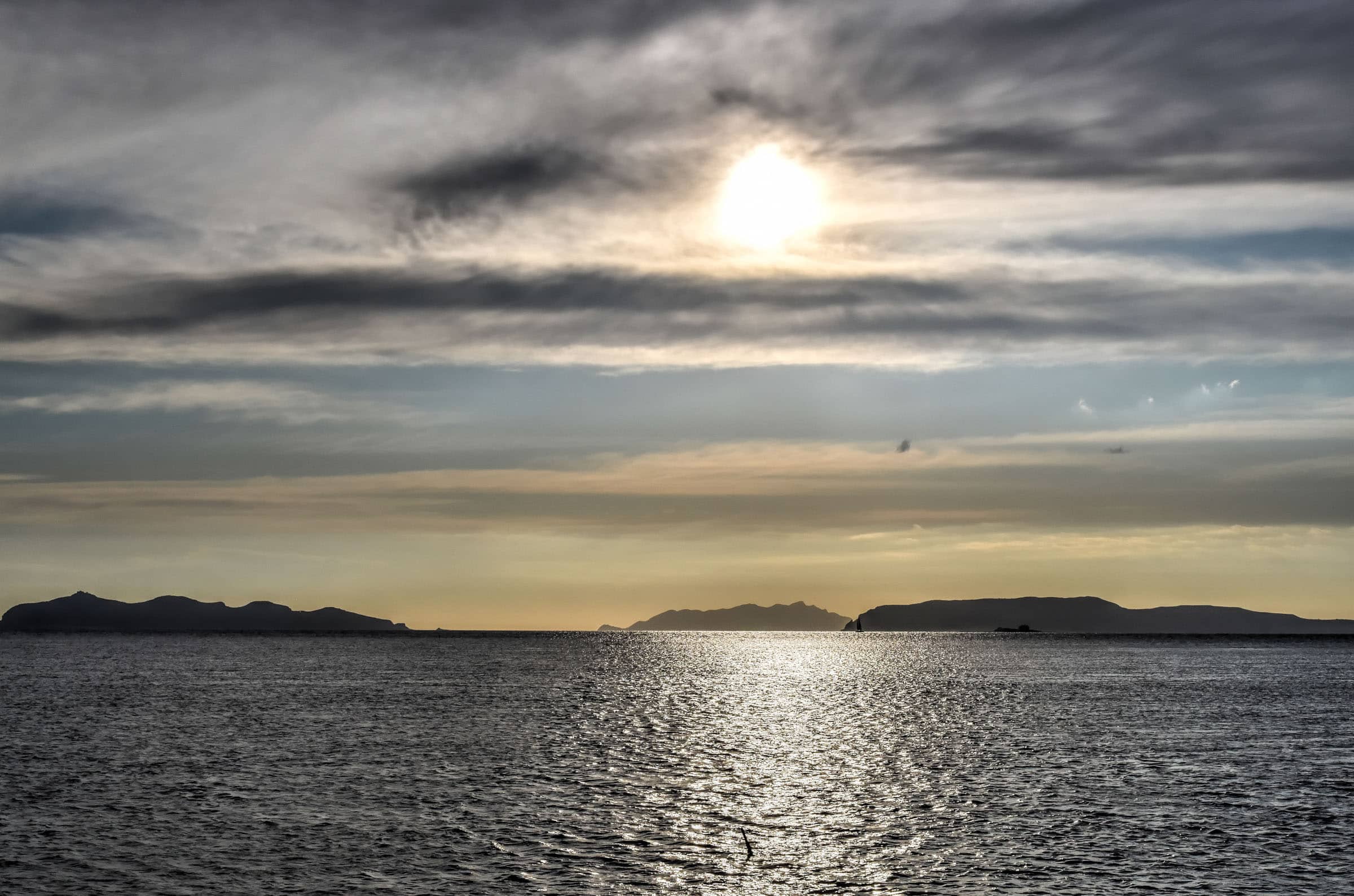
If you are interested, you can book a 75-minute guided tour of the museum and the surrounding salt pans to learn about the region’s rich history of salt mining and production:
An even better option is this 2-hour guided sunset tour that not only visits the museum and salt flats during the beautiful golden hour, but also includes some wildlife viewing time, including some popular flamingo viewing spots, as they are regular visitors to the lagoons around the salt flats:
Finally, if you don’t want to (or can’t) drive to the salt flats, you can also bike there. Indeed, a set of bike paths and coastal roads allows cyclists to enjoy the scenery following a short ride from Trapani. To avoid the headache of figuring out which exact routes to take, you can join this e-bike tour that departs from Trapani:
Discover the Medieval Charms of Erice
One of the things that everyone should do when visiting Trapani is to make their way up to the stunning, fairytale town of Erice, which can be reached after a short cable car ride departing from the eastern side of town. In Erice, an interesting array of cobblestone streets, a stone cathedral, and not one but two stunning cliffside castles await your discovery. We were definitely charmed by the beauty and atmosphere of this town, where time seems to have stood still since its medieval heyday. Due to its altitude and proximity to the sea, Erice is often shrouded by clouds, providing a unique and foggy atmosphere, but on clear days, you’ll have breathtaking views of Sicily’s western coastline and the Tyrrhenian Sea.


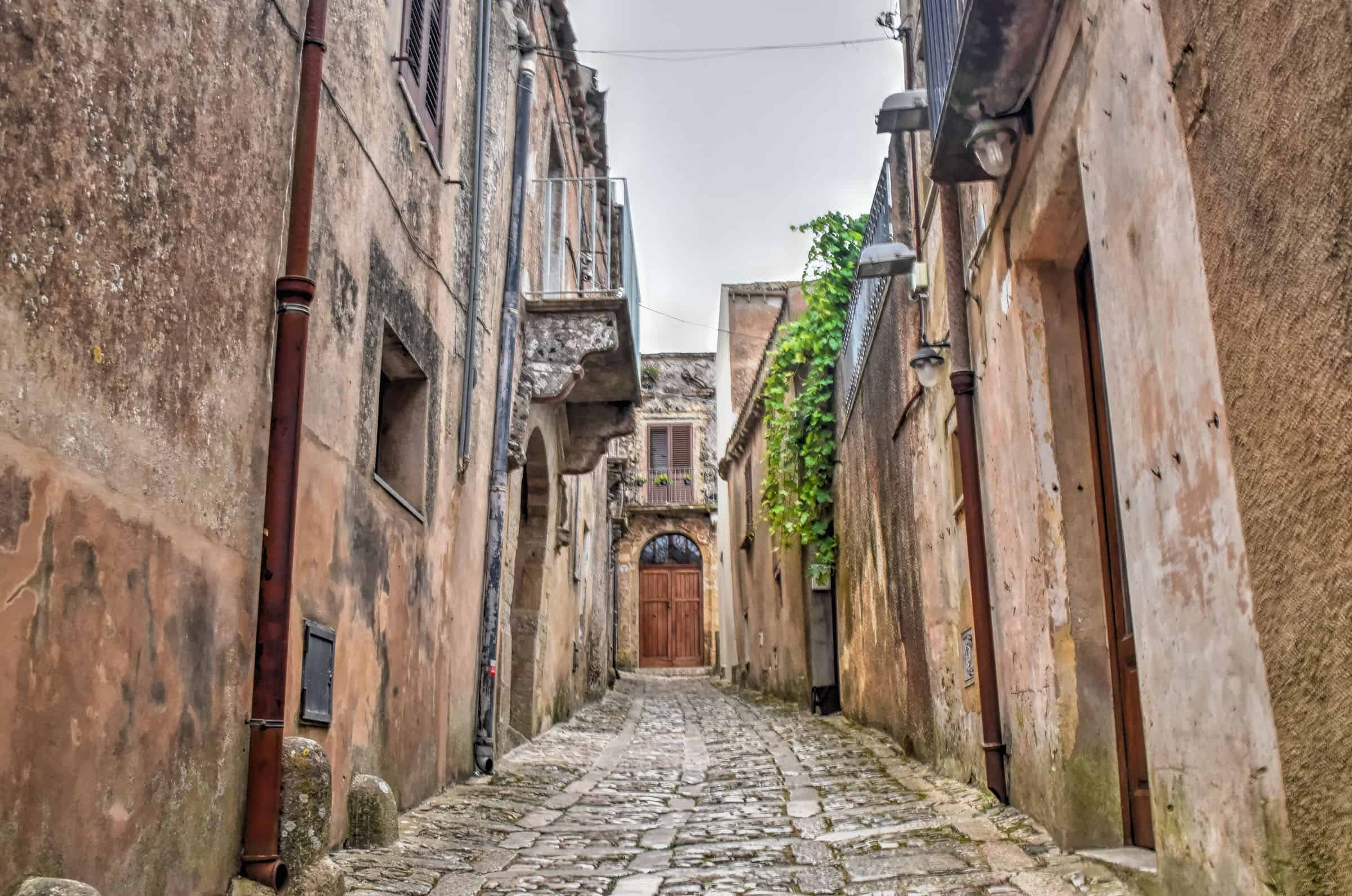
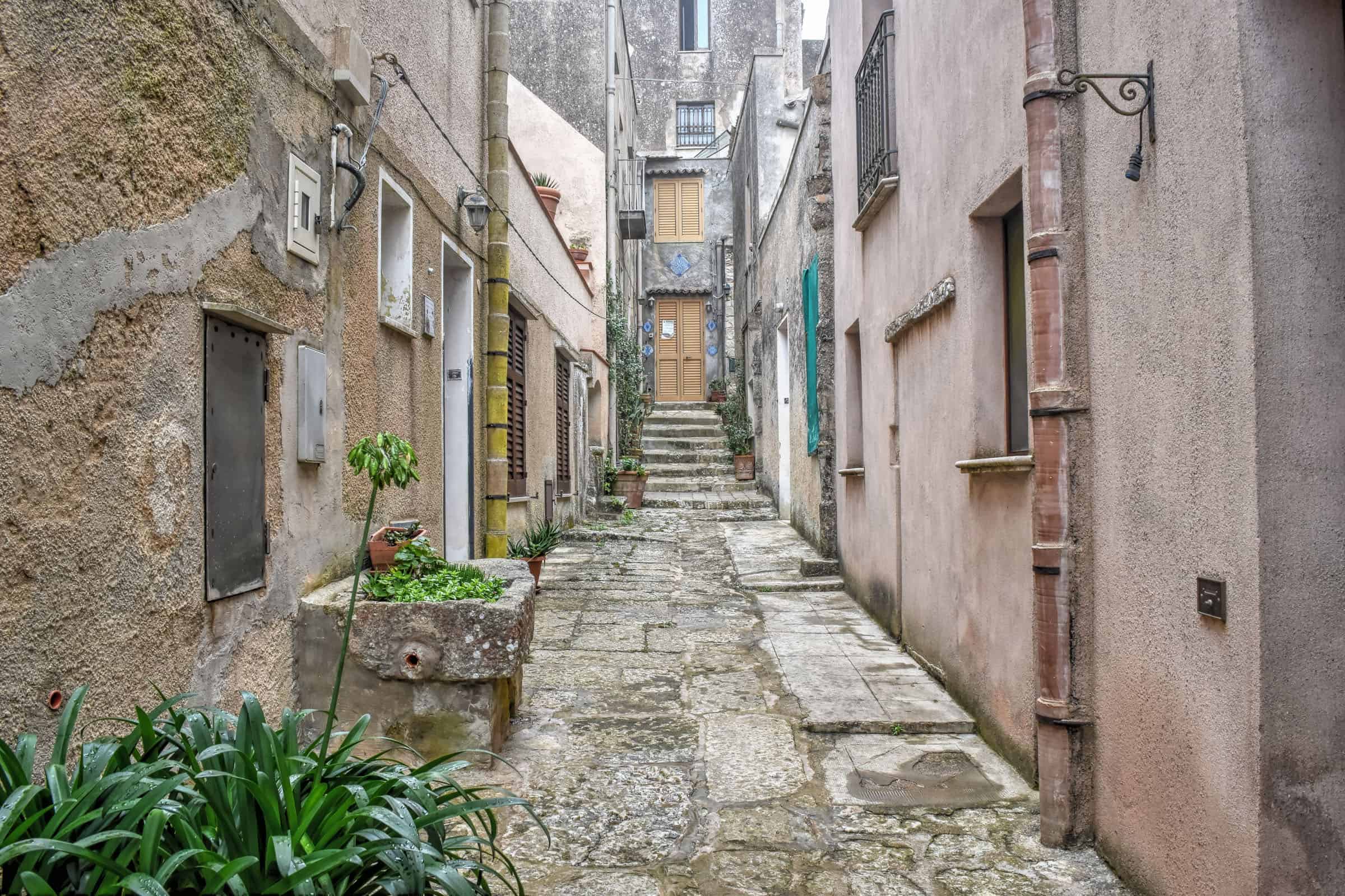
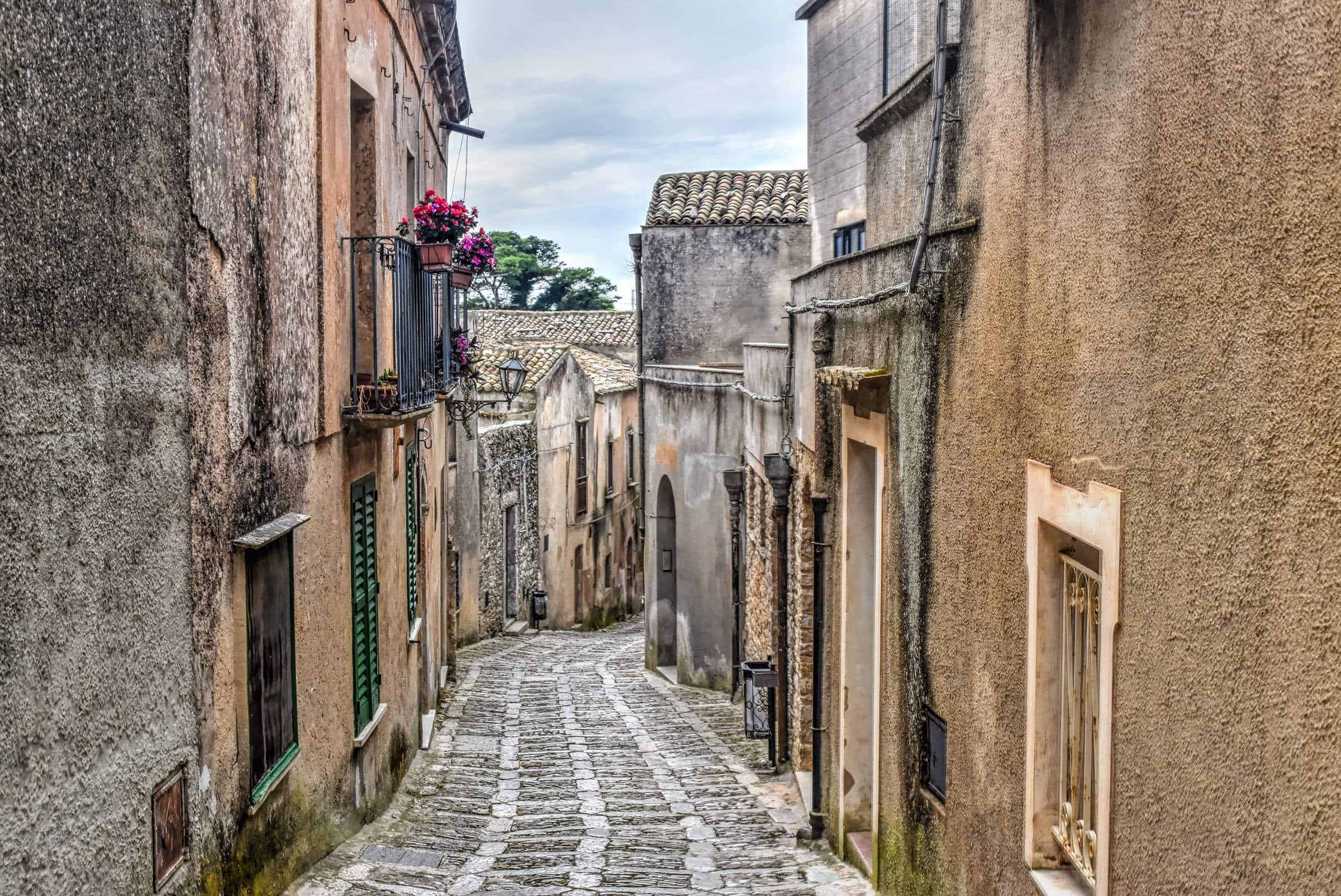
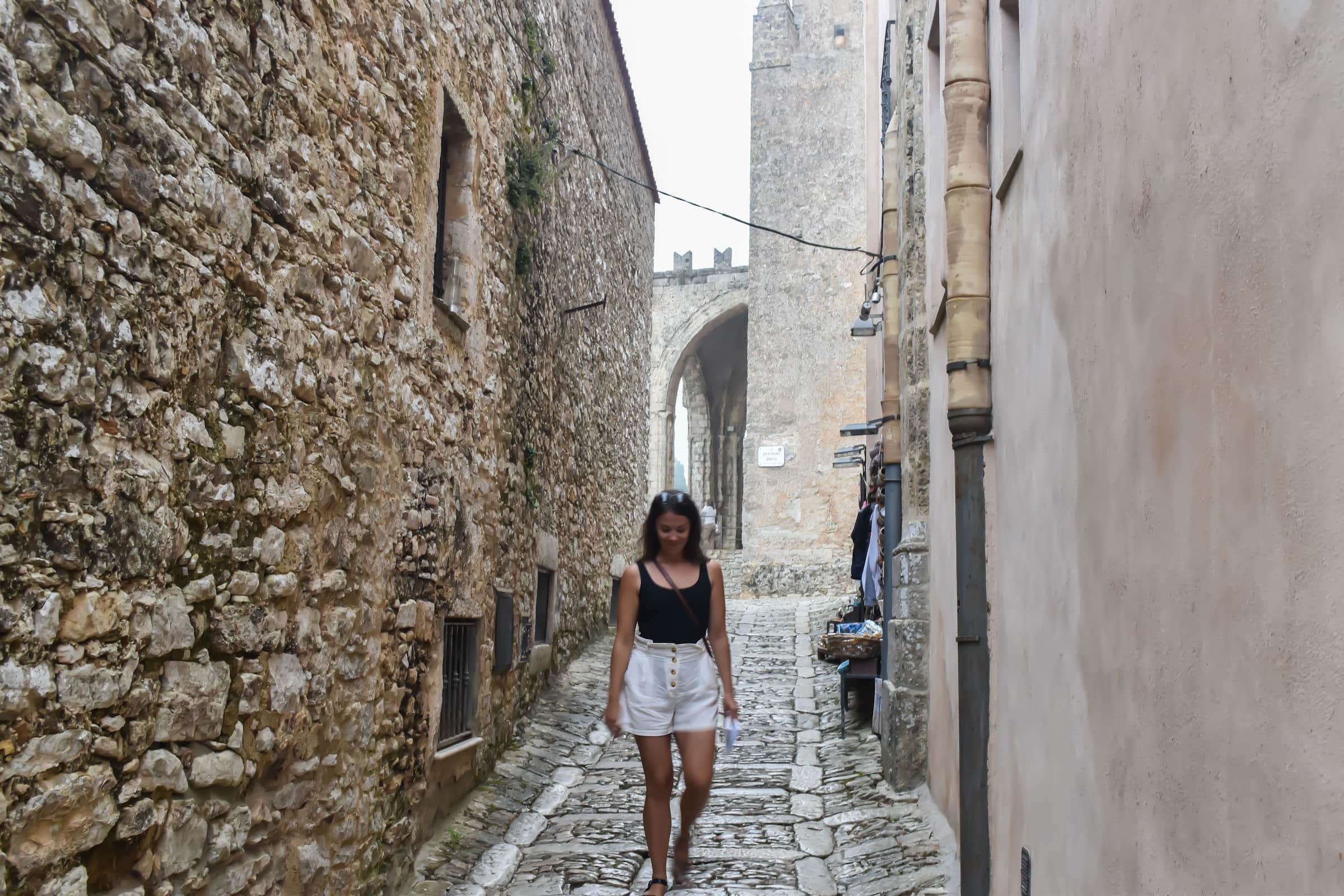
Erice makes for an excellent half-day or full-day excursion from Trapani. For more information on how to get to Erice, including the scenic cable car, and what to see and do there, see our Sicily Travel Guide for Erice.
Island Hopping in the Egadi Islands
One of our favorite things to do while we were in Trapani was to hop on a ferry to visit some of the beautiful Egadi Islands. Though the archipelago consists of 5 islands, only three can be visited by tourists, and most visit either Favignana, Levanzo, or both.
Favignana, the largest of the three islands, is particularly known for its crystal clear waters, beautiful coves, and rugged landscapes. Favignana is also home to what was, in the past, Sicily’s largest tuna fishery (Tonnara di Favignana), which today houses a museum. We highly recommend visiting. One of the best ways to explore butterfly-shaped Favignana is by renting a bike and cycling along coastal roads, which will allow you to easily hit several of the island’s most stunning beaches and idyllic coves.


Levanzo, the smallest of the three main Egadi islands, is perfect for those looking to get away from it all and relax along a beautiful coastline. Its main village seems to come straight from a postcard, with its white houses tightly nestled around the port, beautifully backdropped by the island’s highest point, Pizzo del Monaco. On Levanzo, no cars are allowed as the island is primarily designed for pedestrian exploration, with a very limited road network.


Getting to the islands from Trapani is a breeze, as the ferry port dock is located just south of the old town, a short walk from pretty much anywhere in the historic quarter. Both Favignana and Levanzo are roughly a 30-minute hydrofoil (fast ferry) ride from Trapani, and both islands are 10 minutes from each other. For more information on how to get to the islands, figuring out the must-sees, and planning an optimal day trip itinerary, see our travel and visiting guide for Sicily’s Stunning Egadi Islands.
Villa Regina Margherita
This park (link to Google Maps) is a green oasis of tranquillity, roughly separating the historic center from the newer part of town. It’s a great place to go to escape the midday heat, find some shade, and do some people watching. This park was opened to the public in 1889 and was named after Queen Margherita of Savoy. During the summer, it hosts an open-air theatre where operas, shows, and concerts are staged by the Ente Luglio Musicale Trapanese.
The Museum of Optical Illusions Trapani (MOOI)
The historic city has several traditional art museums, but the most interesting city museum by far is the Museum of Illusions (link to Google maps) – and it’s not just us, it is rated 4.9 on Google Reviews with over 3000 reviews in 2026. The museum offers a truly immersive experience, where you can personally experience the illusions and discover how they work.
Best Day Trips from Trapani
Trapani’s geographical location makes it an excellent home base from which to explore most of Sicily’s western attractions, including several of Sicily’s most beautiful beaches and fascinating Greek archeological parks.
Zingaro Nature Reserve
Distance from Trapani: 40 km / 1 hour drive
The Zingaro Nature Reserve was one of our favorite hiking destinations on the island, where a beautiful coastal trail swerves along the reserve’s stunning mountainous coastline. Zingaro offers both hikers and beach-goers multiple opportunities for swimming in warm, crystal-clear turquoise waters set within idyllic, secluded coves. We had a blast here and highly recommend spending at least half a day. For more information, see our guide on Sicily’s Zingaro Nature Reserve.


San Vito lo Capo
Distance from Trapani: 40 km / 50-minute drive
Near Sicily’s northwestern tip is where you will find one of Sicily’s most stunning beaches: San Vito lo Capo. If you are looking for a half-day beach escape, this is the place to go. San Vito is known for its expansive beach, which is on a sheltered bay overlooked by the imposing Mount Monaco.


Scopello
Distance from Trapani: 40 km / 50-minute drive
Just south of the Zingaro Nature Reserve is where you will find the charming Scopello, a quaint and picturesque village along Sicily’s Northwestern Coast. One of its most iconic sights is its 15th-century tonnara (tuna factory) sitting across from the stunning Faraglioni di Scopello (jagged sea stacks jutting out of the sea). For more information, see our guide on the Best Things to See and Do in Scopello. It’s definitely worth visiting, especially on your way in or out of Zingaro.


Segesta Archaeological Park
Distance from Trapani: 30 km / 25-minute drive
Segesta is one of Sicily’s most stunning Archaeological Parks, where you’ll find a superb Doric temple dating back to the fifth century BC, surrounded by beautiful rolling hills, and a hilltop amphitheatre providing visitors with fantastic views of the surrounding countryside scenery. For more information on visiting this fascinating historical place, see our Segesta Archaeological Park Guide.


Selinunte Archaeological Park
Distance from Trapani: 90 km / 1h10 drive
Selinunte is one of Sicily‘s most impressive Greek archaeological sites to visit and is one of the largest such parks in Europe. The ancient seaside city of Selinunte was one of the most important of the Greek colonies in Sicily during antiquity and may have had as many as 30,000 inhabitants during its peak period in the 5th century BC. Selinute is a fairly large site, and you can easily spend half a day walking through it. If you are a fan of Greek history and the archaeological ruins of ancient Greek cities, then you’ll love discovering this place. For more information on visiting, see our Selinunte Archaeological Park Guide.


Wine Tasting Tour in Marsala
Distance from Trapani: 30 km / 40-minute drive
If you are a wine amateur and/or enjoy visiting wineries and vineyards, you’ll definitely want to head south to Marsala, a region known for its wine production and home to several historic Sicilian wineries such as Cantine Florio, Donnafugata, and Pellegrino. Although the Marsala region is particularly known for “Marsala Wine’, a type of fortified wine, the wineries here produce a wide and excellent range of your standard white and red wines.
Cantine Florio (link to Google Maps) is definitely the most famous winery in the area, but we also enjoyed a visit to its nearby neighbour, Donnafugata (link to Google Maps). One thing to note is that there aren’t any expansive vineyards around the wineries here, as they are spread out across various regions of Sicily, including around Marsala, but not directly adjacent to the wineries and wine-tasting locals.


It’s generally best to reserve your wine-tasting experience ahead of time.
If you would like to visit Cantine Florio, you can book your wine tasting here:
If you are interested in discovering a smaller, more boutique winery, you can book your Cantine Mothia wine-tasting here:
How Long Do You Need in Trapani
Trapani’s historic center can be explored within a few hours. Add a visit to the nearby Salt Flats and some time spent at the nearby beaches, and you’ll definitely need a full day. Erice will require at least half a day, and a visit to the Egadi Islands will require a full day.
If you plan to use Trapani as a home base to explore western Sicily as we did, you should plan to stay at least 4-5 days (though we actually split our time between Trapani and Scopello).
Here’s a suggested itinerary for a multi-day stay in Trapani:
Day 1: Morning in Erice, afternoon & evening in Trapani
Day 2: Trip to the Egadi Islands
Day 3: Morning in Selinunte Archaeological Park, early afternoon Wine Tasting in Marsala, and a stop at the Trapani Salt Flats on your way back into town.
Day 4*: Morning in Zingaro Nature Reserve (via its northern entrance), afternoon enjoying the beach in San Vito lo Capo.
Day 5*: Morning in Segesta Archaeological Park, afternoon in Scopello.
*If, like us, you decide to split your time between Trapani and Scopello, these destinations in particular can also be explored from Scopello. For instance, the southern entrance of Zingaro Nature Reserve is just 2 km outside Scopello, and Segesta is located along the main highway that connects Trapani with Scopello.
Best Time to Visit Trapani
Best Time of the Year
Overall, the best time to visit is anywhere between April and October. However, we would specifically recommend late spring or early autumn to enjoy warm weather in Trapani with fewer crowds. This is only true for Trapani, but also for all the day trip options we suggested. May, June, and September are typically still warm enough to enjoy the beaches.
Even though winter in Sicily is generally very mild, be aware that Trapani can be quite windy during winter due to its peninsular shape and location on the west coast. Furthermore, during winter, many restaurants and hotels may be closed.
Best Time of Day
If you want to enjoy some quiet sightseeing in a relaxed atmosphere, the mornings are ideal, especially before the heat picks up.
For a more lively and vibrant atmosphere, evenings are perfect in Trapani’s historic center as they are often festive without becoming overcrowded.
Is Trapani Worth Visiting?
We definitely think so! Trapani is one of the best bases for exploring northwestern Sicily, and a worthwhile stop for most itineraries in the region.
Why You Might Enjoy It:
– Excellent base for day trips to Erice, the Egadi Islands, and Segesta Archaeological Park
– Lively but relaxed atmosphere compared to more tourist-heavy Sicilian cities
– Compact and walkable historic center
– Good range of restaurants, accommodations, and access to beaches
Why It Might Not Be for You:
– Fewer major “must-see” attractions within the city itself
– Better suited as a base than a destination in its own right
– Some areas outside the historic center feel more functional than scenic
Bottom line: Trapani is well worth visiting, especially if you’re looking for a convenient and relaxed base to explore western Sicily. While it may not stand out for its individual sights, its location and atmosphere make it a very practical and enjoyable place to stay.
Where and What to Eat in Trapani
Must-Sample Dishes
– Seafood is a must while in Trapani, especially tuna and spada (swordfish).
– Pesto alla trapanese, a lesser-known version of the pesto alla genovese, is made with pine nuts and almonds that are mixed with vine-ripened tomatoes in the sauce. The Trapanese version of pesto is typically served with busiate (busiate alla trapanese, a long spiralled pasta that dates back to the 10th century.
– Fish Couscous, a delicious dish that highlights Tunisia’s cultural influence on the city’s cuisine.
Our Favorite Restaurants
– Pizzeria Calvino (link to Google Maps) – Renowned, no-frills venue dishing up traditional Sicilian-style pizzas cooked in a brick oven.
– Osteria ‘A NASSA (link to Google Maps) – Relaxed eatery with outdoor seating specializing in unfussy Trapanese-style seafood dishes.
– Trattoria da Salvatore (link to Google Maps) – Creative Sicilian cuisine served in a bustling atmosphere in the heart of the historic center.
– La Bettolaccia (link to Google Maps) – Seafood couscous, pasta & Trapanese cuisine, plus fried fish, in a simple, modern dining room.
Coffee and Dessert
– Gelateria Meno Tredici (link to Google Maps) – the Best Gelato shop in town, just by the port.
– Caffe’ Noir (link to Google Maps) – Our favorite place for a morning pastry and cappuccino, along Trapani’s main drag, a few blocks outside the old town, where you’ll likely find way more locals than tourists.
Where to Stay in Trapani
Below are some of the highly rated options for staying in town.
Near the town center:
- Palazzo Gatto
A well-located boutique stay in the historic center, with clean, modern rooms and easy access to restaurants and the harbor. - B&B HOTEL Trapani Crystal
A reliable mid-range option offering simple, comfortable rooms within walking distance of the old town. - Central Gallery Rooms- Palazzo D’Ali’ Staiti XIX
A more character-filled stay set in a historic building, combining classic architecture with updated interiors.
Beachfront Options
- Hotel Punta Tipa
A beachfront stay with sea views, located just outside the city center. - Baia dei Mulini Resort & Spa
A larger resort-style option with direct beach access and more on-site amenities.
Trapani Frequently Asked Questions (FAQ)
Is Trapani worth visiting?
Yes, Trapani is one of the best bases for exploring northwestern Sicily, with easy access to places like Erice and the Egadi Islands.
How long should you stay in Trapani?
Ideally, at least 2–3 days. This gives you time to explore Trapani itself and take day trips to Erice and the Egadi Islands.
Do you need a car in Trapani?
Not necessarily for the city itself, which is very walkable. However, a car is recommended if you plan to visit places like Segesta Archaeological Park, Riserva Naturale dello Zingaro, or Scopello.
Is Trapani a good base in Sicily?
Yes, it’s one of the most practical bases for exploring the northwest, thanks to its central location and ferry connections.
Can you visit Trapani without staying overnight?
You can, but it works much better as a base than a quick stop. Staying at least one or two nights allows you to take advantage of nearby day trips.
Is Trapani very touristy?
No. While it’s popular as a base, it tends to feel less crowded and more local than many other Sicilian destinations.
What are the main things to do in Trapani?
Explore the historic center, walk along the seafront promenade, visit the nearby salt flats, and use the city as a base for day trips to Erice and the Egadi Islands.
Photography Gear
If you like our photography, you might be interested in some of the gear we use to shoot our travel and hiking destinations.
Camera Body – Nikon Z 6ii Fx-series Mirrorless Body
Main Lens – NIKON 24-120mm F/4G ED VR AF-S
Zoom Lens – Sigma 745-306 150-600mm f/5-6.3
Polarizing filters – Urth Circular Polarizing (CPL)
Camera Tripod – K&F Concept 64-inch Camera Tripod
Mini-tripod – Lammcou Flexible Camera Tripod
Camera/hiking backpack – Vanguard Alta Rise 48 Backpack
Universal Travel Adapter – VYLEE Universal International Power Travel Plug
Other Travel Essentials
Travel Insurance
SafetyWing is a travel insurance company that offers comprehensive coverage for travellers. Includes Medical Insurance and Travel Insurance. Primarily geared towards long-term travellers, digital nomads, and expats.
e-Sim cards
Airalo is the world’s first and largest eSIM store with eSIM plans for 200+ countries and regions worldwide. With Airalo eSIMs, travellers can get connected the moment they land at their destination and avoid nasty data roaming charges
eSIMS are a sustainable alternative to single-use SIM cards – they are 100% digital, require less energy to produce and be re-used rather than disposed of.
Car Rentals
Discover Cars is our go-to website for car rentals. We almost always find our preferred rate there.
Transfer from Airport
Welcome Pickups is our favourite private transfer service, which you can pre-book at a fixed price. Currently available in 220 cities all over the world (mostly in Europe, but with several major cities in Asia, the Middle East and the US).
Kiwitaxi is another private transfer service – we haven’t tried it yet, but it’s currently available in a few more countries (102 as of 2024).
Hotels and Accommodations (coming soon)
Photography Prints
If you found this blog useful, you can help support our blog by purchasing low-cost digital prints. Printed physical prints are also available for purchase.


—–
Well, that wraps it up! We hope you enjoyed our Travel Guide on the Best Things to See and Do in Trapani and that it will prove useful for planning your trip.
—–
You might also be interested in these related pages: