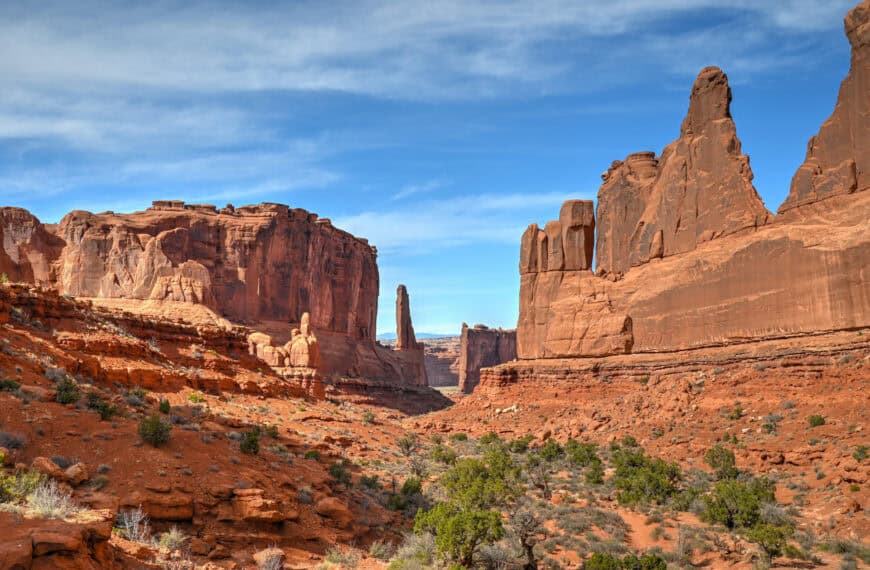
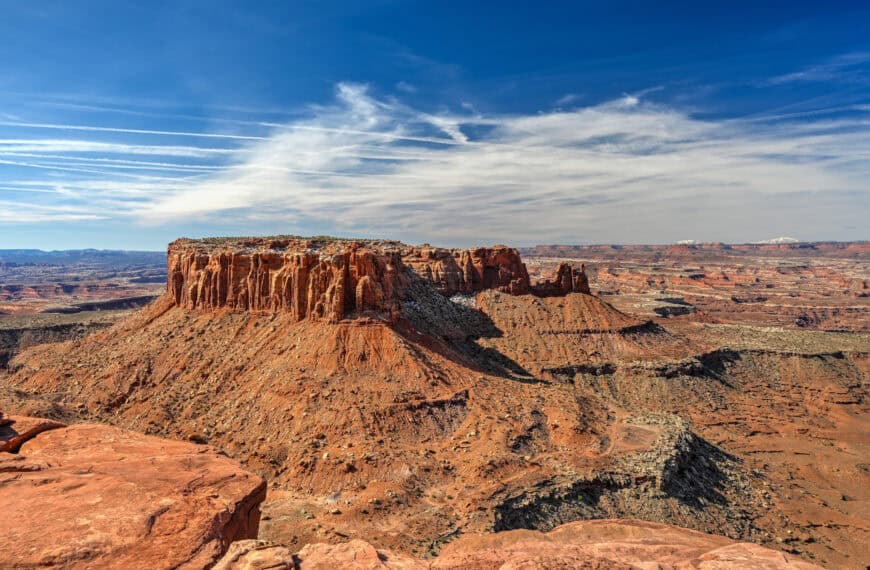
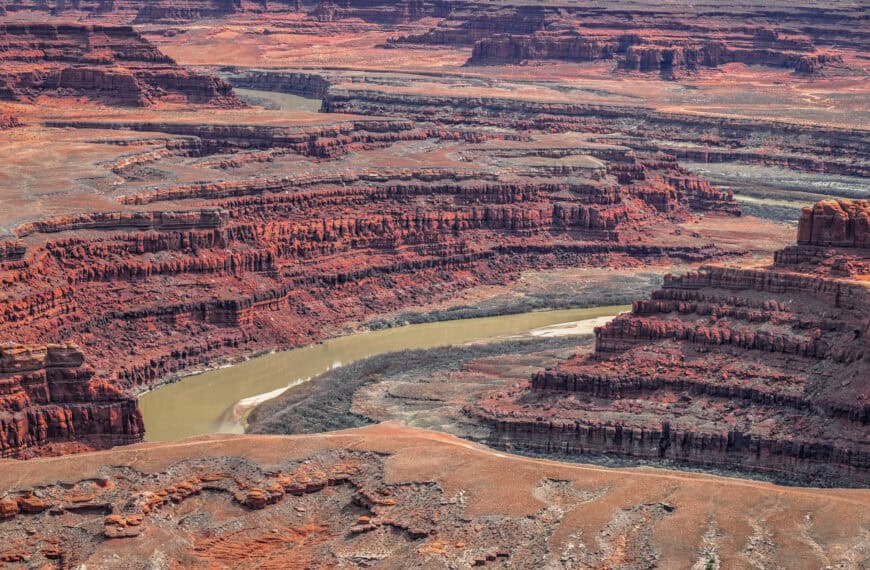
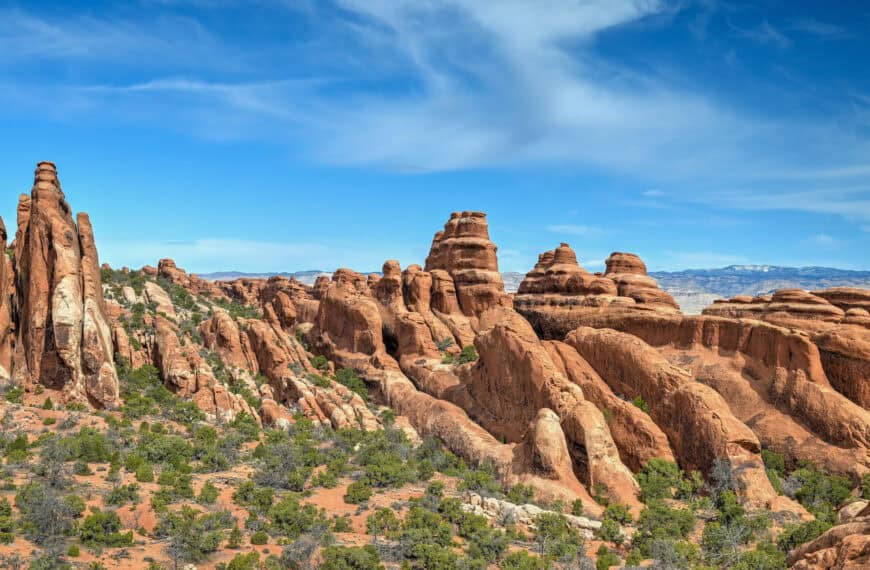
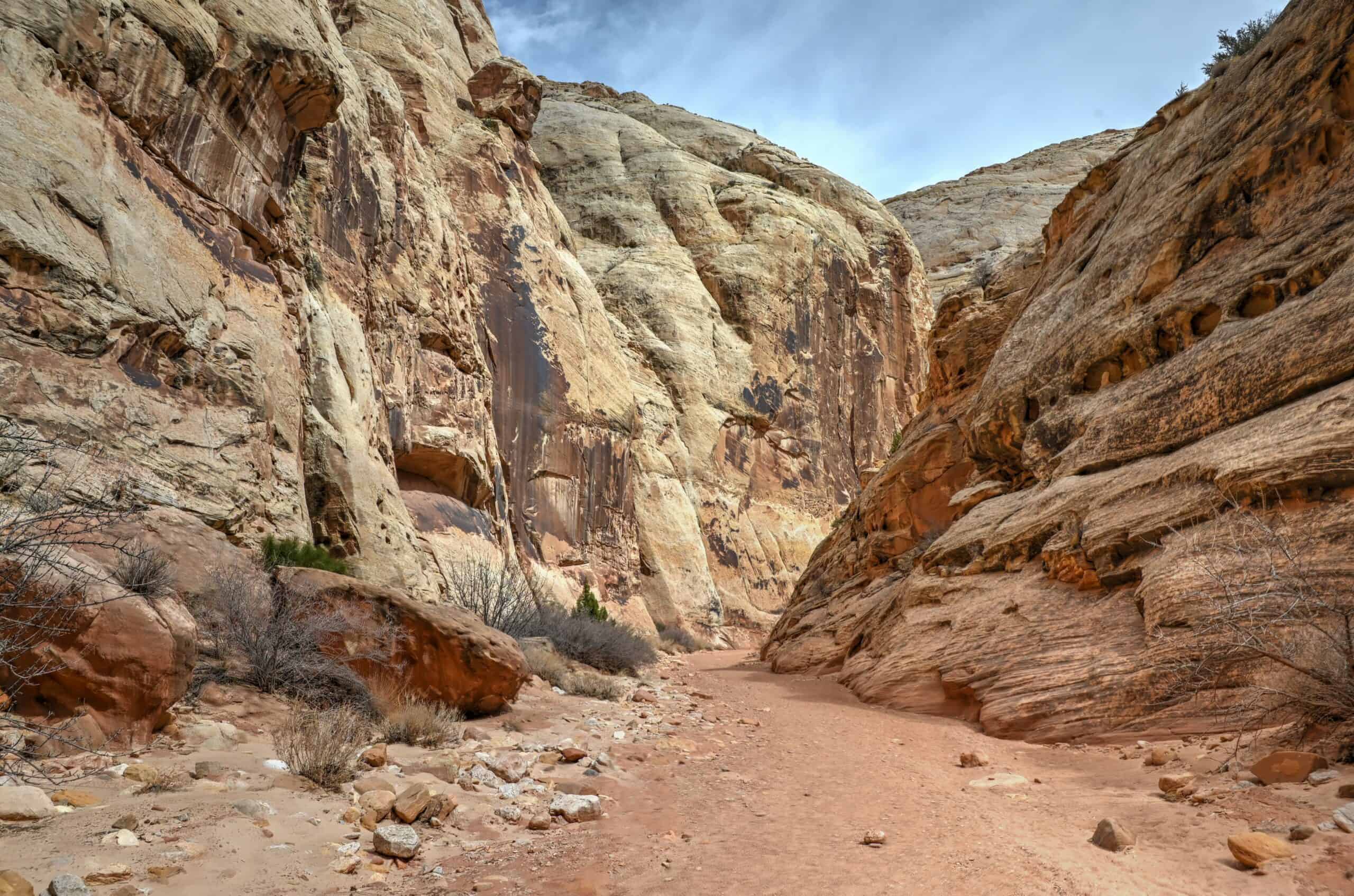
The Grand Wash Trail offers a classic Capitol Reef experience: an easy walk through a towering sandstone canyon that feels both intimate and grand. The mostly level path follows the dry creekbed as sheer Navajo sandstone walls rise hundreds of feet overhead, glowing in shades of red and gold. Along the way, you’ll pass narrow slots, twisted rock formations, and scattered desert vegetation that thrives in the sunlit corridor. To help you plan your visit to this serene corner of Capitol Reef National Park in Utah, we’ve put together this Grand Wash Trail hiking guide, complete with details on trail difficulty, estimated hiking time, and the scenic highlights that make this stroll through the desert canyon so memorable.
Grand Wash Trail – At a Glance
Easy slot-canyon feel – A mostly level 4.7 mi (7.6 km) out-and-back through a towering Navajo sandstone gorge, narrowing to just 15 ft (4.5 m) in places, with walls that rise nearly 500 ft (150 m).
Epic geology – Sheer red and cream cliffs showcase Capitol Reef’s classic rock layers up close, with striking contrasts of color and texture.
Flexible start points – Hike from the Scenic Drive parking area or the Highway 24 trailhead.
Year-round appeal – Open all seasons, with cool shade in summer and dramatic light for photography in winter’s low sun.
Family-friendly adventure – Ideal for casual hikers, kids, and anyone wanting a big canyon feel without the effort of a strenuous climb.
Trail Difficulty: Easy
Typical hike duration: 1h30-2h


Disclosure: This page (Grand Wash Trail – A Capital Reef Hiking Guide) may contain product affiliate links. At no additional cost to you, we may receive a commission for purchases made through these links. More details can be found on our disclosure and policies page.
Grand Wash Trail Location, Map, and How to Get There
Grand Wash Trail is located in the northern part of Capitol Reef National Park, near where the settlement of Fruita and the Capitol Reef visitor center are located (link to Google Maps)
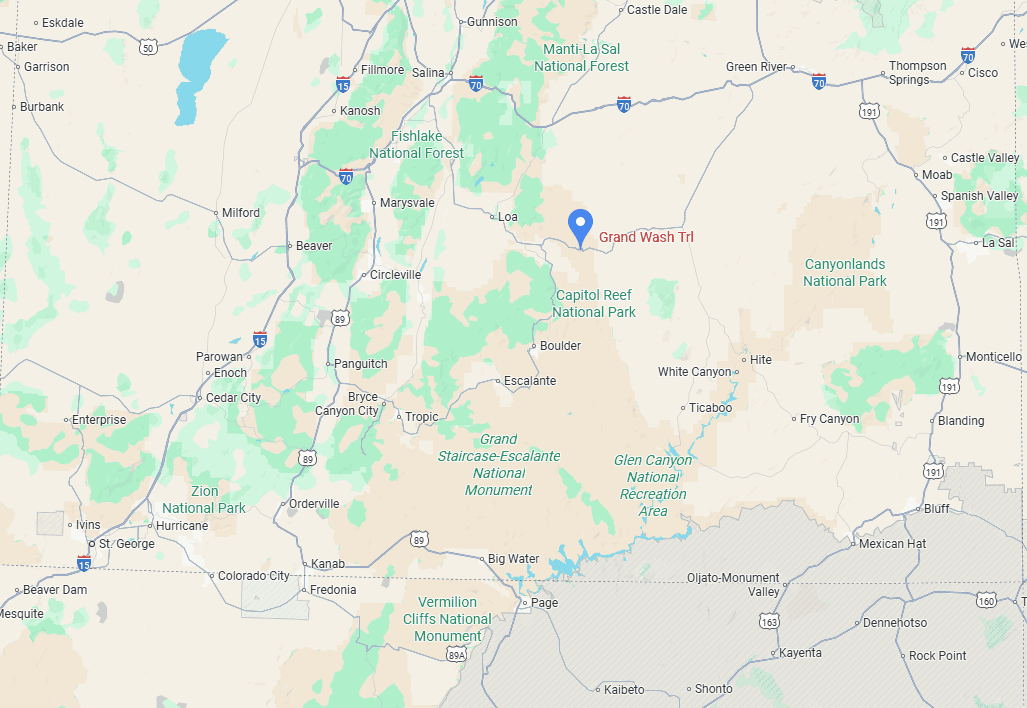
The simplest way to reach the Grand Wash trail is by driving there, as public transportation to Capital Reef National Park is very limited.
Driving times to Capitol Reef National Park (Fruita area)
- Salt Lake City, UT: 350 km / 220 mi – about 3.5–4 hours
- Moab, UT: 240 km / 150 mi – about 2.5–3 hours
- Bryce Canyon City, UT: 190 km / 120 mi – about 2.5 hours
- Page, AZ (Lake Powell): 420 km / 260 mi – about 4.5-5 hours
- Las Vegas, NV: 540 km / 335 mi – about 5–5.5 hours
- St. George, UT: 350 km / 220 mi – about 3.5–4 hours
These times assume good weather and minimal stops; add extra time for scenic byways such as Highway 12, which is slower but spectacular.
If you need to book a rental vehicle for your hiking excursion, we highly recommend using Discover Cars to get the best rates on your rental in Utah, Nevada and Arizona.
We also highly recommend Airalo (eSIM card) for your connectivity needs when travelling abroad. Airalo is the world’s first and largest eSIM store with eSIM plans for 200+ countries and regions worldwide.
Nearest Gas Station
There are several gas stations west of Fruita in Torrey, about a 15-minute drive away. Heading east, the nearest gas station is in Hanksville, about a 45-minute drive away.
Grand Wash Trail Access, Fees, and Parking
The Grand Wash Trail can be accessed from either end, meaning that you can pick your preferred trailhead (start point).
Highway 24 trailhead (link to Google Maps):
-The car park is a roadside pull-off with room for about a dozen vehicles.
-No toilets by the trailhead.
-The trail starts flat and easy and progressively makes its way through narrower sections of the wash, and then starts a moderate climb towards the scenic drive trailhead.
-Ideal for those looking for an easy, but very scenic walk while driving through the park.
Scenic drive trailhead (link to Google Maps)
-Small gravel lot at the end of the Grand Wash road (unpaved), which branches off the Scenic Drive road (paved), with room for about 20-25 vehicles.
-Vault toilets are available by the car park
-The trail starts by gently descending into the wash and finishing with broad views.
-Ideal for those pairing the hike with other stops along the Scenic Drive, such as Capitol Gorge or the Cassidy Arch trail (which branches off the wash).
Trail opening Hours: The Grand Wash Trail is open year-round, 24 hours a day.
Trail access and fees
Anyone visiting Capitol Reef National Park, whether to hike, take a scenic drive, or simply enjoy the views, must pay the applicable entrance fee to the National Park Service.
Entrance Fees (per vehicle, valid 7 days)
Private vehicle: $20
Motorcycle: $15
Individual (on foot, bicycle, etc.): $10
Annual Pass Options
Capitol Reef Annual Pass: $35 – unlimited entry for one year from the month of purchase.
America the Beautiful Pass: $80 – valid for one year at all U.S. National Parks and more than 2,000 federal recreation sites nationwide.
As of 2025, passes can be purchased at the Visitor Center in Fruita (link to Google Maps), self-pay stations, or online through the USGS website or via the REI store.
Which Pass Should You Get?
Capitol Reef Annual Pass ($35): Best if you live nearby or plan to visit Capitol Reef multiple times within a year. It pays off after just two visits.
America the Beautiful Pass ($80): If your trip includes Capitol Reef plus at least two other national parks or monuments (for example, Arches, Canyonlands, Bryce Canyon, Zion, or even Grand Canyon), this is the clear winner. Many Utah road trips easily cover 3–5 parks, making this pass the best value by far.
7-Day Vehicle Pass ($20): The right choice if you’re only passing through Capitol Reef once and don’t plan on visiting any other U.S. national parks within a year.
—> Most visitors exploring Utah’s “Mighty 5” parks (Arches, Bryce Canyon, Canyonlands, Capitol Reef, and Zion) should strongly consider the America the Beautiful Pass—it saves money and avoids the hassle of buying separate entry fees at each park.
About Capitol Reef National Park
Waterpocket Fold Wonder: Capitol Reef protects the Waterpocket Fold, a 100-mile-long wrinkle in the Earth’s crust that formed 50–70 million years ago. Towering cliffs, slot canyons, and natural bridges reveal colorful layers of sandstone, limestone, and shale that tell a geologic story spanning hundreds of millions of years.
Fruita’s Living History: At the heart of the park lies Fruita, a historic Mormon settlement where 19th-century orchards still bloom each spring. Visitors can pick ripe peaches, apples, and cherries in season, wander past preserved pioneer buildings, and stop at the classic Gifford Homestead for fresh pies and jams.
Dark Skies & Quiet Nights: Far from major cities, Capitol Reef is designated a Gold-Tier International Dark Sky Park, offering some of Utah’s clearest stargazing. The combination of high desert air and minimal light pollution makes the Milky Way blaze across the night sky.
Trails for Every Hiker: Despite its rugged appearance, the park offers hikes for all levels. From the easy Grand Wash and Hickman Bridge trails to longer adventures like Navajo Knobs or the multi-day Waterpocket Fold routes, you’ll find everything from slot canyons to sweeping mesa views.
Scenic Byways & Backways: Two spectacular drives showcase the park’s variety: the paved Scenic Drive (with side canyons like Capitol Gorge) and the adventurous Cathedral Valley Loop, a remote route where giant monoliths rise from a desert floor. Both reveal the vast, otherworldly beauty that defines Capitol Reef.
Grand Wash Trail Stats, Difficulty, and Map
Distance: 4.7 miles (7.6 km)
Route Type: Out & back
Elevation change: 216 ft / 66 m (difference between trail high and low point)
Elevation gain: 341 ft / 104 m (cumulative elevation gain)
AllTrails rating: (4.7, 4579 ratings (2025))
Duration: Most people complete the trail in 1h30-2h.
Trail difficulty level assessment (based on our personal assessment, taking into account the trail length, slope grade, and trail surface) :
Very Easy | Easy | Moderate | Moderately Challenging | Challenging
Overall, the trail does not present any significant challenges other than a slight but progressive elevation gain and a fairly lengthy trail. If you choose to only walk a portion of the trail, it would then be rated as Very Easy.
Grand Wash Trail Description and What to Expect
From the Highway 24 trailhead, the Grand Wash trail wastes no time immersing you in Capitol Reef’s canyon country. The hike begins in a broad, open wash, where wide gravel flats stretch between cliffs of creamy Navajo sandstone. At this early stage, the canyon feels spacious and sunlit, giving you plenty of room to take in the scenery before the walls start to close in.


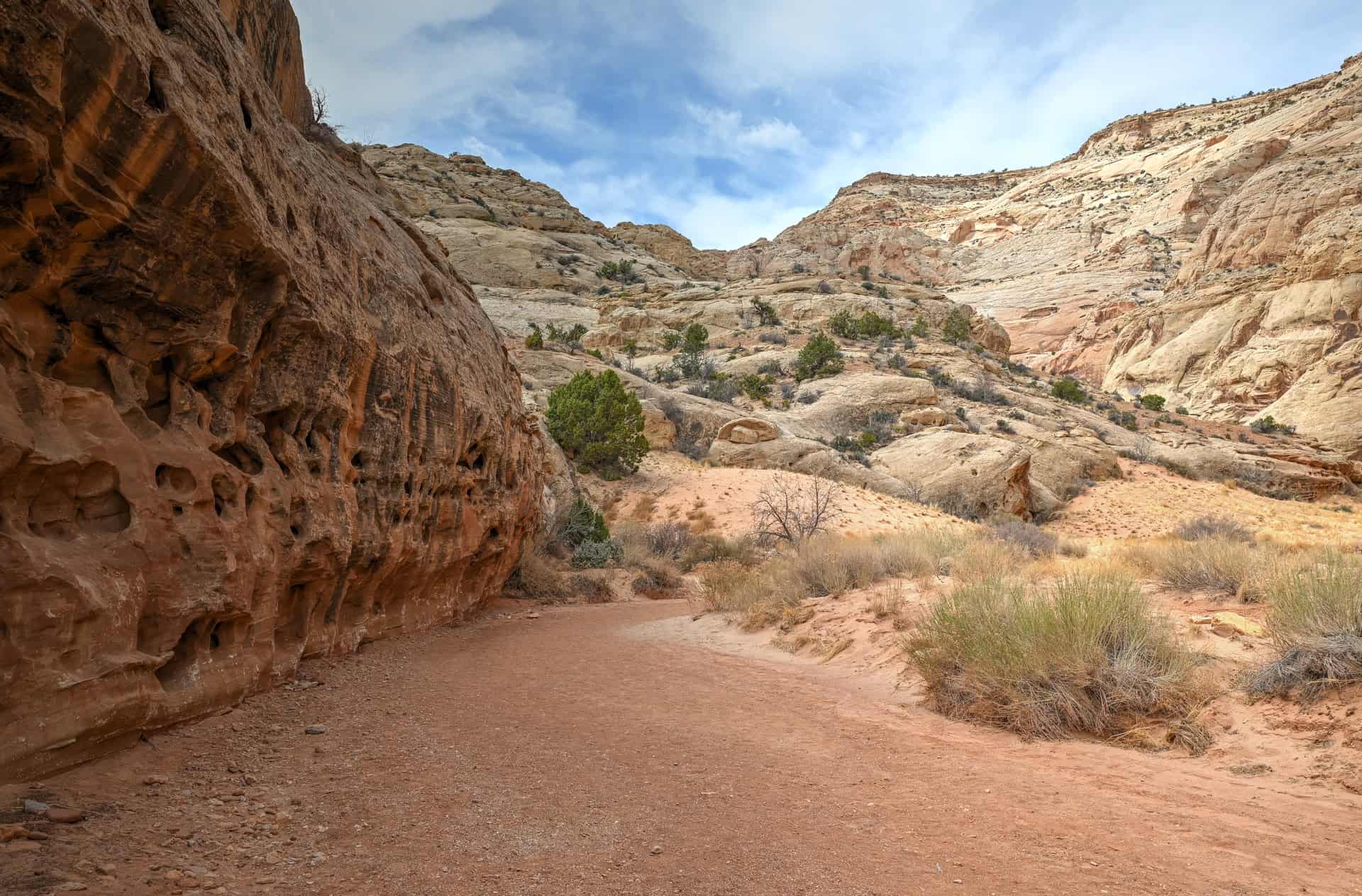
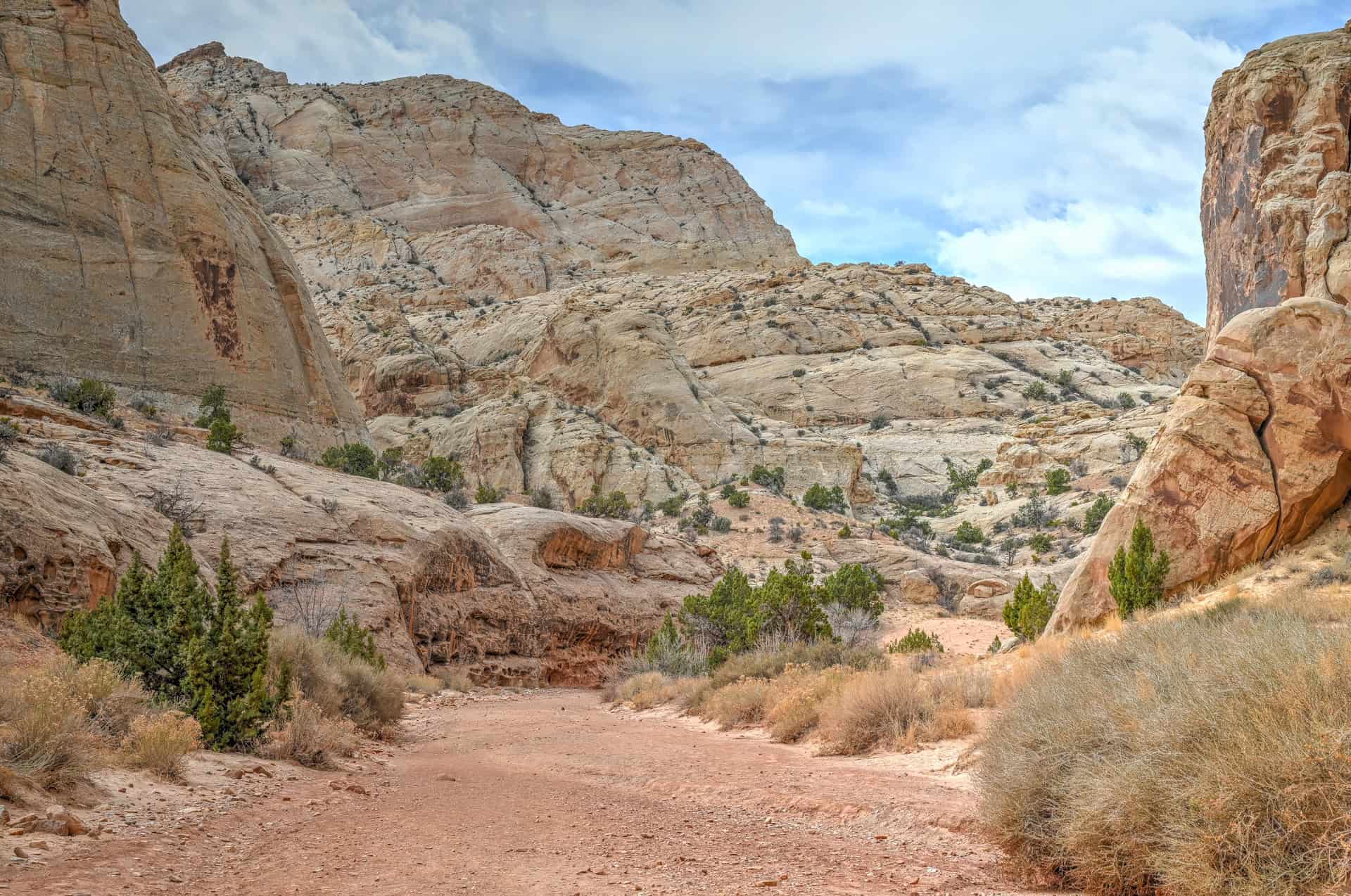
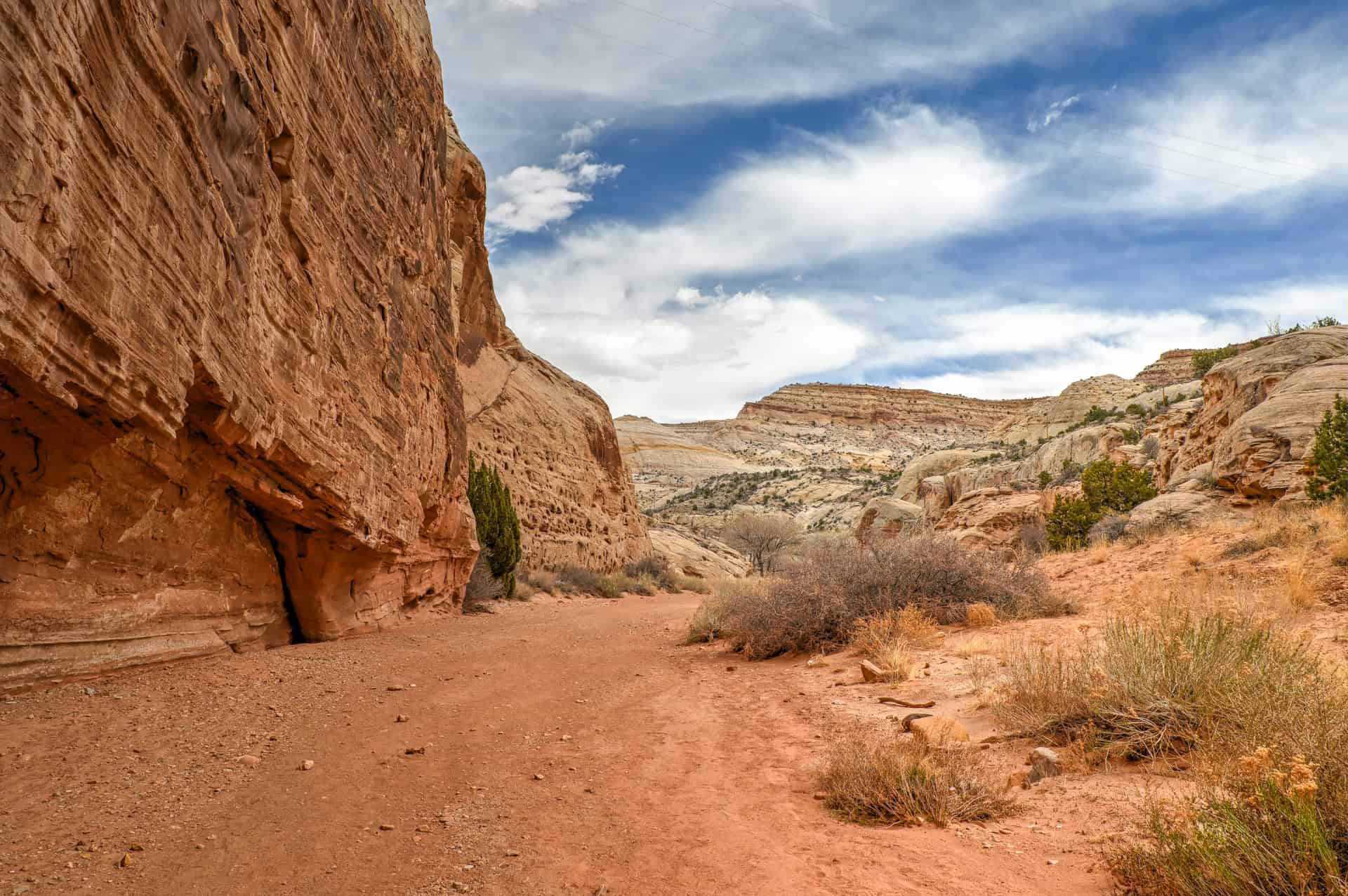
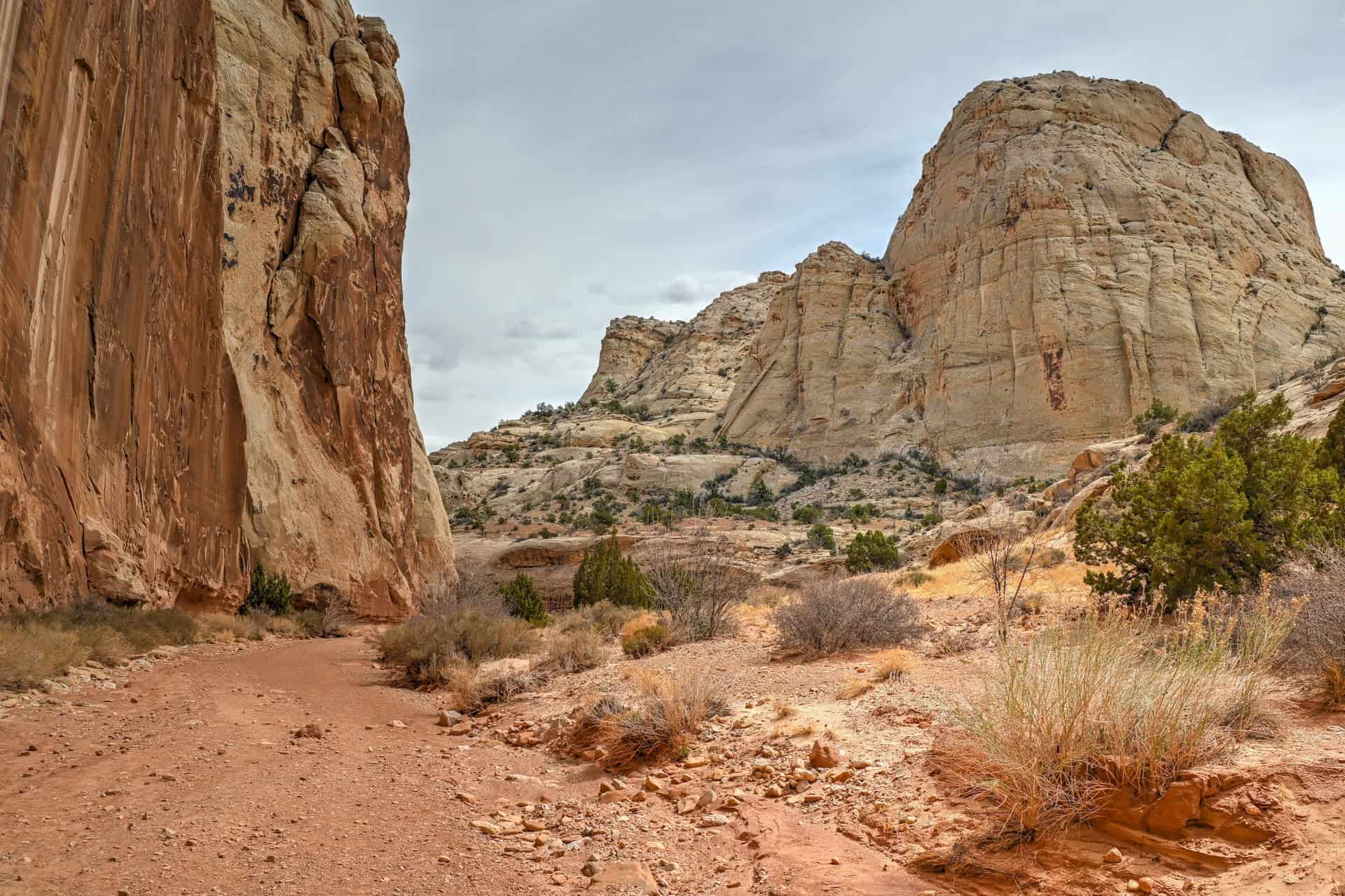
As you continue deeper, the canyon gradually narrows, and the cliffs rise higher on either side. The sense of scale increases step by step. What begins as a wide desert wash soon transforms into a dramatic corridor of sheer rock, where walls soar up to 500 feet overhead.


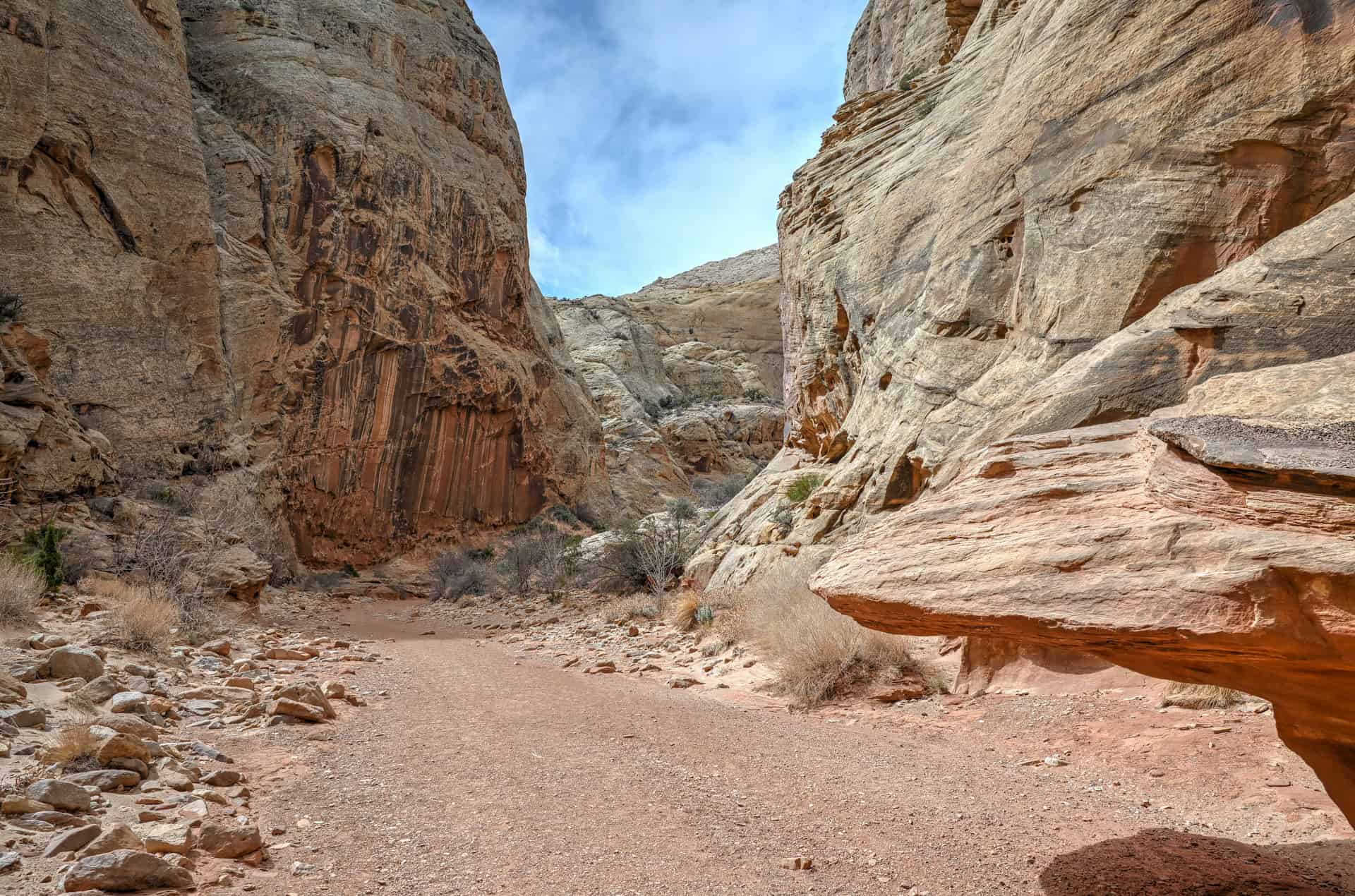
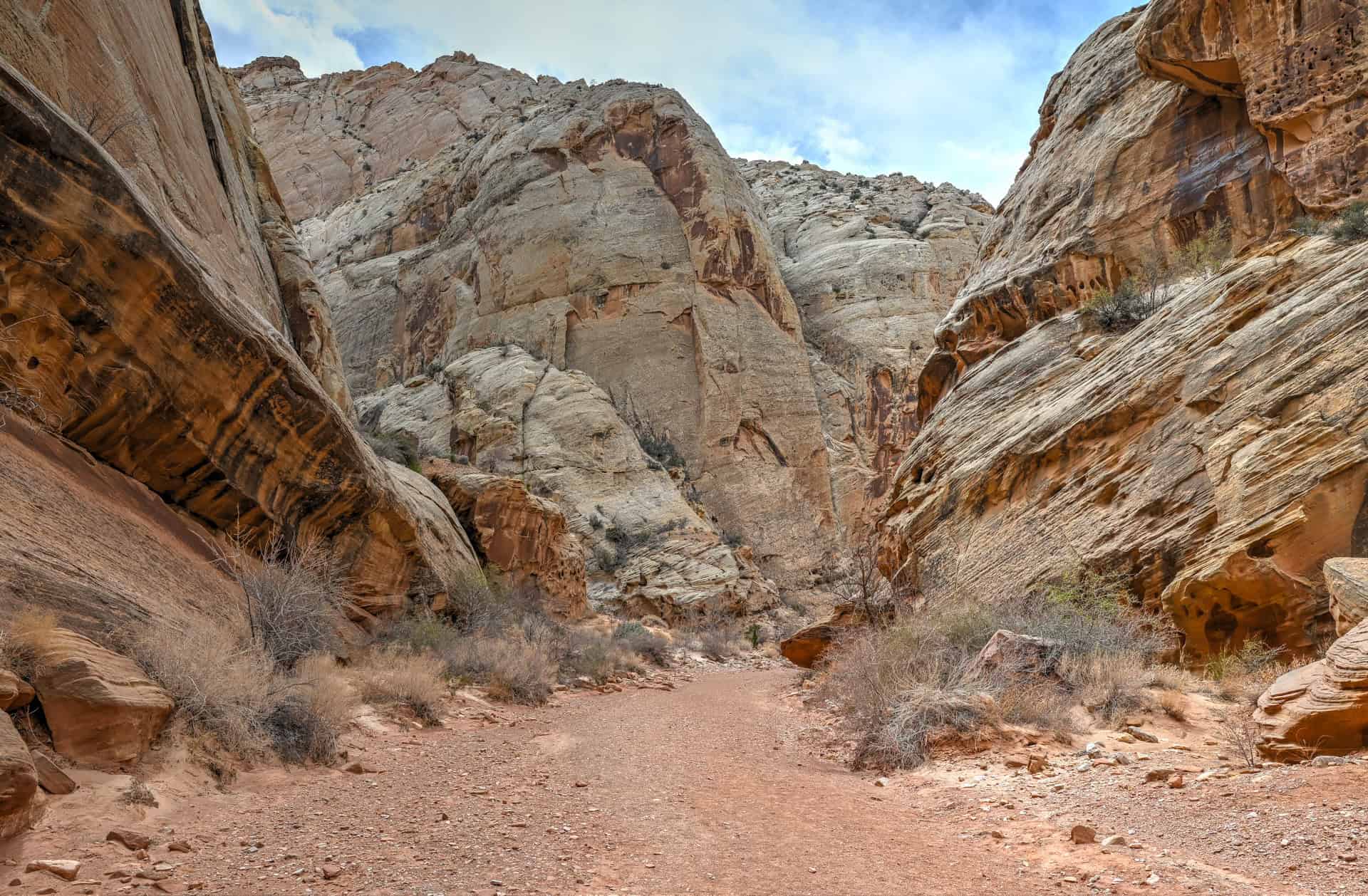
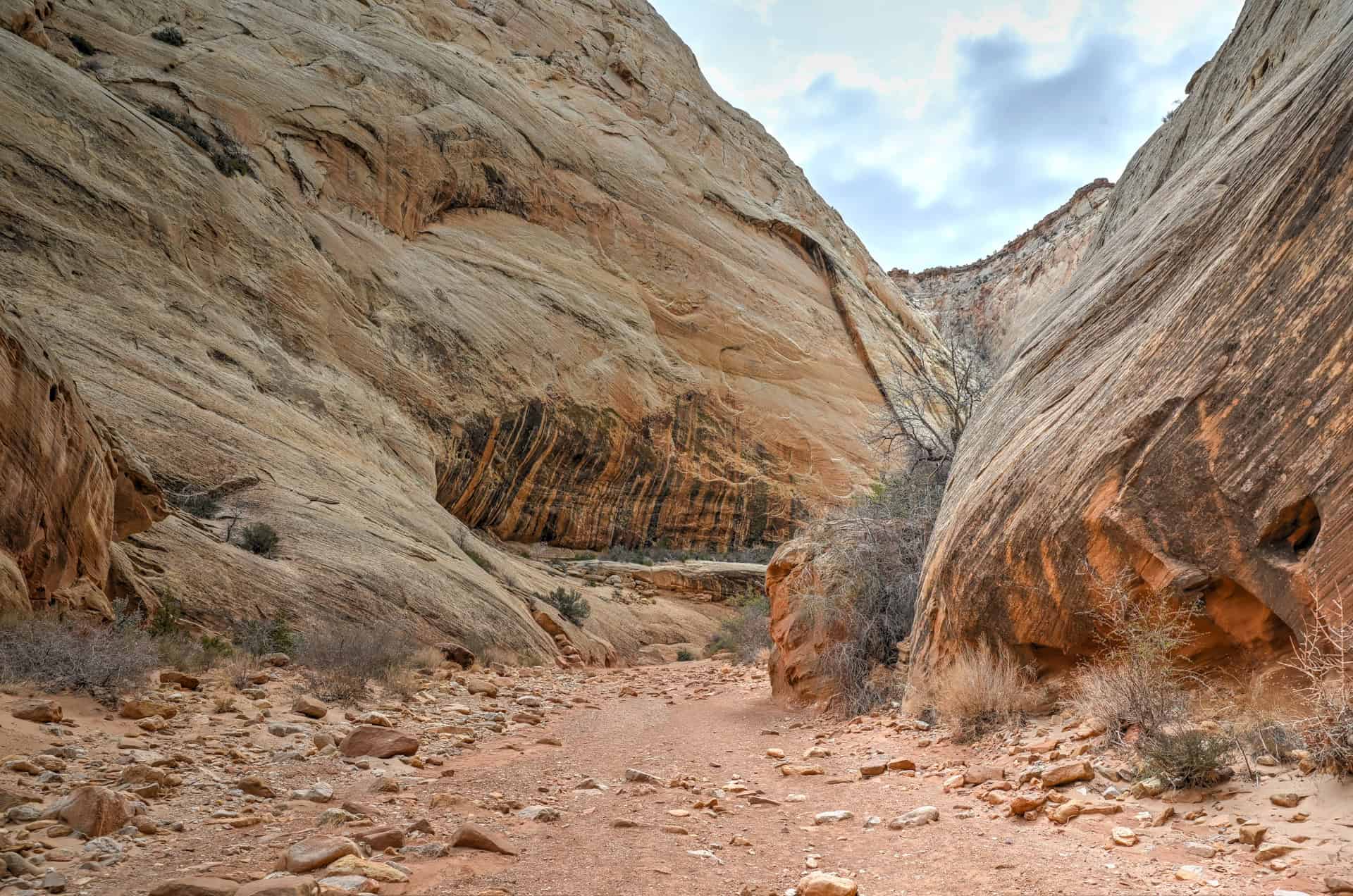
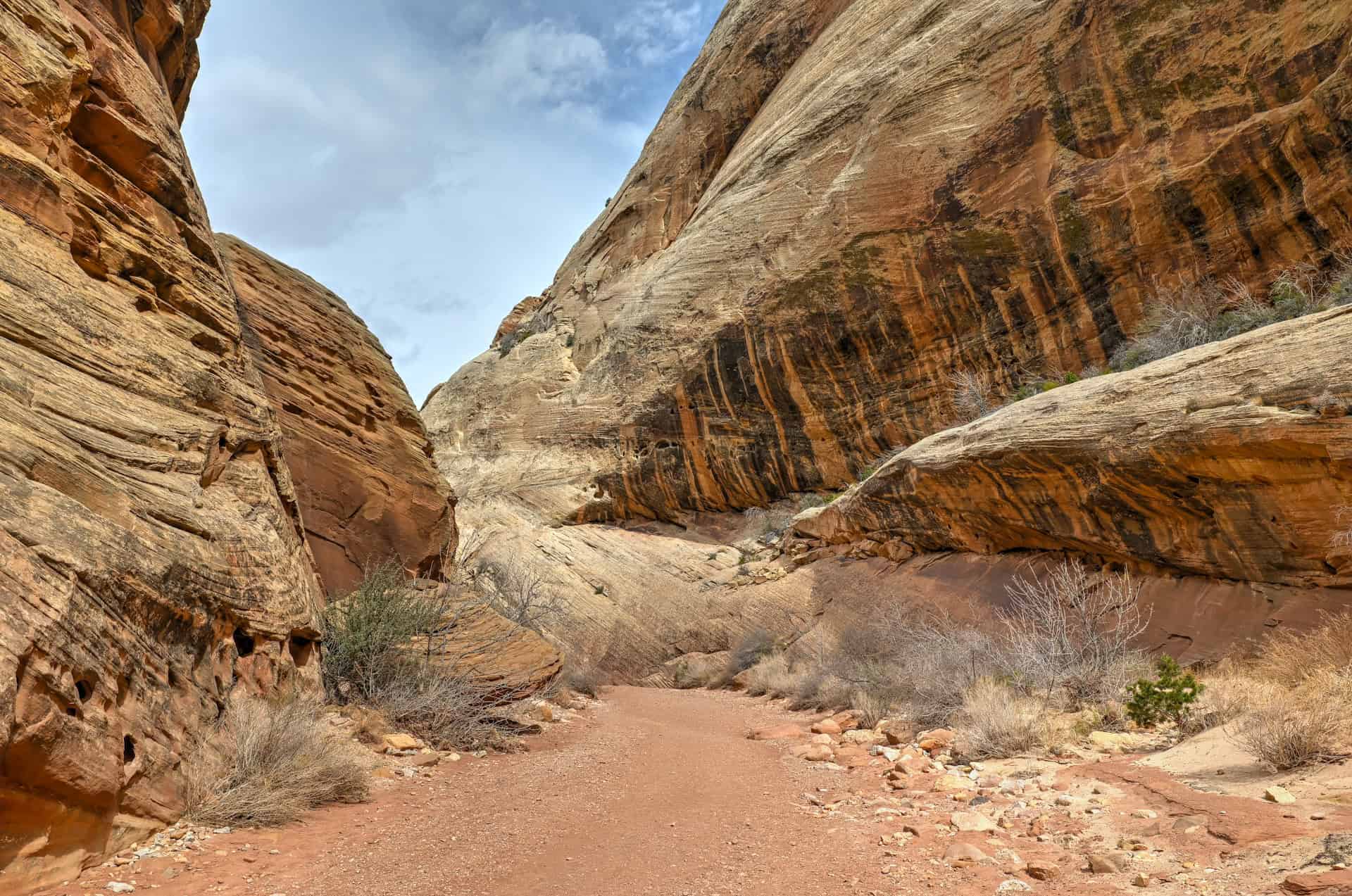
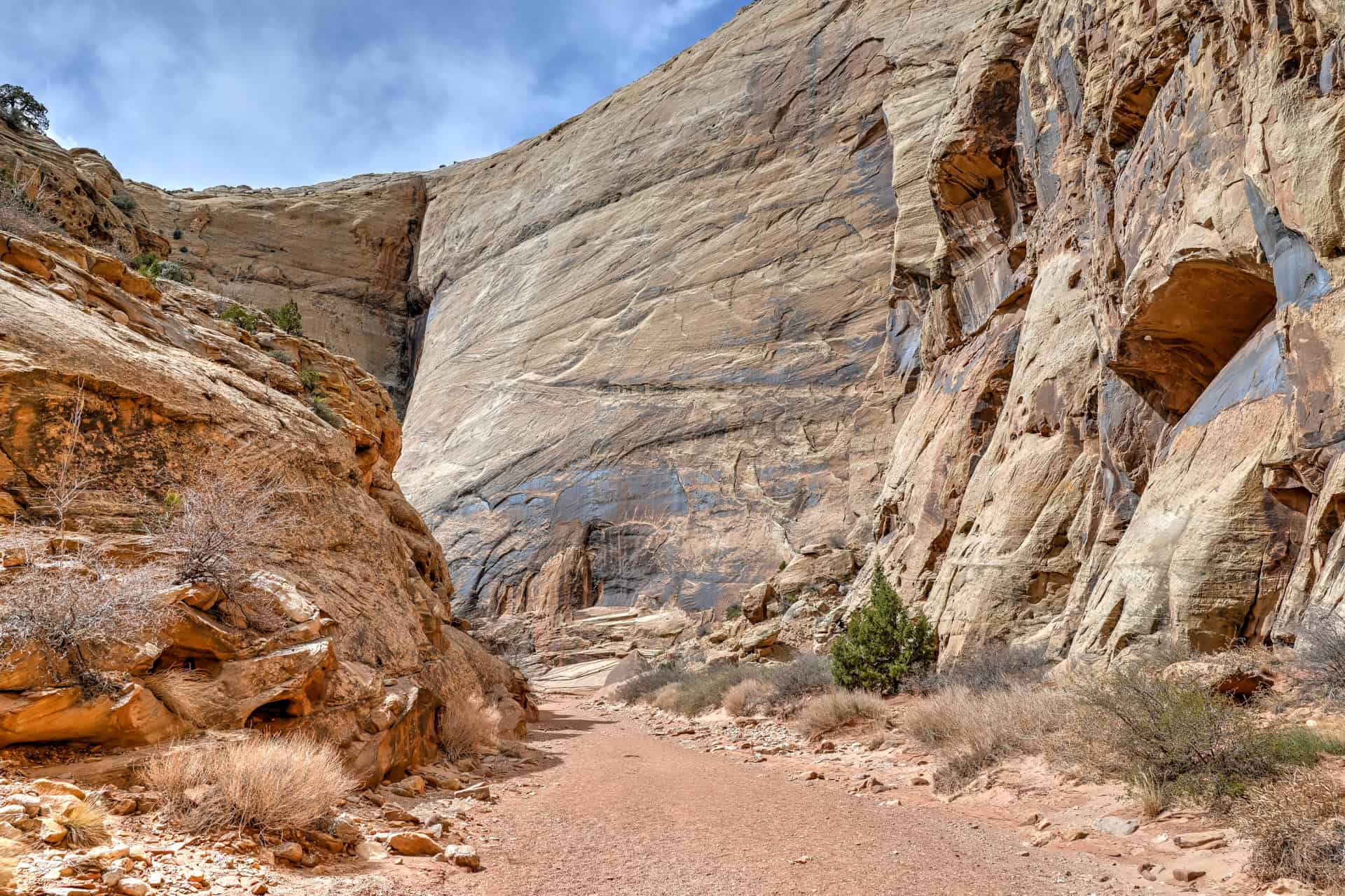
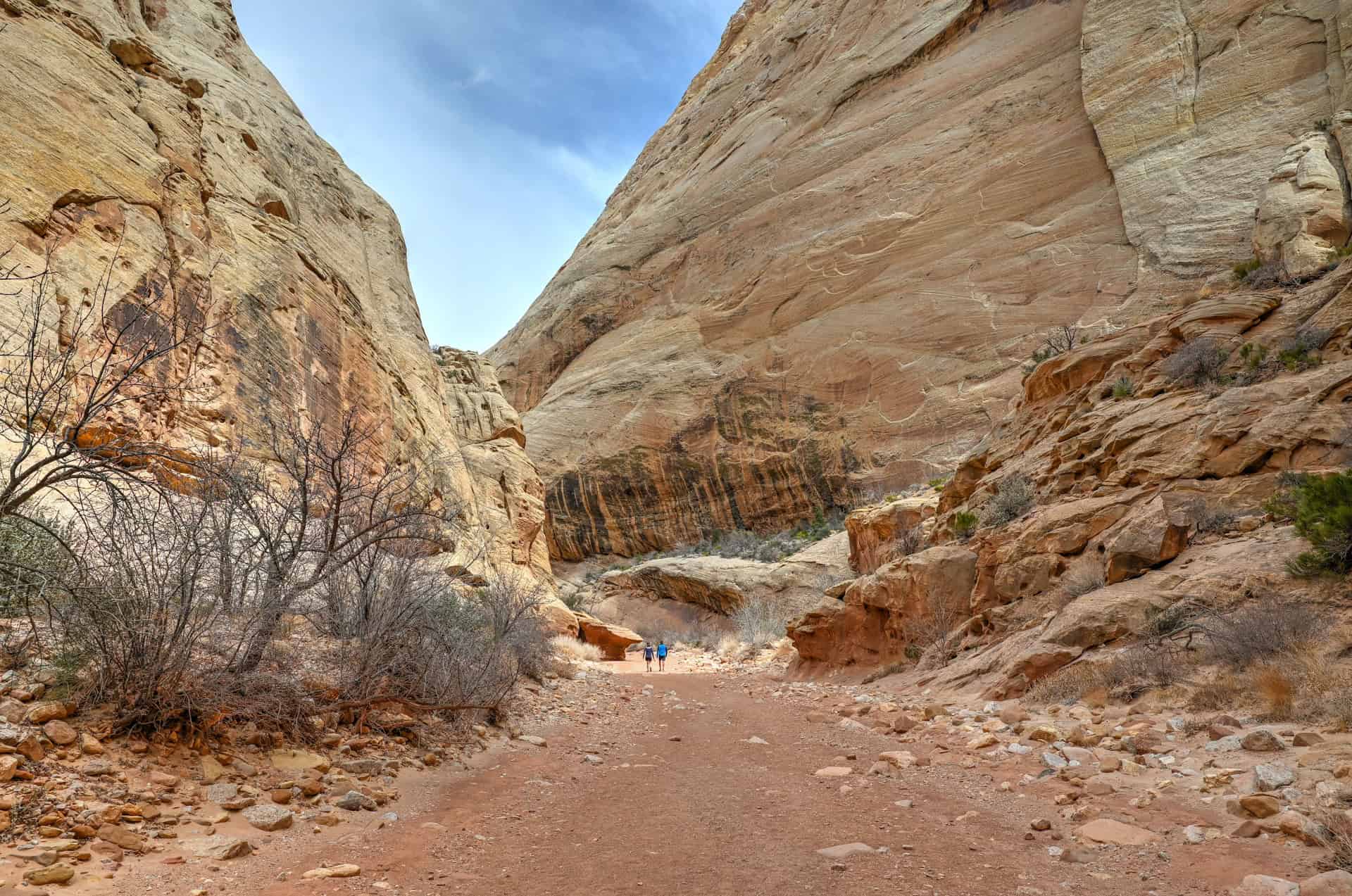
The deeper you go, the more the trail feels like a slot canyon, though it always remains easy to follow on the flat, sandy bottom.


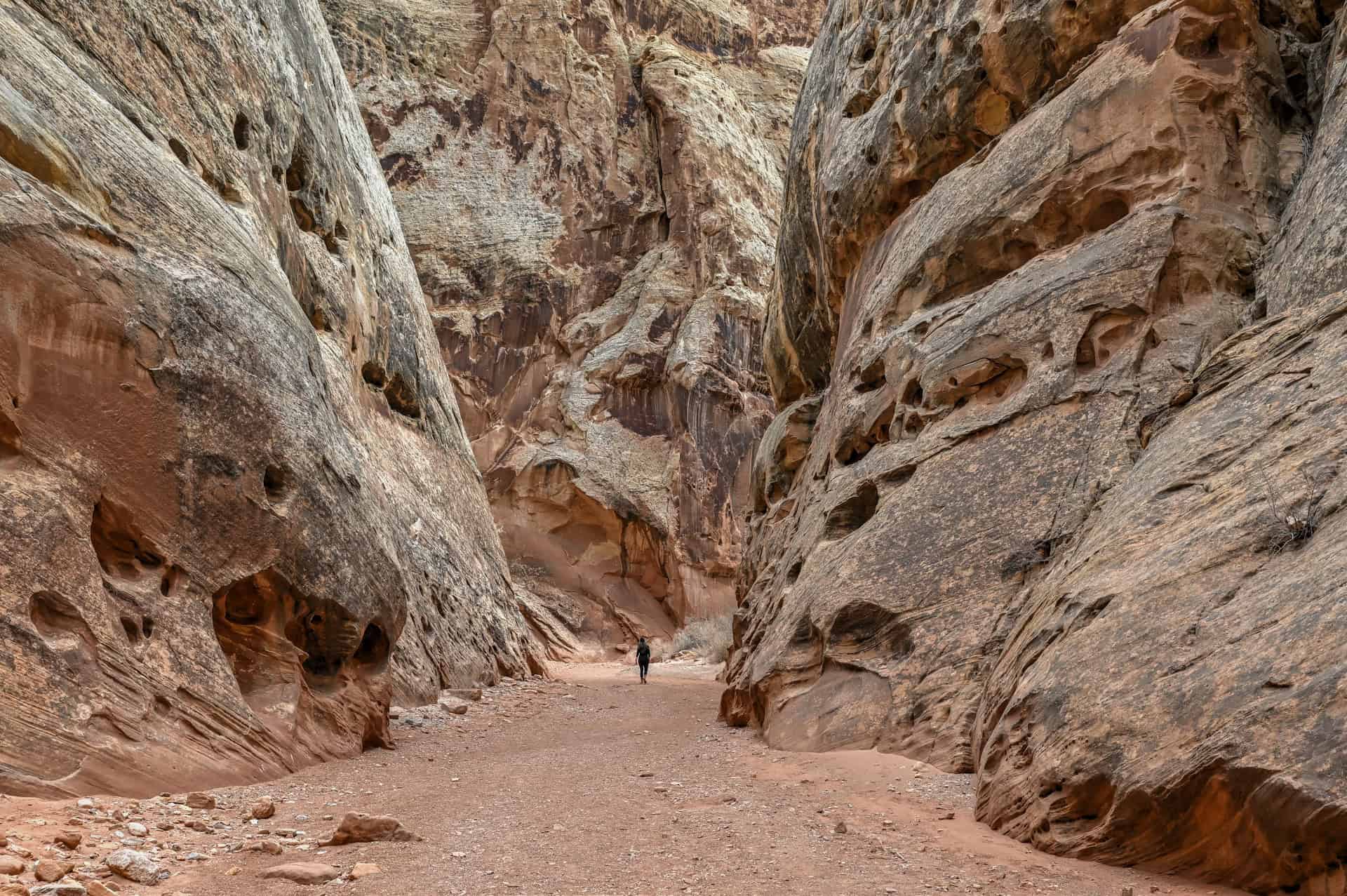
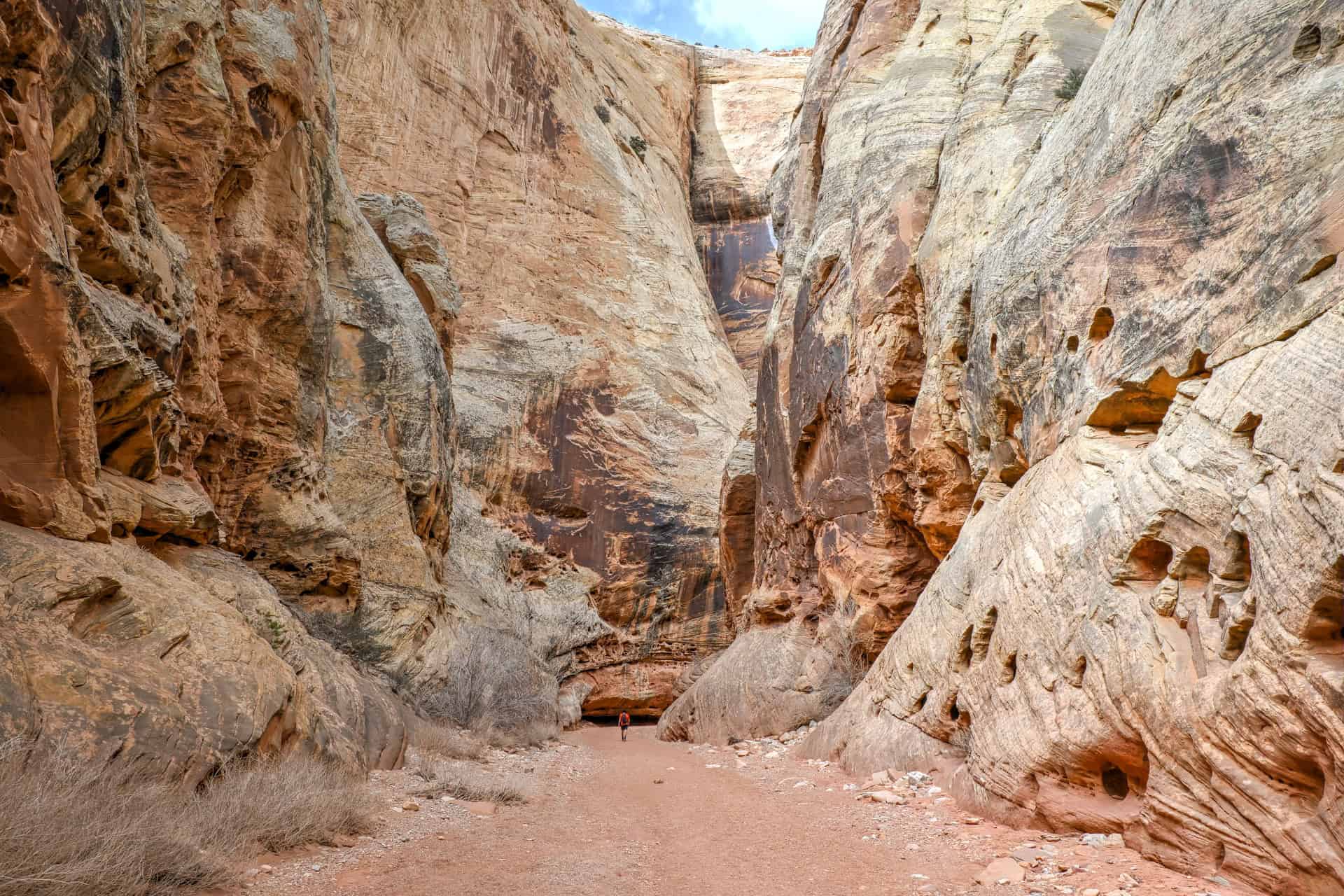
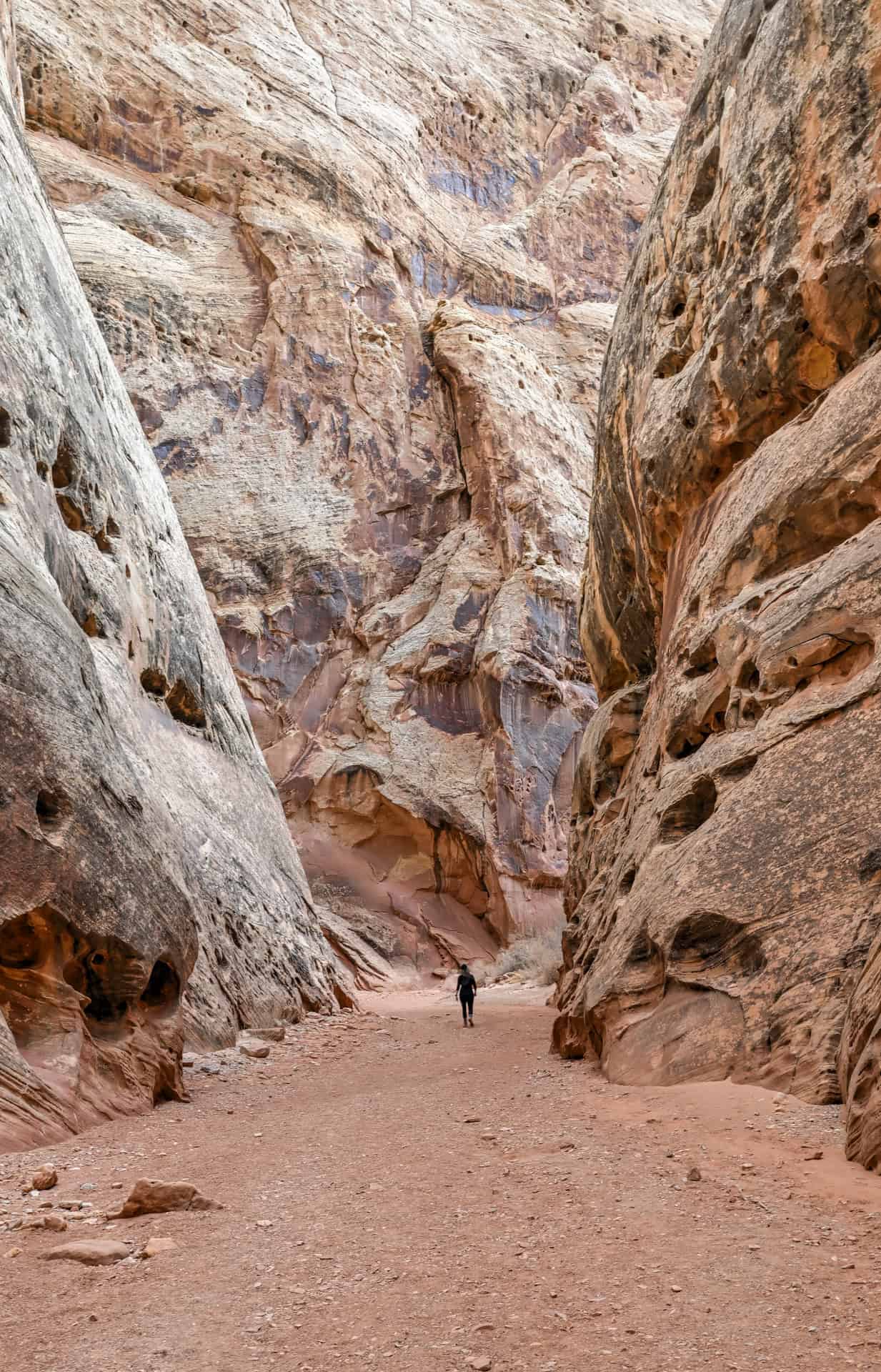
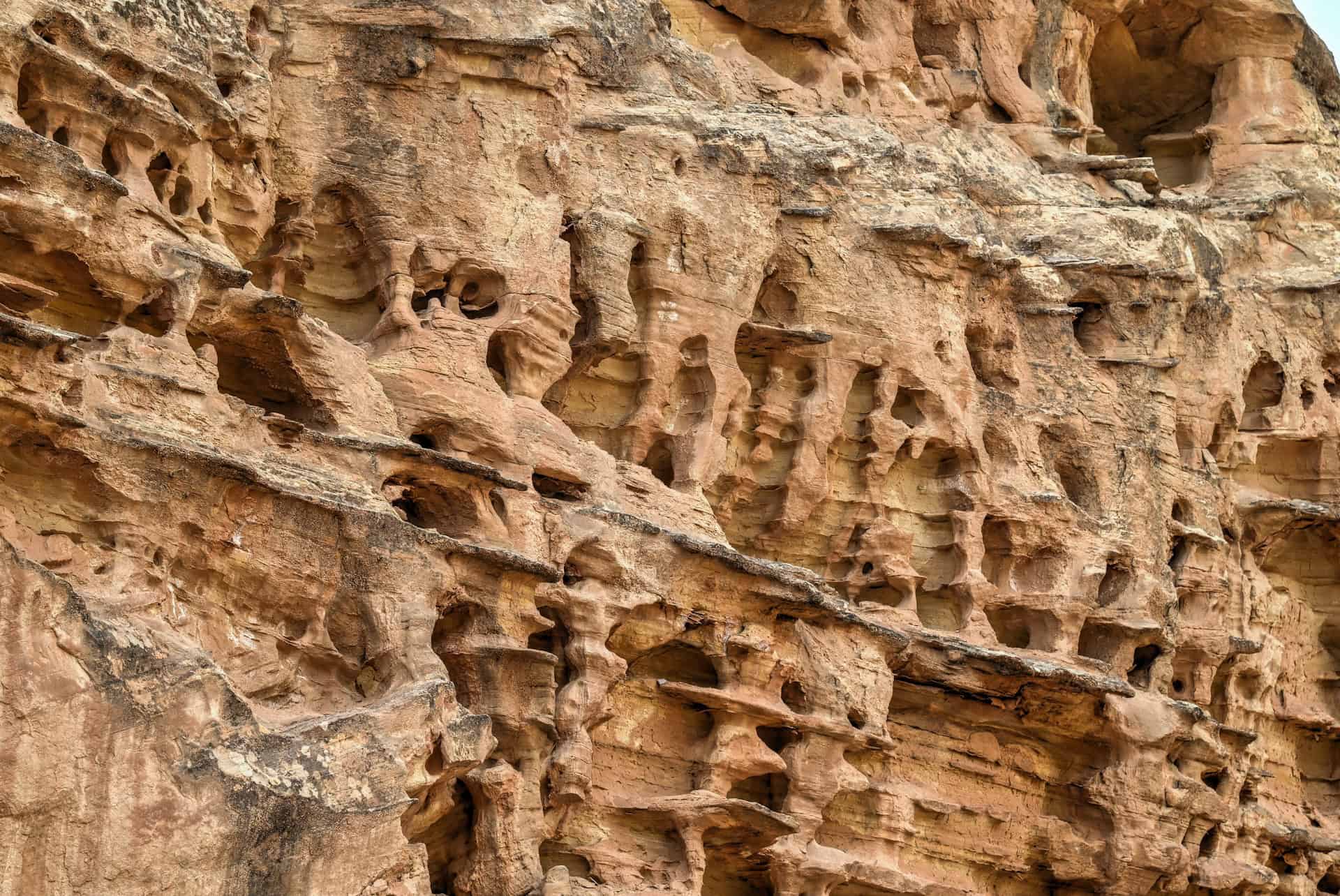
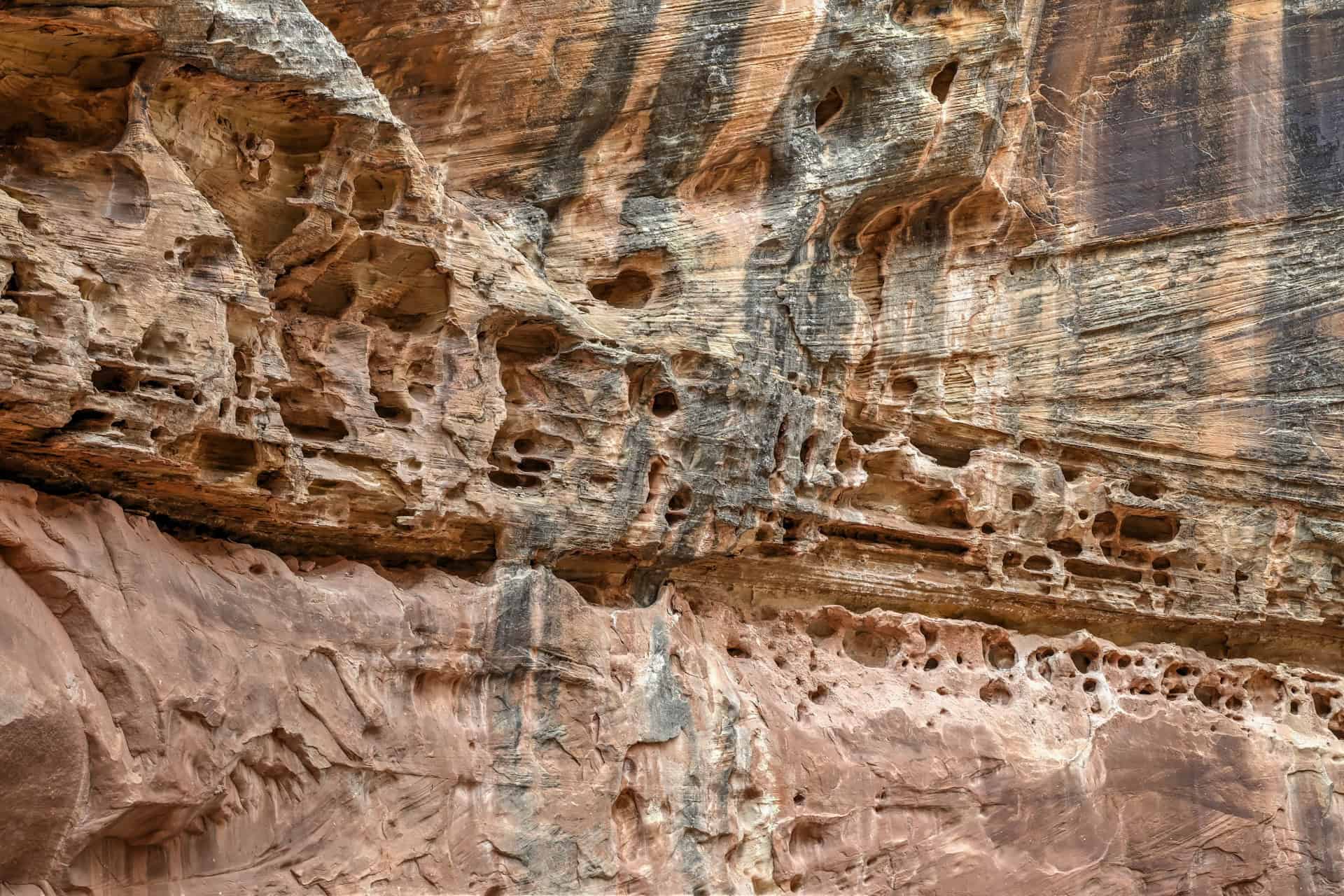
Keep an eye out for fascinating geology along the way. The Navajo sandstone shows off unusual “honeycomb” weathering, where small pits in the rock create clustered patterns across the canyon walls. These formations, combined with streaks of desert varnish and the shifting light that plays across the sandstone, make this stretch of the hike especially photogenic.
The walk from Highway 24 to the Scenic Drive end is about 2.4 miles one way, but even if you only go part of the distance before turning around, you’ll still experience the best of the canyon’s progression, from its wide-open entrance to its towering, narrows-like core. We do recommend trying to walk at least the first mile (for a two-mile round trip), which will take you through the narrowest part of the canyon.
Grand Wash Trail – Additional Details and Hiking Tips
Canine companions: Dogs are not permitted on trails in Capitol Reef National Park, including Grand Wash.
Summit: This trail doesn’t lead to a summit. Its highest point is at the western trailhead along Scenic Drive (~1,655 m / 5,430 ft), and it gradually descends through the wash toward Highway 24.
Trail environment: The route follows a dramatic dry wash flanked by towering Navajo sandstone walls that rise up to 500 feet (150 m). The scenery shifts from wide-open canyon bottoms to narrower slots, with little shade, so expect full sun exposure, especially midday.
Route signage: Signage is minimal but adequate. The trail itself is very straightforward, as it simply follows the wash between the two trailheads.
Trail surface / Technical aspects: The terrain is non-technical and suitable for most hikers, with a mostly flat, sandy, and rocky wash bottom. Some sections have uneven footing due to loose rocks, but there are no significant obstacles or steep grades.
Average trail slope grade: 3%, which is considered a very easy incline.
Previous Hiking Experience: The Grand Wash Trail is a flat, straightforward hike suitable for beginners, families, and casual walkers. With little elevation gain and a well-defined path along the sandy wash, it requires no special skills or technical ability. The biggest “challenge” is simply the desert sun and heat, so plan accordingly.
Cell Service: Cell service in Capitol Reef is very limited. You may find a weak signal near the Visitor Center or along Highway 24, but coverage quickly drops off once you enter the canyons. Do not rely on your phone for navigation or emergency communication, and download maps offline before you arrive.
Leave No Trace: Stay within the main wash and designated trail corridor. Cryptobiotic soil, which appears as dark, crusty patches along the desert floor, is extremely fragile, and just one footprint can damage it for decades. Protect the canyon ecosystem by sticking to the trail.
Bugs: Insects are rarely a major nuisance in Capitol Reef compared to wetter parks, but you may encounter mosquitoes near water pockets after summer rains, and gnats can sometimes be present in warmer months. Ticks are uncommon but possible in grassy areas. Overall, bugs are not usually a big factor on this hike.
Equipment: No specialized gear is required for Grand Wash, but sturdy walking shoes are recommended for sandy stretches and uneven ground. A wide-brimmed hat, sunscreen, and plenty of water are essential for hiking in this exposed desert environment.
Weather and Exposure: Grand Wash is fully exposed to the elements. There is little shade, and temperatures can soar in summer. Early morning or evening hikes are far more pleasant than midday outings. Conversely, in winter, the low sun creates dramatic lighting but can leave the canyon floor chilly.
Avoid the trail during or after heavy rainstorms, as flash flooding is a serious hazard in narrow canyon environments.
Current Trail Conditions: Check the Capitol Reef Alerts page for up-to-date trail conditions and any notices of temporary trail closure.
Hiking Packing List
All Trails subscription – This comes in really handy for areas with little or no cell reception, as the annual subscription allows you to download trail maps for offline use.
External Battery – If you are using your phone to track your progress along the trail or to help with navigation, you certainly don’t want your phone to die on you. That’s especially true in the unlikely event that you might get hurt or need assistance.
Hiking poles – These can be particularly useful in steep trails or muddy/boggy trail conditions.
Water Filter Bottle – The Life Straw bottle is an advanced water bottle with a filter that not only improves water taste but more importantly filters out bacteria and parasites, chemicals and microplastics.
Headlamp – very practical and a smart choice if you plan to start your hike before sunrise or finish it after sunset.
Best Time to Hike the Trail
The Grand Wash Trail can be hiked year-round, but the best months are spring (March–May) and fall (September–October), when temperatures are mild and conditions are most comfortable.
Spring (March–May):
- Pleasant daytime temperatures make this one of the most enjoyable seasons.
- Wildflowers sometimes bloom in April and May, adding splashes of color to the desert floor.
- Expect an increase in visitors during spring break periods.
Summer (June–August):
- Extremely hot temperatures (often 90–100°F / 32–38°C+) make midday hiking uncomfortable and sometimes unsafe.
- Hike early in the morning or near sunset if visiting in summer.
- Flash floods are more common during the monsoon season (July–August). Never enter the wash if storms are forecast—even distant rainfall can trigger sudden flooding.
Fall (September–October):
- Cooler air and golden light make fall an excellent time to visit.
- Fewer bugs and generally stable weather.
- Autumn also brings quieter trails compared to peak summer.
Winter (November–February):
- The trail remains open, and snow is rare inside the canyon, though mornings and evenings can be cold. Temperatures can drop well below freezing, even if the sun warms the canyon midday, so dress in layers.
- The low winter sun creates dramatic shadows and excellent photography conditions.
- Visitor numbers are at their lowest, so you’ll likely have much of the canyon to yourself.
- Snow in winter is generally light and infrequent, especially within the narrow canyon itself. The desert climate and sheltered canyon walls usually keep snow from accumulating significantly along the trail, so hiking is typically not impeded.
- Any light snow or frost on exposed sandstone or rocky areas can be slick, so proper footwear with good traction is recommended.
Quick Summary – When to Visit
For comfortable weather and great light, aim for spring or fall. If visiting in summer, start very early to beat the heat and avoid flash flood risks. Winter hiking is also rewarding if you don’t mind cooler conditions and want solitude.
Grand Wash Trail Add-Ons
For a longer adventure, many hikers combine Grand Wash with the Cassidy Arch Trail, which branches off near the western end of the Grand Wash trail (shortly after departing from the Scenic Drive trailhead). From there, a steep but manageable climb leads to one of Capitol Reef’s most iconic features, a massive natural arch named after outlaw Butch Cassidy, who is said to have hidden in the area. Linking the two trails together lets you experience both the sheer canyon walls of Grand Wash and the sweeping panoramas from above, all in a single outing.
Note that the Cassidy Arch trail does require some light scrambling with exposure to heights. Unlike the Grand Wash trail, you will find very little shade here.
The full trail length is 3.4 miles (5.4 km) and requires hikers to ascend about 670 feet (204 meters).
Our Other Favorite Capitol Reef Trail: Hickman Bridge Trail
If you are looking for a family-friendly and uncrowded hiking adventure, the Bellevue Prairie If you’re looking for a short but rewarding hike in Capitol Reef, the Hickman Bridge Trail is a must. This family-friendly route packs a lot into just under 2 miles round-trip, leading you through desert scrub and past striking rock formations before arriving at the trail’s namesake: a dramatic 133-foot natural sandstone bridge. Along the way, you’ll enjoy views of the Fremont River canyon and the Waterpocket Fold, making it a great introduction to Capitol Reef’s unique geology. With its combination of accessibility, scenery, and a big payoff at the end, Hickman Bridge is one of the park’s most popular trails, and for good reason.


For more information on this trail, be sure to check out our Hickman Natural Bridge hiking guide.
Where to Stay Near Capitol Reef
While there’s no traditional lodging inside Capitol Reef National Park, visitors can camp within the park at the Fruita Campground or designated backcountry sites. For those seeking hotels, cabins, or inns, the best options lie just outside the park in small nearby towns, each offering its own charm and convenience. The closest is Torrey, located just 5 miles (8 km) west of the park’s visitor center, while Hanksville and Caineville provide good options for travellers heading east toward Moab or Lake Powell.
Torrey
Torrey is the main gateway to Capitol Reef and has the widest range of accommodations, from cozy inns to full-service resorts. It’s also where you’ll find the best selection of restaurants and shops.
Capitol Reef Resort – The area’s most upscale lodging, offering cabin, wagon, and teepee stays with stunning views of red cliffs and on-site amenities like a pool and restaurant.
Broken Spur Inn & Steakhouse – Comfortable Western-style rooms and hearty dining just a few minutes from the park entrance.
SkyRidge Inn – A charming bed and breakfast known for its panoramic vistas and peaceful atmosphere, perfect for couples or quieter stays.
Days Inn by Wyndham Torrey Capitol Reef – A practical, budget-friendly option with simple rooms and easy highway access.
Hanksville
About 45 minutes east of Fruita, Hanksville is a small desert outpost well-positioned for exploring Capitol Reef’s eastern side or nearby Goblin Valley State Park.
Whispering Sands Motel – A clean, comfortable classic roadside motel with friendly service, ideal for travellers continuing toward Moab or Lake Powell.
Caineville
Halfway between Torrey and Hanksville, this tiny settlement sits in a dramatic desert setting, surrounded by badlands and open skies.
Cathedral Valley Inn – A peaceful and simple motel popular with photographers and off-road adventurers, offering quick access to the Cathedral Valley Loop and other remote park areas
Grand Wash Trail – Frequently Asked Questions
How long does the Hickman Bridge Trail take?
Most hikers complete the out-and-back trail in about 1–1.5 hours, depending on pace and stops for photos.
Is the Grand Wash Trail kid-friendly?
Yes. The trail is flat, wide, and non-technical, making it a good option for families. Just be prepared for full sun exposure and bring plenty of water.
Can you hike the Grand Wash in winter?
Yes. The trail is open year-round, and snow rarely lingers inside the canyon. Winter hiking can be especially peaceful, though mornings are cold and the canyon floor may be slick with frost.
Is there shade on the Grand Wash Trail?
Very little. The canyon walls provide occasional relief, but much of the route is exposed. A hat, sunscreen, and extra water are essential, especially in summer.
Is Grand Wash safe during rain?
You should avoid hiking during or right after storms. Grand Wash is prone to flash flooding, particularly in the summer monsoon season (July–August). Always check the weather before entering.
Explore More Utah National & State Park Guides
Continue exploring Utah with these detailed guides:
Bryce Canyon National Park Guide
Zion National Park Guide
Goblin Valley State Park Guide
Monument Valley Guide
Arches National Park Guide
Canyonlands National Park
Photography Gear
If you like our photography, you might be interested in some of the gear we use to shoot our travel and hiking destinations.
Camera Body – Nikon Z 6ii Fx-series Mirrorless Body
Main Lens – NIKON 24-120mm F/4G ED VR AF-S
Zoom Lens – Sigma 745-306 150-600mm f/5-6.3
Polarizing filters – Urth Circular Polarizing (CPL)
Camera Tripod – K&F Concept 64-inch Camera Tripod
Mini-tripod – Lammcou Flexible Camera Tripod
Camera/hiking backpack – Vanguard Alta Rise 48 Backpack
Universal Travel Adapter – VYLEE Universal International Power Travel Plug
Other Travel Essentials
Travel Insurance
SafetyWing is a travel insurance company that offers comprehensive coverage for travellers. Includes Medical Insurance and Travel Insurance. Primarily geared towards long-term travellers, digital nomads, and expats.
e-Sim cards
Airalo is the world’s first and largest eSIM store with eSIM plans for 200+ countries and regions worldwide. With Airalo eSIMs, travellers can get connected the moment they land at their destination and avoid nasty data roaming charges
eSIMS are a sustainable alternative to single-use SIM cards – they are 100% digital, require less energy to produce and be re-used rather than disposed of.
Car Rentals
Discover Cars is our go-to website for car rentals. We almost always find our preferred rate there.
Transfer from Airport
Welcome Pickups is our favourite private transfer service, which you can pre-book at a fixed price. Currently available in 220 cities all over the world (mostly in Europe, but with several major cities in Asia, the Middle East and the US).
Kiwitaxi is another private transfer service – we haven’t tried it yet, but it’s currently available in a few more countries (102 as of 2024).
Hotels and Accommodations (coming soon)
Photography Prints
If you found this blog useful, you can help support our blog by purchasing low-cost digital prints. Printed physical prints are also available for purchase.


—–
Well, that wraps it up! We hope you enjoyed our Capitol Reef Hiking Guide for the Grand Wash Trail and that it will prove useful for planning your hiking trip.
—–
You might also be interested in these related pages: