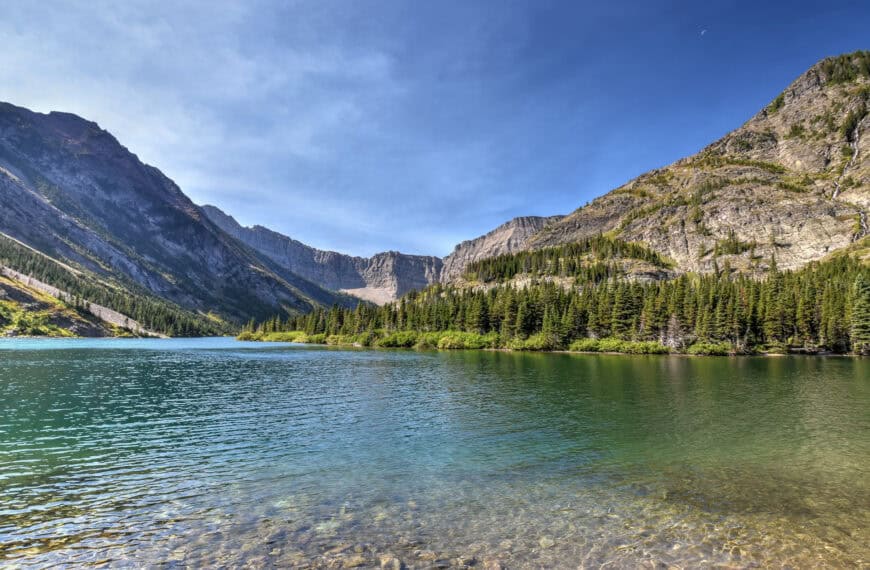
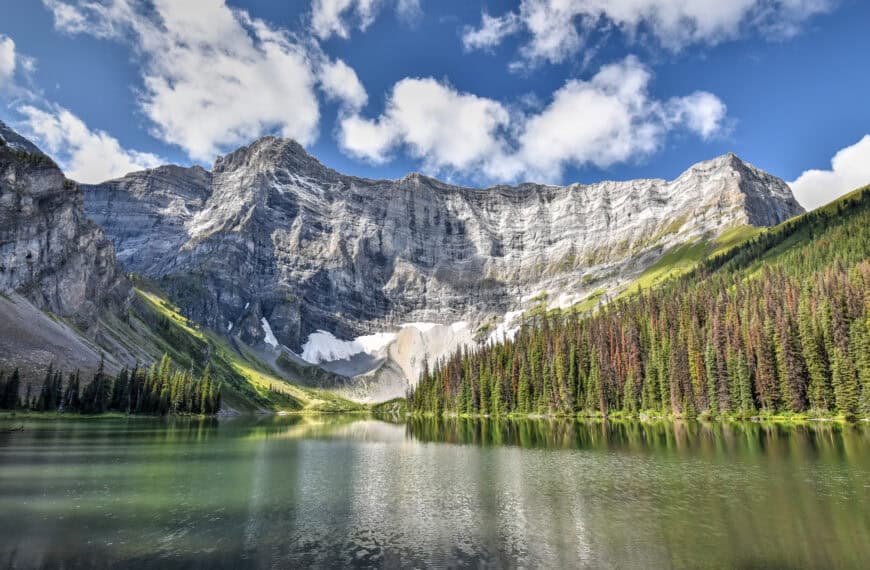
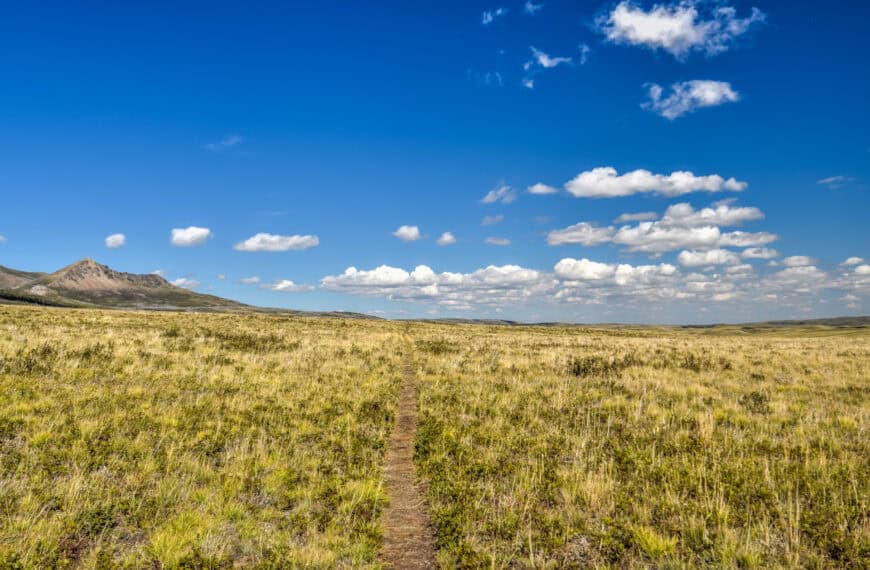
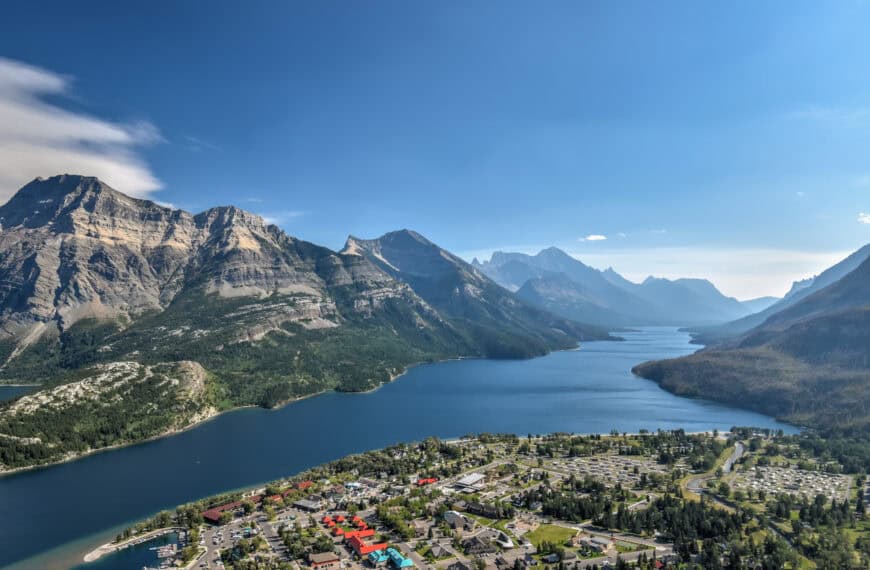
Tucked against the Alberta–Montana border where the prairies meet the peaks, Waterton Lakes National Park packs an incredible variety of experiences into a compact, easily explored area. In a single day, you can hike alpine trails with sweeping Rocky Mountain vistas, drive two of Canada’s most scenic parkways, spot bighorn sheep or bears from a roadside pullout, and finish with a quiet paddle across a mirror-calm lake. Whether you’re here for wildlife watching, kayaking on emerald waters, or simply soaking up mountain views from the townsite cafés, Waterton offers the full Canadian Rockies experience without the crowds of Banff or Jasper. This guide brings together the park’s best hikes, drives, and outdoor adventures to help you plan an unforgettable visit.
Disclosure: This page (Best Things to Do in Waterton Lakes National Park) may contain product affiliate links. At no additional cost to you, we may receive a commission for purchases made through these links. More details can be found on our disclosure and policies page.


You might also be interested in these Waterton Lakes National Park pages:
Best Hikes in Waterton Lakes National Park
Wildlife Watching in Waterton Lakes National Park
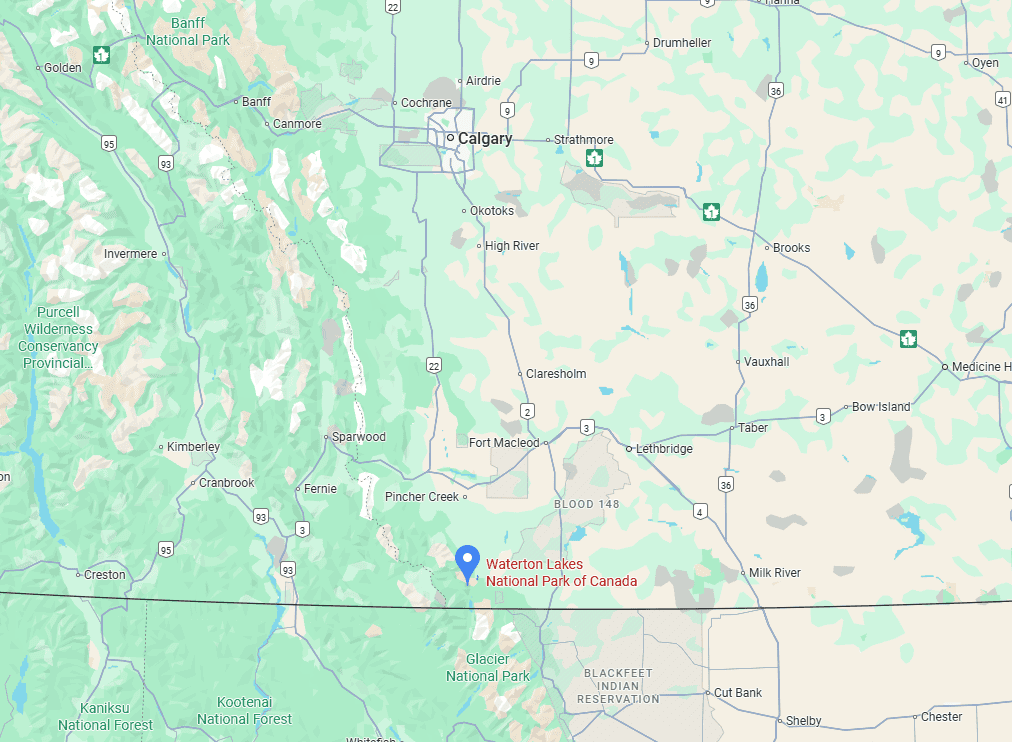
Waterton Lakes National Park Location and Map
Waterton Lakes National Park is located in the extreme southwestern corner of Alberta (link to Google Maps), immediately north of Glacier National Park in the US.
How to Get to Waterton Lakes National Park
The simplest way to reach the national park is by driving there with your own vehicle, as there is no public transit service to the park. There is, however, an airport charter service available from Calgary, though this is a rather expensive means of reaching the park, and obviously isn’t very useful for getting around the park afterwards.
If coming from outside the park, you can expect the following drive times from the nearest major cities:
From Lethbridge: 130 km (1h30 min drive)
From Calgary: 280 km (3h drive)
From Medicine Hat: 300 km (3h15 min drive)
From Banff: 360 km (3h45 drive)
If you need to book a rental vehicle for your hiking excursion, we highly recommend using Discover Cars to get the best rates on your rental in Alberta.
We also highly recommend Airalo (eSIM card) for your connectivity needs when travelling abroad. Airalo is the world’s first and largest eSIM store with eSIM plans for 200+ countries and regions worldwide.
Gas Station
The nearest gas station is in the town of Waterton (there’s only one) (link to Google Maps). Otherwise, the nearest gas stations are outside of the park, in Mountainview to the east (20 km away) and in Pincher Creek to the north (45 km).
About Waterton Lakes National Park – Some Quick Facts
Where Mountains Meet the Prairies: The park’s range lies between the Canadian Rockies and the Prairies, and is often referred to as the “park where mountains meet the prairies.” Waterton Lakes became Canada’s fourth national park in 1895, though its official status, park boundary and name have varied over the years.
Small in Size, Grand in Scenery: Although Waterton Lakes is currently the smallest of the National Parks located in the Canadian Rockies, it has about 200 km of hiking trails, making its backcountry the most developed of the Canadian mountain parks, where towering peaks often plunge straight into deep blue lakes. Whether you want a leisurely stroll or a heart-pumping climb, Waterton makes it easy to match a hike to your energy level, and you can reach sweeping viewpoints in just a short hike, so dramatic mountain scenery is never far from the trailhead.
Fewer visitors, more breathing room – Waterton welcomes a fraction of the annual visitors seen in better-known Canadian Rockies parks like Banff or Jasper. That means quieter trailheads, easier parking, and a more relaxed pace, even in midsummer, so that you can soak up the scenery without the bustle.
Diverse Park Flora: Waterton Lakes National Park is home to many rare plants, more so than any national park in the Canadian Rockies. More than half of Alberta’s plant species are found in Waterton, which is also the only Canadian national park that preserves foothills fescue grasslands. Several different ecological regions converge in Waterton, with prairie plants of the Great Plains, Rocky Mountain plants from northern areas, and coastal plants from the Pacific Northwest all overlapping.
Impressive Wildlife: Waterton Lakes National Park is home to more than 60 species of mammals, including elk, moose, mule deer, white-tailed deer, bighorn sheep, mountain goats, plain bison, lynx, bobcats, wolves, coyotes, cougars, black bears and grizzly bears.
Dark Skies: Waterton Lakes National Park and Glacier National Park in the United States are now recognized by the International Dark-Sky Association (IDA) as an International Dark Sky Park and together form the first transboundary IDA International Dark Sky Park.
Waterton Park Access Fees
Anyone visiting Waterton Lakes National Park, whether for a hike or simply to enjoy the scenery, must first pay the applicable Parks Canada entrance fee.
Daily Fee: $11 (adults; discount for seniors and free for children)
Annual Waterton Lakes Pass*: $54.50 (adults; discount for seniors and free for children)
Parks Canada Discovery Pass**: $75.25 (adults; discount for seniors)
The Parks Canada Discovery Pass is valid for 12 months after the date of purchase, which can be purchased online here (includes access to all Canadian National Parks)
As of 2025, the Waterton Day Use and Annual passes can only be purchased in person.
*If you plan on spending at least 5 days in Waterton Lakes National Park, you are better off purchasing the Annual Waterton Lakes Pass.
**If you plan on spending at least 7 days within a Canadian National Park during any 12-month period, you are better off purchasing the Parks Canada Discovery Pass. This is usually easily achieved during road trips through the Canadian Rockies.
For up-to-date fee information, consult the Waterton Lakes National Park fee page.
A Short Waterton History
Indigenous Roots and Early Exploration
Long before it was a national park, the dramatic landscape where the prairies meet the peaks was home to the Blackfoot Confederacy, including the Kainai (Blood), Piikani, and Siksika Nations. They followed the bison herds, gathered plants, and travelled seasonally through the valleys and lakes that now draw modern visitors. European fur traders and explorers arrived in the 1800s, mapping routes through the passes and marvelling at the striking chain of deep blue lakes.
Canada’s Fourth National Park
Local rancher and outdoorsman F.W. Godsal recognized the need to protect the area’s scenery and wildlife and successfully lobbied for its preservation. In 1895, the Canadian government set aside the land as Waterton Lakes National Park—Canada’s fourth national park and the first in the southern Rockies. Early tourists came by horseback or boat to fish, camp, and take in the views that remain just as captivating today.
An International Peace Park
Waterton’s setting on the U.S. border soon led to a groundbreaking partnership with neighboring Glacier National Park in Montana. In 1932, the two parks were united as the Waterton-Glacier International Peace Park, a symbol of friendship between Canada and the United States. Recognized as a UNESCO World Heritage Site in 1995, this cross-border landscape is celebrated worldwide for its rich biodiversity and stunning meeting of prairie, mountain, and alpine ecosystems—a legacy you can still experience on every trail and scenic drive.
The Kenow Wildfire and Renewal
In September 2017, the Kenow wildfire swept through more than half of the park, burning forests, campgrounds, and historic structures. In the short term, it left blackened hillsides and closed many trails, dramatically altering the scenery. Yet fire is also a force of renewal in these ecosystems. Only a few years later, visitors can already see vibrant carpets of wildflowers, young aspen groves, and fresh understory growth emerging, offering a rare opportunity to witness the park’s natural cycle of regeneration and resilience.
Best Things to See and Do in Waterton Lakes National Park
Hiking
Waterton Lakes may be the smallest of the Canadian Rockies’ national parks, but its trail network delivers outsized rewards. Towering peaks plunge straight into deep-blue lakes, and sweeping viewpoints are often just a short hike away (dramatic mountain scenery is never far from the trailhead). The 2017 Kenow wildfire also reshaped the landscape, opening up new sightlines and sparking remarkable regrowth. In summer, expect vibrant wildflowers and broad, airy vistas where dense forest once stood, making each visit feel a little different from the last.
Whether you’re chasing big views or a quiet lakeside stroll, there’s a trail for every mood. Adventurous hikers can climb to Bertha Lake, where cascading falls lead to a jewel-like alpine basin, or tackle the short but steep Bear’s Hump, which rewards you with a full panorama of Upper Waterton Lake and the surrounding peaks in under an hour.


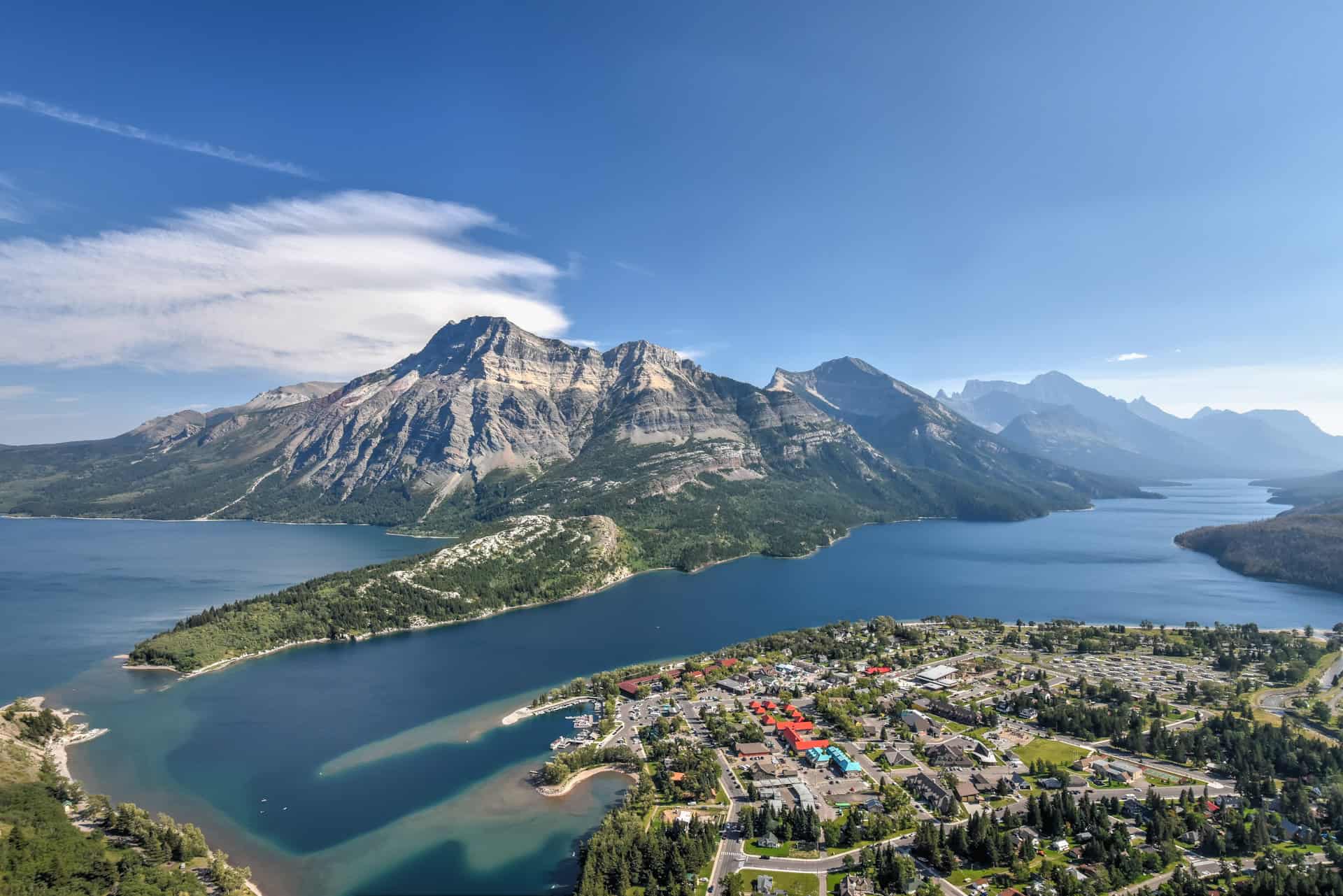
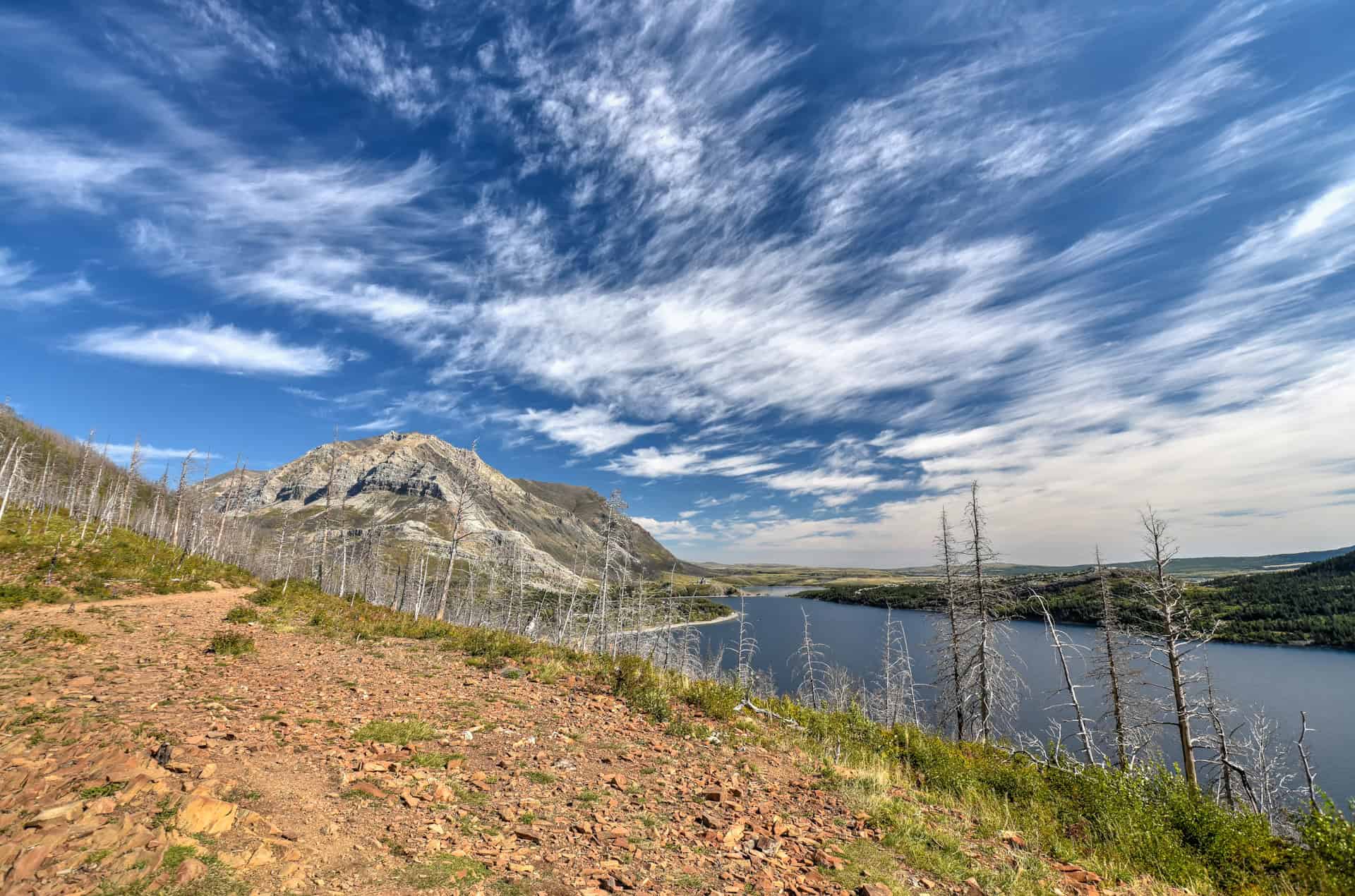
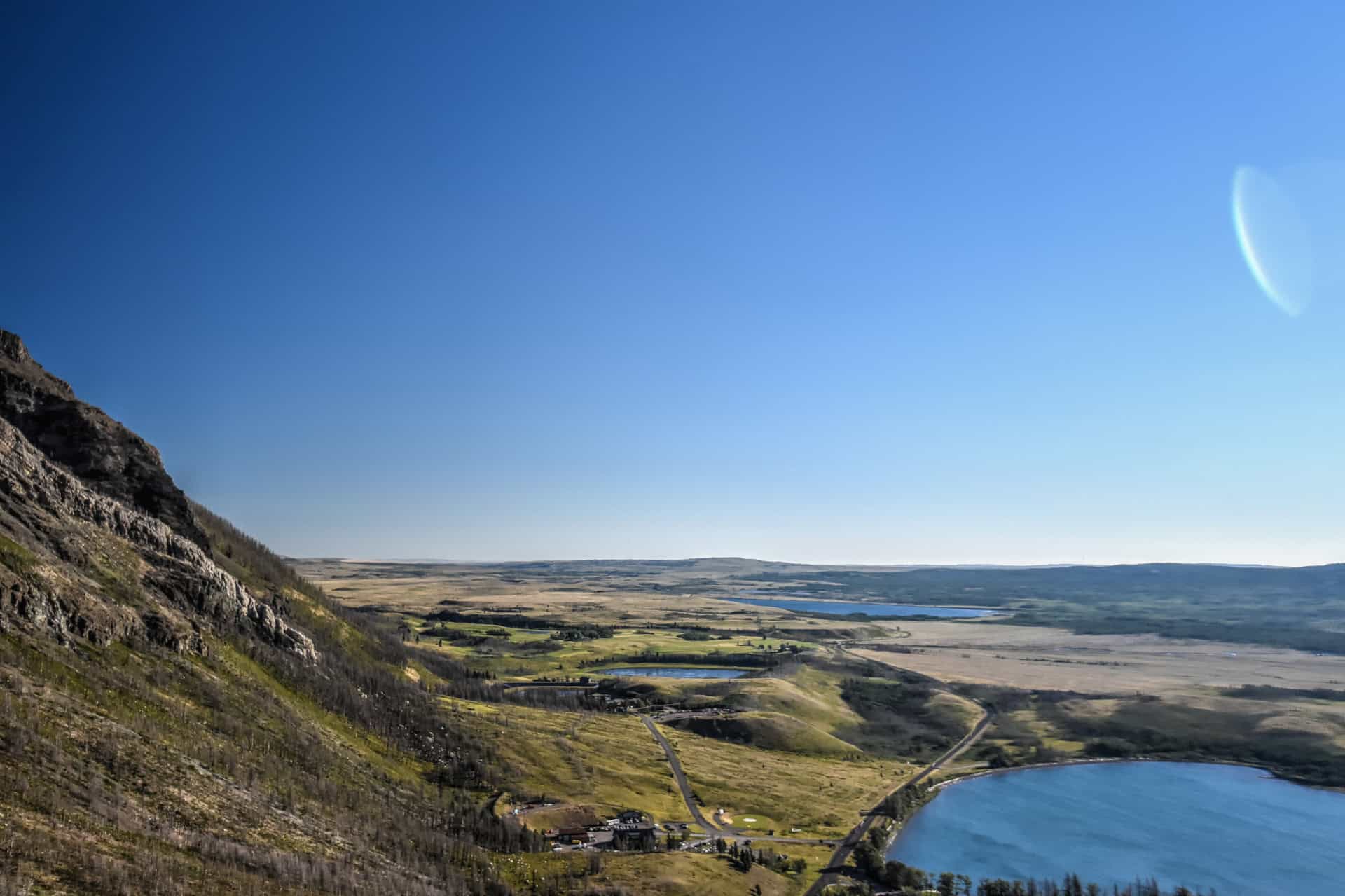
For something gentler, the flat Cameron Lakeshore Trail offers an easy, family-friendly walk with mirror-like reflections of the mountains. Add in challenging classics like Crypt Lake, or the breezy prairie paths around Bellevue, and you’ll find that Waterton’s compact size makes it effortless to string together multiple hikes in a single day.


Scenic Drives
Red Rock Parkway
Stretching 15 km from the park entrance into the rolling foothills, the Red Rock Parkway offers a classic Waterton experience. The road winds through open prairie and wildflower meadows before climbing toward the dramatic front ranges of the Rockies. In late spring and early summer, the roadside blooms are spectacular. Several popular trailheads, like Blakiston Falls and Bellevue, branch off along the way, so it’s easy to combine a drive with a hike. The route ends at striking Red Rock Canyon, where vibrant red and green creek beds invite short strolls or longer hikes deeper into the backcountry. Wildlife sightings are common here, especially deer and black bears in late summer and fall.


Akamina Parkway
Equally beautiful but more forested, the 16 km Akamina Parkway follows Cameron Creek into the park’s southern valleys. Towering peaks rise steeply above the dense spruce and fir forest, and trailheads for Wall Lake, Rowe Lakes, and Crandell Lake dot the roadside. Along the way, you’ll also pass the site of Canada’s first commercial oil well (link to Google Maps), a small historical point of interest highlighting the area’s unique natural history. The drive concludes at Cameron Lake, a tranquil alpine jewel straddling the U.S. border. Here you can rent a canoe or paddleboard, hike the gentle lakeshore trail, or simply relax with a picnic

Driving Tips: Both are narrow and lack paved shoulders, so cyclists and motorists alike should drive with care and watch for wildlife crossing the road. For the quietest experience, and the best chance of seeing animals, head out early in the morning or later in the evening when traffic is light and the light is soft.
A third scenic drive of note is the Bison Paddock Loop Road, which we will describe in greater detail in the next section on wildlife viewing.
Wildlife watching and the Bison Paddock
Wildlife viewing in Waterton Lakes National Park rivals its hiking for pure memorability. More than sixty mammal species live here, from elk, moose, mule and white-tailed deer to bighorn sheep, mountain goats, and the park’s celebrated plains bison. Predators such as cougars, lynx, bobcats, wolves, coyotes, black bears, and even the occasional grizzly bear round out the list, making this small park unusually rich in species.
The townsite itself is a surprisingly good place to start. Deer are practically residents here: white-tailed and mule deer often graze right on lawns and wander through side streets. It seemed like every evening after dinner, we would cross deer wandering through the streets and parks of the town. Deer were also a frequent occurrence on hiking trails, particularly those that start in or near the townsite.


Beyond the townsite, the park’s two **scenic parkways—Red Rock and Akamina—**are classic wildlife corridors. Black bears (and occasionally grizzlies) are frequently seen along Red Rock Parkway, while bighorn sheep often patrol the slopes beside the Akamina Parkway. Each road has numerous pullouts and trailheads that make safe viewing easy; just remember to pull fully off the pavement and never stop in the driving lane.


For a signature Waterton experience, visit the Bison Paddock, a fenced prairie enclosure just outside the park gates. The small plains bison herd roams freely inside, and the 4 km Bison Paddock Loop Road lets you drive right through their native grassland habitat. Remain in your vehicle, keep a respectful distance, and enjoy a close-up look at one of North America’s most iconic animals, without even passing the main entrance kiosk.


It’s important to stay in your vehicle at all times while inside the Bison Paddock. Bison may look calm, but they are powerful wild animals that can charge without warning.
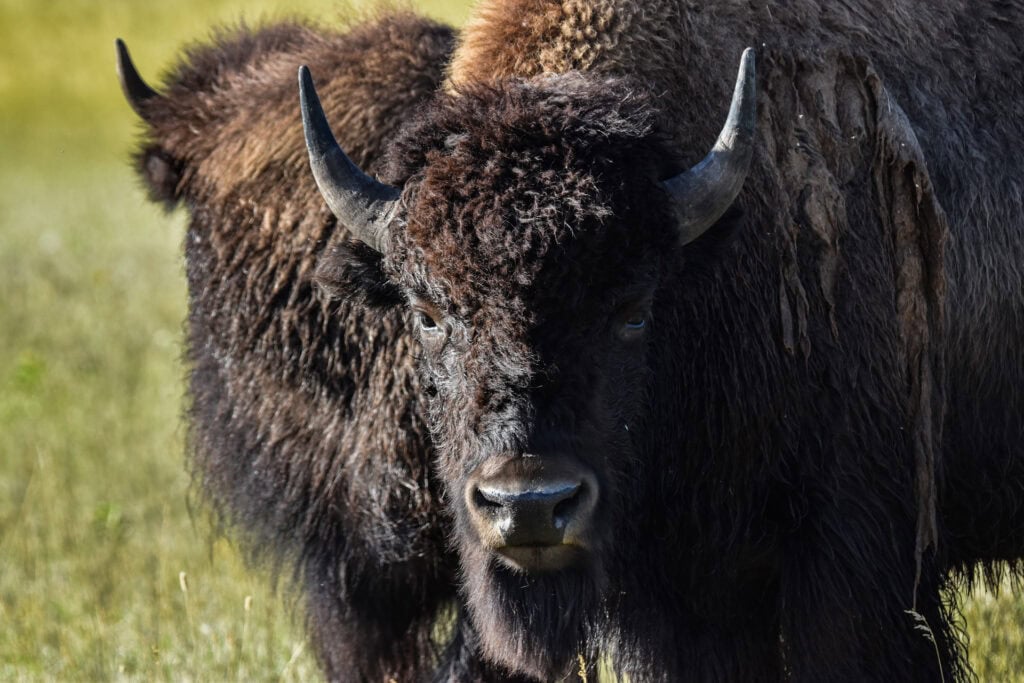
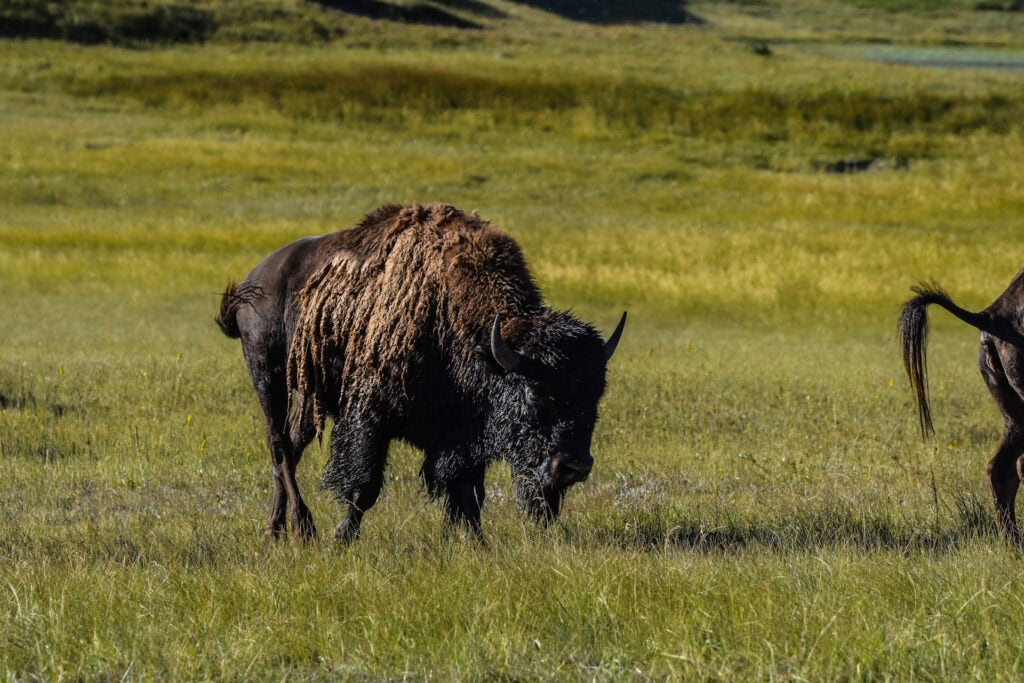
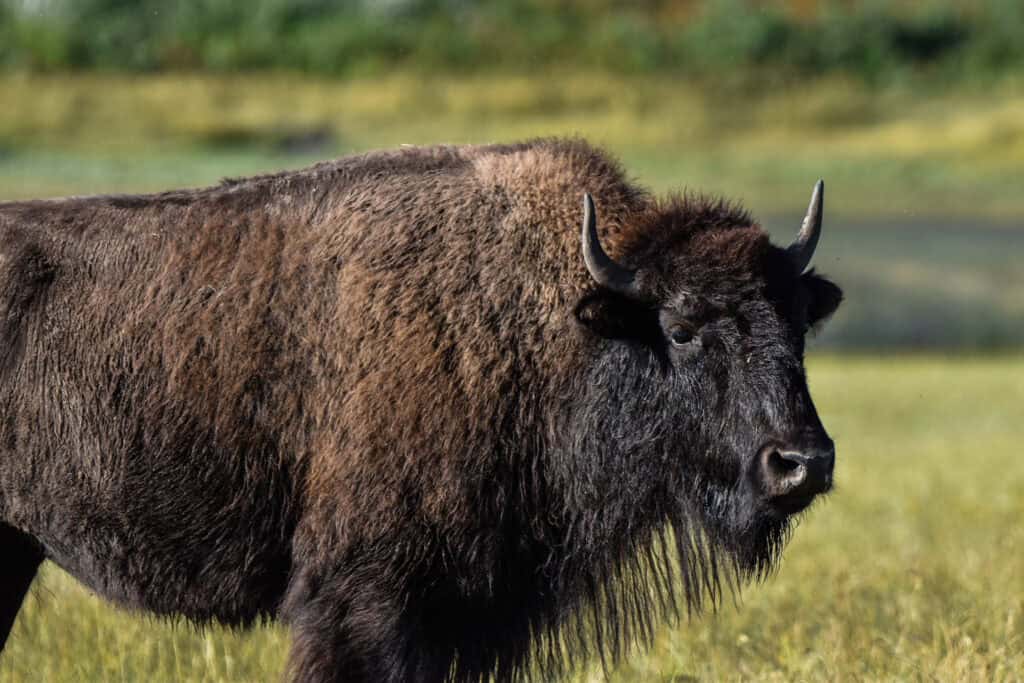
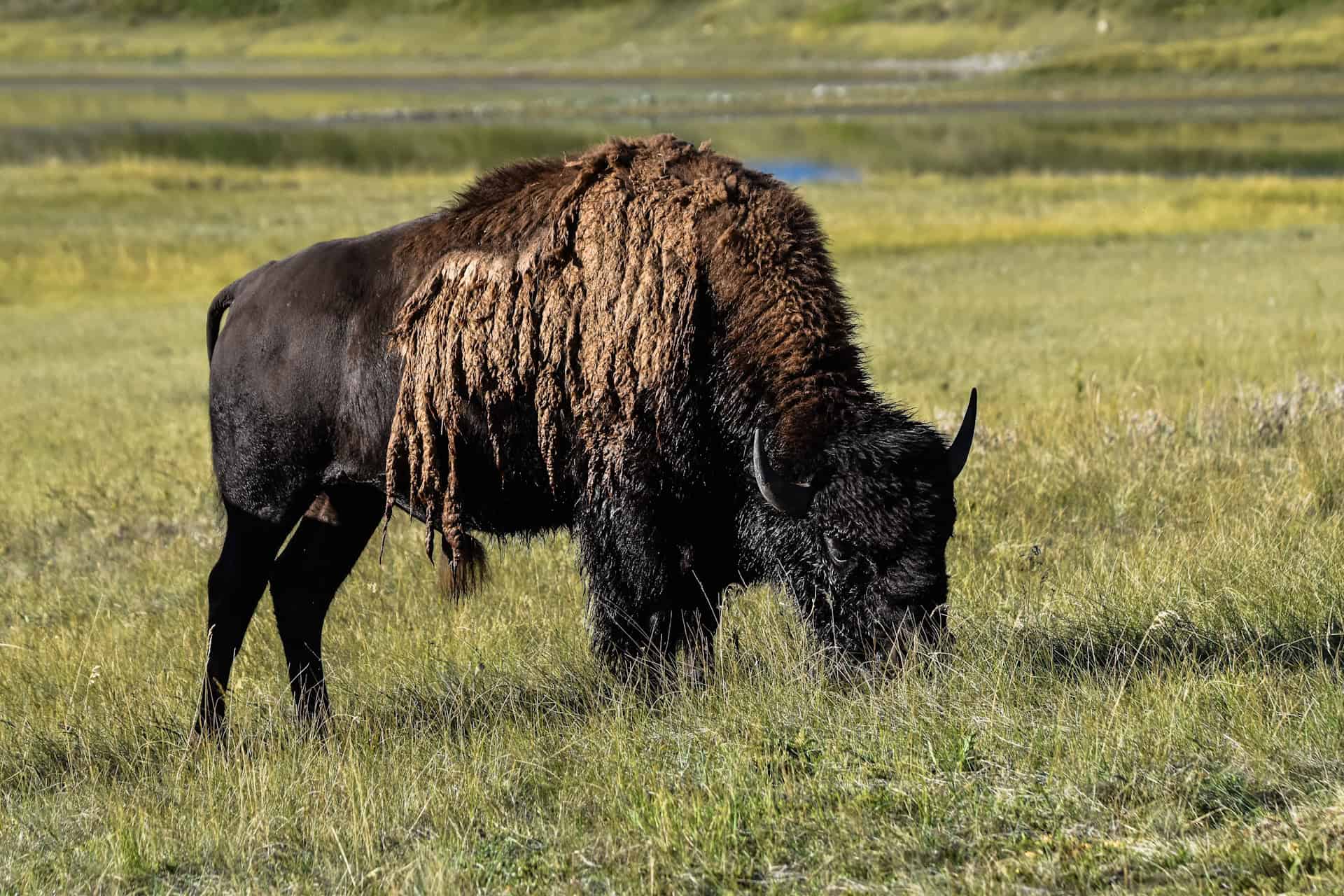
For more tips on wildlife encounters, safety precautions, and visiting the bison paddock, be sure to check out our guide on Wildlife Watching in Waterton.
Cycling
Waterton’s compact size and dramatic scenery make it a rewarding place to explore by bike. The park’s two main scenic roads, the Red Rock Parkway (15 km one way) and the Akamina Parkway (16 km one way), which we described above, are also popular cycling routes. Both roads are narrow, however, and lack paved shoulders, so riders should stay alert for traffic, ride single file, and ideally use lights or bright clothing for visibility. The best time to ride these roads with minimal traffic is early in the morning.
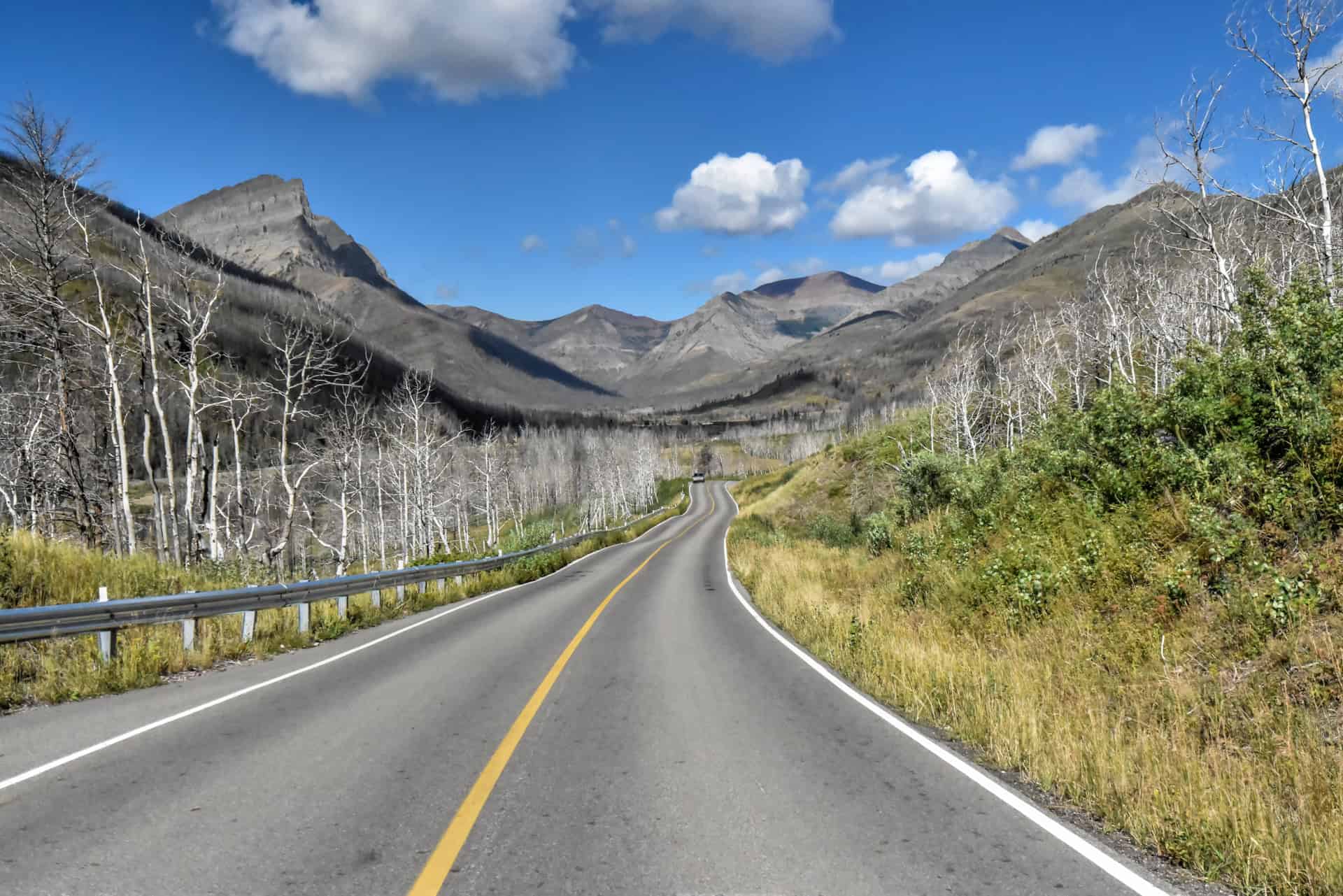
From November through May, the Red Rock Parkway is closed to motorized vehicles, which can create a peaceful car-free corridor, at least until snow or ice makes conditions tricky.
Alternatively, cyclists can follow the Kootenai Brown Trail, an off-road paved pathway that parallels the Entrance Parkway from the park gate to the townsite. An out-and-back ride covers about 14.6 km. Most of the route is gently rolling and easy to ride, but if you start from the townsite, be prepared for a more noticeable climb as you approach the park gate at the far end.
Seasonal bike and e-bike rentals, including helmets, are available in the Waterton townsite at shops such as Pat’s Waterton (link to Google Maps), where staff can share current road conditions and bear-safety advice.
Kayaking & Paddleboarding
If the wind takes a break (Waterton is famous for its gusts), grabbing a paddle is one of the most relaxing ways to experience the park. Early mornings are usually the calmest, when the lakes can be as smooth as glass and the mountains reflect perfectly on the water.
Two spots top the list. Upper Waterton Lake, located right next to the townsite, is vast and dramatic, offering long views down the valley and ample space to explore. Cameron Lake, tucked at the end of the Akamina Parkway, feels more secluded and ringed by peaks, making it perfect for a gentle circuit or just floating and soaking in the scenery.
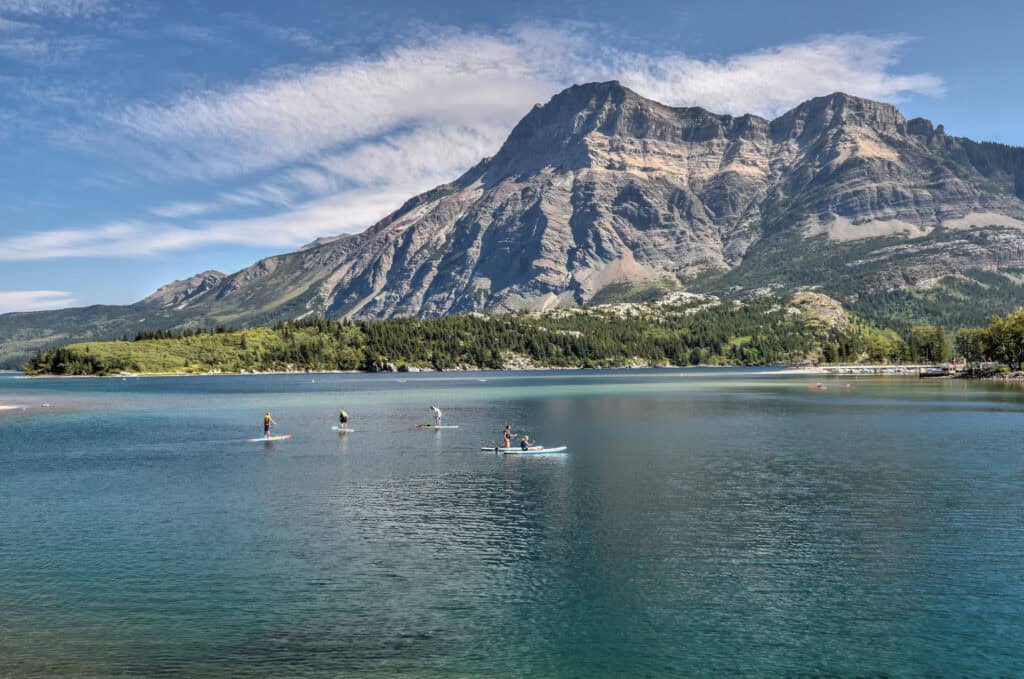
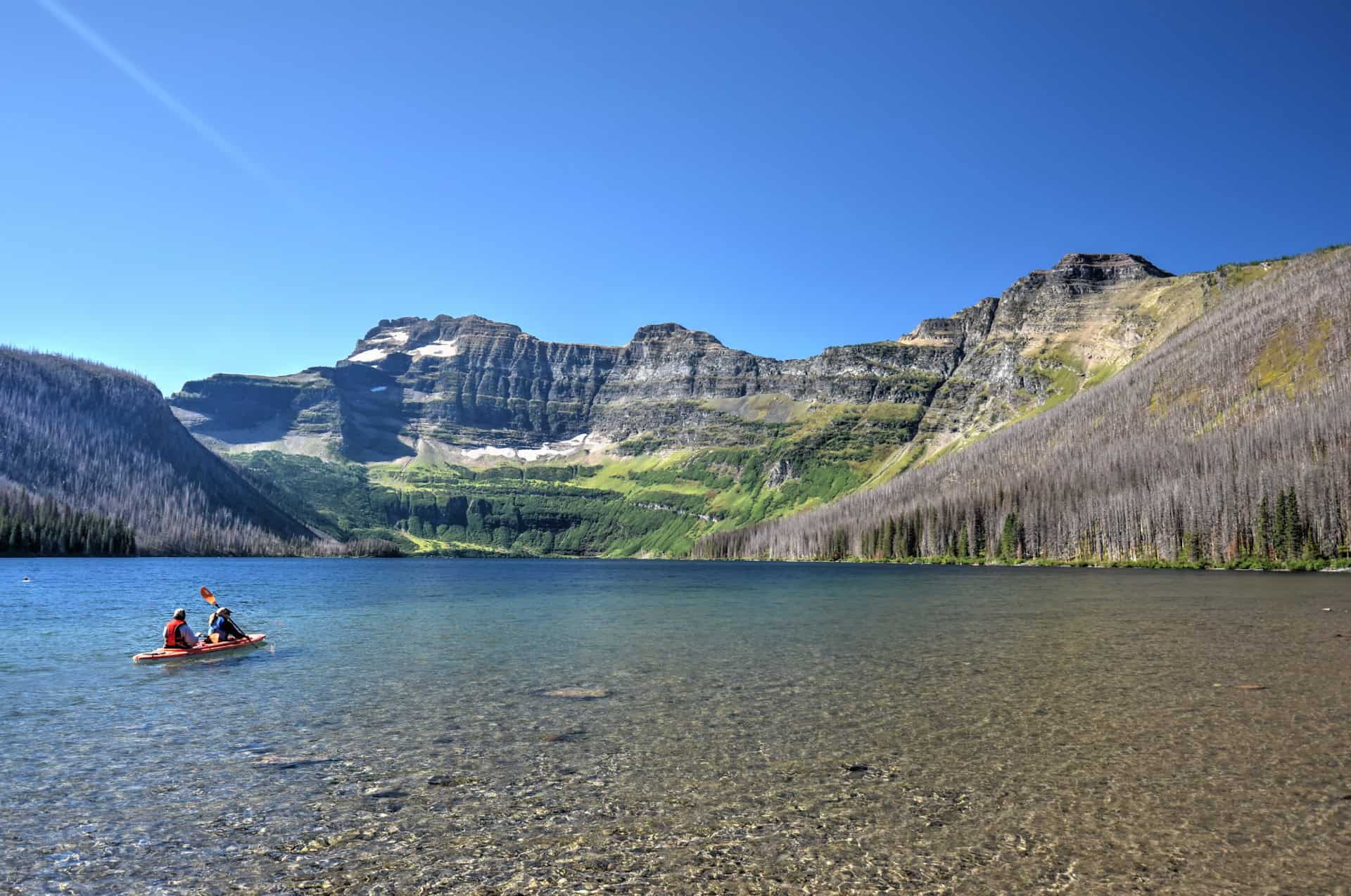
You don’t need to haul gear. Blakiston & Company rents kayaks and paddleboards right in town for Upper Waterton Lake, and Cameron Lake Boat Rentals has canoes, kayaks, and SUPs waiting for you right on the dock.
Important: To keep these waters pristine, Parks Canada prohibits launching any non-motorized watercraft brought from outside the park. Renting on-site (or using gear supplied by local outfitters) is the way to go, and saves you the hassle of inspections.
Scenic Cruise on Upper Waterton Lake
If you’d rather let someone else do the paddling, hop aboard the Waterton Shoreline Cruise, a classic way to take in Waterton’s signature lake without lifting a finger. From late May through early October, the company runs several departures a day (usually every two to three hours in peak summer), so it’s easy to fit a cruise into your plans.
The most popular trip is a two-hour international tour that glides the full length of Upper Waterton Lake, crossing the border into Glacier National Park in Montana ($89 for adults, half-price for children). It includes a 30-minute stop at the Goat Haunt Interpretive Centre on the U.S. side, where you can stretch your legs and explore this tranquil backcountry ranger station. Passports are not required unless you plan to remain longer than the scheduled stop or continue hiking from Goat Haunt (for more details on hiking back to Waterton from Goat Haunt, check out our Lakeshore Trail Hiking Guide).
There’s also a shorter 1h15 tour that doesn’t dock on the US side of Upper Waterton Lake ($65 for adults, half price for children). The cruise stays close to the shoreline, which increases the chances of seeing wildlife
On board, you’ll find indoor and outdoor seating, and live commentary from local guides who share stories about the lake’s geology, history, and wildlife. Whether you stay inside or brave the open deck, expect sweeping views of rugged peaks, hidden waterfalls, and the ever-changing colors of the water, a perfectly effortless way to see why Waterton and Glacier were linked as the world’s first International Peace Park.
Tip: July and August sailings, especially on weekends or evenings, often sell out. We recommend purchasing your tickets as soon as you arrive in Waterton since they can only be purchased up to three (3) days in advance and up to the day of your cruise. As of 2025, tickets can only be purchased in person at the ticket office (link to Google Maps).
Stargazing & Astrophotography
Waterton’s remote location and small size make it one of the best places in the Canadian Rockies to enjoy a truly dark night sky. The park is designated a Dark-Sky Preserve, meaning light pollution is strictly limited and you can see thousands of stars, the Milky Way, and (on occasion) the northern lights with remarkable clarity. On moonless nights, the sky feels almost three-dimensional, a treat for casual stargazers and serious photographers alike.


Some of the easiest spots for night-sky viewing are right in the townsite: head to the lakeshore near the marina (where the photos above were taken) or to the lawn below the Prince of Wales Hotel for wide-open views over Upper Waterton Lake. Our favorite spot was the latter, in front of the Prince of Wales Hotel (where the photos below were taken). We even had company from a deer for a good half an hour while we were taking shots of the Milky Way!


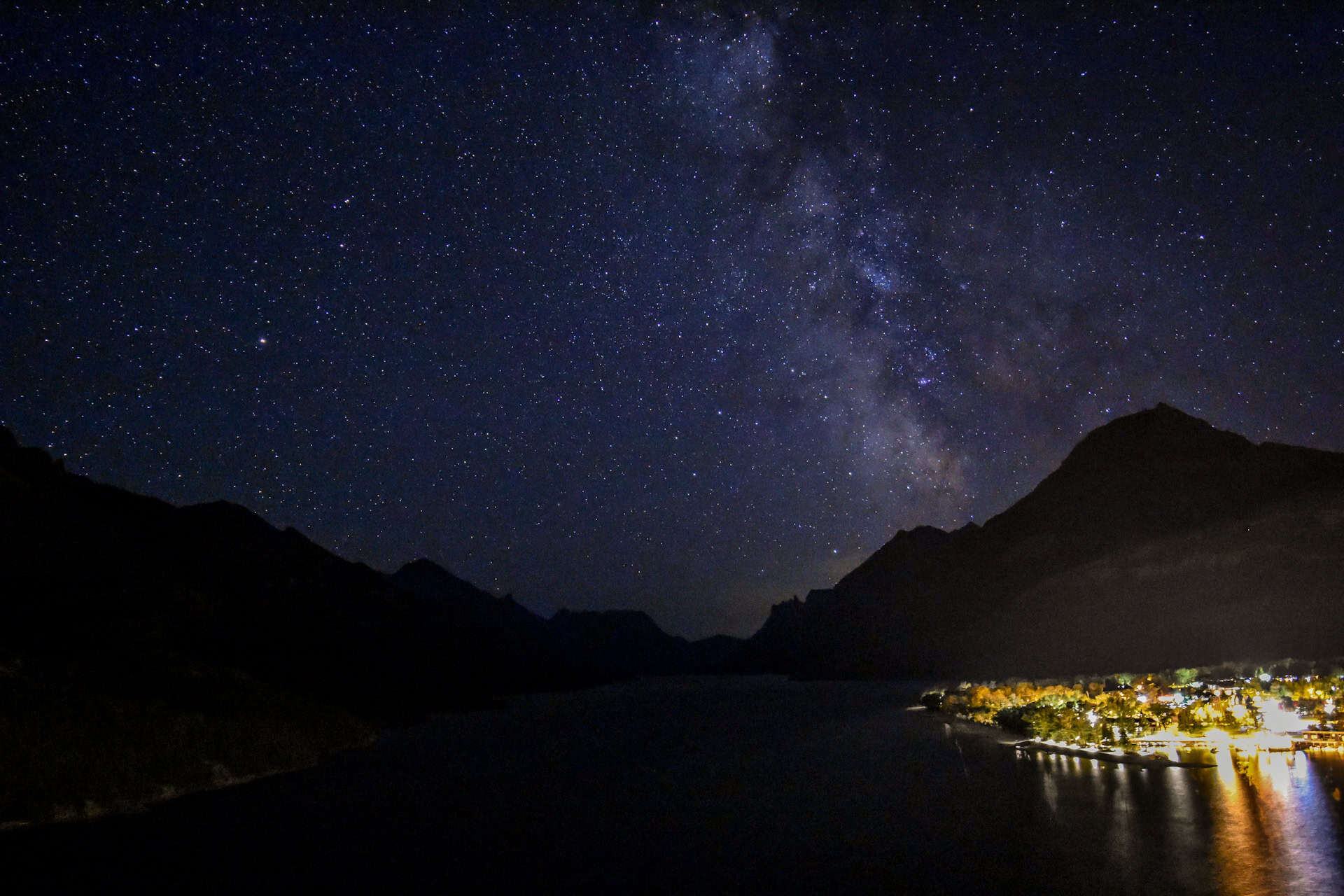
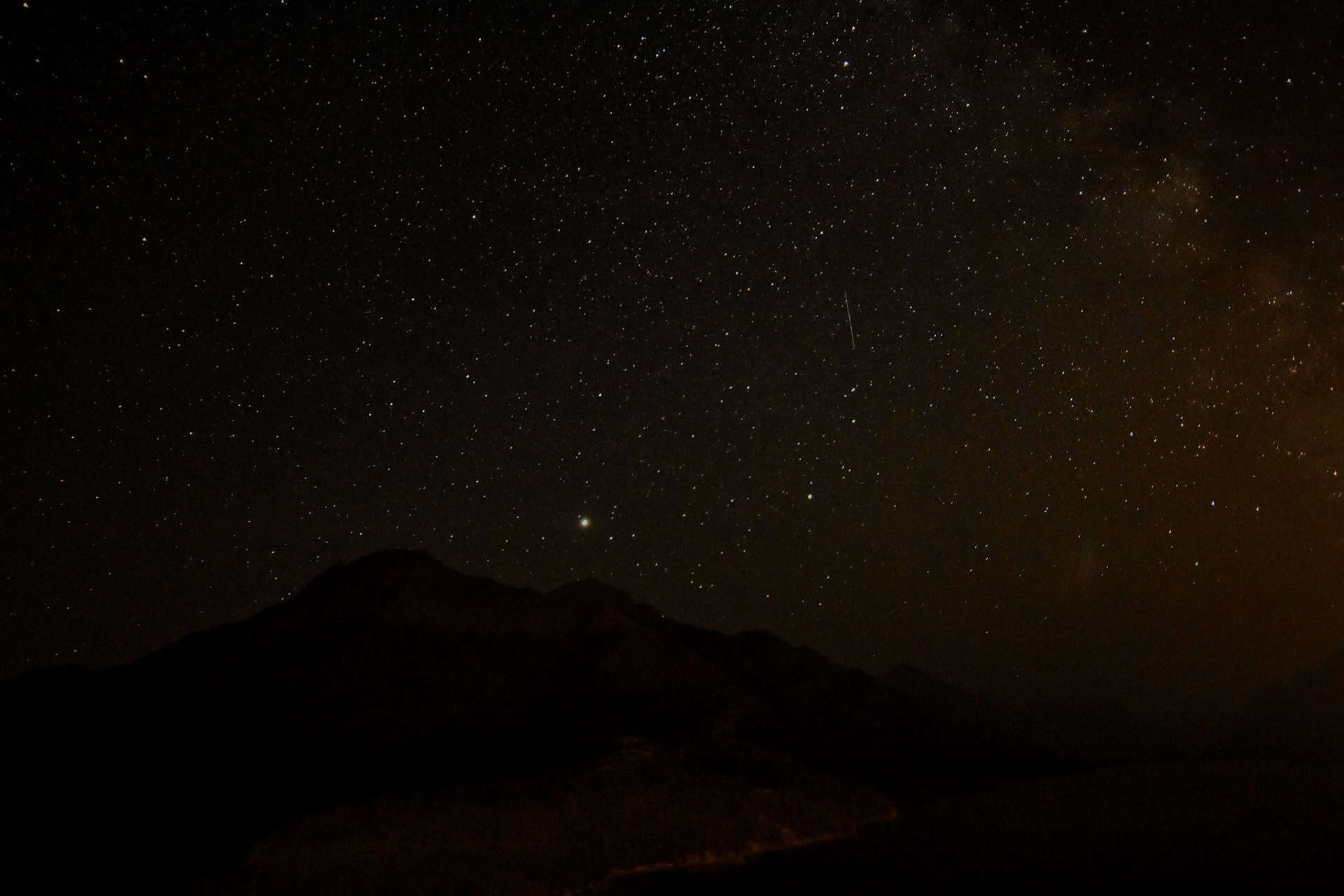
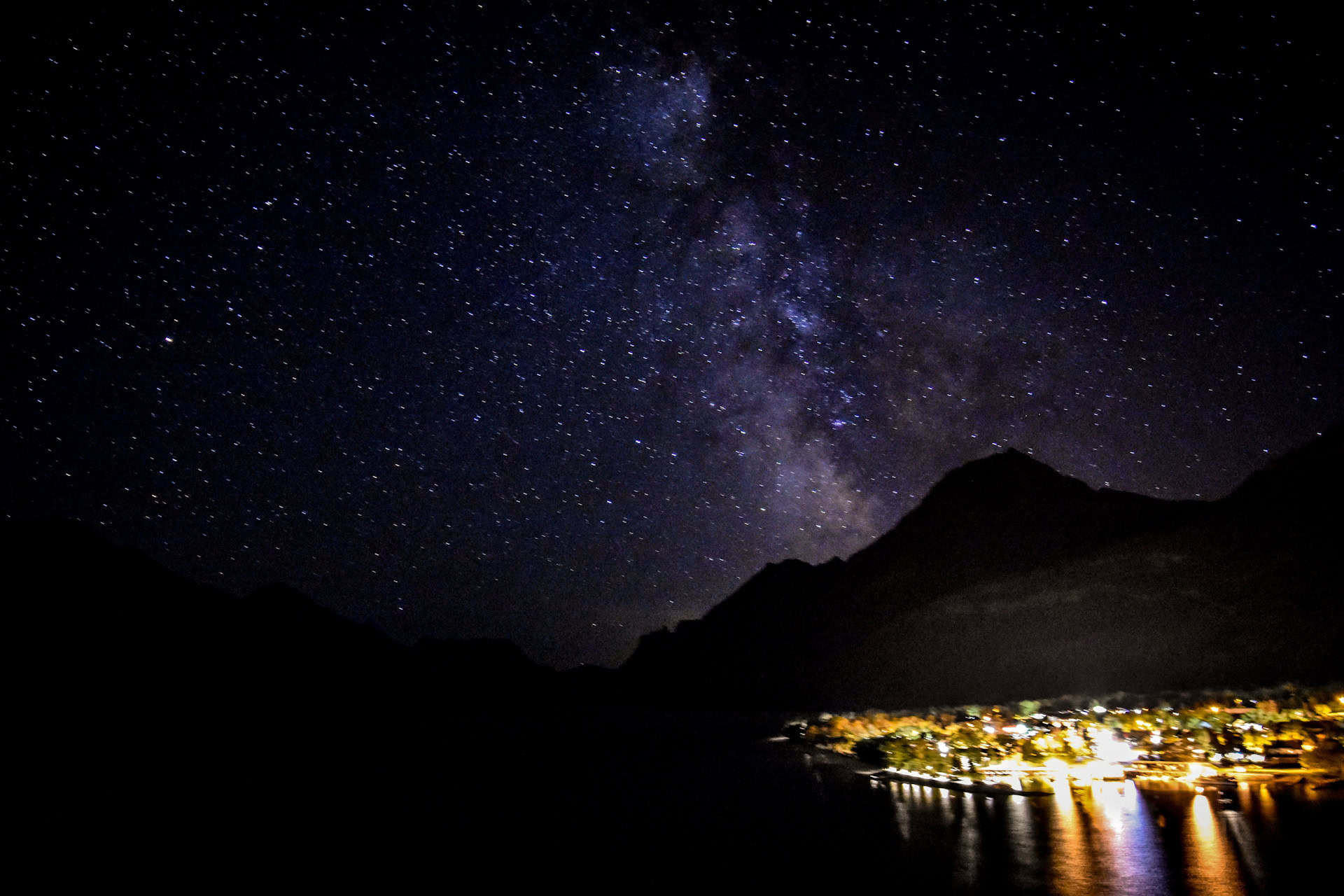
For a more secluded setting, you might want to drive out to one of the pullouts along the Red Rock or Akamina Parkways, or set up near the Bison Paddock overlook. Regardless of where you go, we recommend bringing a headlamp with a red-light mode to preserve your night vision, and to dress warmly even in midsummer since nighttime temperatures can drop quickly.
Now, we are not expert astrophotographers, but we were still able to get decent shots of the Milky Way. If you are new to this, you’ll definitely want to plan for long exposures and pack a sturdy tripod.
The Milky Way is at its most vibrant from late spring through early fall. You might want to check the park’s event calendar for occasional astronomy programs or ranger-led night walks, where staff provide telescopes and share tips for spotting constellations and planets. Whether you’re capturing a time-lapse of stars wheeling over the Rockies or simply lying back to count shooting stars, Waterton’s dark skies are a memorable part of any visit.
Around the Townsite Attractions
You don’t have to venture far to soak up Waterton’s charm, as many of the park’s most enjoyable experiences are steps from cafés and shops. Start with the Townsite Loop Trail, a flat, scenic path that circles the village and hugs the lakeshore. It’s an easy hour-long stroll with constant views of Upper Waterton Lake and the surrounding peaks, plus a quick detour to Cameron Falls, a beautiful cascade right at the edge of town that’s lit dramatically in the evening. If yuo want to extend your walk, follow the Kootenai Brown Trail, a paved path that extends beyond the village toward the park gates.


On warm days, a great activity is just to spread a blanket on one of the pebble beaches that line the lakeshore, where the sweeping mountain backdrop makes it a perfect picnic spot.


Although we generally prefer outdoor activities, a good rainy day option is the Dark Sky Planetarium, a small but impressive facility offering interactive shows about the night sky—a great complement to the park’s Dark-Sky Preserve status. For a deeper dive into the park’s natural and cultural history, drop by the Waterton Lakes Visitor Centre (newly completed in 2022), which features state-of-the-art and engaging exhibits, and up-to-date trail and wildlife information from Parks Canada staff.
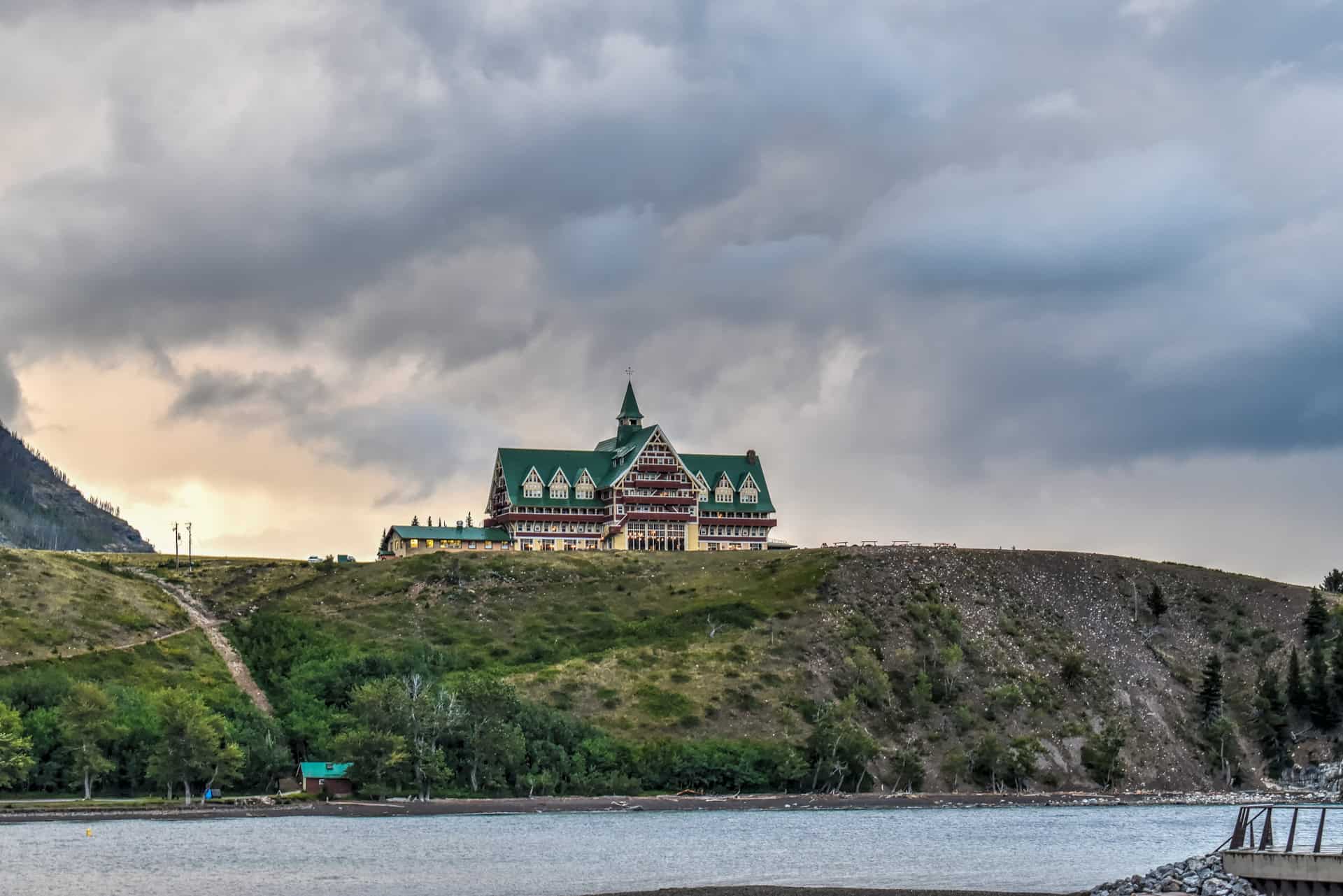
You can round out your visit with a stop at the Marina, where you can watch the Shoreline Cruise boats come and go or simply enjoy the view of Upper Waterton Lake framed by the Prince of Wales Hotel high above. With cafés, ice cream shops, and cozy restaurants within easy reach, the townsite is the perfect place to unwind after a day of hiking or to spend a relaxed evening soaking up the park’s mountain-and-lake atmosphere.
Prince of Wales Hotel
Perched dramatically on a windswept bluff above Upper Waterton Lake, the Prince of Wales Hotel is hard to miss—and absolutely worth a stop, even if you’re not staying overnight. Built in 1927 by the Great Northern Railway to lure well-heeled travellers from the United States, the hotel was named in honour of the future King Edward VIII and remains one of Canada’s classic grand railway hotels. Its Swiss-chalet architecture and jaw-dropping setting make it one of the most photographed spots in the park.
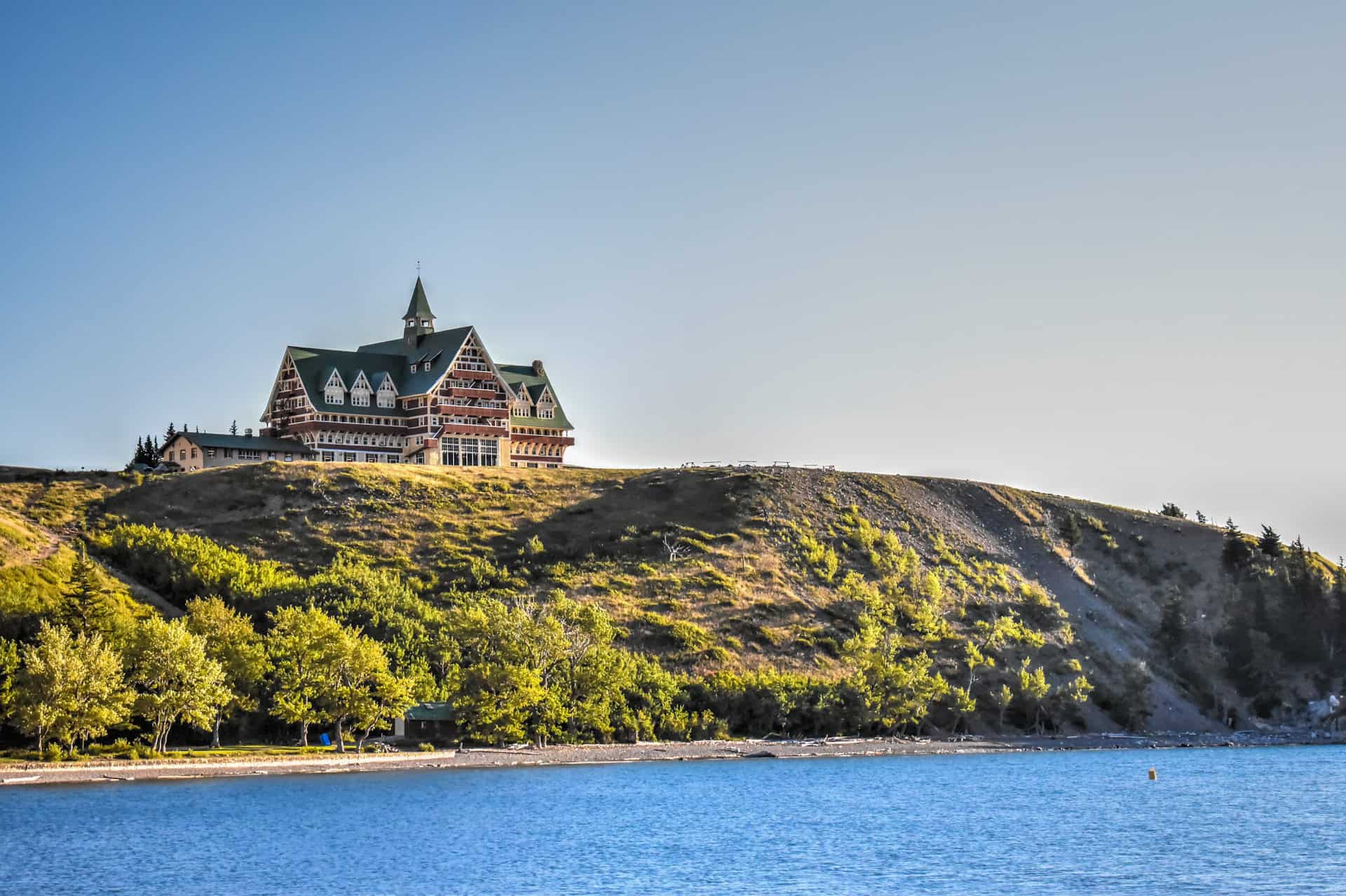


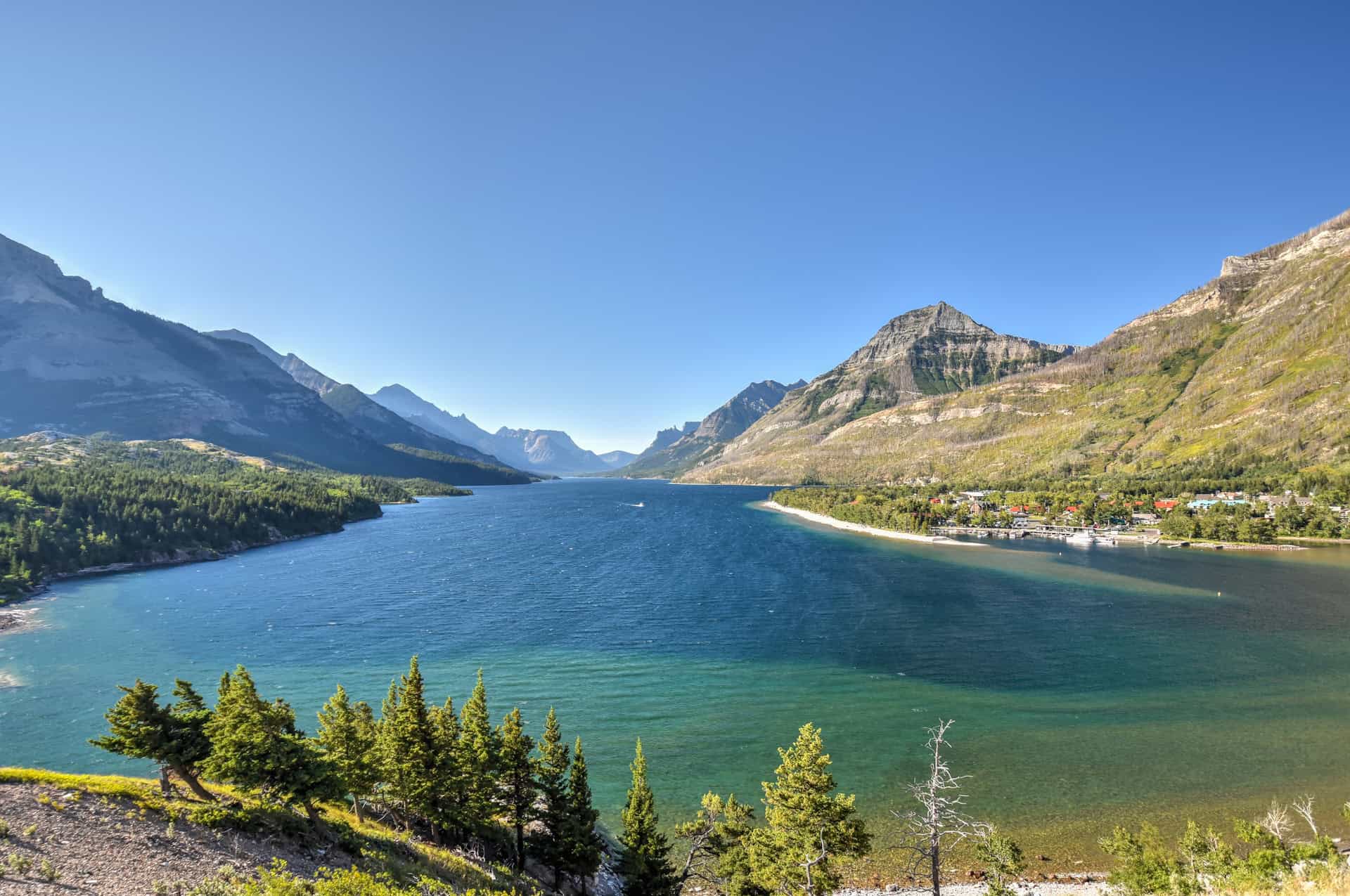
The views from the hilltop are spectacular. From the front lawn, you can see the entire length of Upper Waterton Lake stretching south into Montana’s Glacier National Park, while the mountains to the north catch the evening light in shades of gold and rose. Sunrise is equally beautiful, and it’s not uncommon to spot deer or bighorn sheep grazing on the slopes below.


If you’re in the mood for a treat, book afternoon tea in the Windsor Lounge, where fine teas, finger sandwiches, and pastries are served against a wall of floor-to-ceiling windows. It’s a long-standing tradition and a great way to linger over the view. Reservations are a smart idea in July and August when the hotel is busiest.
When you’re ready to stretch your legs, follow the Prince of Wales Loop Trail, an easy 1 km circuit around the bluff. Interpretive signs along the way share bits of local history and explain how wind and water shaped the landscape. Benches scattered along the route are perfect for soaking in different angles of the lake and townsite below.


How Long Should You Stay in Waterton Lakes National Park
Waterton Lakes National Park might be small, but it’s packed with things to see and do. Because it’s a bit off the beaten path compared to other Canadian parks, trying to squeeze it into a day trip usually isn’t worth it.
If you want to really soak in the hiking, scenic drives, and wildlife, plan for at least 2–3 nights. That’s enough time to tackle a few trails, paddle or boat on Cameron or Upper Waterton Lake, and casually watch for wildlife along the parkways without feeling rushed.
For those who love to explore, 4–5 nights is even better. You’ll have time to fully experience the park’s highlights, enjoy some hidden gems, and really appreciate why Waterton is such a special corner of the Rockies.
Waterton Visiting Tips
Cell Service
Cell service in Waterton Lakes National Park is limited and unreliable. While some cell service is available in the town of Waterton, it is generally spotty and may be unavailable in other areas of the park.
Leave No Trace
When visiting, stick to the designated path to protect the surrounding environment.
Bugs
The prairie-meets-mountain environment of the Waterton Lakes National Park means you can encounter both wetland-loving mosquitoes and sunny-meadow-loving horseflies when visiting Waterton Lakes National Park.
Late May – Mid June: Mosquito activity begins in low-lying, wet areas (near lakes, streams, marshy valleys).
Late June – Mid August: Mosquitoes are most active around dawn/dusk, especially near vegetation and water. Black and deer flies are worse during calm, sunny days in open areas.
Late August – September: Bug activity drops sharply as nights cool.
Ticks are also present in the park and the surrounding area. They are most active from April to June, especially in dry, grassy slopes.
In summary, be sure to pack insect repellent for your visit to Waterton. We can recommend visiting in late August, which is when we spent most of our time in Waterton, as we didn’t find bugs to be a nuisance during our time there.
Weather and Exposure
Waterton Lakes National Park is famously windy, and many trails—especially those in open areas—can feel the full force of it. Sections affected by the 2017 Kenow wildfire often lack tree cover, leaving hikers more exposed to the elements until significant regrowth occurs. This means you’ll need to be prepared for everything from intense sun (sunscreen and a hat are essential) to sudden rain showers. Dressing in layers and carrying rain gear is always a good idea, even on seemingly calm days.
Current Trail Conditions
Before undertaking a hike, be sure to check this page of the Waterton Lakes NP for up-to-date trail conditions and any notices of temporary trail closure.
Wildlife Safety
You may encounter wildlife along the trails, and it is important to know how to react in the presence of wild animals appropriately. Always maintain a safe distance from wildlife, whether deer, big-horned sheep, elk or wolves. Never attempt to feed wildlife, either: feeding wildlife in a Canadian national park is prohibited by law and may lead to a fine of up to $25,000.
Bears: Waterton Lakes National Park is bear territory, so you should carry bear spray at all times (keep it easily accessible in a bear spray holster) and know how to use it.
When possible, hike in groups, and try to make frequent noise while you hike to avoid surprise encounters.
Follow Waterton’s advisories and Trail Condition pages for more information on current bear sightings and trail closures.
For more tips on wildlife encounters and safety precautions, be sure to check out our guide on Wildlife Watching in Waterton.
Best Time (Months) to Visit In Waterton Lakes National Park
The best months to hike in Waterton are generally late May through early October.
June & September: These shoulder season months offer a good balance of pleasant weather and fewer crowds. You might encounter some rain or cooler temperatures, but you’ll also experience more tranquillity on the trails.
-Wildflowers will start to peak in late June.
-Mosquitoes can be quite active in June.
-Fall colours are apparent in late September.
July & August: Best weather (warmer, drier and more dependable) but more crowded trails – the park attracts around 500,000 visitors each year. Nearly 50% of visitors come in July and August.
-July is peak wildflower season.
-Bugs are still quite active in July, with their activity decreasing throughout August.
May and October*: These months are more unpredictable, with the possibility of snow, especially at higher elevations, and hiking may be limited to lower-elevation trails.
Quick Summary
If you want wildflowers and smaller crowds, late June to early July is ideal. Daylight hours are also significantly longer during these months, allowing you more time to explore every day.
If you want fall colors and fewer people, aim for mid-to-late September. Cooler temperatures make longer hikes more comfortable.
During the peak summer months, it’s best to go early in the morning or late in the afternoon to avoid the trail’s most crowded times.
Winter Activities in Waterton Lakes National Park
Though quieter in the colder months, Waterton is still a fantastic place to explore. Snowshoeing and winter hiking are popular, with trails like the Cameron Lakeshore offering relatively gentle routes through snowy landscapes. Keep in mind that many higher-elevation trails, including Bertha Lake, are closed or harder to access due to snow and avalanche risk. Note also that the Red Rock Parkway closes in winter, and the Akamina Parkway is partially closed in winter.
Wildlife watching in winter can be rewarding, as animals like deer, elk, and bighorn sheep remain visible against the snow. Early mornings or late afternoons often provide the best opportunities to spot them, while also enjoying the park’s peaceful, snow-covered scenery.
If you prefer a more relaxed pace, the townsite remains accessible for a winter stroll along the frozen lakeshore, exploring local shops, or visiting the Prince of Wales Hotel for a warm drink. Just remember that the park’s winter conditions can be harsh, so dress in layers, wear sturdy footwear, and check trail or road closures before heading out.
Where to stay in Waterton Lakes National Park
Unlike many national parks, Waterton Lakes National Park offers several lodging options right inside its charming lakeside townsite, putting visitors just steps from the trails, restaurants, and waterfront views. Staying within the park means you can enjoy sunrise and sunset over the lake without ever needing to drive far.
Prince of Wales Hotel – One of the most iconic places to stay in the park, this historic 1920s landmark is perched dramatically on a bluff overlooking Upper Waterton Lake. Its vintage interiors, elegant tea service, and panoramic views make it one of Canada’s most memorable national park lodges.
Bayshore Inn & Spa – For those who prefer to stay closer to the heart of the village, the Bayshore Inn & Spa offers modern comforts right on the lakefront — ideal for travellers who want easy access to restaurants, shops, and boat rentals.


Aspen Village – Meanwhile, the Aspen Village Inn provides a relaxed, family-friendly alternative with spacious rooms and great value, all within walking distance of the park’s main attractions.


Want to Discover More Hiking Trails In The Canadian Rockies?
You might be interested in these pages (coming soon):
Photography Gear
If you like our photography, you might be interested in some of the gear we use to shoot our travel and hiking destinations.
Camera Body – Nikon Z 6ii Fx-series Mirrorless Body
Main Lens – NIKON 24-120mm F/4G ED VR AF-S
Zoom Lens – Sigma 745-306 150-600mm f/5-6.3
Polarizing filters – Urth Circular Polarizing (CPL)
Camera Tripod – K&F Concept 64-inch Camera Tripod
Mini-tripod – Lammcou Flexible Camera Tripod
Camera/hiking backpack – Vanguard Alta Rise 48 Backpack
Universal Travel Adapter – VYLEE Universal International Power Travel Plug
Other Travel Essentials
Travel Insurance
SafetyWing is a travel insurance company that offers comprehensive coverage for travellers. Includes Medical Insurance and Travel Insurance. Primarily geared towards long-term travellers, digital nomads, and expats.
e-Sim cards
Airalo is the world’s first and largest eSIM store with eSIM plans for 200+ countries and regions worldwide. With Airalo eSIMs, travellers can get connected the moment they land at their destination and avoid nasty data roaming charges
eSIMS are a sustainable alternative to single-use SIM cards – they are 100% digital, require less energy to produce and be re-used rather than disposed of.
Car Rentals
Discover Cars is our go-to website for car rentals. We almost always find our preferred rate there.
Transfer from Airport
Welcome Pickups is our favourite private transfer service, which you can pre-book at a fixed price. Currently available in 220 cities all over the world (mostly in Europe, but with several major cities in Asia, the Middle East and the US).
Kiwitaxi is another private transfer service – we haven’t tried it yet, but it’s currently available in a few more countries (102 as of 2024).
Hotels and Accommodations (coming soon)
Photography Prints
If you found this blog useful, you can help support our blog by purchasing low-cost digital prints. Printed physical prints are also available for purchase.


—–
Well, that wraps it up! We hope you enjoyed our Best Things to Do in Waterton Lakes National Park guide and that it will prove useful for planning your hiking trip.
—–
You might also be interested in these related pages: