Cefalù is one of the most charming coastal towns in Sicily, known for its combination of sandy beaches, a historic old town, and a dramatic rocky backdrop.
Set along the northern coast, Cefalù blends relaxed seaside atmosphere with cultural highlights, including its Norman cathedral and the towering La Rocca that rises above the town.
Compact and easy to explore, Cefalù works well as both a day trip and a short stay, offering a good balance between sightseeing and time at the beach.
This guide covers the best things to do in Cefalù, along with how to plan your visit and make the most of your time here.
Cefalù Highlights – At a Glance
Why Visit Cefalù
– Beach + old town combo: One of the few places in Sicily where you can easily combine sightseeing with time at the beach
– Iconic backdrop: The old town sits beneath the dramatic La Rocca (which also offers a great short hiking trail), creating one of the most recognizable views in Sicily
– Historic sights: Home to a striking Norman cathedral and a compact, walkable historic center
– Great base: Well-positioned for exploring the nearby Madonie mountain villages
Good to Know
– Time required: 1-3 days, depending on how much beach time you want, and if you plan on visiting the Madonie mountain villages
– Crowds: Popular beach destination, especially in summer
– Getting around Cefalù: Best explored on foot – the historic core is compact
– Parking: Parking is located outside the historic center, close to the beaches
– Driving: Restricted traffic (ZTL area) in the historic core
– Easy to reach from Parlermo: 1hr drive or train ride


Disclosure: This page (Cefalù Travel Guide) may contain product affiliate links. At no additional cost to you, we may receive a commission for purchases made through these links. More details can be found on our disclosure and policies page.
Cefalù: Location & Map
Cefalù, located on the northern coast of Sicily, east of Palermo, sits right along the Tyrrhenian Sea.
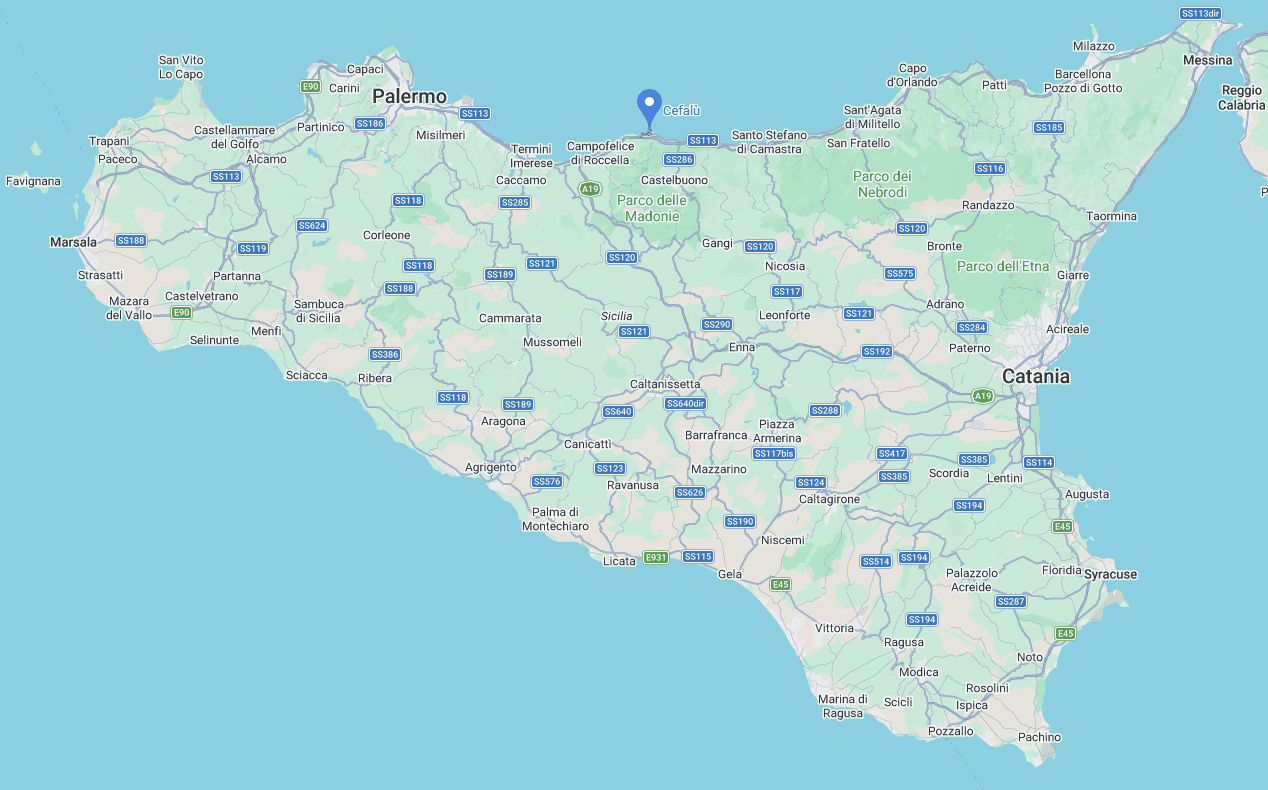
How to get to Cefalù
By Car: Driving is a convenient option, especially if you’re exploring multiple destinations across Sicily.
From Palermo: 70 km (1 hour)
From Catania: 180 km (2h15-2h30)
From Siracusa: 230 km (2h30-3 hours)
If you need to book a rental vehicle for your travels, we highly recommend using Discover Cars to get the best rates on your rental in Sicily.
We also highly recommend Airalo (eSIM card) for your connectivity needs when travelling abroad. Airalo is the world’s first and largest eSIM store with eSIM plans for 200+ countries and regions worldwide.
By Public Transit: Cefalù is very well-connected by train, making it one of the easiest places to visit in Sicily without a car.
Frequent trains (Trenitalia) run along the northern coast, especially between Palermo and Cefalù (about 60-70 minutes), with additional connections from Messina and eastern Sicily.
The train station is located just a short walk from the historic center, making it a very convenient option for travelers who are not road-tripping.
Buses to/from Palermo are also available, but generally slower and less convenient than the train in our opinion.
Group Tour: Visiting Cefalù as part of a guided day trip from Palermo is a convenient option, especially if you prefer not to handle parking or transportation logistics. Many tours, such as this one, also combine Cefalù with Monreale:
Driving in Cefalù: ZTL Areas (Restricted Traffic)
Like many historic towns in Sicily, Cefalù has a ZTL (Zona Traffico Limitato) in its historic center.
The restricted area covers the compact old town near the waterfront, where vehicle access is limited to residents and authorized vehicles. Unauthorized entry can result in fines (typically around €100 including fees).
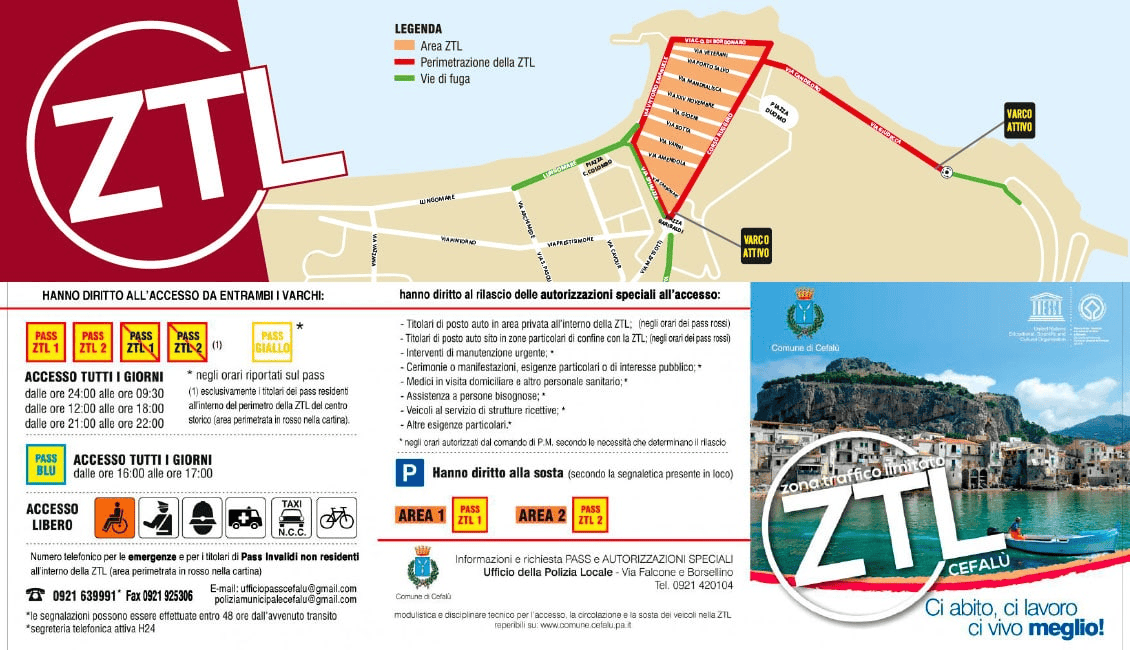
Driving into the historic center is not recommended. If your accommodation is inside the ZTL, confirm that they can register your license plate in advance.
Parking in Cefalù
Cefalù is much easier to navigate than larger or hilltop towns, but parking near the historic center can still be limited.
The best options are located just outside the old town:
- Parcheggio Lungomare Giardina (Paid – link to Google Maps)
A convenient option near the seafront, within easy walking distance of the old town. - Parking Historical Center Dafne Cefalù (Paid – link to Google Maps)
Located between the train station and the historical center - Parcheggio central park cefalú (Paid – link to Google Maps)
A good fallback option slightly further out, especially during busy periods.
Tip: During peak summer months (June–August), it’s still best to arrive early, as parking fills up quickly near the beach and historic center.
About Cefalù: A Brief History
Cefalù has a long history shaped by multiple civilizations, including the Greeks, Romans, Byzantines, Arabs, and Normans.
The town’s most defining period came under Norman rule in the 12th century, when the impressive Cefalù Cathedral was built. Commissioned by King Roger II, the cathedral is one of the finest examples of Norman architecture in Sicily and remains the town’s main landmark today.
Cefalù’s name is believed to derive from the Greek word kephale, meaning “head,” referring to the distinctive shape of La Rocca, the massive rock that rises behind the town and has played a key defensive role throughout its history.
Unlike many inland towns, Cefalù developed as a coastal settlement, combining maritime activity with a compact fortified center. Today, this blend of seaside setting, historic architecture, and natural backdrop is what defines Cefalù’s character.
Best Things to See and Do in Cefalù
Wander the Old Town
One of the best things to do in Cefalù is to wander through its compact historic center.
The old town is made up of narrow streets, small piazzas, and weathered buildings that open up toward the sea, giving it a more relaxed and lived-in feel than many of Sicily’s other tourist destinations. As you explore, you’ll come across a mix of local shops, cafés, and viewpoints, often with glimpses of La Rocca rising above the town.


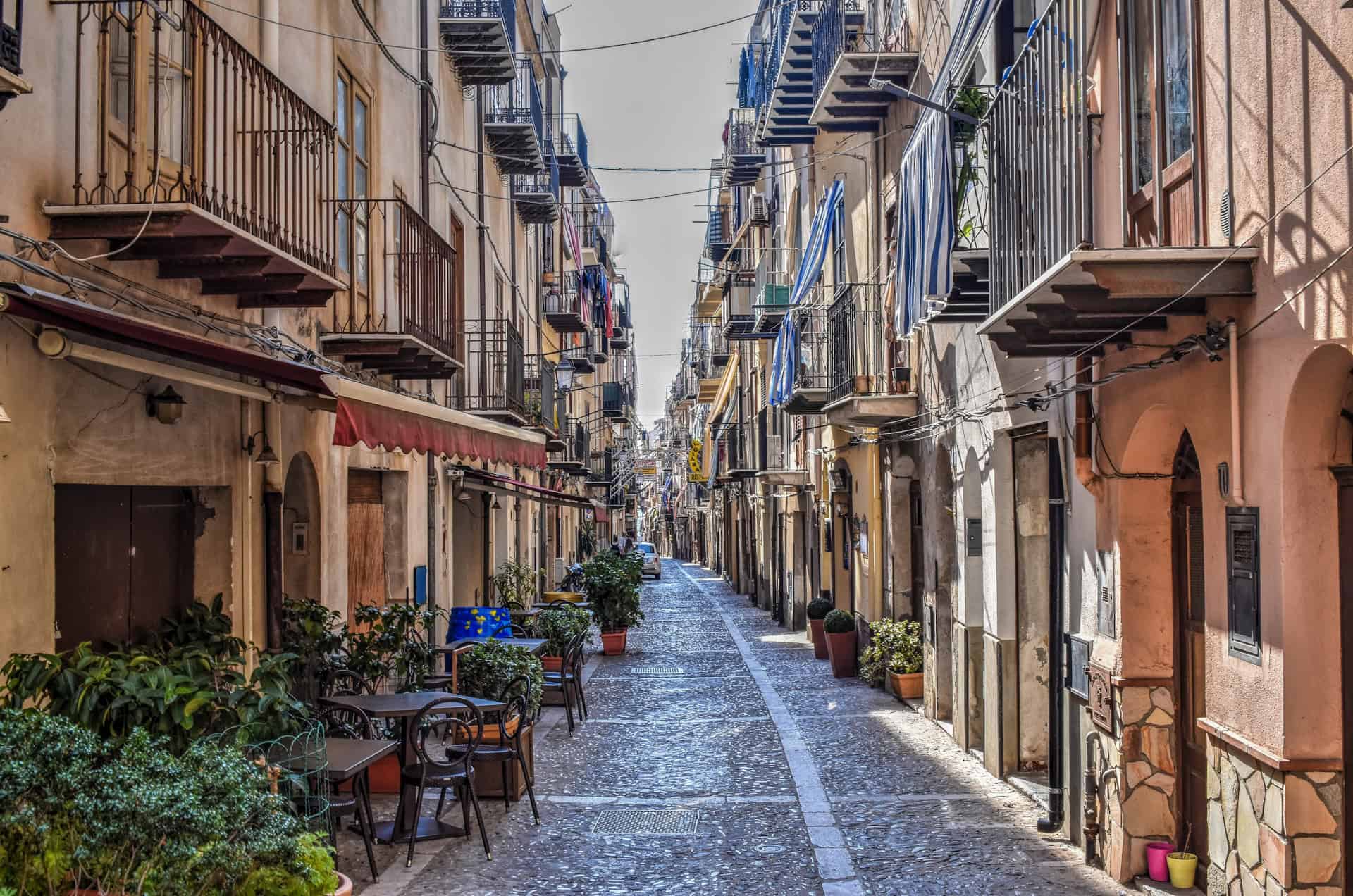
The area is easy to navigate, and you’ll naturally find your way between the main sights, the waterfront, and the cathedral. Like many places in Sicily, there’s no need for a strict plan here; wandering is part of the experience. This historic core is quite compact, so it’s almost impossible to get lost. You should be able to cover most of the old town’s streets in an hour or less.
Cefalù Cathedral (Duomo di Cefalù)
The Duomo di Cefalù is the old town’s main landmark and one of the most important Norman monuments in Sicily. Built in the 12th century under King Roger II, its imposing façade dominates the main square and is often the focal point of a visit to Cefalù.
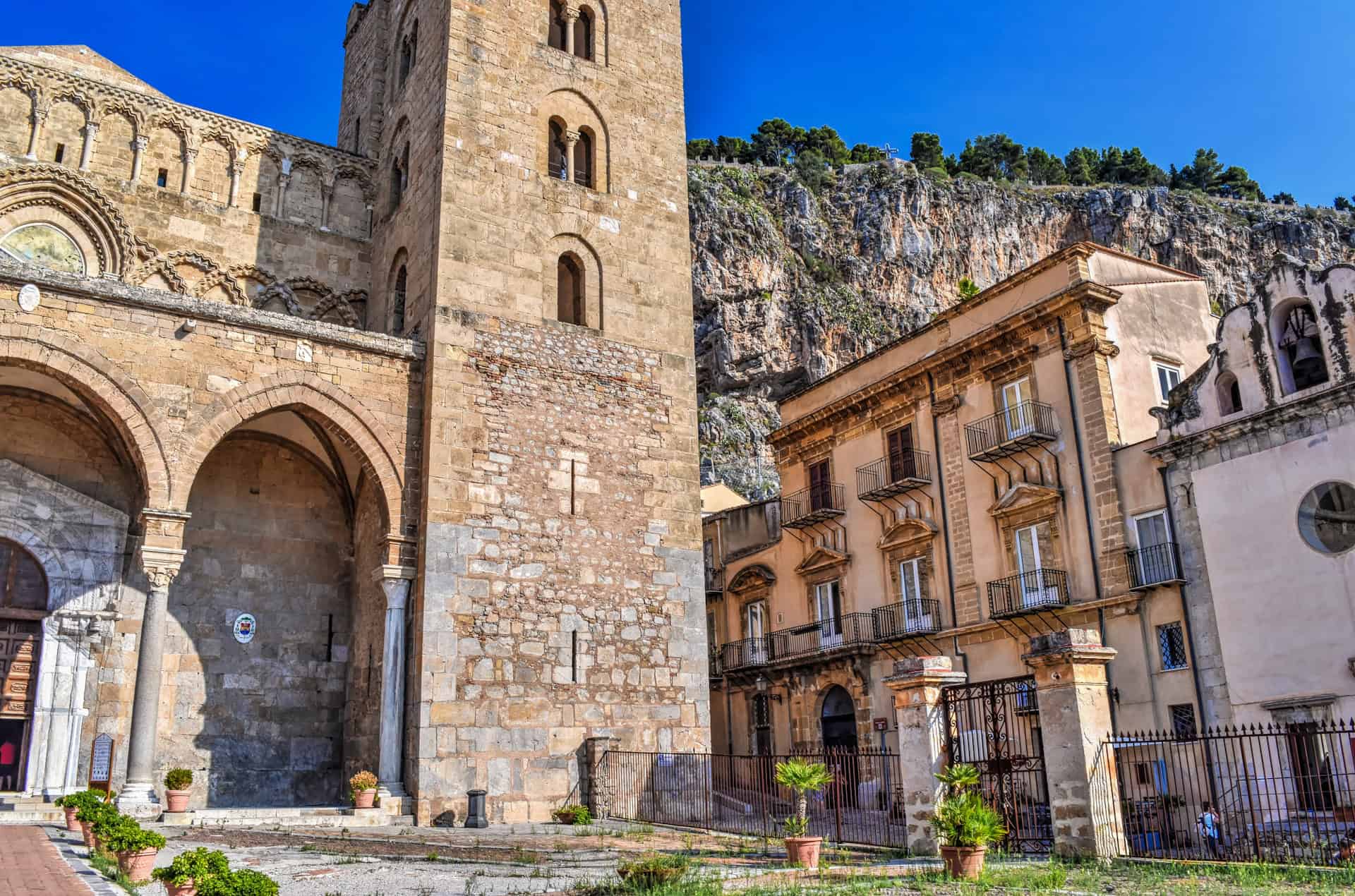


Entry to the cathedral itself is free, and the interior is well worth a visit, especially for the stunning Christ Pantocrator mosaic that fills the apse—one of the finest Byzantine mosaics in Sicily.
For those wanting more, a series of paid “itineraries” provide access to additional areas such as the towers, rooftop, and museum:
- Red Itinerary (€13): Most complete option, including the towers, cathedral roof, museum, Episcopal Chapel, and Canons’ Cloister
- Blue Itinerary (€10): Focused on access to the towers and cathedral roof (best option for views)
- Green Itinerary (€10): Includes the museum, Sansoni Hall, Bishop’s Chapel, and Canons’ Cloister
If your main goal is views over the town and coastline, the Blue (or Red) itinerary is the one to choose.
Molo di Cefalù & Harbor (Best Views & Sunset)
The Molo di Cefalù is one of the best and easiest viewpoints in Cefalù.
This long pier extends out from the old town and is a popular spot for walking, sunbathing, and swimming, with locals and visitors often jumping into the clear water below.
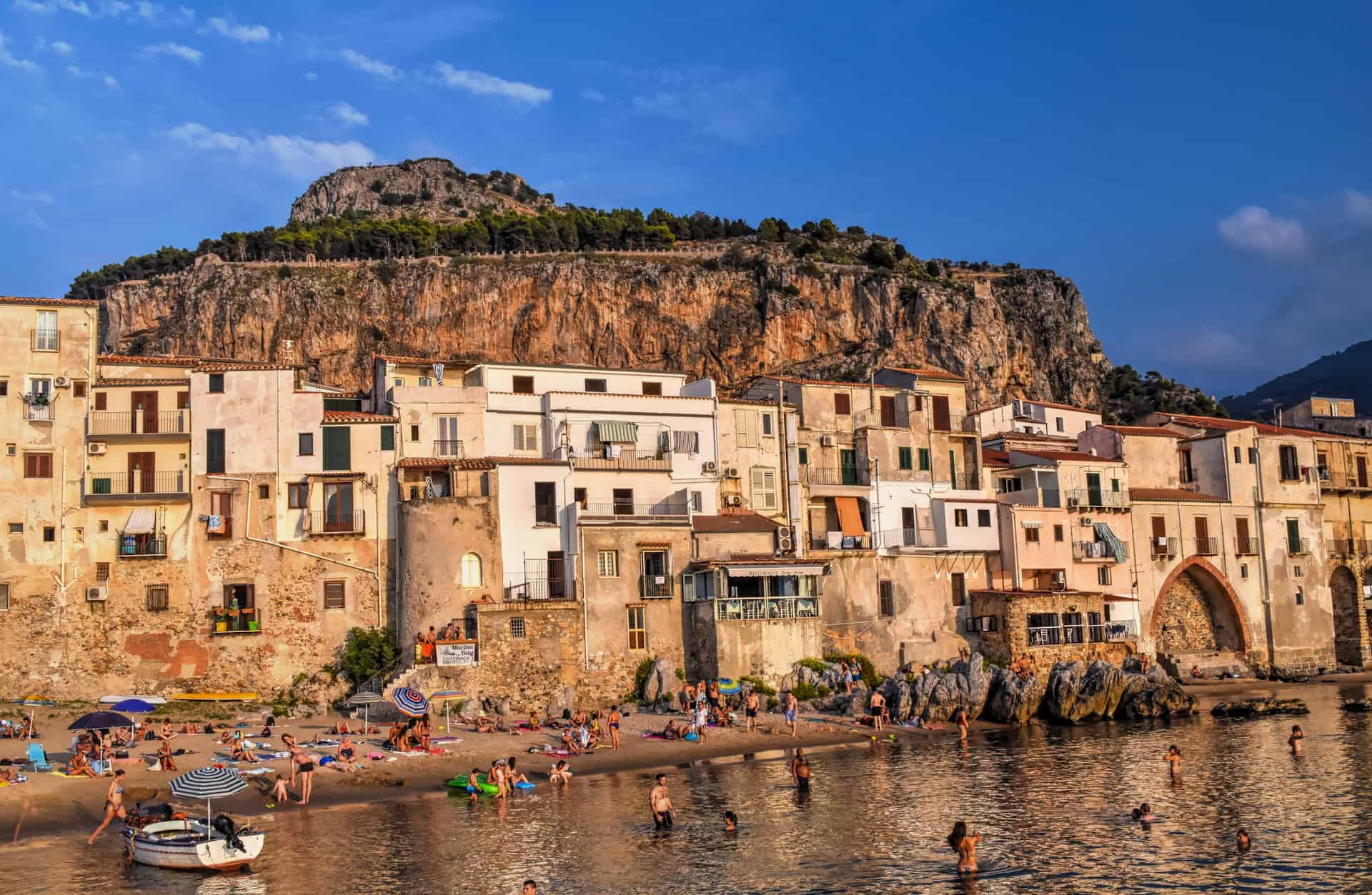
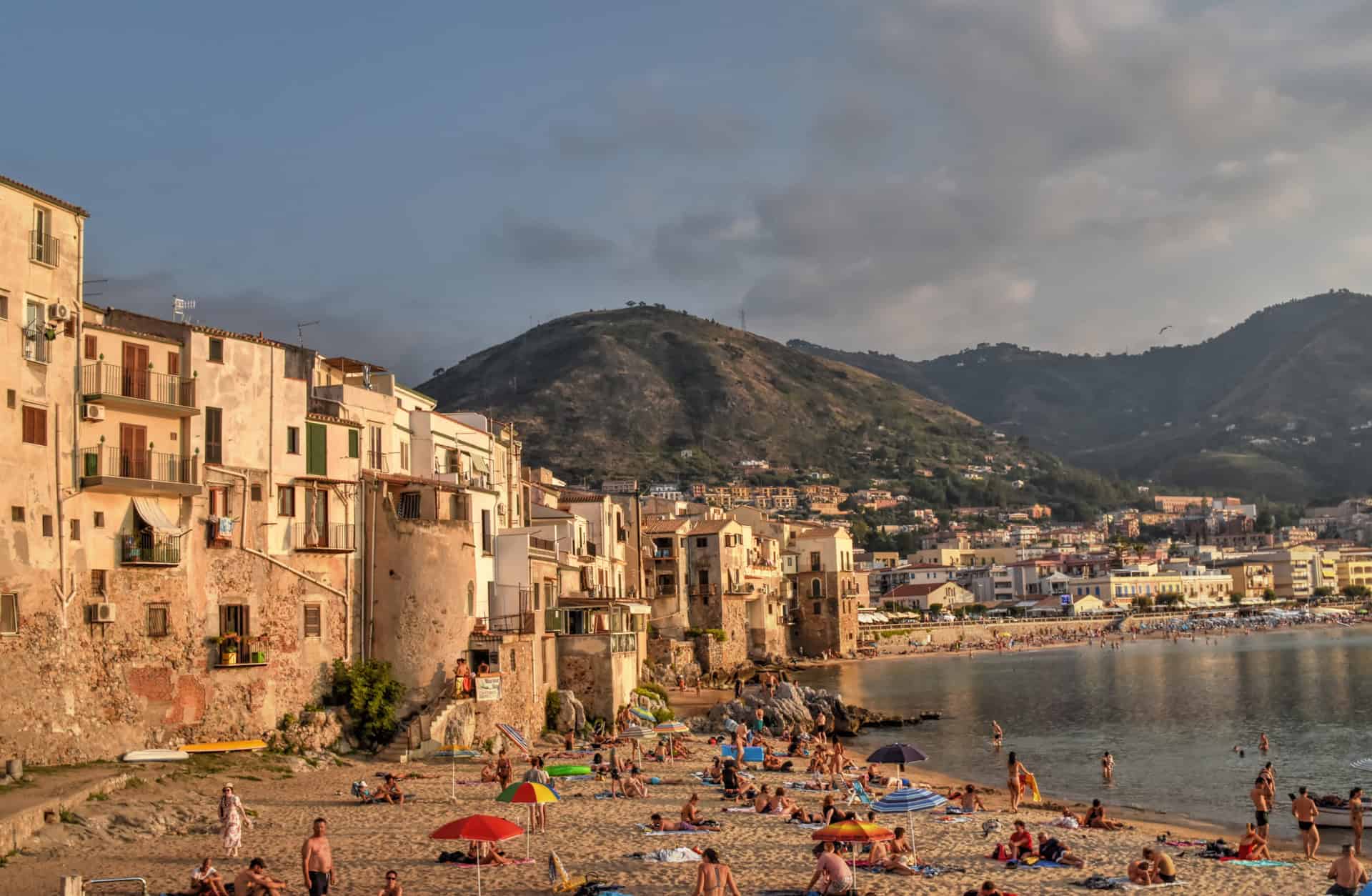
From here, you get one of the most iconic views of Cefalù, with the historic buildings lining the waterfront and La Rocca rising dramatically behind them.
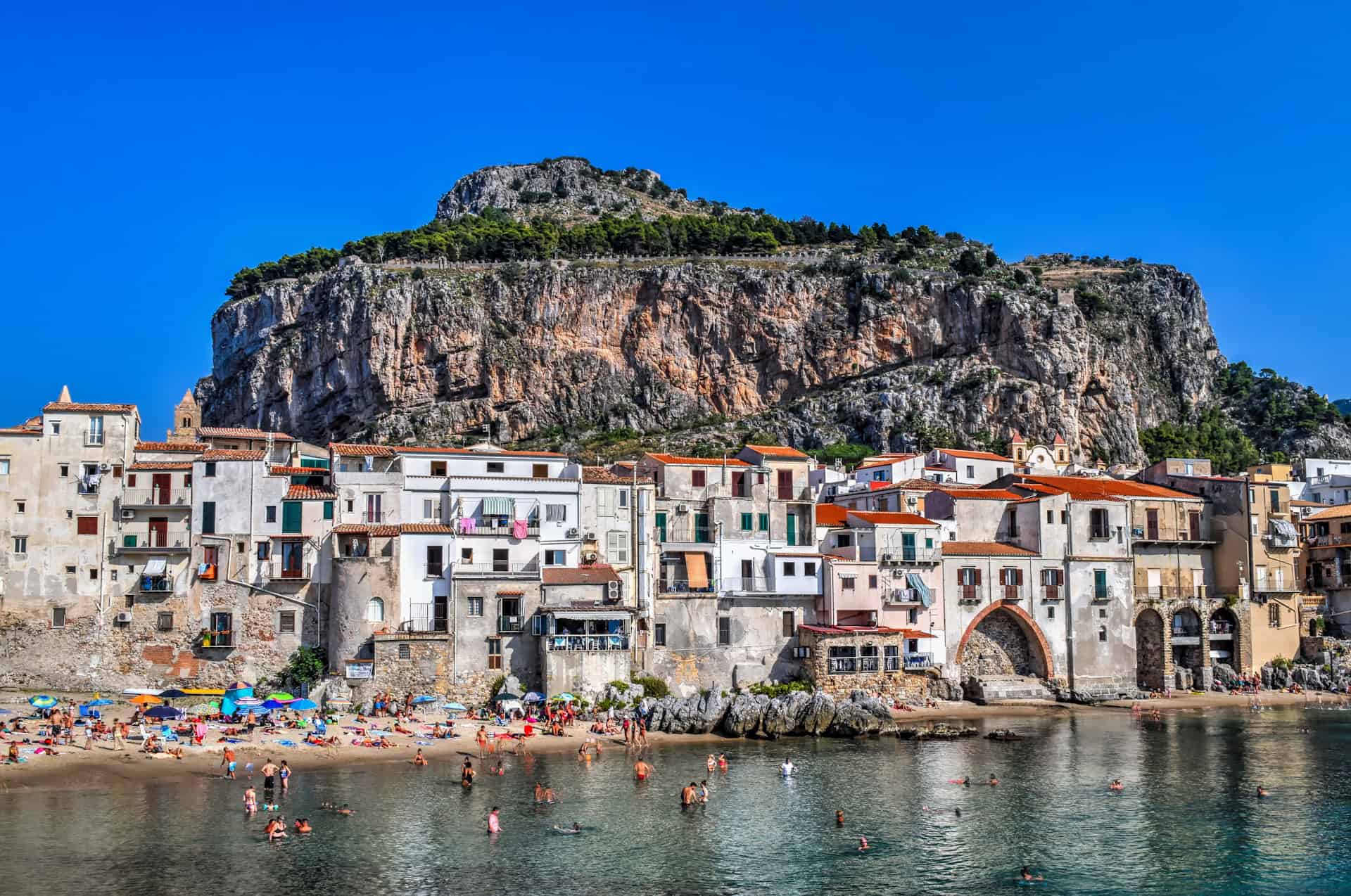
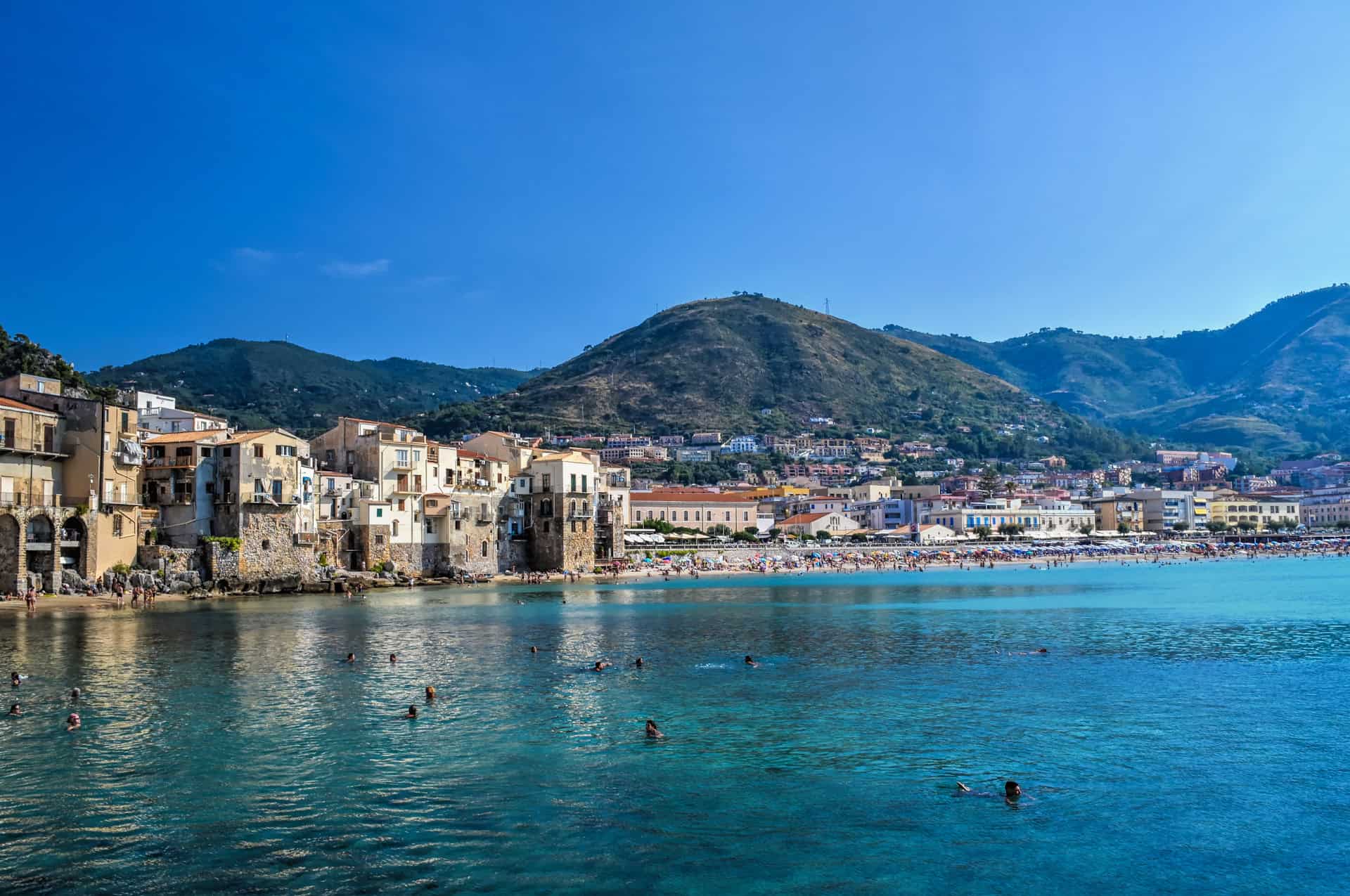


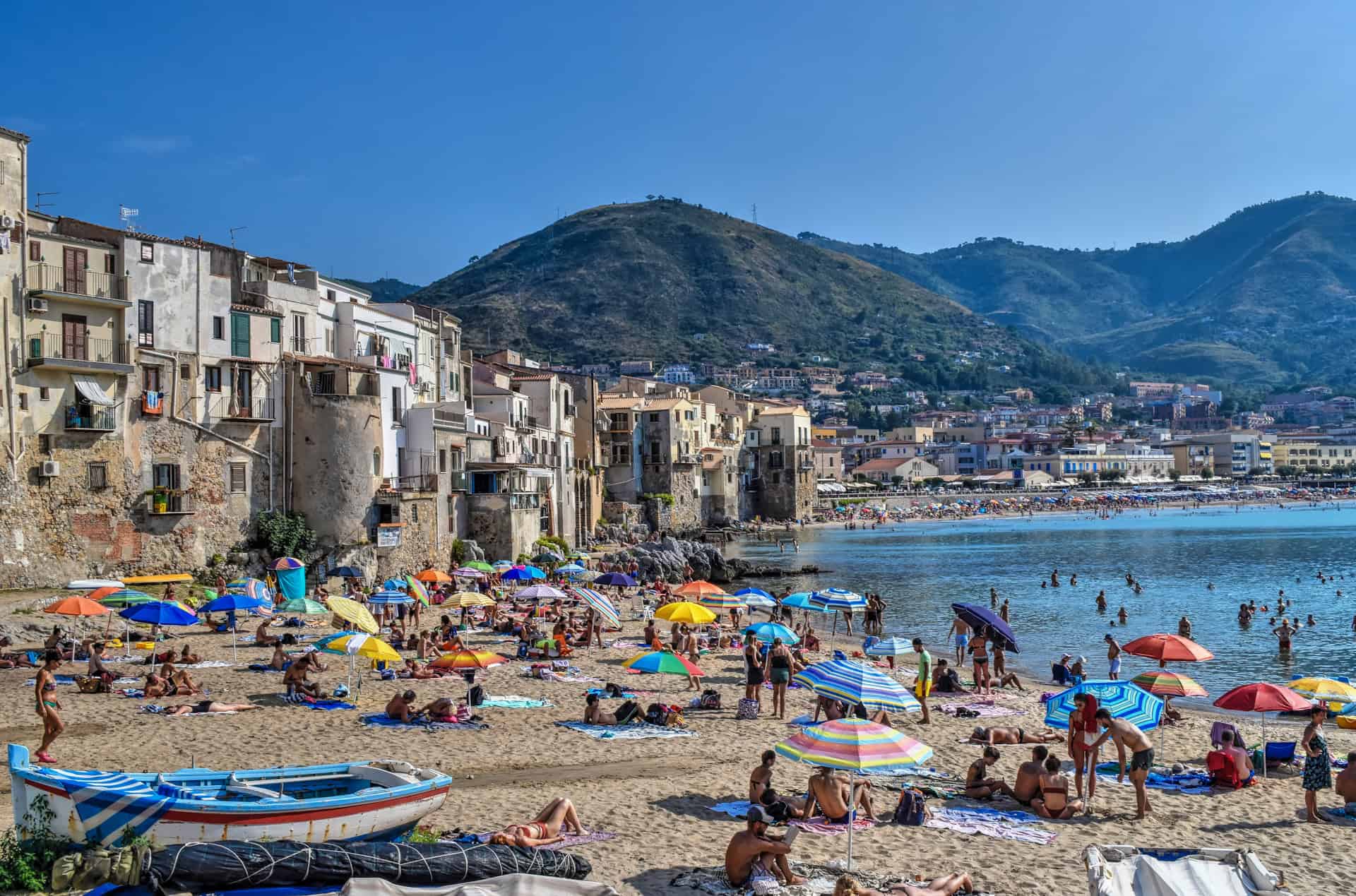
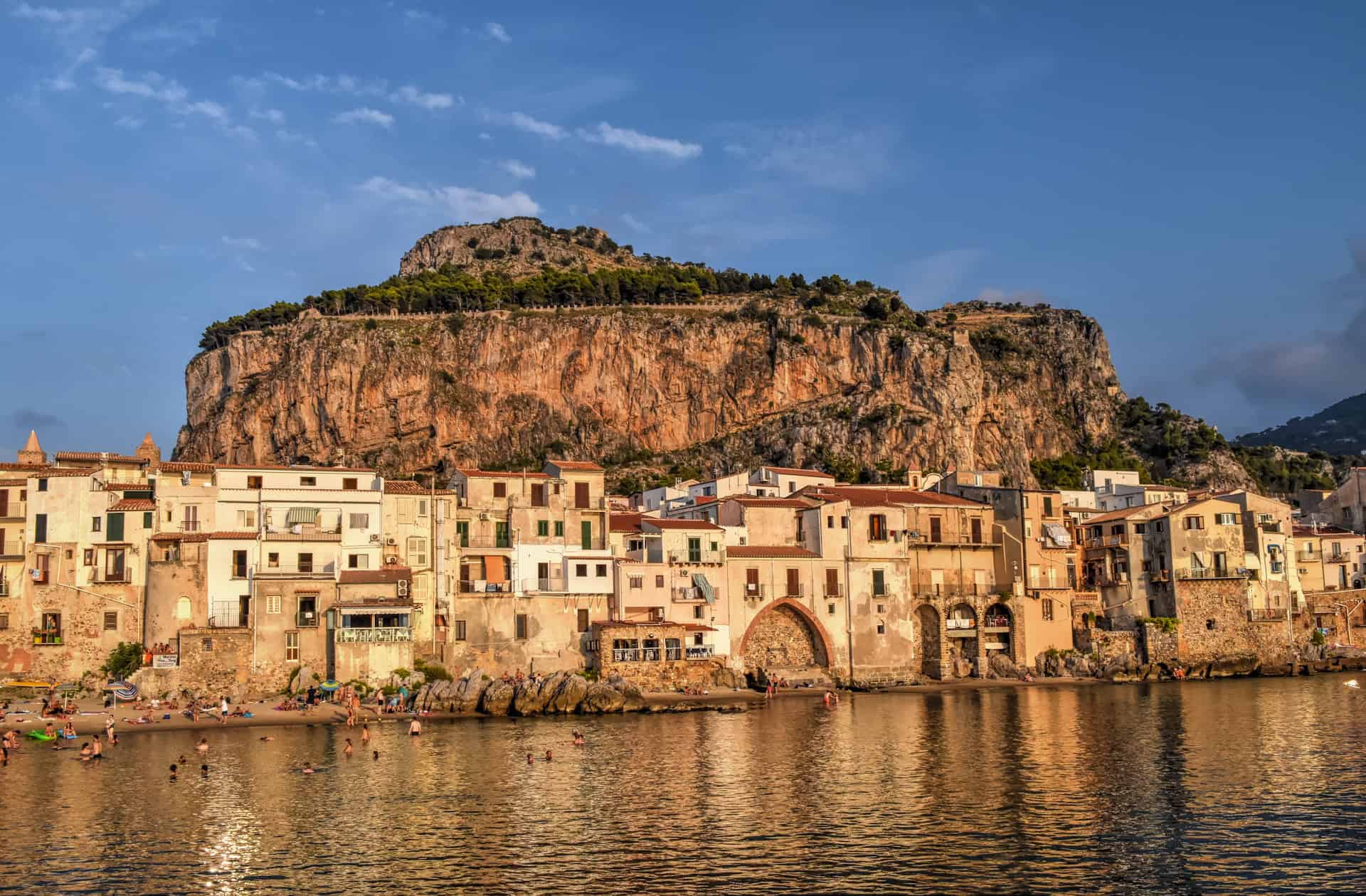
It’s also one of the best places in town for sunset, when the light hits the buildings and gives the entire coastline a warm glow.


Hike La Rocca
If you only do one active thing in Cefalù, make it this. It was one of our favorite hikes to do in Sicily, along with the trails in Zingaro Nature Reserve, near Scopello, two hours west of Cefalu.
Towering above the town, La Rocca is the defining feature of Cefalù’s landscape, and hiking to the top is one of the most rewarding experiences in the area.
What to Expect at the Top
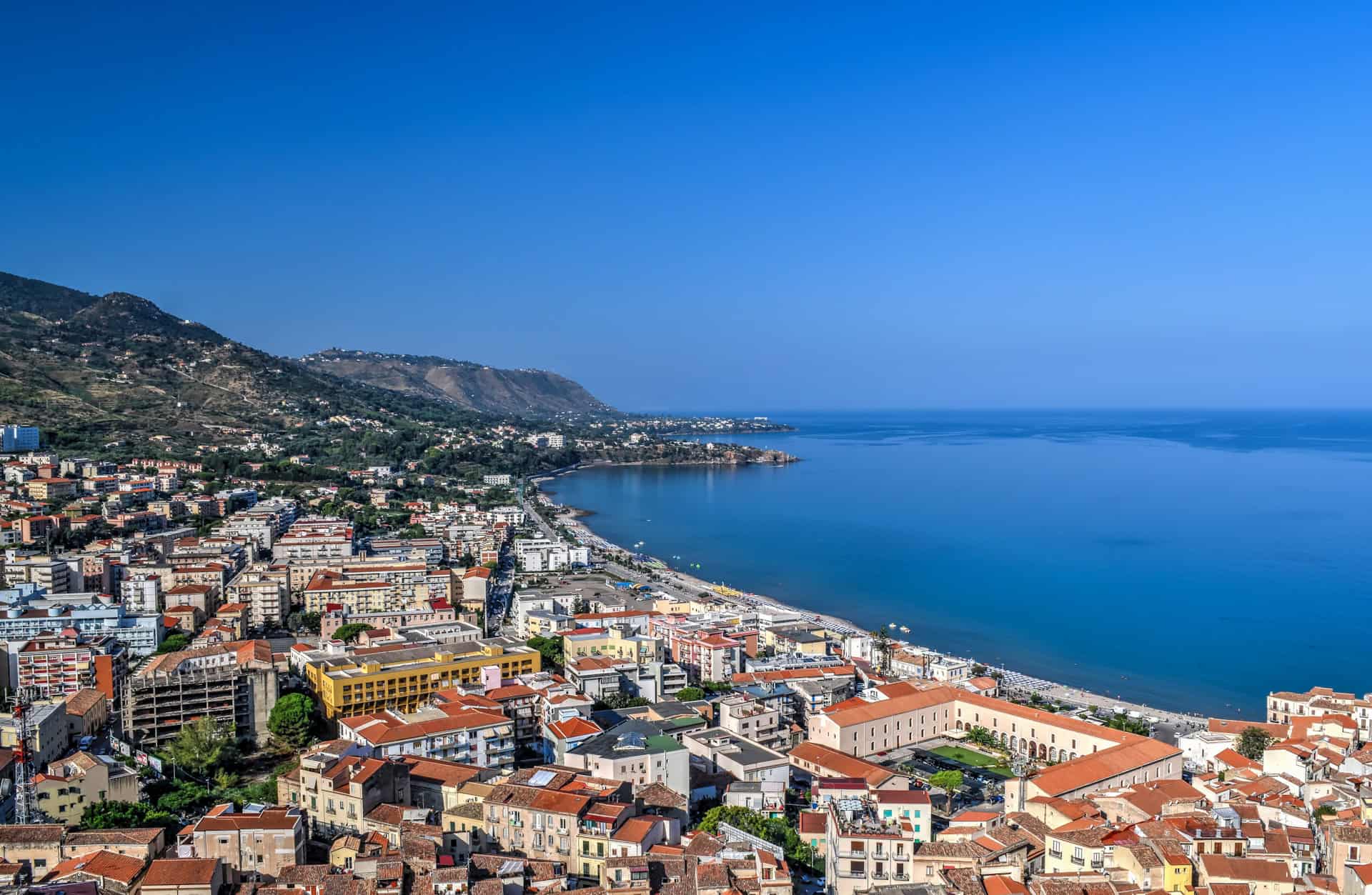
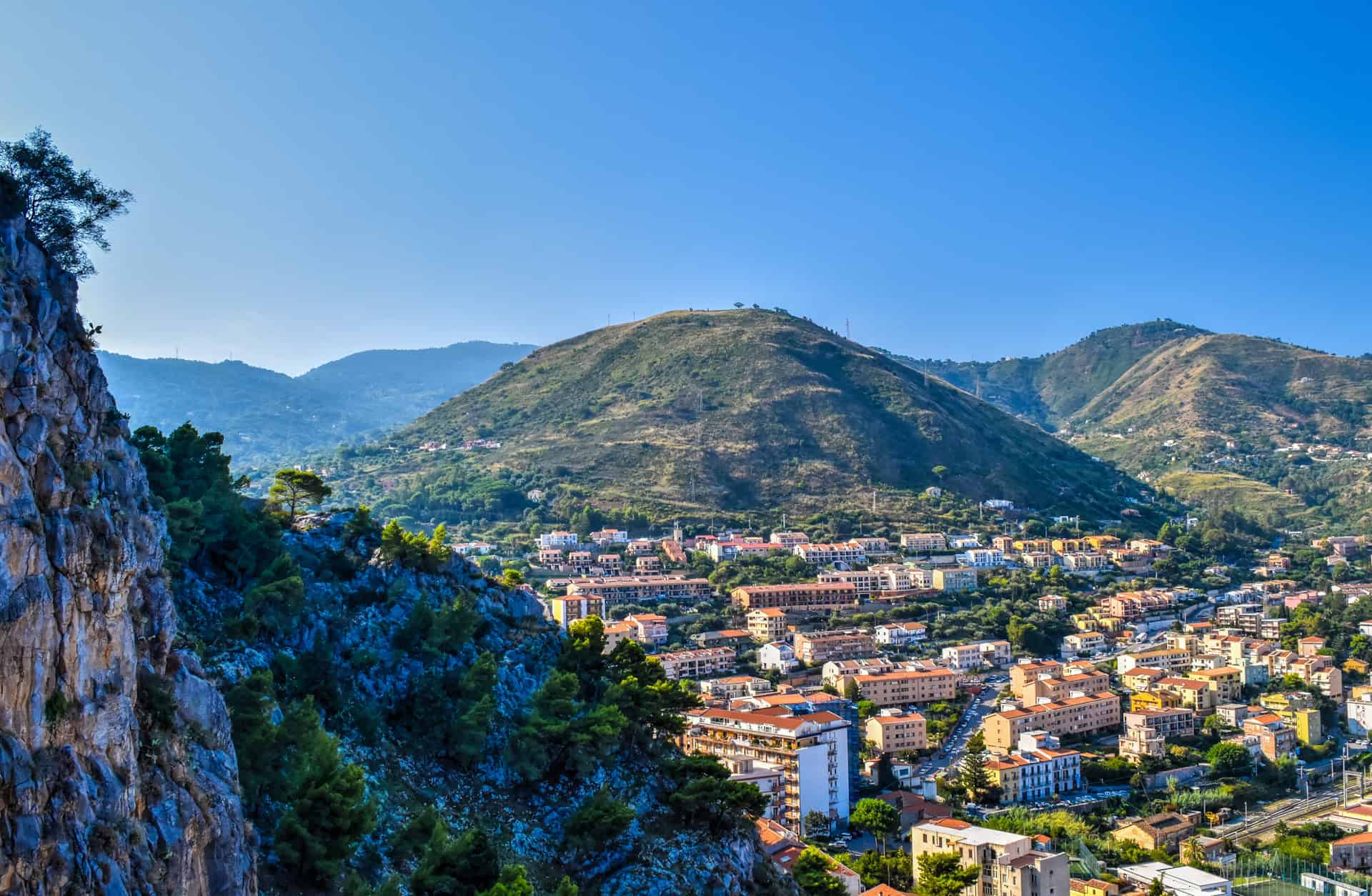
From the summit, you’ll get panoramic views over Cefalù, the coastline, and the surrounding countryside. It’s the best vantage point to fully appreciate how the old town sits between the sea and the rock.


Along the way and at the top, you’ll come across the remains of ancient defensive walls and fortifications that once protected the site, reflecting La Rocca’s long-standing strategic importance. You’ll also pass by the Temple of Diana, a megalithic structure dating back to the 9th century BC.


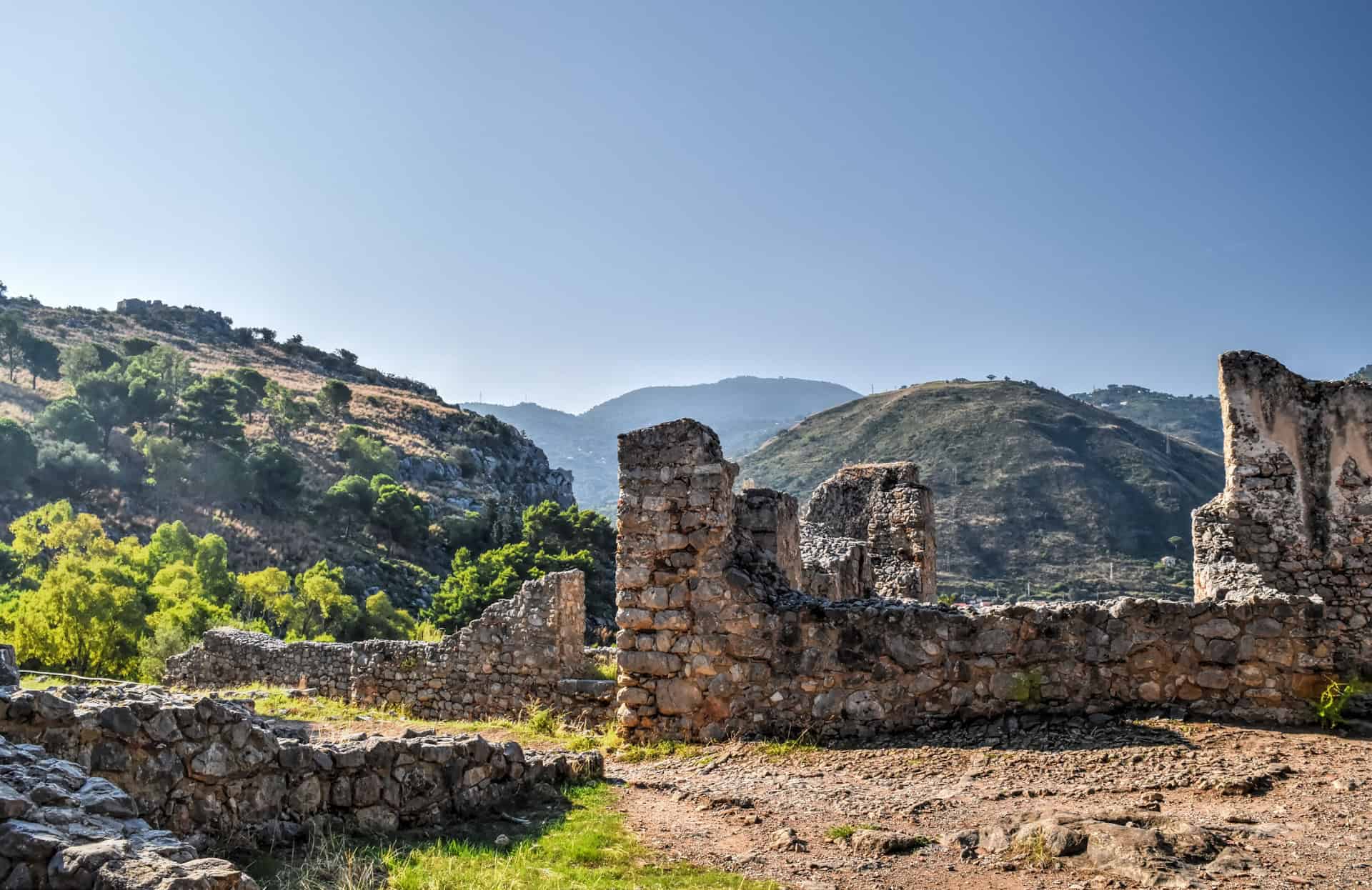
Despite its name, the Temple of Diana was likely not a traditional temple, but rather part of an early sanctuary or water-collection system, possibly linked to ritual practices. Its large stone blocks and hilltop position give it a distinctly ancient feel and make it one of the most intriguing stops along the hike.
The Hike: Distance, Time & Difficulty
- Distance: 3 km including return (about 2 miles)
- Time: 30-45 minutes up; slightly less going down
- Elevation Gain: 200 m (about 650 feet)
- Difficulty: Moderate (steep with uneven stone steps)
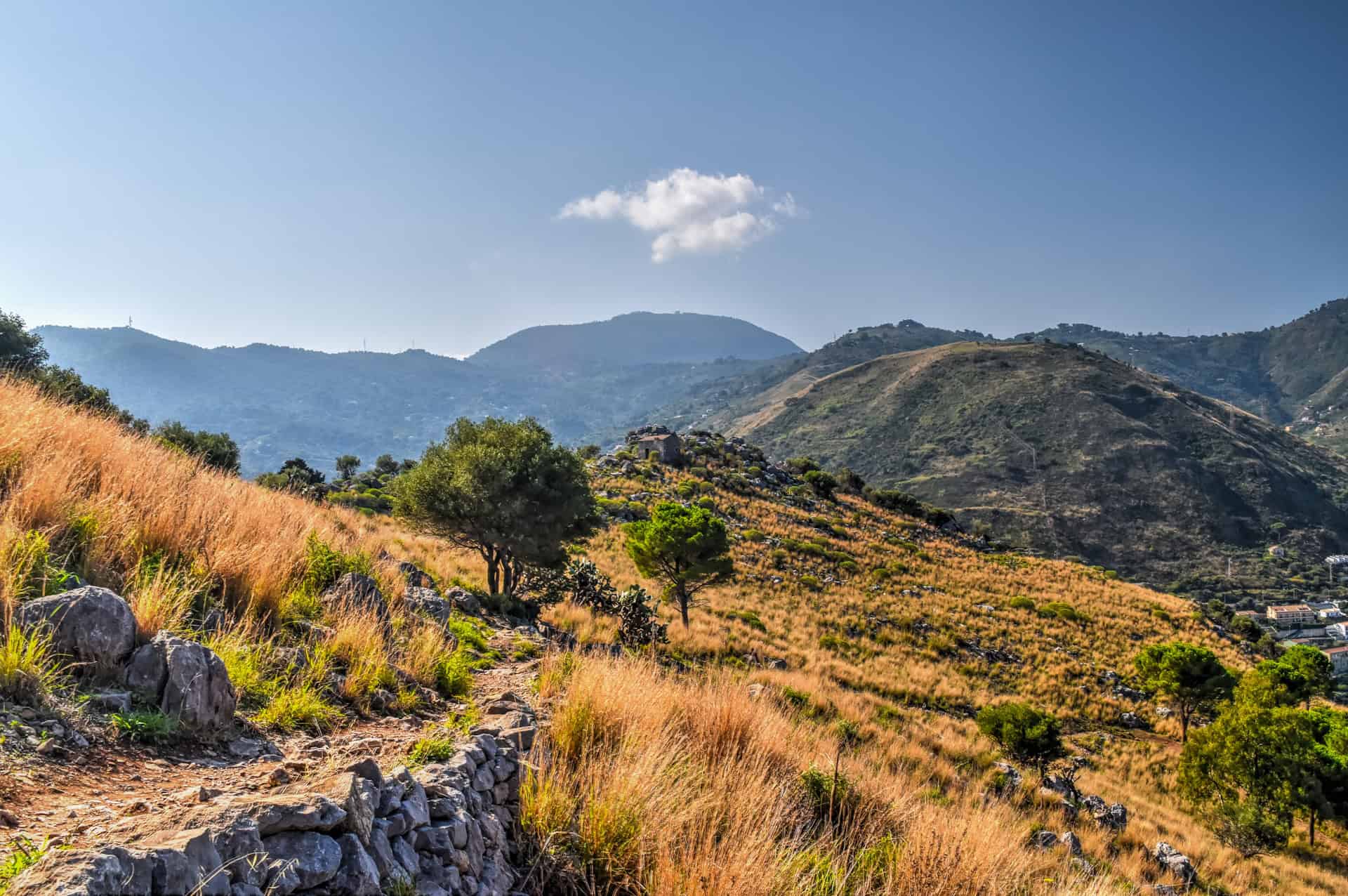
The trail starts just behind the old town (link to Google Maps) and quickly begins to climb through a series of switchbacks. While not technically difficult, the incline and exposed sections can make it feel more demanding, especially in the heat.
It’s best to go early in the morning or later in the day, especially in summer, and to bring water, as there is little shade along the route.


The Hike: Hours and Cost
Hiking La Rocca costs roughly €5 per adult (2026 rates – managed by Parco della Rocca di Cefalù).
- Summer (approx.): 8:00 am – 8:00 pm (last entry around 6:00 pm)
- Winter (approx.): 8:00 am – 5:00 pm (last entry around 3:00 pm)
- Open daily: Generally open year-round
Opening hours can vary, so it’s worth checking locally if visiting in the shoulder months.
Beaches in Cefalù
One of the main reasons to visit Cefalù is its easy access to the beach, something that’s relatively rare among Sicily’s historic towns.
The coastline runs directly alongside the old town, making it easy to switch between sightseeing and relaxing by the water.
Spiaggia del Porto Vecchio
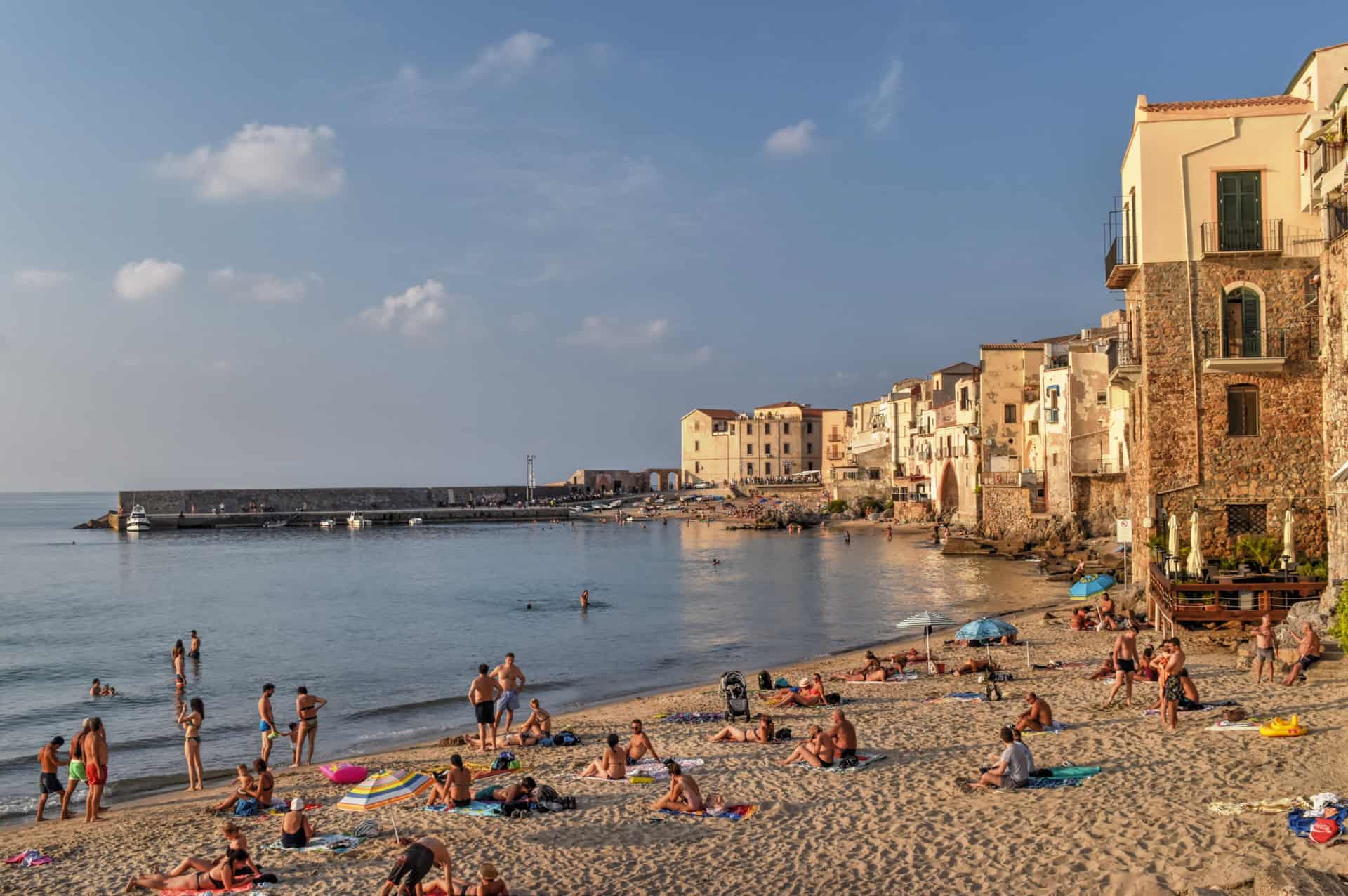
Located right next to the historic center, Spiaggia del Porto Vecchio is the most scenic beach in Cefalù.
From here, you get postcard views of the old town’s waterfront buildings with La Rocca rising behind them. It’s a smaller beach and tends to get crowded, but the setting makes it one of the most memorable spots in town.


Spiaggia di Cefalù
Stretching along the town’s seafront, Spiaggia di Cefalù is a much larger sandy beach.
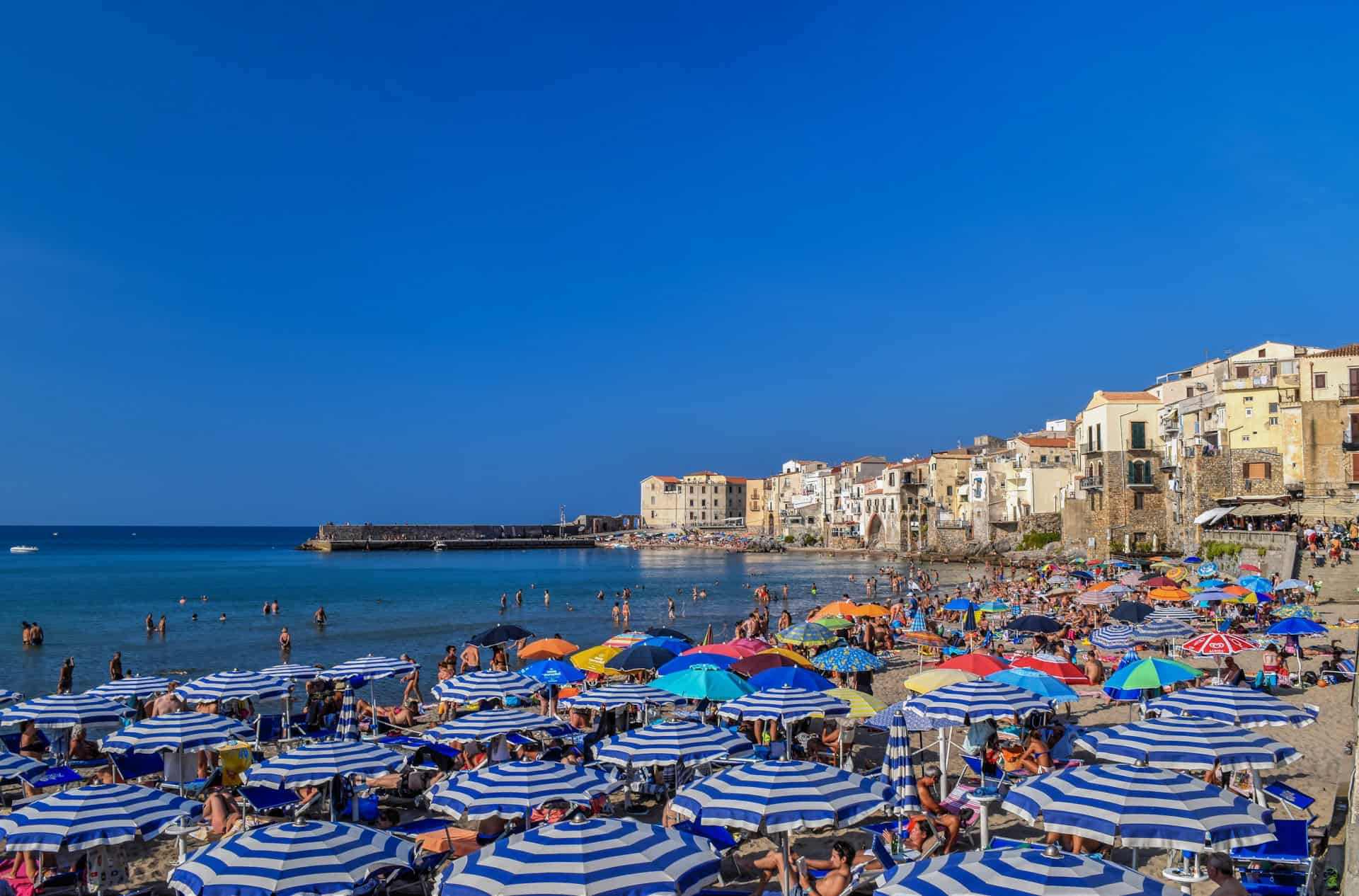
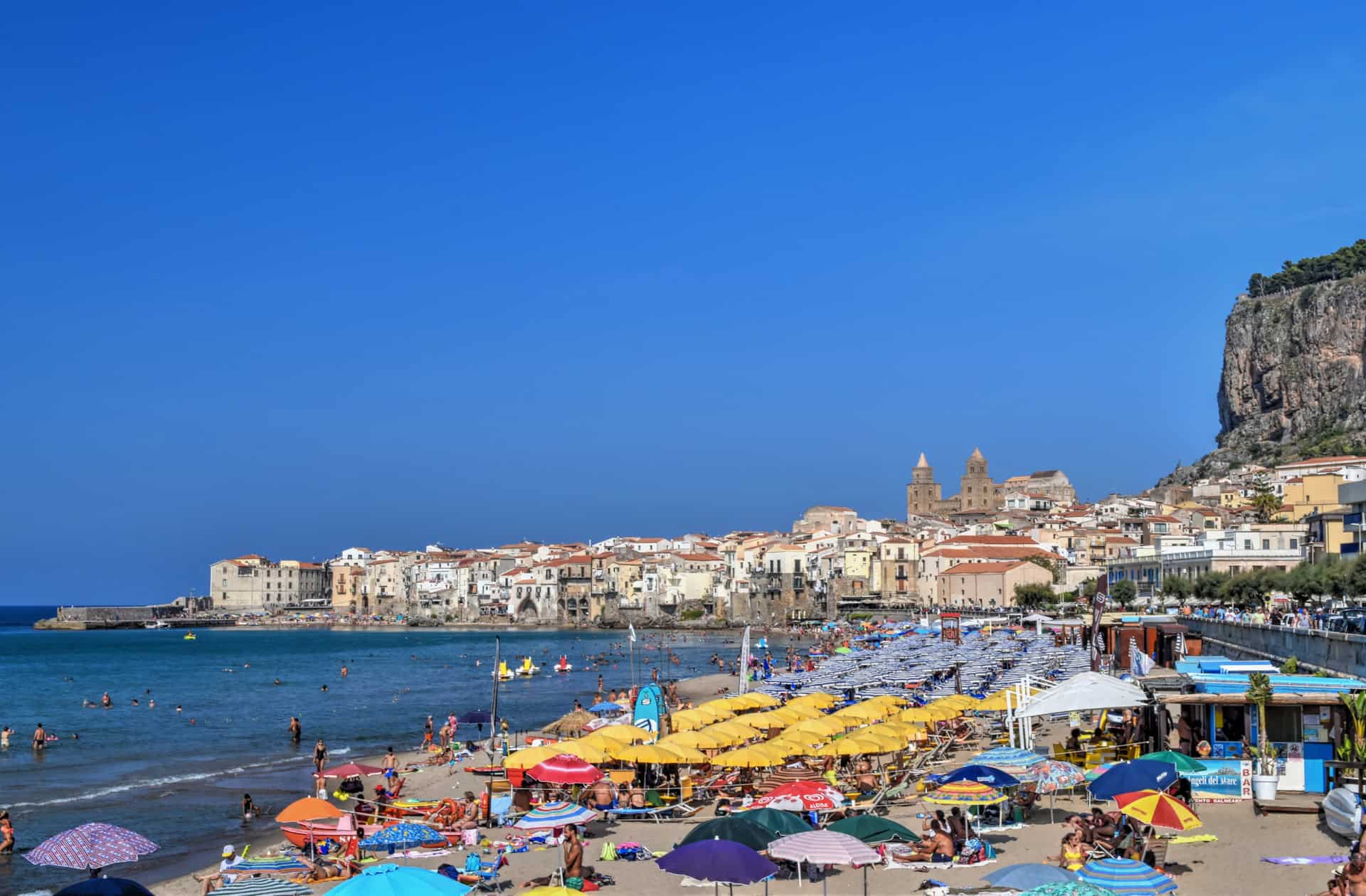
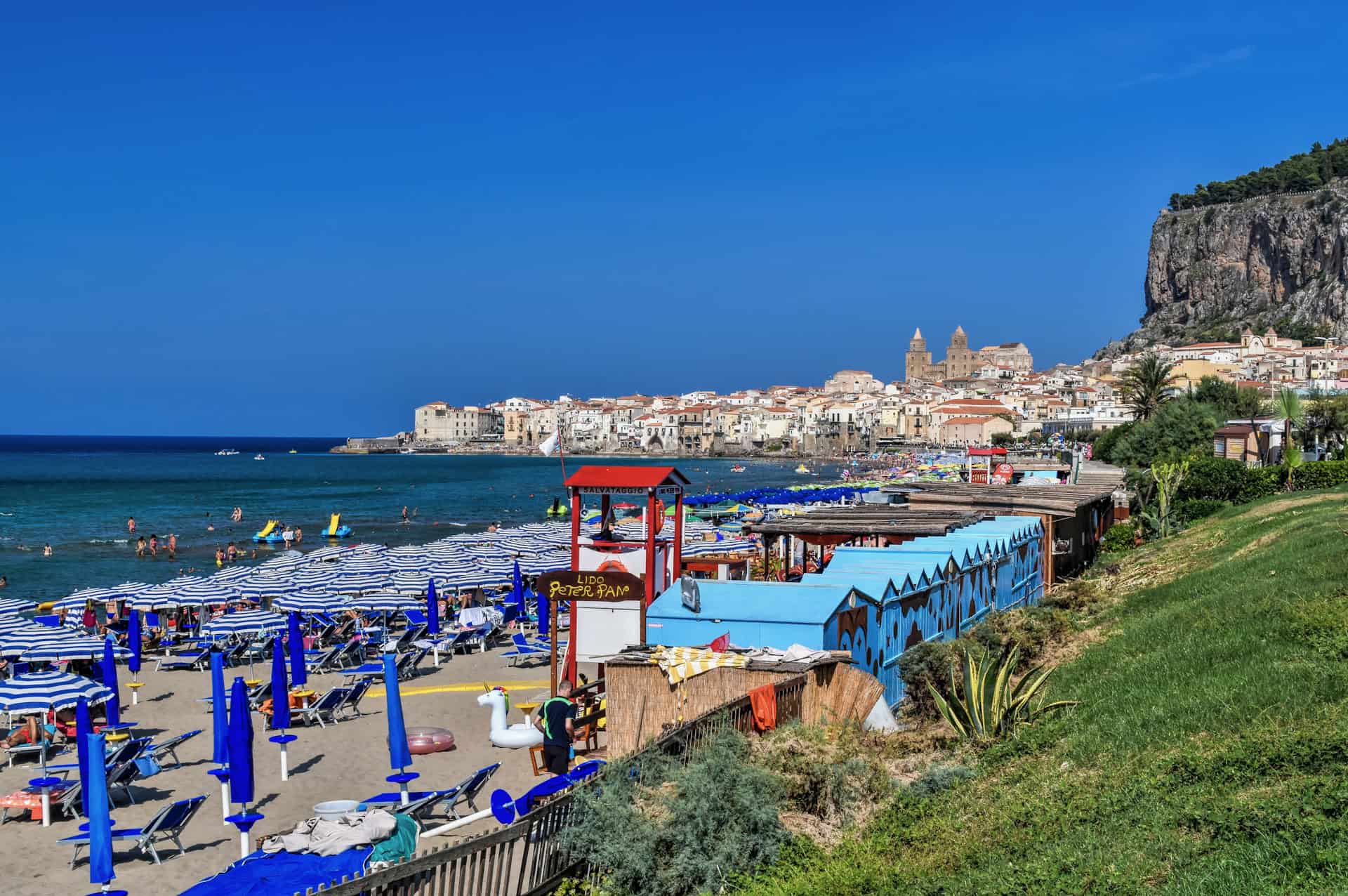
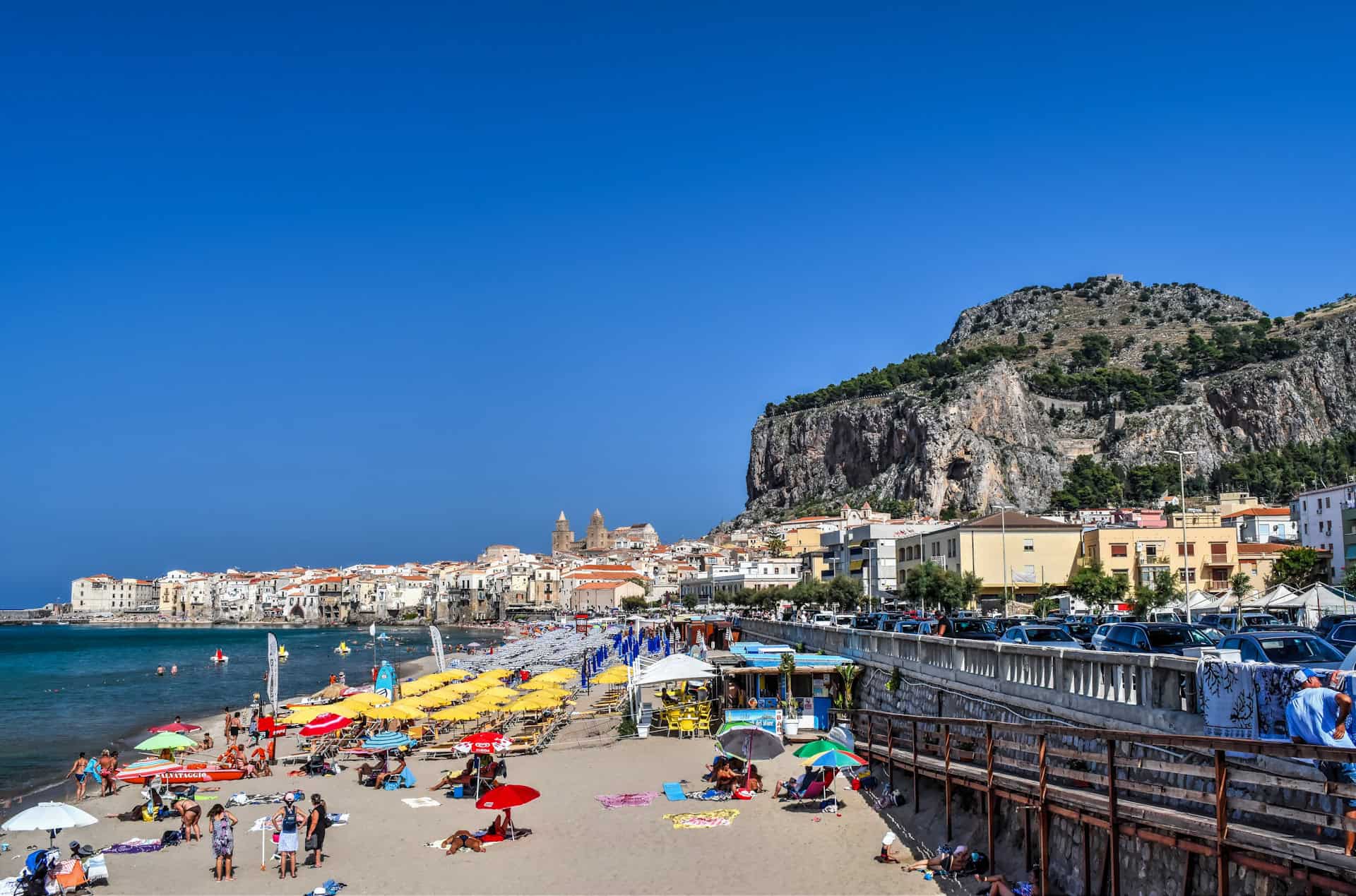
This is the best option if you’re looking for space, with both free sections and paid lidos offering sunbeds and umbrellas. It’s more relaxed than Porto Vecchio and better suited for spending a few hours by the water.
Sunbed and umbrella rentals typically range from approximately €15 to over €30 per set (one umbrella + two loungers) per day.
Other Things to See in Cefalù
Beyond the main sights, Cefalù has a few smaller stops that are easy to visit as you explore the old town.
Lavatoio Medievale
The Lavatoio Medievale is a well-preserved medieval washhouse built over a natural water source.
Stone steps lead down to a series of basins where locals once washed clothes, fed by a small stream that still flows today. It’s a quick but interesting stop that offers a glimpse into everyday life in centuries past.
Vicolo Caracciolo
Vicolo Caracciolo is a small, picturesque staircase tucked away in the old town.
Lined with colorful ceramic pots and plants, it’s one of the most photogenic corners of Cefalù. While similar details can be found throughout the town, this is one of the most concentrated and charming examples.
Lungomare Giuseppe Giardina
The Lungomare Giuseppe Giardina runs along the seafront just outside the old town.
It’s a pleasant place for a walk, especially in the evening, with views back toward Cefalù’s waterfront and La Rocca. It also provides easy access to the larger beach areas.
Boat Excursions Along the Coast
One of the best ways to experience Cefalù from a different perspective is from the water.
Boat excursions typically run along the coastline, offering views back toward the old town and La Rocca, with opportunities for swimming in clear, secluded spots. These are usually half-day trips and are especially popular during the summer months. This is one of the most popular boating trips that includes some snorkeling:
Paragliding Over Cefalù
For a more unique experience, paragliding offers a bird’s-eye view over Cefalù, the coastline, and the surrounding landscape.
Flights typically launch from higher elevations inland and glide down toward the coast, providing a completely different perspective on the town and its setting. This is one of the most popular paragliding activities in Cefalù:
Great Day Trips from Cefalù
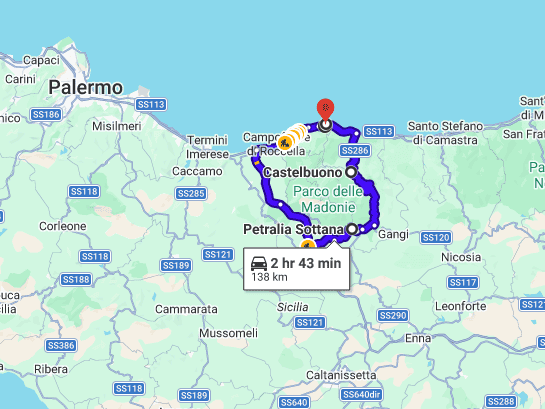
Loop Road Trip Through the Madonie Mountains
One of the best day trips from Cefalù is a scenic drive through the Madonie Mountains, a quieter and more traditional side of Sicily.
The route takes you through a series of hilltop villages, each offering a slightly different perspective on the region:
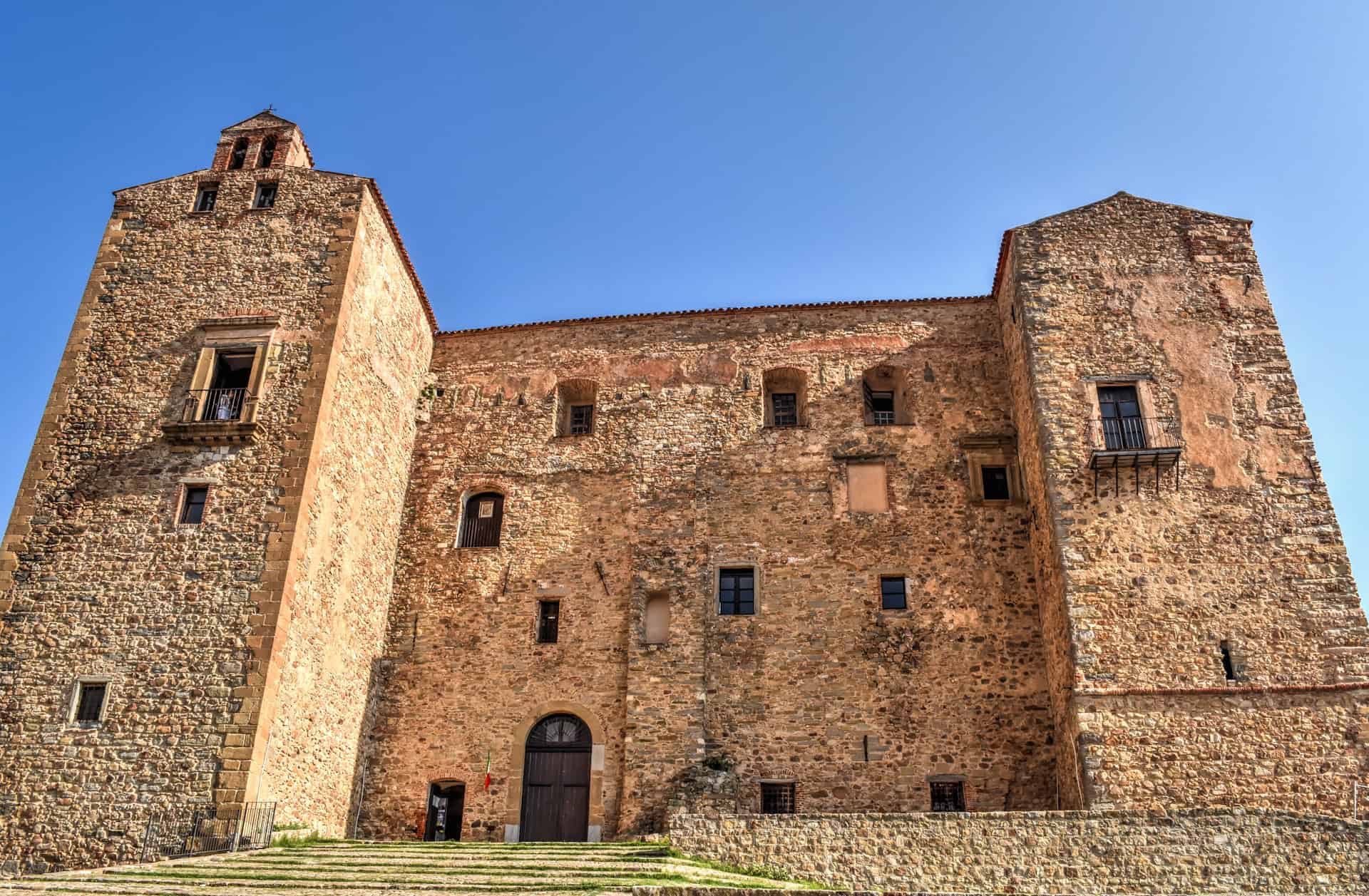
Castelbuono – The easiest and most popular stop, Castelbuono has a lively feel compared to the other villages. Its main highlight is the Castello dei Ventimiglia, a well-preserved castle in the center of town. You’ll also find a good selection of cafés, restaurants, and local shops, making it a great place for a longer stop or lunch.


Geraci Siculo – Smaller and more atmospheric, Geraci Siculo feels noticeably more remote. The village sits at a higher elevation, offering wide views over the surrounding mountains and valleys. Just above town, you’ll find the Ruderi del Castello dei Ventimiglia (historic ruins of a 14th-century fortress), along with the nearby Salto dei Ventimiglia (panoramic steel-and-glass skywalk that juts out over a deep cliff). Both provide some of the best viewpoints in the area. It’s a quiet stop, best suited for a short wander and taking in the scenery.
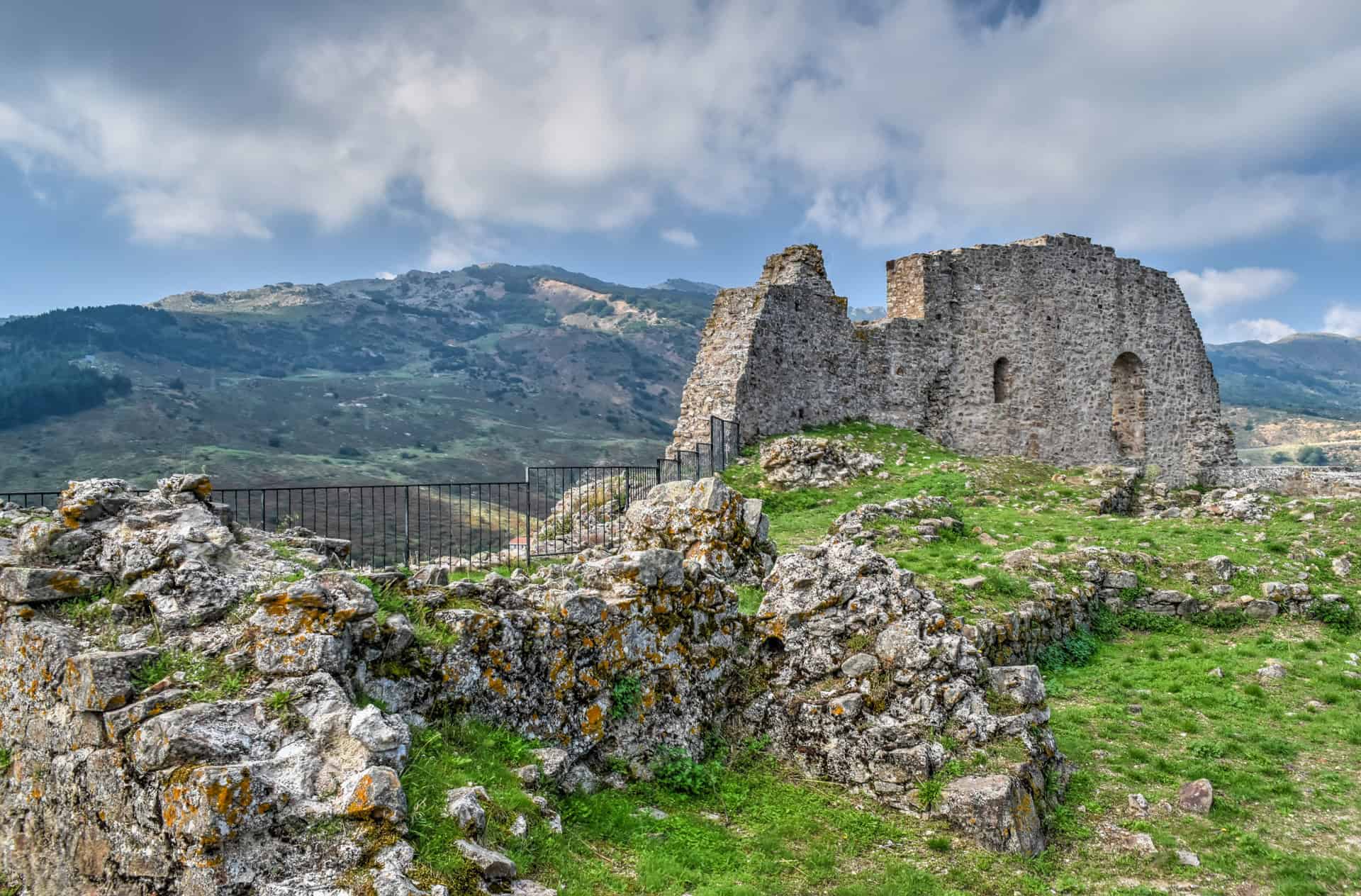
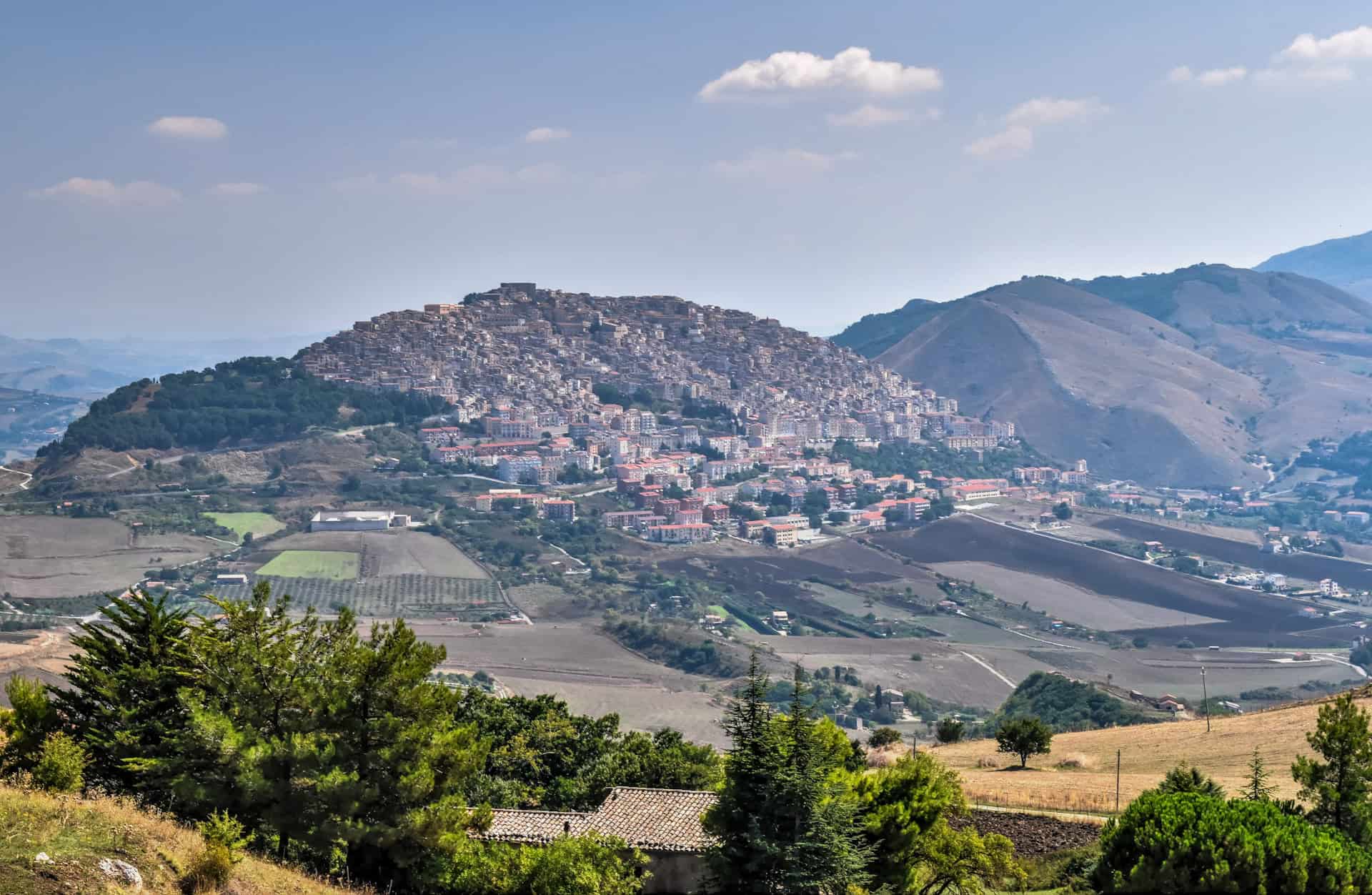
Gangi – Often ranked among Italy’s most beautiful villages, Gangi is built dramatically along a hillside, with tightly packed houses cascading down the slope. The views from the upper part of town are particularly impressive, and wandering through its narrow streets is one of the highlights of the loop.
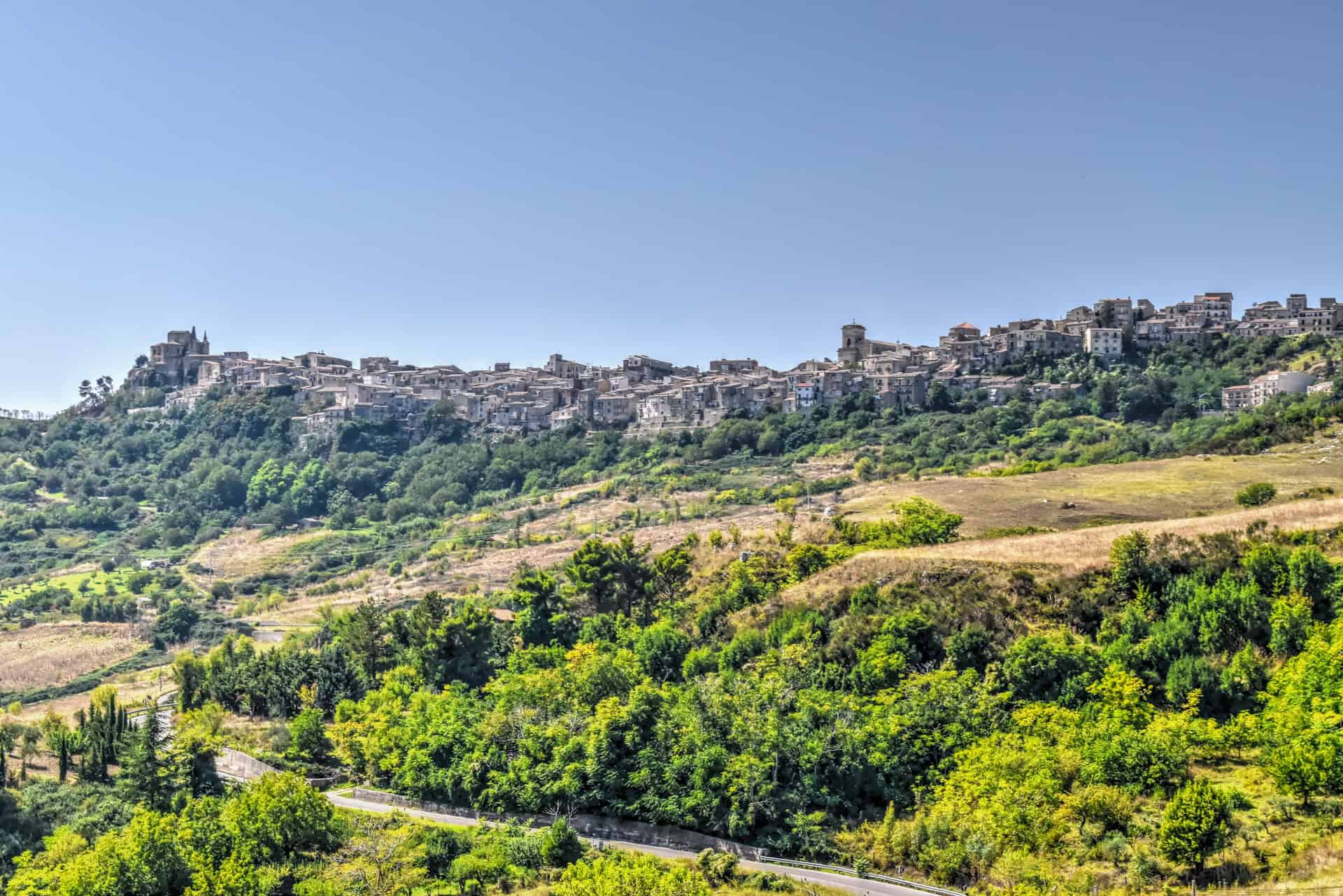
Petralia Soprana & Petralia Sottana – These two neighboring towns offer a more local and less-visited feel. Petralia Soprana sits higher and has sweeping viewpoints, while Petralia Sottana has a slightly more lived-in atmosphere. Together, they provide a good sense of everyday life in the Madonie region.


This makes for a full-day itinerary, best done by car, with plenty of opportunities to stop along the way for viewpoints and short walks.
Total loop drive distance: 140 km
Total Driving Time: 2h30-3h
Visit time: 1h-2h per town.
Palermo
If you’re curious about Sicily’s capital but don’t want to fully commit part of your itinerary to it, visiting Palermo as a day trip from Cefalù is a great option.
The city offers a completely different experience, with a mix of historic landmarks and lively street life. Highlights include the Teatro Massimo, Palermo Cathedral, the Norman Palace, Villa Bonanno, and the city’s famous outdoor markets.
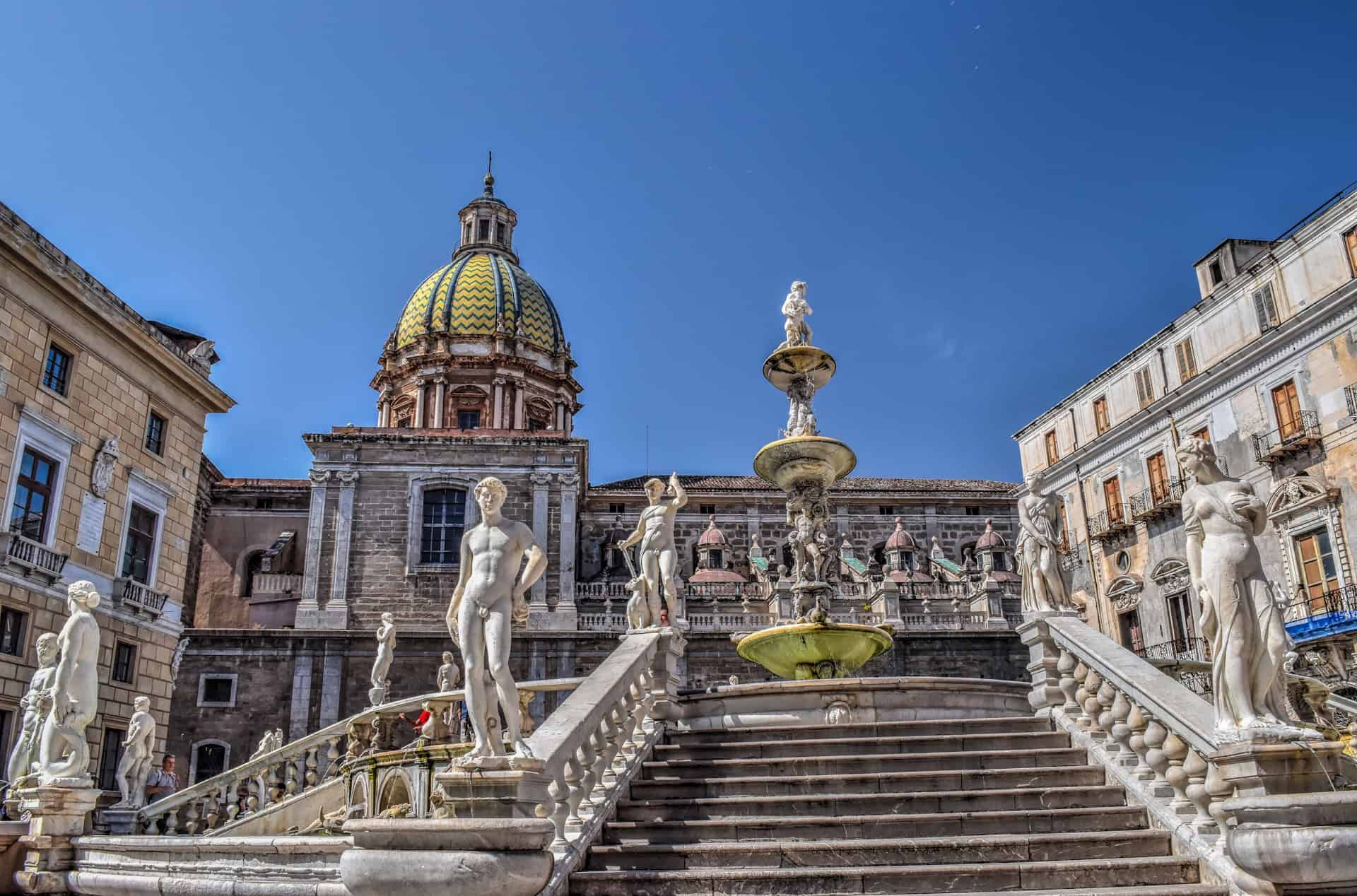
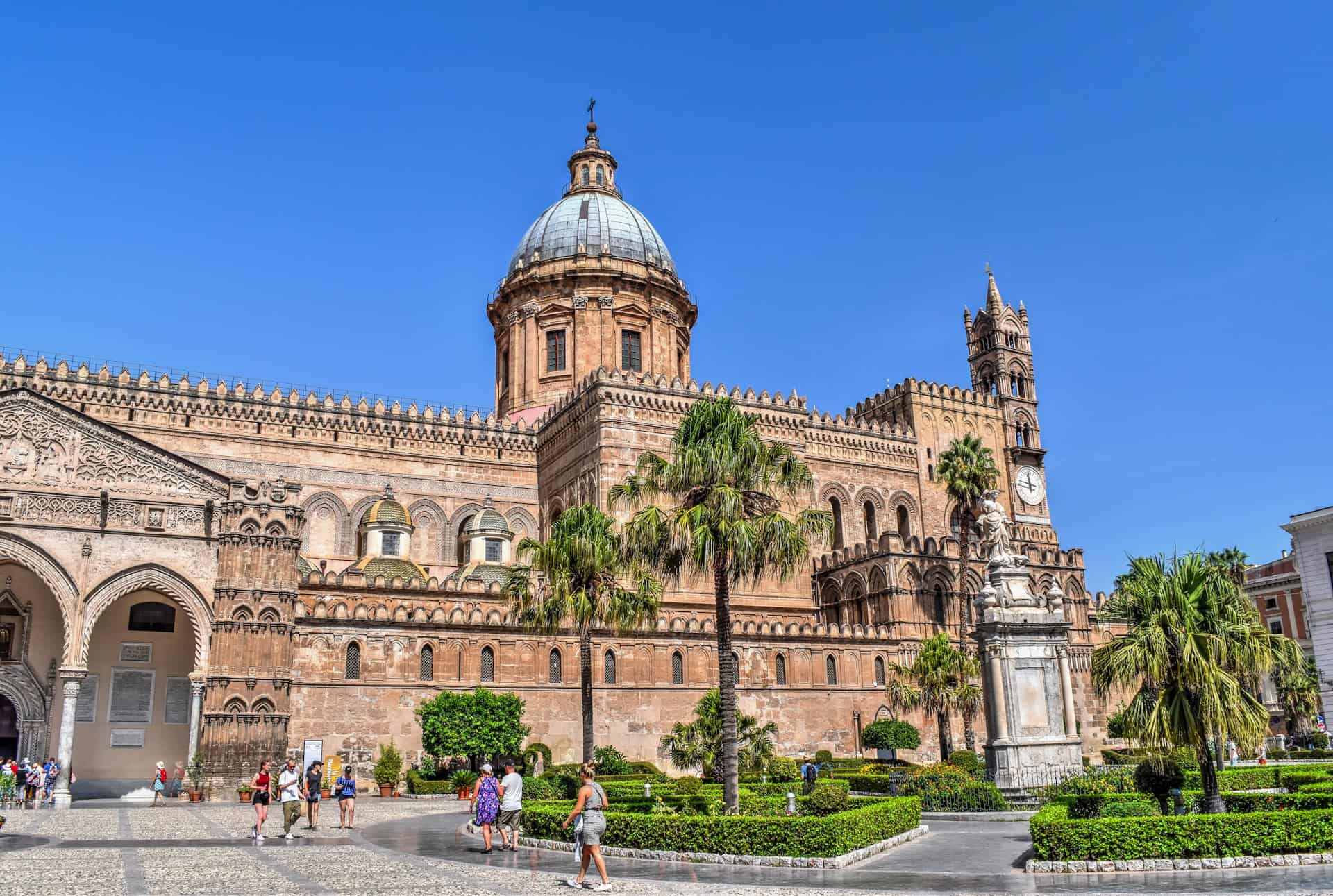


Tip: Driving and parking in Palermo can be challenging, so it’s highly recommended to visit by train, with frequent connections from Cefalù taking about 1 hour.
Is Cefalù Worth Visiting?
Cefalù is one of the most well-rounded destinations in Sicily, combining a historic old town with easy access to the beach.
Why You Might Enjoy It:
– A rare beach + cultural mix, with the old town directly on the waterfront
– The striking presence of La Rocca towering above the town
– A compact, walkable center that’s easy to explore in a few hours
– A more relaxed and less hectic atmosphere than places like Taormina
Why It Might Not Be for You:
– Can still get busy, especially in peak summer
– Fewer major “must-see” landmarks compared to larger cities
Bottom line: Cefalù is definitely worth visiting, especially if you’re looking for a destination that balances sightseeing with time by the sea. It works well as either a day trip or a short stay and is one of the most enjoyable stops along Sicily’s northern coast.
Best Time to Visit Cefalù
Best Time of Year
The best time to visit Cefalù is during the shoulder seasons (April–June and September–October), when temperatures are warm, the sea is often swimmable, and crowds are more manageable. These months are ideal for enjoying both the historic center and the beach, without the peak summer congestion.
Summer (July–August) is the most popular time to visit, especially for beachgoers. The atmosphere is lively, and conditions are perfect for swimming, but the town and beaches can become crowded, particularly in the middle of the day.
Winter is much quieter, with fewer visitors and a more local feel. While it’s less suitable for beach time, it can still be pleasant for exploring the old town on mild, sunny days.
Best Time of Day
Cefalù is easier to navigate than some of Sicily’s larger towns, but timing still makes a difference, especially in summer.
- Early morning (best for exploring):
Quiet streets, softer light, and a more relaxed atmosphere in the old town. Also, the best time to hike up La Rocca. - Mid-day (best for the beach):
Ideal for swimming and beach time, though the historic center and Porto Vecchio area can get busy. - Late afternoon/evening:
One of the best times to be in Cefalù, with cooler temperatures, a lively atmosphere and great light for walking along the waterfront or watching the sunset.
How Long Do You Need in Cefalù?
Most visitors will want to spend 1–3 days in Cefalù, depending on how much time you want to dedicate to the beach and nearby day trips.
You can see the main sights (the old town, the Cefalù Cathedral, and a hike up La Rocca) in about half a day.
That said, Cefalù is also a great place to slow down. Adding an extra day or two allows time to enjoy the beach, explore at a more relaxed pace, or take day trips to places like the Madonie Mountains or Palermo.
Where to Stay in Cefalù
Most visitors choose to stay near the historic center of Cefalù, where you’ll be within walking distance of the main sights, the beach, and the waterfront.
Accommodation here ranges from small guesthouses in the old town to more modern hotels along the seafront. Staying nearby allows you to easily move between sightseeing and beach time, and to enjoy the town in the early morning and evening once the day visitors have left.
Some of the best options in Cefalù include:
Skyview Cefalù
A more elevated stay with panoramic views over the town and coastline, ideal if you’re looking for a quieter setting just outside the center.
YEASY Smart Rooms Cefalù
A modern, well-reviewed option with a clean design and a convenient location close to both the train station and the historic center.
Victoria Palace Cefalù
A seafront hotel offering direct beach access, spacious rooms, and a more traditional hotel experience with added comfort.
Cefalù Frequently Asked Questions (FAQ)
Is Cefalù worth visiting?
Yes! Cefalù is one of the most well-rounded destinations in Sicily, combining a historic old town with easy access to the beach.
How long do you need in Cefalù?
1–3 days is ideal. You can see the main sights in a day, but extra time allows for beach time and day trips.
Is Cefalù very touristy?
It’s popular, especially in summer, but generally more relaxed and less crowded than Taormina.
Do you need a car to visit Cefalù?
No. Cefalù is one of the easiest places to visit in Sicily without a car, thanks to frequent train connections, especially from Palermo.
Where should you park in Cefalù?
Parking is best just outside the historic center, such as near the Lungomare or the train station, with easy walking access into town.
Can you combine Cefalù with Palermo?
Yes, Palermo makes for an easy day trip by train (about 1 hour), making it a great option if you want to visit the capital without staying there.
Photography Gear
If you like our photography, you might be interested in some of the gear we use to shoot our travel and hiking destinations.
Camera Body – Nikon Z 6ii Fx-series Mirrorless Body
Main Lens – NIKON 24-120mm F/4G ED VR AF-S
Zoom Lens – Sigma 745-306 150-600mm f/5-6.3
Polarizing filters – Urth Circular Polarizing (CPL)
Camera Tripod – K&F Concept 64-inch Camera Tripod
Mini-tripod – Lammcou Flexible Camera Tripod
Camera/hiking backpack – Vanguard Alta Rise 48 Backpack
Universal Travel Adapter – VYLEE Universal International Power Travel Plug
Other Travel Essentials
Travel Insurance
SafetyWing is a travel insurance company that offers comprehensive coverage for travellers. Includes Medical Insurance and Travel Insurance. Primarily geared towards long-term travellers, digital nomads, and expats.
e-Sim cards
Airalo is the world’s first and largest eSIM store with eSIM plans for 200+ countries and regions worldwide. With Airalo eSIMs, travellers can get connected the moment they land at their destination and avoid nasty data roaming charges
eSIMS are a sustainable alternative to single-use SIM cards – they are 100% digital, require less energy to produce and be re-used rather than disposed of.
Car Rentals
Discover Cars is our go-to website for car rentals. We almost always find our preferred rate there.
Transfer from Airport
Welcome Pickups is our favourite private transfer service, which you can pre-book at a fixed price. Currently available in 220 cities all over the world (mostly in Europe, but with several major cities in Asia, the Middle East and the US).
Kiwitaxi is another private transfer service – we haven’t tried it yet, but it’s currently available in a few more countries (102 as of 2024).
Hotels and Accommodations (coming soon)
Photography Prints
If you found this blog useful, you can help support our blog by purchasing low-cost digital prints. Printed physical prints are also available for purchase.


—–
Well, that wraps it up! We hope you enjoyed our Travel Guide on the Best Things to See and Do in Cefalù and that it will prove useful for planning your trip.
—–
You might also be interested in these related pages: