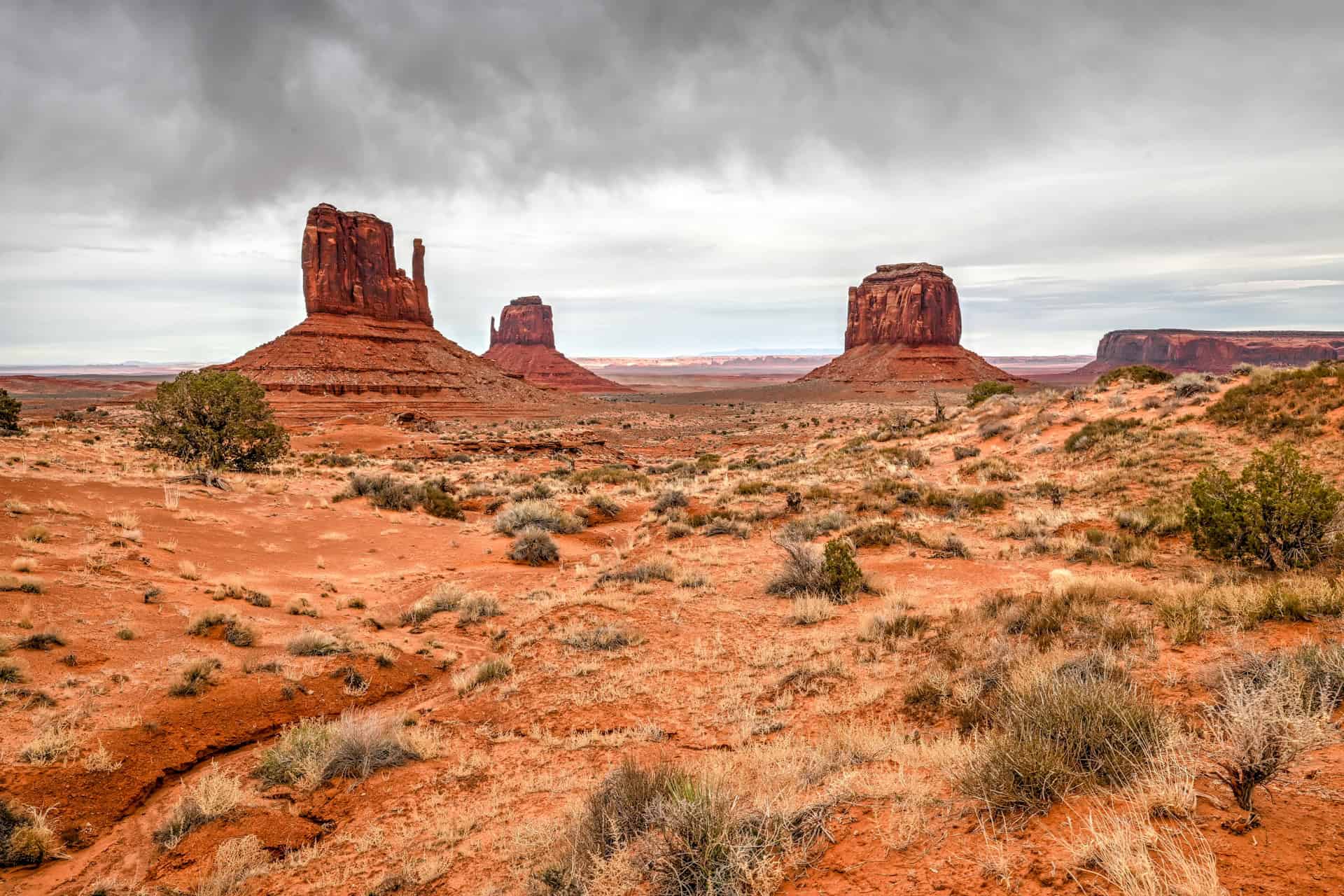
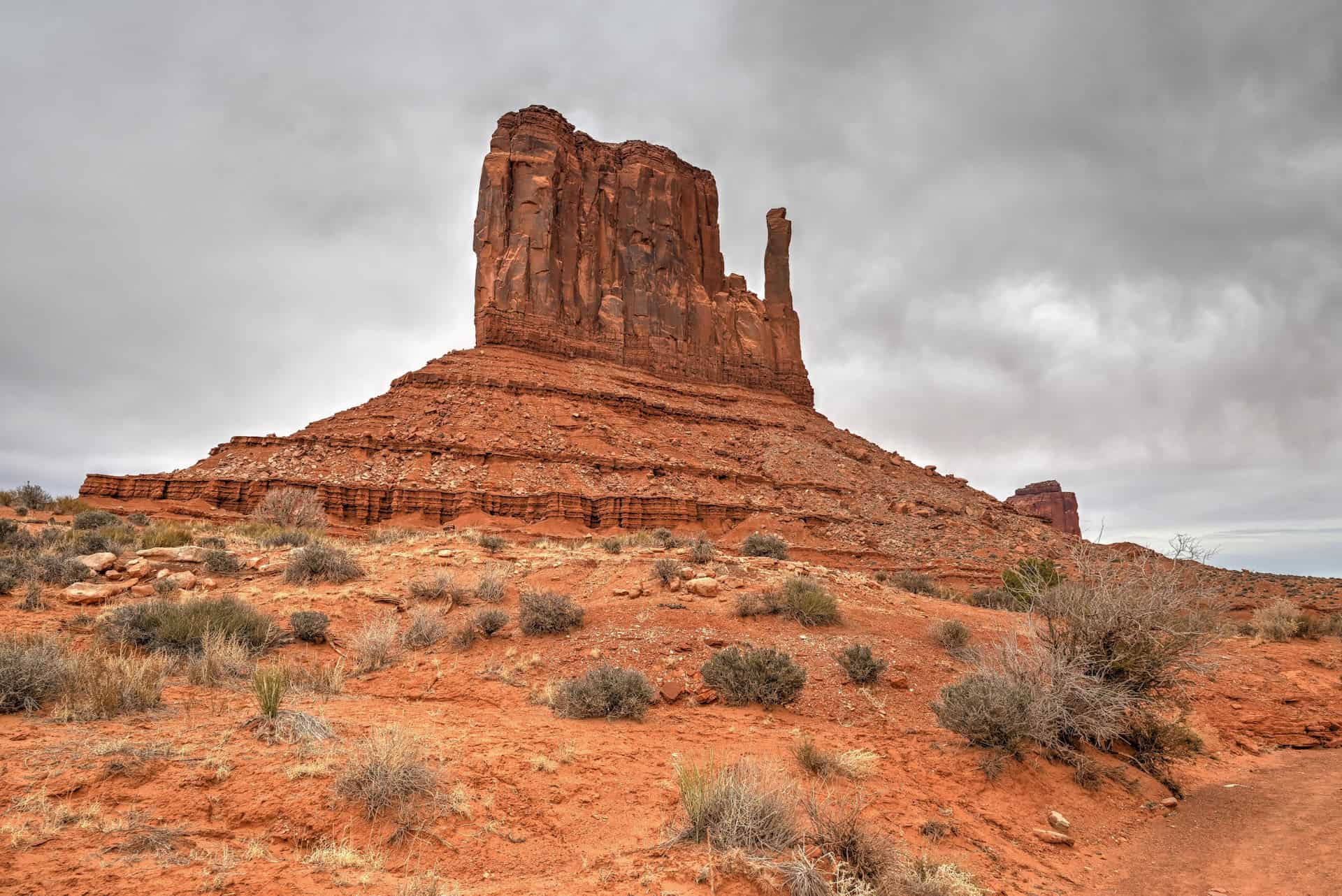
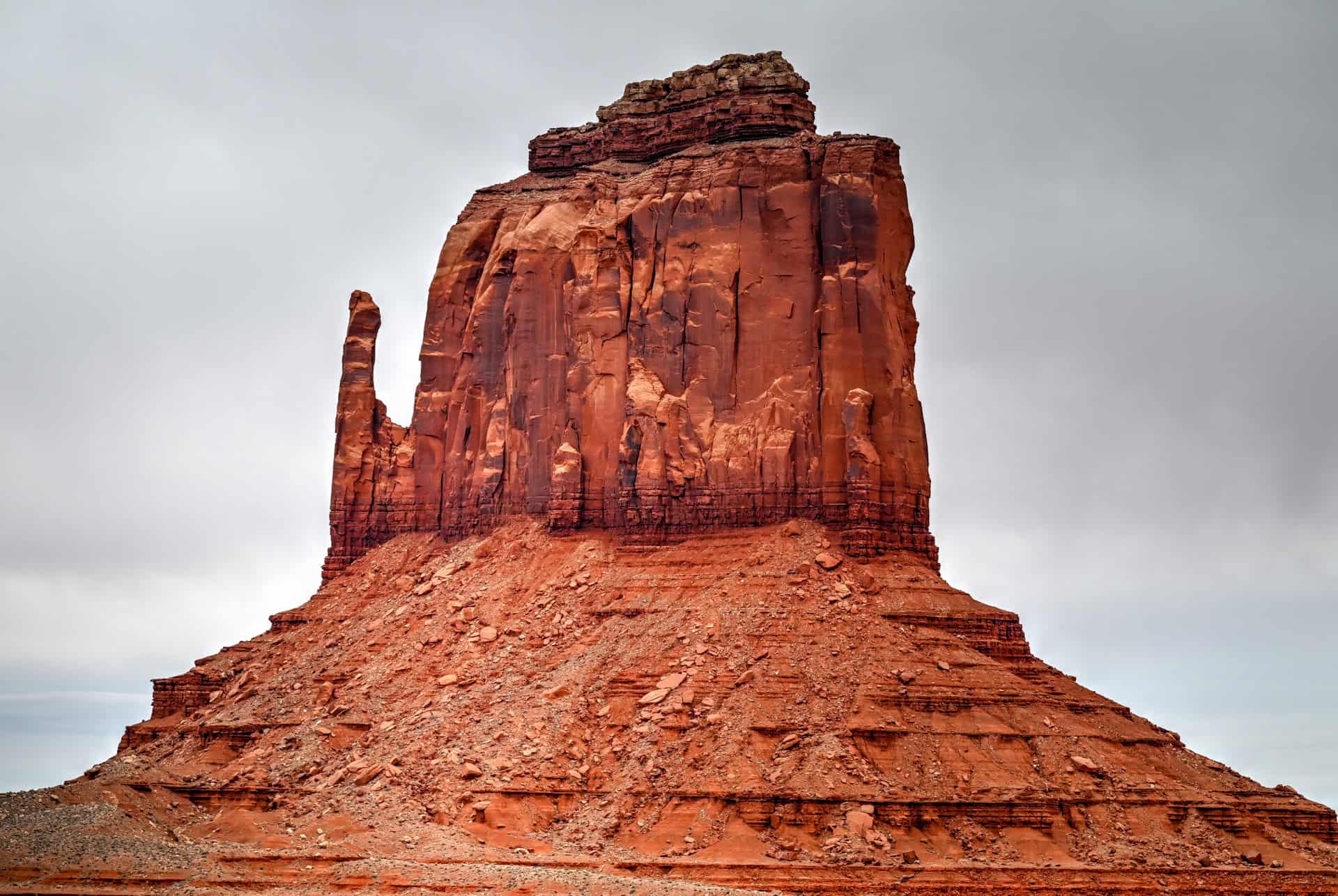
The Wildcat Trail offers visitors the rare chance to walk among the towering red rock buttes that define the legendary landscapes of Monument Valley, straddling the Arizona – Utah border. This 4-mile (6.4 km) loop is the only self-guided hiking trail within Monument Valley Navajo Tribal Park that descends into the valley floor, circling the base of the iconic West Mitten Butte with sweeping views of East Mitten and Merrick Buttes throughout. It’s the perfect way to experience the valley’s silence, scale, and solitude up close, and a must-do for anyone spending a few hours or a full day in Monument Valley.
To help you plan your visit, we’ve put together this Monument Valley Hiking Guide for the Wildcat Trail, covering everything from trail difficulty and estimated hiking time to what to expect along the route and the incredible viewpoints that make it such a memorable hike
Wildcat Trail – At a Glance
Monument Valley’s premier hiking trail – This 4-mile (6.4 km) loop circles the base of the iconic West Mitten Butte, offering a rare chance to explore Monument Valley on foot without a guide. It’s the park’s best-known self-guided route, and it’s the only one that descends into the valley floor among the towering buttes.
Iconic scenery in every direction – Towering sandstone buttes, wide desert vistas, and ever-shifting light make this one of the most photogenic hikes in the American Southwest. You’ll enjoy spectacular views of West Mitten, East Mitten, and Merrick Butte throughout.
A true desert experience – The soft, sandy trail and open terrain mean exposure to sun and heat, but also an unparalleled sense of space and solitude. For the best conditions, start early in the morning or late in the afternoon when temperatures are cooler, and the light is golden.
Convenient access – The trail begins right from the main visitor parking area near The View Hotel and campground, making it easy to fit into any Monument Valley visit or combine with the scenic drive.
Trail Difficulty: Easy
Typical Hike Duration: 1h30-2h


Disclosure: This page (Wildcat Trail – A Monument Valley Hiking Guide) may contain product affiliate links. At no additional cost to you, we may receive a commission for purchases made through these links. More details can be found on our disclosure and policies page.
Wildcat Trail Location and Map
The Wildcat Trail is located within Monument Valley Navajo Tribal Park, near the Arizona–Utah border. The trail begins directly from the main visitor parking area, just below The View Hotel and Visitor Center, offering immediate access to the valley’s most iconic scenery.
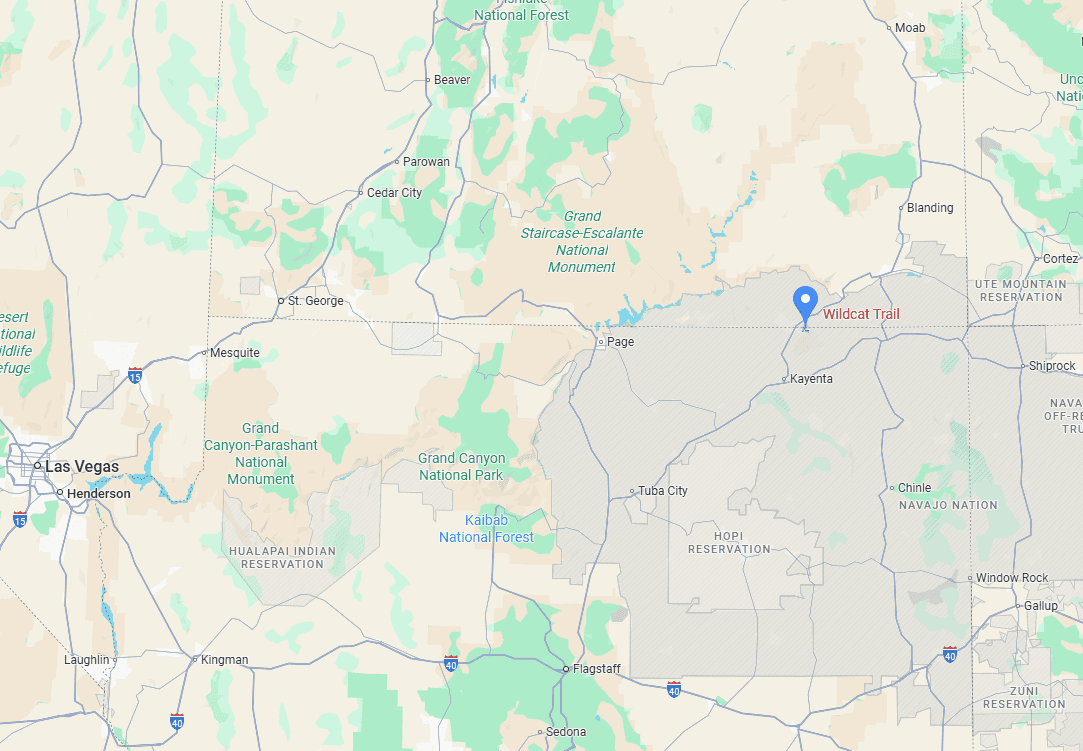
How to Get to the Wildcat Trail & Monument Valley
The simplest way to reach the Wildcat trail is by driving there, as there is no public transportation to Monument Valley.
Driving times to Monument Valley
- Page, AZ: 200 km / 125 mi – about 2 hours
- Moab, UT: 240 km / 150 mi – about 2.5–3 hours
- Flagstaff, AZ: 280 km / 175 mi – about 3 hours
- Las Vegas, NV: 640 km / 400 mi – about 6–6.5 hours
- Salt Lake City, UT: 615 km / 380 mi – about 6–6.5 hours
These times assume good weather and minimal stops.
If you need to book a rental vehicle for your hiking excursion, we highly recommend using Discover Cars to get the best rates on your rental in Utah, Nevada and Arizona.
We also highly recommend Airalo (eSIM card) for your connectivity needs when travelling abroad. Airalo is the world’s first and largest eSIM store with eSIM plans for 200+ countries and regions worldwide.
Nearest Gas Stations
The nearest gas station is Goulding’s Gas Station, located next to Goulding’s Lodge, just across the highway from the Monument Valley Visitor Center, about a 10-minute drive away.
If you’re arriving from the north, the last gas station before Monument Valley is in Mexican Hat, roughly 30 minutes away. If coming from the south, the closest option is in Kayenta, also about 30 minutes away.
Given the remoteness and limited services in this part of the Navajo Nation, it’s best to arrive with a full tank of fuel, as waiting too long could mean fewer options and higher prices.
Time Zone Information
Monument Valley Navajo Tribal Park observes Mountain Time (MT), in alignment with the Navajo Nation.
- In the winter months, all three share the same time.
- Arizona does not observe daylight saving time, while Utah and the Navajo Nation do.
- During daylight saving months (March–November), Monument Valley and Utah are one hour ahead of most of Arizona.
Wildcat Trail Access, Fees, and Parking
Trailhead location: The Wildcat Trail begins between the main visitor parking area and the campground, just north of the Scenic Drive road (link to Google Maps).
Parking lot: Parking is plentiful, as this large lot serves both Monument Valley Navajo Tribal Park visitors (both those who are hiking and those who are not) and guests staying at The View Hotel.
Facilities: There are no restrooms directly at the trailhead, but public washrooms are available at the nearby Visitor Center. There is also an outhouse toilet around the midpoint of the trail.
Trail opening Hours: Open daily from sunrise to sunset.
However, the trail may occasionally close during extreme weather conditions, such as heavy rain, flash flood risk, or high winds, or during special park events. Always check with the Visitor Center before starting your hike.
Monument Valley Entrance Fees
All visitors entering Monument Valley Navajo Tribal Park, whether to hike the Wildcat Trail, drive the scenic loop, or simply enjoy the viewpoints, must pay the applicable Navajo Parks and Recreation Department entry fee.
Entrance Fees
$8 per person, per day.
Payment & Passes
Fees are paid upon entry at the Monument Valley Navajo Tribal Park entrance station. Note that U.S. National Park passes (such as the America the Beautiful Pass) are not valid here, as the park is managed by the Navajo Nation, not the National Park Service.
Credit and debit cards are accepted at the entrance booth, but it’s a good idea to carry some cash in case of network outages.
As of 2025, online pre-purchase options are available through the official Navajo Parks and Recreation Department website (but cost an additional $1 due to an online fee surcharge), although entry is still controlled at the gate.
Wildcat Trail Stats, Difficulty, and Map
Distance: 4 miles (6.4 km)
Route Type: Loop
Elevation change: 380 ft / 120 m (difference between trail high and low point)
Elevation gain: 380 ft / 120 m (cumulative elevation gain)
AllTrails rating: (4.8, 2491 ratings (2025))
Duration: Most people complete the trail in 1h30-2h.
Trail difficulty level assessment (based on our personal assessment, taking into account the trail length, slope grade, and trail surface) :
Very Easy | Easy | Moderate | Moderately Challenging | Challenging
Overall, the Wildcat Trail is relatively Easy, with only moderate elevation changes. While the sandy terrain can make footing a bit tiring at times, the route is non-technical and free of obstacles or difficult navigation. It remains firmly in the easy hiking category, suitable for most visitors in reasonable shape.
Not an AllTrails member yet? We highly recommend signing up for either their free or paid membership plans. The free plan allows you to find new trails and plan routes but it can only be used while hiking if you have access to mobile data. The paid membership plan (AllTrails+) allows you to download trail maps for offline use and provides live progress updates and off-route notifications.
If you are still uncertain – you should know that the All Trails mobile application was voted the 2023 iPhone App of the Year by Apple.
We find that AllTrails is a great tool to have when hiking, particularly for assisting with navigation when the trail is hard to locate and to help monitor your progress along the trail, which helps estimate how much time you’ll need to complete the trail.
Additional Trail Details
Wildcat Trail Description and What to Expect
From the main Monument Valley parking area, walk along the short Rim Walk Trail (about 3-5 minutes), which connects the visitor center to the campground and the start of the Wildcat Trail.


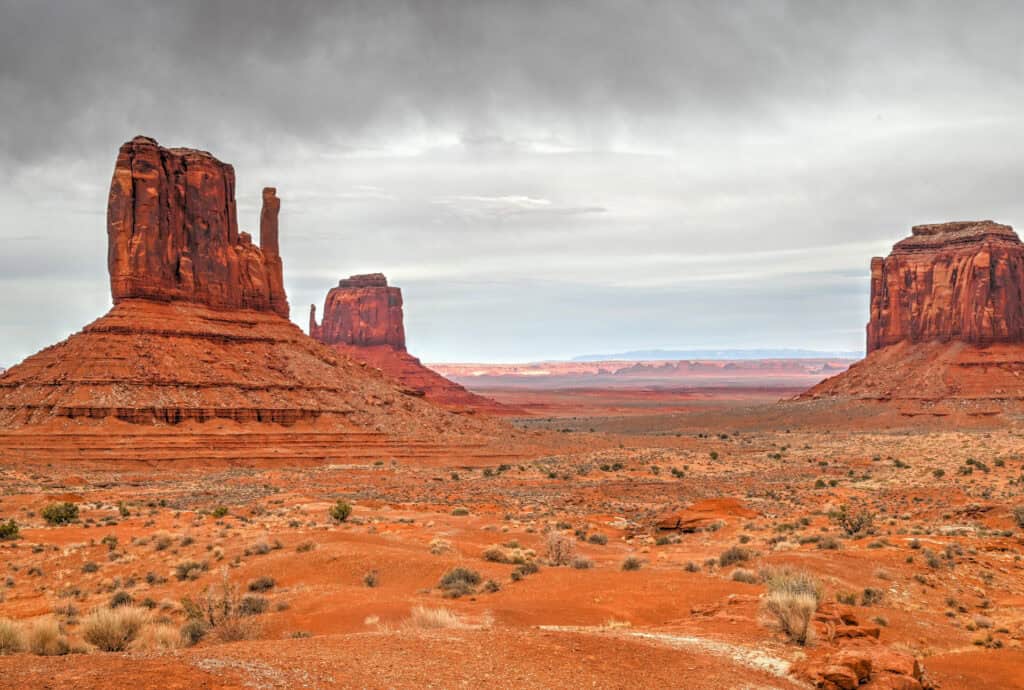
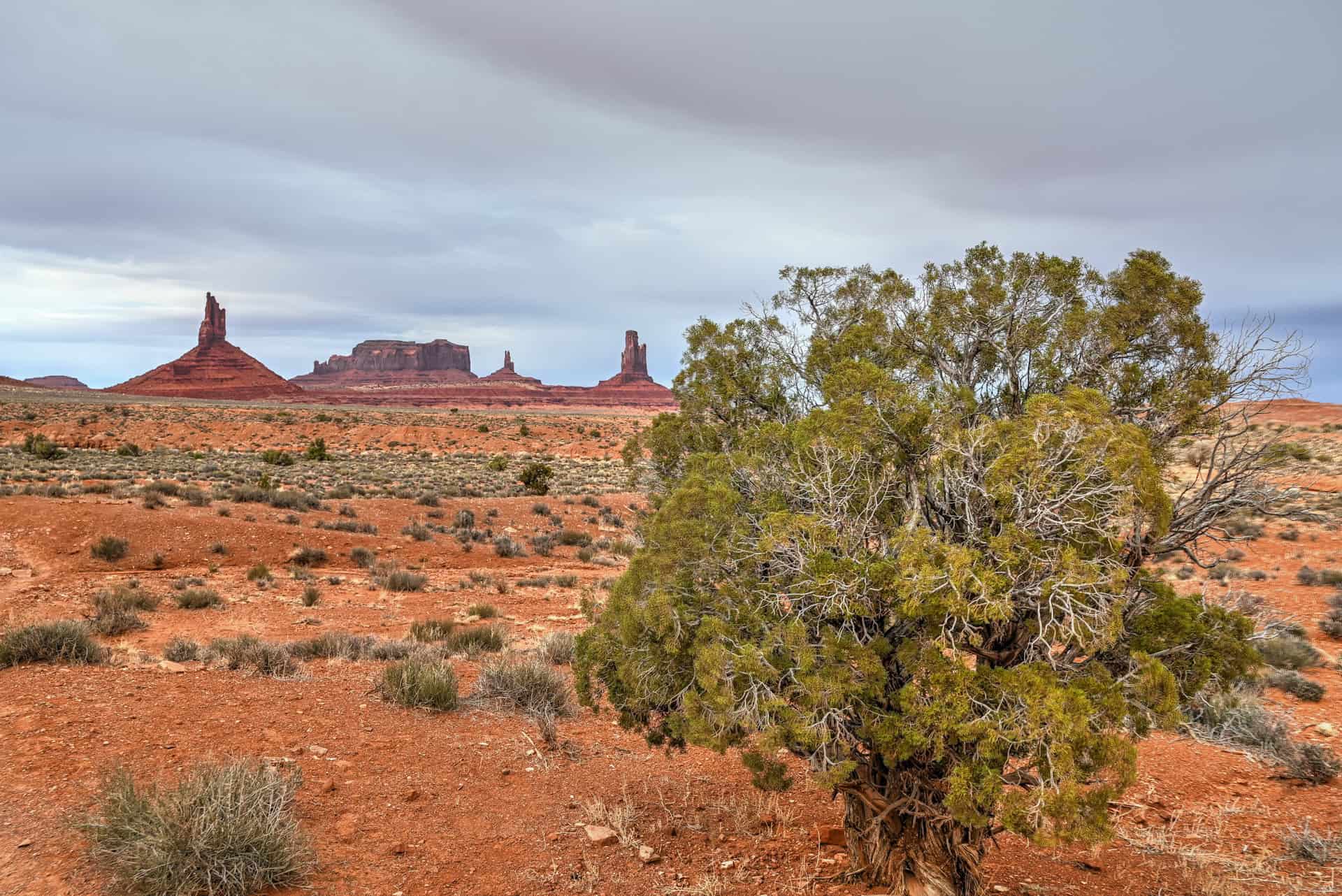
The Wildcat Trailhead sits at the northeast corner of this intersection. From the very start, you’ll have sweeping views of the West Mitten, East Mitten, and Merrick Buttes rising from the desert floor, your companions for the duration of the hike.


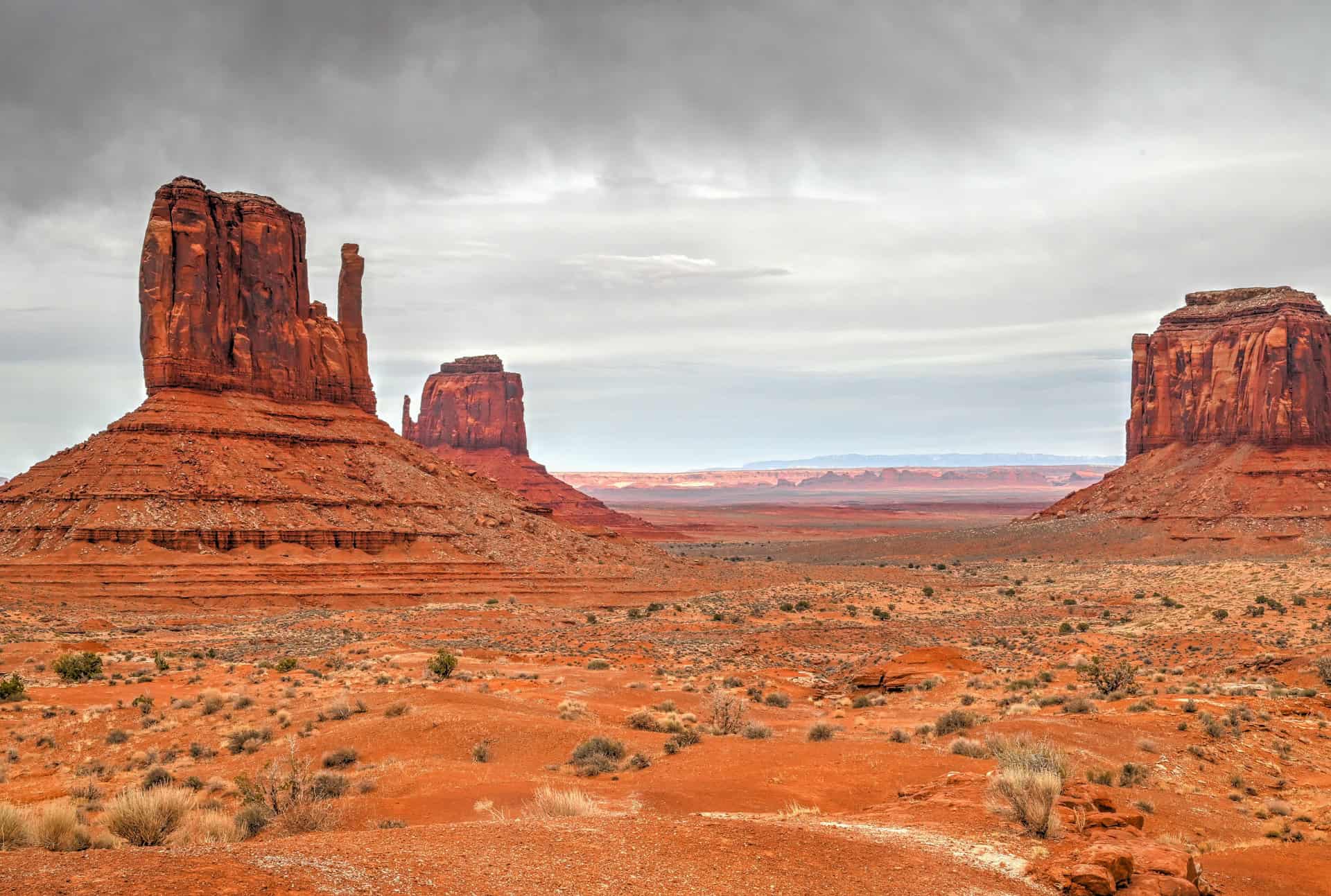
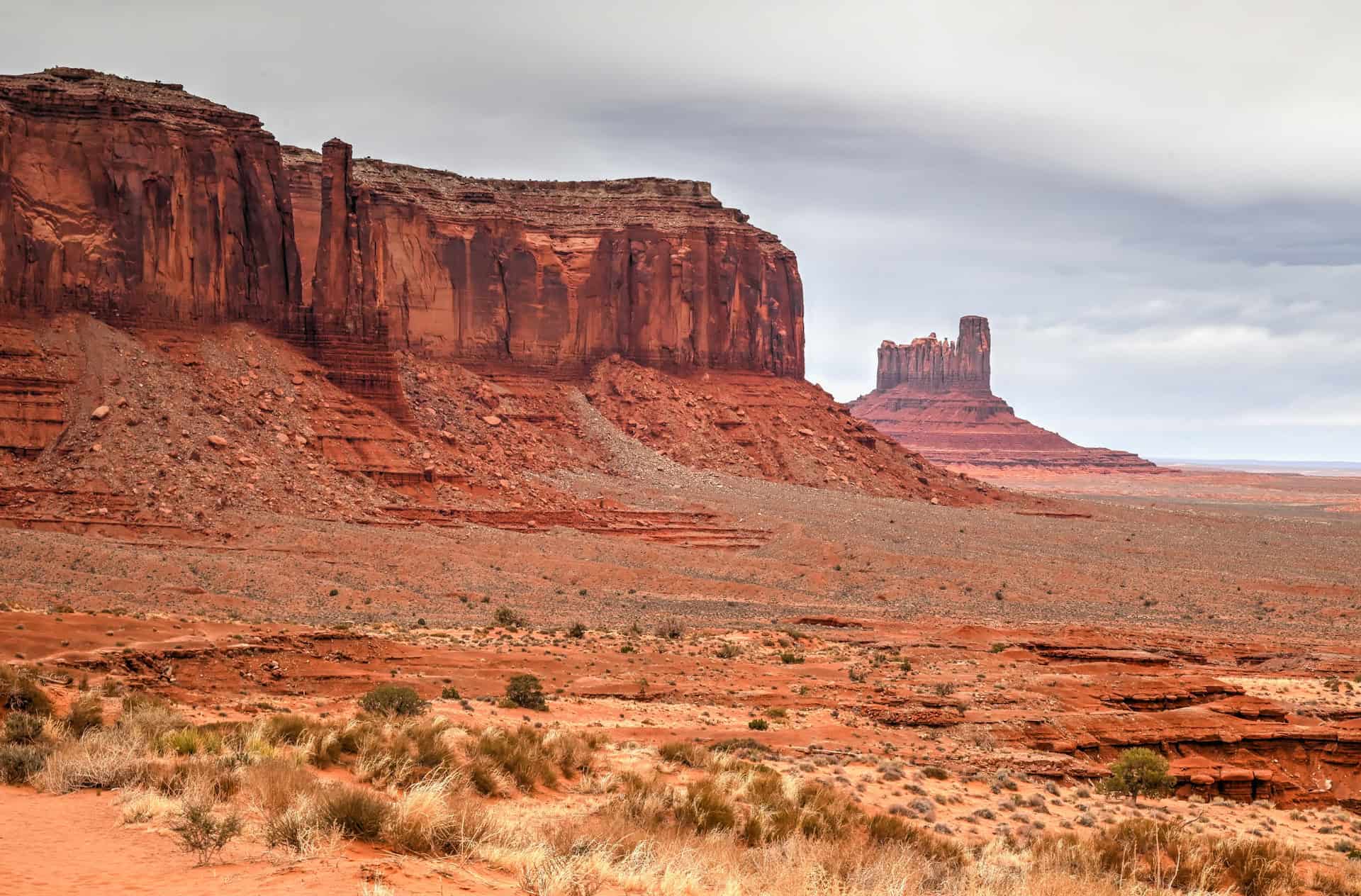
The trail starts gently, descending across a wide, sandy slope toward the valley floor. This opening stretch is beautiful but deceptively easy: the soft sand makes each step more effortful than it looks, and you’ll definitely feel it on the return climb. Along the way, you’ll pass a handful of rental cabins and The View Campground, both facing the buttes.


At about 0.7 miles (1.1 km), the trail reaches a signed junction marking the start of the loop. Keep right here (heading southeast) to follow the park’s preferred direction of travel. The left fork is the return route.
As you continue, the path meanders through a series of dry washes, shallow, sandy gullies carved by flash floods. The route is well-worn and easy to follow, with only a few short crossings. This section of the hike feels wonderfully remote, surrounded by open desert and framed by the Mittens ahead.
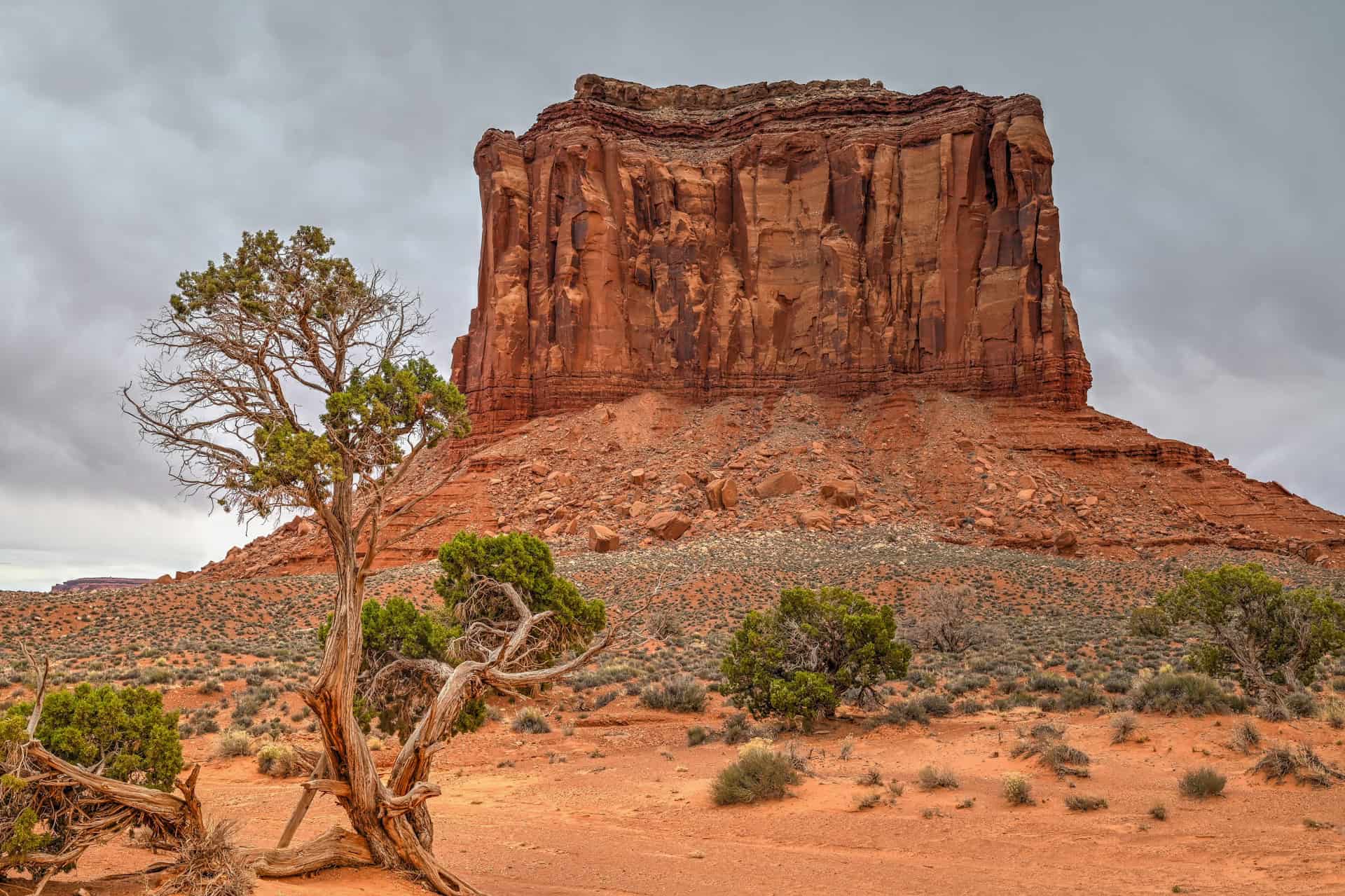
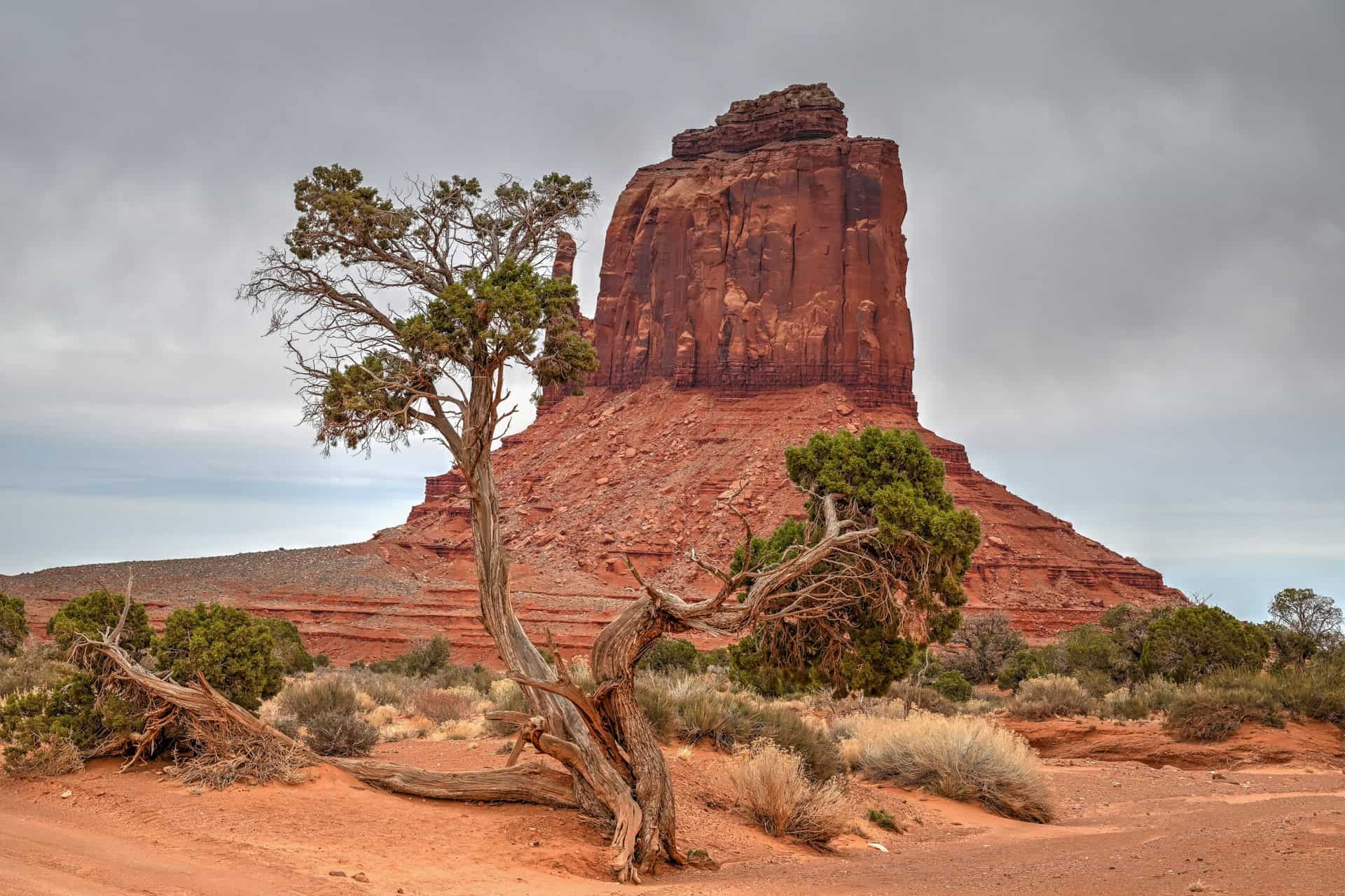
Around 1.7 miles (2.7 km), you’ll find yourself standing at one of the most photogenic spots in Monument Valley, the midpoint between the two Mitten Buttes and Merrick Butte, with all three formations perfectly aligned on the horizon.


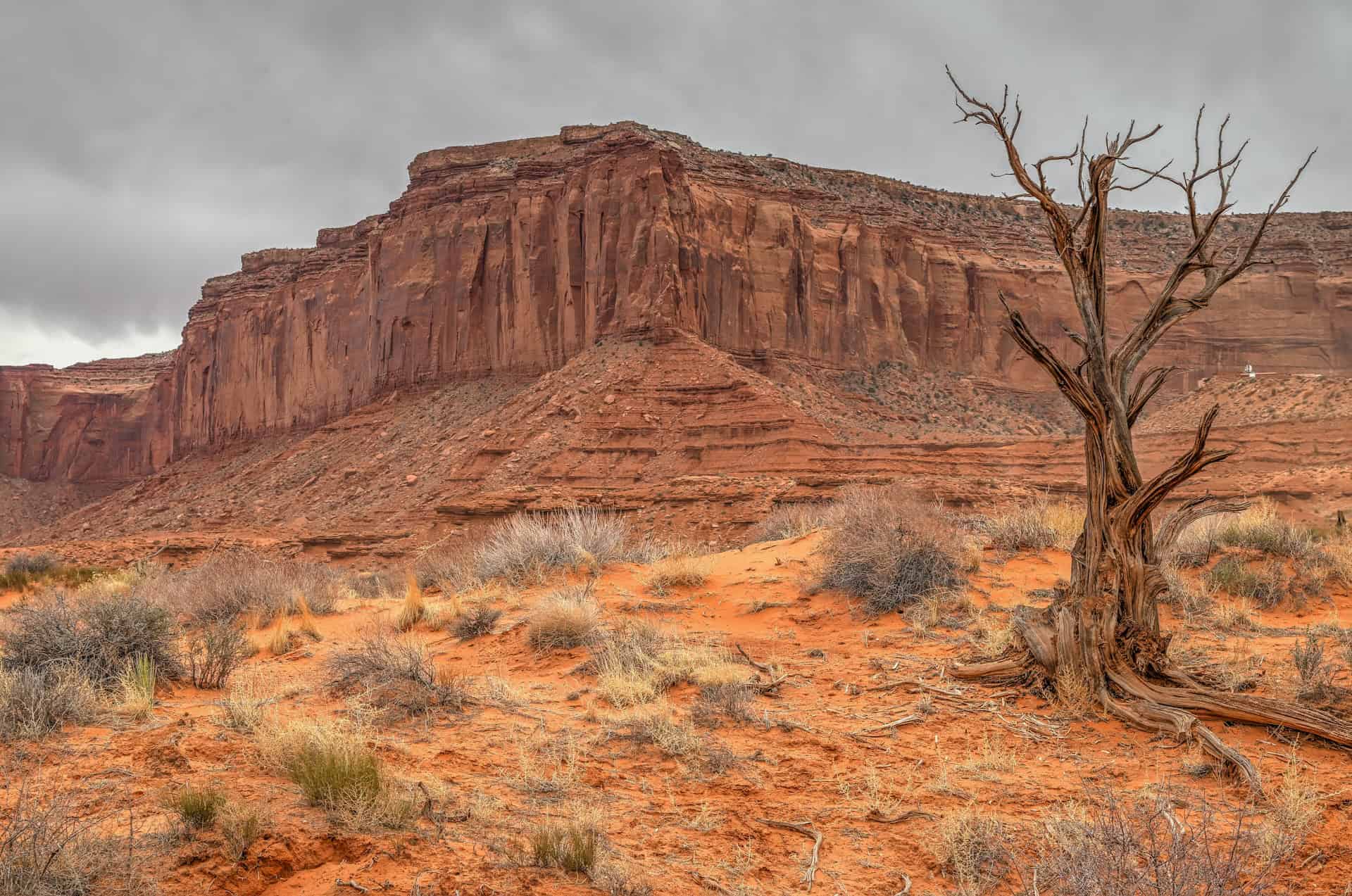
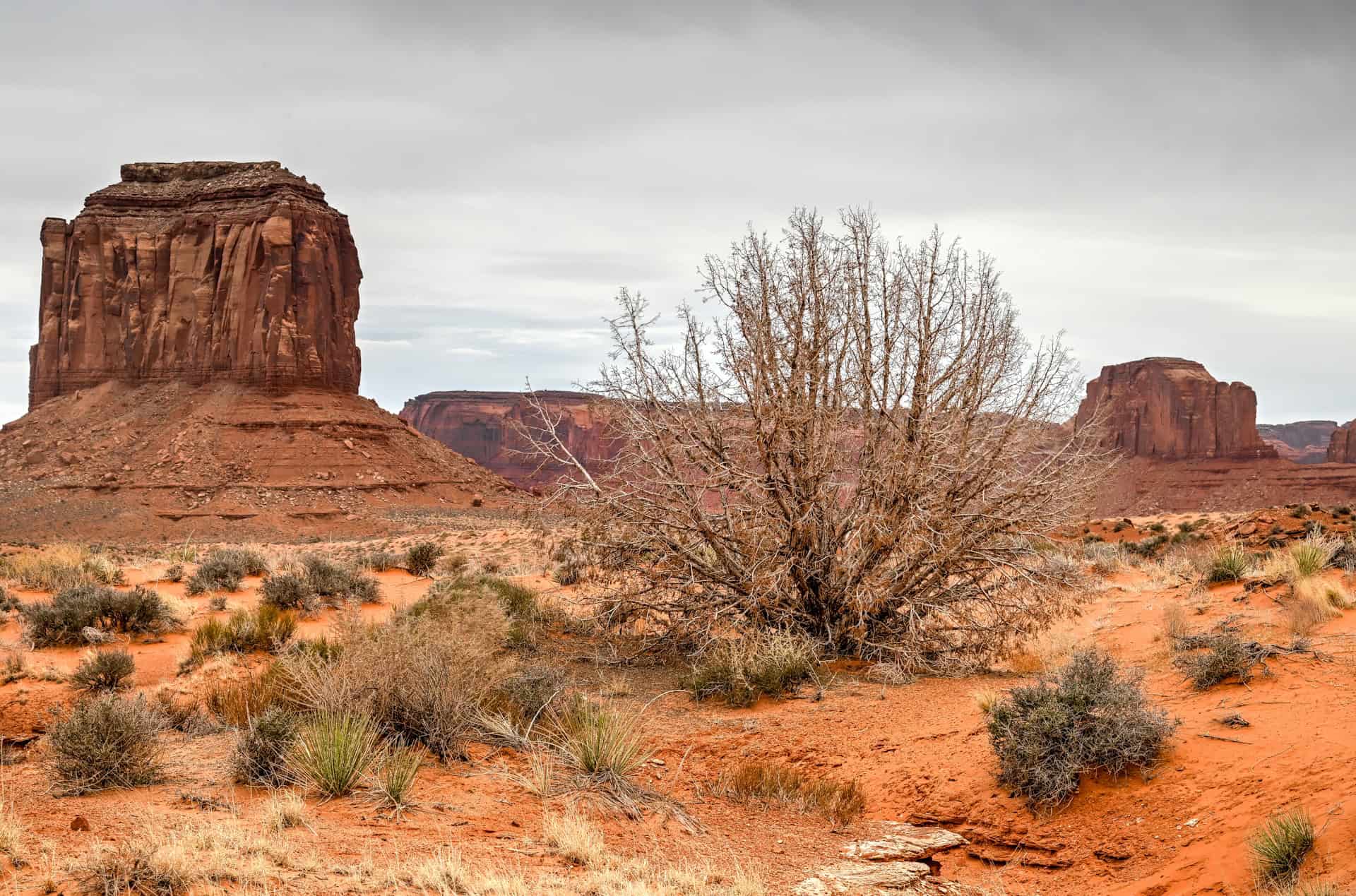
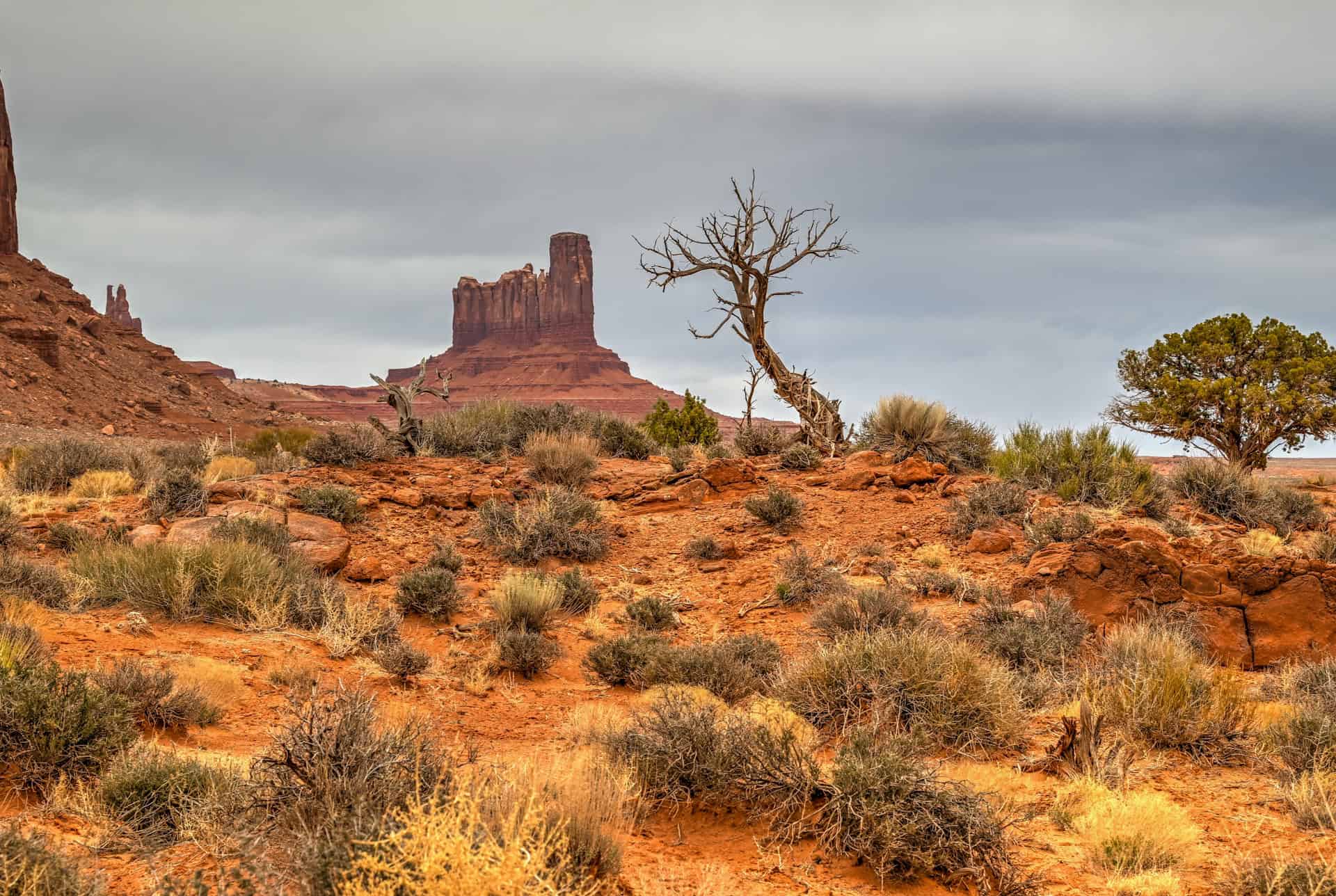
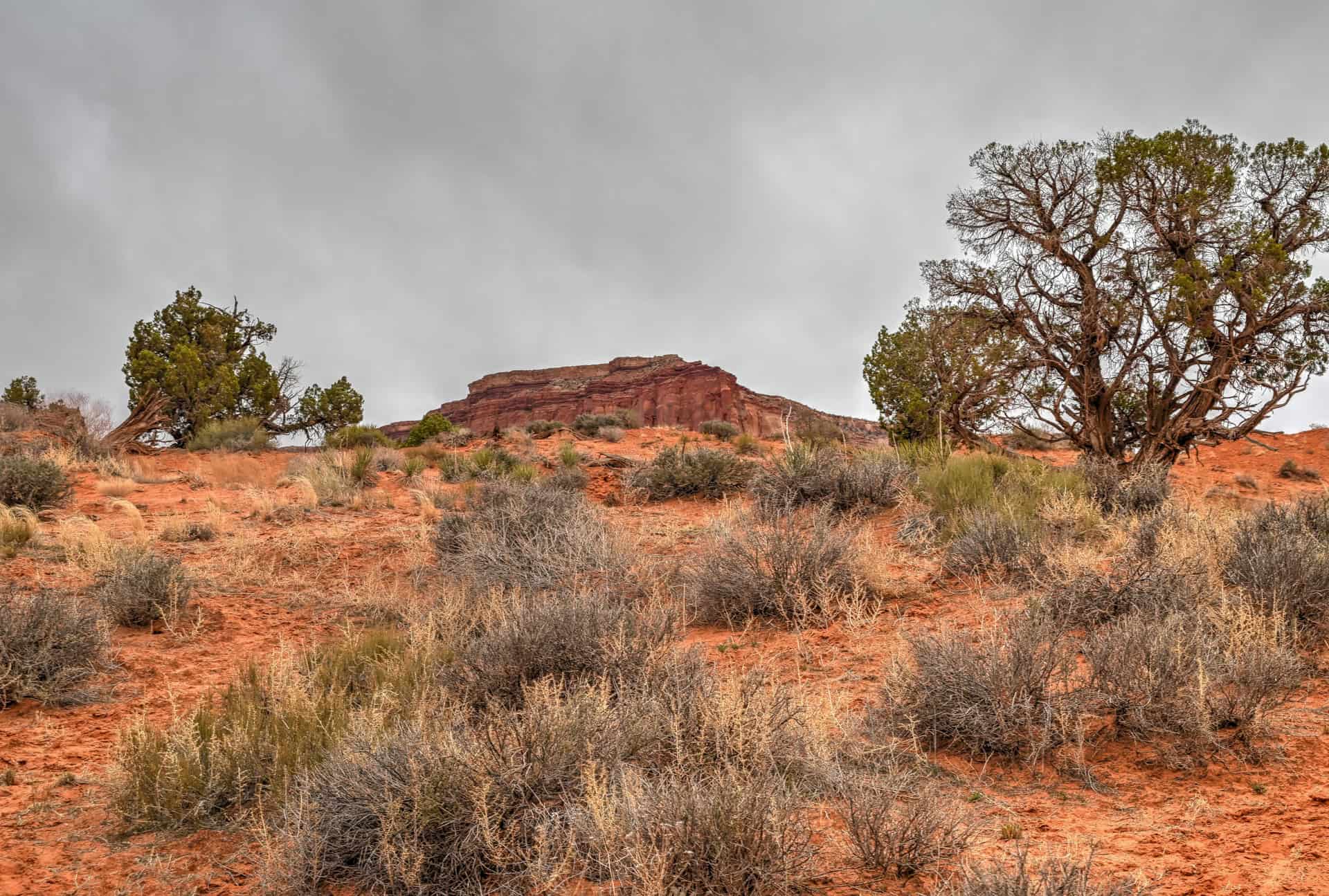
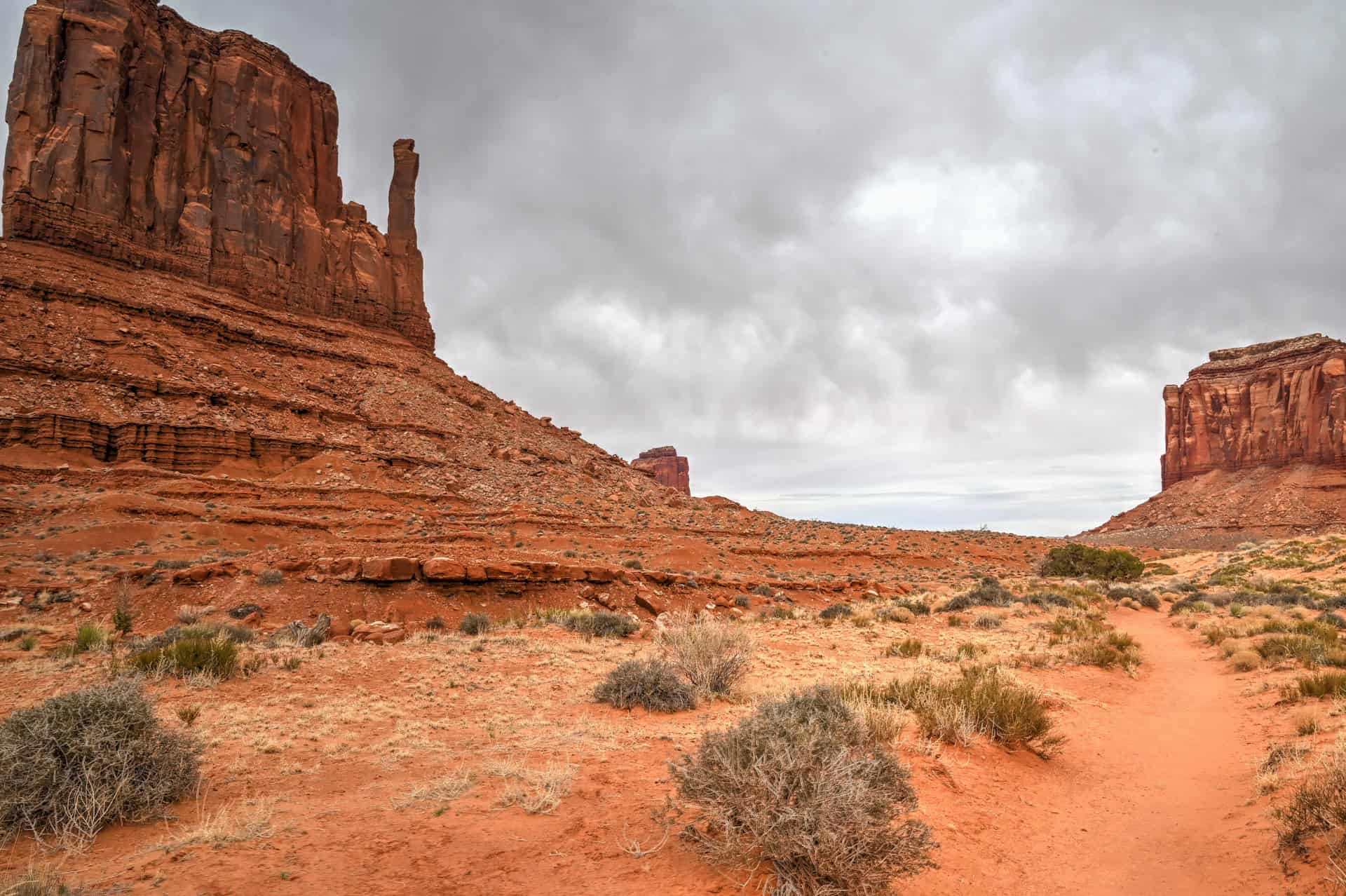
The trail then briefly merges with a two-wheel-drive dirt road that leads to private property; stay on it only briefly until a narrower footpath veers left (northwest) to circle the western base of West Mitten Butte, giving you an entirely new perspective on its sheer cliffs and the shifting colors of its sandstone layers. The desert here is quiet and dotted with sagebrush, yucca, and hardy grasses, a landscape of red sand and silence.


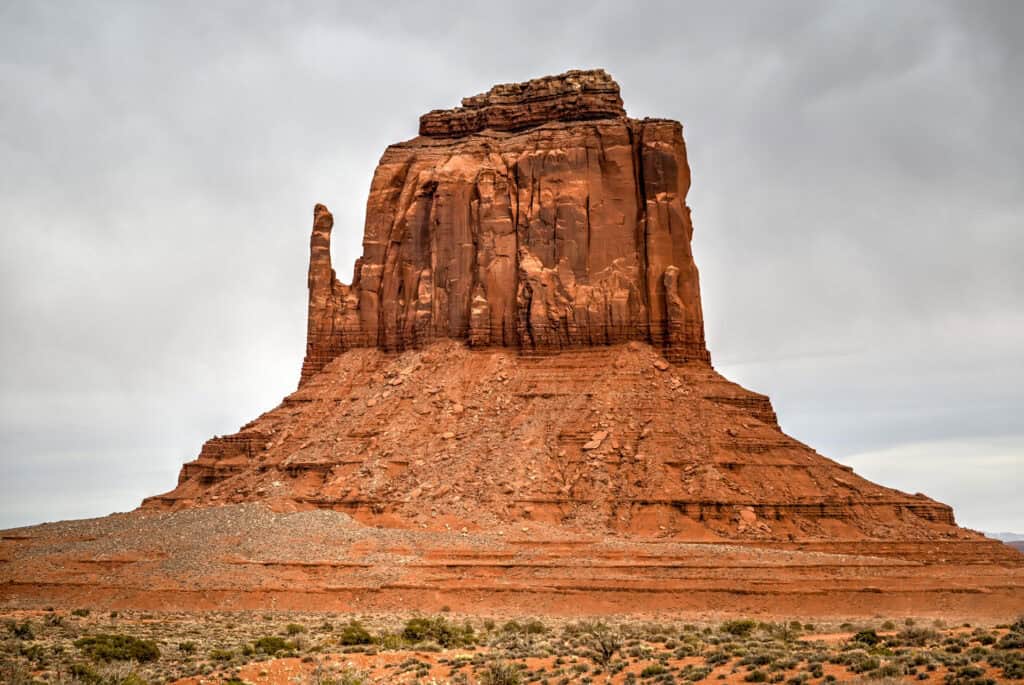
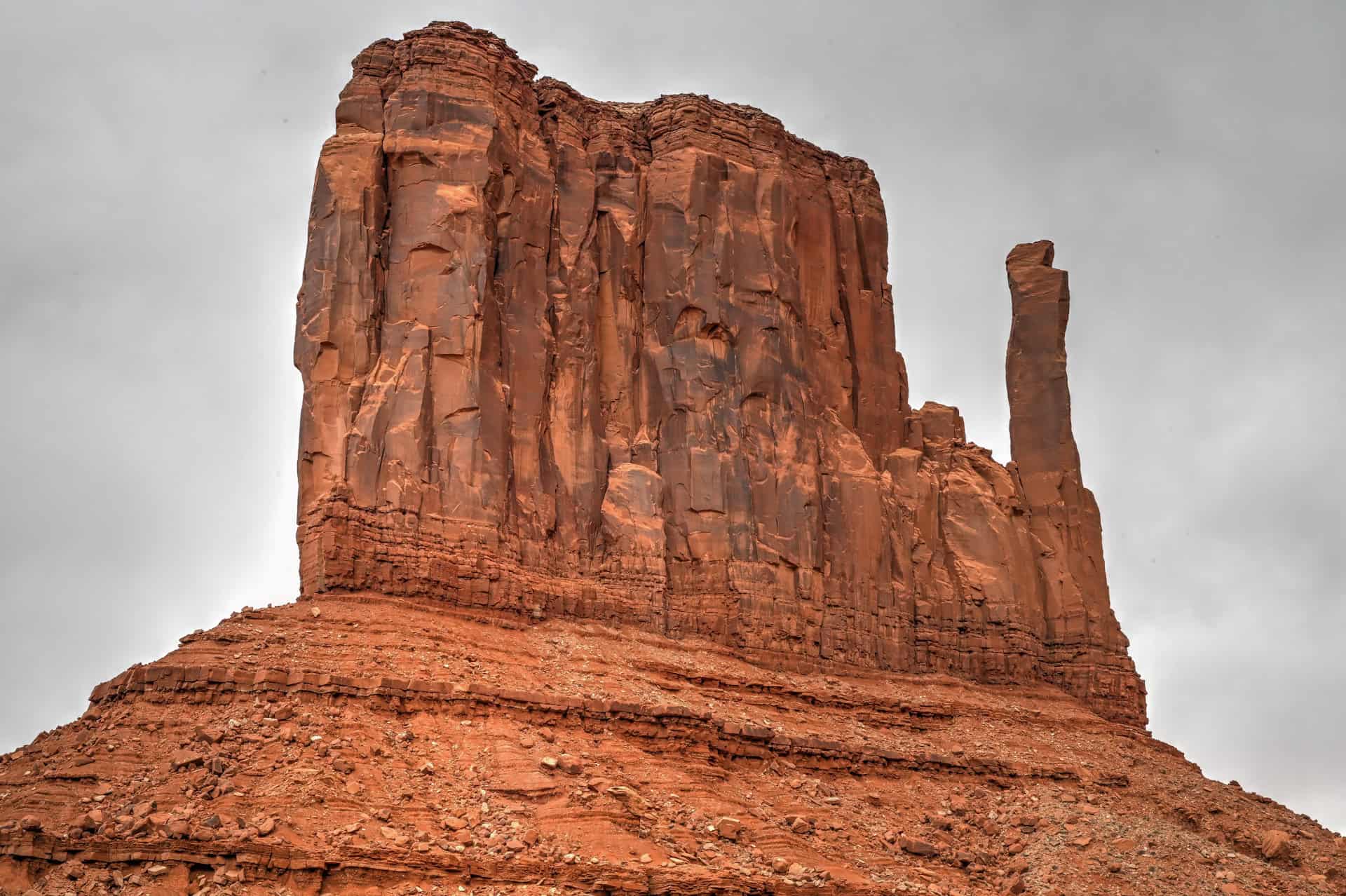


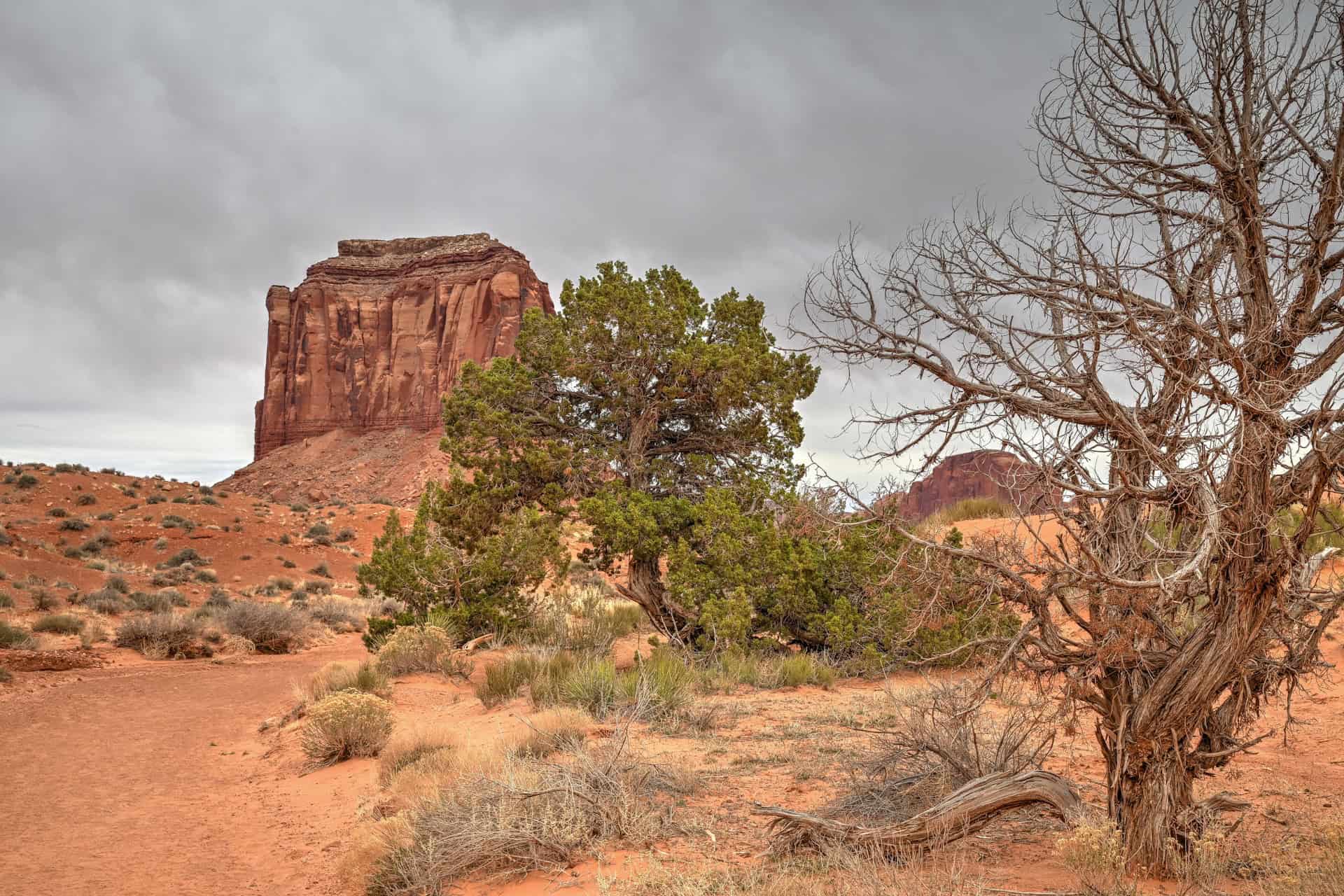
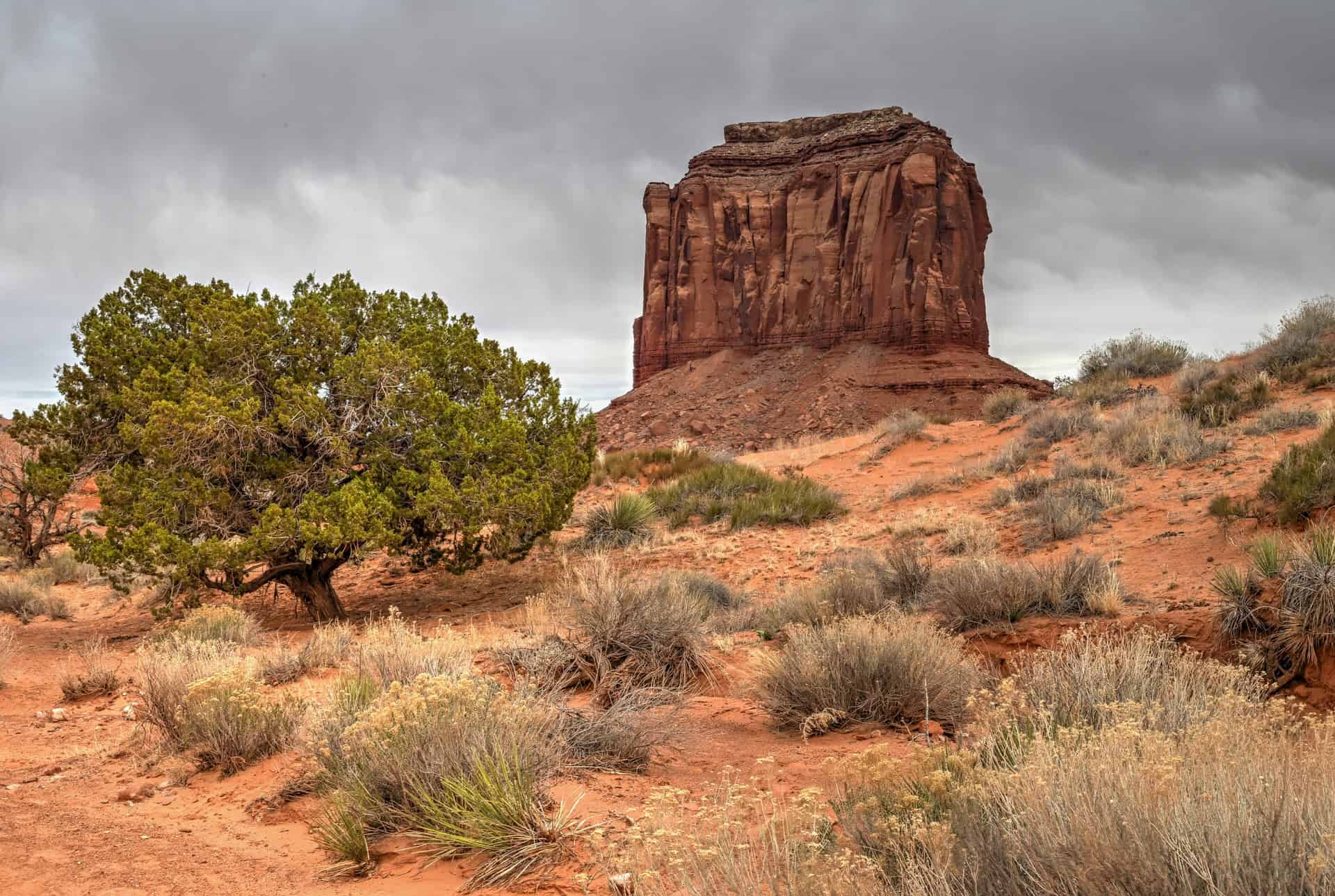
Around the halfway point of the trail, you’ll come across a small picnic area with an outhouse toilet.


At about 2.7 miles (4.3 km), the trail drops briefly into a broad wash, following its sandy bottom for a short distance before climbing out to the left (southwest) at 2.8 miles (4.5 km). From here, the loop gradually curves back toward the west, climbing gently toward the valley rim. You’ll notice signs warning not to cross the wash in the event of flash floods.


You’ll also come across several interpretive signs along the way that identify the hardy desert plants growing along the trail, species like sagebrush, rabbitbrush, and yucca that thrive in Monument Valley’s arid environment.


As the path curves around the base of West Mitten Butte, the landscape opens dramatically, revealing a sweeping panorama of the northern buttes and Sentinel Mesa.


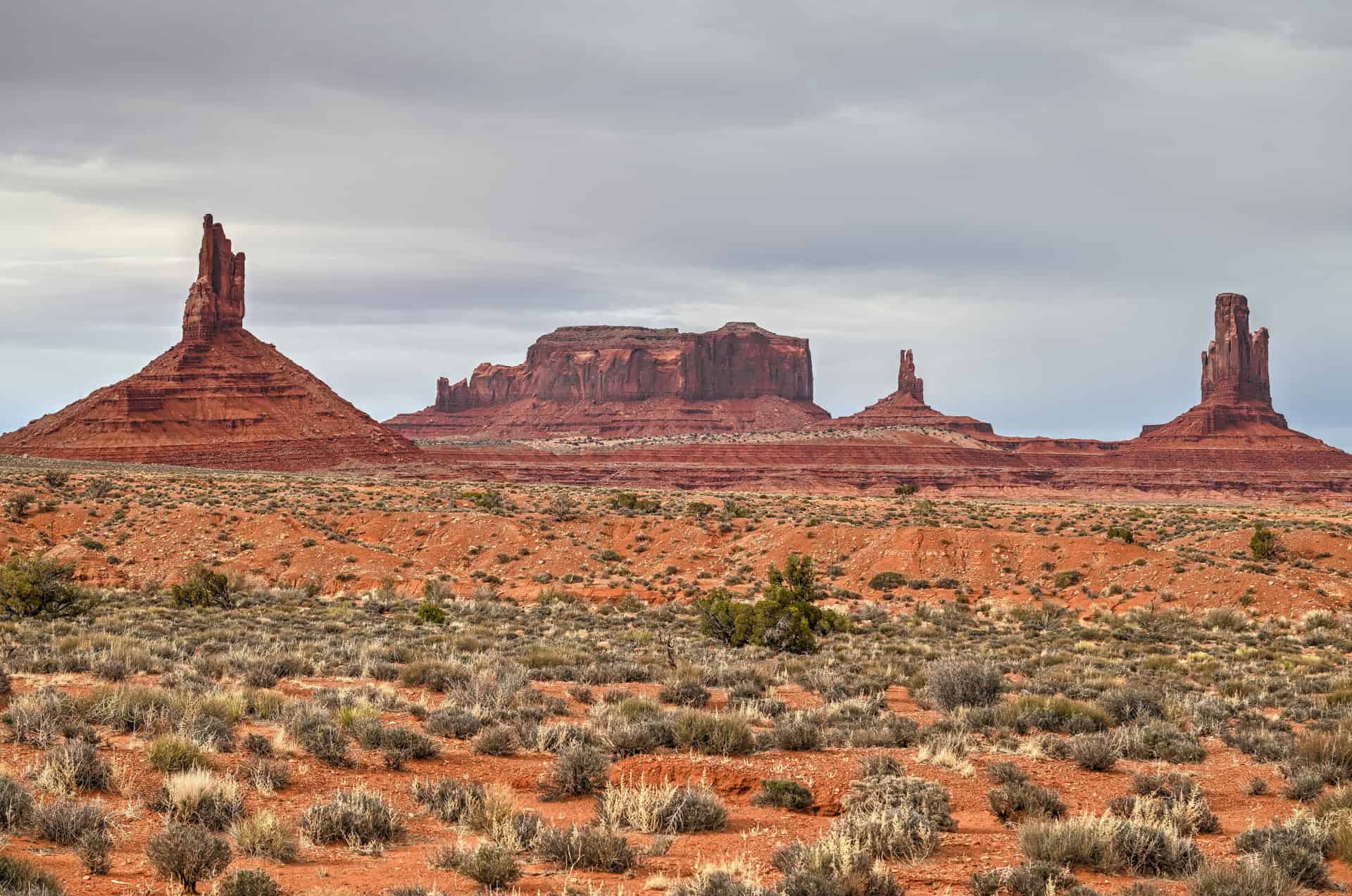
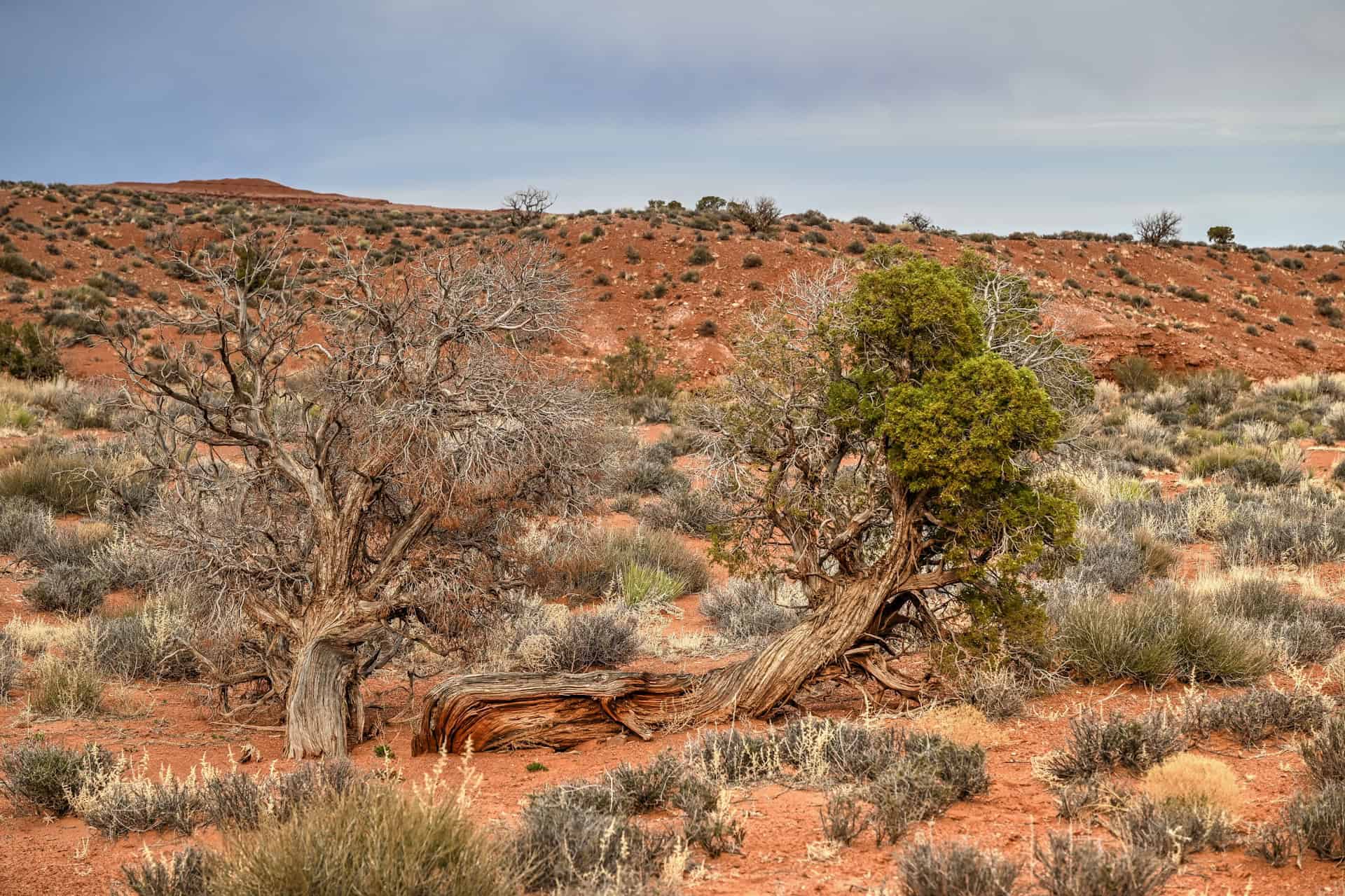
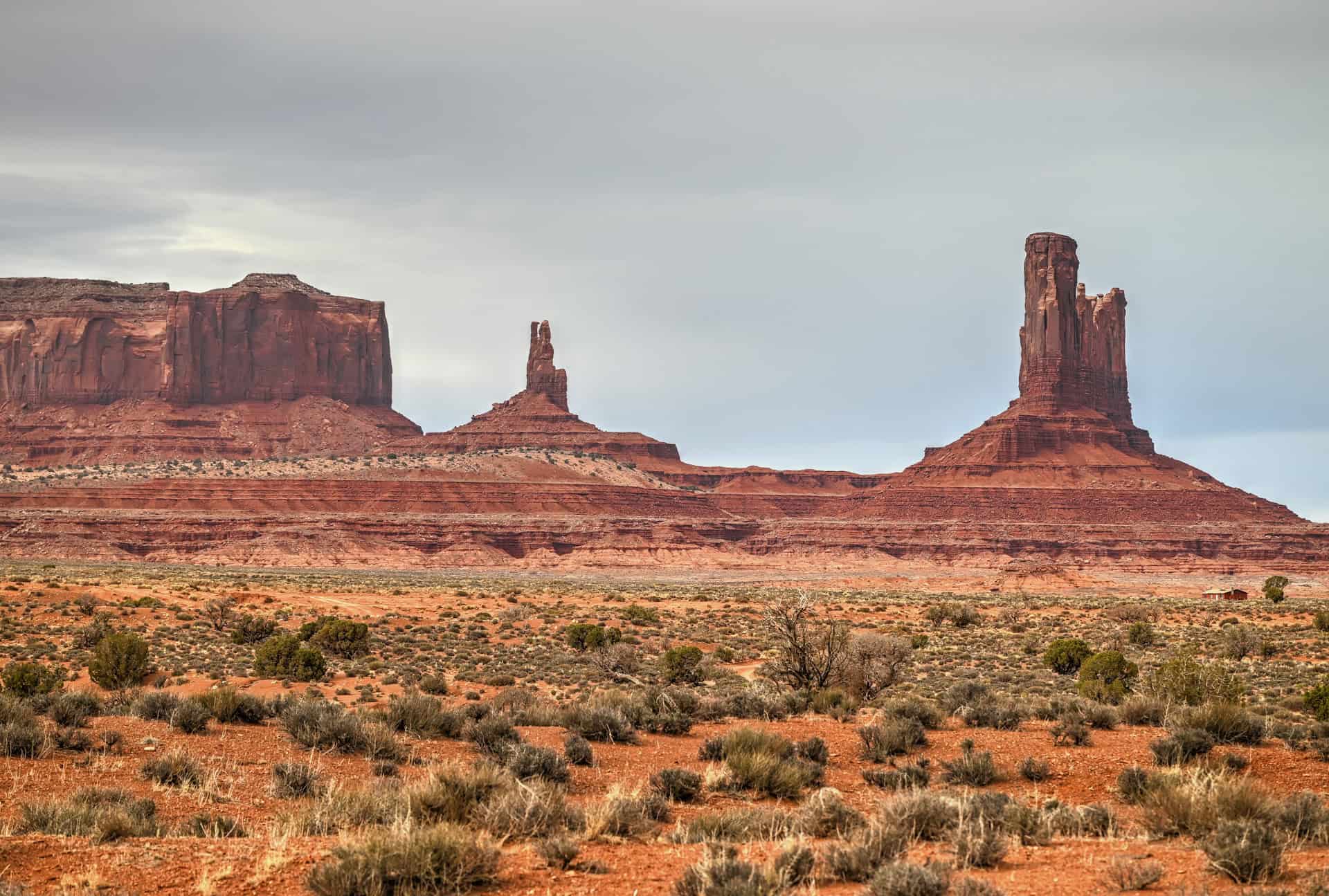
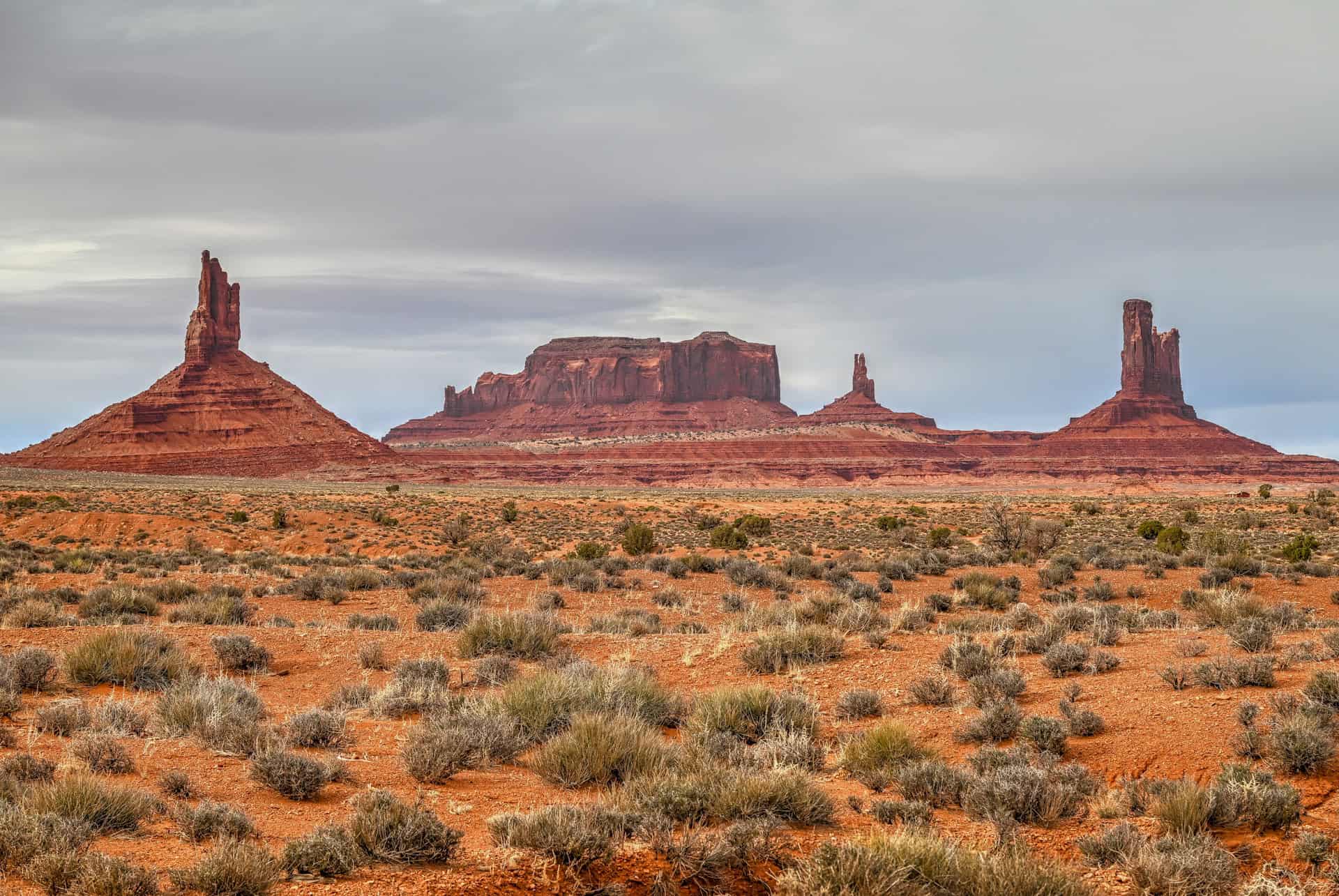
When you reach 3.2 miles (5.1 km), you’ll complete the loop portion of the hike and rejoin the original trail. Turn right (west) to retrace your steps uphill toward the parking area. This final ascent is sandy and exposed, so take your time and enjoy the last sweeping views behind you as the Mitten Buttes recede into the distance.
Soon thereafter, you’ll have returned to the trailhead, having completed one of the most memorable short hikes in the American Southwest. The Wildcat Trail offers something rare in Monument Valley, a chance to leave the car behind, walk among the giants, and truly feel the scale of this sacred Navajo landscape.
Wildcat Trail – Additional Details and Hiking Tips
Canine companions: Dogs are allowed in the park, but must be leashed at all times.
Summit: This trail doesn’t lead to a summit. Its highest point is actually the trailhead (~1,595 m / 5,230 ft).
Trail environment – The Wildcat Trail circles the base of West Mitten Butte, offering continuous, panoramic views of East Mitten and Merrick Butte as you hike. The landscape is classic Monument Valley: vast red sand plains dotted with sagebrush, framed by towering sandstone monoliths that shift in color throughout the day. Shade is virtually nonexistent, so expect full sun exposure for the entire route..
Route signage – Trail markers are present but fairly minimal, typically consisting of small posts or cairns that guide you around West Mitten in a counterclockwise loop. Navigation is generally straightforward in good weather, but it’s easy to lose the path briefly in sandy sections, especially if strong winds have erased footprints. It’s best to download offline maps in advance, such as those available on AllTrails.
Trail surface / Technical aspects – The trail is non-technical but can be physically demanding due to the deep, loose sand found along long portions of the route. There are no steep climbs or scrambles, though the initial and final segments include a gradual descent and ascent to and from the valley floor. Footing can be uneven at times, so sturdy shoes and ample water are essential.
Average trail slope grade: 6%, which is considered a fairly easy incline. However, there are very few flat sections – most of the trail is on a slight descending or ascending incline, which is more pronounced around the trailhead.
Previous Hiking Experience: The Wildcat is relatively easy but can be moderately demanding in sections due to sandy terrain, full sun exposure, and gradual elevation changes. The soft sand makes progress slower than you might expect, especially on the return climb, but the route itself is straightforward and well-marked. Families with older children and casual hikers will find it manageable with proper footwear and water. The reward is the rare chance to walk among the Mitten Buttes and witness Monument Valley’s grandeur from ground level.
Cell Service: Cell coverage in Monument Valley is very limited to nonexistent once you leave the visitor center area. You may have a faint signal near The View Hotel or Goulding’s Lodge, but don’t rely on it. Download offline maps and any trail information before arriving. Always let someone know your plans if hiking alone.
Leave No Trace: While the Wildcat Trail encourages exploration, it’s crucial to stay on the main path and avoid climbing on any rock formations. The buttes and surrounding desert are fragile, and climbing damages the sandstone and erodes the landscape. Be mindful of cryptobiotic soil, which looks like dark, crusty patches. This living layer protects the desert from erosion and can take decades to recover from a single footprint.
Bugs: Insects are usually not a major issue in Monument Valley’s dry desert climate. Gnats may appear in warmer months, especially near the start of the trail after rain, and mosquitoes are minimal. Ticks are very uncommon. A light insect repellent can help in spring and summer, but is rarely necessary.
Equipment: No special equipment is required for the Wildcat Trail, but sturdy hiking shoes or boots are highly recommended due to the deep sand and occasional rocky sections. Bring plenty of water along with a hat, sunscreen, and sunglasses. Trekking poles can help with stability in sandy stretches, though they aren’t essential.
Weather and Exposure: The Wildcat Trail is completely exposed to the elements, offering little to no shade. Expect intense sun and high temperatures from late spring through early fall, making early morning or late afternoon the most pleasant times to hike. During winter, temperatures can dip below freezing, and strong winds may whip through the valley, creating wind chill and blowing sand. Always check conditions before setting out: Monument Valley’s open landscape offers incredible views, but it also leaves hikers fully exposed to the desert climate.
Current Trail Conditions: For current trail conditions, it’s best to check with the visitor center.
Wildlife: While Monument Valley’s vast desert landscape may appear barren at first glance, it quietly supports a resilient community of desert-dwelling animals. Lizards are the most commonly seen, scurrying across the sandy trail or basking on sun-warmed rocks. In the early morning or evening, keep an eye out for larger mammals such as jackrabbits, coyotes, and occasionally desert bighorn sheep wandering near the cliffs. However, sightings are less frequent here compared to nearby areas due to the arid climate and presence of Navajo livestock.
While snakes, including rattlesnakes, do inhabit the region, encounters are uncommon; most prefer to stay hidden and avoid human activity.
Hiking Packing List
All Trails subscription – This comes in really handy for areas with little or no cell reception, as the annual subscription allows you to download trail maps for offline use.
External Battery – If you are using your phone to track your progress along the trail or to help with navigation, you certainly don’t want your phone to die on you. That’s especially true in the unlikely event that you might get hurt or need assistance.
Hiking poles – These can be particularly useful in steep trails or muddy/boggy trail conditions.
Water Filter Bottle – The Life Straw bottle is an advanced water bottle with a filter that not only improves water taste but more importantly filters out bacteria and parasites, chemicals and microplastics.
Headlamp – very practical and a smart choice if you plan to start your hike before sunrise or finish it after sunset.
Best Time to Hike the Trail
The Wildcat Trail can be enjoyed year-round, but Monument Valley’s desert climate means that timing your hike can make a big difference in comfort and experience. The best seasons are spring and fall, when temperatures are mild, the air is clear, and the light brings out the rich colors of the sandstone buttes.
Spring (March–May):
Spring is one of the most rewarding times to hike the Wildcat Trail. Daytime temperatures generally range from 60–80°F (16–27°C), creating ideal hiking conditions. The desert floor begins to show hints of green, and the softer sunlight enhances the deep reds and golds of the valley’s buttes. Winds can occasionally be brisk in early spring, especially in March, but they often ease as the season progresses. Morning and late afternoon hikes are particularly beautiful, offering both comfort and exceptional lighting for photography.
Summer (June–August):
Summer in Monument Valley can be intense. Daytime highs often exceed 95°F (35°C), and there is little to no shade along the Wildcat Trail. If you visit during these months, start your hike before 8:00 a.m. or in the last two hours before sunset to avoid the worst heat. Carry plenty of water and wear a wide-brimmed hat and sun protection.
The monsoon season, which typically runs from July through early September, brings short but powerful afternoon thunderstorms that can create dramatic skies but also dangerous lightning and localized flooding. Always check the weather forecast before starting out.
Fall (September–October):
Fall rivals spring as the best time to explore Monument Valley. Daytime temperatures settle back into the comfortable 60–80°F (16–27°C) range, while nights become cool and crisp. The summer crowds thin out, and the golden autumn light gives the buttes a warm, glowing hue, especially at sunrise and sunset. Air clarity tends to be excellent during this period, making it a favorite for both hikers and photographers.
Winter (November–February):
Winter brings a quieter, more introspective side to Monument Valley. Crowds are minimal, and the low-angled sun casts dramatic shadows across the valley floor. Daytime highs typically range from 40–55°F (4–13°C), though mornings and evenings can dip below freezing. Light snowfalls are possible and can transform the landscape into a breathtaking scene of red rock dusted in white. The trail remains open, but dress warmly and be prepared for occasional strong winds.
Quick Summary – When to Visit
For the most enjoyable conditions, spring and fall are ideal. Summer is manageable if you start early and prepare for the heat. Winter offers solitude and striking scenery, though you’ll need to dress in layers and watch your footing.
About Monument Valley
Timeless Desert Icons: Monument Valley’s towering sandstone buttes and mesas, some rising over 1,000 feet (300 m), form one of the most recognizable landscapes in the American Southwest. These colossal formations have been shaped over millions of years by erosion, leaving behind an awe-inspiring desert panorama of red rock spires, vast open plains, and deep blue skies.
Navajo Nation Heritage: Monument Valley lies entirely within the Monument Valley Navajo Tribal Park, which is managed by the Navajo Nation Parks and Recreation Department. The Navajo Tribal Parks system functions as the Navajo Nation’s equivalent to the U.S. National Park Service, preserving the land’s cultural and natural significance for future generations. Visitors are guests on Navajo land, where traditional herding, farming, and crafts continue to thrive.
Hollywood’s Western Backdrop: From classic John Ford films like Stagecoach and The Searchers to modern blockbusters and car commercials, Monument Valley has long been the cinematic symbol of the American West. Standing among the Mittens and Merrick Butte feels instantly familiar, like stepping into a movie scene brought to life.
Dark Skies & Desert Silence: Far from urban light pollution, Monument Valley offers pristine night skies ideal for stargazing. The quiet of the desert, broken only by wind and distant echoes, creates an atmosphere that’s as spiritual as it is scenic.
Exploring the Valley: Visitors can take in the landscape via the 17-mile Valley Drive, accessible by guided tour or private vehicle (when conditions allow), or experience it on foot along the Wildcat Trail, the park’s premier self-guided hiking route. Both reveal the monument’s scale and beauty in unforgettable ways.
Other Things to Do in Monument Valley
Beyond the Wildcat Trail, Monument Valley offers a range of unforgettable experiences that showcase its beauty from every angle. Those looking for additional hiking opportunities can explore short interpretive trails such as the Lee Cly Trail, which provides elevated views of the valley’s buttes without descending to the valley floor.
For many visitors, the 17-mile self-guided scenic drive is the park’s main highlight: an unpaved loop that winds among towering monoliths like the Totem Pole and the Three Sisters, accessible to most vehicles in dry conditions. To venture deeper into the restricted backcountry, guided jeep tours led by local Navajo guides offer access to sacred sites, hidden arches, and petroglyphs not open to the public.
If you want a more immersive experience, consider a horseback ride through the valley, tracing the same paths that Navajo herders and Hollywood film crews once used. Sunset and sunrise tours are especially popular, when the buttes glow in vivid shades of red and orange. After dark, the valley’s isolation makes it a premier destination for stargazing tours, where the Milky Way shines brilliantly above the desert.
For a complete overview of these activities, including tour options, costs, and photography tips, see our full Monument Valley Travel Guide.
Where to Stay Near Monument Valley
When it comes to accommodation, few places in the American Southwest can match the views offered by The View Hotel, the only lodging located directly inside Monument Valley Navajo Tribal Park. Perched on the rim above the valley floor, it lives up to its name: every room, cabin, and even the on-site restaurant faces the Mittens and Merrick Butte. Waking up to the sunrise lighting up these iconic formations, or watching them fade into silhouette at sunset, is an unforgettable experience. While prices here are on the higher side, the location and scenery make it absolutely worth the splurge.
Just a 10-minute drive away, Goulding’s Lodge is the next best option. A historic property dating back to the 1920s, it offers comfortable rooms, suites, and cabins with partial valley views. The lodge also features a small museum, a restaurant, a grocery store, and the nearest gas station to the park, making it a convenient and slightly more affordable alternative to The View.
Some travelers choose to stay farther afield in Kayenta (30 minutes south) or Mexican Hat (30 minutes north), where prices are noticeably lower and more options are available. However, staying outside the park means missing the chance to experience Monument Valley at its most magical, during sunrise and sunset. Driving these stretches in the dark is not recommended, as the roads are unlit, open-range livestock often wander onto the pavement, and cell service can be limited.
- In Kayenta, the Hampton Inn Kayenta is the top choice, offering modern rooms, a restaurant, and reliable amenities.
- In Mexican Hat, the Hat Rock Inn stands out for its scenic location above the San Juan River and easy access to the Valley of the Gods and Goosenecks State Park.
For those traveling by RV or looking to camp, there are also several excellent options:
- The View Campground – Located right next to The View Hotel, this campground offers both tent and RV sites with stunning vistas of the Mittens. Facilities include restrooms, picnic tables, and fire pits.
- Goulding’s Campground & RV Park – A few minutes west of the park entrance, this site provides full RV hookups, showers, and access to the lodge’s pool and store—ideal for travelers seeking a bit more comfort.
Still, if your goal is to witness Monument Valley’s grandeur from dawn to dusk without ever leaving its scenery, The View Hotel remains the ultimate place to stay.
Wildcat Trail – Frequently Asked Questions
Is the Wildcat Trail open year-round?
Yes. The Wildcat Trail is open year-round, though conditions vary by season. Spring and fall are ideal, with pleasant daytime temperatures and clear skies. Summer can bring intense heat, often exceeding 95°F (35°C), so early morning or late afternoon hikes are best. Winter is generally quiet and beautiful, though temperatures can dip below freezing, and snow occasionally dusts the buttes.
How long does it take to hike the Wildcat Trail?
Most visitors complete the 4-mile (6.4 km) loop in about 1.5 to 2 hours, depending on pace and how often you stop for photos. Allow extra time if you want to linger at the viewpoints or enjoy the solitude on the valley floor.
How difficult is the trail?
The trail is rated easy on average. There are no technical sections, but hikers should be prepared for deep sandy stretches and moderate elevation changes when climbing back up to the parking area. The main challenge is exposure to sun and heat, so bring plenty of water and sun protection.
Is a guide required to hike the Wildcat Trail?
No. The Wildcat Trail is the only self-guided hiking trail within the Monument Valley Navajo Tribal Park that descends onto the valley floor. All other hiking routes or scenic drives beyond this trail require a Navajo guide or participation in a permitted tour.
What’s the best time of day to hike the Wildcat Trail?
Early morning is ideal, especially in warmer months. The light is soft, temperatures are cooler, and you’ll likely have the trail to yourself. Late afternoon is also beautiful as the setting sun paints the buttes in deep red and orange hues, though allow enough time to finish before sunset (hiking after dark is prohibited).
Are dogs allowed on the Wildcat Trail?
Dogs are allowed in the park, but must be leashed at all times.
Is it safe to hike the Wildcat Trail alone?
Yes. provided you come prepared. Monument Valley is generally very safe, but conditions can be harsh. Always carry plenty of water, sun protection, and downloaded offline maps. Let someone know your plans if hiking solo, and avoid the trail during storms due to the risk of flash flooding in washes.
Can I hike at sunrise or sunset?
You can start right after sunrise and must finish by sunset, as the trail and park close after dark. For sunrise and sunset photography, the best views are often from the overlooks near The View Hotel or the visitor center, where you can safely enjoy the changing light over the buttes.
Explore More Utah National & State Park Guides
Continue exploring Utah with these detailed guides:
Bryce Canyon National Park Guide
Capitol Reef National Park Guide
Goblin Valley State Park Guide
Arches National Park Guide
Canyonlands National Park Guide
Zion National Park
Explore More Arizona
Continue exploring Arizona with these detailed guides:
Best Things to See and Do in Sedona
Best Stops and Must-See Attractions Between Las Vegas and Sedona
Best Things to Do in Page
Sunset Crater Volcano National Monument
Photography Gear
If you like our photography, you might be interested in some of the gear we use to shoot our travel and hiking destinations.
Camera Body – Nikon Z 6ii Fx-series Mirrorless Body
Main Lens – NIKON 24-120mm F/4G ED VR AF-S
Zoom Lens – Sigma 745-306 150-600mm f/5-6.3
Polarizing filters – Urth Circular Polarizing (CPL)
Camera Tripod – K&F Concept 64-inch Camera Tripod
Mini-tripod – Lammcou Flexible Camera Tripod
Camera/hiking backpack – Vanguard Alta Rise 48 Backpack
Universal Travel Adapter – VYLEE Universal International Power Travel Plug
Other Travel Essentials
Travel Insurance
SafetyWing is a travel insurance company that offers comprehensive coverage for travellers. Includes Medical Insurance and Travel Insurance. Primarily geared towards long-term travellers, digital nomads, and expats.
e-Sim cards
Airalo is the world’s first and largest eSIM store with eSIM plans for 200+ countries and regions worldwide. With Airalo eSIMs, travellers can get connected the moment they land at their destination and avoid nasty data roaming charges
eSIMS are a sustainable alternative to single-use SIM cards – they are 100% digital, require less energy to produce and be re-used rather than disposed of.
Car Rentals
Discover Cars is our go-to website for car rentals. We almost always find our preferred rate there.
Transfer from Airport
Welcome Pickups is our favourite private transfer service, which you can pre-book at a fixed price. Currently available in 220 cities all over the world (mostly in Europe, but with several major cities in Asia, the Middle East and the US).
Kiwitaxi is another private transfer service – we haven’t tried it yet, but it’s currently available in a few more countries (102 as of 2024).
Hotels and Accommodations (coming soon)
Photography Prints
If you found this blog useful, you can help support our blog by purchasing low-cost digital prints. Printed physical prints are also available for purchase.


—–
Well, that wraps it up! We hope you enjoyed our Monument Valley Hiking Guide for the Wildcat Trail and that it will prove useful for planning your hiking trip.
—–
You might also be interested in these related pages: