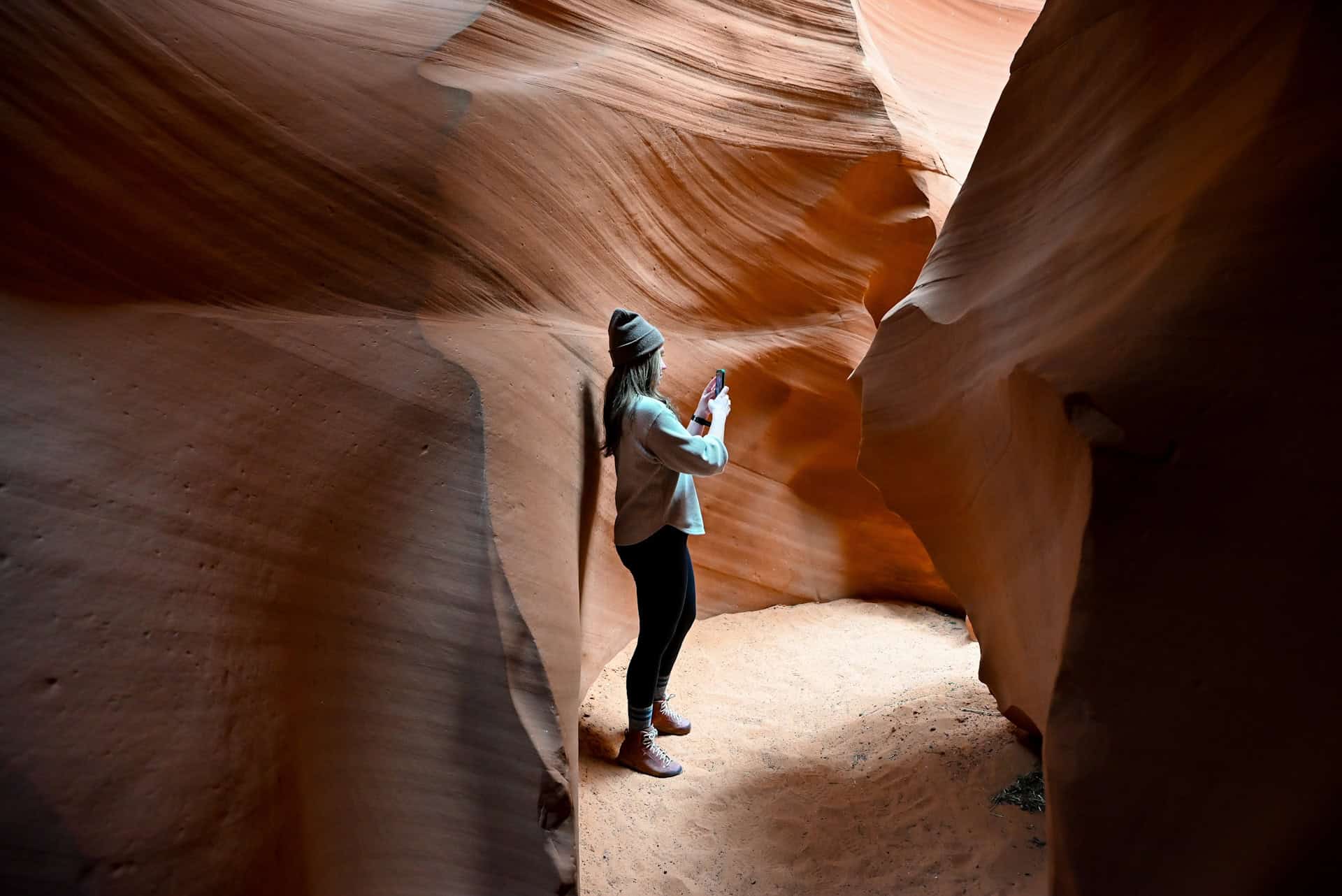
Just east of Page, Arizona, Antelope Canyon X offers a more peaceful and accessible way to experience the surreal beauty of the region’s world-famous slot canyons. Its smooth Navajo sandstone walls twist and curve in elegant waves, glowing in warm tones of orange and gold as sunlight filters from above. Managed by Taadidiin Tours on Navajo Nation land, Antelope Canyon X provides a less crowded, equally photogenic alternative to the Upper and Lower canyons, perfect for travellers who want to immerse themselves in the same breathtaking scenery without the large tour groups.
To help you plan your visit, we’ve put together this complete Antelope Canyon X guide, including how to reach the site, how it compares to the other canyons, what to expect on your tour, and tips for capturing its incredible light and texture.
Antelope Canyon X – At a Glance
A quieter alternative to the classic Antelope tours – Located just southeast of Page, Arizona, Antelope Canyon X offers the same stunning light beams, sculpted sandstone walls, and glowing textures as the Upper and Lower canyons, but with far fewer crowds and a more relaxed pace.
Two slot canyons in one tour – The guided experience includes access to two separate canyon sections, each showcasing its own colors, curves, and photo angles. You’ll descend into narrow passageways where shifting light transforms the walls from deep orange to radiant gold.
Guided by Navajo hosts – As part of the Navajo Nation, all visits are led by local guides who share stories about the land, culture, and the formation of these unique canyons carved by water and time.
Easier logistics, same unforgettable views – Tours depart directly from Highway 98, a short distance from Page. Unlike Upper and Lower Antelope Canyon, which often book out weeks in advance, Antelope Canyon X typically offers easier availability while maintaining a world-class experience.
Ideal for photographers and casual visitors alike – With fewer people per group and more time inside the canyon, it’s easier to set up the perfect shot or simply enjoy the silence and beauty of the swirling sandstone corridors.


Disclosure: This page (Antelope Canyon X Guide) may contain product affiliate links. At no additional cost to you, we may receive a commission for purchases made through these links. More details can be found on our disclosure and policies page.
Antelope Canyon X – Location and Map
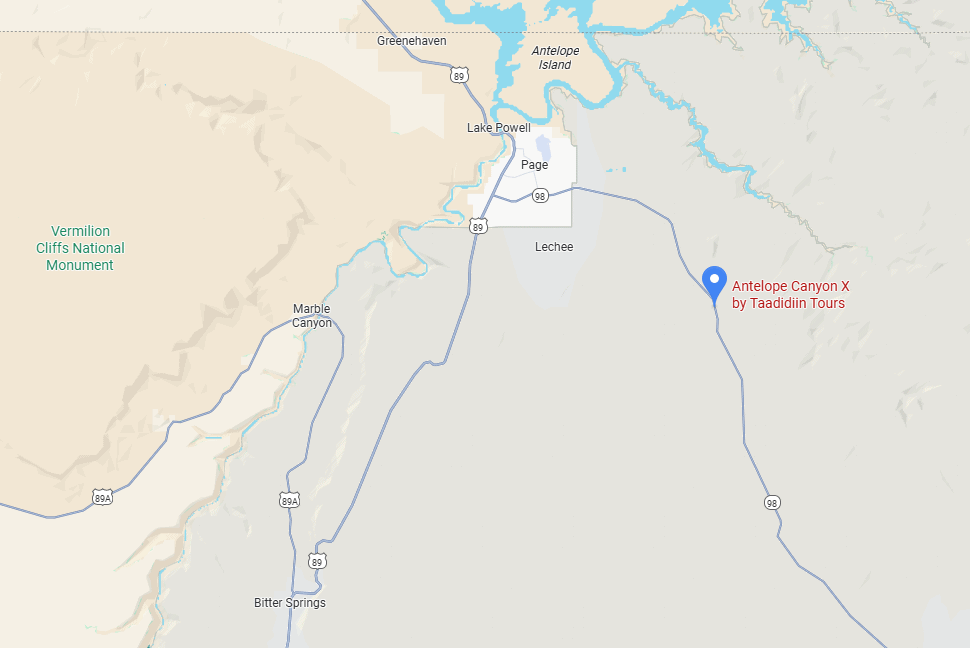
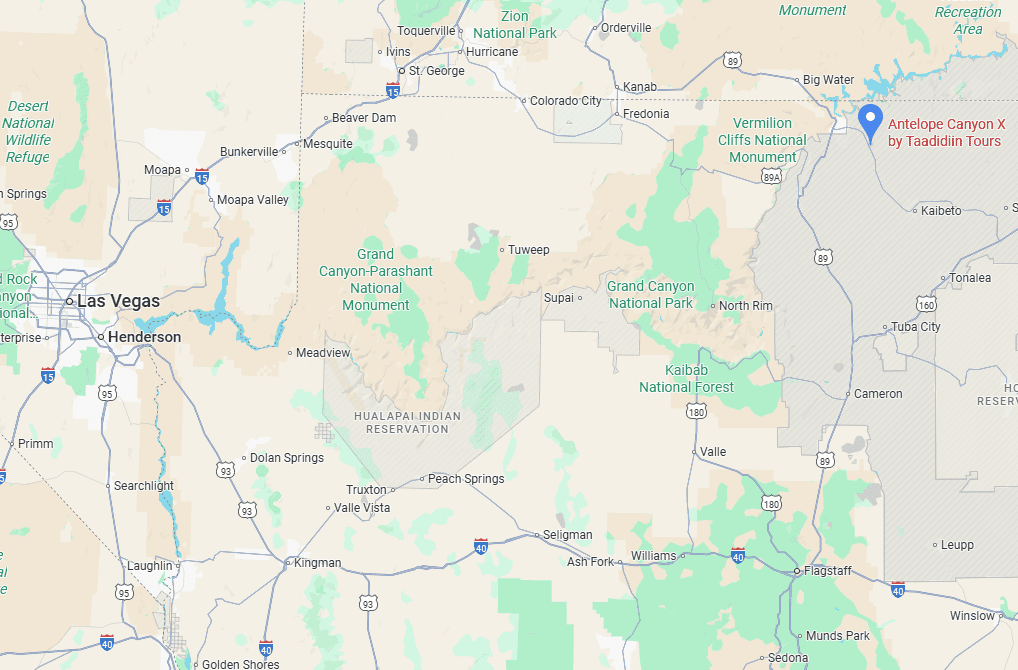
Antelope Canyon X is located just southeast of Page, Arizona, on Navajo Nation land along Highway 98. The check-in point is about 12 miles (18 km) from downtown Page and roughly 15 minutes by car (link to Google Maps).
About Antelope Canyon & the Navajo Lands Around Page
A Landscape Carved by Time: Antelope Canyon is one of the most extraordinary slot canyons in the American Southwest, a masterpiece sculpted by flash floods and centuries of wind and water erosion. Beneath the desert surface, narrow corridors twist and glow with shifting beams of light that filter through the sculpted Navajo sandstone, revealing swirls of orange, red, and gold.
More Than One Canyon: “Antelope Canyon” actually refers to several separate slot canyons spread across Navajo land near Page, Arizona, including Upper Antelope, Lower Antelope, and Antelope Canyon X. While the upper and lower sections are the most famous (and busiest), Antelope Canyon X offers a quieter, more immersive experience with fewer crowds and equally photogenic chambers. It’s named for the two “X”-shaped openings where sunlight streams through intersecting canyon walls.
Cultural and Spiritual Significance: These canyons lie on the Navajo Nation, and each visit is led by Navajo guides who share insight into the area’s geology, legends, and cultural importance. The canyons are considered sacred places, symbolizing both the creative and destructive power of water. Visitors are encouraged to tread respectfully and appreciate the deeper connection between landscape and heritage.
Gateway to the Colorado Plateau: Located just minutes from Page, Antelope Canyon sits within a region defined by spectacular contrasts: from the turquoise waters of Lake Powell to the sweeping viewpoints of Horseshoe Bend and the rugged expanse of Glen Canyon. Together, these landscapes showcase the dramatic intersection of desert, water, and time that defines northern Arizona.
A Must-See for Photographers and Explorers: With its otherworldly textures and glowing light beams, Antelope Canyon has become one of the most photographed destinations in the world, yet each section retains its own personality. Antelope Canyon X, in particular, combines the grandeur of the classic slots with a more peaceful, personal experience, making it a favorite for travelers seeking both beauty and solitude.
How to Get to Antelope Canyon X in Page, Arizona
Antelope Canyon X is best reached by car, as there is no public transportation directly to the canyon.
Driving times to Page, AZ
- Las Vegas, NV: 450 km / 280 mi – about 4.5–5 hours
- Phoenix, AZ: 450 km / 280 mi – about 4.5–5 hours
- Flagstaff, AZ: 200 km / 125 mi – about 2.5 hours
- Kanab, UT: 120 km / 75 mi – about 1.5 hours
- Monument Valley, UT/AZ: 195 km / 120 mi – about 2 hours
These times assume good weather and minimal stops.
If you need to book a rental vehicle for your hiking excursion, we highly recommend using Discover Cars to get the best rates on your rental in Utah, Nevada and Arizona.
We also highly recommend Airalo (eSIM card) for your connectivity needs when travelling abroad. Airalo is the world’s first and largest eSIM store with eSIM plans for 200+ countries and regions worldwide.
Nearest Gas Stations
Given the canyon’s proximity to Page, there are several gas stations within 15 minutes of the canyon entrance.
Group Tour Option
An alternative way to reach Antelope Canyon is by joining an organized day trip group expedition, although these involve a significant amount of time on the road.
This one departs from Vegas and includes round-trip transportation (about five hours each way) and stops at major highlights such as Horseshoe Bend, Glen Canyon Dam, and your choice of Antelope Canyon tour (Antelope Canyon X, Upper Antelope Canyon, or Lower Antelope Canyon): Antelope Canyon X is the least expensive option, and Upper Antelope Canyon is the most expensive:
There’s also a shorter but similar trip for those wanting to depart from Sedona or Flagstaff:
How to Visit Antelope Canyon X
Access to Antelope Canyon X is only permitted with a guided tour led by a Navajo-authorized operator. The canyon lies entirely on Navajo Nation land, and visitors cannot enter independently. The experienced Taadidiin tour guides not only lead you safely through the slots but also share insights into the canyon’s formation, cultural significance, and the best photographic angles.
Advance booking is highly recommended. Antelope Canyon X tours are smaller and less crowded than those at Upper or Lower Antelope, but time slots still fill up quickly, especially during spring and fall. We recommend reserving through a trusted platform like GetYourGuide, which offers easy scheduling, instant confirmation, and free cancellation options (up to 4 days in advance).
We highly recommend the following tour (starting from $69 USD):
Arrival and Check-In: Plan to arrive at least 30 minutes before your scheduled tour time. This allows time for check-in, safety orientation, and the short shuttle transfer from the parking lot to the canyon entrance. Late arrivals may forfeit their spot, as tours operate on a fixed timetable.
Parking: There’s ample on-site parking directly at the Taadidiin Tours headquarters along Highway 98, about 15 minutes southeast of Page. The lot easily accommodates cars, trailers, and RVs, so there’s no need to worry about space or maneuverability.
What to Expect: Tours typically last 1.5 to 2 hours and include visits to two main slot canyons, connected by a short, sandy trail across the desert floor. The terrain is mostly level but can be soft in sections, so closed-toe shoes are recommended. Tripods are not allowed on standard tours, though dedicated photography tours may be available on select days (see further below).
Important Things to Know Before Booking the Tour
No pets allowed: Dogs or other animals are not permitted on any Antelope Canyon X tours.
Reservations: While walk-ups are occasionally accommodated, booking in advance is strongly recommended, especially during peak season (spring and fall) when tours often sell out.
Weather cancellations: Tours may be cancelled or rescheduled due to extreme weather, including thunderstorms, heavy rain, or flash flood risk. Refunds or rebooking options are provided in these cases.
Time zone note: Although Antelope Canyon X is located on Navajo Nation land, tour operators do not observe Daylight Saving Time. This means that during the summer months, the canyon’s time remains consistent with Page, Flagstaff, and Phoenix, AZ, unlike most other areas of the Navajo Nation that shift for Daylight Savings.
Physical requirements: The tour includes walking over sandy, uneven terrain and descending/ascending a 200-foot staircase with a gentle slope to enter/exit the canyon. small rock steps. Individuals who are unable to safely complete the hike should not participate. Guides cannot accommodate those with significant mobility limitations.
Light beams: If you’re hoping to see the iconic light beams that made Antelope Canyon world-famous, timing is everything. These shafts of sunlight only appear when the sun is high in the sky, typically between 10:30 a.m. and 1:00 p.m., from mid-May through early August. Keep in mind that while Antelope Canyon X does occasionally display light beams, they are generally less pronounced than those seen in Upper Antelope Canyon, where the narrower ceiling openings create the most dramatic effect.
Tour restrictions: For the standard tour, backpacks and tripods are not allowed. Guests may bring a cell phone, a camera, and a small water bottle. Photography tours allow one backpack and a tripod.
If you are interested in a photography tour, you can book one here (though they are significantly more expensive, and last up to 3 hours):
Antelope Canyon X – What to Expect
Arrival & Check-In
Your visit begins at the Antelope Canyon X Tour Office, located about 10 miles southeast of Page, Arizona. Upon check-in, you’ll be assigned to a 4×4 van, which typically seats around 10 passengers. When it’s time to depart, groups board their vehicles in order. Usually, several vans leave at once, each carrying its own small group.
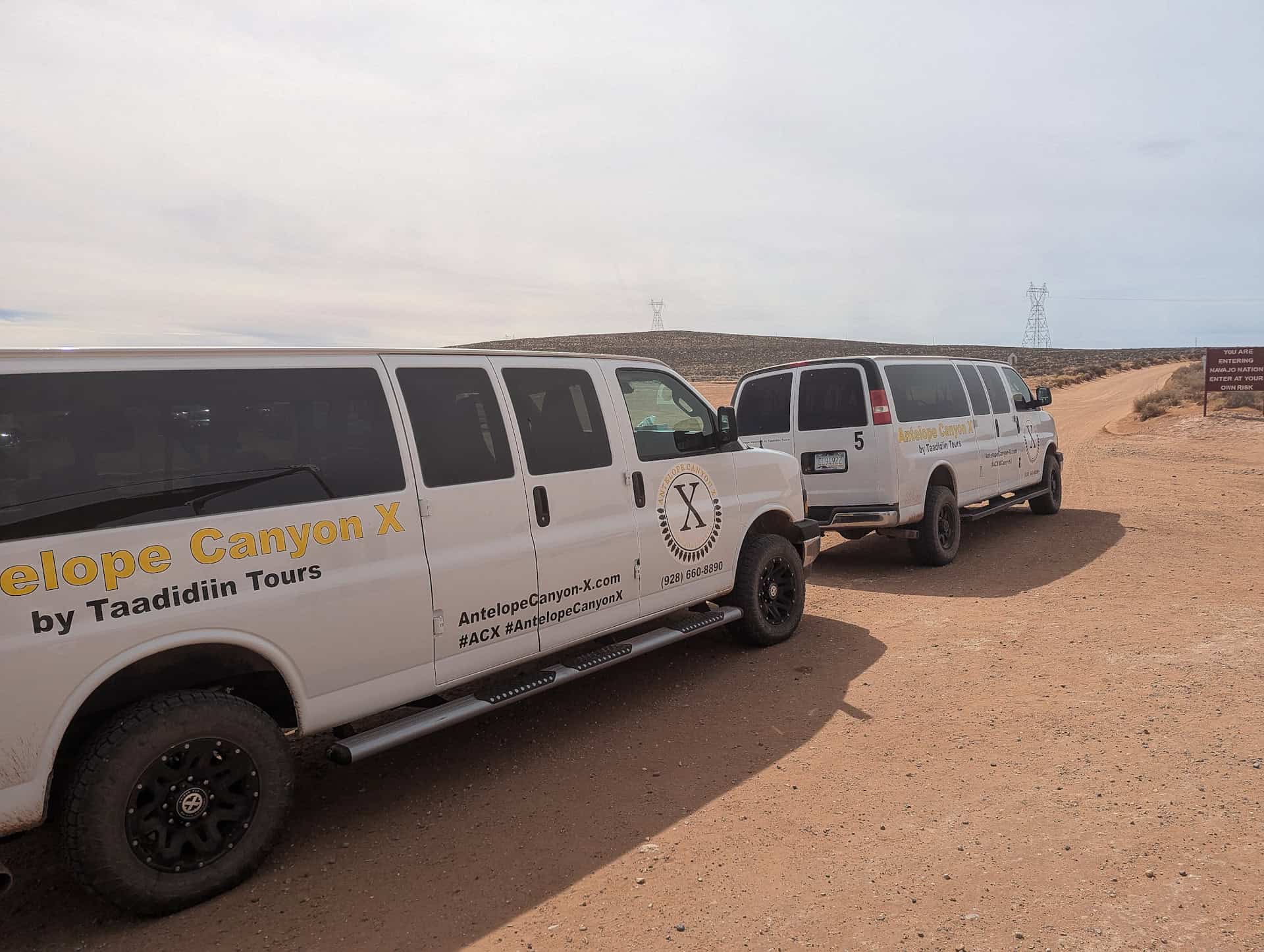
The 10–15-minute drive to the canyon follows a scenic but bumpy dirt road across open desert, framed by mesas and sandstone cliffs. Along the way, your driver will share insights about the Taadidiin family, who operate the tours, as well as stories about the Navajo Nation and the unique geology that shaped this area over millions of years.
The Canyon Tour
At the canyon trailhead, your group will meet its dedicated Navajo guide, who leads you through the two main slot canyons that make up Antelope Canyon X. Each van group explores separately, with staggered start times (about five minutes apart) to maintain a more peaceful, small-group atmosphere inside the canyon.
You’ll begin by descending a staircase of roughly 200 feet (60 m) to reach the canyon floor. At the bottom, the trail opens into a wide, sandy wash, bordered by tall red walls and dotted with desert vegetation.


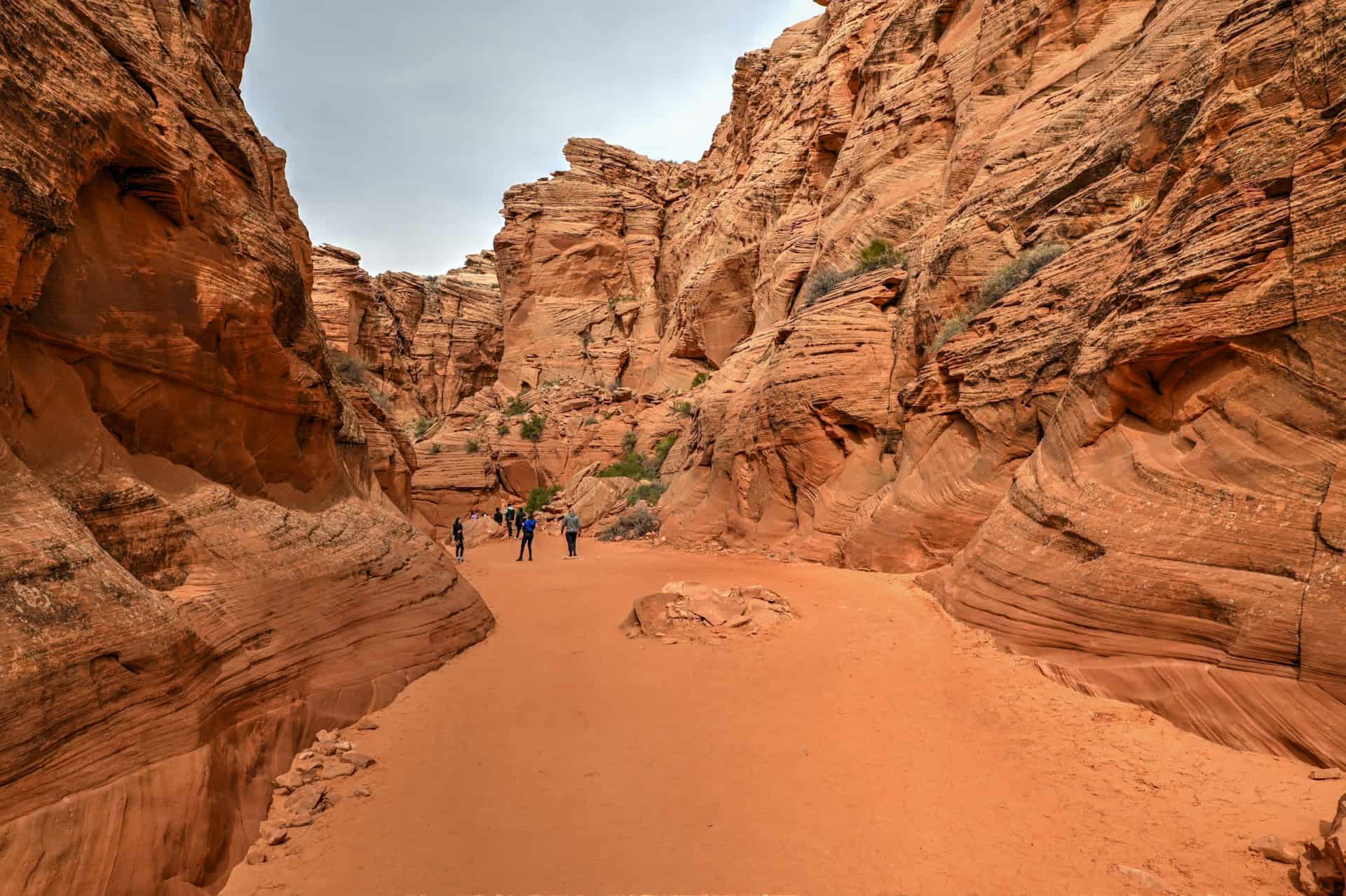
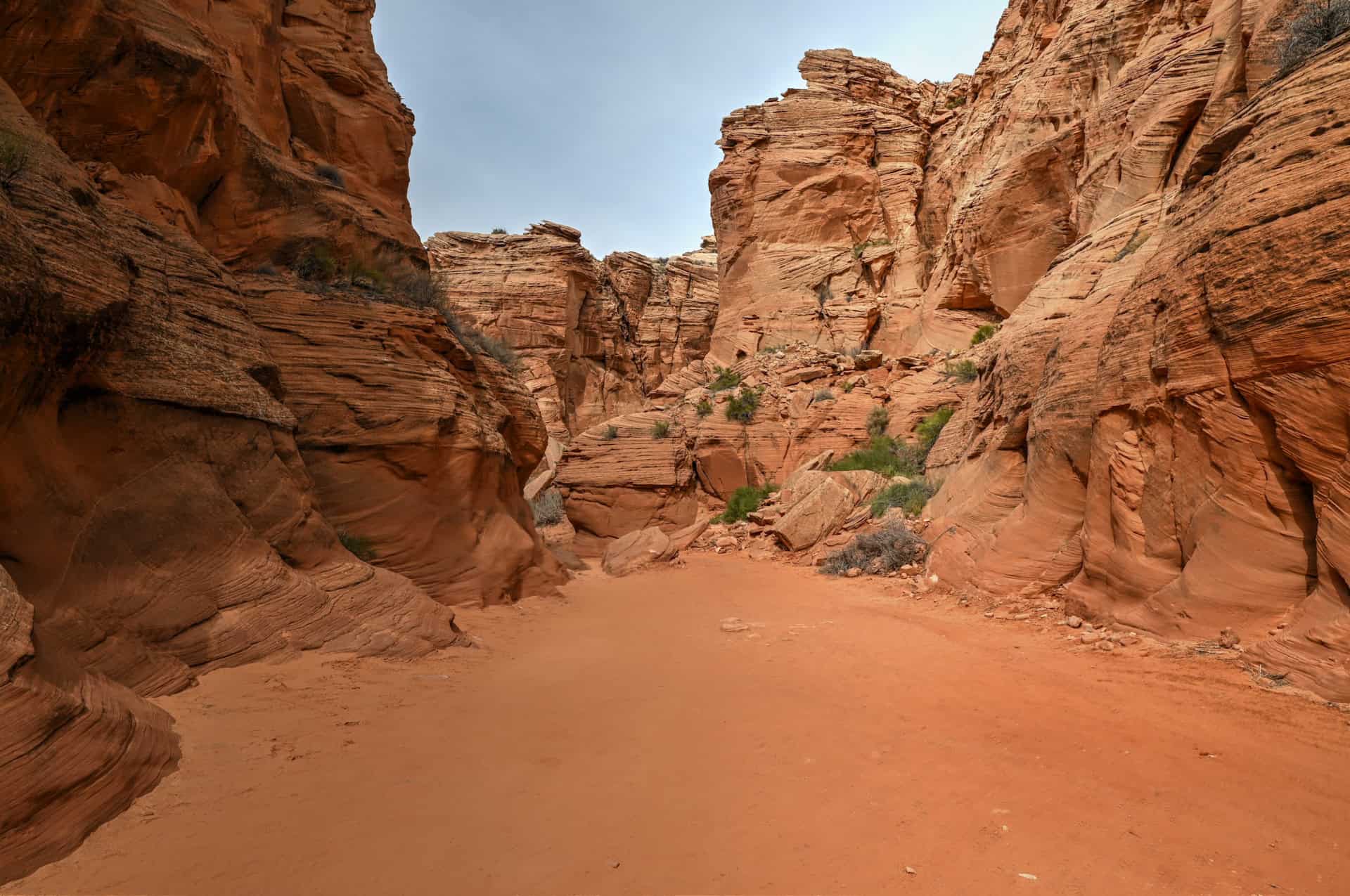
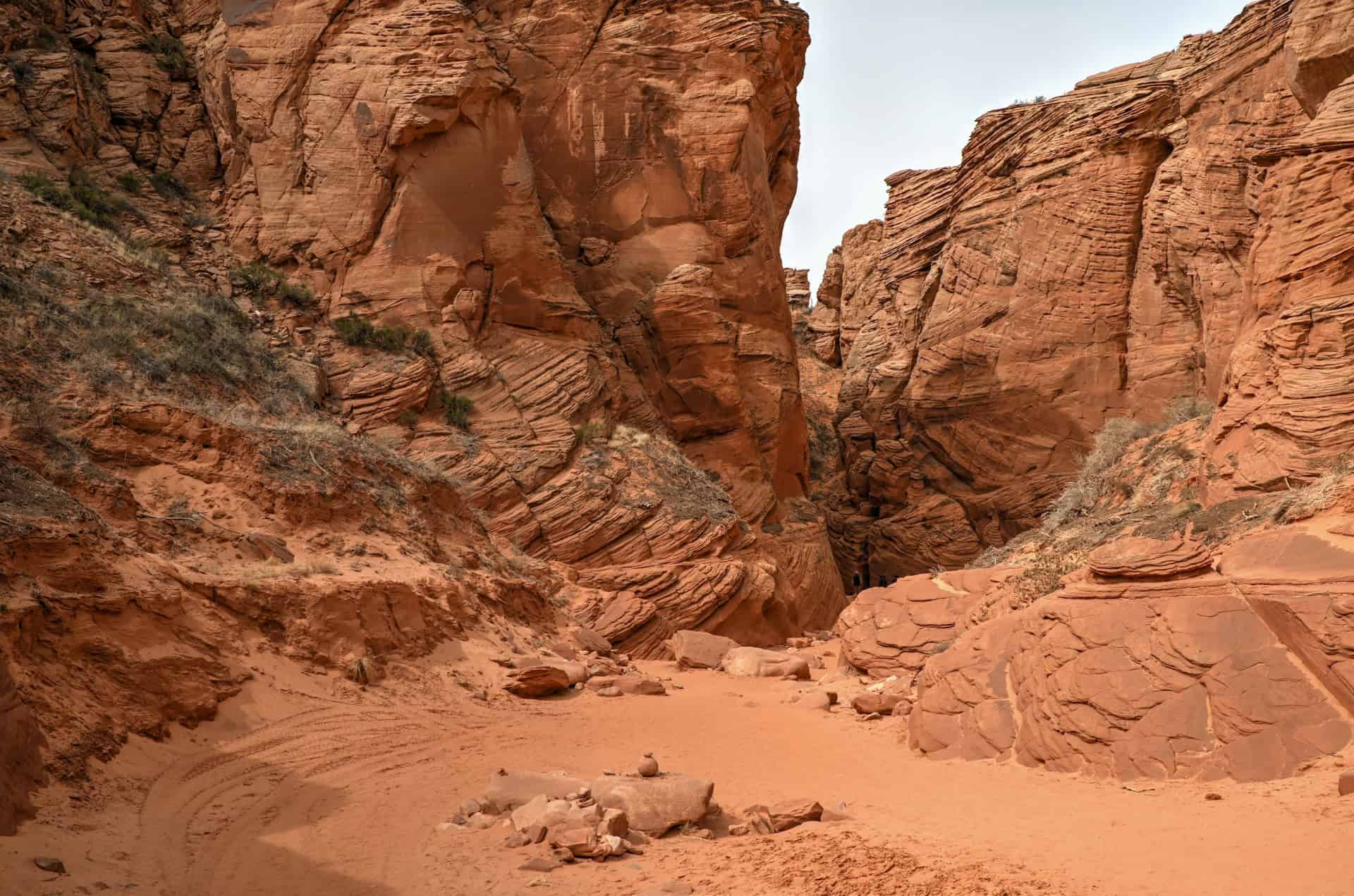
This larger canyon acts as a natural corridor between the two narrow slot sections, a beautiful contrast that lets you appreciate the broader landscape before stepping back into the sculpted stone passages.
The walk through both slots, including this open section, covers about 0.8 miles (1.3 km) round-trip, taking around 50–60 minutes at a relaxed pace with plenty of photo stops.
The terrain is mostly flat and sandy, with a few gentle inclines and narrow sections that require careful footing. Most visitors find the walk easy and suitable for all ages with moderate mobility.
You’ll also pass an area with a small sheep enclosure, which the guides use to share stories about traditional Navajo herding practices and the significance of the land to local families.


Inside the Canyon
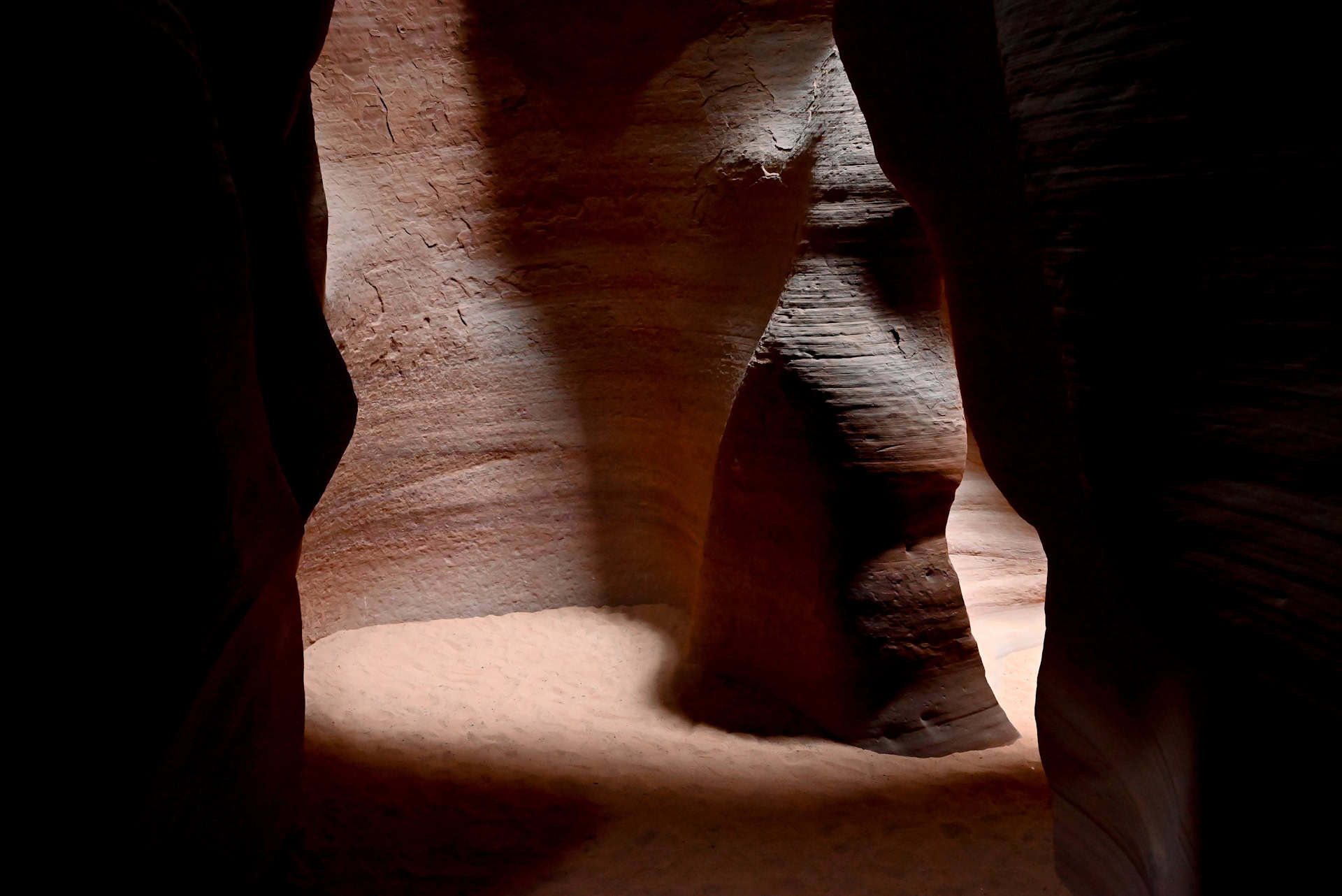
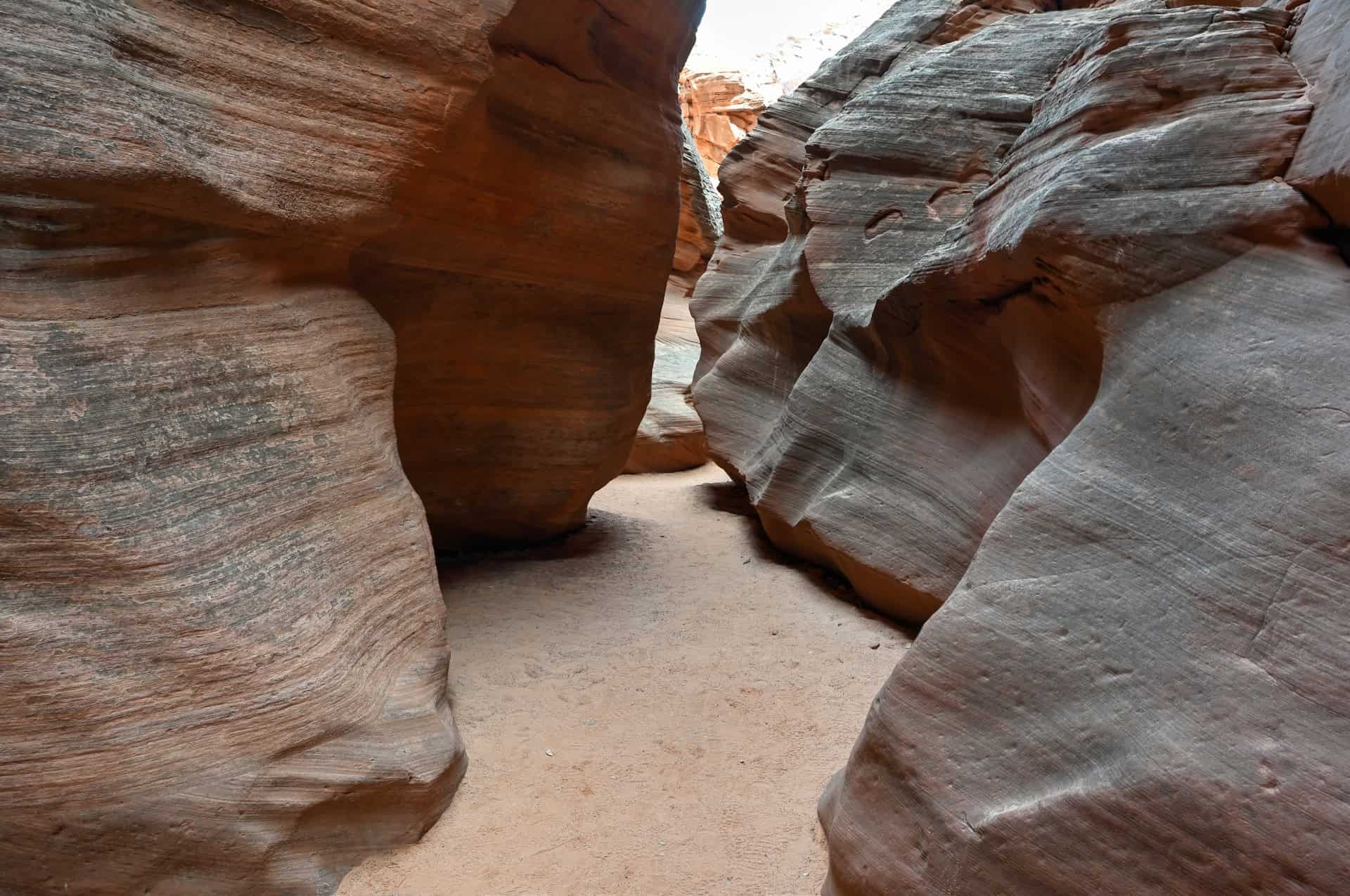
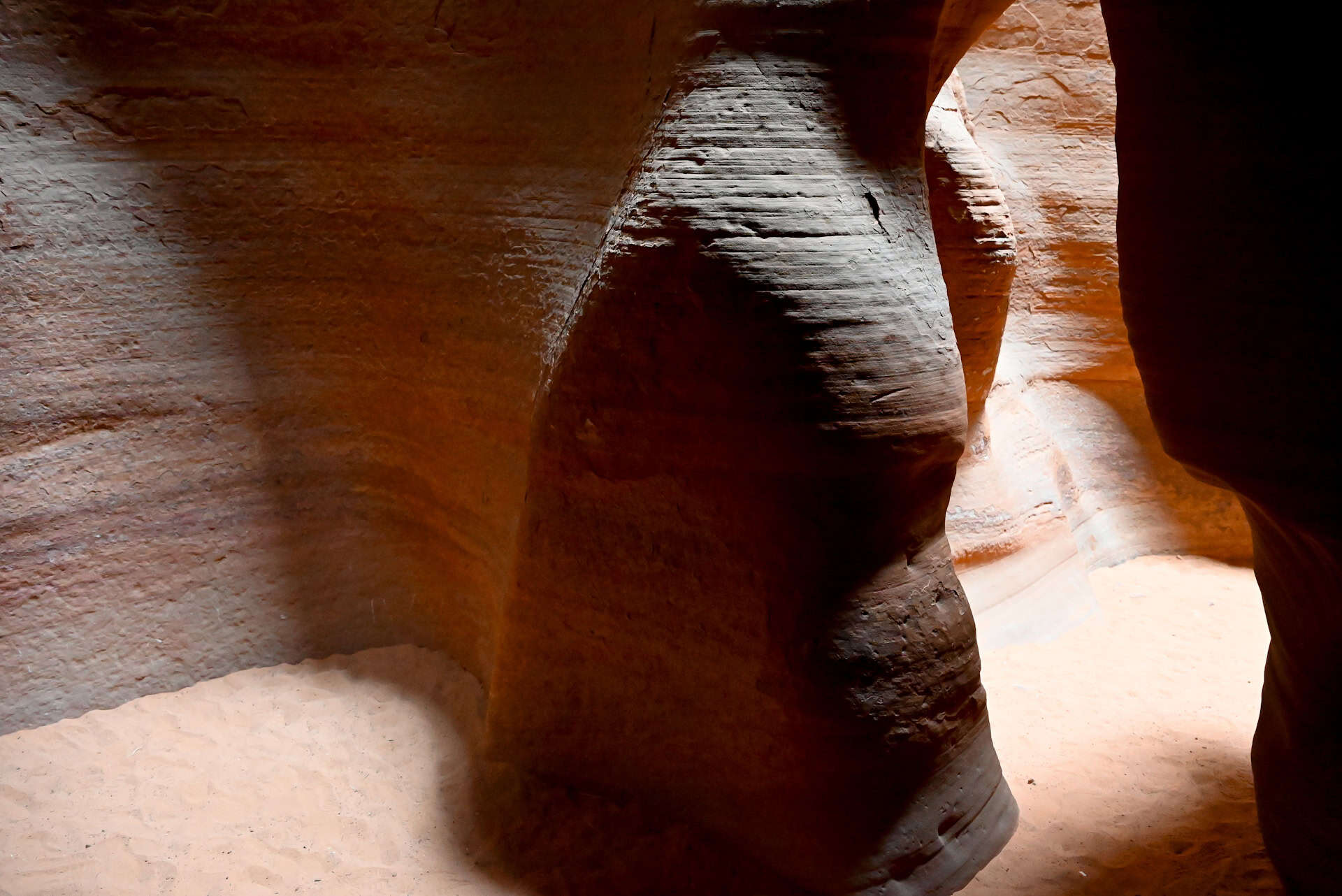
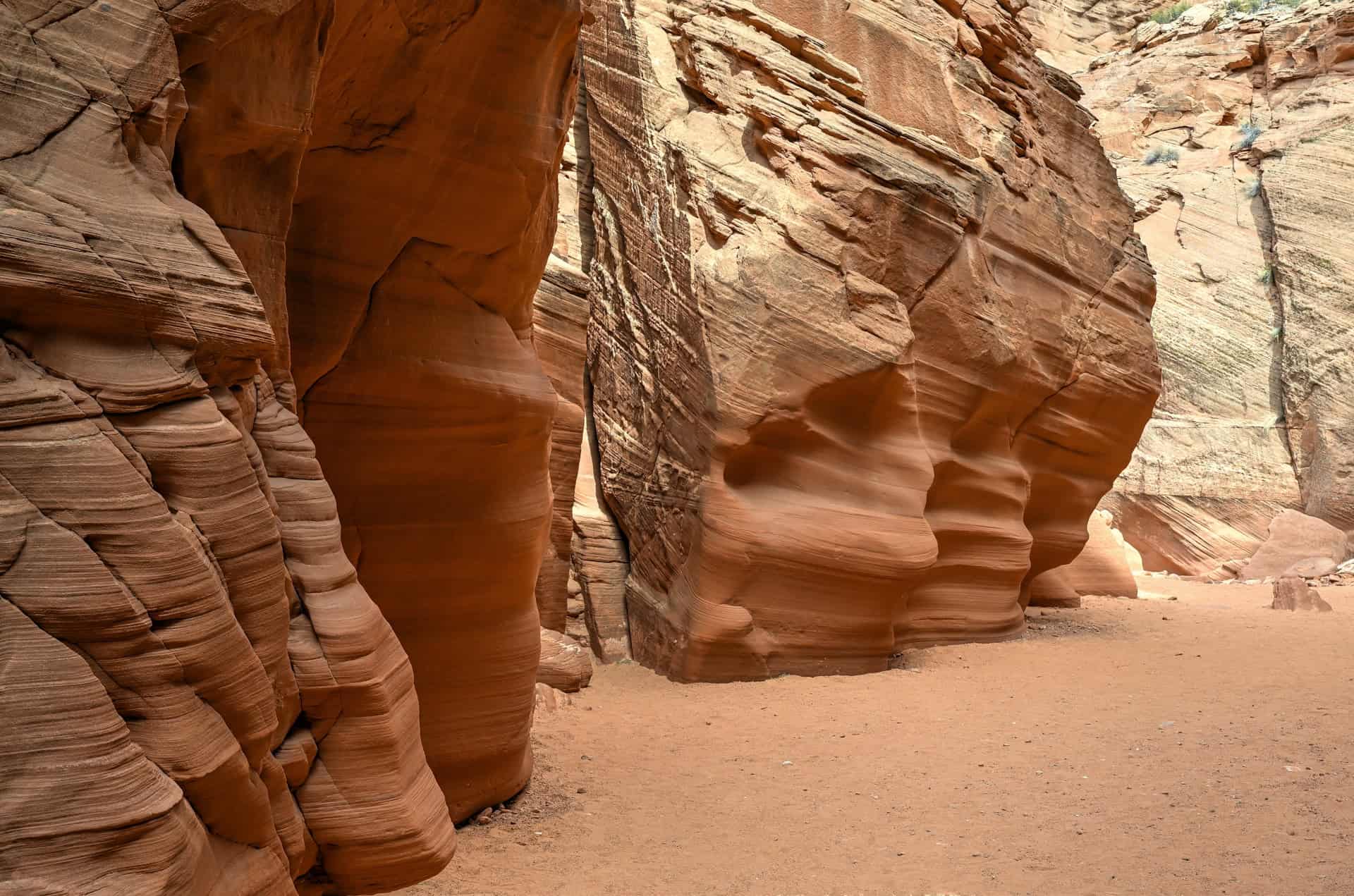
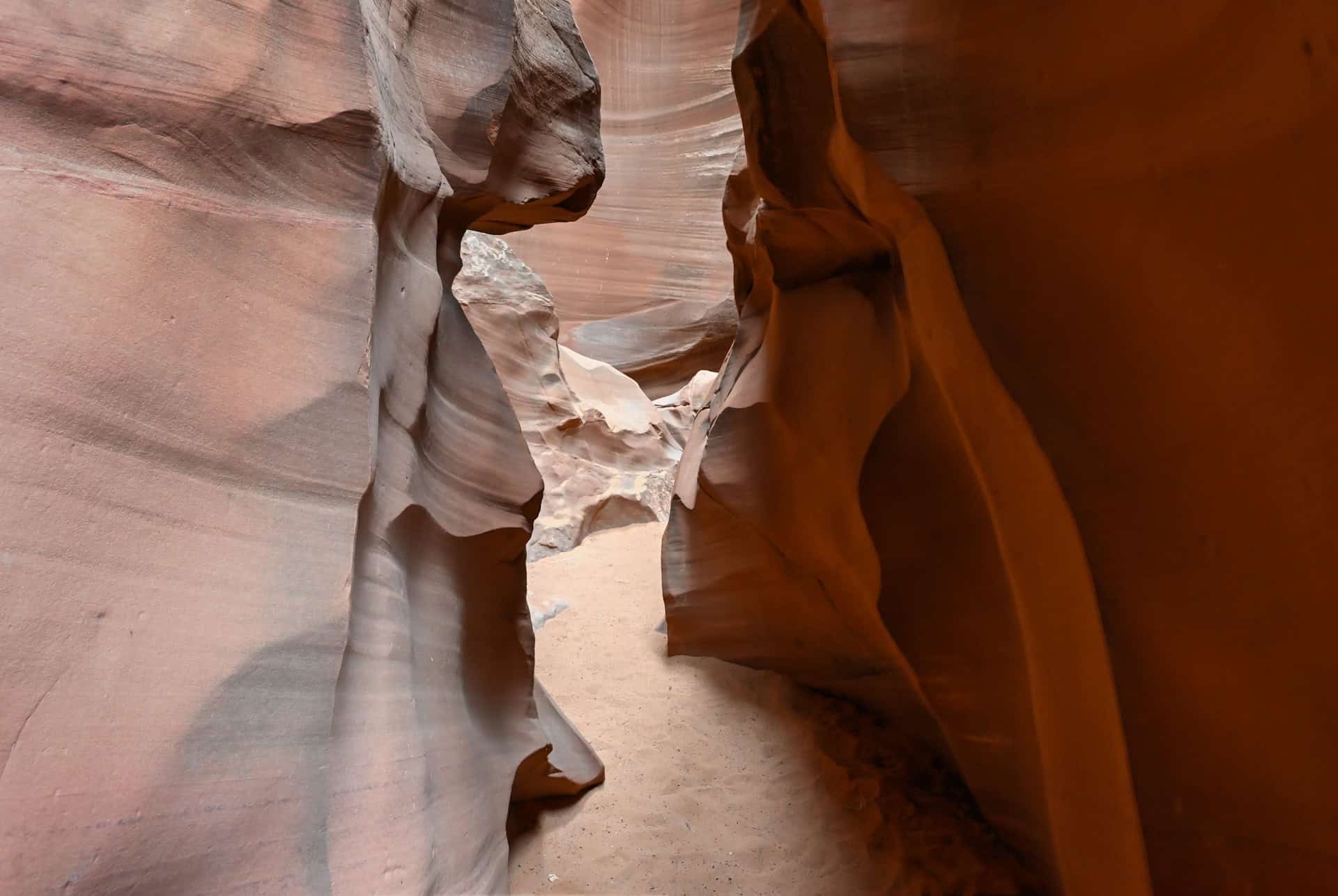
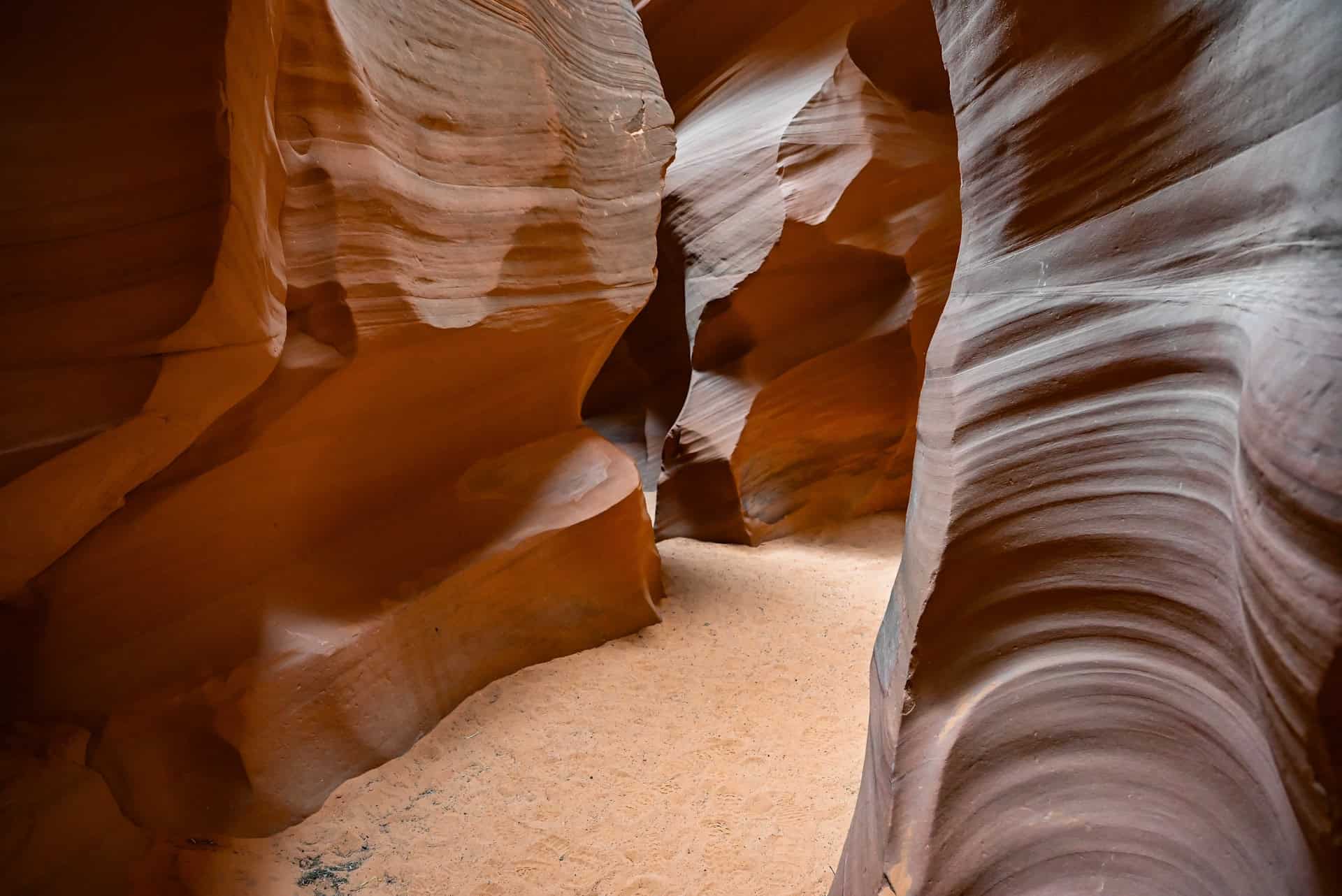
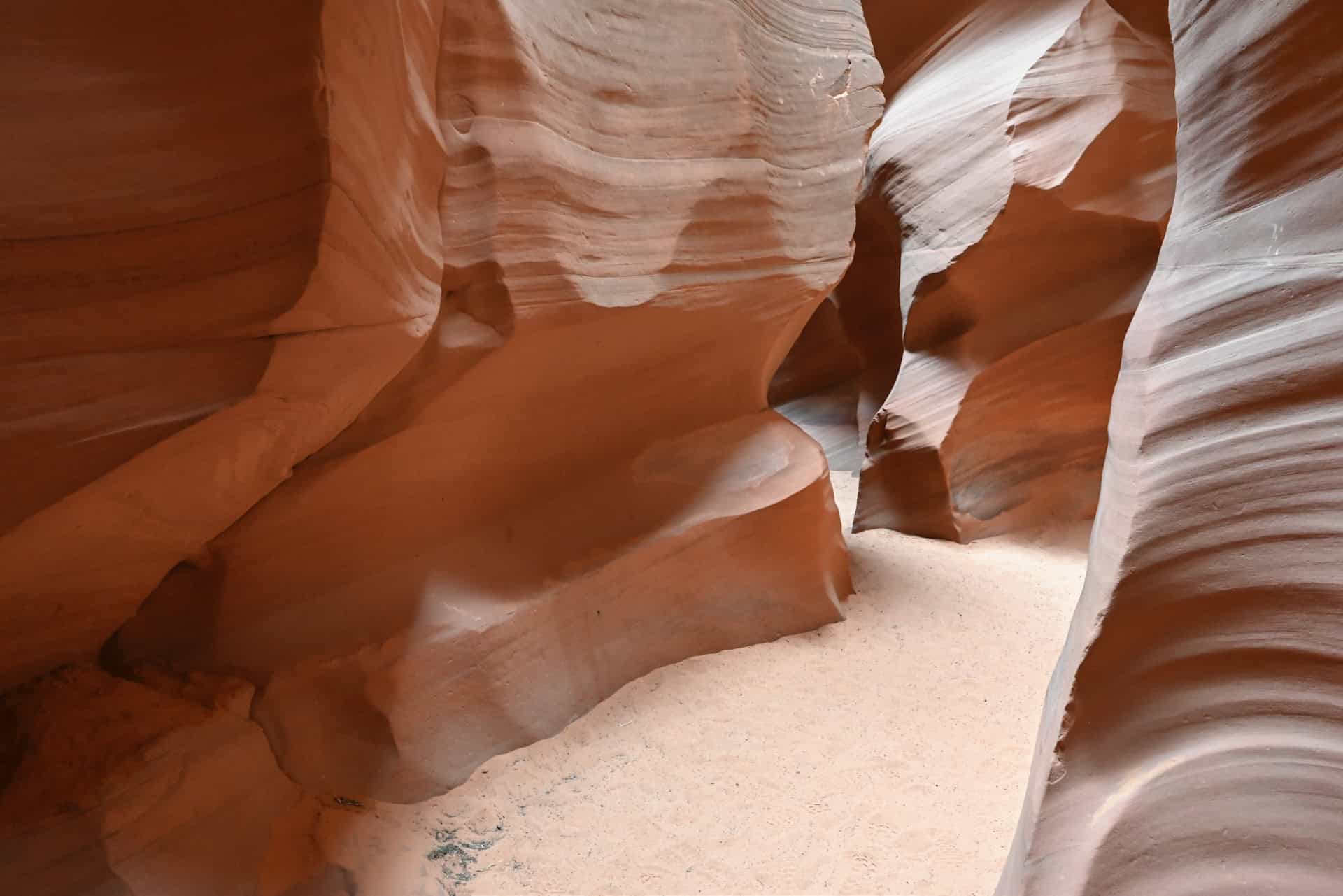
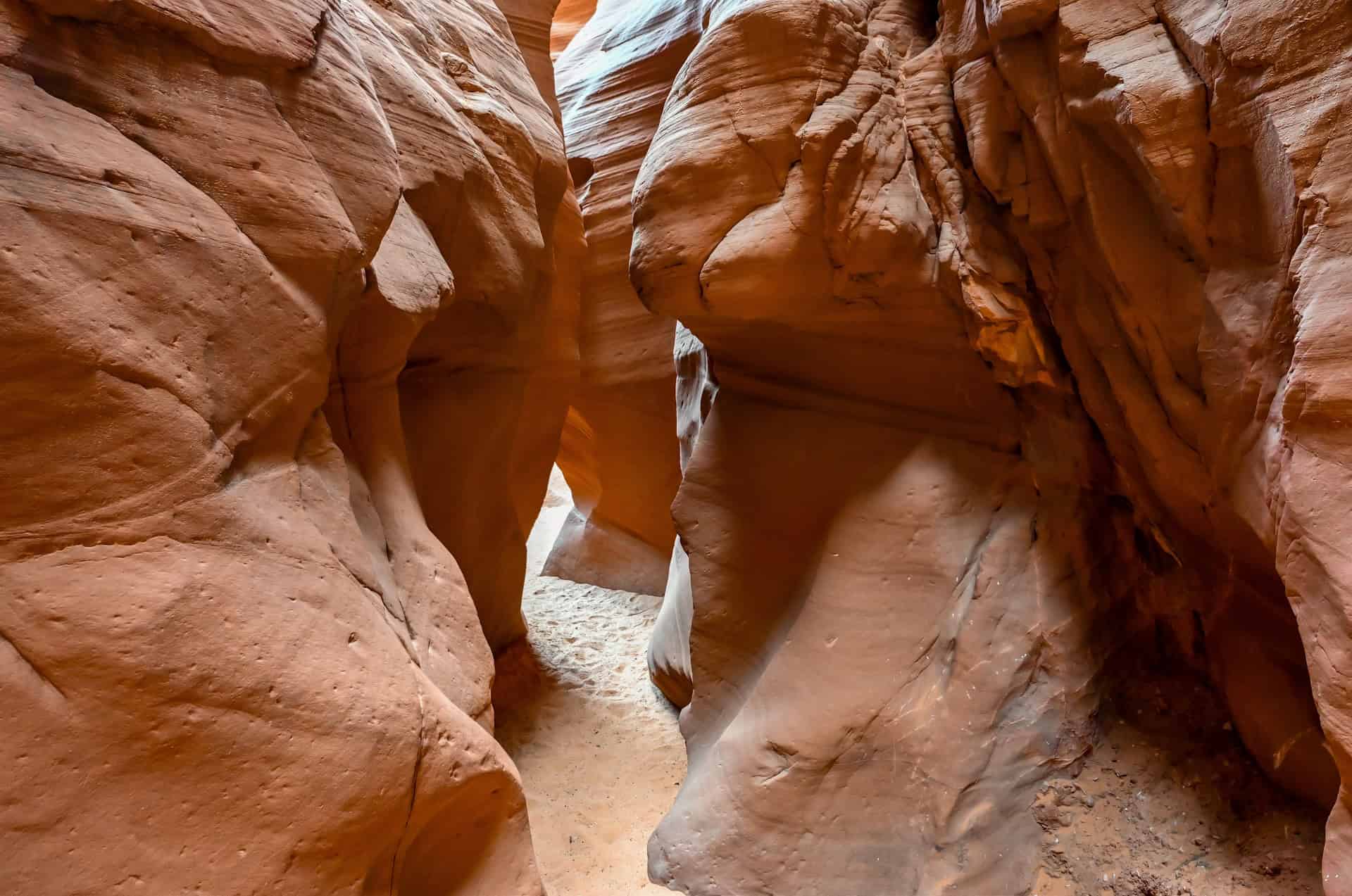
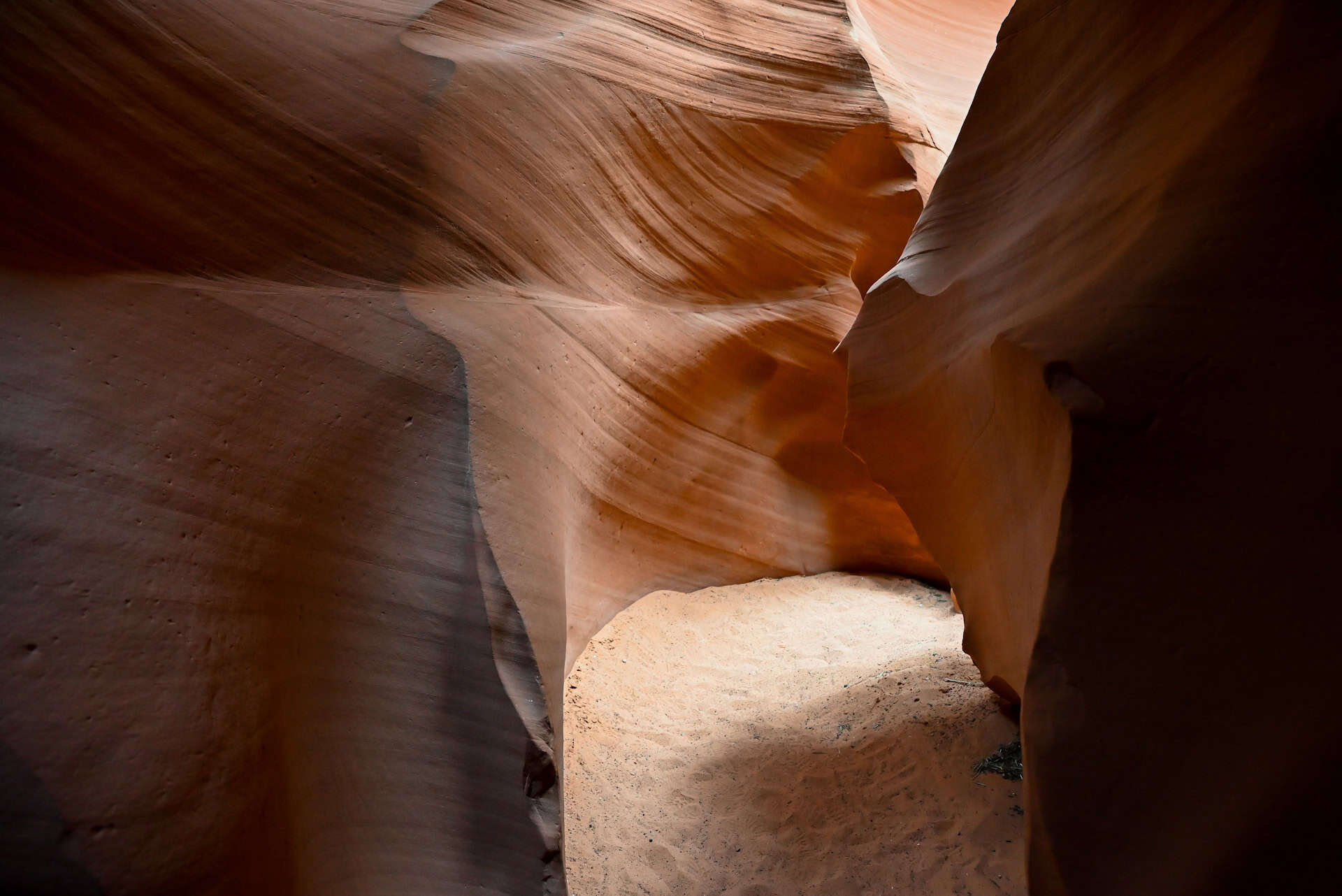
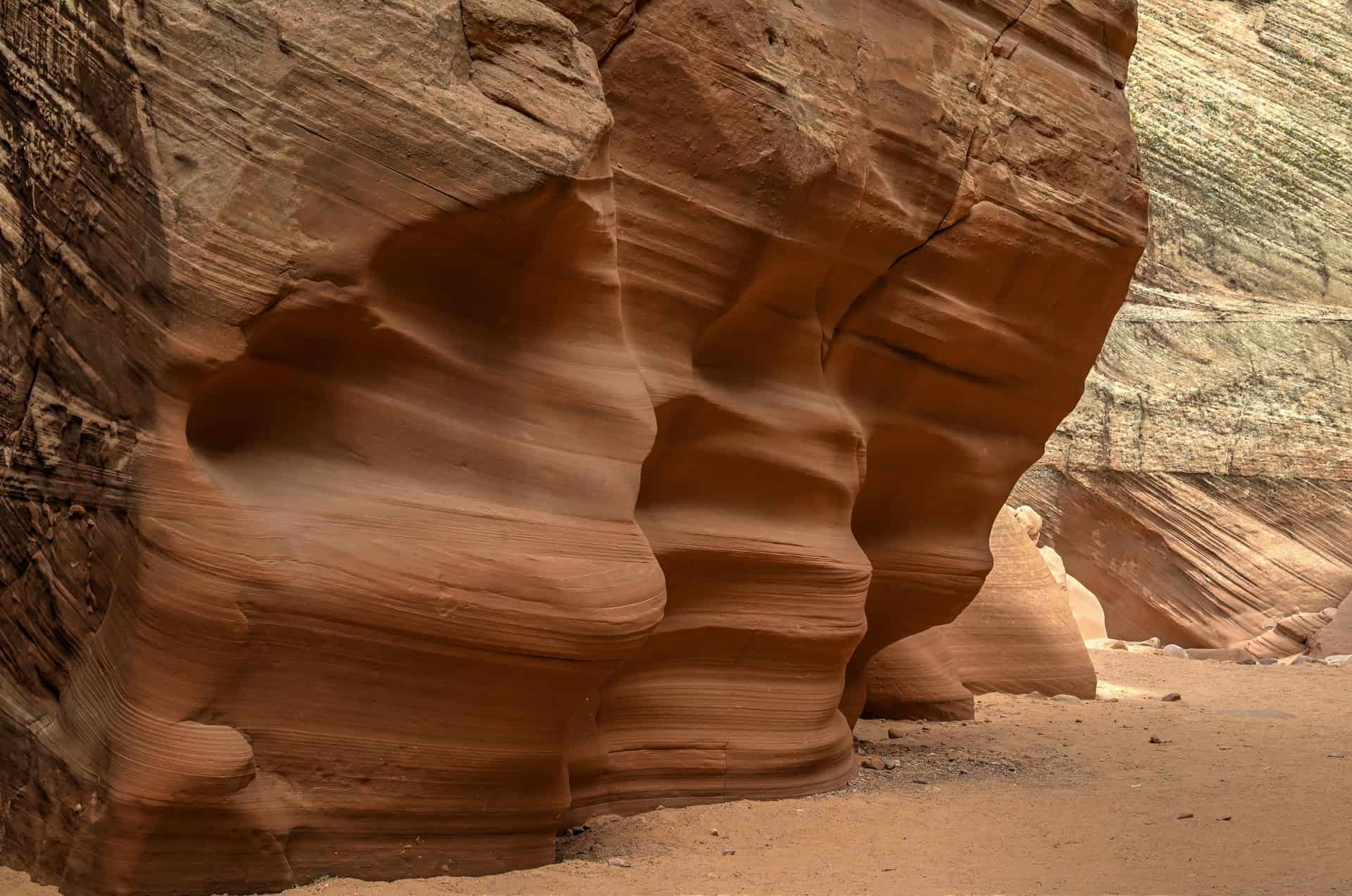
Antelope Canyon X consists of two distinct slot canyons, both carved by centuries of flash floods and wind erosion into smooth, undulating sandstone walls.


The first canyon is shaped like a V, narrower at the bottom, with tall walls that twist and glow in shades of deep red and orange. The second canyon is shaped like an A, wider at the bottom, famous for its “X”-shaped opening at the top, where beams of sunlight filter down and create mesmerizing contrasts of shadow and light.


As you move through the corridors, you’ll notice the swirling patterns, striated layers, and natural sculpting that make these formations so photogenic. Look up often, the view changes constantly depending on the time of day and angle of sunlight.


Your guide will point out the best vantage points for photos and share cultural and geological insights along the way. Many visitors find Antelope Canyon X offers an equally striking experience to the better-known Upper and Lower Antelope Canyons, but with fewer crowds and more space to linger and take pictures.
Best Time to Visit Antelope Canyon X
Antelope Canyon X can be visited year-round, but the experience, especially for photography, changes dramatically with the seasons and the position of the sun. Since much of the canyon’s beauty comes from how light interacts with its sculpted walls, timing your visit carefully can make all the difference.
Spring (March–May):
One of the most popular and photogenic times to visit. Temperatures are comfortable, ranging from 65–85°F (18–30°C), and the light is soft but bright enough to illuminate the canyon’s intricate textures. Winds can occasionally stir up sand in March, but the fresh spring sun enhances the deep reds and oranges of the sandstone. Midday tours offer excellent lighting for photography, even without the peak summer beams.
Summer (June–August):
Expect hot desert conditions (highs often exceed 100°F (38°C)), but this is also when the famous light beams are most likely to appear. These shafts of sunlight, best seen between 10:30 a.m. and 1:00 p.m., typically occur from mid-May through early August. If you’re visiting during this season, bring plenty of water, wear light clothing, and avoid the very hottest part of the day. Keep in mind that the Southwest monsoon season (usually July to early September) can bring sudden thunderstorms and flash floods, which may lead to temporary tour suspensions.
Fall (September–October):
A favorite for both comfort and photography. Highs range from 70–85°F (21–30°C), and the canyon light is golden and angled, creating dramatic shadows and rich contrast in the narrower sections. Crowds thin out slightly compared to spring and summer, making it easier to enjoy a quieter, more relaxed experience with fewer groups inside the canyon.
Winter (November–February):
The quietest and most peaceful time to visit. Daytime highs hover between 45–60°F (7–16°C), and while there are no light beams this time of year, the low winter sun brings out deep, saturated hues in the canyon walls. Mornings can be chilly, so dress in layers. Photographers will appreciate the soft, diffused light that eliminates harsh shadows and reveals subtle color gradients on the sandstone.
Quick Summary – When to Visit
For the best combination of comfort and lighting, spring and fall are ideal.
If you want to witness sunbeams, plan for late spring to midsummer, but be prepared for heat and larger crowds.
Winter offers solitude, cooler temperatures, and exceptional color depth for photography enthusiasts.
Best Time of Day to Visit Antelope Canyon X
Because Antelope Canyon X is a slot canyon, the position of the sun has a major impact on what you’ll see, from the color tones of the walls to whether the famous light beams appear at all.
Midday (10:30 a.m. – 1:00 p.m.) — Best for Light Beams and Vivid Colors
This is the prime time to visit if you want to experience Antelope Canyon X at its most photogenic. When the sun is directly overhead, beams of light can occasionally pierce through the narrow openings at the top of the canyon, especially from mid-May through early August. Even when beams aren’t visible, this period provides the brightest illumination, enhancing the contrast between the glowing orange walls and the cool blue shadows. Most visitors and photographers prefer late morning to early afternoon tours for this reason.
Morning (before 10:00 a.m.) — Soft Lighting and Fewer Crowds
Early morning light brings cooler tones and a calmer atmosphere. The canyon walls glow gently in hues of rose and amber, creating a tranquil experience that’s great for casual photography and reflection. Crowds are typically lighter, and temperatures are far more comfortable in the summer months.
Afternoon (after 2:00 p.m.) — Warm Hues and Deep Shadows
By mid- to late afternoon, sunlight begins to angle into the canyon differently, casting dramatic patterns of light and shadow. The walls take on warmer, deeper shades of red and gold, but the light beams have usually faded. This time is excellent for photographers seeking contrast and texture rather than bright, even illumination.
Quick Tip: If your main goal is photography, book a late morning or midday tour. For a more relaxed and uncrowded experience, especially in summer, opt for an early morning slot. Both offer spectacular light, just with different moods.
How Does Antelope Canyon X Compare to Upper and Lower Antelope Canyon
Upper Antelope Canyon
The most famous and most photographed of the three, Upper Antelope Canyon is renowned for its spectacular light beams that appear around midday from March through October. The canyon floor is flat and easy to walk, making it accessible for most visitors, but it’s also the busiest, with large groups moving through in tightly scheduled tours that often sell out weeks in advance.
Pros: Best for seeing light beams; fully accessible (no stairs); world-famous photo opportunities.
Cons: Most crowded and most expensive; visits are brief and often feel rushed.
Lower Antelope Canyon
Lower Antelope Canyon offers a more adventurous experience, featuring narrow passageways, ladders, and metal staircases that descend deep into the twisting sandstone. The route is more physically demanding, but also incredibly rewarding for those comfortable with heights and confined spaces.
Pros: The most adventurous and physically engaging tour; spectacular swirling formations and textures.
Cons: Almost as busy and costly as Upper; not suitable for visitors with mobility issues or claustrophobia.
Antelope Canyon X
By contrast, Antelope Canyon X offers the perfect balance, combining the beauty and spaciousness of Upper with the quiet, immersive atmosphere of a less-visited canyon. It features both “A” and “V”-shaped slot formations, warm light contrasts, and a slower pace that allows for more time to enjoy photography and reflection without feeling hurried.
Pros: Best mix of beauty, tranquillity, and value; smaller groups and longer time inside the canyon; generally lower cost than Upper or Lower tours.
Cons: Less physically adventurous than Lower; light beams are possible but less dramatic than in Upper.
Lower and Upper Tours
If you’re also interested in visiting the Upper Antelope Canyon (starting around $126 USD) or Lower Antelope Canyon (starting around $80 USD), you can book guided tours directly below. Both tours tend to sell out even faster than Antelope Canyon X, so advance reservations are highly recommended, especially in spring and summer:
Can You Book Multiple Antelope Canyon Tours on the Same Day?
Yes, you can, but expect a full, structured day with little downtime.
Each canyon requires a separate guided tour, and all are located just a few miles from Page, Arizona. However, because the tours have fixed departure times and limited group sizes, you’ll need to schedule them back-to-back with travel time in between
Here’s an example of how you could make it work if you wanted to do all three:
- Morning (9:00–10:00 a.m.) – Lower Antelope Canyon
Start early at Lower Antelope to avoid crowds and the midday heat. This tour involves stairs and ladders, so it’s best tackled while you’re fresh.
Tour length: about 1 hour
- Late Morning to Midday (11:30 a.m.–13:00 p.m.) – Upper Antelope Canyon
Schedule your Upper Canyon visit around midday to catch the iconic light beams (best from mid-May to early August).
Tour length: 1–1.5 hours
- Afternoon (2:30–4:00 p.m.) – Antelope Canyon X
Wrap up the day with a visit to Canyon X. The light is softer but still beautiful in the afternoon, and the smaller groups make it a peaceful finish.
Tour length: about 1.5 hours, including the drive in and out
Other Things to See and Do Near Antelope Canyon
Horseshoe Bend
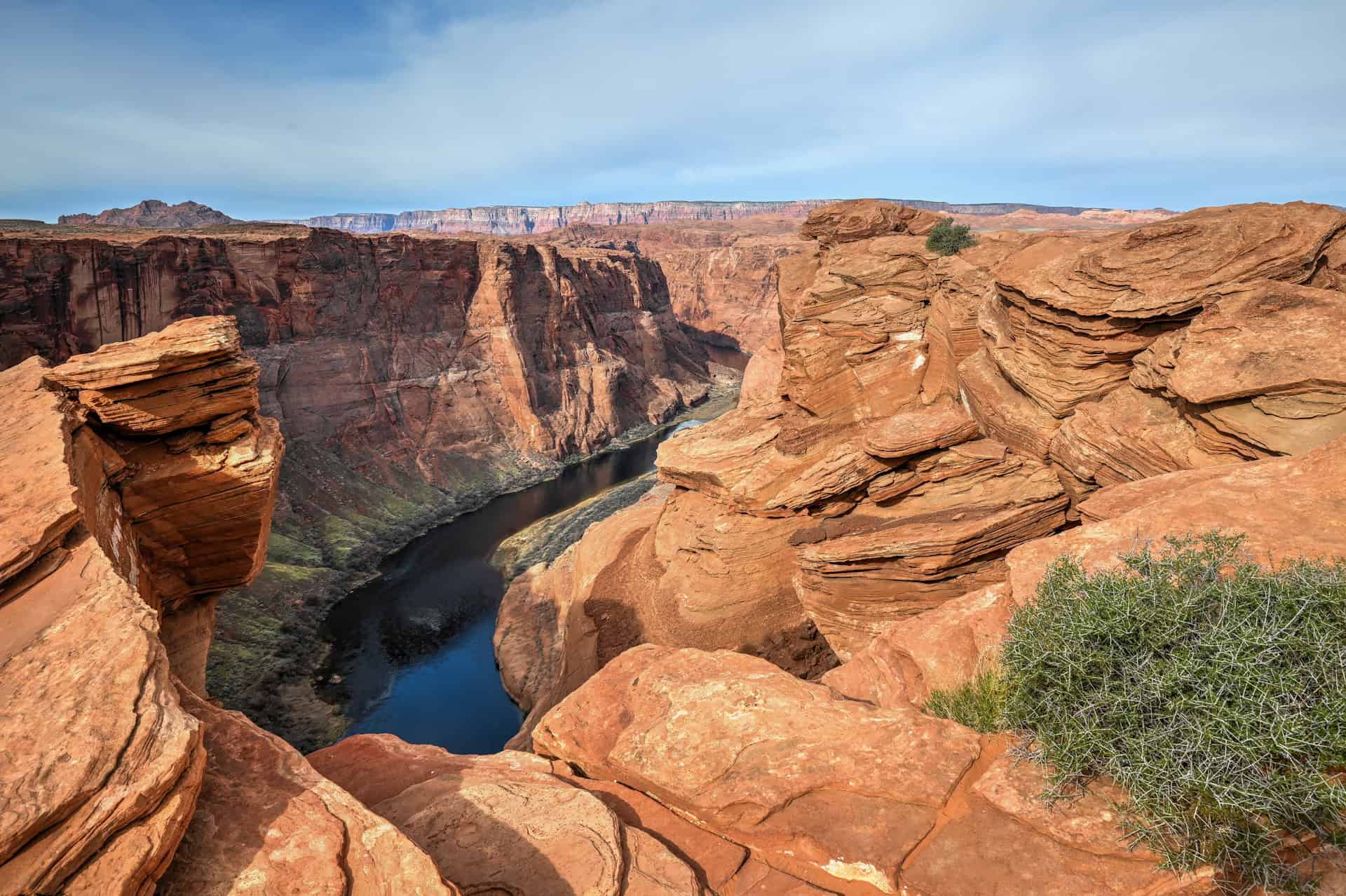
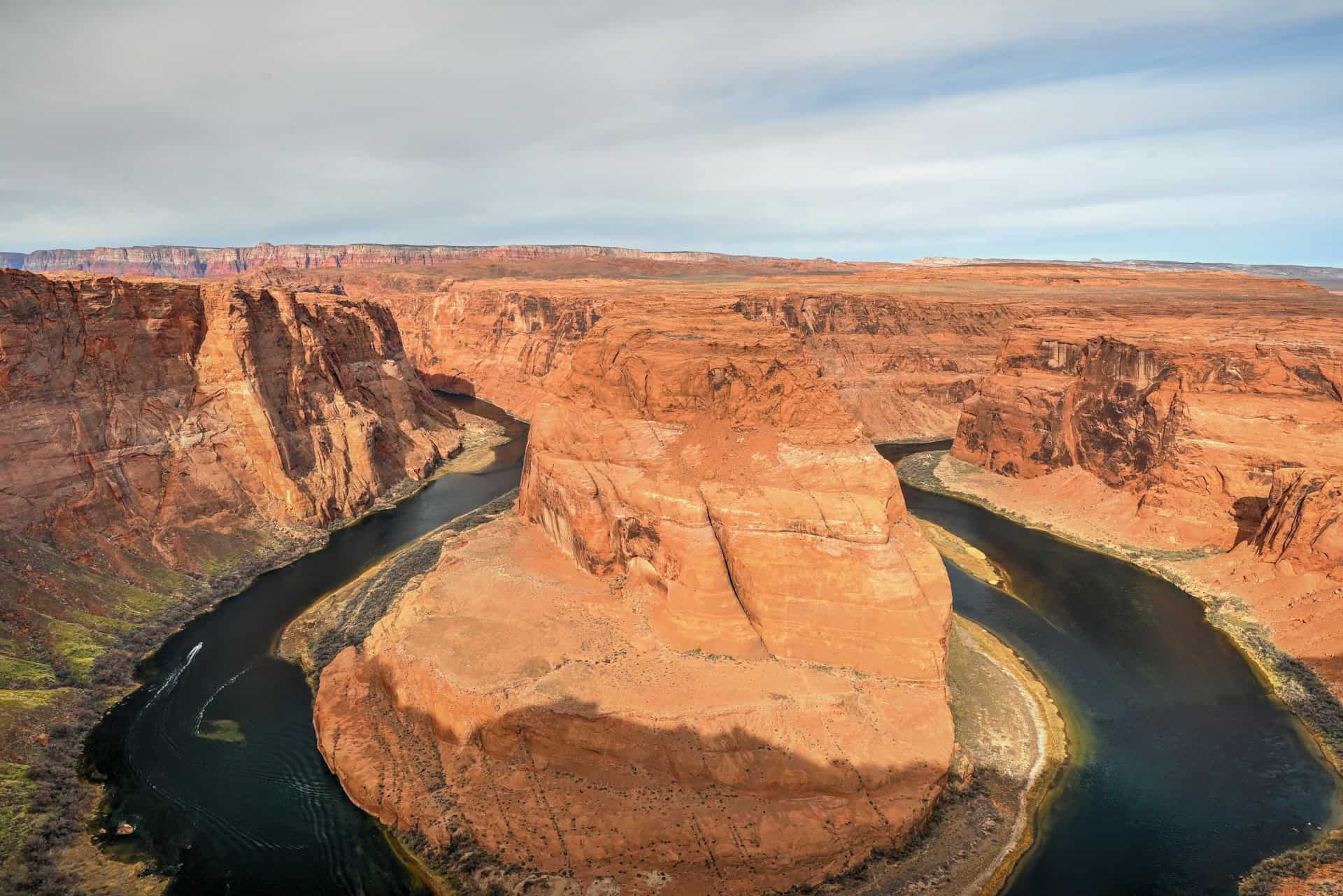
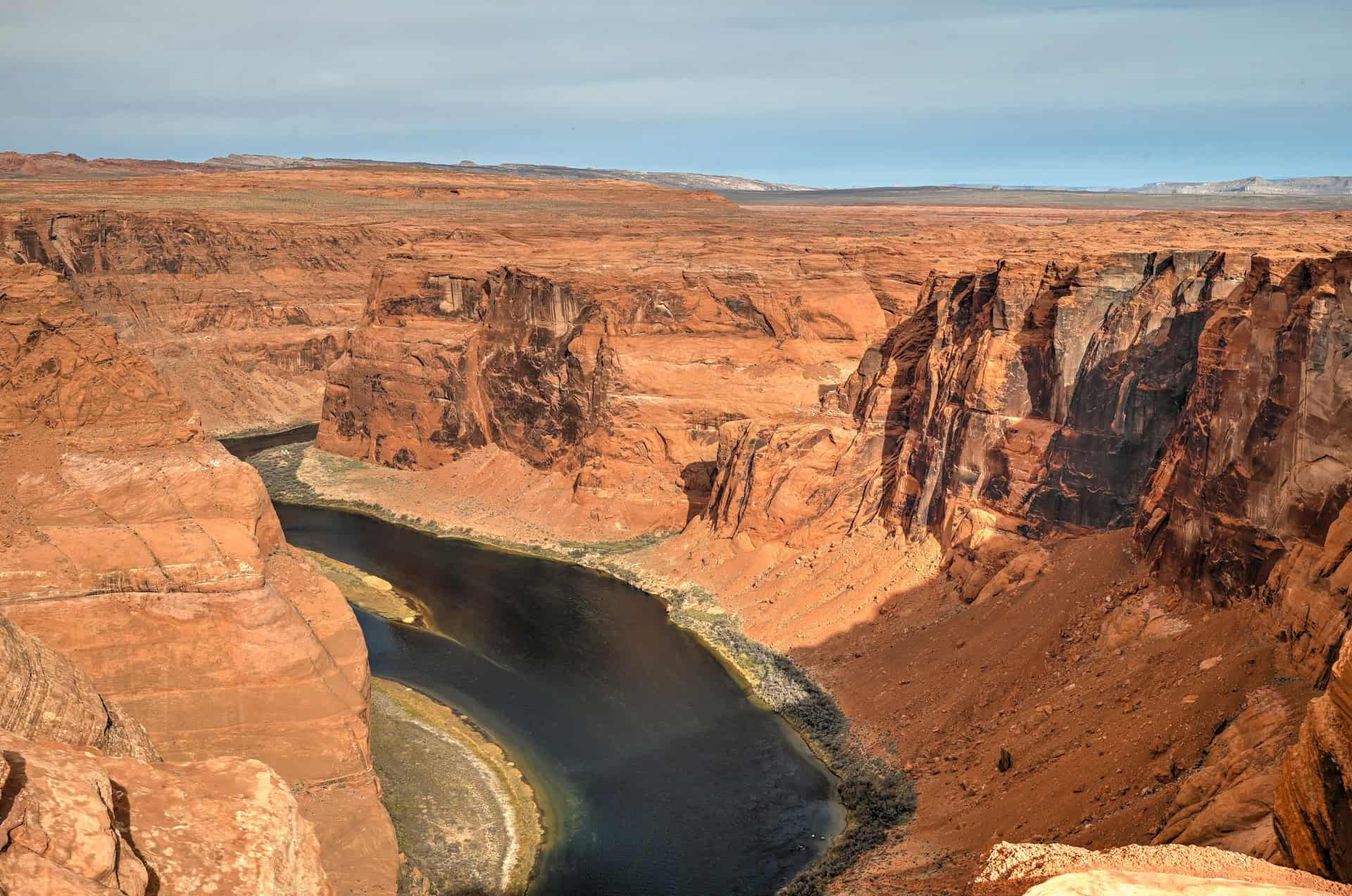
Only a few minutes southwest of Page, Horseshoe Bend is one of the most photographed natural landmarks in the American Southwest, and for good reason. From the overlook, the Colorado River makes a perfect 270-degree curve 1,000 feet below, carving a deep sandstone canyon into a shape that truly resembles a horseshoe. The view is both vast and vertigo-inducing, offering a powerful sense of the river’s scale and the immense geologic forces that shaped Glen Canyon. A designated viewing platform with guardrails provides safe access to the edge, though visitors often fan out along the rim for unobstructed views. The walk to the overlook is short, about 1.5 miles round-trip, but expect full sun exposure and large crowds during the middle of the day.


Beehive (New Wave) Trail
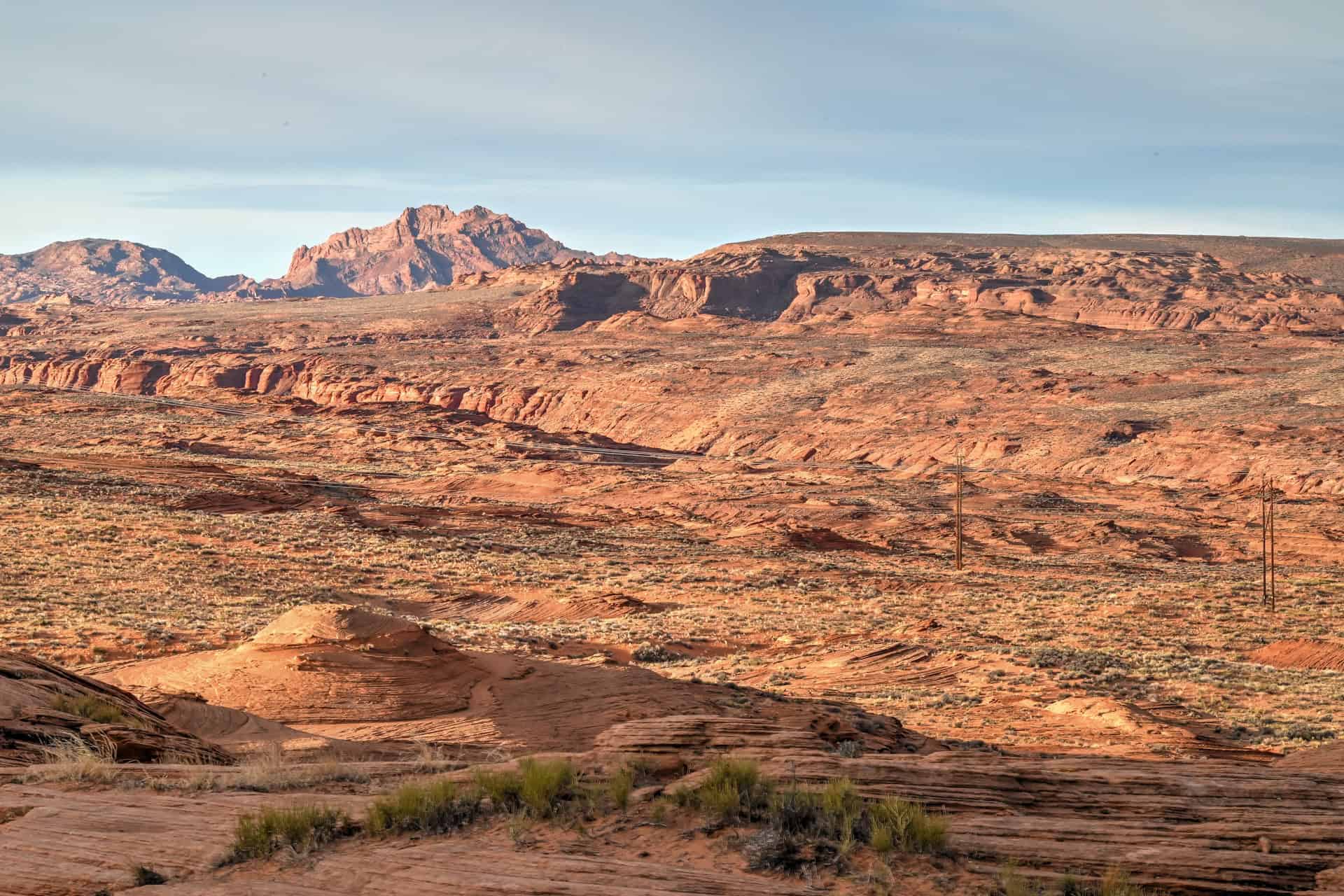
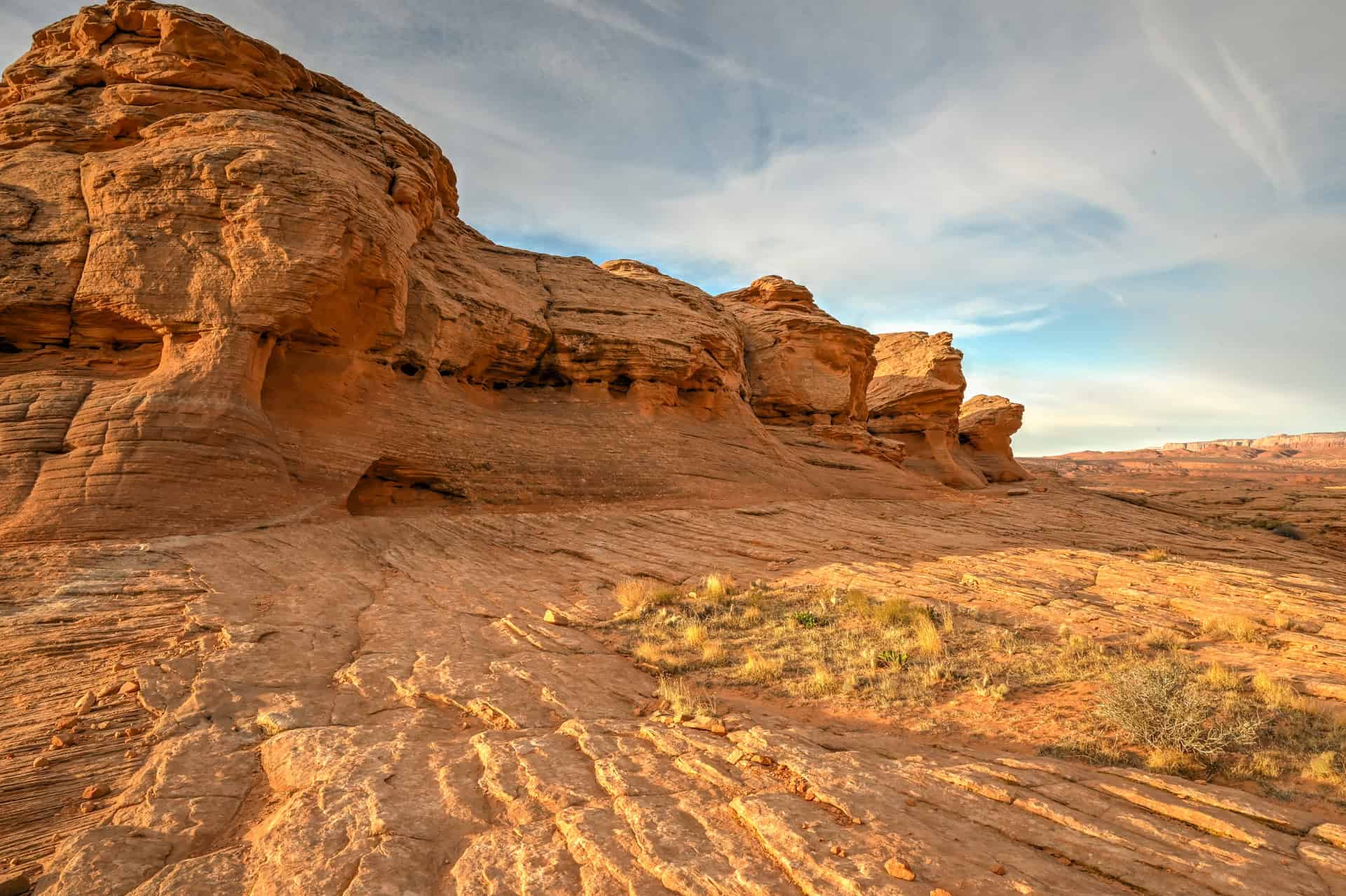
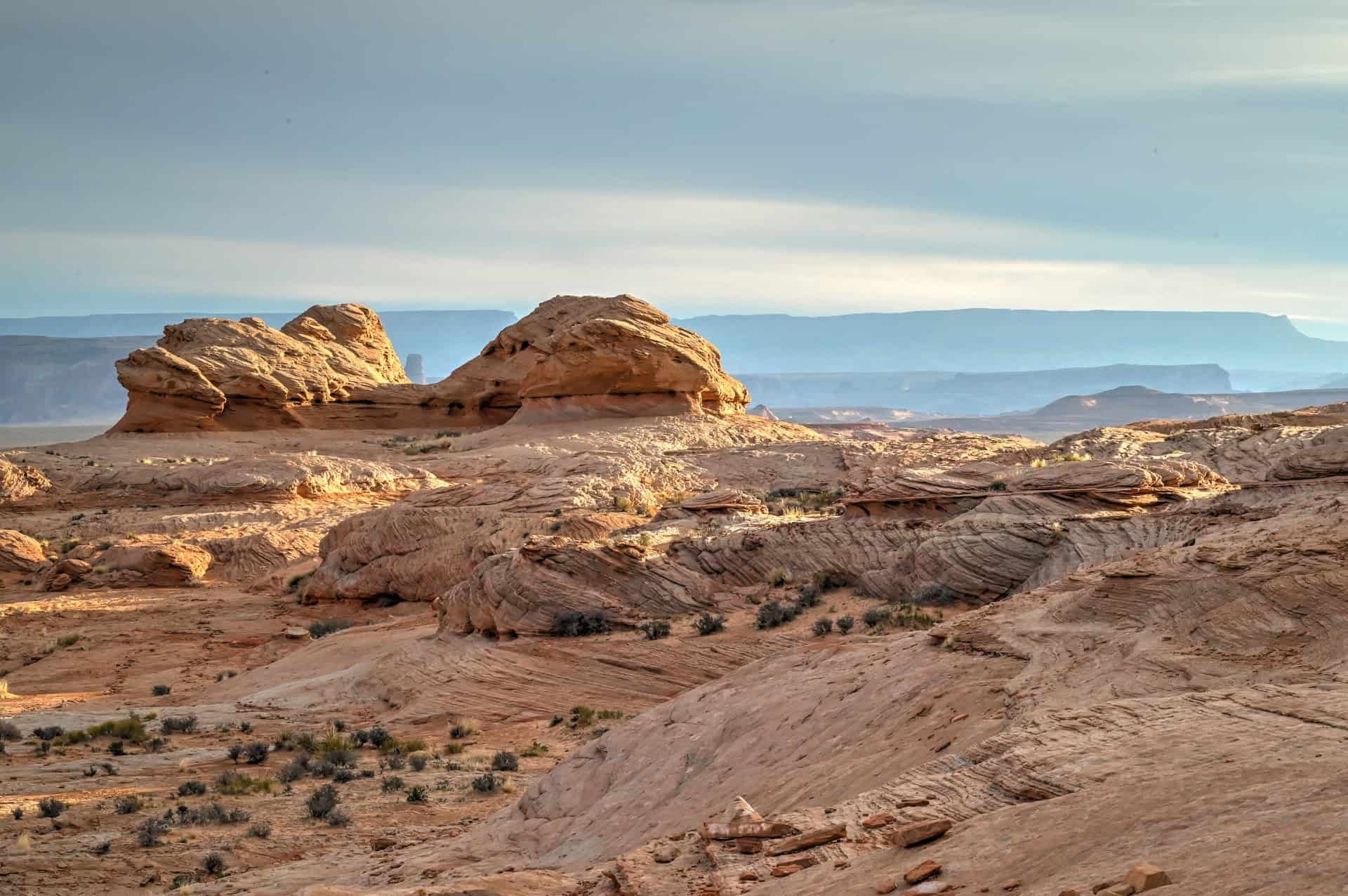
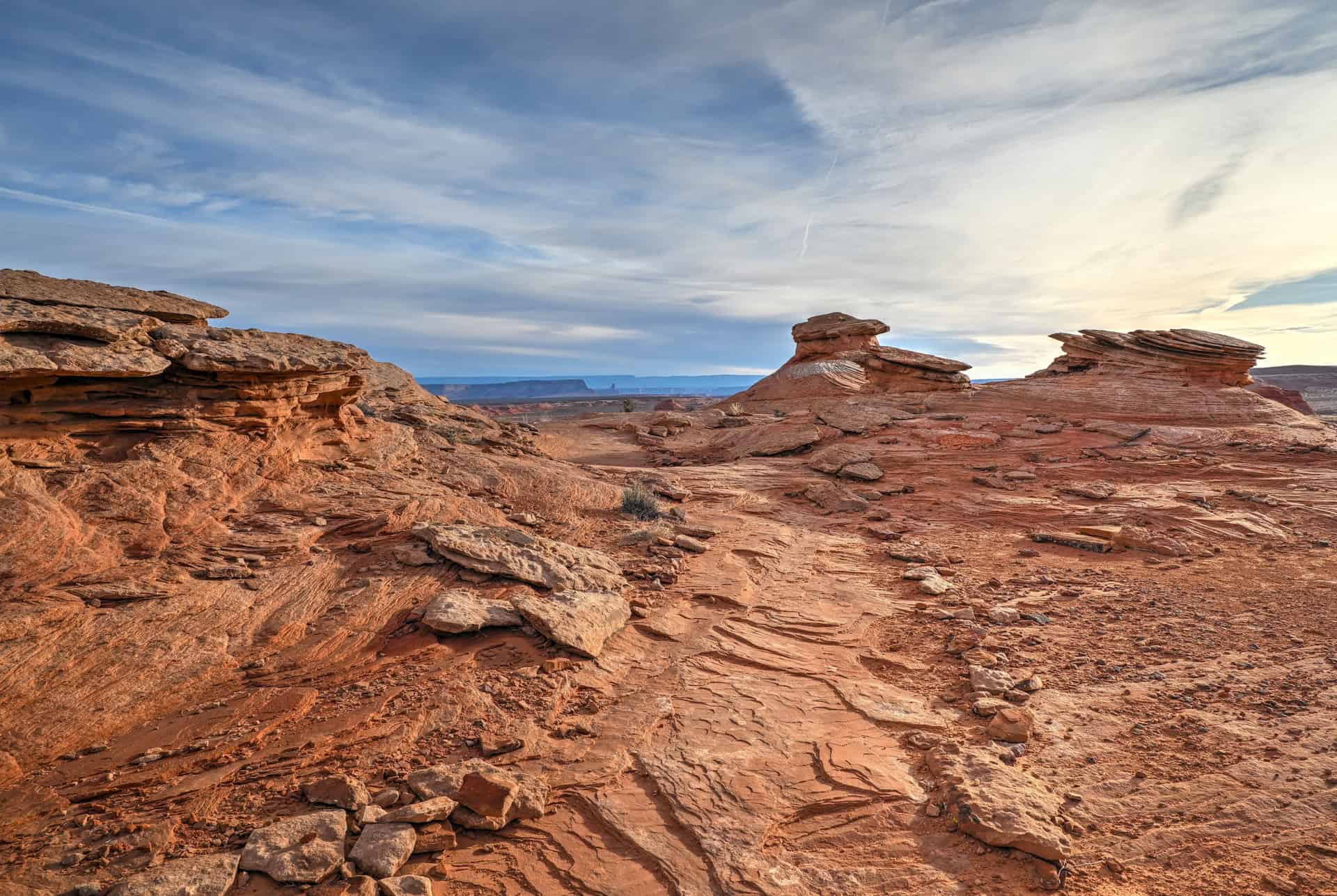
If you’re looking for a short and scenic hike near Page, the Beehive Trail (New Wave) is a fantastic option. Just a few minutes’ drive away, this easy loop winds through swirling Navajo sandstone formations that resemble a mini version of the famous Wave trail, offering dramatic red rock textures, photogenic ridges, and a “mini Wave” experience without the need for a permit.


For a more comprehensive list of activities and attractions, see our full guide on the Best Things to See and Do Near Page, Arizona (coming soon).
Where to Stay Near the Antelope Canyon X
If you’re looking for comfortable, well-located lodging in Page without splurging on luxury, here are four of the best mid-range options in town. These hotels are all within easy reach of major attractions, including Horseshoe Bend, Antelope Canyon and Lake Powell. All include free parking, free WiFi, and breakfast, making them solid bases for exploring the region.
Best Western Plus at Lake Powell
What sets it apart: Its walkable downtown location near restaurants and shops.
A reliable and comfortable choice featuring hot breakfast, a seasonal outdoor pool and hot tub, and clean, spacious rooms. Ideal if you want to leave the car behind in the evenings.
Hyatt Place Page Lake Powell
What sets it apart: Newer and more modern than many competitors in town.
Contemporary rooms with separate sitting areas, plus amenities like a gym, bar/lounge, and outdoor pool. A great pick for families or those wanting a slightly elevated mid-range stay.
La Quinta Inn & Suites by Wyndham Page at Lake Powell
What sets it apart: Pet-friendly rooms with practical in-room amenities.
Offers hot breakfast, an outdoor pool, and guest rooms with a microwave, especially convenient for longer stays or travellers bringing a pet.
Wingate by Wyndham Page Lake Powell
What sets it apart: Excellent value with consistently high guest satisfaction.
Features an indoor pool and spa, fitness center, and comfortable modern rooms.
Booking Tip: Lodging near Page can fill up fast, especially during peak seasons (spring & fall) and weekends. Reserve early.
Antelop Canyon X – Frequently Asked Questions
Do I need a guided tour to visit Antelope Canyon X?
Yes. Like all slot canyons in the Antelope Canyon system, Antelope Canyon X can only be visited on a guided tour operated by a Navajo-authorized company. Access is managed exclusively by Taadidiin Tours, and all visitors must join an official tour to enter the canyon.
How long is the Antelope Canyon X tour?
The total experience lasts about 1.5 to 2 hours, including transportation from the check-in area to the canyon and back. The walking portion through the canyon itself covers roughly 0.8 miles (1.3 km) round-trip and typically takes 50–60 minutes at a relaxed pace.
Is Antelope Canyon X suitable for all fitness levels?
The tour is moderately easy, but you’ll need to descend and climb a staircase of about 200 feet (60 m). Once inside the canyon, the walk is mostly level with sandy surfaces. Anyone with significant mobility challenges or heart conditions should consult their guide before joining.
Can I bring a backpack, tripod, or selfie stick?
No. For safety and space reasons, backpacks, tripods, monopods, and large bags are not allowed on the basic sightseeing tour. You may bring a camera, phone, and water bottle only. Professional photography tours (if available seasonally) may allow tripods.
Are pets allowed?
No. Dogs and other pets are not permitted inside Antelope Canyon X, even if leashed, due to the sensitive environment and safety concerns.
What happens in bad weather?
Tours may be delayed or cancelled during periods of heavy rain, thunderstorms, or flash flood risk. Full refunds or rescheduling options are typically provided by the tour operator if conditions are unsafe.
What time zone does Antelope Canyon X follow?
Although located on Navajo Nation land, Antelope Canyon X follows Arizona time year-round, meaning it does not observe Daylight Saving Time. It shares the same time as Page, Flagstaff, and Phoenix, even during the summer months.
Are drones allowed?
No. Drones are strictly prohibited in Antelope Canyon X and all areas of the Antelope Canyon system. This restriction protects visitor safety, privacy, and the fragile sandstone environment, and it also complies with Navajo Parks & Recreation Department regulations.
Explore More Arizona
Continue exploring Arizona with these detailed travel guides:
Best Things to See and Do in Sedona
Best Stops and Must-See Attractions Between Las Vegas and Sedona
Monument Valley Travel Guide
Sunset Crater Volcano National Monument
Photography Gear
If you like our photography, you might be interested in some of the gear we use to shoot our travel and hiking destinations.
Camera Body – Nikon Z 6ii Fx-series Mirrorless Body
Main Lens – NIKON 24-120mm F/4G ED VR AF-S
Zoom Lens – Sigma 745-306 150-600mm f/5-6.3
Polarizing filters – Urth Circular Polarizing (CPL)
Camera Tripod – K&F Concept 64-inch Camera Tripod
Mini-tripod – Lammcou Flexible Camera Tripod
Camera/hiking backpack – Vanguard Alta Rise 48 Backpack
Universal Travel Adapter – VYLEE Universal International Power Travel Plug
Other Travel Essentials
Travel Insurance
SafetyWing is a travel insurance company that offers comprehensive coverage for travellers. Includes Medical Insurance and Travel Insurance. Primarily geared towards long-term travellers, digital nomads, and expats.
e-Sim cards
Airalo is the world’s first and largest eSIM store with eSIM plans for 200+ countries and regions worldwide. With Airalo eSIMs, travellers can get connected the moment they land at their destination and avoid nasty data roaming charges
eSIMS are a sustainable alternative to single-use SIM cards – they are 100% digital, require less energy to produce and be re-used rather than disposed of.
Car Rentals
Discover Cars is our go-to website for car rentals. We almost always find our preferred rate there.
Transfer from Airport
Welcome Pickups is our favourite private transfer service, which you can pre-book at a fixed price. Currently available in 220 cities all over the world (mostly in Europe, but with several major cities in Asia, the Middle East and the US).
Kiwitaxi is another private transfer service – we haven’t tried it yet, but it’s currently available in a few more countries (102 as of 2024).
Hotels and Accommodations (coming soon)
Photography Prints
If you found this blog useful, you can help support our blog by purchasing low-cost digital prints. Printed physical prints are also available for purchase.


—–
Well, that wraps it up! We hope you enjoyed our Guide for visiting Antelope Canyon X and that it will prove useful for planning your trip.
—–
You might also be interested in these related pages: