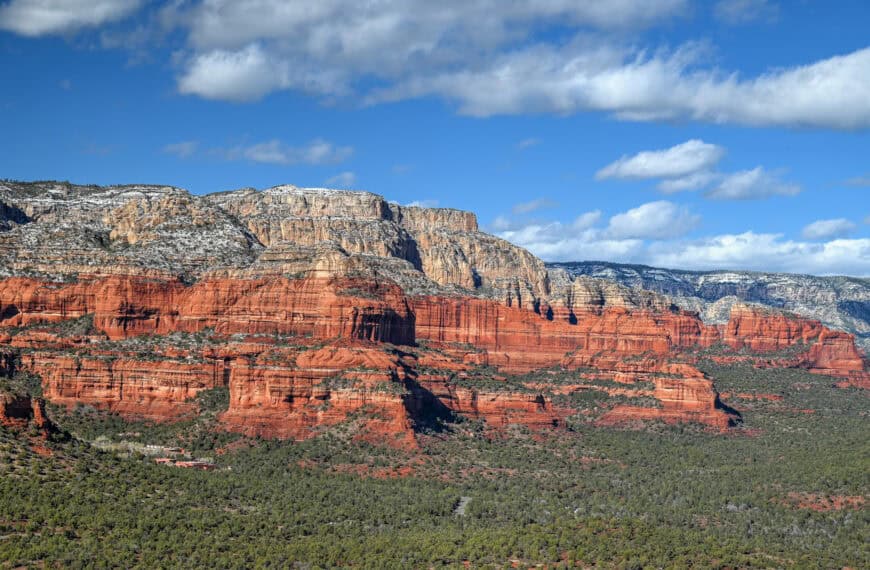
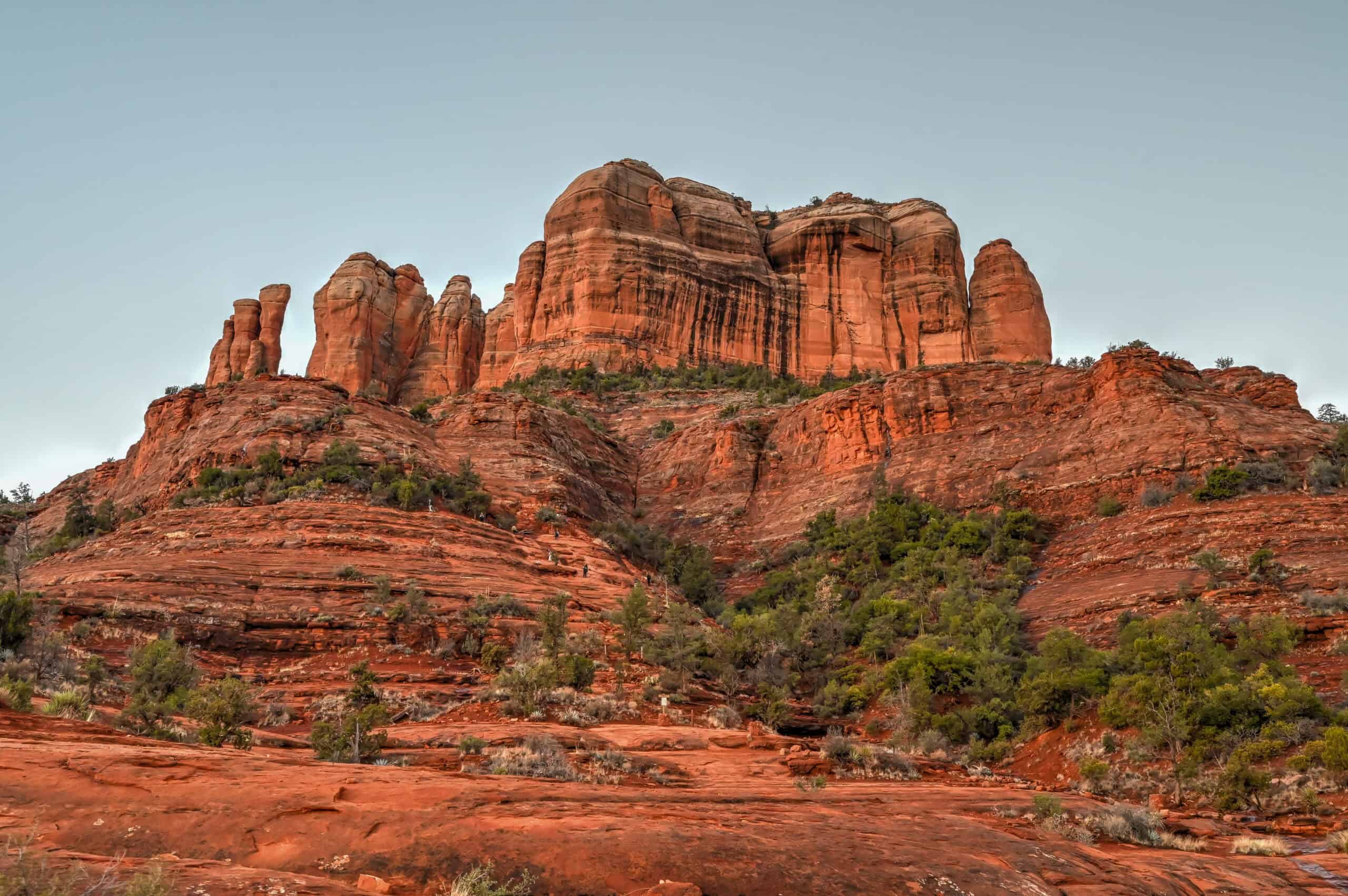
Cathedral Rock is Sedona’s signature sandstone formation, instantly recognizable for its soaring red spires and dramatic silhouette against the sky. The trail to the summit is short but steep, rewarding hikers with some of the most stunning panoramic views in the region. Along the way, you’ll navigate slickrock ledges, natural steps, and tight rock formations that make the climb feel adventurous without requiring technical gear. To help you plan your visit, we’ve put together this Cathedral Rock Trail hiking guide, covering everything from trail difficulty and estimated hiking time to what to expect along the route. Whether you’re aiming for sunrise photography, a quick afternoon hike, or simply a bucket-list Sedona experience, Cathedral Rock delivers unforgettable scenery and a taste of northern Arizona red-rock beauty.
Cathedral Rock Trail Highlights – At a Glance
Sedona’s iconic red-rock climb – Cathedral Rock Trail is short but steep, leading directly to the base and summit of one of Sedona’s most photographed formations. The trail packs adventure into a compact route, giving hikers a close-up experience of dramatic sandstone spires and towering cliffs.
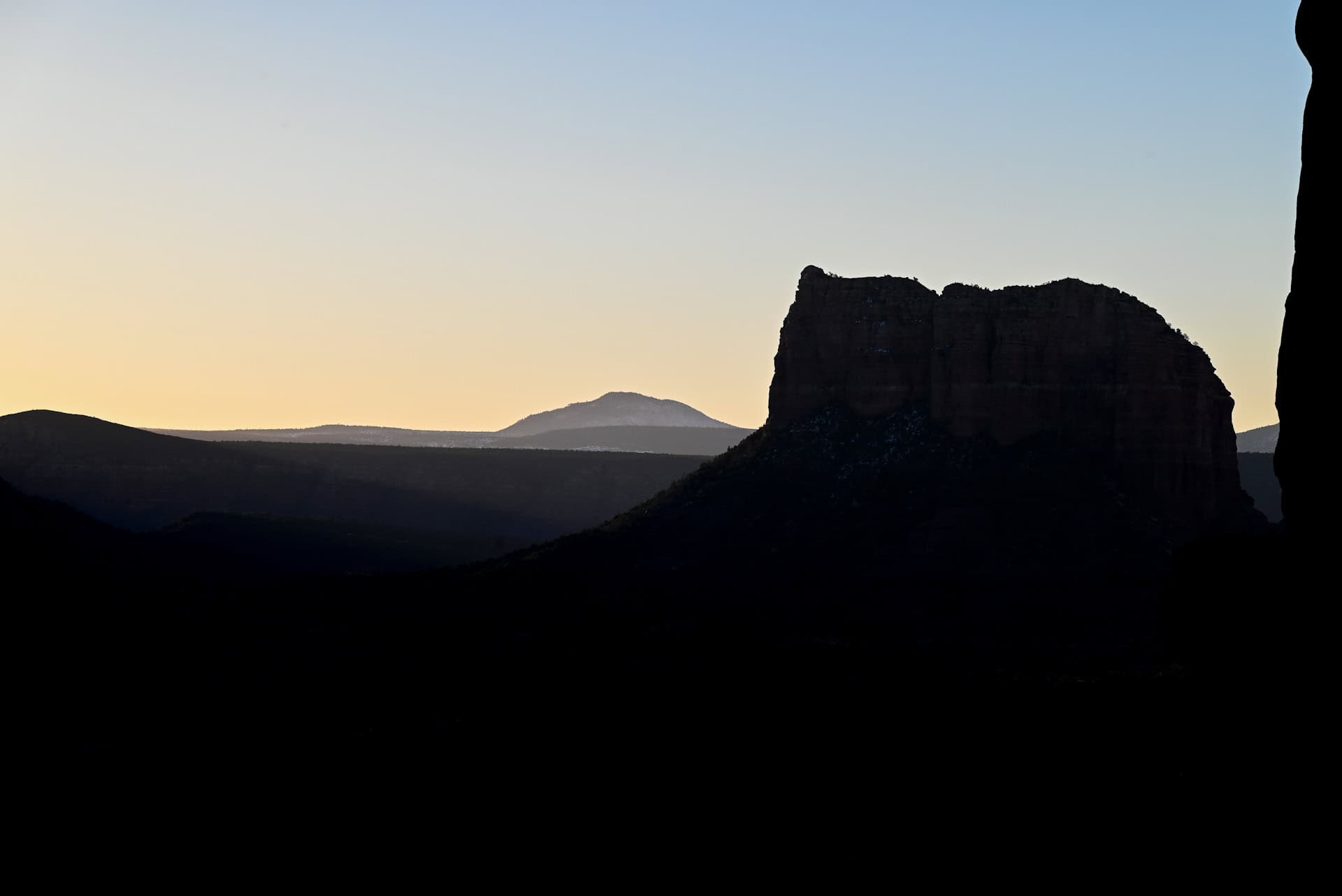
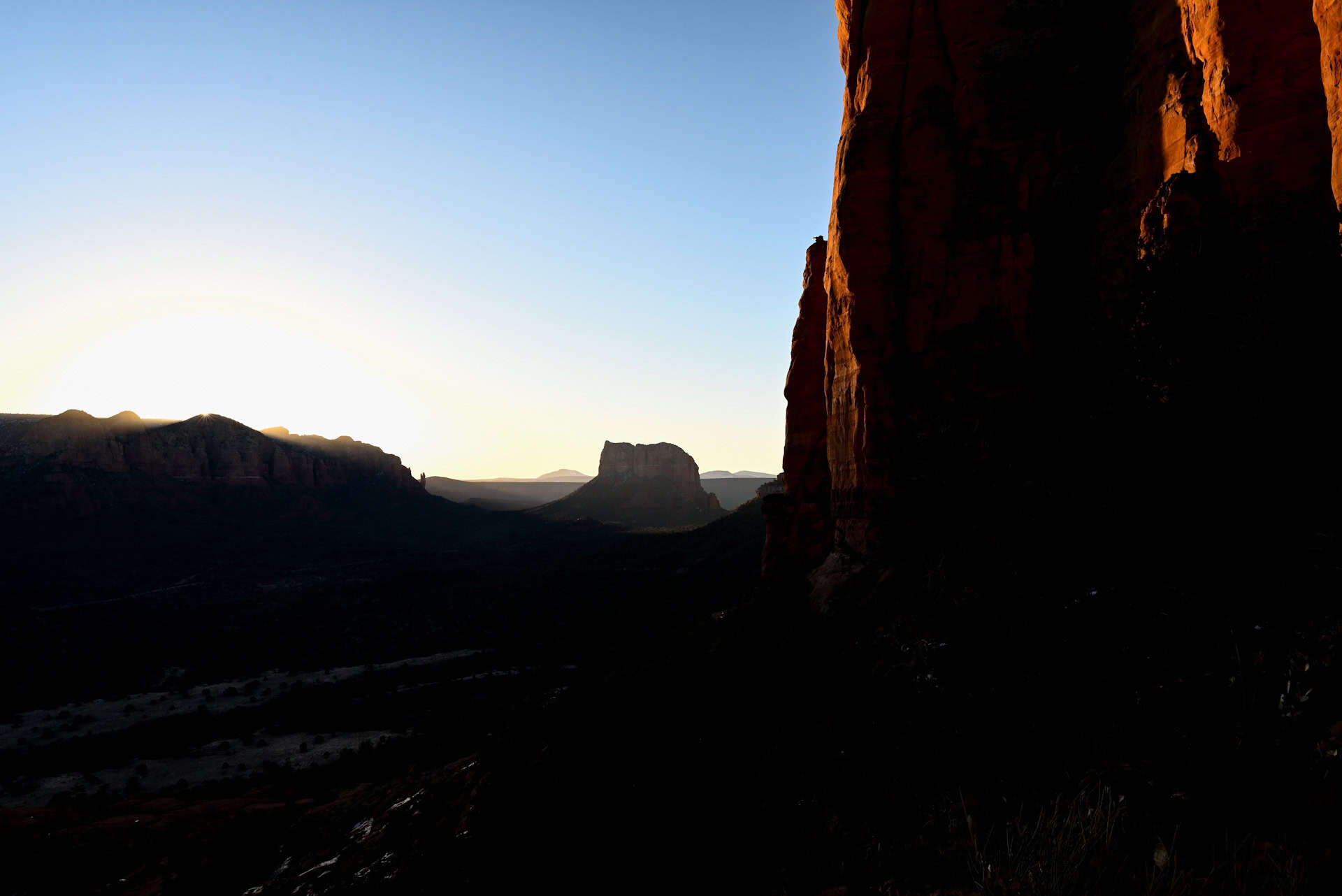
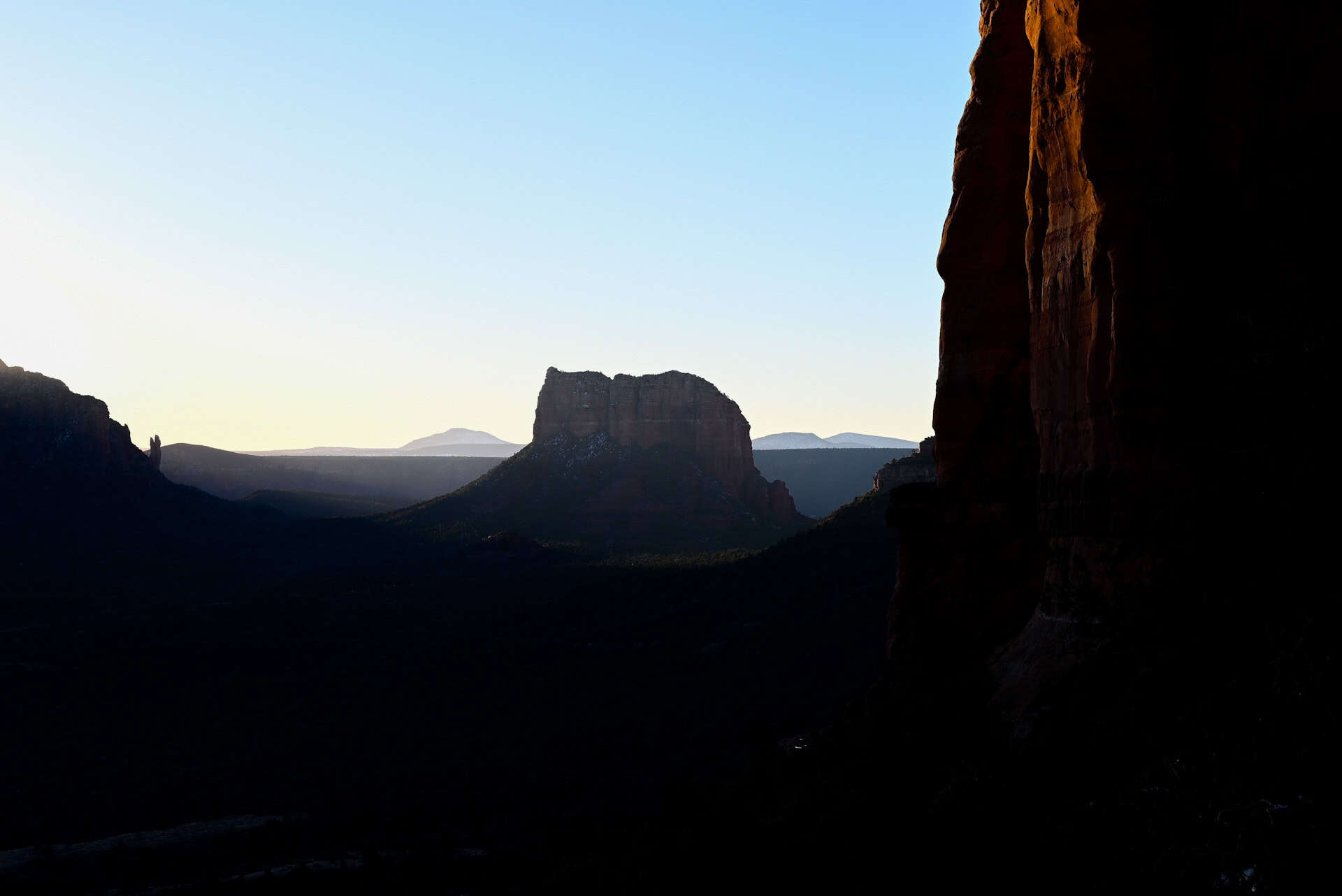
Panoramic summit views – From the upper ledges, you can look out over Oak Creek, Red Rock Crossing, and the surrounding canyons, with Bell Rock and Courthouse Butte visible in the distance. The trail’s summit and saddle points offer multiple vantage points, perfect for photography or simply soaking in Sedona’s high-desert beauty.
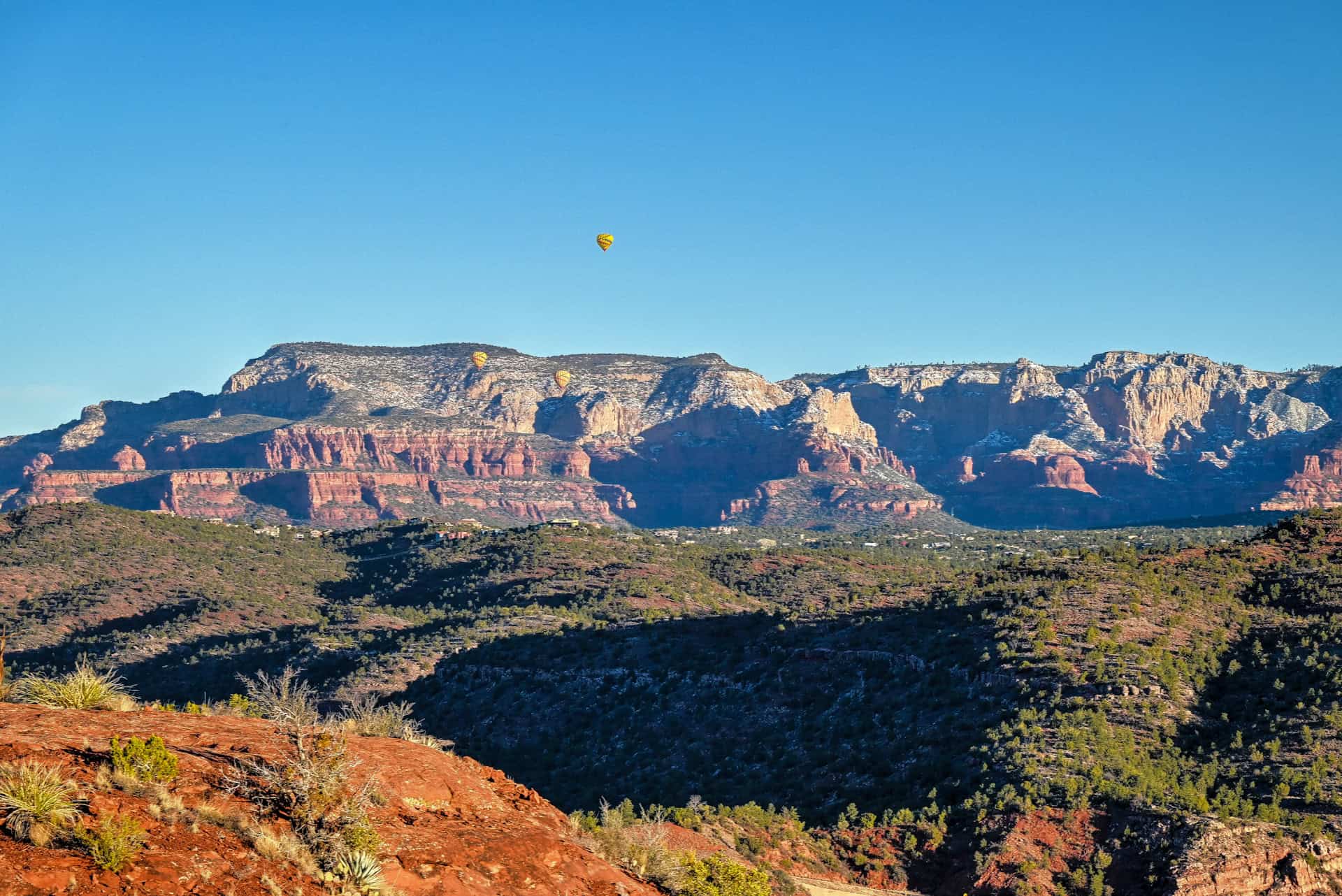
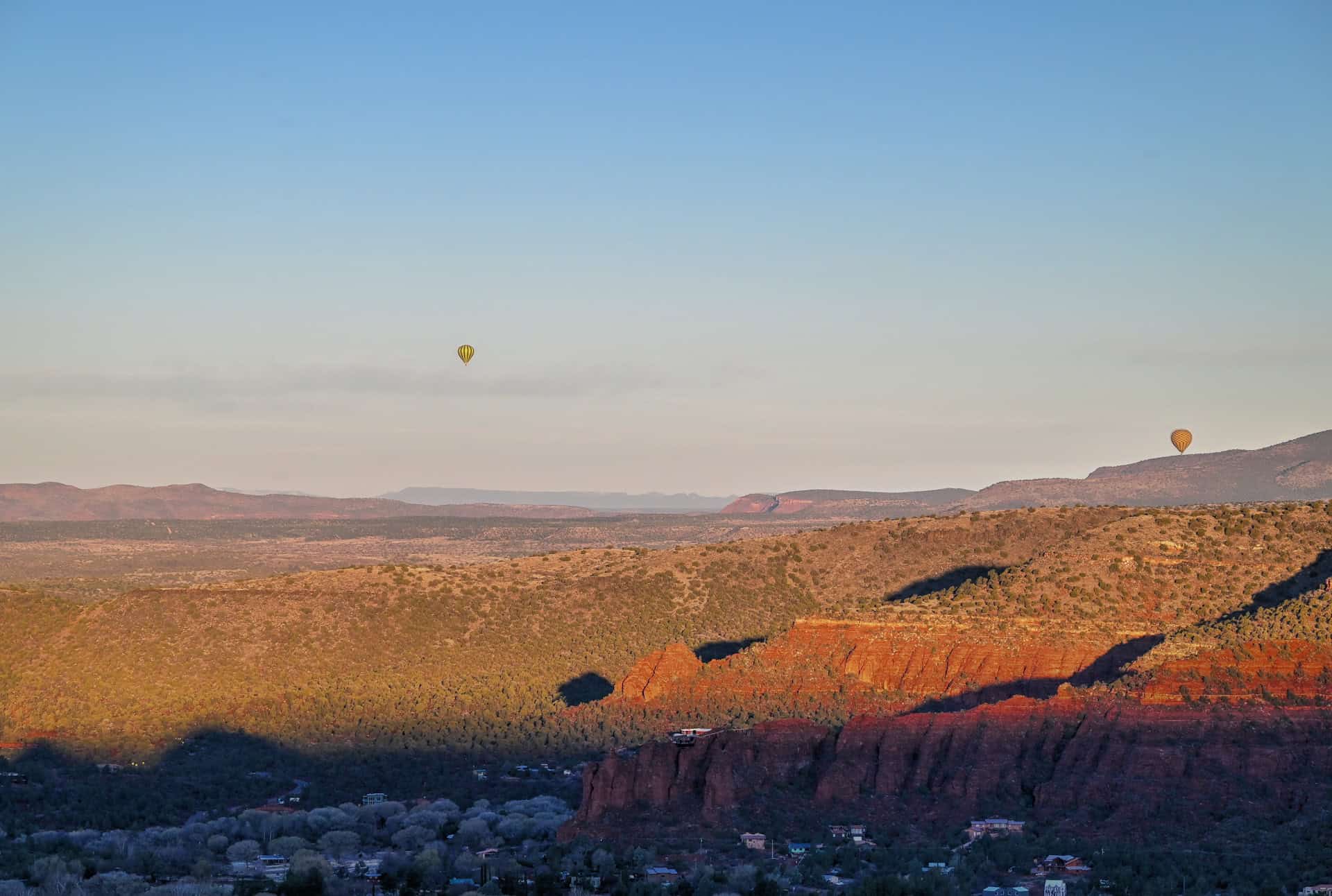
Sunrise and balloon watching – Cathedral Rock is a favorite spot for early risers. From the summit or saddle, you can catch the first light hitting the red rocks and watch hot air balloons gracefully rise over the valley — a truly magical Sedona experience.
A must-do Sedona experience – Whether you’re ticking off Sedona’s classic hikes or exploring a full day of red-rock trails, Cathedral Rock offers a quintessential adventure. Its combination of scenic beauty, short but steep challenge, and iconic status make it a highlight for visitors of all levels.


Disclosure: This page (Cathedral Rock Trail – A Sedona Hiking Guide) may contain product affiliate links. At no additional cost to you, we may receive a commission for purchases made through these links. More details can be found on our disclosure and policies page.
Cathedral Rock Trail & Sedona: Location and Map
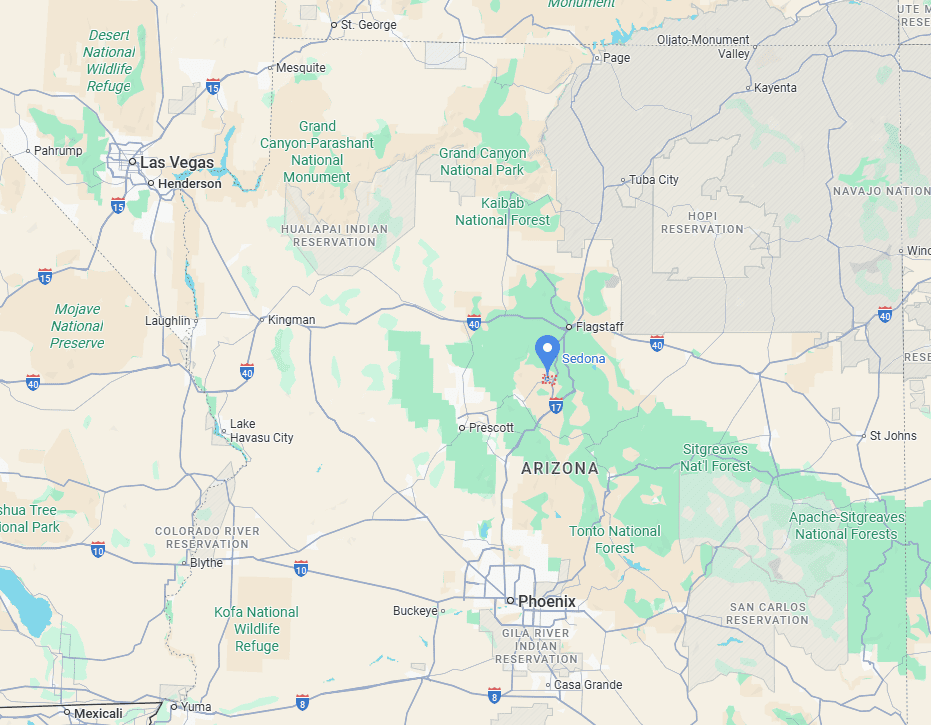
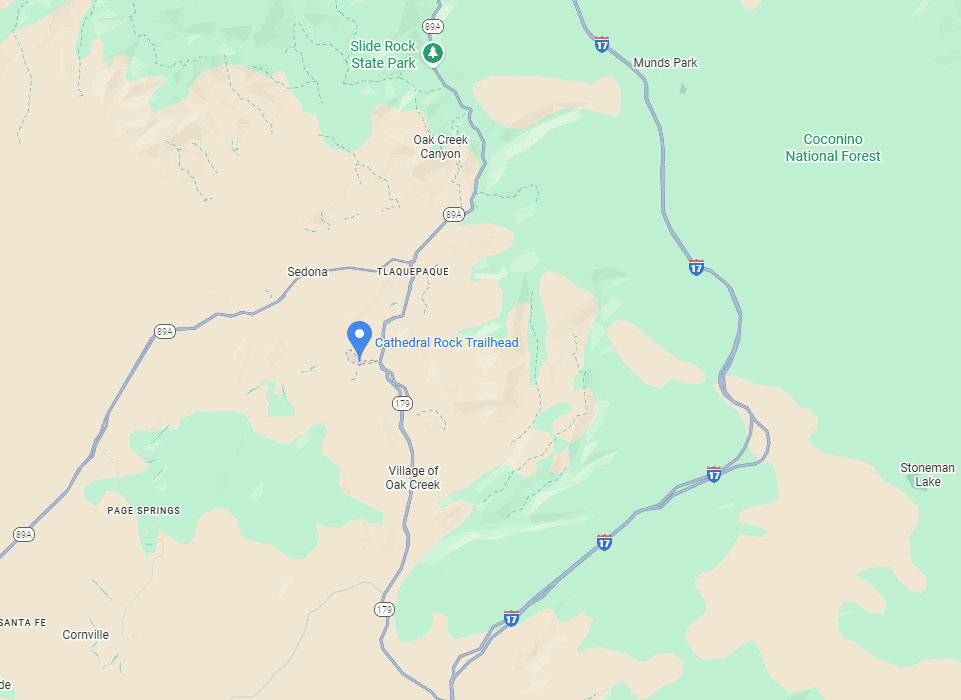
Cathedral Rock Trail is located in Sedona, Arizona, within the scenic Red Rock Crossing area, part of the Coconino National Forest, and surrounded by iconic red sandstone formations.
How to Get to the Cathedral Rock Trail in Sedona
Unlike many other local trails, the Cathedral Rock Trail is served by the Sedona Shuttle, which operates year-round on a set schedule (typically Thursday through Sunday). Private vehicles are not permitted to park at the Cathedral Rock Trailhead when the shuttle is running (but they are allowed on those days outside of shuttle operating hours).
Outside of shuttle operating hours, driving to the trailhead is the only practical option.
Driving times to Sedona, AZ
- Phoenix, AZ: 190 km / 120 mi – about 2 hours
- Flagstaff, AZ: 50 km / 30 mi – about 1 hour
- Grand Canyon (South Rim): 180 km / 110 mi – about 2.5 hours
- Prescott, AZ: 95 km / 60 mi – about 1.5 hours
- Page, AZ: 250 km / 160 mi – about 3 hours
- Las Vegas, NV: 475 km / 300 mi – about 5 hours
These times assume good weather and minimal stops.
If you need to book a rental vehicle for your hiking excursion, we highly recommend using Discover Cars to get the best rates on your rental in Utah, Nevada and Arizona.
We also highly recommend Airalo (eSIM card) for your connectivity needs when travelling abroad. Airalo is the world’s first and largest eSIM store with eSIM plans for 200+ countries and regions worldwide.
Cathedral Rock Trail Access, Fees, and Parking
Trailhead location: The trailhead sits just off Soldier Pass Road, about 10 minutes from downtown Sedona (link to Google Maps).
Shuttle departure location: Shuttles depart from the N SR-179 Park and Ride lot (link to Google Maps)
Sedona shuttle schedule: The free Sedona Shuttle, which operates year-round on a regular schedule, typically runs Thursday through Sunday. The shuttle runs approximately every 15–20 minutes between 7 a.m. and 5 p.m., with a travel time of about 10-15 minutes each way. Check the official Sedona Shuttle website for the most up-to-date routes, schedules, and any service changes before your visit.
Trailhead parking lot: Outside of shuttle operating hours, a small paved lot with roughly 20-25 spaces is available at the Cathedral Trailhead on a first-come, first-served basis. It often fills very early in the morning, so most visitors use the shuttle instead.
Shuttle parking lot: The shuttle parking is substantially larger (50+ cars), but it can fill up quickly, too. On busy weekend days, you might have to wait for a spot to open up.
Facilities: Vault toilets are available both at the trailhead and at the shuttle car park.
Trail opening Hours: Open daily 24/7.
Cathedral Rock Trail Entrance Fees
Parking at the N SR-179 Park and Ride lot and riding the Sedona Shuttle are free of charge. A Red Rock Pass is not required when using the shuttle system.
A Red Rock Pass is required to park at the trailhead. Passes can be purchased at the parking kiosk, at visitor centers in Sedona, or online at recreation.gov (5$ for a daily pass, $15 for a weekly pass).
If purchasing online, your license plate will need to be entered; if purchasing a physical pass, it must be displayed while parked.
Holders of an America the Beautiful Pass can enter free of charge. You can purchase your pass ahead of time through the REI store.
About Sedona & Red Rock Country
Where the Desert Meets the Pines: Nestled among Arizona’s iconic red rock formations, Sedona sits at the crossroads of desert and highland forest. Towering sandstone spires rise above juniper-covered plateaus, while oak-filled canyons hide cool streams and shaded trails. The contrast of vivid red cliffs against blue skies and green pines makes Sedona one of the most photogenic landscapes in the American Southwest.
A Landscape Shaped by Time: Sedona’s red rocks are part of the ancient Schnebly Hill Formation — layers of iron-rich sandstone sculpted by millions of years of erosion. The result is a wonderland of mesas, buttes, and cliffs that glow deep crimson at sunrise and sunset. This dramatic geology forms the heart of the Coconino National Forest and the Red Rock–Secret Mountain Wilderness, protecting hundreds of miles of hiking trails and viewpoints.
A Hub for Outdoor Adventure: From short, scenic walks to challenging summit climbs, Sedona offers hiking for every level. Iconic trails like Cathedral Rock, Devil’s Bridge, and Bell Rock draw visitors from around the world, while lesser-known routes such as Doe Mountain and Fay Canyon reveal quieter corners of the landscape. Beyond hiking, Sedona is a hub for mountain biking, jeep tours, and stargazing under some of Arizona’s clearest night skies.
A Spiritual and Cultural Destination: Long before it became a modern resort town, this region was home to the Yavapai and Apache peoples, whose history remains deeply tied to the land. Today, Sedona is also known for its vibrant arts community and its reputation as a place of renewal, with “energy vortexes” and meditation sites attracting visitors seeking connection and calm amid the red rocks.
Gateway to Northern Arizona: Located between Flagstaff and the Verde Valley, Sedona makes an ideal base for exploring the broader region — from the ancient cliff dwellings of Montezuma Castle to the scenic switchbacks of Oak Creek Canyon and the high desert plateaus beyond. Whether you’re here to hike, photograph, or simply take in the views, Sedona captures the essence of Arizona’s wild beauty.
Arriving For Sunrise on a Shuttle Day
On shuttle days, the Cathedral Rock Trailhead parking lot is closed during shuttle operating hours (from roughly 7:00 a.m. to 5:30 p.m). To secure a spot before it closes, you should plan to arrive no later than 6:30 a.m.—but you probably want to arrive even earlier if you want to see the sunrise from the top (always check exact sunrise times). In summer, you’ll have to arrive very early, but few people bother getting up that early for sunrise.
If the lot is already full, you’ll likely need to circle back and head to the shuttle parking area to ride the shuttle. Alternatively, you can aim for the Baldwin Trailhead (see next section), which is about a 20-minute drive away.
Don’t worry about hiking in complete darkness — even before sunrise, there is usually enough ambient light to make your way up the trail without additional lighting. That said, carrying a small headlamp or phone light is always a good idea, especially if you’re starting extra early or prefer more visibility. As a general guideline, plan to begin your hike about 45 minutes before sunrise to give yourself enough time to reach the viewpoint and settle in before the first light hits the red rock — though if you are a fast hiker and don’t have issues with scrambling, you can probably get there in under 30 minutes (the main viewpoint is only half a mile from the trailhead, but some sections are slow going).
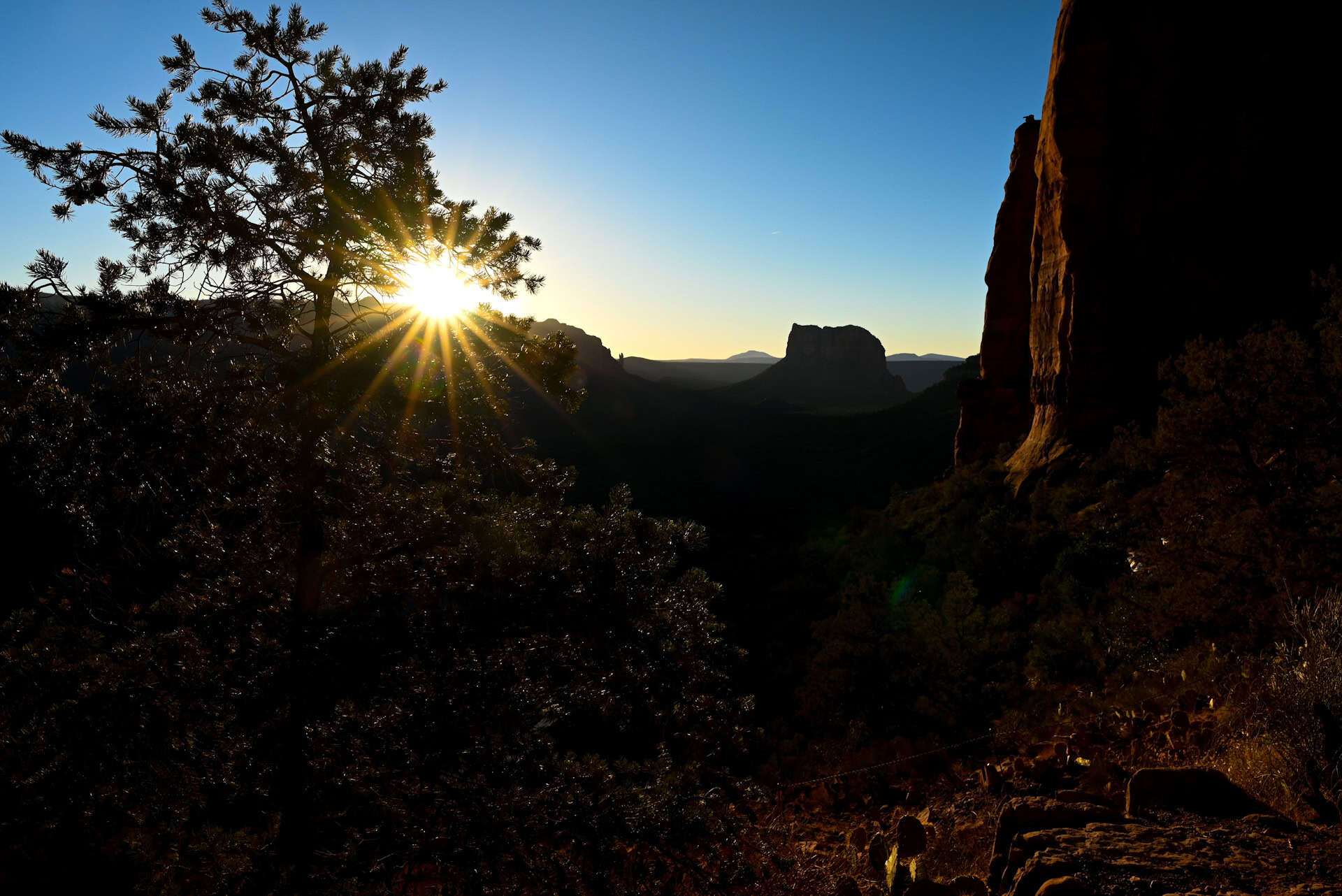
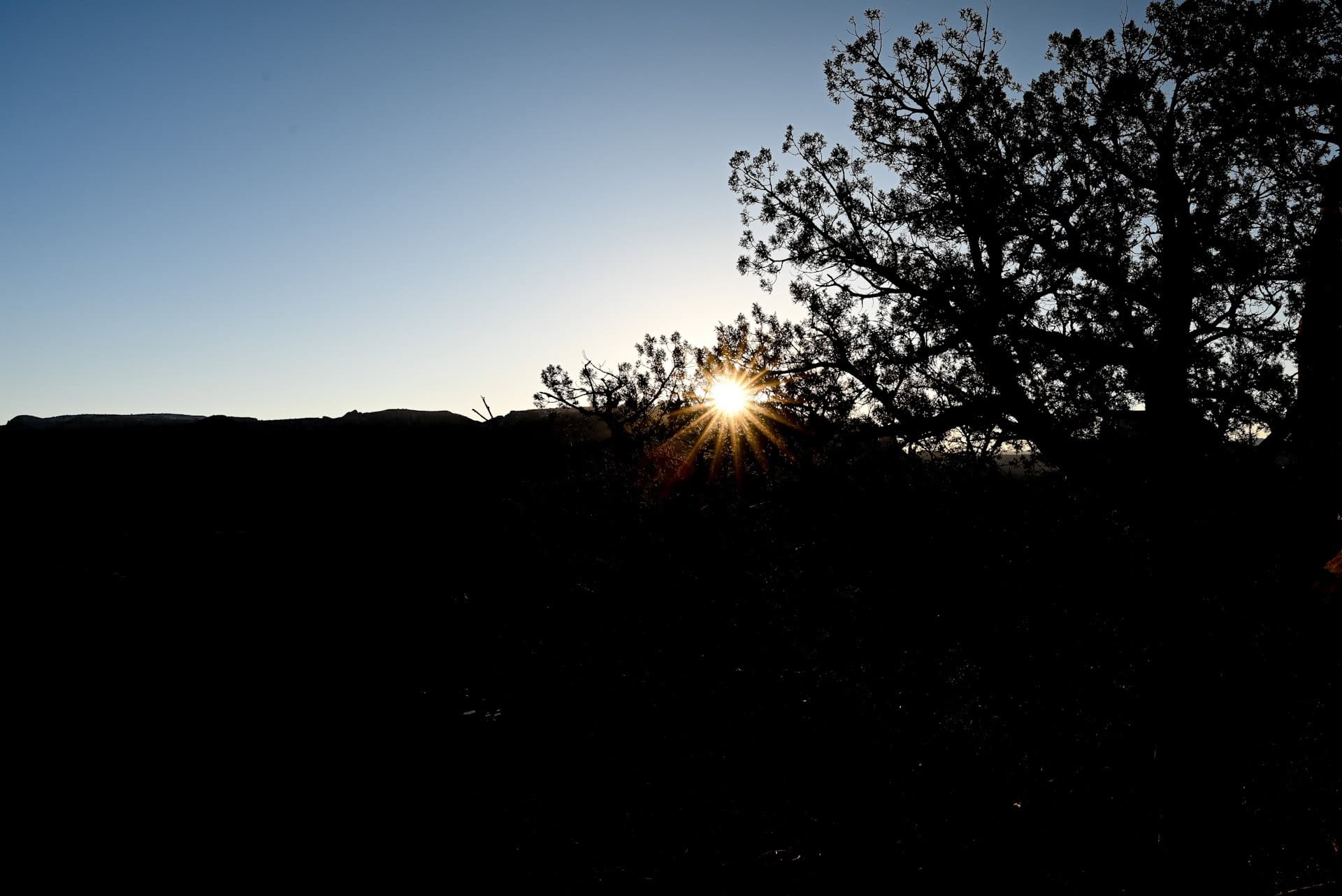
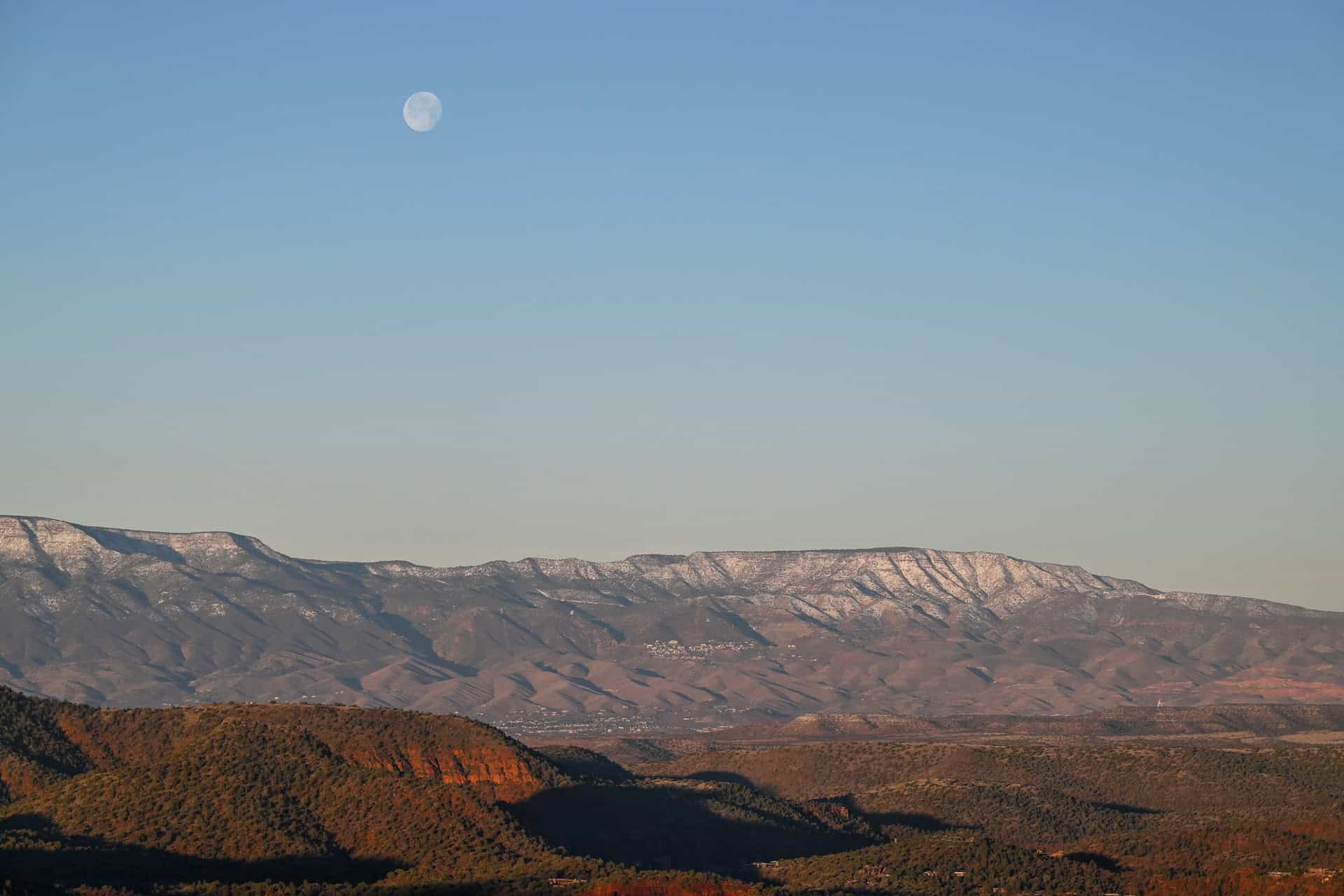
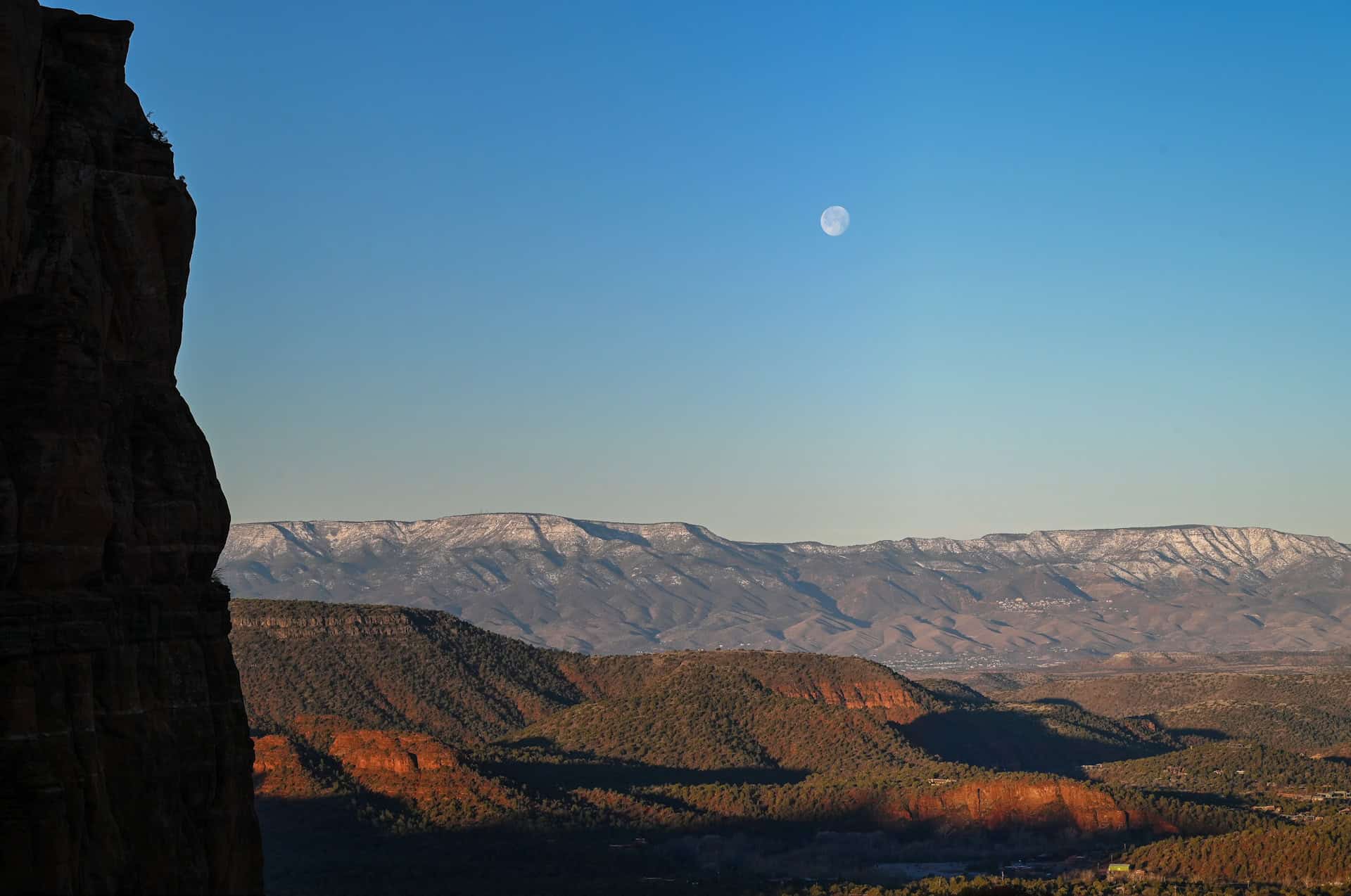
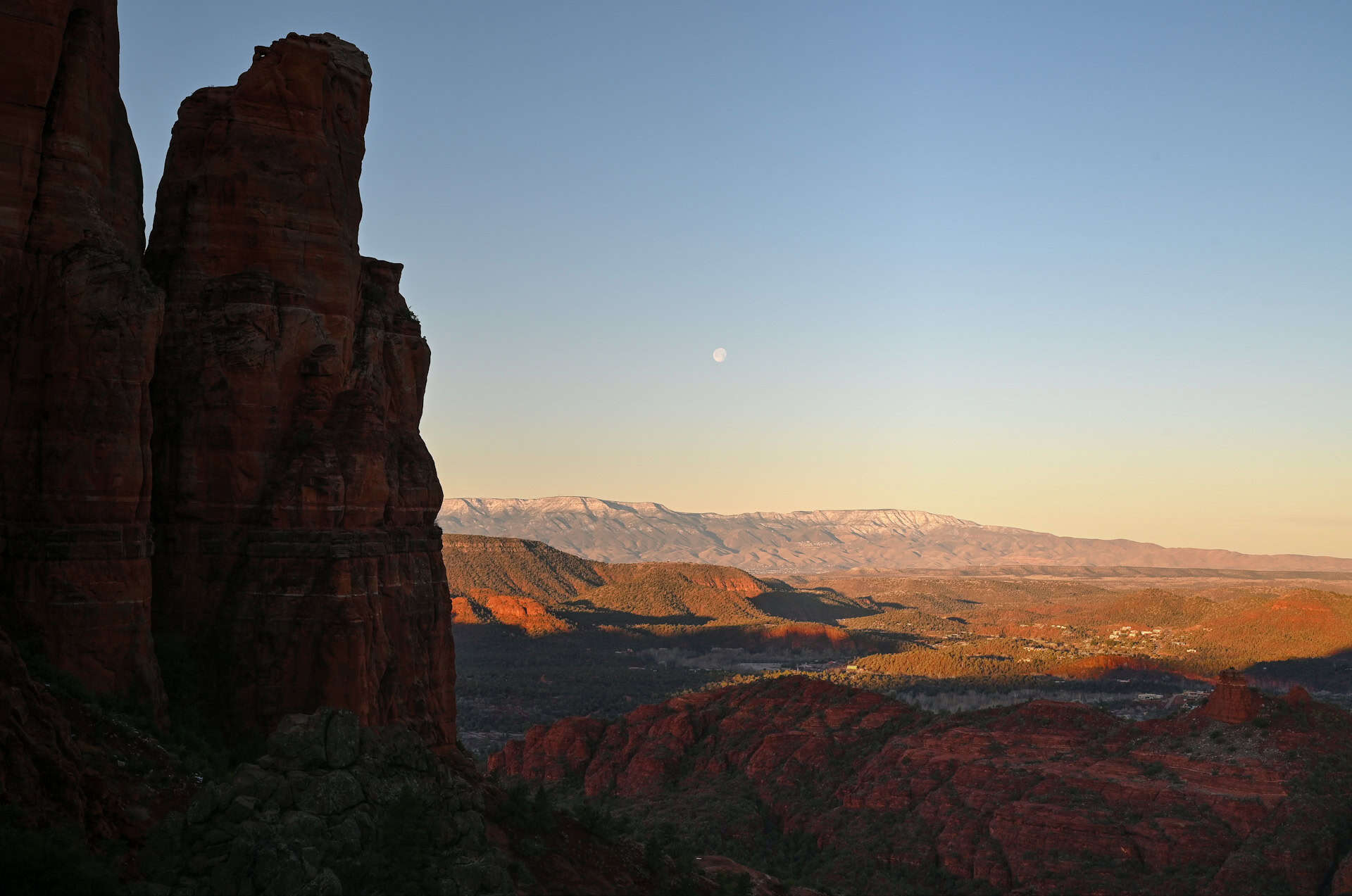
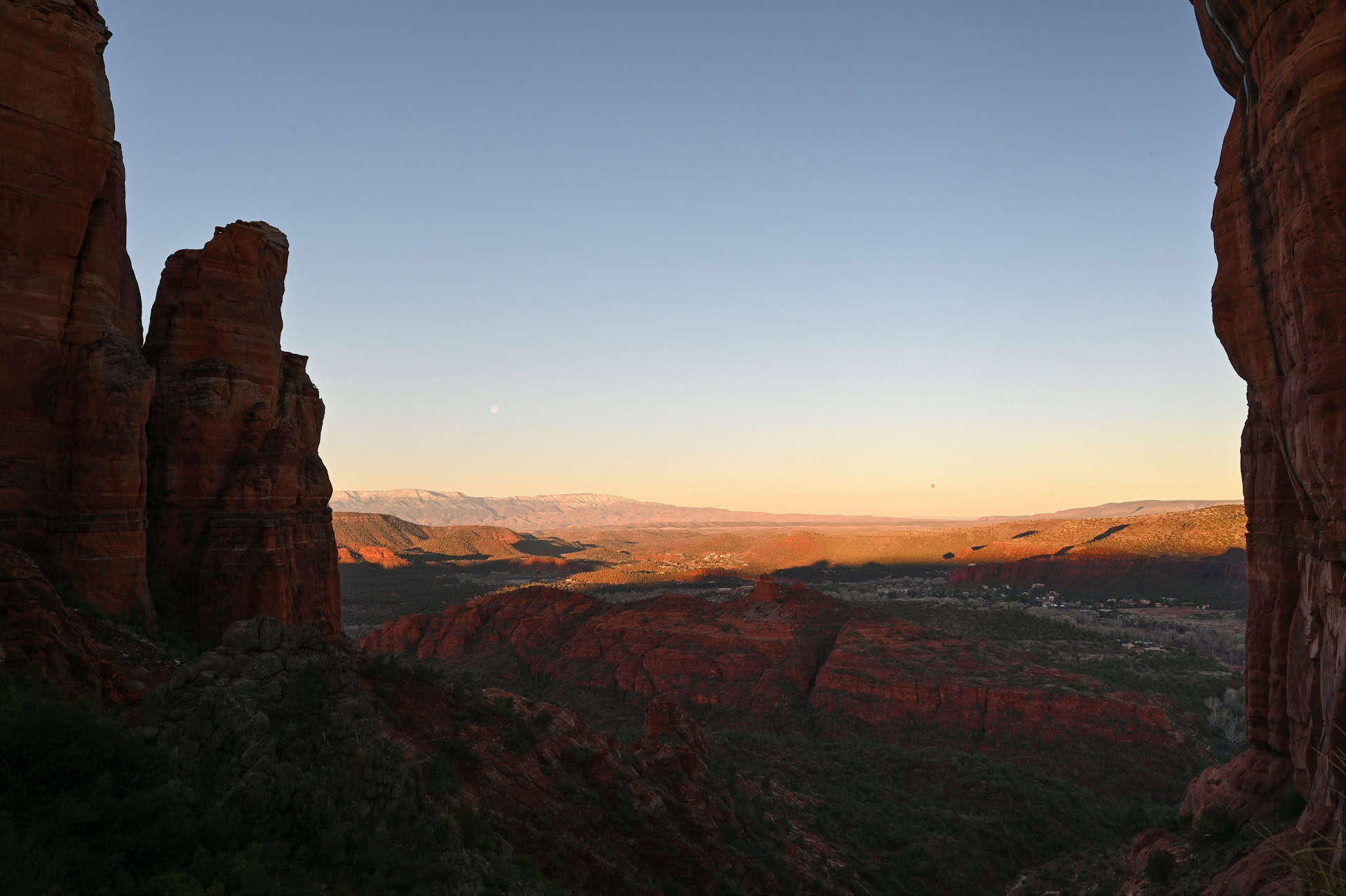
We arrived around 6:00 a.m. in March to find the lot already half full, but it gave us enough time to reach Cathedral Rock’s “summit” in time to watch the sunrise (around 6:45 am) on one side and the hot air balloons lifting off on the other (photos below).
Not everyone hikes all the way to Cathedral Rock’s upper saddle (“the summit”). In fact, many sunrise hikers choose to stop at the wide, open slickrock plateau just below the trail’s more challenging climbing sections. This natural viewpoint still offers an excellent vantage point for watching the sunrise spread across the eastern horizon — and it’s where most visitors gather if they prefer to avoid the steeper short scrambles higher up. The atmosphere here is usually relaxed, with people spreading out across the slickrock to enjoy the early light, take photos, or simply settle in before the sun appears. For those who feel comfortable with the steeper sections, continuing to the upper saddle offers even more dramatic views, but the lower plateau is a perfectly scenic and much easier alternative.
How to Avoid Taking the Shuttle During Operating Hours
The only practical alternative to the shuttle when it’s operating is to park at the Baldwin Trailhead (Google Maps link). Although this trailhead is only about 1.5 miles west of the Cathedral Rock Trailhead as the crow flies, reaching it by car requires driving a 9-mile loop (about 20 minutes).
While the standard Cathedral Rock trail is just 1.1 miles (1.8 km) round-trip, starting from the Baldwin Trailhead increases your journey to a 3.8-mile (6 km) out-and-back hike. It’s not technically harder but is notably longer and more time-consuming.
Cathedral Rock Trail Details and Map
Distance: 1.1 miles (1.8 km)
Route Type: Out & Back
Elevation change: 790 ft / 240 m (difference between trail high and low point)
Elevation gain: 790 ft / 240 m (cumulative elevation gain)
AllTrails rating (2025): 4.9, 25122 ratings
Duration: Most people complete the full trail in 1h15-1h45
Not an AllTrails member yet? We highly recommend signing up for either their free or paid membership plans. The free plan allows you to find new trails and plan routes but it can only be used while hiking if you have access to mobile data. The paid membership plan (AllTrails+) allows you to download trail maps for offline use and provides live progress updates and off-route notifications.
If you are still uncertain – you should know that the All Trails mobile application was voted the 2023 iPhone App of the Year by Apple.
We find that AllTrails is a great tool to have when hiking, particularly for assisting with navigation when the trail is hard to locate and to help monitor your progress along the trail, which helps estimate how much time you’ll need to complete the trail.
Additional Trail Details
Canine companions: Dogs are allowed on the trail, but they must be kept on a leash at all times. The route includes uneven terrain, exposed rock ledges, and occasional steep sections, so exercise extra caution if hiking with pets.
You can bring dogs on the Sedona Shuttle as long as they are in an appropriate carrier or have a muzzle and are on a leash.
Trail environment – Cathedral Rock is one of Sedona’s most iconic sandstone formations, and the trail leading to its saddle offers a dramatic, close-up experience of its towering red spires. The hike begins on packed dirt but quickly transitions to steep slickrock, with wide-open views over the Village of Oak Creek, Courthouse Butte, and Bell Rock. Shade is virtually nonexistent — the trail is fully exposed from start to finish — so bring adequate water and sun protection even in cooler months.
Route signage – Route markings are modest but sufficient. Occasional white painted arrows on the rock guide hikers up the steep slickrock sections, and cairns mark the more gradual segments. The trail is straightforward but requires attention, especially at the steepest pitches where the route hugs narrow ledges or climbs up eroded sandstone chutes. Follow the arrows closely to stay on the safest line.
Trail surface / Technical aspects – This is a non-technical but highly hands-on hike. After the initial gentle approach, the trail becomes steep, requiring frequent use of hands (easy scrambles) to ascend short chimneys and angled slickrock slabs. The rock is generally grippy in dry weather but becomes extremely slick when wet. Good footwear with strong traction is essential. Those uncomfortable with heights should be cautious near exposed sections approaching the saddle.
Slope grade: The average trail slope grade is above 20%, which is considered very steep, with several sustained sections significantly steeper than that. The steepest slickrock pitches are closer to 30–35% incline, which explains why this 1.1-mile trail feels much more demanding than its distance suggests.
Trail difficulty level assessment (based on our personal assessment, taking into account the trail length, slope grade and trail surface) :
Very Easy | Easy | Moderate | Moderately Challenging | Challenging
While certain sections of Cathedral Rock are indeed steep and require hands-on scrambling, the trail’s very short total distance and the brief nature of the most technical segments mean that the hike overall is best described as Moderate. Fit hikers will find the steep slickrock and mid-section chute challenging but rewarding, while casual hikers can still complete the climb without it feeling overwhelmingly difficult. In other words, the short length keeps the challenging sections from defining the overall rating.
Cathedral Rock Trail Description and Summary
The Cathedral Rock Trail begins with a gentle ascent across open desert terrain—a peaceful warm-up that gradually builds anticipation for the iconic climb ahead. Early in the hike, you’ll cross a small seasonal wash by stepping over stones placed to keep your feet dry. Shortly after, the landscape opens onto expansive slickrock, where the trail becomes more adventurous and the views start to unfold.


You’ll soon pass the signed junction with the Templeton Trail, which skirts the base of Cathedral Rock and eventually connects to the Baldwin Trailhead. This connection is especially handy when the Cathedral Rock Trailhead is closed to private vehicles and only accessible via the Sedona Shuttle—the Baldwin Trailhead becomes a practical alternative starting point, allowing hikers to reach Cathedral Rock without relying on shuttle service.


After this intersection, the main Cathedral Rock Trail continues its steady climb onto increasingly steep and scenic red rock, setting the stage for the famous scrambles ahead.


As the terrain transitions to solid red rock, you’ll encounter a series of short scrambles. Most require only light hand-and-foot work, but grippy hiking shoes or trail runners are a big help here. Partway up, the trail reaches a broad, sloping slickrock plateau—a popular stopping point for sunrise watchers and for anyone who prefers not to climb the trail’s most technical section. The views from this open area are already spectacular, making it a natural turnaround spot for many. In fact, most people we crossed along the trail that morning stopped here, as only a handful of people were at the top with us to watch the sunrise.


Beyond this plateau, the path narrows and soon funnels into Cathedral Rock’s iconic sandstone “chute”—the steepest and most technical portion of the trail. Despite its intimidating reputation, this section is often more manageable than it looks. The rock forms natural steps and handholds, and the center groove is just wide enough for most feet to find secure placements. You’ll use both hands to climb, but the moves are intuitive, the rock is solid and grippy in dry conditions, and the vertical exposure is moderate. Still, it’s a lively, hands-on ascent that gets your heart pumping.


Once above the chute, the trail eases again. You’ll negotiate a couple of minor scrambles, traverse a short but memorable narrow ledge, and climb a few natural stone staircases through tight switchbacks.


The route ends at Cathedral Rock’s saddle-like summit area, a dramatic perch between towering rock spires. Here you’re rewarded with sweeping panoramas of the Mogollon Rim, Bell Rock, Courthouse Butte, and Sedona’s layered red-rock country. It’s a compact summit, but it offers one of the most breathtaking viewpoints anywhere in the region.


At sunrise, this perch becomes truly magical: you can watch the sun crest over the mountains to the east while hot-air balloons drift into the sky from the northwest—a quintessential Sedona spectacle that adds an unforgettable touch to the experience.




Cathedral Rock Trail Hiking Tips
Hiking Experience
The Cathedral Rock Trail is short but famously steep, with sustained hands-on scrambling and several exposed slickrock sections. The climb becomes progressively more technical as you approach the sandstone “chute,” where both hands are required to ascend. While the hike is manageable for fit beginners, it is best suited for hikers with some experience on rocky desert terrain or those comfortable using their hands for balance and upward movement. Families with older, confident kids may find it exciting; less experienced or acrophobic hikers may prefer stopping at the wide slickrock plateau below the final ascent — a popular place to watch sunrise without tackling the steepest section.
Cell Service
Cell coverage around Cathedral Rock is spotty. You may get a weak signal near the trailhead or on higher ledges, but coverage is inconsistent and should not be relied upon for navigation or emergencies. Download offline maps ahead of time and share your hiking plans if traveling solo.
Leave No Trace
Stay on designated rock routes and avoid creating new paths on slickrock or cryptobiotic soil. Do not climb on delicate rock formations off-trail, and avoid disturbing fragile pockets of vegetation clinging to the rock. Pack out all trash, keep noise low, and be especially mindful of leaving no trace during sunrise and sunset hours, when crowds can concentrate in small areas.
Bugs
Insects are usually minimal. You might encounter gnats or flies in warmer months, particularly after rain, but mosquitoes and ticks are uncommon. Insect repellent is optional but rarely needed.
Equipment
No technical climbing gear is needed, but sturdy hiking shoes or trail runners with excellent grip are essential — the entire ascent involves slickrock, ledges, and steep scrambles. Bring plenty of water, sun protection, and, optionally, lightweight gloves for grip on the sandstone. Trekking poles are not useful on the steep upper sections and are best stowed once the scrambling begins.
Weather and Exposure
Cathedral Rock is one of the most exposed hikes in Sedona, with very limited shade and relentless sun on clear days.
- Monsoon season (July–September): Storms can form suddenly. Avoid being on high, exposed rock during lightning; the summit area is not safe in storms.
- Summer: Start early (before 8 a.m.) or hike later in the afternoon to avoid peak heat.
- Winter: Morning frost and shaded rock surfaces can become icy and dangerously slick; micro-spikes may be helpful after a freeze.
Wind exposure increases significantly as you climb higher; gusts at the saddle can be strong and unpredictable.
Current Trail Conditions
Check the Coconino National Forest Alerts page for updates on trail conditions or temporary closures.
Wildlife
You may spot lizards basking on rocks, ravens gliding along the cliffs, and occasionally mule deer grazing in the foothills. Wildlife tends to be most active around sunrise and sunset. In warmer months, rattlesnakes and other desert reptiles are active, so keep an eye out near rocky ledges and underbrush – but they tend to avoid hikers.
Best Time to Hike the Trail
Because of the heavy exposure and steep scrambling, comfort varies dramatically by season.
Spring (March–May):
One of the best times to climb. Temperatures range from 60–80°F (15–27°C), and lighting is excellent — especially for sunrise photography. Crowds are moderate to heavy.
Summer (June–August):
Hot and dry, with daytime highs often above 95°F (35°C). Early morning and late evening hikes are most comfortable. Always bring extra water and watch for monsoon storms in late July through early September.
Fall (September–October):
Another ideal season. Temperatures drop back into the 70s–80s°F (21–30°C), and the light creates rich red and golden hues on the cliffs. Crowds thin out slightly after October.
Winter (November–February):
Cool, quiet, and beautiful. Highs average 50–60°F (10–16°C) make the climb comfortable, but mornings can be icy — especially in the chute and shaded corners. Snow on the red rocks is beautiful but slippery.
Quick Summary – When to Visit
Spring & fall offer the best overall conditions, lighting, and crowds.
Summer is doable only with a very early start and ample water.
Winter provides quiet trails and crisp air — but watch for icy, slick sections.
Hiking Packing List
All Trails subscription – This comes in really handy for areas with little or no cell reception, as the annual subscription allows you to download trail maps for offline use.
External Battery – If you are using your phone to track your progress along the trail or to help with navigation, you certainly don’t want your phone to die on you. That’s especially true in the unlikely event that you might get hurt or need assistance.
Hiking poles – These can be particularly useful in steep trails or muddy/boggy trail conditions.
Water Filter Bottle – The Life Straw bottle is an advanced water bottle with a filter that not only improves water taste but more importantly filters out bacteria and parasites, chemicals and microplastics.
Headlamp – very practical and a smart choice if you plan to start your hike before sunrise or finish it after sunset.
Some of Our Other Sedona Favorite Trails
Soldier Pass Trail – A must-do for those seeking a mix of natural landmarks, geological wonders, and classic Sedona red rock adventure. The trail begins in a scenic desert wash before climbing gradually into the rugged foothills of the Red Rock-Secret Mountain Wilderness. Along the way, you’ll encounter some of Sedona’s most iconic features — the dramatic collapse of Devil’s Kitchen Sinkhole, the reflective pools of Seven Sacred Pools, and towering cliffs of vibrant sandstone layered with desert vegetation.


Fay Canyon Trail – Just a few minutes from the Doe Mountain Trailhead, Fay Canyon offers a gentle, shaded hike through a narrow red rock canyon framed by towering sandstone walls and desert vegetation. The main trail is easy and family-friendly, leading to a scenic alcove and a hidden natural arch near the end. For those seeking a bit more adventure, a short but steep scramble up the rocks at the canyon’s end reveals one of Sedona’s most rewarding secret viewpoints — a breathtaking panorama of the surrounding cliffs and red rock formations that few casual visitors take the time to see.


Teacup & Sugarloaf Loop – A local favorite that combines moderate climbing with panoramic views, this loop connects the Teacup and Sugarloaf trails right in the heart of Sedona. The short ascent up Sugarloaf Mountain rewards hikers with 360° views of Coffee Pot Rock, Thunder Mountain, and the greater Red Rock range.


For more hiking inspiration, check out our complete guide to Sedona’s Best Hiking Trails, featuring detailed descriptions, difficulty levels, and local tips for planning your adventures.
Where to Stay Near the Cathedral Rock Trail
If you’re looking for comfortable, well-located lodging in Sedona without splurging on luxury, here are four of the best mid-range options. These hotels and resorts put you within easy reach of popular hiking trails, the Red Rock Scenic Byway, and Sedona’s shops and restaurants. Most include free WiFi, parking, and convenient amenities, making them solid bases for exploring the area.
GreenTree Inn Sedona
What sets it apart: affordable comfort with a quiet, convenient location near Uptown Sedona.
Clean, well-appointed rooms, complimentary breakfast, and friendly service make this a reliable choice for hikers and families alike. Its easy access to main roads ensures a quick drive to trailheads while still offering a peaceful stay.
Hilton Grand Vacations Club – Sedona Ridge
What sets it apart: Spacious suites ideal for families or longer stays.
Featuring full kitchens, separate living areas, and a resort-style outdoor pool, this property combines convenience with extra space. Guests can enjoy easy access to nearby trails and Sedona’s scenic viewpoints, making it perfect for those who want both comfort and flexibility.
Arabella Hotel Sedona
What sets it apart: Classic mid-range hotel with a touch of style and excellent amenities.
Offering outdoor pools, on-site dining, and clean, comfortable rooms, Arabella is an easy pick for travellers seeking a balance of affordability and quality. Its central location also makes it a convenient home base for exploring both Uptown Sedona and nearby Red Rock trails.
The Wilde Resort and Spa
What sets it apart: A modern, boutique-inspired option with a spa and scenic views.
The Wilde combines well-designed rooms with amenities like a hot tub, fitness center, and easy access to nearby hiking. Ideal for those who want a bit more flair without going full luxury.
Booking Tip: Sedona lodgings can fill up quickly, particularly in spring and fall when temperatures are ideal for hiking, as well as on weekends. Early reservations are strongly recommended to secure the best rates and rooms.
Cathedral Rock Trail – Frequently Asked Questions
How much time does Cathedral Rock trail require?
Most hikers complete the hike in 1h15 to 1h45, depending on comfort with scrambling, crowd levels, and time spent at the summit.
Is Cathedral Rock difficult?
Yes — this is considered a Moderate to Moderately Challenging hike. The trail is short, but the slickrock, exposure, and steep scrambles — especially the chute — make it more demanding than its mileage suggests.
Do I need rock-climbing experience?
No technical climbing skills are necessary, but you will need to use your hands to pull yourself up the rock in multiple places. Good traction shoes are essential.
Is the chute as scary as it looks?
The chute looks intimidating in photos, but most hikers find it easier than expected because the rock is solid and naturally grippy. Handholds and footholds are easy to identify. Still, those uncomfortable with heights or steep scrambling may choose to enjoy sunrise from the plateau below it.
Do I need a permit?
Yes, a Red Rock Pass, but only if parking at the trailhead. Daily and weekly passes can be purchased at the kiosk, visitor centers, or online. Holders of an America the Beautiful Pass are exempt.
Are drones allowed?
No. Drones are prohibited at Cathedral Rock and throughout the Red Rock District of the Coconino National Forest, except in specifically designated areas (Cathedral Rock is not one of them). This includes takeoff, landing, and operation anywhere along the trail, at the saddle, or from nearby parking areas.
Is the trail kid-friendly?
Families with older, experienced, or adventurous children often enjoy it. Younger kids or those uncomfortable with heights may struggle, especially in the chute.
Is there shuttle service to Cathedral Rock?
Yes. The Sedona Shuttle operates to the trailhead on select days (typically Thursday–Sunday). When the shuttle is running, the trailhead parking lot is closed, even outside shuttle hours.
The only alternative is to park at the Baldwin Trailhead, which requires a longer approach hike.
Is sunrise a good time to hike Cathedral Rock?
It’s one of the best sunrise hikes in Sedona.
Arrive before the shuttle begins operating to park at the trailhead. Many hikers stop at the wide plateau below the chute to watch the sun rise over the Mogollon Rim; others continue to the saddle to watch both the sunrise and the hot-air balloons lifting off to the northwest.
Is the trail safe to hike in the dark?
Yes — sunrise hikers commonly begin in pre-dawn light. The trail becomes increasingly visible as you climb, and slickrock reflects early light well. Still, bring a headlamp for safety and backup.
Is Cathedral Rock good for sunset?
Yes — but sunset descents require extra caution. The slickrock becomes harder to navigate in fading light, so bring a headlamp and leave yourself plenty of time to descend before darkness.
Explore More Arizona
Continue exploring Arizona with these detailed travel guides:
Best Things to See and Do in Page
Monument Valley Travel Guide
Sunset Crater Volcano National Monument
Photography Gear
If you like our photography, you might be interested in some of the gear we use to shoot our travel and hiking destinations.
Camera Body – Nikon Z 6ii Fx-series Mirrorless Body
Main Lens – NIKON 24-120mm F/4G ED VR AF-S
Zoom Lens – Sigma 745-306 150-600mm f/5-6.3
Polarizing filters – Urth Circular Polarizing (CPL)
Camera Tripod – K&F Concept 64-inch Camera Tripod
Mini-tripod – Lammcou Flexible Camera Tripod
Camera/hiking backpack – Vanguard Alta Rise 48 Backpack
Universal Travel Adapter – VYLEE Universal International Power Travel Plug
Other Travel Essentials
Travel Insurance
SafetyWing is a travel insurance company that offers comprehensive coverage for travellers. Includes Medical Insurance and Travel Insurance. Primarily geared towards long-term travellers, digital nomads, and expats.
e-Sim cards
Airalo is the world’s first and largest eSIM store with eSIM plans for 200+ countries and regions worldwide. With Airalo eSIMs, travellers can get connected the moment they land at their destination and avoid nasty data roaming charges
eSIMS are a sustainable alternative to single-use SIM cards – they are 100% digital, require less energy to produce and be re-used rather than disposed of.
Car Rentals
Discover Cars is our go-to website for car rentals. We almost always find our preferred rate there.
Transfer from Airport
Welcome Pickups is our favourite private transfer service, which you can pre-book at a fixed price. Currently available in 220 cities all over the world (mostly in Europe, but with several major cities in Asia, the Middle East and the US).
Kiwitaxi is another private transfer service – we haven’t tried it yet, but it’s currently available in a few more countries (102 as of 2024).
Hotels and Accommodations (coming soon)
Photography Prints
If you found this blog useful, you can help support our blog by purchasing low-cost digital prints. Printed physical prints are also available for purchase.


—–
Well, that wraps it up! We hope you enjoyed our Sedona Hiking Guide for the Cathedral Rock Trail and that it will prove useful for planning your hiking trip.
—–
You might also be interested in these related pages: