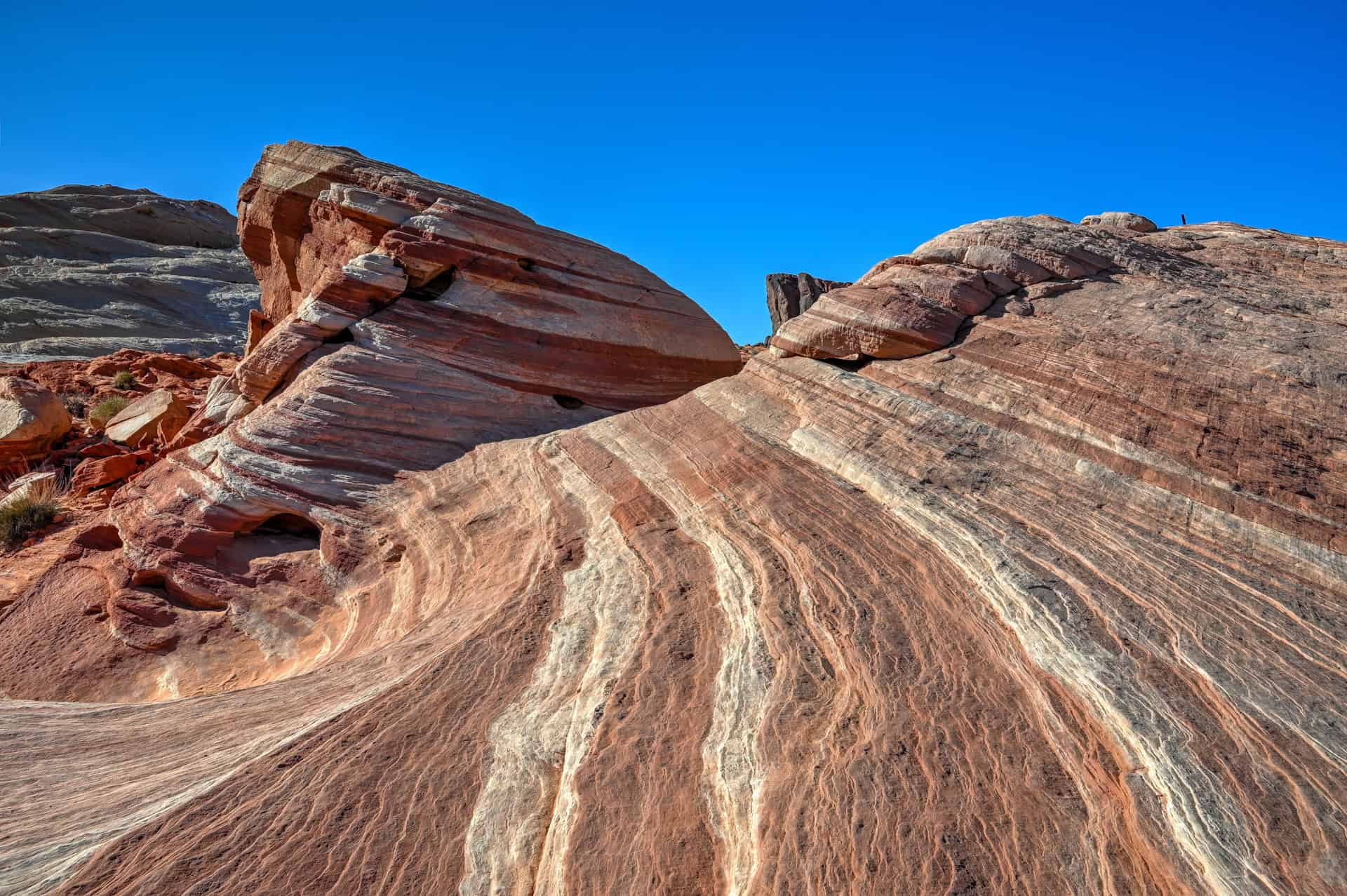
The Fire Wave and Seven Wonders Loop is one of the most spectacular (and surprisingly accessible) hikes in Valley of Fire State Park. Known for its swirling red-and-cream sandstone, wave-like rock formations, slot-like passages, and sweeping desert views, this loop packs an impressive amount of scenery into a relatively short distance. It’s the kind of trail where every few minutes reveals something new: striped domes, sculpted fins, pastel canyons, and hidden pockets of color that feel almost otherworldly. Although it looks like a remote, backcountry landscape, the hike is well-marked, easy to follow, and manageable for most visitors with moderate fitness.
Whether you’re here to photograph the iconic “Fire Wave,” explore the soft curves of Pink Canyon, or simply enjoy one of Nevada’s most photogenic desert hikes, the Seven Wonders Loop offers a perfect blend of adventure and accessibility. In this guide, you’ll find everything you need to plan your visit—from trail details and route tips to parking info, best times to go, and what to expect along the way.
Fire Wave & Seven Wonders Loop – At a Glance
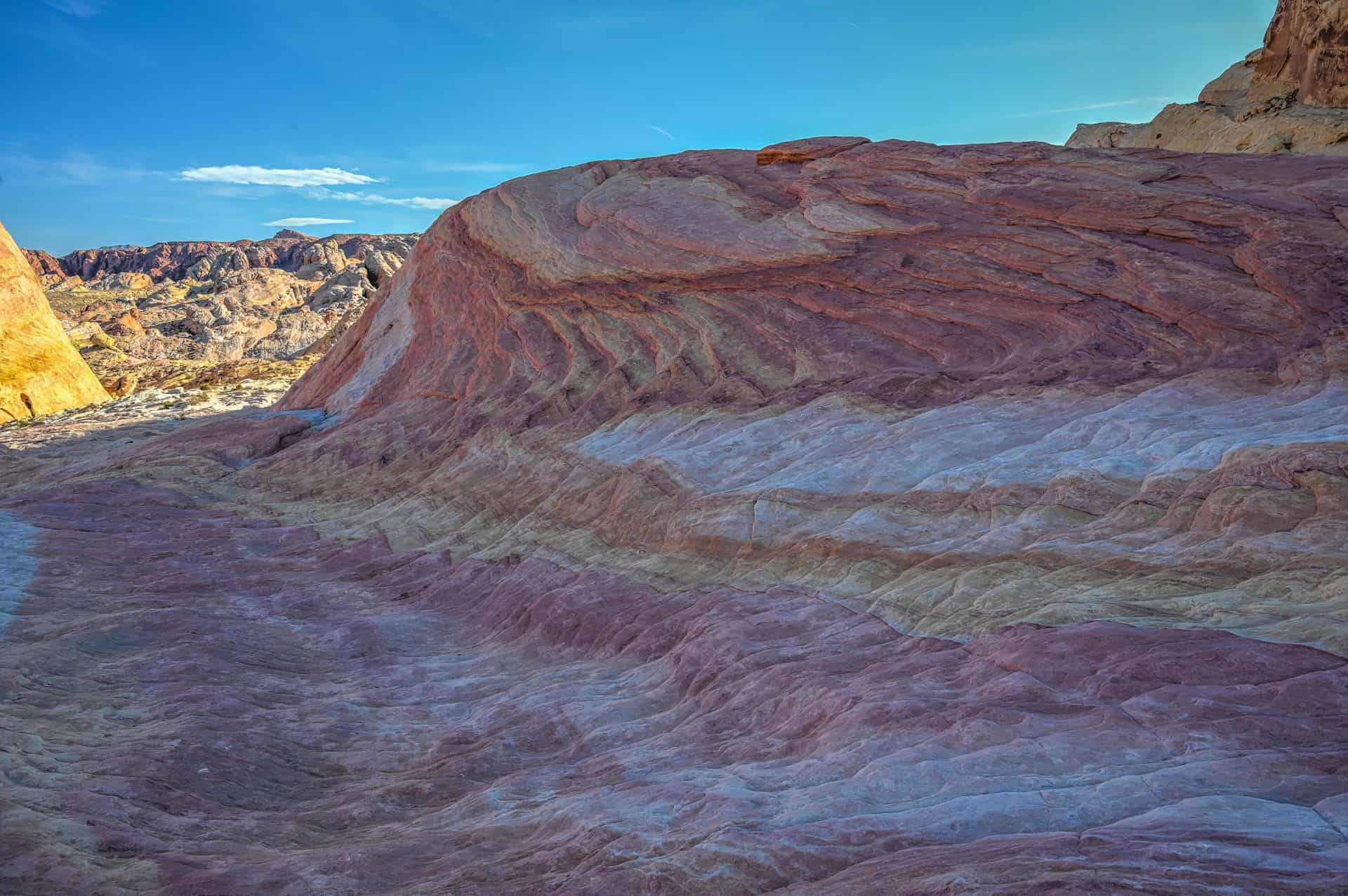
A world of swirling sandstone – The Fire Wave is one of Valley of Fire’s most photographed landmarks, known for its candy-striped sandstone that twists in soft pinks, reds, and creams. The Seven Wonders Loop builds on this iconic spot, guiding you through an ever-changing landscape of domes, fins, narrow passages, and wave-like rock formations that feel almost otherworldly.
A compact loop with big scenery – Despite being relatively short, this route delivers nonstop visual payoff. You’ll walk across sculpted slickrock, weave through pastel slot-like canyons such as Pink Canyon, and pass vibrant rock layers that shift dramatically with the sun. It’s an excellent choice for hikers who want a high-impact experience without committing to a full-day trek.
Easy-to-moderate with adventure built in – While the trail is generally manageable for most visitors, the terrain includes sandy stretches, uneven rock, and occasional scrambles. It’s adventurous enough to feel exciting, yet accessible enough to be enjoyed by families, photographers, and casual hikers seeking a memorable outing.
Golden hour magic – Sunrise and late-afternoon light cast beautiful shadows across the ridges and enhance the color bands of the Fire Wave. These times not only offer better temperatures but also produce some of the best photography conditions in the park.
One of Valley of Fire’s essential hikes – If you’re short on time, the Fire Wave & Seven Wonders Loop delivers the park’s signature scenery in a single, curated experience. Its mix of accessible walking, playful terrain, and striking rock formations has made it one of the most beloved—and most rewarding—trails in Valley of Fire.


Disclosure: This page (Fire Wave and Seven Wonders Loop – A Valley of Fire Hiking Guide) may contain product affiliate links. At no additional cost to you, we may receive a commission for purchases made through these links. More details can be found on our disclosure and policies page.
Fire Wave & Seven Wonders Loop: Location and Map
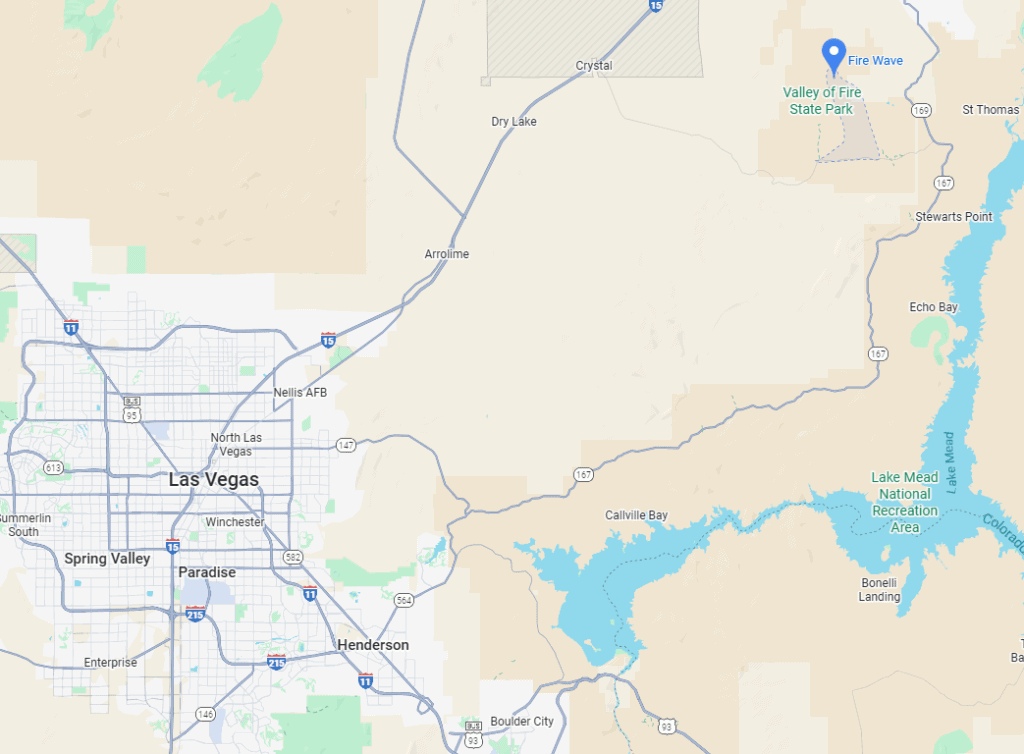
The Fire Wave and Seven Wonders Loop are located in Valley of Fire State Park, about one hour northeast of Las Vegas. This section of the park is known for its vibrant sandstone formations, narrow canyons, and richly colored desert landscapes, making it one of the most visually striking areas to explore on foot.
About Valley of Fire State Park
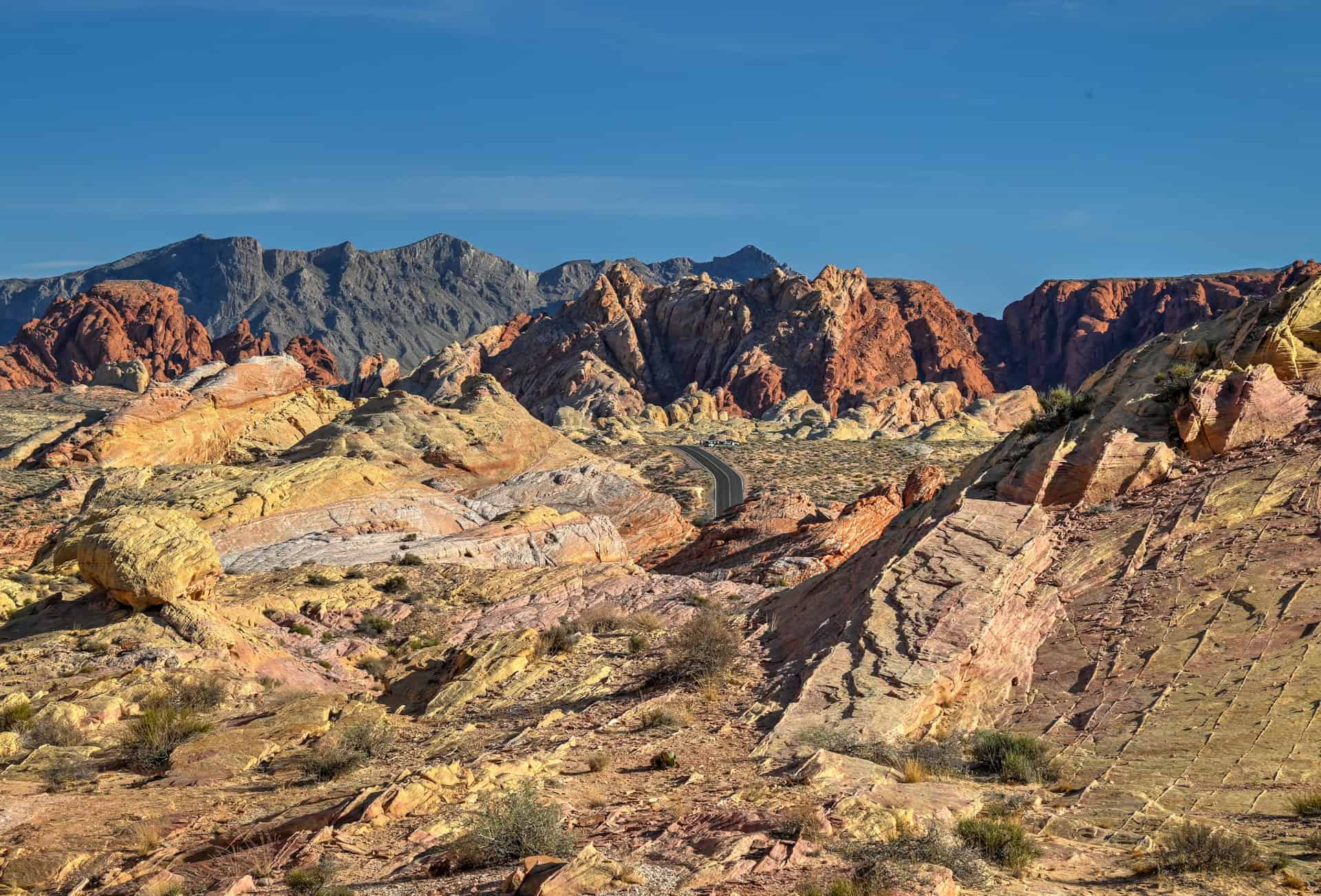
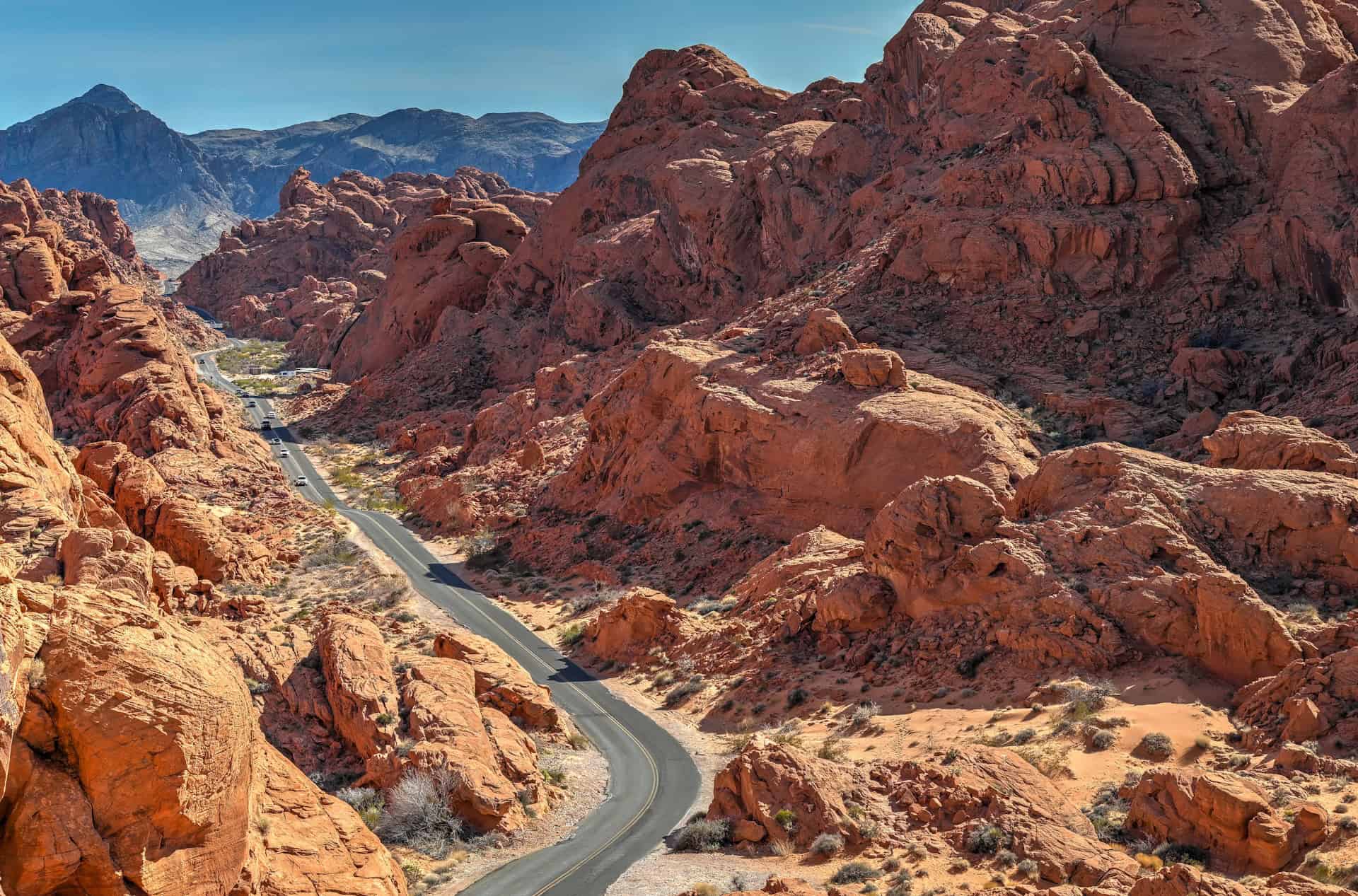
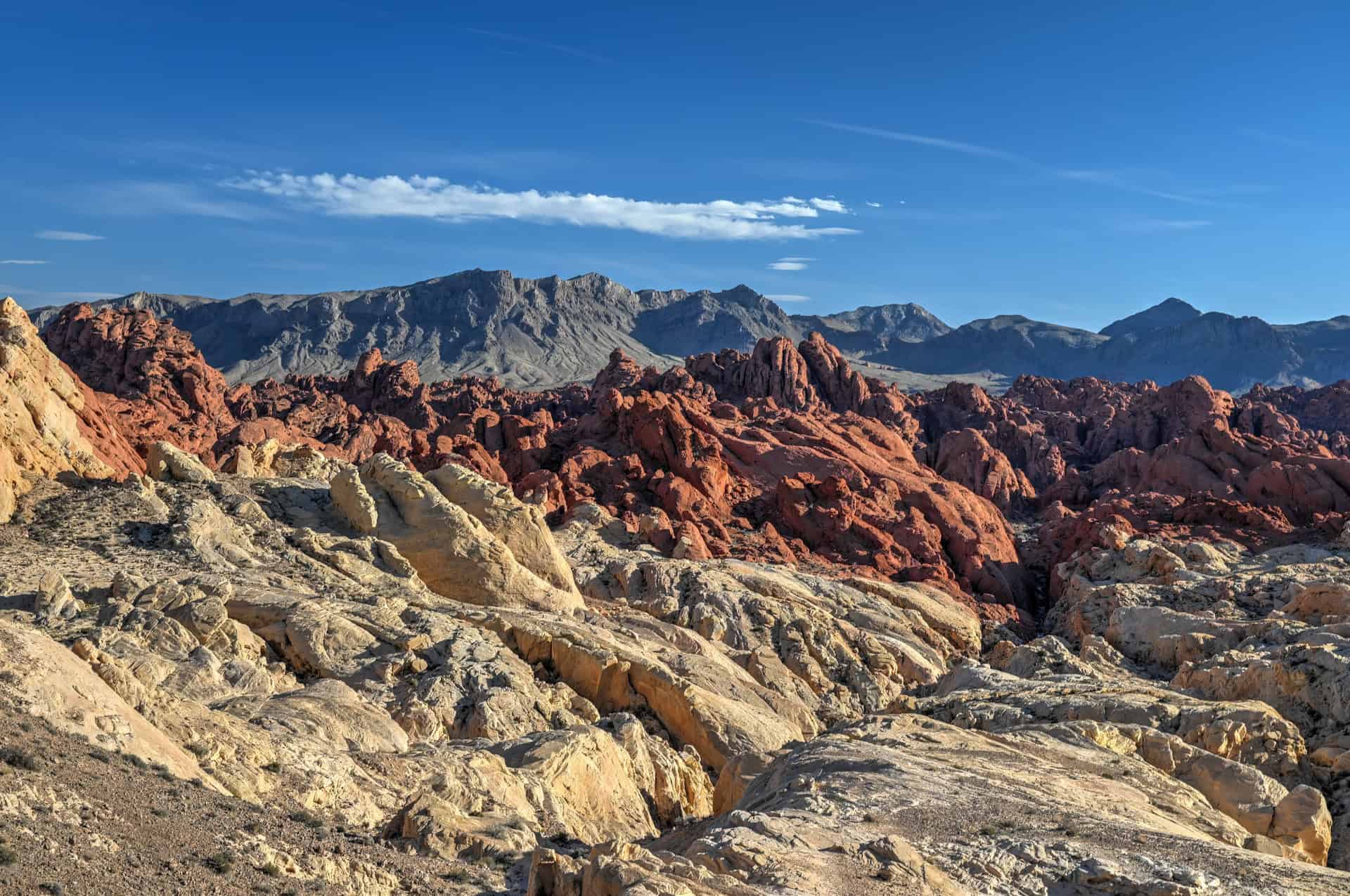
Nevada’s Fiery Desert Wonderland: Valley of Fire State Park sits in the Mojave Desert northeast of Las Vegas, where waves of blazing-red sandstone rise from pale desert plains. The park’s name comes from the way these formations ignite in brilliant shades of orange and scarlet when struck by the sun, especially at sunrise and sunset. With its swirling rock stripes, slot-like passages, and vast open panoramas, Valley of Fire feels like a natural sculpture garden carved by wind, water, and time.
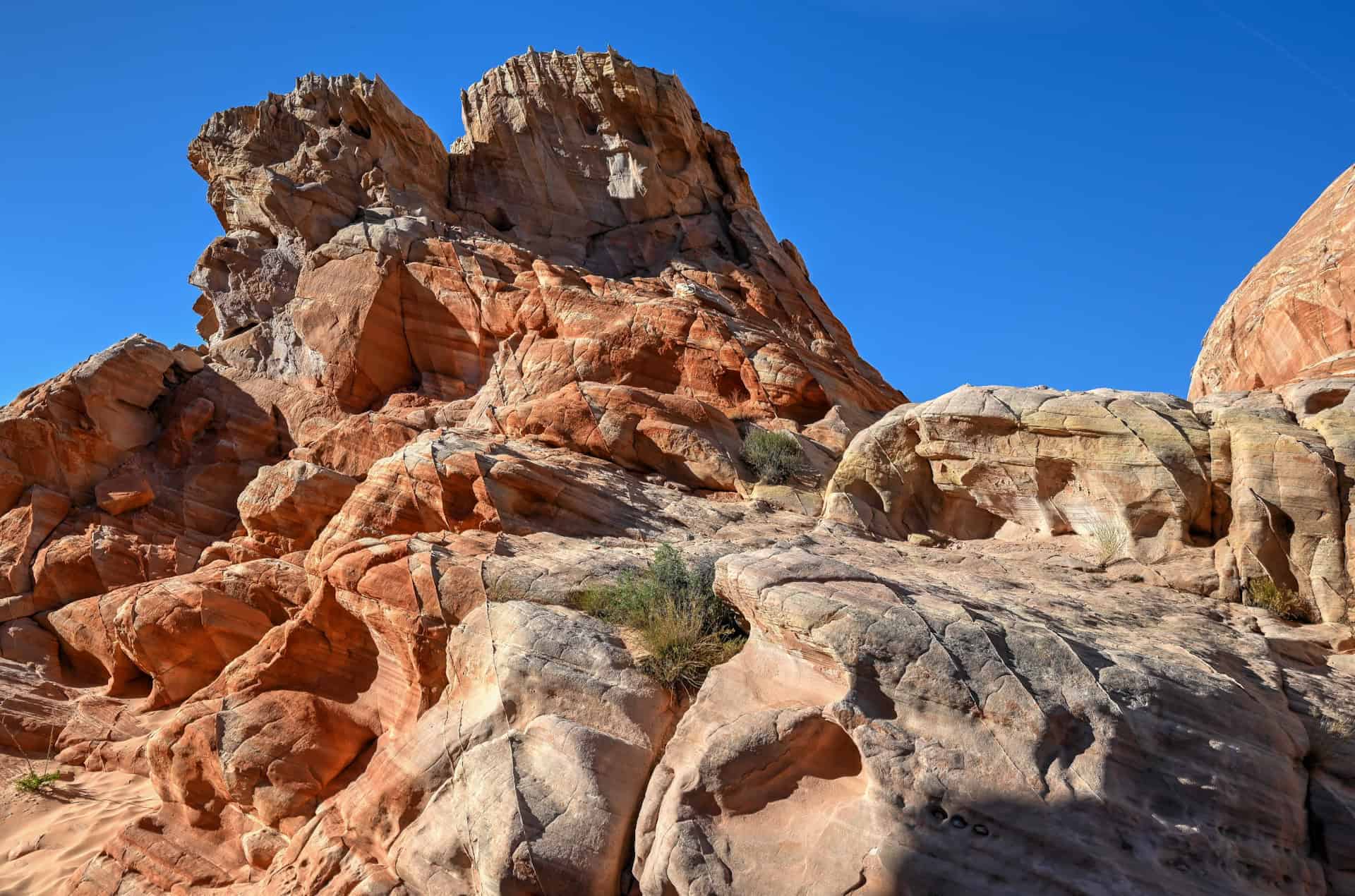
A Landscape Sculpted Over 150 Million Years: The park’s famous red rocks are part of the Aztec Sandstone, remnants of ancient sand dunes from the Jurassic era. Over millions of years, erosion etched these dunes into ridges, fins, domes, and wave-like formations, including the Fire Wave, Pink Canyon, and Crazy Hill. The result is a landscape full of surreal textures and colors: deep reds, peachy pastels, bright whites, and smooth stripes that twist like painted brushstrokes.
A Haven for Short, Scenic Hikes: Valley of Fire is packed with accessible but unforgettable trails. Routes like the Fire Wave, Seven Wonders Loop, and White Domes lead you through narrow canyons, crossbanded sandstone, and wide-open slickrock. These hikes are generally short, making the park ideal for half-day and full-day visits where you can experience several standout features without long mileage. Even roadside pullouts, like Elephant Rock, Atlatl Rock, and Rainbow Vista, offer quick access to photogenic viewpoints.
Rich Indigenous History and Petroglyph Sites: Long before it became Nevada’s first state park, this region was home to the Ancestral Puebloans and later the Southern Paiute people. The park preserves thousands of years of rock art, with petroglyph panels carved into desert varnish across sites like Mouse’s Tank and Atlatl Rock. These carvings offer meaningful insight into the region’s early inhabitants and their relationship with the desert landscape.
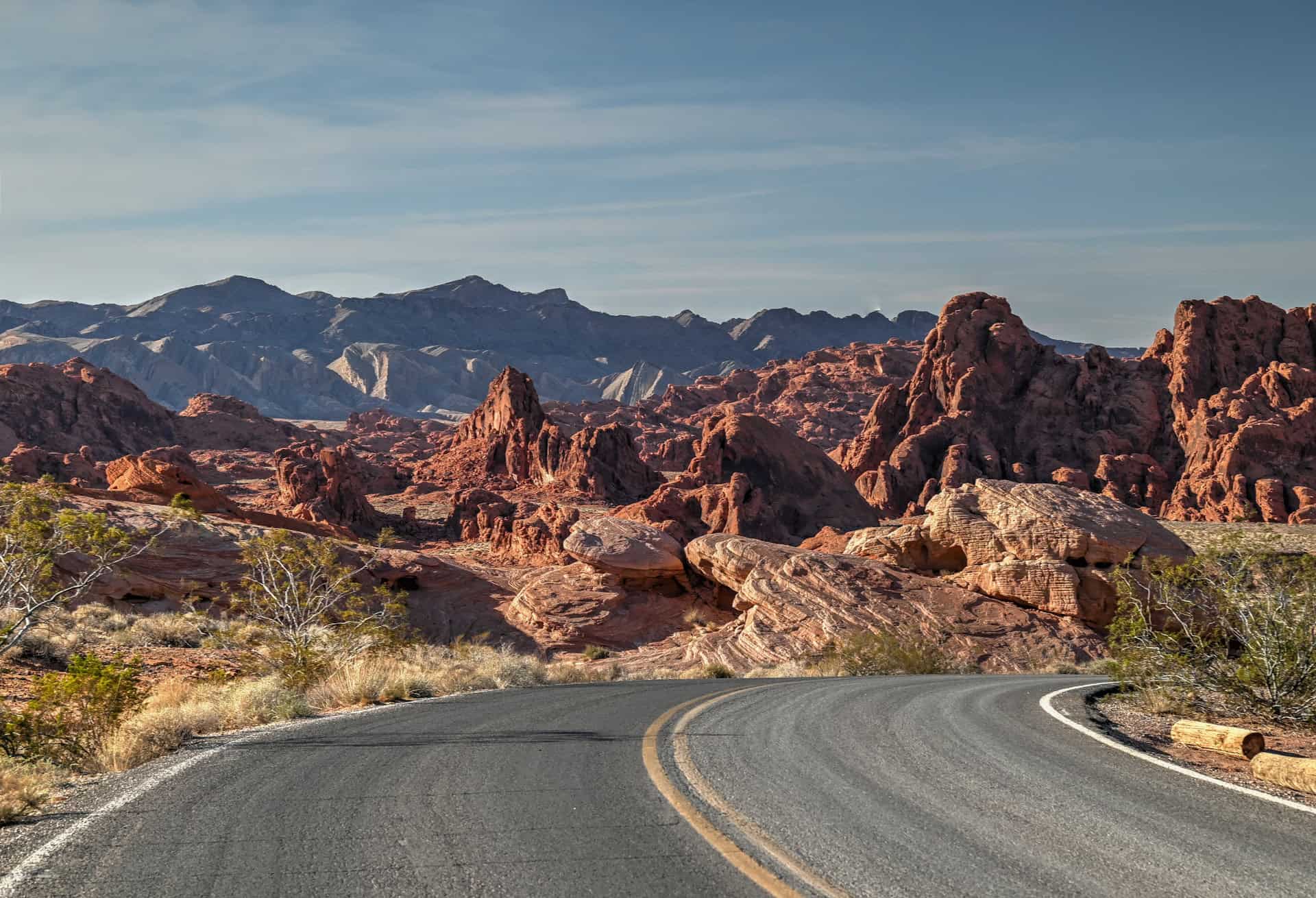
Easy Access From Las Vegas: Just one hour from the Las Vegas Strip, Valley of Fire is one of the Southwest’s most convenient natural escapes. Its well-maintained park roads create a scenic driving route through the heart of the landscape, making it easy to combine hikes with overlooks, photo stops, and picnic areas. Whether you’re here for sunrise photography, a quick half-day adventure, or a full day of rock formations and desert trails, Valley of Fire delivers some of the most vibrant scenery in the Mojave.
How to Get to Valley of Fire State Park
The Valley of Fire State Park is best reached by car, as there is no public transportation directly to the trailhead.
Valley of Fire State Park has two main entrances, both accessible by paved roads:
- West Entrance (via Valley of Fire Highway):
Best for visitors coming from Las Vegas or other destinations in southern Nevada. This is the most commonly used entrance and offers the quickest, most direct access from the city. - East Entrance (via the Northshore Road / Lake Mead National Recreation Area):
Ideal for travellers arriving from Utah, Arizona, or the eastern side of Lake Mead, including St. George, Zion, Page, and other points east. This entrance offers a quieter, more scenic approach.
Regardless of which entrance you use, all main roads inside the park are paved and suitable for any vehicle.
Driving times to Valley of Fire State Park
- Las Vegas, NV: 85 km / 50 mi – about 1 hour
- St. George, UT: 150 km / 95 mi – about 1.5 hours
- Zion National Park (Springdale, UT): 185 km / 115 mi – about 2 hours
- Page, AZ: 435 km / 270 mi – about 4.5 hours
- Flagstaff, AZ: 420 km / 260 mi – about 4.5 hours
These times assume clear weather and normal traffic conditions. The last stretch of the drive, from the park entrance to the Fire Wave trailhead, is fully paved and suitable for all vehicles.
If you need to book a rental vehicle for your hiking excursion, we highly recommend using Discover Cars to get the best rates on your rental in Utah, Nevada and Arizona.
We also highly recommend Airalo (eSIM card) for your connectivity needs when travelling abroad. Airalo is the world’s first and largest eSIM store with eSIM plans for 200+ countries and regions worldwide.
Group Excursion from Vegas
Alternatively, if you don’t have a car and are staying in Las Vegas, you can still visit Valley of Fire by joining an organized tour from the city. Several companies offer full-day or half-day excursions, including one that focuses on catching the park at sunset, and another that combines Valley of Fire and Red Rock Canyon into a single day trip. These are among the most popular options:
Fire Wave & Seven Wonders Loop – Trailhead, Parking & Fees
Trailhead Location: The Fire Wave & Seven Wonders Loop begins along Mouse Tank Road, the scenic drive that cuts through the heart of Valley of Fire State Park (link to Google Maps). Most hikers start at the Fire Wave / Parking Lot #3, located near the end of Mouse Tank Road. An alternative starting point is the White Domes Trailhead at the very end of the road, which also has its own parking area and access to the loop.
Trailhead parking lot: A medium-sized paved parking area directly across from the Fire Wave Trailhead. This lot fills quickly during peak hours (mid-morning through mid-afternoon), especially on weekends and during spring months.
- White Domes Parking: a larger paved lot at the very end of Mouse Tank Road. It offers more space and is the better option if Lot #3 is full.
- Both lots provide immediate access to the trail network, and the loop can be completed clockwise or counter-clockwise from either starting point – though our suggested route is counter-clockwise.
Facilities: There are vault toilets at the White Domes Trailhead and also at the Visitor Center near the entrance to Mouse Tank Road (several minutes away).
Note: There are no restrooms at Fire Wave Parking Lot #3.
Trail opening Hours: Valley of Fire State Park is generally open sunrise to sunset, though hours can vary seasonally. The trail itself is accessible only during park open hours.
Seasonal Closure: The Fire Wave Trail, Seven Wonders Loop, and nearby areas close every year from May 15 to September 30 due to extreme heat and safety concerns. During this period, the entire zone along Mouse Tank Road north of the Visitor Center is off-limits for hiking.
The trails reopen October 1 through May 14, when temperatures are safer, and conditions are ideal for hiking and photography.
Entrance Fees for Valley of Fire State Park
Valley of Fire charges a per-vehicle entrance fee, payable at the park entrance station:
$15 per vehicle for out-of-state visitors
$10 per vehicle for Nevada residents
Fees must be paid before accessing the Scenic Drive or any trailheads, including the Fire Wave.
The park does not accept the America the Beautiful Pass, as it is a Nevada State Park.
Fire Wave & Seven Wonders Loop – Trail Details and Map
Distance: 2 miles (3.1 km)
Route Type: Loop
Elevation change: 200 ft / 60 m (difference between trail high and low point)
Elevation gain: 200 ft / 60 m (cumulative elevation gain)
AllTrails rating (2025): 4.8, 4005 ratings
Duration: Most people complete the full trail in 45-60 minutes
Trail difficulty level assessment:
Very Easy | Easy | Moderate | Moderately Challenging | Challenging
Overall, the Fire Wave & Seven Wonders Loop is best described as Easy. The elevation gain rates as easy, the trail length also rates as easy, and the terrain surface alternates between easy and moderate.
Not an AllTrails member yet? We highly recommend signing up for either their free or paid membership plans. The free plan allows you to find new trails and plan routes but it can only be used while hiking if you have access to mobile data. The paid membership plan (AllTrails+) allows you to download trail maps for offline use and provides live progress updates and off-route notifications.
If you are still uncertain – you should know that the All Trails mobile application was voted the 2023 iPhone App of the Year by Apple.
We find that AllTrails is a great tool to have when hiking, particularly for assisting with navigation when the trail is hard to locate and to help monitor your progress along the trail, which helps estimate how much time you’ll need to complete the trail.
Fire Wave & Seven Wonders Loop – Trail Description and Summary
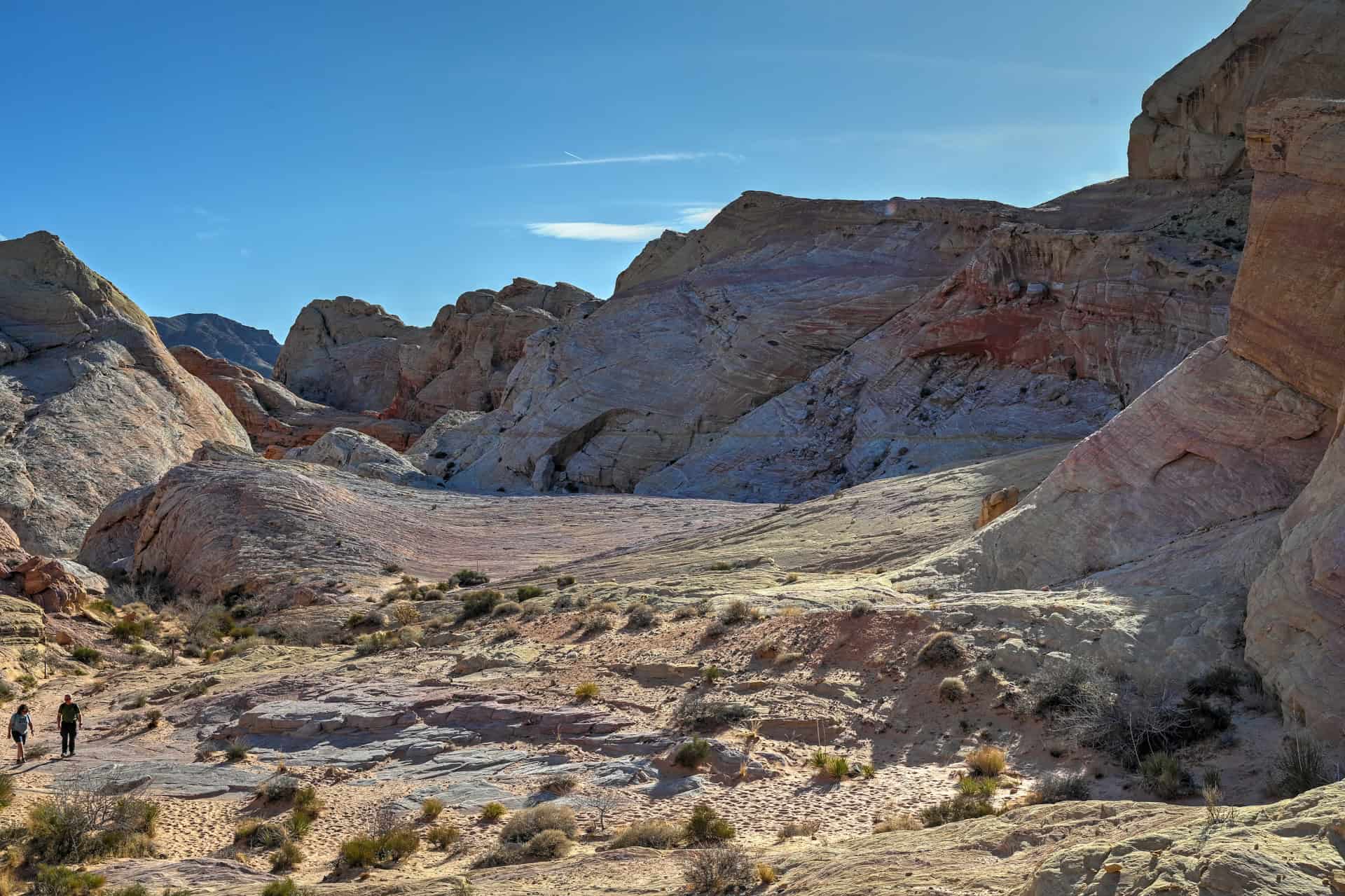
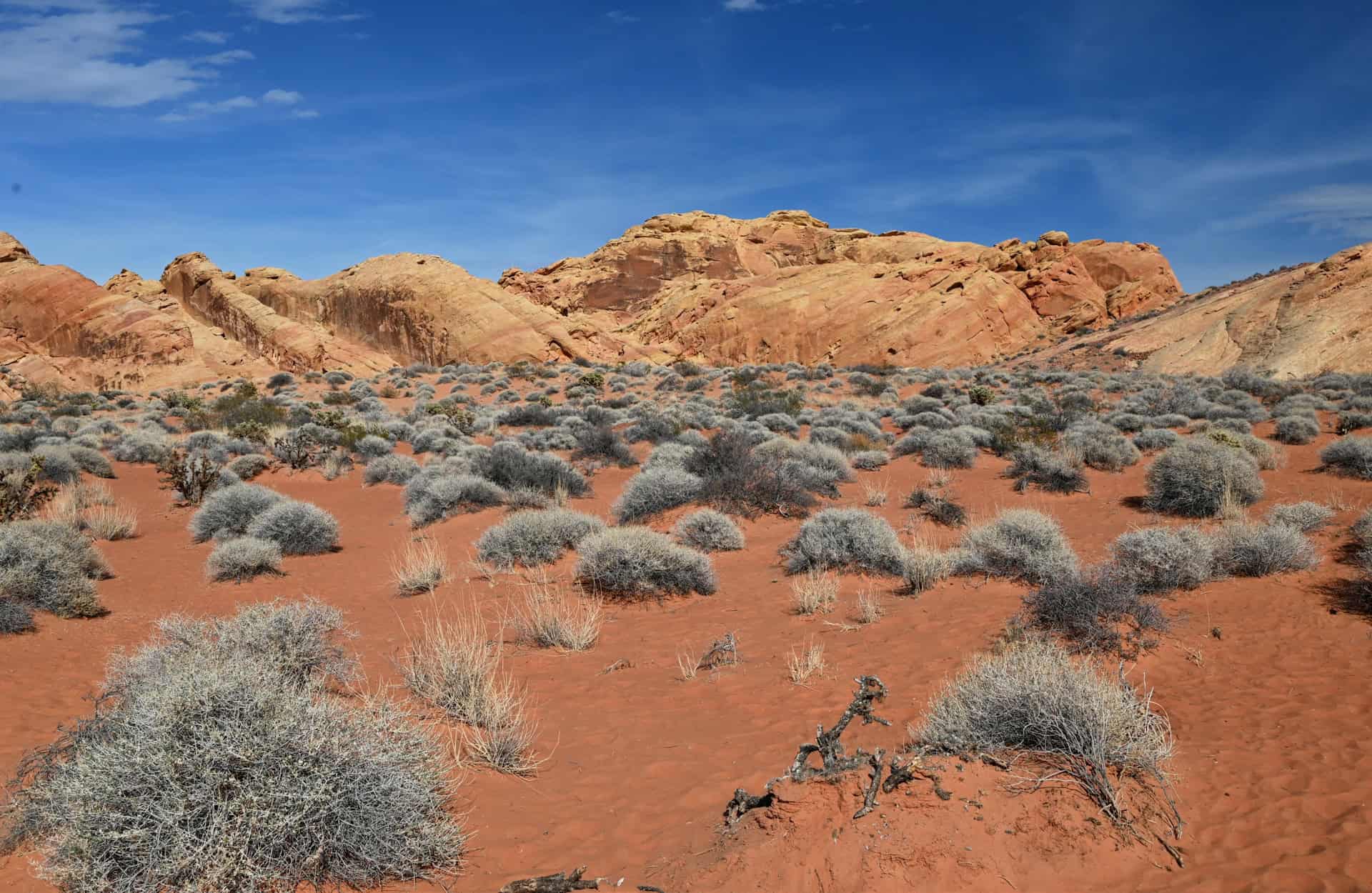
The Fire Wave & Seven Wonders Loop begins with a gentle stroll across the undulating desert floor, offering a warm-up that gradually introduces you to the vivid sandstone landscapes that make this hike so memorable. Early on, the trail weaves through soft sandy washes and low rock outcrops, giving a sense of the vast, colorful terrain ahead while allowing your eyes to adjust to the incredible patterns and striations in the surrounding rocks.


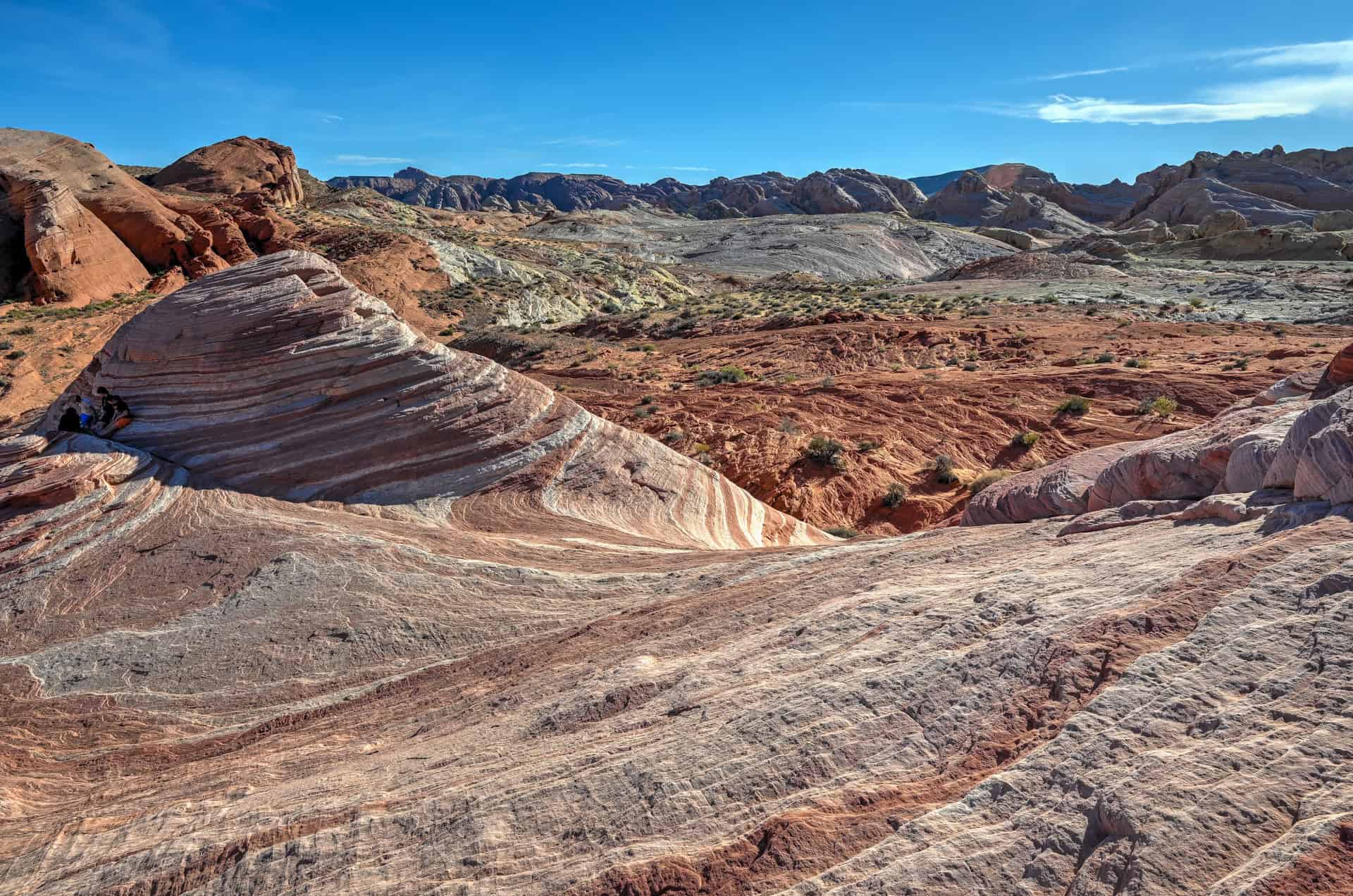
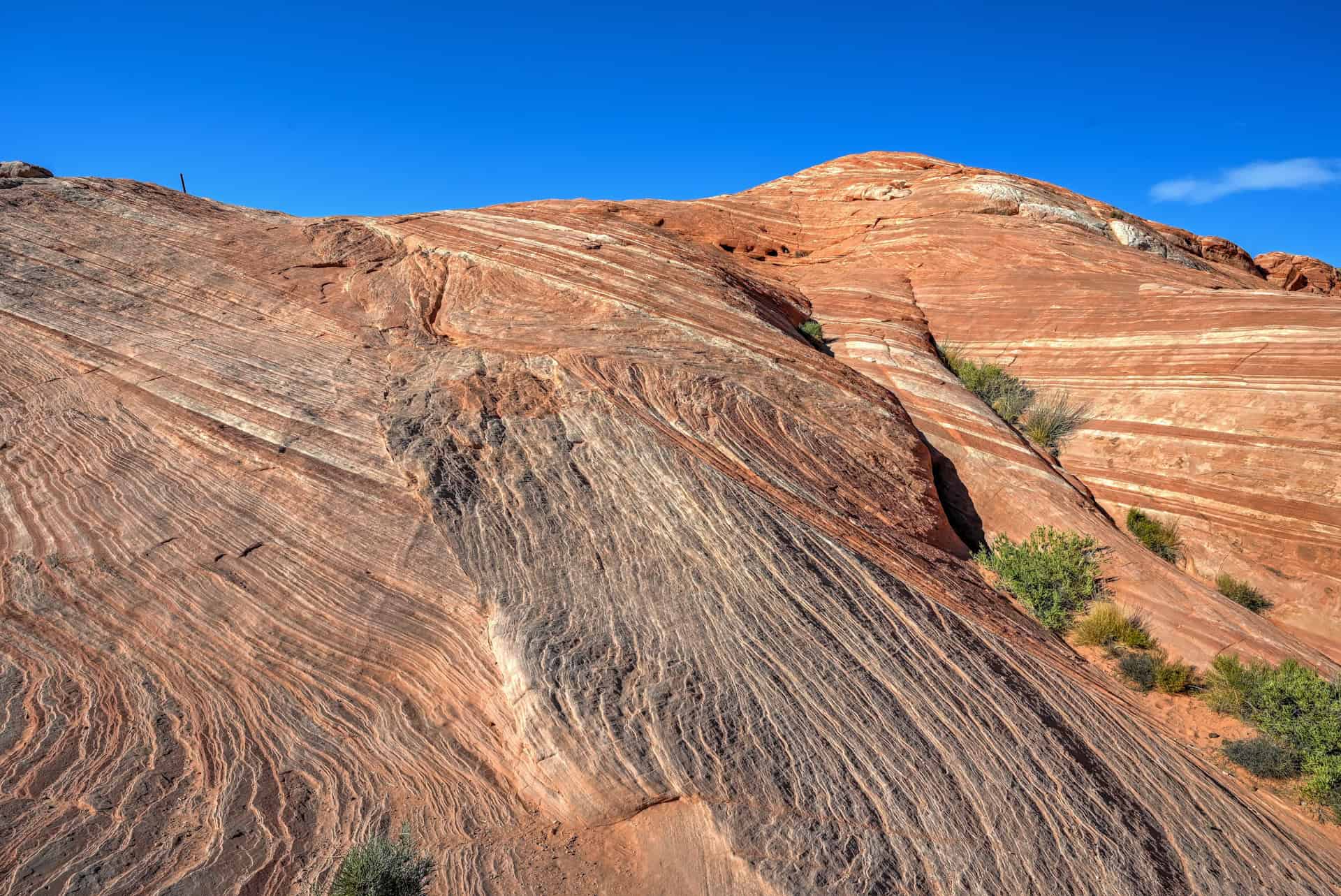
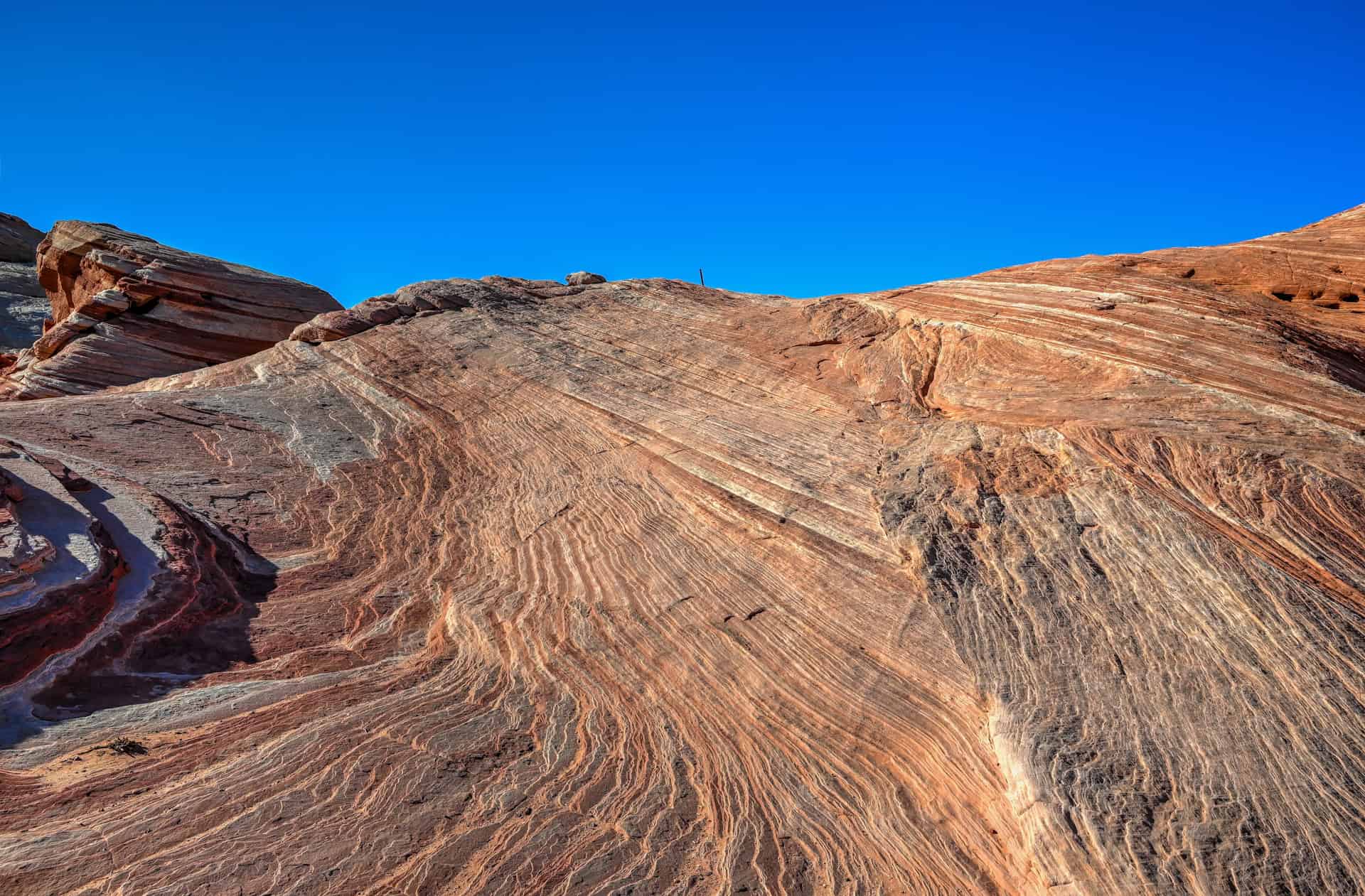
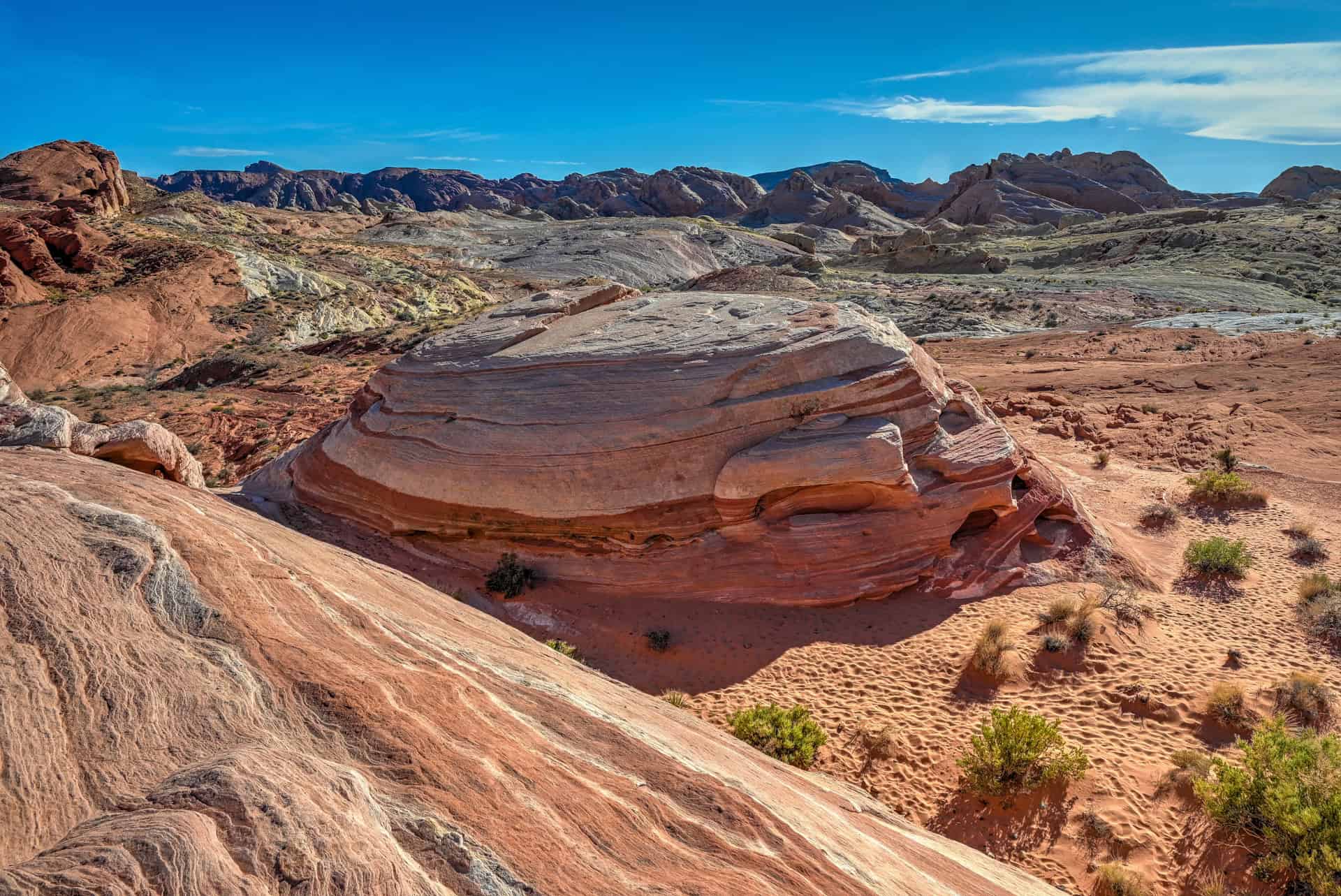
Soon, the path opens onto the iconic Fire Wave formation itself. Here, the ground undulates like rippling fabric, with red, white, and pink sandstone stripes creating a surreal visual effect.
The wave’s gentle slope invites careful exploration and photo stops, making it easy to linger and take in the hypnotic patterns. This section is relatively flat, allowing hikers of all levels to fully appreciate the artistry carved by wind and water over millennia.


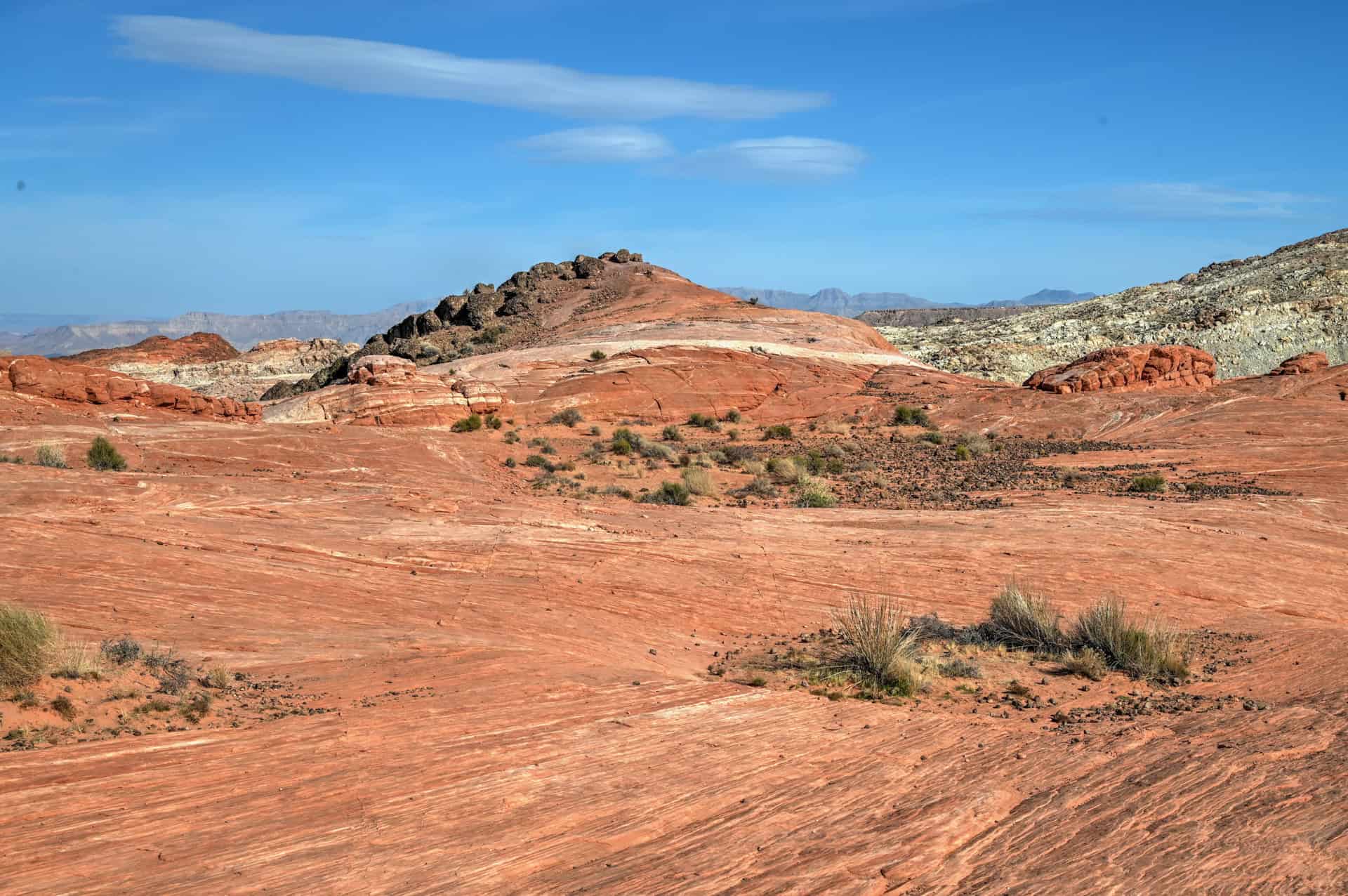
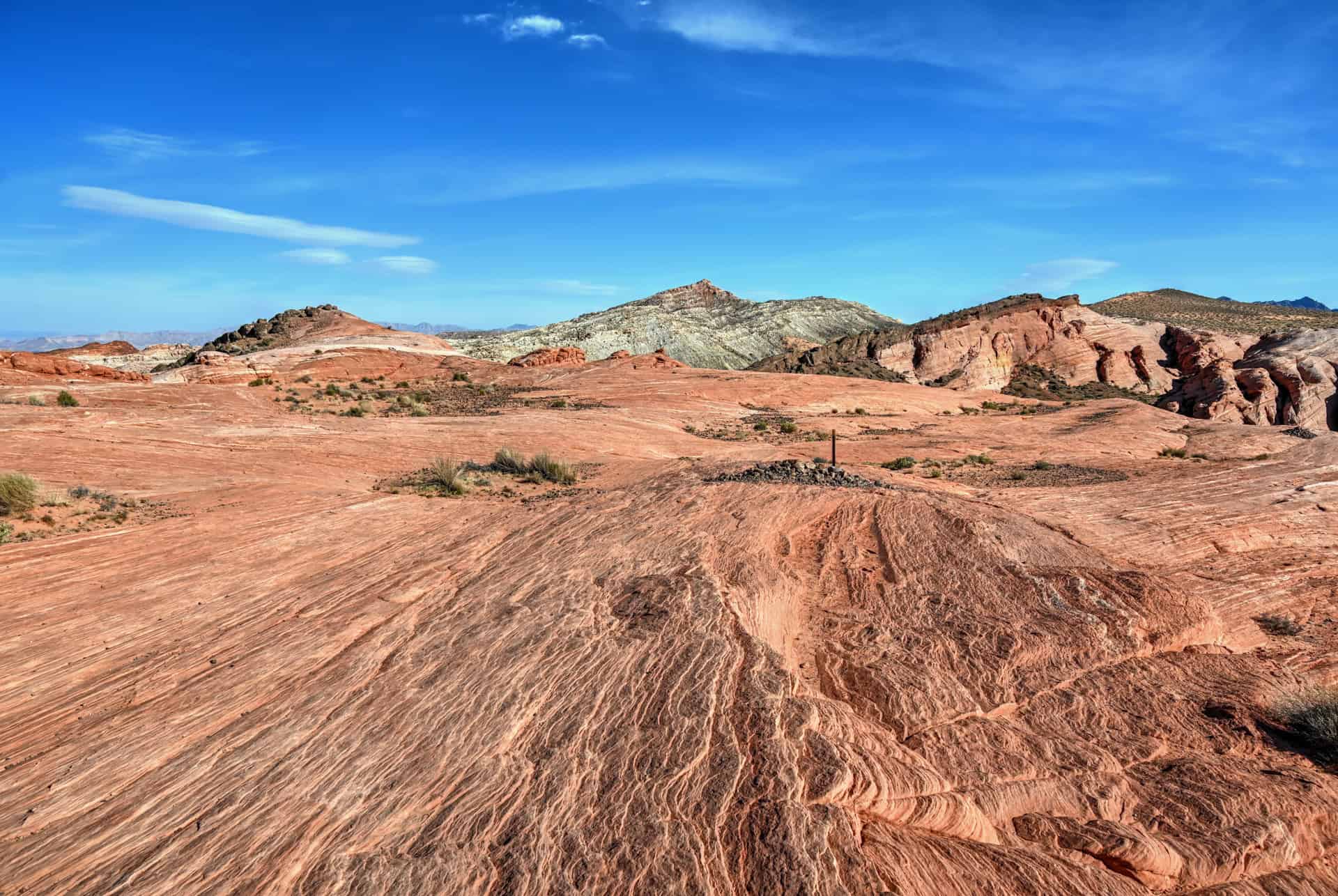
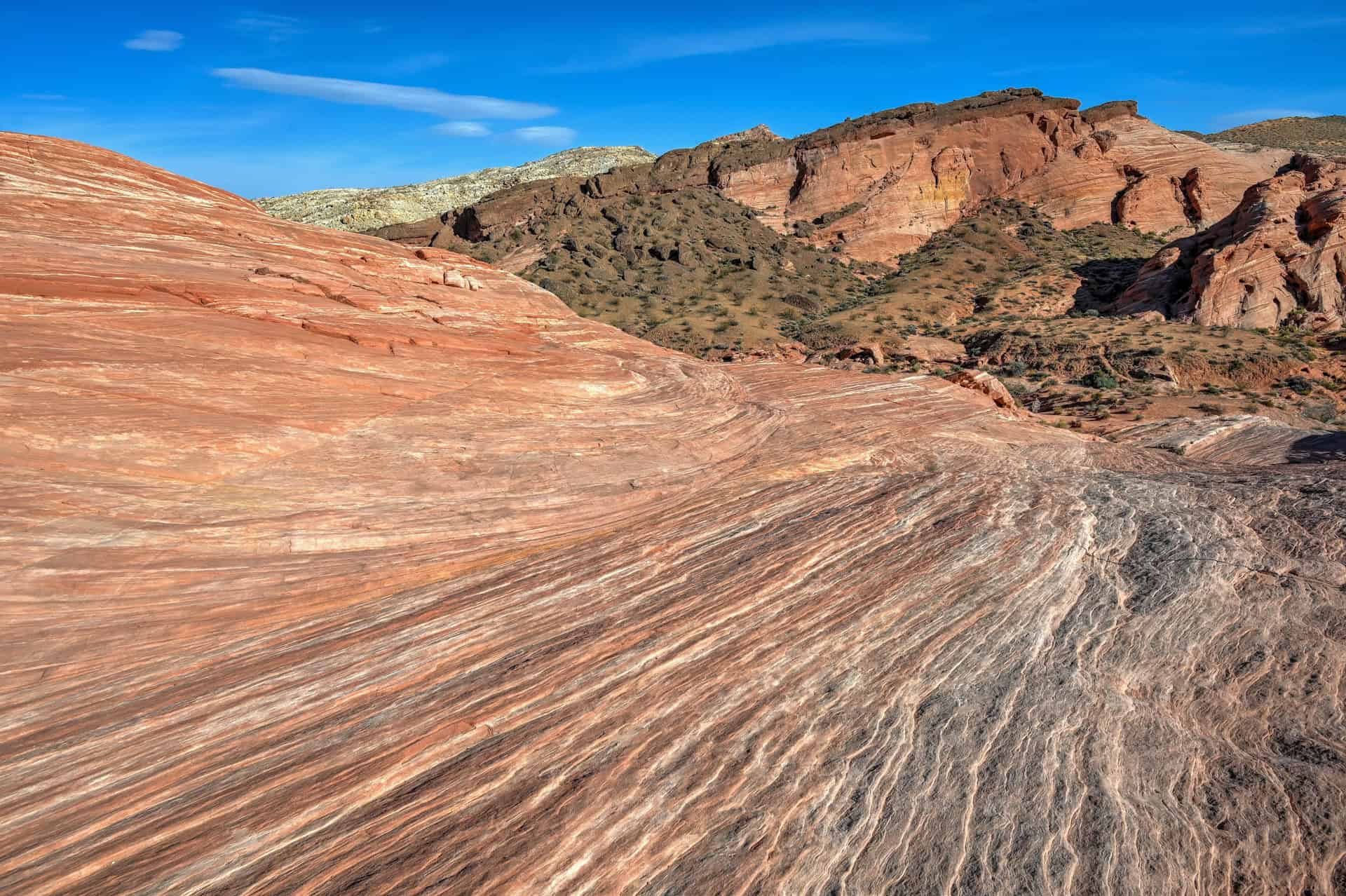
Although many hikers turn around after visiting the Fire Wave, it’s highly recommended to continue along the loop trail. From the Fire Wave, the path gently descends through a sandy wash before briefly crossing Mouse Tank Road.


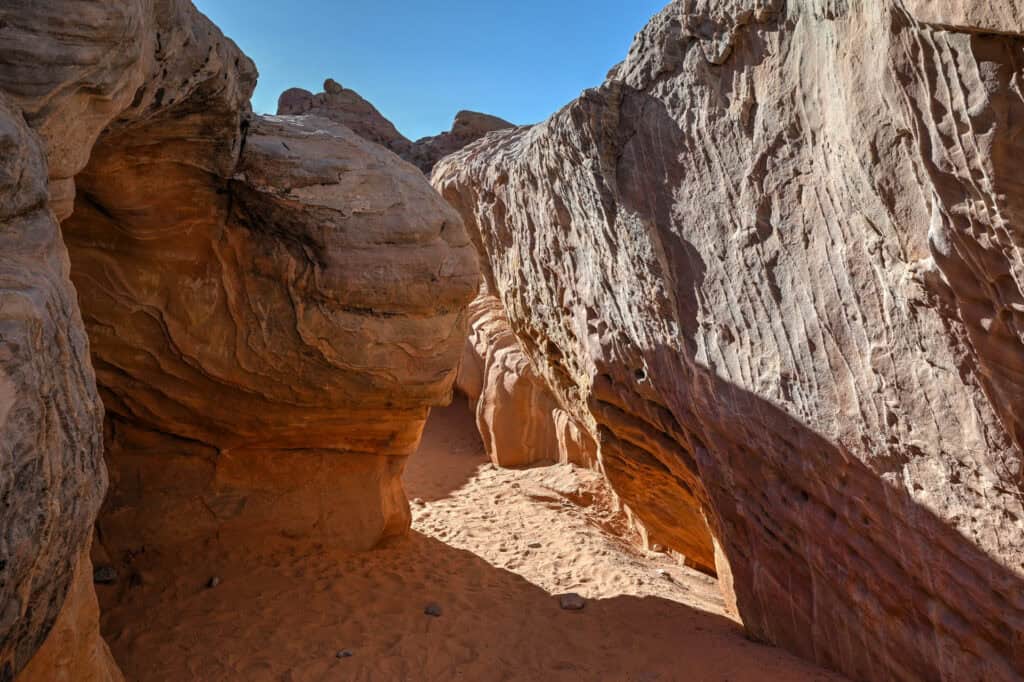
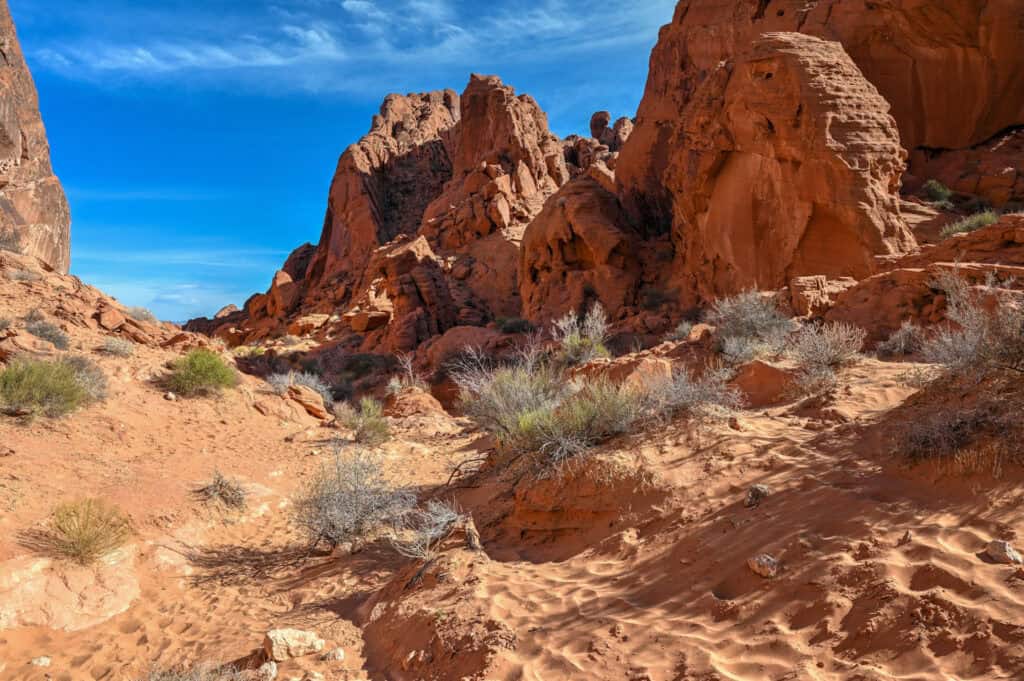
Next, the trail winds through the first of the Seven Wonders — the Pink Canyon — a narrow, twisting corridor of warm-hued sandstone walls, where intimate passageways and layered walls provide a true sense of adventure and seclusion.


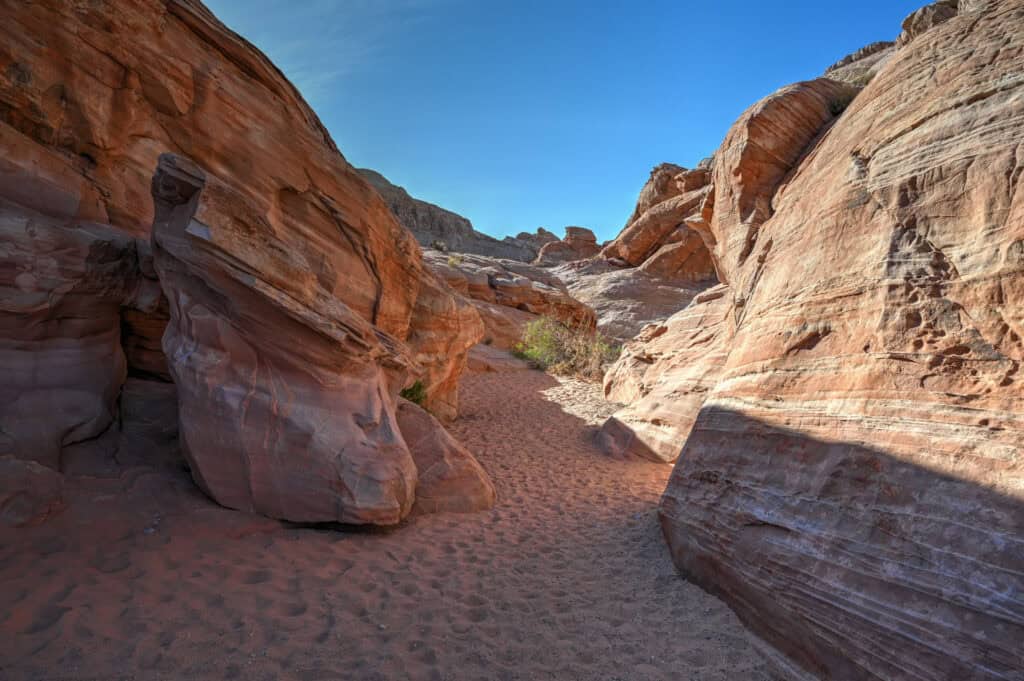
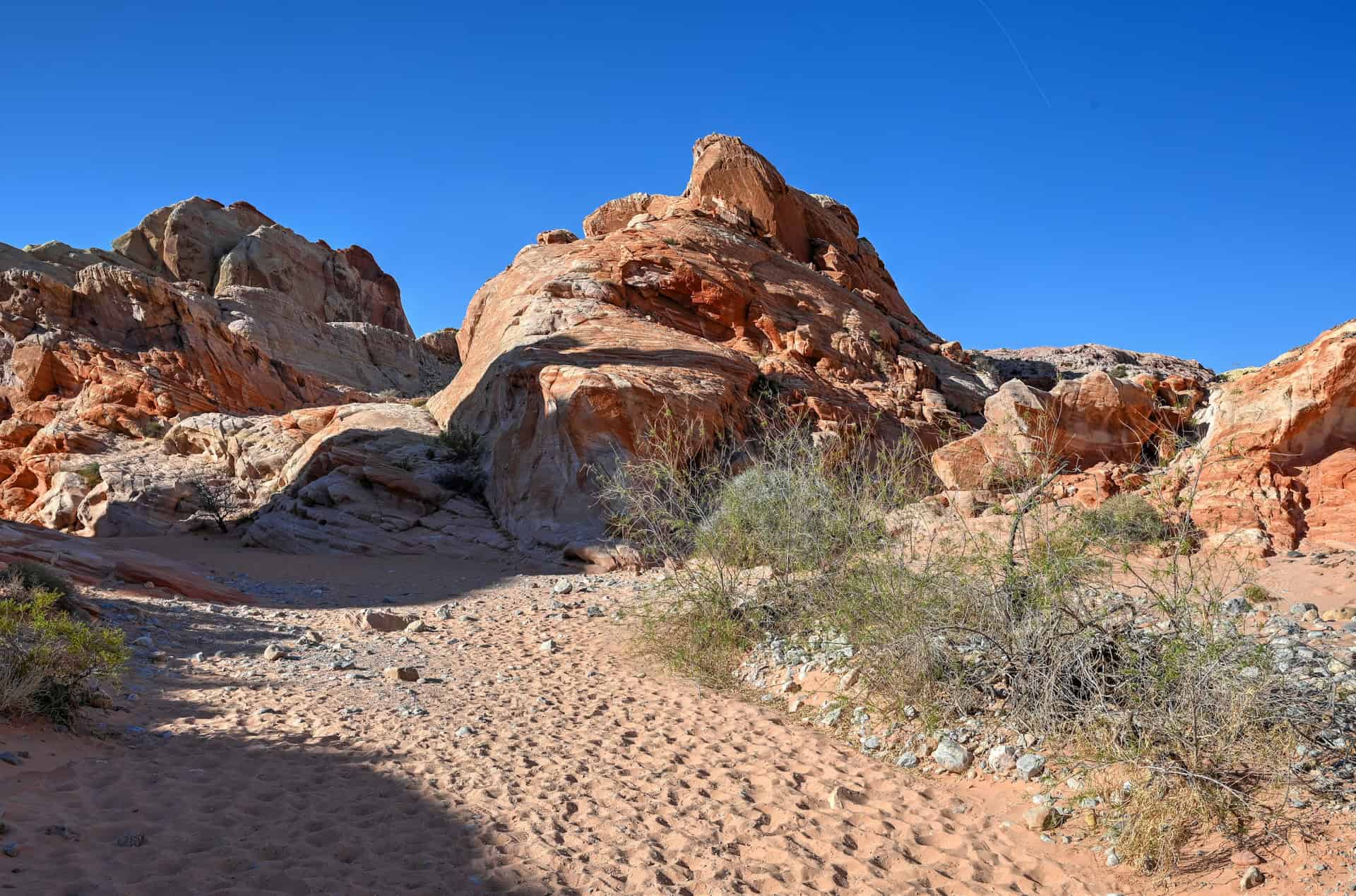
Emerging below larger rock structures, the path begins its ascent up the so-called “Crazy Hill,” gradually making its way toward the White Domes Trailhead.


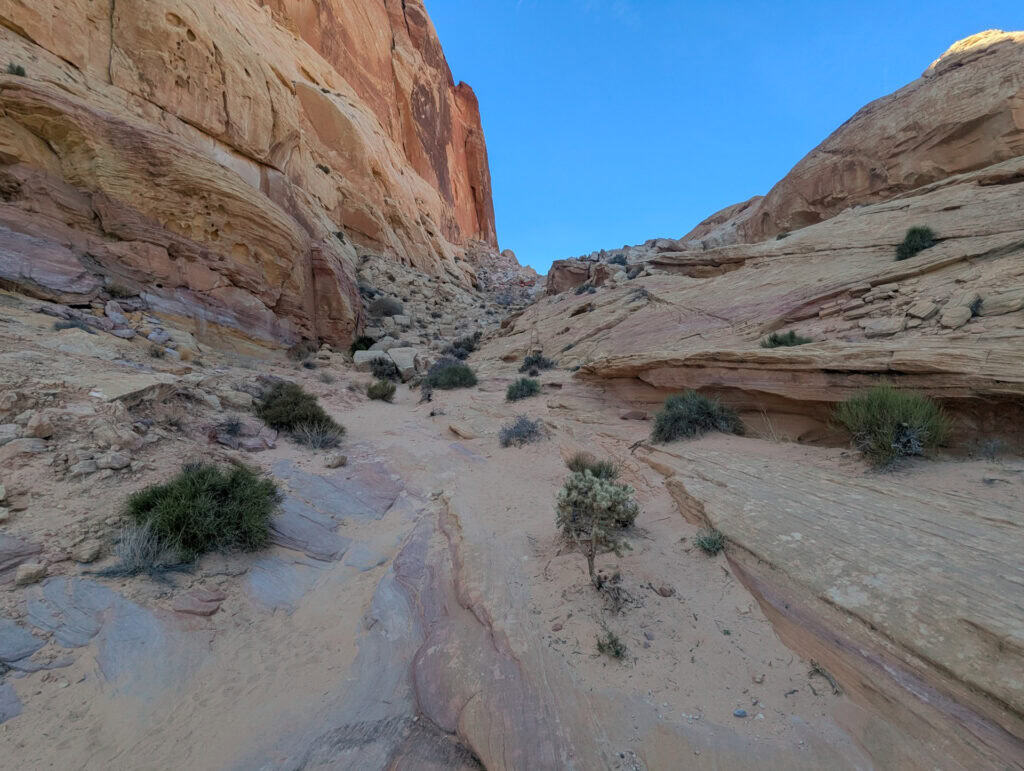


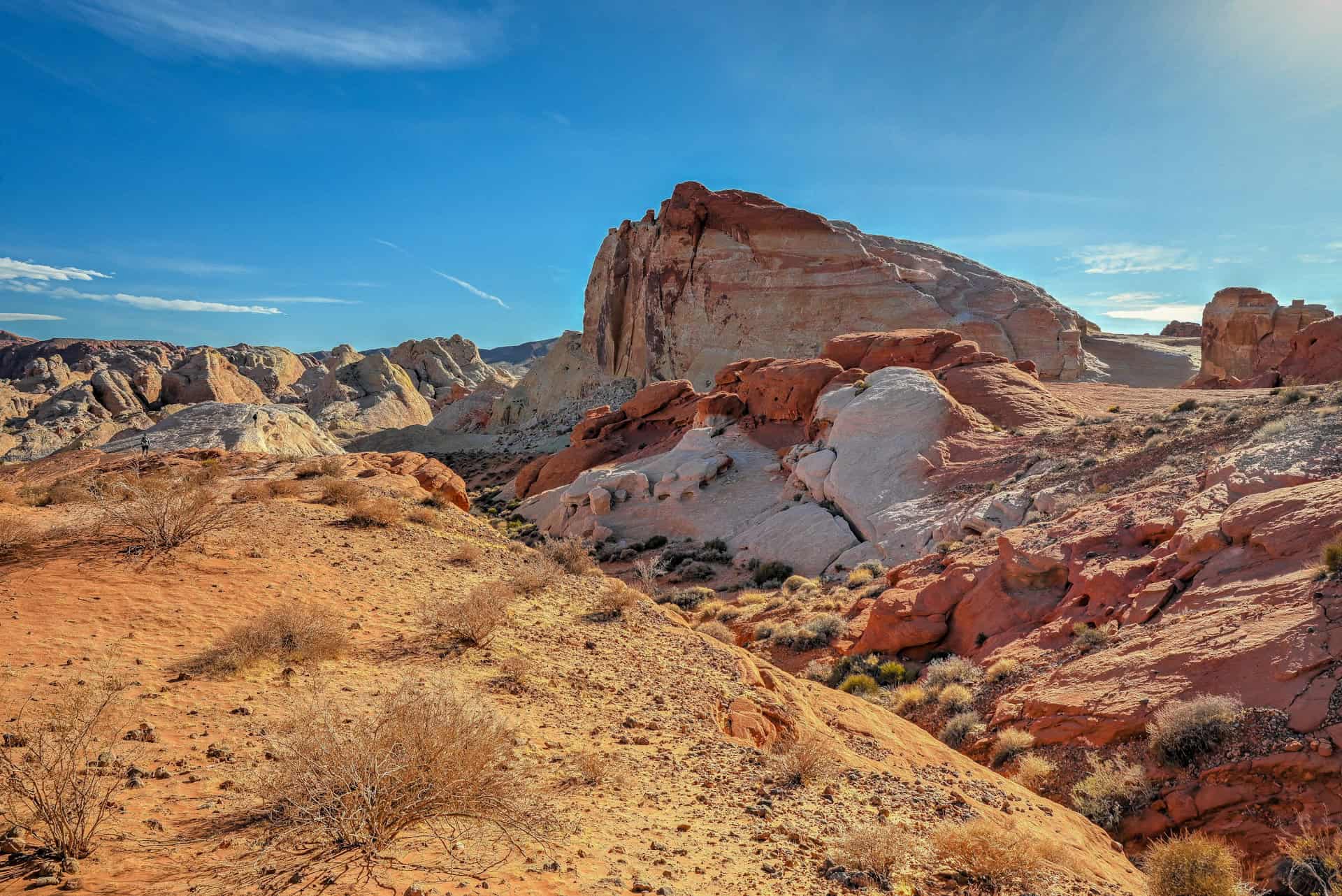
This portion of the hike feels more secluded, with fewer visitors and a chance to enjoy the desert’s quietude.


Fire Wave & Seven Wonders Loop – Trail Variants and Add-Ons
Fire Wave Out-and-Back
If you’re short on time or prefer a lighter hike, the out-and-back to the Fire Wave is a great choice. The trail meanders across sandy washes and low rock fins before arriving at the iconic Fire Wave formation. This quick out-and-back route is where red, pink, and white sandstone stripes ripple like liquid. Its gentle slope makes it easy to explore and photograph at a leisurely pace. This shorter out-and-back version covers a total distance of roughly 1.3 miles (2.1 km) and minimal elevation gain.
Fire Wave, White Domes & Seven Wonders Loop
For those seeking the most varied and scenic experience, extend the Seven Wonders Loop to include the White Domes loop trail, which feels more remote and secluded, offering unique vantage points, short technical scrambles, and striking photographic opportunities distinct from the smoother, rippling patterns of the Fire Wave. Completing the loop with White Domes provides a full desert adventure, showcasing the breadth and variety of the Valley of Fire’s geology. If you do this loop, you’ll go around two distinct loops and cover a trail length of just over 3 mi (5 km), with nearly double the elevation gain of the Fire Wave and Seven Wonders Loop.
Fire Wave Trail – Additional Details and Hiking Tips
Canine companions: Dogs are allowed on the trail but must be kept on a leash at all times.
Trail environment: The Fire Wave & Seven Wonders Loop winds through the heart of Valley of Fire State Park, showcasing dramatic sandstone formations, vibrant striations, and sculpted desert landscapes. Shade is nearly nonexistent along most of the trail, so bring plenty of water, sun protection, and hats, even in cooler months.
Route signage: The trail is well-marked with small cairns, occasional painted arrows, and clear signage near key junctions. Having a downloaded offline map can be helpful in a few sections where the trail becomes less obvious, particularly when navigating across slickrock or around subtle rock formations.
Trail surface / Technical aspects: The trail is slightly technical in short sections but suitable for hikers of most levels. Sand washes are soft but easy to navigate, while short slickrock sections require careful footing. Some parts involve slight but easy scrambles over angled rock slabs, but nothing demands technical climbing skills. Sturdy shoes with good traction are recommended.
Slope and effort: The loop features gentle slope grades (on average 4%), with a few short sections that rise more noticeably over eroded rock. Overall, the elevation gain is modest, making it very manageable for most hikers.
Previous Hiking Experience: The Fire Wave & Seven Wonders Loop is moderate in length and mostly easy terrain, but it includes some undulating sandy washes, short slickrock sections, and a few modest ascents, including the “Crazy Hill” climb toward the White Domes Trailhead. Most of the hike is flat and accessible, allowing hikers of all levels to enjoy the Fire Wave, the Pink Canyon, and the surrounding formations. While the trail is beginner-friendly, those new to desert hiking should bring plenty of water and sun protection, and wear shoes suitable for sandy and rocky surfaces.
Cell Service: Cell coverage along the trail is inconsistent. Some areas, particularly near the Fire Wave and White Domes sections, may have a weak signal, while narrow canyons can block reception entirely. Download offline maps and consider sharing your hiking plan with someone if travelling solo.
Leave No Trace: Stick to the designated trail to protect fragile desert soils and avoid trampling cryptobiotic crusts. Do not climb on fragile fins or slot canyon walls off-trail, and pack out all trash. Keep noise low, especially near viewpoints, as the desert’s quiet is part of its appeal.
Bugs: Insects are minimal. You may encounter gnats or flies in warmer months, particularly after rain, but mosquitoes and ticks are uncommon. Repellent is optional.
Equipment: No technical climbing gear is required. Sturdy hiking shoes or trail runners with good grip are essential, especially on slickrock or sandy slopes. Bring ample water, sun protection, a hat, and sunglasses. Trekking poles are optional but can help on sand washes or uneven ground; they are generally unnecessary on the more exposed rocky portions of the loop.
Weather and Exposure: The Fire Wave & Seven Wonders Loop is largely exposed, with minimal natural shade along the sandy washes, slickrock slopes, and narrow slot canyon sections. Hikers should be prepared for intense desert sun and reflective heat from the sandstone, even on cooler days.
- Sun exposure: Bring sun protection—hat, sunglasses, and sunscreen—as there are long stretches without cover.
- Wind: Desert gusts can be strong, particularly across the Fire Wave and open plateau sections.
- Rain: Sudden thunderstorms can occur during monsoon season, and slot canyons can flood quickly. Avoid hiking if storms are in the forecast.
- Temperature swings: Early mornings and late afternoons are cooler, while midday sun can push the heat well above comfortable levels.
Wildlife: Expect to see lizards, birds, and small mammals along the trail. Desert wildlife is most active early or late in the day. Rattlesnakes may be present during warmer months, so remain cautious around rock crevices and shaded areas.
Current Trail Conditions: Check the Valley of Fire State Park alerts page for any updates on trail closures, maintenance, or extreme weather conditions.
Best Time to Hike the Trail
Best Time to Hike the Trail
The Fire Wave & Seven Wonders Loop is closed from May 15 through September 30, so the best times to hike are in the cooler months before and after summer. Seasonal conditions can vary, so plan accordingly:
Spring (March–mid May):
One of the most pleasant times to visit. Daytime temperatures generally range from 65–85°F (18–29°C). Desert wildflowers may begin to bloom, and the lighting enhances the vibrant colors of the sandstone. Mornings and late afternoons are cooler, but afternoon winds can pick up across open sections.
Fall (October–early November):
Another excellent season for hiking. Temperatures usually settle in the 70s–80s°F (21–27°C). The softer sunlight accentuates the reds, pinks, and whites of the Fire Wave and surrounding formations. Crowds are lighter than in spring, making for a more tranquil experience.
Winter (December–February):
Cool and quiet, with daytime highs often in the 50s–60s°F (10–16°C). Mornings can be chilly, especially in shaded washes and slot canyons. Snow is rare but can dust higher rock surfaces, creating striking photography opportunities.
Quick Summary – When to Visit
Spring and fall offer the best combination of comfortable temperatures, scenic lighting, and smaller crowds. Winter provides a quieter desert experience with crisp air, but mornings can be cold.
Hiking Packing List
All Trails subscription – This comes in really handy for areas with little or no cell reception, as the annual subscription allows you to download trail maps for offline use.
External Battery – If you are using your phone to track your progress along the trail or to help with navigation, you certainly don’t want your phone to die on you. That’s especially true in the unlikely event that you might get hurt or need assistance.
Hiking poles – These can be particularly useful in steep trails or muddy/boggy trail conditions.
Water Filter Bottle – The Life Straw bottle is an advanced water bottle with a filter that not only improves water taste but more importantly filters out bacteria and parasites, chemicals and microplastics.
Headlamp – very practical and a smart choice if you plan to start your hike before sunrise or finish it after sunset.
Want to Know More About Valley of Fire State Park?
If you’re planning a quick visit to Valley of Fire, whether as a half-day trip from Las Vegas or a scenic stop while travelling between Las Vegas and Zion National Park, you may want a broader overview than just the Fire Wave & Seven Wonders Loop. We’ve put together a dedicated Valley of Fire Guide that highlights the park’s top viewpoints, short hikes (such as Rainbow Vista, must-see stops along Mouse Tank Road, time-saving tips, and how to make the most of just a few hours in the park. It’s the perfect companion if you’re building a day trip or mapping out a smooth Vegas-to-Utah drive.
Fire Wave & Seven Wonders Loop – Frequently Asked Questions
Is the Fire Wave Trail open year-round?
No. The Fire Wave Trail and all routes that include it (including the Seven Wonders Loop) are closed annually from May 15 to September 30 due to extreme heat and safety concerns. This seasonal closure is strictly enforced.
Do I need a reservation or permit to hike the Fire Wave?
No permits or reservations are required. You only need to pay the Valley of Fire State Park entrance fee upon arrival. No timed entry system is in place.
How difficult is the Fire Wave & Seven Wonders Loop?
The full Fire Wave & Seven Wonders rates as easy overall, but it does have a few sections of moderate difficulty, mostly because of uneven slickrock, sandy sections, and minor elevation changes; not because of major climbs.
Is the Fire Wave dog-friendly?
Yes, dogs are allowed in Valley of Fire State Park on leash.
Keep in mind the terrain can get extremely hot outside the winter months, so paw protection and extra water are musts.
Are drones allowed?
No. Drones are prohibited anywhere in Valley of Fire State Park without a special permit.
Is the trail kid-friendly?
Yes, if they are comfortable walking on uneven slickrock and sand.
Can I do the Fire Wave hike at sunrise?
You can start around sunrise (the park opens at first light), but you cannot begin earlier because the trail is closed before sunrise.
Can I see the Fire Wave without doing the full loop?
Yes. The Fire Wave can be reached via a shorter out-and-back route. This is a great option for those short on time or visiting with young kids.
Can I visit the park from Las Vegas as a day trip?
Absolutely. Valley of Fire is one of the best day trips from Las Vegas, just about an hour away.
Photography Gear
If you like our photography, you might be interested in some of the gear we use to shoot our travel and hiking destinations.
Camera Body – Nikon Z 6ii Fx-series Mirrorless Body
Main Lens – NIKON 24-120mm F/4G ED VR AF-S
Zoom Lens – Sigma 745-306 150-600mm f/5-6.3
Polarizing filters – Urth Circular Polarizing (CPL)
Camera Tripod – K&F Concept 64-inch Camera Tripod
Mini-tripod – Lammcou Flexible Camera Tripod
Camera/hiking backpack – Vanguard Alta Rise 48 Backpack
Universal Travel Adapter – VYLEE Universal International Power Travel Plug
Other Travel Essentials
Travel Insurance
SafetyWing is a travel insurance company that offers comprehensive coverage for travellers. Includes Medical Insurance and Travel Insurance. Primarily geared towards long-term travellers, digital nomads, and expats.
e-Sim cards
Airalo is the world’s first and largest eSIM store with eSIM plans for 200+ countries and regions worldwide. With Airalo eSIMs, travellers can get connected the moment they land at their destination and avoid nasty data roaming charges
eSIMS are a sustainable alternative to single-use SIM cards – they are 100% digital, require less energy to produce and be re-used rather than disposed of.
Car Rentals
Discover Cars is our go-to website for car rentals. We almost always find our preferred rate there.
Transfer from Airport
Welcome Pickups is our favourite private transfer service, which you can pre-book at a fixed price. Currently available in 220 cities all over the world (mostly in Europe, but with several major cities in Asia, the Middle East and the US).
Kiwitaxi is another private transfer service – we haven’t tried it yet, but it’s currently available in a few more countries (102 as of 2024).
Hotels and Accommodations (coming soon)
Photography Prints
If you found this blog useful, you can help support our blog by purchasing low-cost digital prints. Printed physical prints are also available for purchase.


—–
Well, that wraps it up! We hope you enjoyed our Valley of Fire Hiking Guide for the Fire Wave and Seven Wonders Loop Trail and that it will prove useful for planning your hiking trip.
—–
You might also be interested in these related pages: