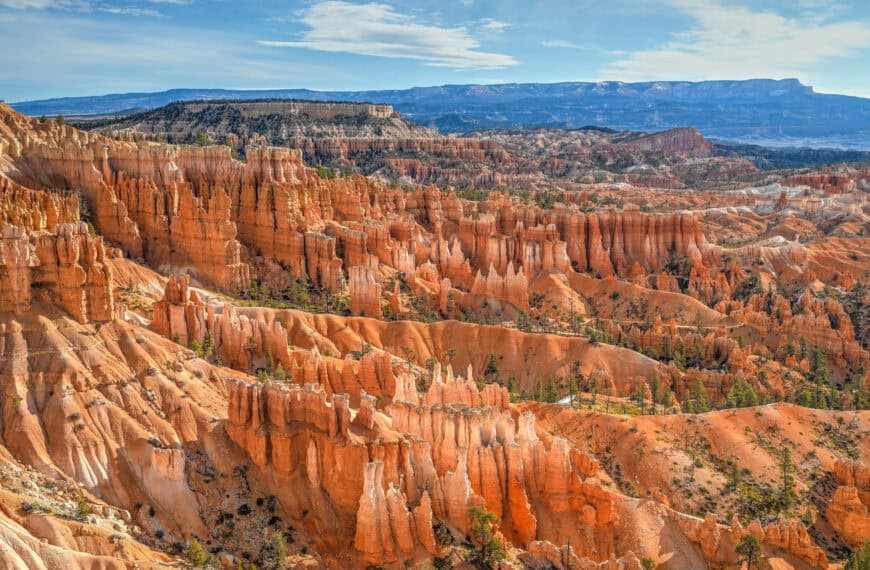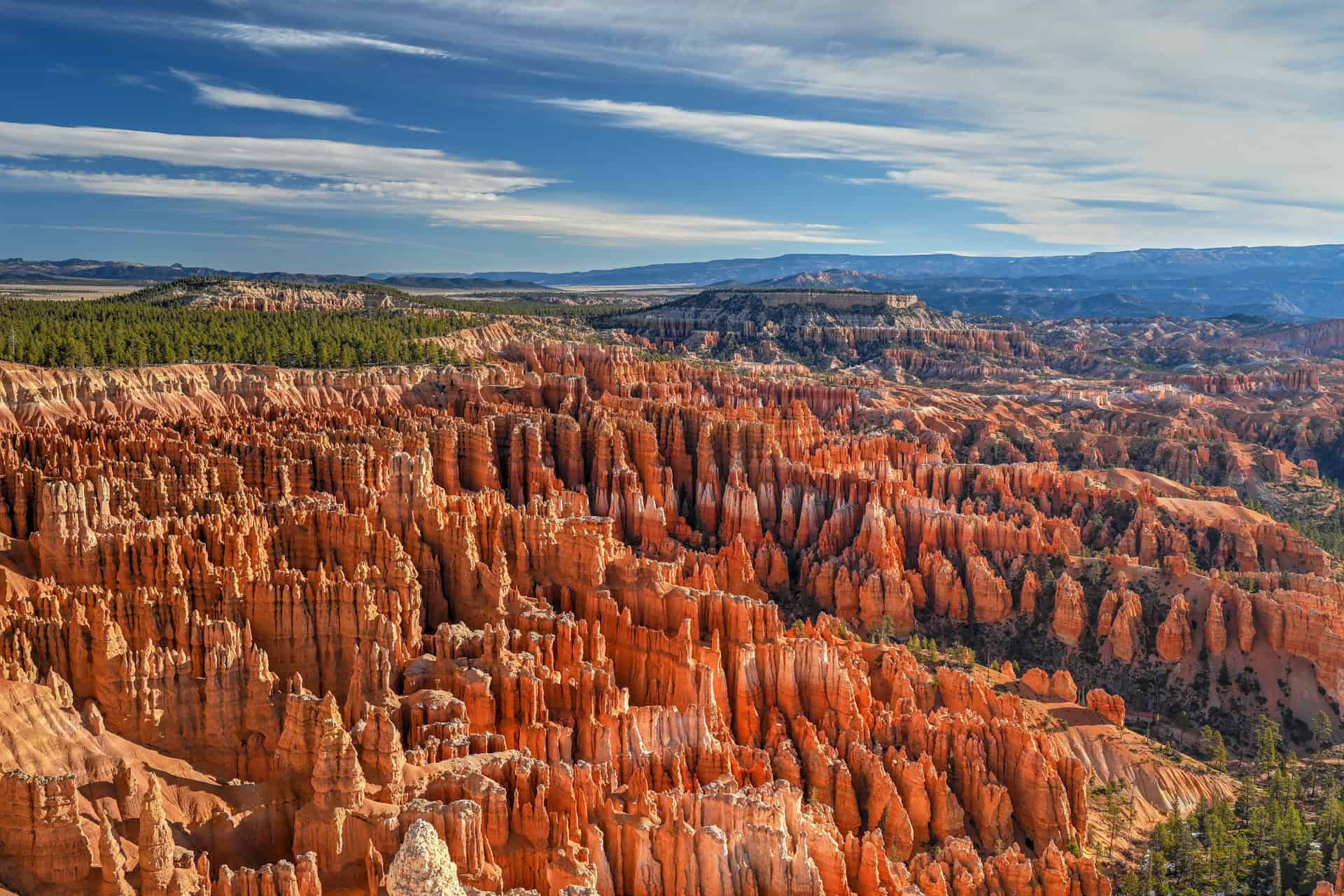
Bryce Canyon National Park is compact, easy to navigate, and visually concentrated. Unlike larger Utah parks that require long drives between attractions, Bryce centers around a single scenic road and a main amphitheater filled with hoodoos (tall, thin rock spires formed by erosion). Most of the park’s highlights can be experienced from rim viewpoints or by descending briefly into the canyon.
This Bryce Canyon guide brings together everything you need to plan your visit, including:
- The best hikes (from short rim walks to classic loops)
- The most worthwhile viewpoints along the scenic drive
- How long to spend in the park
- When to visit for the best light and conditions
- Practical tips for parking, shuttle use, and seasonal access
Bryce Canyon National Park Guide – At a Glance
Hiking Trails for All Levels – Bryce makes it easy to tailor your visit. The Rim Trail offers mostly flat, high-reward walking between major viewpoints. The Navajo Loop & Queen’s Garden route descends directly into the amphitheater for an up-close walk among hoodoos. For a quieter alternative, the Tower Bridge Trail provides a less crowded below-the-rim experience in a more open section of the park.
A Scenic Drive That’s the Backbone of the Park – Bryce Canyon is structured around an 18-mile north–south scenic drive with continuous overlooks. The northern section centers on the main amphitheater (where most of the hiking trails are located), while the southern section opens up broader canyon views, natural arches, and quieter pullouts. It’s one of the most efficient scenic drives in the Southwest.
Iconic Sunrise and Sunset Views – Few parks reward early starts like Bryce. Sunrise, Sunset, Inspiration, and Bryce Points each offer slightly different perspectives of the amphitheater. The changing angle of light transforms the hoodoos throughout the day, making timing almost as important as location.
Compact and Easy to Navigate – Unlike larger parks, Bryce is concentrated. Most highlights sit along a single road, and many viewpoints can be linked on foot via the Rim Trail. This makes it possible to experience a lot without long drives or complex logistics.
High Elevation, Cooler Climate – Sitting around 8,000–9,000 feet (2,400–2,700 m), Bryce is significantly higher than Zion, Capitol Reef, or Arches. Expect cooler temperatures year-round and the possibility of snow well into spring and again in late fall.
Seasonal Shuttle Service – A free shuttle typically operates from April through mid-October, helping reduce congestion near the main amphitheater. It’s optional, but useful during peak summer months when parking fills early.


Disclosure: This page (Bryce Canyon National Park Guide) may contain product affiliate links. At no additional cost to you, we may receive a commission for purchases made through these links. More details can be found on our disclosure and policies page.
Bryce Canyon National Park Location and Map
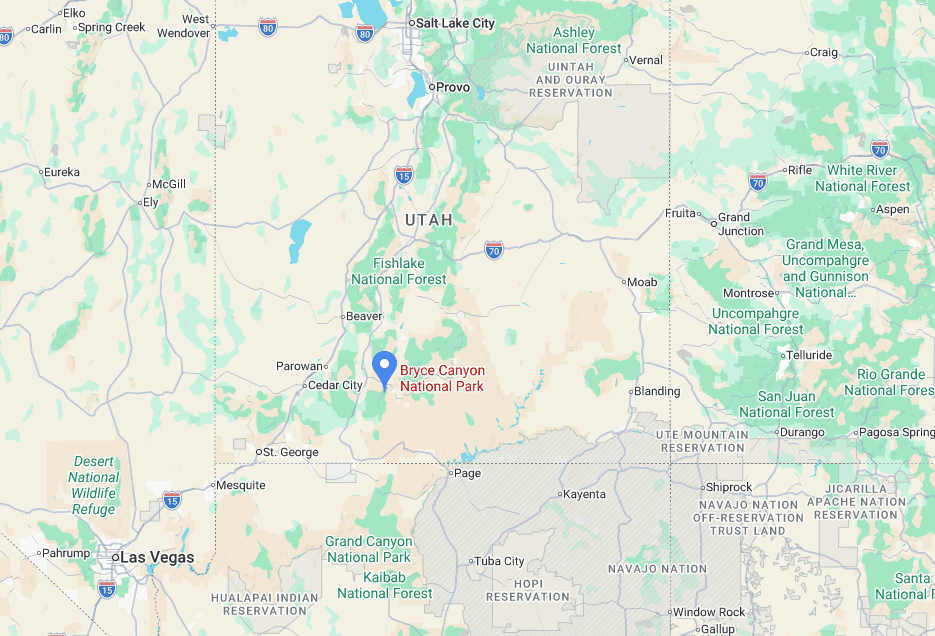
Bryce Canyon National Park is located in southern Utah, roughly two hours northeast of Zion National Park and about four and a half hours from Las Vegas. Unlike Zion, which sits directly along Interstate 15, Bryce requires a short detour east from U.S. Highway 89, giving it a more tucked-away, high-elevation feel.
Set between 8,000 and 9,000 feet (2,400–2,700 m), Bryce Canyon is significantly higher than most other Utah parks, which affects both climate and road conditions, especially in spring and winter. Despite its somewhat remote location, the park fits naturally into a southern Utah road trip, particularly when combined with Zion, Capitol Reef, or Grand Staircase–Escalante.
How to Get to Bryce Canyon National Park
Bryce Canyon National Park is best reached by car, as there is no public transportation that provides direct access to the park. Bryce Canyon National Park is accessed primarily via Utah State Route 63, which connects the park to U.S. Highway 89. There are no alternate park entrances for private vehicles, and access is straightforward in all seasons when roads are open.
Driving times to Bryce Canyon National Park
- Zion National Park: 135 km / 85 mi – about 2 hours
- St. George, UT: 240 km / 150 mi – about 3 hours
- Page, AZ: 240 km / 150 mi – about 3 hours
- Las Vegas, NV: 420 km / 260 mi – about 4.5 hours
- Salt Lake City, UT: 430 km / 270 mi – about 4.5 hours
These times assume clear weather and normal traffic conditions.
If you need to book a rental vehicle for your hiking excursion, we highly recommend using Discover Cars to get the best rates on your rental in Utah, Nevada and Arizona.
We also highly recommend Airalo (eSIM card) for your connectivity needs when travelling abroad. Airalo is the world’s first and largest eSIM store with eSIM plans for 200+ countries and regions worldwide.
Entrance Fees for Bryce Canyon National Park
Anyone visiting Bryce Canyon National Park, whether to hike, take a scenic drive, or simply enjoy the views, must pay the applicable entrance fee to the National Park Service.
Entrance Fees (per vehicle, valid 7 days)
Private vehicle: $35
Motorcycle: $30
Individual (on foot, bicycle, etc.): $20
Annual Pass Options
Bryce Canyon Annual Pass: $70 – unlimited entry for one year from the month of purchase.
America the Beautiful Pass: $80 – valid for one year at all U.S. National Parks and more than 2,000 federal recreation sites nationwide. This is the best value if you plan to visit multiple national parks within a year.
Passes can be purchased at the park entrance station, at the Visitor Center, or online through the USGS website or via the REI store.
—> Most visitors exploring Utah’s “Mighty 5” parks (Arches, Bryce Canyon, Canyonlands, Capitol Reef, and Zion) should strongly consider the America the Beautiful Pass: it saves money and avoids the hassle of buying separate entry fees at each park.
Bryce Canyon National Park – Access, Navigation, Parking & Facilities
Park Opening Hours: Bryce Canyon National Park is open year-round, 24 hours a day. The scenic drive and viewpoints are generally accessible at all hours, weather permitting. Visitor services operate on seasonal schedules.
Visitor Center: The Bryce Canyon Visitor Center is located just inside the main entrance along UT-63. It offers exhibits on the park’s geology, hoodoo formation, ecology, and history, as well as maps, ranger information, and bookstore services. Hours vary by season, but it is typically open daily, with shorter hours in winter. For the most up-to-date information, see the park’s official website.
Park Navigation: Once inside the park, the Bryce Canyon Scenic Drive follows a north–south alignment, is fully paved, and is suitable for all standard vehicles. During winter storms, sections of the scenic drive may temporarily close, and side roads, such as those leading to Fairyland Point or Paria View, are often closed for extended portions of the winter season. Checking current conditions before arrival is recommended in colder months.
Parking: Parking lots are located at each major viewpoint along the scenic drive. During peak summer months, the lots near the main amphitheater (Sunrise, Sunset, Inspiration) fill quickly between late morning and mid-afternoon.
Southern viewpoints typically have lighter traffic and easier parking. Arriving early or using the shuttle during busy periods helps reduce congestion.
Picnicking / Day Use / Restrooms: Restrooms are available at the Visitor Center and at several major viewpoints along the scenic drive. Picnic areas are located near North Campground and other developed areas.
Camping: Bryce Canyon has two main campgrounds: North Campground, located near the Visitor Center and main amphitheater, and Sunset Campground, slightly farther south along the scenic road. Both offer standard campsites with tables, fire rings, and restroom facilities. Reservations are required for most of the year.
Bryce Canyon Layout (Map) and Shuttle Stops
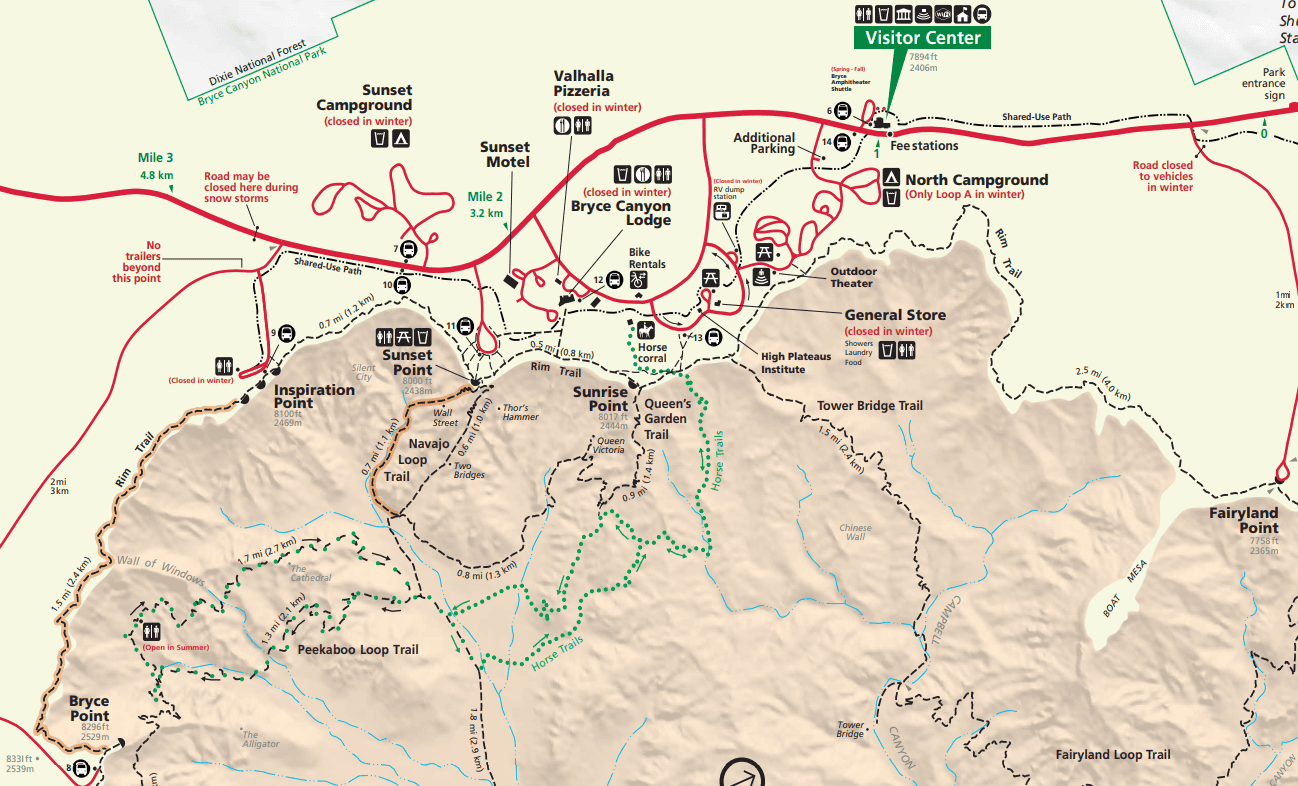
Bryce Canyon is structured around a single north–south scenic road, the Bryce Canyon Scenic Drive, which runs through the park for roughly 18 miles (29 km), passing the Visitor Center, North Campground, the main amphitheater viewpoints, and eventually reaching Rainbow Point at the southern end.
Nearly all major viewpoints are located along the eastern side of this road, making navigation straightforward and efficient.
The northern portion of the park centers on the main amphitheater, where Sunrise, Sunset, Inspiration, and Bryce Points are clustered close together. Farther south, the road continues to Rainbow Point, passing additional overlooks that feel quieter and more spread out.
Bryce Canyon Shuttle Service
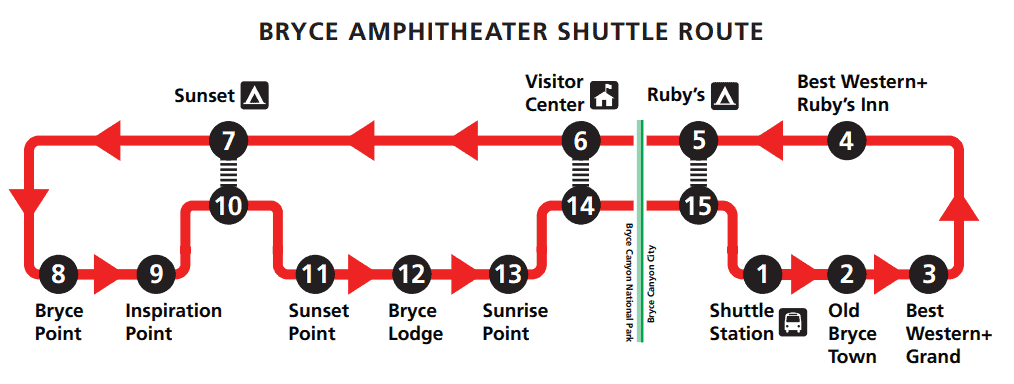
A seasonal shuttle operates (typically April through mid-October): although it is optional rather than mandatory, it becomes very useful during peak periods when parking lots fill up. The shuttle connects the main amphitheater viewpoints with the campgrounds, visitor center, and the Bryce Canyon City hotels.
The shuttle service is free with park admission.
Bryce Canyon National Park – Some Quick Facts
Establishment: Bryce Canyon National Park was designated a national park in 1928. The park was created to protect its unique hoodoo formations and high-elevation plateau landscape, which differ significantly from Utah’s deeper canyon parks.
Visitor Numbers: Bryce Canyon receives over two million visitors per year. Most visitation occurs between late spring and early fall, with summer being the busiest period. Winter sees far fewer visitors, though snowfall can temporarily affect access to certain roads and viewpoints.
Size: The park covers approximately 35,000 acres (14,000 hectares), making it much smaller than Zion or Canyonlands. Despite its modest size, Bryce’s main amphitheater concentrates an extraordinary density of hoodoos in a relatively compact area.
Elevation: Bryce Canyon sits at roughly 8,000 to 9,000 feet (2,400–2,700 m) above sea level. This higher elevation means cooler temperatures year-round and a greater likelihood of snow in spring and fall compared to other southern Utah parks.
Geology: Bryce Canyon is not actually a canyon carved by a river. Instead, it consists of a series of natural amphitheaters formed through erosion of the Claron Formation, a layered limestone deposited around 50 million years ago. Freeze–thaw cycles gradually break down the rock, creating the park’s distinctive hoodoos, fins, and natural arches.
Bryce Canyon’s Best Hiking Trails
“Best” is always subjective, especially in a park where many trails overlap or connect. The four hikes listed below are our personal picks, chosen for how clearly they showcase Bryce Canyon’s hoodoos, scale, and variety. Together, they cover rim views, below-the-rim immersion, quieter alternatives, and an easy option for arrival or winter visits.
Later in the guide, we also mention additional trails and connectors that may suit specific interests or longer stays.
Navajo Loop & Queen’s Garden
If you’re only going to hike one trail in Bryce Canyon National Park, this is the one most people choose — and for good reason. The combined Navajo Loop and Queen’s Garden route descends directly into the main amphitheater, weaving through narrow corridors of hoodoos before climbing back to the rim.


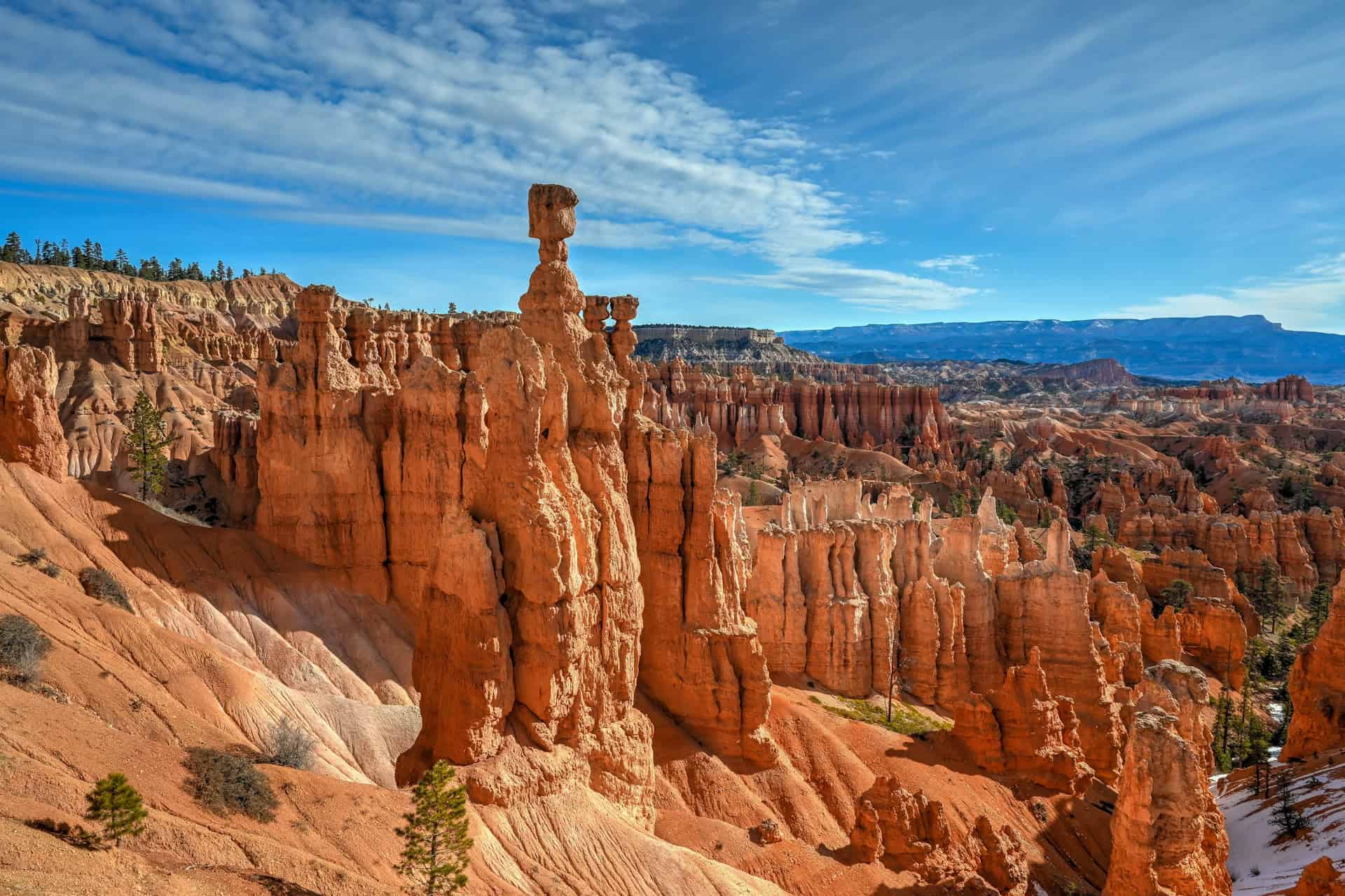
Starting from Sunset Point, the Navajo portion drops steeply through a series of switchbacks (via Wall Street or the Two Bridges section), quickly immersing you among towering rock spires. The landscape shifts again as you connect to Queen’s Garden, where the terrain opens slightly, and the trail passes close to formations like Queen Victoria. The experience feels varied, compact, and visually dense.
Highlights: Direct access into the main amphitheater, iconic hoodoo scenery, varied terrain in a relatively short loop
Potential drawbacks: Steep descent and ascent, heavy foot traffic during peak hours
Location: Between Sunset Point and Sunrise Point (main amphitheater area)
Difficulty: Moderate, primarily due to elevation change
Important to know: Starting at Sunset and finishing at Sunrise (counterclockwise) is generally considered the most comfortable direction
For detailed route descriptions, seasonal considerations, and trail variations, see our Navajo Loop & Queen’s Garden Hiking Guide.
Tower Bridge Trail
The Tower Bridge Trail offers a quieter alternative for those wanting to descend below the rim without joining the amphitheater crowds. Starting near Sunrise Point (via Fairyland), the trail drops gradually into a more open, desert-like section of Bryce, where hoodoos are spaced farther apart, and sightlines feel expansive.


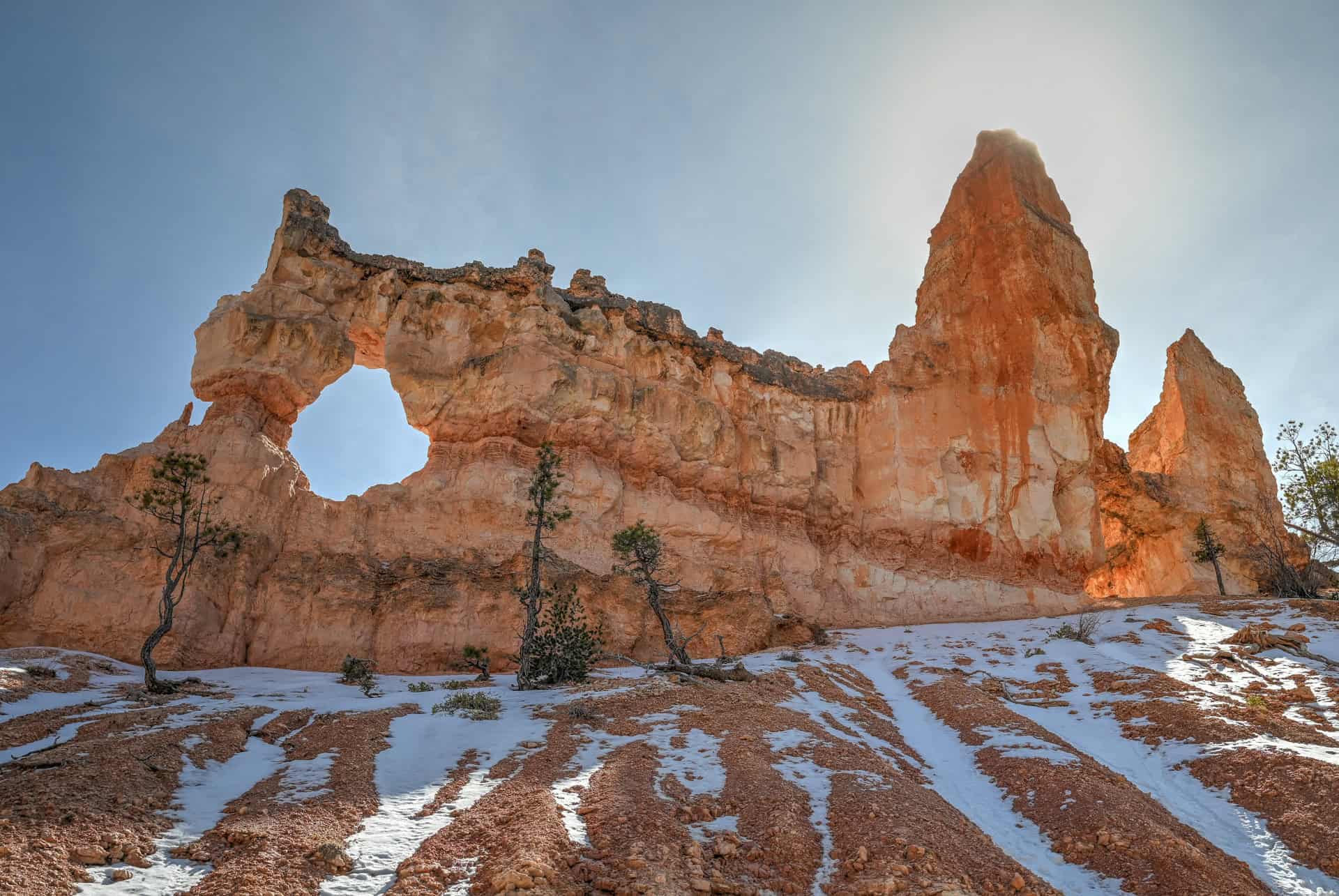
The turnaround point is Tower Bridge itself — a distinctive rock formation resembling a suspended arch framed by tall pillars. While less trafficked than Navajo Loop, this trail still delivers immersive hoodoo scenery and a strong sense of Bryce’s scale.
Highlights: Fewer crowds, distinctive rock formation, wide-open terrain
Potential drawbacks: Longer than it initially appears, steady climb on return
Location: Northern section of the main amphitheater, near Sunrise Point
Difficulty: Moderate, due to length and return ascent
Important to know: This trail is more exposed and quieter than the central amphitheater routes
For full details, maps, and seasonal tips, see our Tower Bridge Trail Hiking Guide.
Rim Trail (Amphitheater Section)
For those who prefer to stay above the hoodoos, the Rim Trail provides continuous views along the edge of the main amphitheater. The most rewarding and practical stretch runs between Sunrise, Sunset, and Inspiration Points, where viewpoints can be linked on foot without major elevation change.


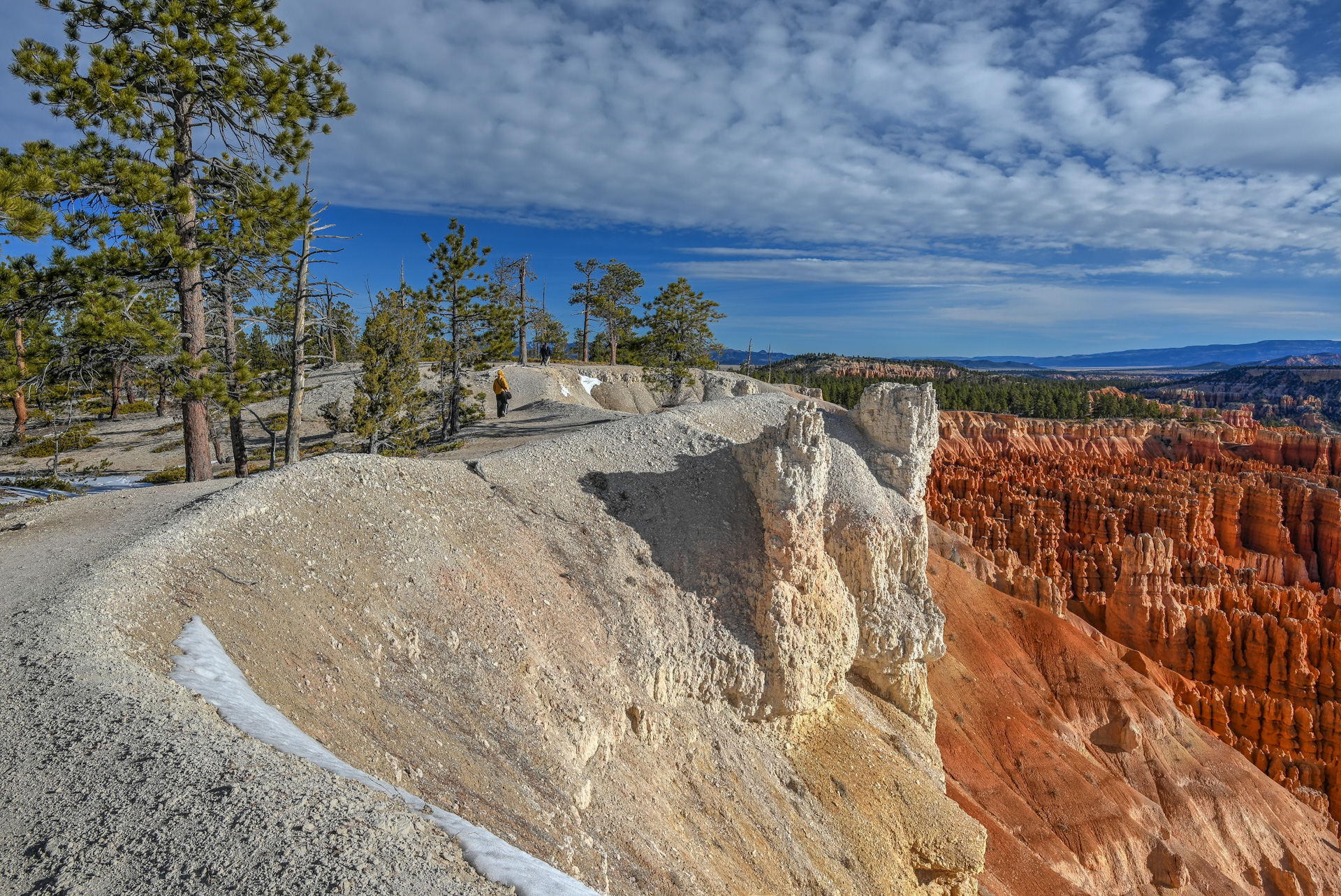
Unlike below-the-rim trails, this section remains largely flat and accessible. It works especially well in winter, when icy conditions may make steep descents less appealing.
Highlights: Continuous amphitheater views, minimal elevation gain, flexible distance
Potential drawbacks: Can feel crowded near major viewpoints
Location: Main amphitheater rim
Difficulty: Easy
Important to know: Portions of the Rim Trail are paved and suitable for most visitors
For more details, maps and hiking tips, see our Rim Trail Hiking Guide.
Mossy Cave
Mossy Cave sits apart from the main amphitheater and offers a short, easy walk to a small cave and seasonal waterfall. While it lacks the scale of Bryce’s larger formations, it provides a different perspective on the park’s geology and is especially interesting in colder months.


In winter and early spring, icicles often form along the rock face near the waterfall, creating a dramatic contrast against the red and orange rock. Because of its lower elevation and separate location along UT-12, Mossy Cave can be a convenient stop when entering or leaving the park.
Highlights: Short and accessible, seasonal waterfall, winter icicles
Potential drawbacks: Not as dramatic as amphitheater hikes
Location: Along UT-12, outside the main scenic drive corridor (link to Google Maps)
Difficulty: Easy
Important to know: Conditions can be icy in winter; traction may be helpful
Other Bryce Canyon Hiking Trails
Peekaboo Loop
The Peekaboo Loop is a longer, more strenuous route that descends deep into the amphitheater and winds through dense clusters of hoodoos. Often combined with the Navajo Loop, this trail adds distance and elevation while reaching quieter sections of the canyon floor. The terrain feels more rugged and exposed than Queen’s Garden, and the climbs are sustained rather than gradual. It’s a good option for experienced hikers looking to extend their time below the rim.
Fairyland Loop
The Fairyland Loop is one of Bryce’s longest maintained trails, circling the northern side of the main amphitheater and passing through less-traveled terrain. It incorporates the Tower Bridge area and continues into varied landscapes with sweeping views back toward the rim. Compared to the Navajo and Peekaboo routes, Fairyland feels more remote and open. The full loop is demanding, but sections can be sampled for a shorter outing.
Bryce Canyon’s Best Viewpoints & Scenic Drive
While Bryce Canyon is known for its hiking, many of its most dramatic views are accessible directly from the rim. The park is organized around an 18-mile (29 km) north–south scenic drive, with nearly all major overlooks located along the eastern edge of the plateau.
The Main Amphitheater
The northern section of the park centers on the main amphitheater: Bryce’s most concentrated and visually striking area. Viewpoints such as Sunrise Point, Sunset Point, Inspiration Point, and Bryce Point offer slightly different angles over the same dense cluster of hoodoos.


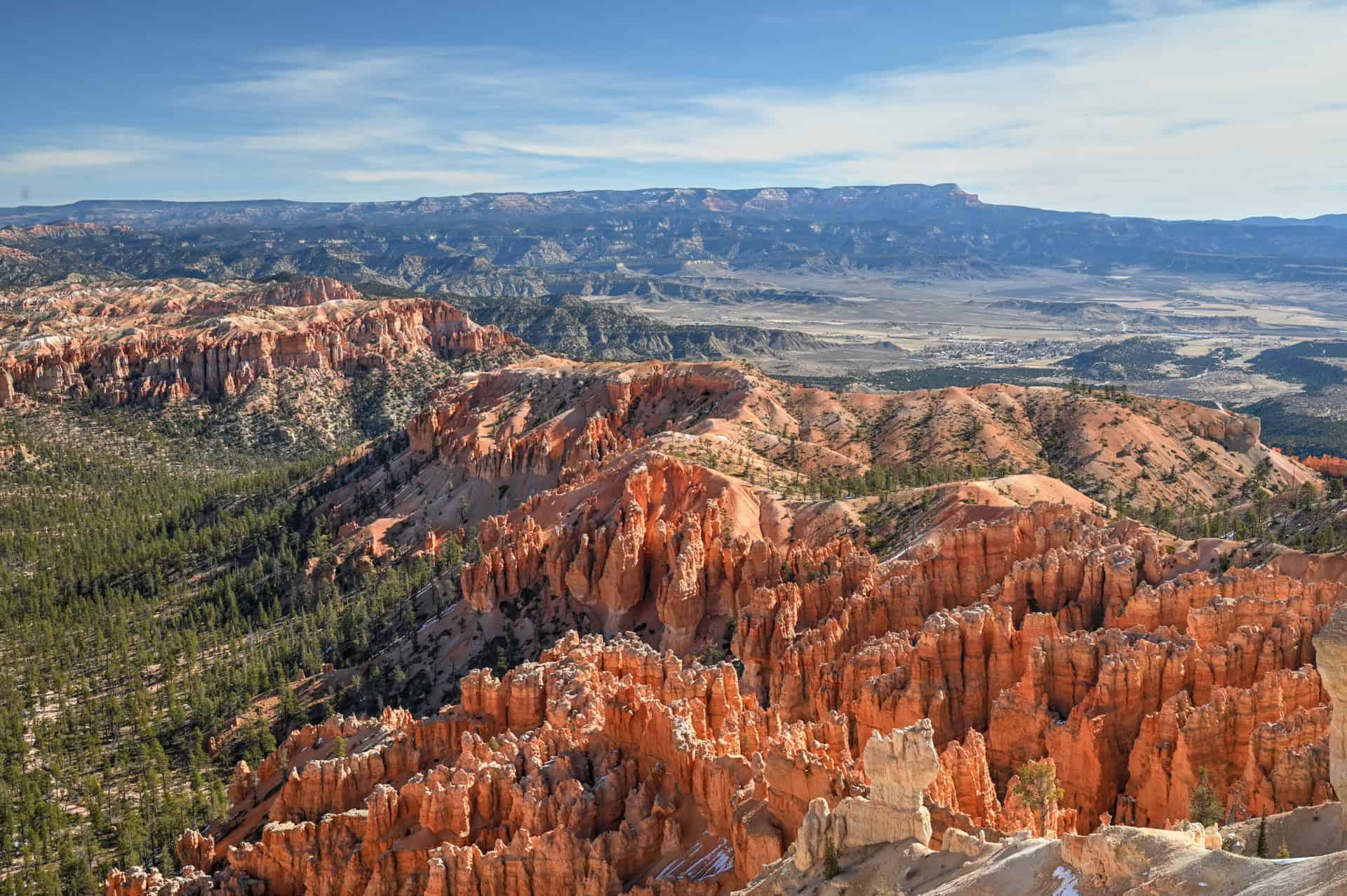
These stops are close enough to connect on foot via the Rim Trail, making it possible to park once and walk between them. This area sees the highest concentration of visitors and benefits most from early morning or late afternoon light.
The Southern Scenic Drive
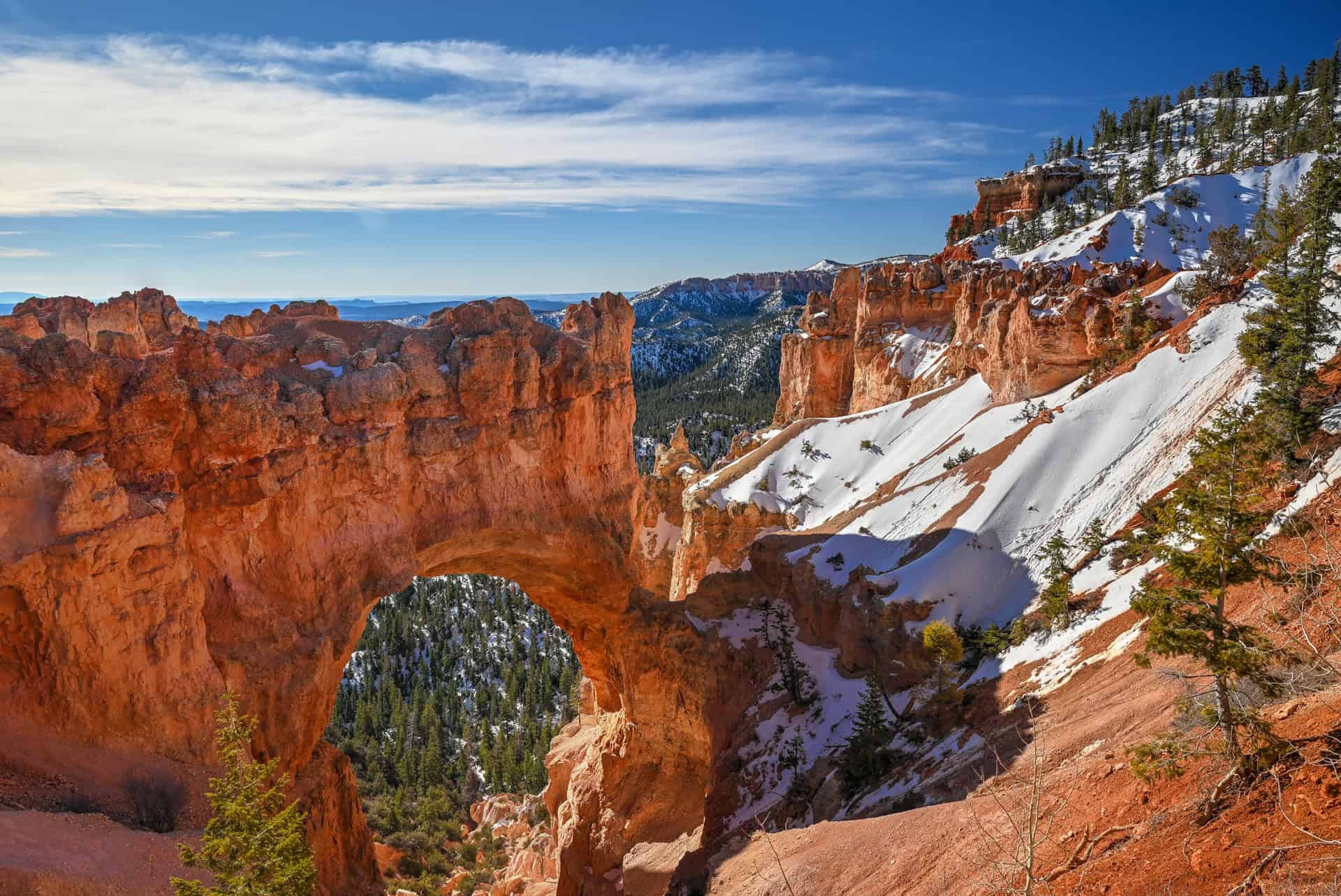
Beyond the amphitheater, the road continues south toward Rainbow Point, passing a series of quieter overlooks that feel more open and expansive. These viewpoints, including Natural Bridge, Agua Canyon, Ponderosa Canyon, and others, highlight broader landscapes rather than dense hoodoo corridors.
Traffic thins considerably the farther south you drive, and the scenery shifts from tightly packed formations to wider basins and forested slopes.


How to Structure the Drive
Most visitors either:
- Focus only on the amphitheater viewpoints, or
- Drive all the way to Rainbow Point first and make stops on the way back north.
If you have more than one day, it often makes sense to separate amphitheater viewpoints from the southern drive so both can benefit from softer morning light.
For a detailed breakdown of every major overlook, including suggested must-see stops and timing tips, see our Bryce Canyon Scenic Drive & Viewpoints Guide.
Best Sunrise and Sunset Spots in Bryce Canyon
Bryce Canyon is one of the few parks where sunrise generally outperforms sunset. Because the main amphitheater faces east, the early morning light strikes the hoodoos directly, bringing out warm tones, long shadows, and strong contrast. At sunset, much of the amphitheater falls into shadow, and while the sky can still be colorful, the formations themselves don’t glow in quite the same way.
Best Sunrise Spots
Sunrise Point and Sunset Point are the most obvious sunrise locations. Both provide classic amphitheater views and easy access from nearby parking. They are also the busiest. If you’re visiting in peak season, expect company.
Our preferred alternative is Inspiration Point, particularly Upper Inspiration Point. It sits slightly higher than Sunrise and Sunset Points and provides a more elevated, layered perspective over the amphitheater. It’s only a short drive farther south, making it easier to reach in the dark than Bryce Point, which requires a longer detour.


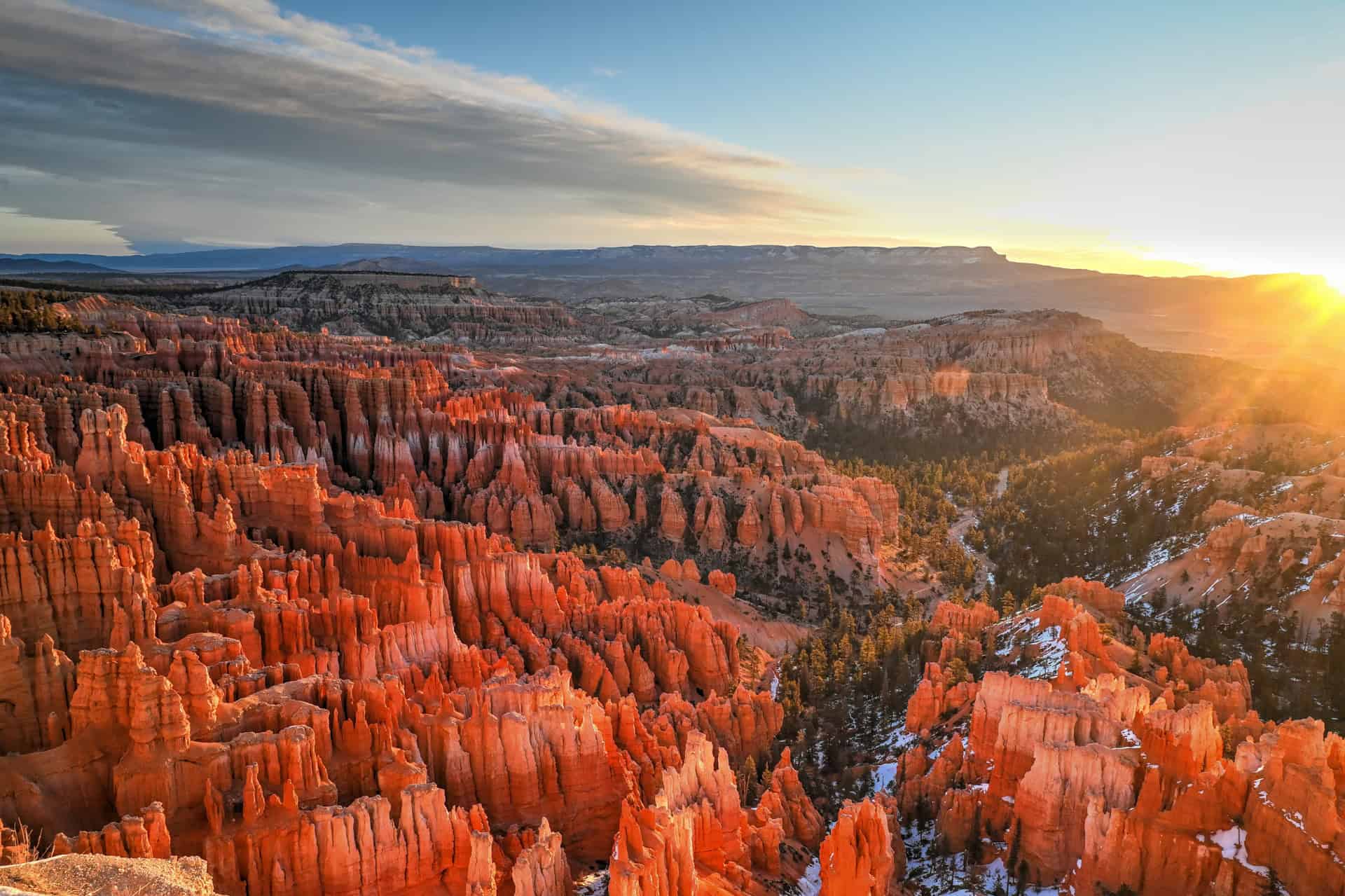
Bryce Point is another excellent sunrise option, but it requires driving farther in low light or darkness.
One additional tip: any stretch of the Rim Trail between the major viewpoints can offer equally compelling sunrise views. Walking even a few minutes away from the main railings often provides a quieter and more personal vantage point.
If arriving before sunrise or staying after sunset, exercise caution along the rim. Only the developed viewpoints have guardrails. Much of the Rim Trail is unprotected, and drop-offs can be steep. Bring a headlamp if walking in low light, and stay aware of your footing.
How Long Do You Need in Bryce Canyon?
Bryce Canyon is compact and easy to visit. Unlike some of Zion’s larger parks that require long drives between areas, most highlights sit along a single scenic road, with the main amphitheater clustered near the north end. As a result, it’s possible to see a lot in a short amount of time (but staying longer allows for better light and less rushed hiking).
Half Day
With half a day, you can cover the scenic drive and stop at key viewpoints, focusing either on the amphitheater or driving south toward Rainbow Point. Add a short Rim Trail walk between Sunrise, Sunset, and Inspiration Points to stretch your legs.
This works well as a stop between Zion and Capitol Reef, but you won’t have time for a meaningful below-the-rim hike.
1 Full Day
One full day is enough to experience Bryce’s core highlights at a comfortable pace. A common single-day itinerary is:
- Morning: Scenic drive (south to Rainbow Point and back)
- Midday: Rim Trail walk between major viewpoints
- Afternoon: Navajo Loop & Queen’s Garden
This gives you both rim perspectives and time inside Bryce’s unique amphitheater.
2 Full Days (Ideal for Most Visitors)
Two days allow you to slow down and separate activities based on light and energy levels.
A balanced itinerary might look like:
Day 1
- Early morning: Amphitheater viewpoints (Sunrise, Sunset, Inspiration, Bryce Point)
- Late morning: Navajo Loop & Queen’s Garden
- Afternoon: Southern scenic drive
Day 2
- Morning: Tower Bridge, Fairyland Loop, or Peekaboo Loop
- Departure stop: Mossy Cave (if arriving or leaving via UT-12)
This daily structure avoids stacking steep hikes back-to-back and lets you enjoy both sunrise and a quieter below-the-rim experience.
3 Days or More
With three or more days, you can explore longer loops like the full Fairyland or combine trails for extended below-the-rim routes. Most visitors, however, find that two days cover Bryce’s major experiences without feeling repetitive.
Bottom line:
For most travelers, 1–2 full days is the sweet spot. Half a day works if you focus on viewpoints, but staying overnight allows you to experience Bryce at its best (particularly at sunrise).
Best Time to Visit Bryce Canyon National Park
Bryce Canyon National Park is open year-round, but conditions vary significantly due to its high elevation. Sitting between 8,000 and 9,000 feet, Bryce is cooler than Zion, Arches, or Capitol Reef, and snow can linger well into spring.
Light quality, road access, and trail conditions all play a role in shaping the experience.
Spring (March–May)
Spring is a transitional season in Bryce. Snow often remains on shaded trails in March and April, and below-the-rim routes can be muddy or icy. However, this is also one of the most visually striking times to visit, with hoodoos contrasting sharply against lingering snow.
By late April and May, temperatures become comfortable for hiking, typically ranging from 45–65°F (7–18°C). Shuttle service usually begins in April, and visitation steadily increases as summer approaches.
Spring can be an excellent time for photography, but flexibility is important due to changing conditions.
Summer (June–September)
Summer is Bryce’s busiest season, but thanks to the park’s elevation, temperatures are generally milder than in lower-elevation Utah parks. Daytime highs typically range from 65–80°F (18–27°C), making hiking more comfortable than in Zion.
The shuttle operates throughout the main season, and parking near the amphitheater can fill early. Afternoon thunderstorms are common during monsoon season (July–August), so early starts are recommended for longer hikes.
Long daylight hours make it easier to combine scenic drives, hikes, and sunrise visits in a single day.
Fall (October–November)
Fall offers some of the most balanced conditions in Bryce. Temperatures cool, crowds thin noticeably after September, and trail conditions are usually stable. The lower sun angle enhances shadows and texture across the amphitheater.
Early snowfall is possible in late October or November, and some side roads (such as those to Fairyland Point or Paria View) may begin closing for the season. Days become shorter, but hiking conditions are generally excellent.
Winter (December–February)
Winter transforms Bryce into a quieter and often dramatic landscape. Snow frequently blankets the rim and hoodoos, creating a strong color contrast and fewer crowds. The main scenic drive typically remains open, though temporary closures can occur during storms.
Some side roads are closed for much of the winter, and below-the-rim trails may require traction devices due to ice. Sunrise remains beautiful, but temperatures often drop well below freezing in the mornings.
For many visitors, winter is best suited to rim viewpoints and shorter hikes rather than long descents into the amphitheater.
Quick Summary: When to Visit Bryce Canyon
- Late spring through early fall offers the most reliable access and comfortable hiking conditions.
- Summer provides long days and full access but brings peak crowds.
- Spring and fall offer the best balance of light and crowd levels.
- Winter is quieter and visually dramatic, though snow and ice may limit access to certain roads and trails.
What to See Near Bryce Canyon National Park
Bryce Canyon fits naturally into a southern Utah road trip, especially when paired with other parks and scenic drives in the region. Depending on which direction you’re heading, there are several worthwhile stops within easy driving distance.
If You’re Heading West (Toward Kanab or Zion)
Kanab Sand Caves
Located just outside the town of Kanab, the Kanab Sand Caves (often called Moqui Caves or Moqui Caverns) are a quick and popular roadside stop. A short but slightly steep trail leads to carved sandstone alcoves overlooking the desert below. The visit is brief, and it pairs well with a Bryce-to-Zion drive.


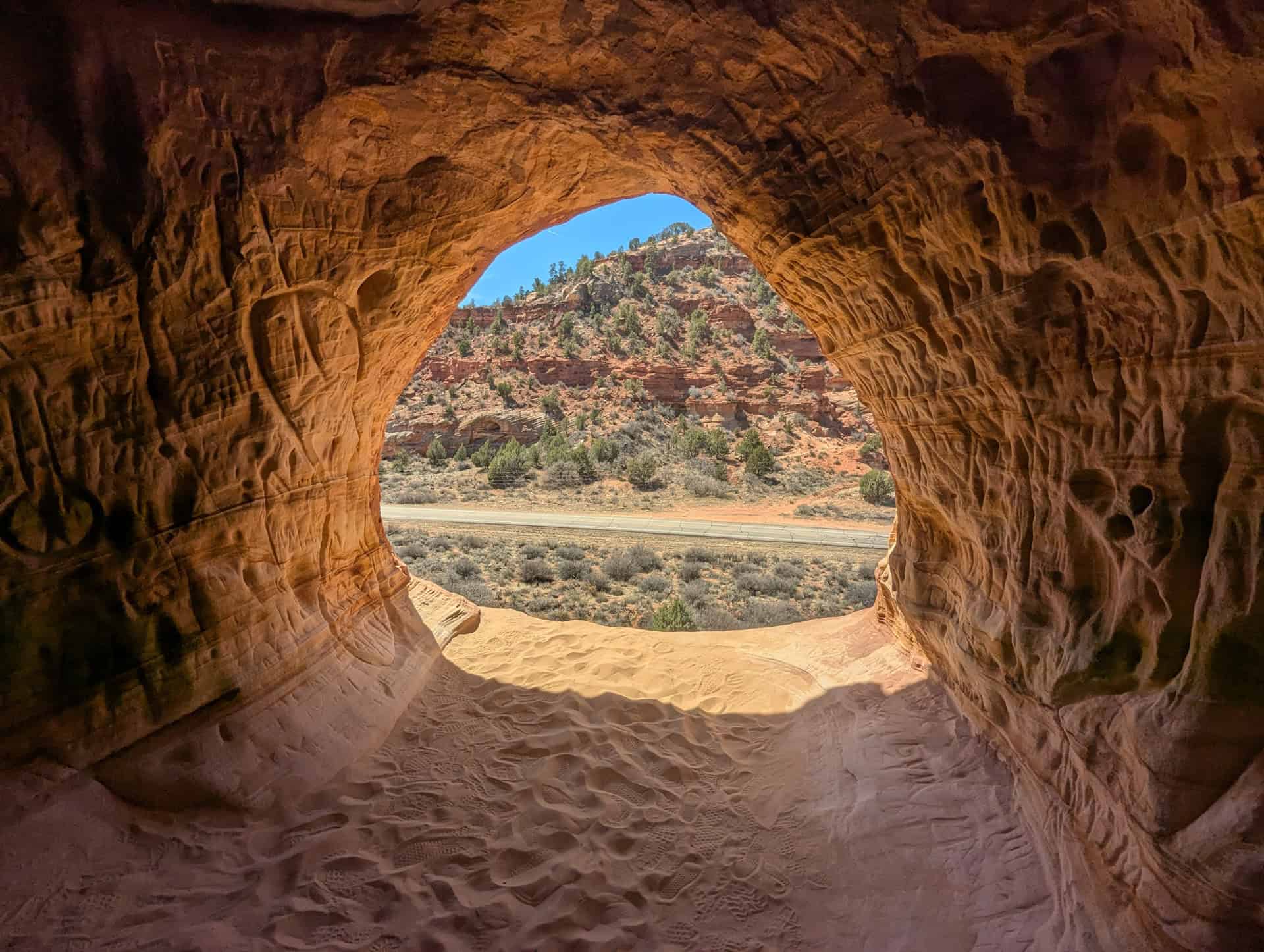
It’s a good option if you’re looking to stretch your legs without committing to a full hike. For more information on visiting and how to access the caves, see our Kanab Sand Caves Visiting Guide.
Coral Pink Sand Dunes State Park
Coral Pink Sand Dunes State Park sits about an hour west of Bryce near Kanab and offers a completely different landscape — rolling salmon-colored sand dunes backed by red cliffs. Visitors can wander freely across the dunes, rent sandboards, or simply explore for an hour or two.


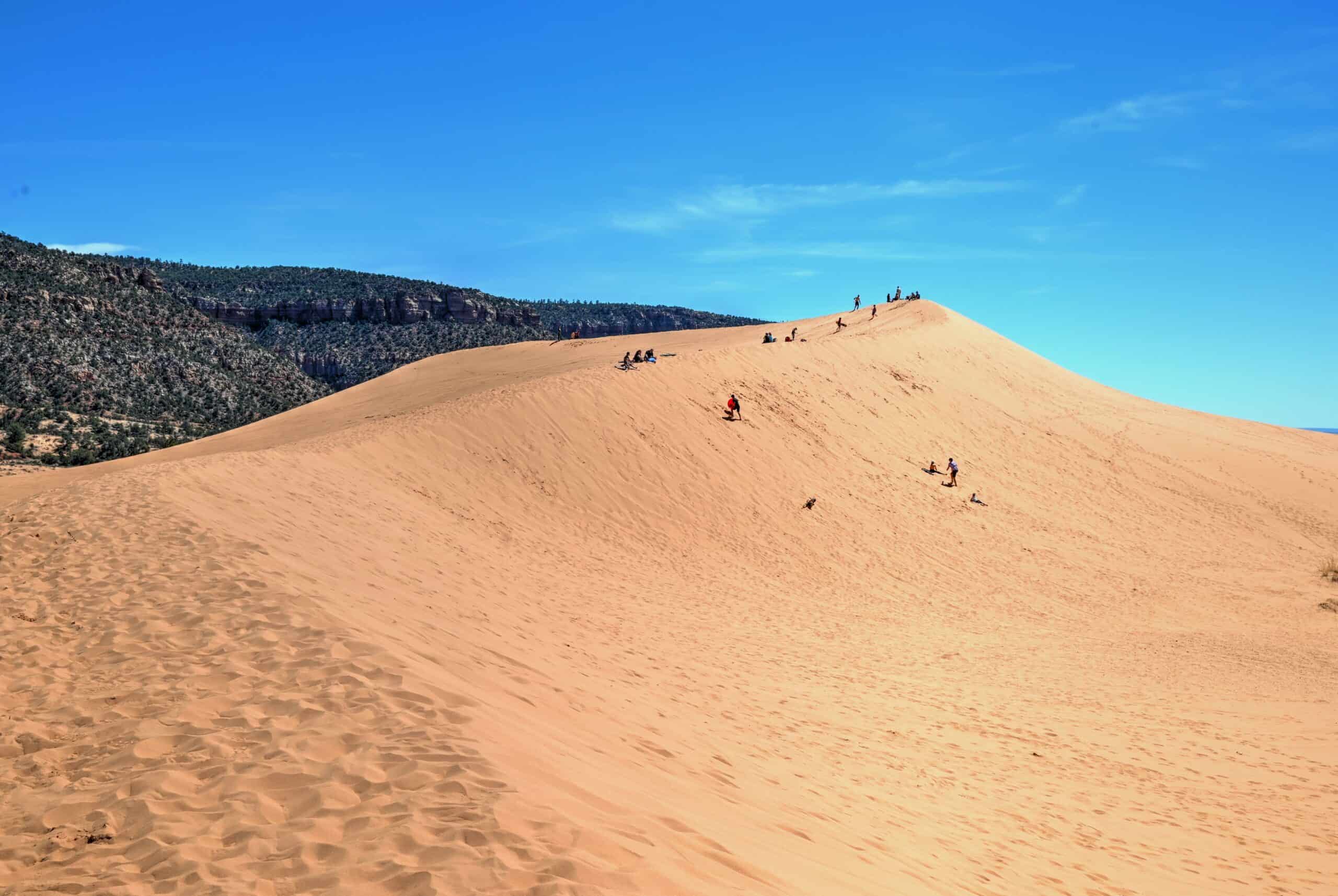
The open terrain and shifting light make it especially appealing in the late afternoon. It’s an easy add-on if you’re spending time in Kanab or heading toward Zion.
Zion National Park
About two hours southwest of Bryce, Zion National Park offers a dramatic contrast in scale and terrain. Where Bryce is compact and elevated, Zion centers on a deep canyon carved by the Virgin River, with towering sandstone walls rising from the canyon floor.


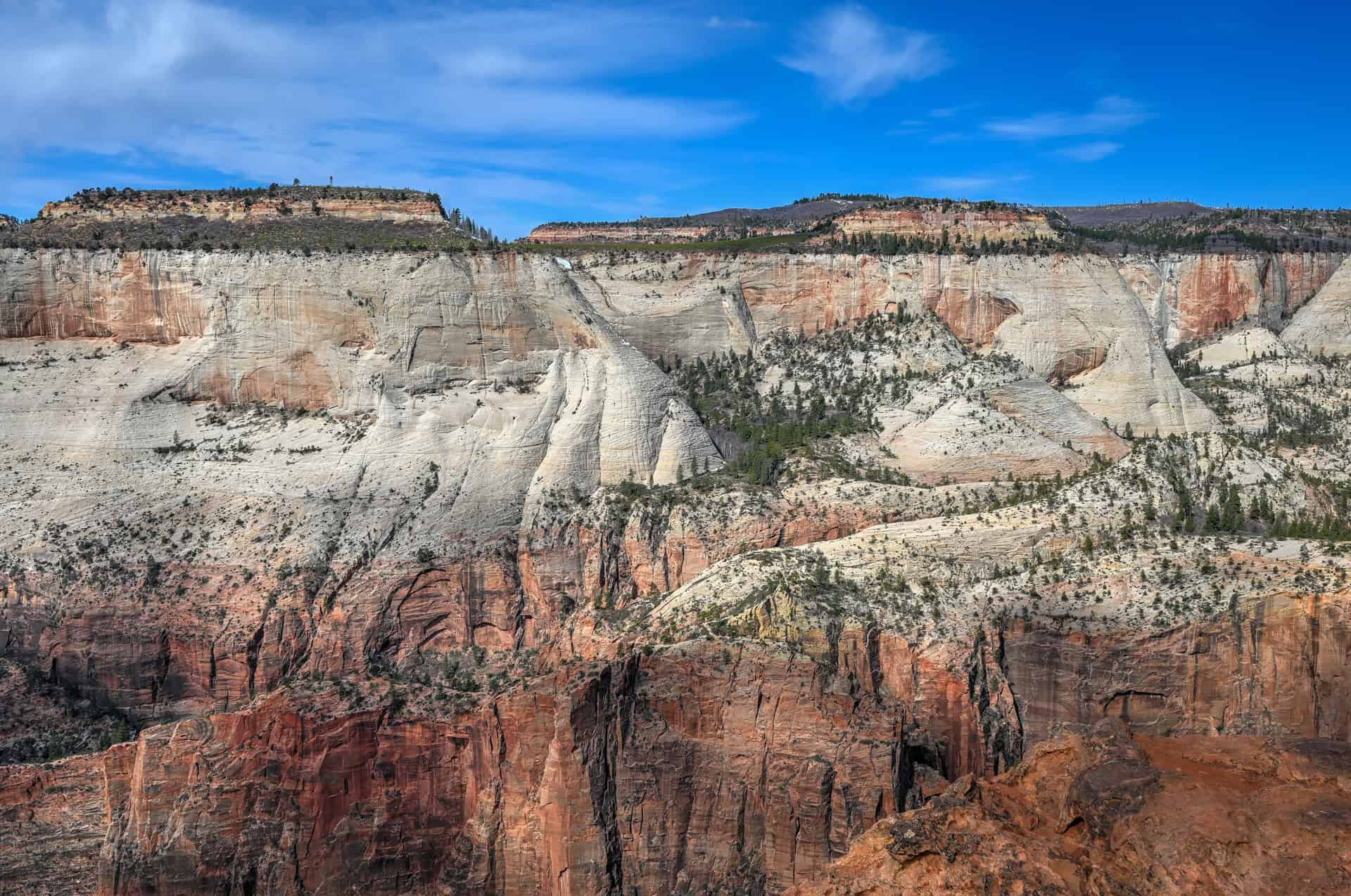
Zion is better suited to longer hikes and multi-day stays, especially for routes like Angels Landing, the West Rim, or The Narrows. If you’re structuring a southern Utah road trip, Bryce and Zion complement each other well: Bryce for sunrise viewpoints and concentrated hoodoos, Zion for canyon immersion and longer hikes.
For detailed planning advice, see our full Zion National Park Guide.
If You’re Heading East or North
Scenic Byway 12
Utah State Route 12 — often called Scenic Byway 12 — is one of the most visually varied drives in the Southwest. The road climbs through forests, descends into red rock country, and crosses exposed ridgelines with wide-open views.


Driving east from Bryce toward Escalante or Torrey, you’ll pass overlooks, pullouts, and trailheads within the Grand Staircase–Escalante region. Even if you don’t stop for a full hike, the drive itself is part of the experience.
For more details, we cover a long list of attractions in our guide to the Best Stops Between Bryce Canyon and Moab.
Capitol Reef National Park
About 2.5 hours northeast of Bryce via Scenic Byway 12, Capitol Reef National Park offers a different kind of landscape: long sandstone cliffs, domes, and orchards set within a more linear valley setting.


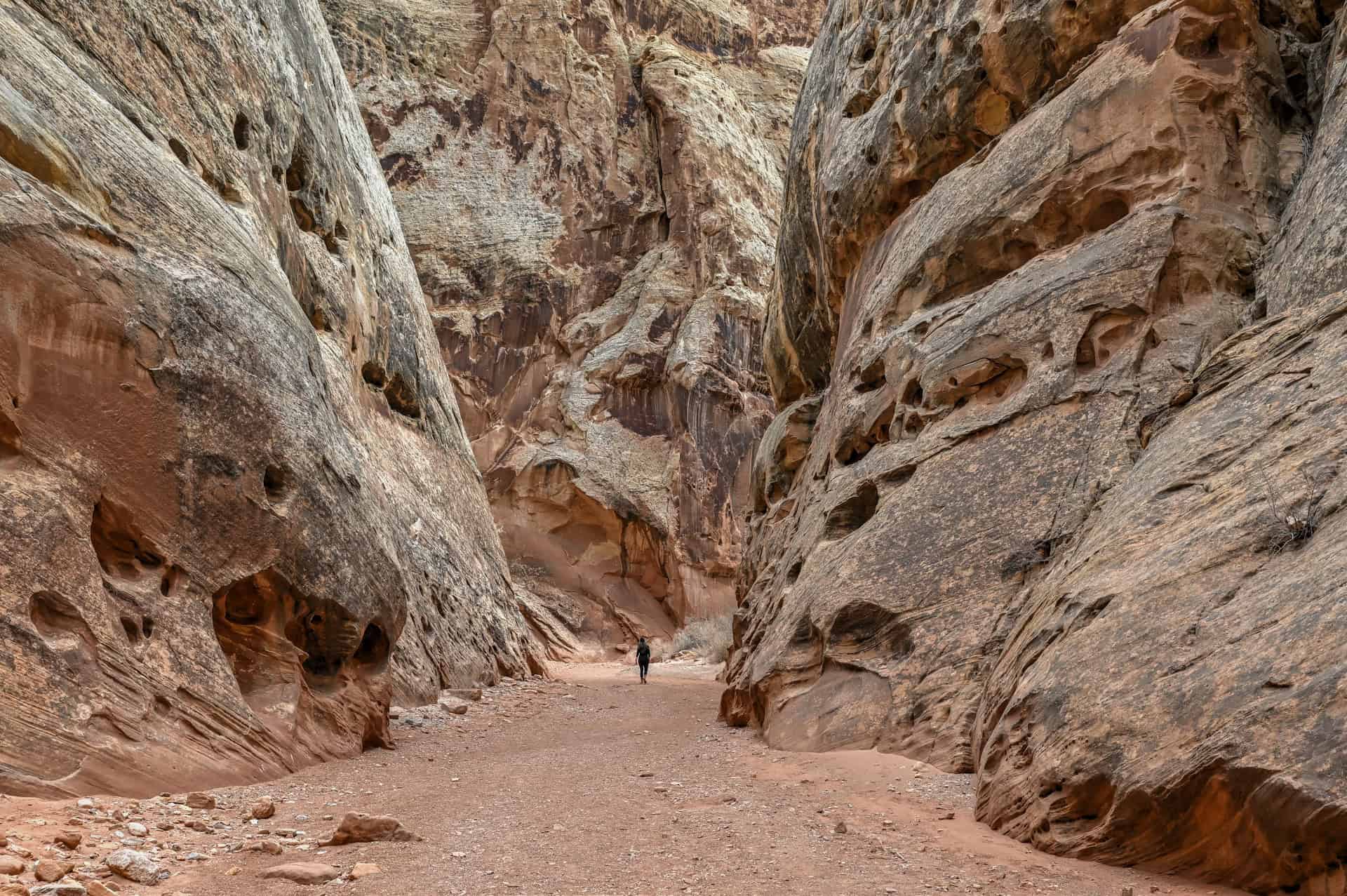
Compared to Bryce, Capitol Reef feels quieter and more spread out. It works especially well as the next stop on a multi-day Utah road trip, particularly if you’re continuing toward Moab.
For more details and planning tips, see our Capitol Reef National Park Guide.
Where to Stay Near Bryce Canyon National Park
If your goal is to maximize time in Bryce Canyon and keep logistics simple, staying just outside the park entrance is the most practical option. Lodging in this area allows for early starts, easy access to sunrise viewpoints, and minimal driving once you’re in the park—especially useful during busy months or when weather conditions change quickly.
Rather than spreading options across multiple towns, we recommend basing yourself as close to the entrance as possible.
Best Western Plus Ruby’s Inn is located directly outside Bryce Canyon National Park’s main entrance, making it one of the most convenient places to stay. Rooms are comfortable and well-maintained, and the property includes a restaurant, general store, outdoor pool, and laundry facilities.
Its location makes early morning and late evening visits to the rim especially easy, whether you’re catching sunrise, returning after sunset, or timing hikes around changing weather. Ruby’s Inn also serves as a hub for Bryce Canyon’s shuttle system during the operating season, further simplifying access to viewpoints and trailheads.
Booking tip: Bryce Canyon accommodations are limited, and Ruby’s Inn fills quickly during peak season (late spring through fall). Reserving well in advance is strongly recommended, especially if you plan to visit during the summer or on weekends.
Bryce Canyon National Park – Frequently Asked Questions
Do you need a reservation to enter Bryce Canyon National Park?
No reservations are required to enter Bryce Canyon National Park. Visitors pay the entrance fee at the gate or use an America the Beautiful pass. No timed-entry system is currently in place.
Do you need to use the Bryce Canyon shuttle?
No. Private vehicles are allowed on the scenic drive year-round when conditions permit. A free shuttle typically operates from April through mid-October, but it is optional. During peak summer months, the shuttle can make parking near the main amphitheater easier.
Can you drive the entire scenic road?
Yes, in most seasons. The 18-mile scenic drive to Rainbow Point is fully paved and accessible to standard vehicles. However, winter storms can temporarily close sections of the road, and side roads such as Fairyland Point or Paria View are often closed for extended periods during winter.
Is Bryce Canyon suitable for beginners or families?
Yes. Bryce offers a mix of easy rim walks and moderate below-the-rim hikes. The Rim Trail between Sunrise and Sunset Points is mostly flat and accessible, while Mossy Cave provides a short and manageable walk. Steeper trails like Navajo Loop require more effort but are still manageable for many visitors with basic fitness.
How difficult are the below-the-rim hikes?
Most below-the-rim hikes involve a steady descent followed by a climb back to the rim. Trails such as Navajo Loop and Queen’s Garden are considered moderate due to elevation change rather than technical difficulty. The higher elevation of the park can make climbs feel more strenuous than distances suggest.
Is Bryce Canyon worth visiting if you’re already seeing Zion?
Yes. Bryce and Zion National Parks are very different in character. Zion focuses on towering canyon walls and river-carved landscapes, while Bryce offers dense hoodoo formations viewed from above and below. The parks complement each other well on a southern Utah itinerary.
When is the best time to see the sunrise in Bryce?
Sunrise is often the most dramatic time of day in Bryce because the main amphitheater faces east. Sunrise, Sunset, Inspiration, and Bryce Points are all strong options, though Sunrise and Sunset Points are the busiest.
Does Bryce Canyon get crowded?
Yes, especially from late spring through early fall. The main amphitheater viewpoints can become busy between mid-morning and late afternoon. Arriving early, visiting in shoulder season, or exploring the southern scenic drive helps reduce crowd pressure.
Is Bryce Canyon worth visiting in winter?
Yes, particularly if you’re comfortable with cold conditions. Snow-covered hoodoos create a striking contrast, and visitor numbers drop significantly. However, some roads and trails may be closed or icy, and flexibility is important.
Explore More Utah National & State Park Guides
Continue exploring Utah with these detailed guides:
Zion National Park Guide
Capitol Reef National Park Guide
Goblin Valley State Park Guide
Monument Valley Guide
Arches National Park Guide
Canyonlands National Park
Photography Gear
If you like our photography, you might be interested in some of the gear we use to shoot our travel and hiking destinations.
Camera Body – Nikon Z 6ii Fx-series Mirrorless Body
Main Lens – NIKON 24-120mm F/4G ED VR AF-S
Zoom Lens – Sigma 745-306 150-600mm f/5-6.3
Polarizing filters – Urth Circular Polarizing (CPL)
Camera Tripod – K&F Concept 64-inch Camera Tripod
Mini-tripod – Lammcou Flexible Camera Tripod
Camera/hiking backpack – Vanguard Alta Rise 48 Backpack
Universal Travel Adapter – VYLEE Universal International Power Travel Plug
Other Travel Essentials
Travel Insurance
SafetyWing is a travel insurance company that offers comprehensive coverage for travellers. Includes Medical Insurance and Travel Insurance. Primarily geared towards long-term travellers, digital nomads, and expats.
e-Sim cards
Airalo is the world’s first and largest eSIM store with eSIM plans for 200+ countries and regions worldwide. With Airalo eSIMs, travellers can get connected the moment they land at their destination and avoid nasty data roaming charges
eSIMS are a sustainable alternative to single-use SIM cards – they are 100% digital, require less energy to produce and be re-used rather than disposed of.
Car Rentals
Discover Cars is our go-to website for car rentals. We almost always find our preferred rate there.
Transfer from Airport
Welcome Pickups is our favourite private transfer service, which you can pre-book at a fixed price. Currently available in 220 cities all over the world (mostly in Europe, but with several major cities in Asia, the Middle East and the US).
Kiwitaxi is another private transfer service – we haven’t tried it yet, but it’s currently available in a few more countries (102 as of 2024).
Hotels and Accommodations (coming soon)
Photography Prints
If you found this blog useful, you can help support our blog by purchasing low-cost digital prints. Printed physical prints are also available for purchase.


—–
Well, that wraps it up! We hope you enjoyed our Bryce Canyon National Park Guide and that it will prove useful for planning your trip.
—–
You might also be interested in these related pages: