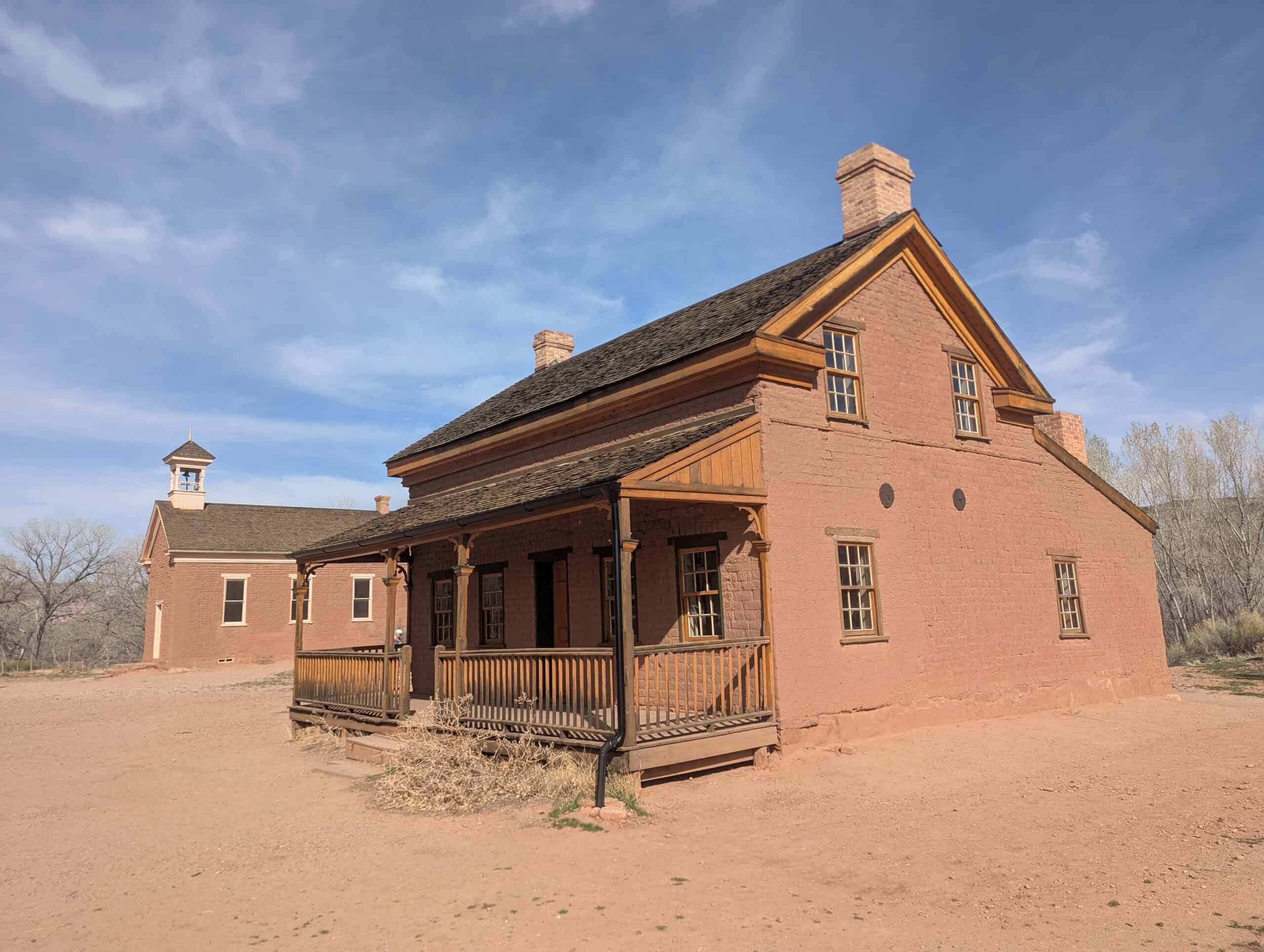
Just a short drive from the towering cliffs and winding canyons of Zion National Park, Grafton Ghost Town offers a glimpse into Utah’s pioneer past. Founded in the mid-1800s, this small settlement once thrived despite harsh conditions, only to be gradually abandoned as families moved on to more accessible locations. Today, Grafton’s weathered homes, historic church, and open fields tell the story of a determined community that carved out a life in the rugged Utah desert. The town’s cinematic charm has also made it a favorite among filmmakers, offering stunning backdrops framed by red-rock cliffs and wide skies. Whether you’re drawn by history, scenery, or a touch of the eerie, Grafton makes for a memorable short excursion southwest of Zion. We put together this Grafton Ghost Town Visiting Guide to help you plan your visit and get the most out of your time here.
Grafton Ghost Town – At a Glance
Historic Buildings & Church – The heart of Grafton lies in its preserved 19th-century structures, including the iconic Grafton Church. Wander among the weathered homes, barns, and fences to step back in time and imagine life for the pioneers who settled here. It’s a compact, easily walkable site that offers a strong sense of history in a stunning desert setting.
Photography & Scenic Views – Surrounded by red rock cliffs and open fields, Grafton provides dramatic, cinematic landscapes that have attracted filmmakers and photographers for decades. Early morning or late afternoon light highlights the textures and colors of the old buildings against the desert backdrop, making it a must-stop for photographers.
Compact Exploration – While small, Grafton rewards slow exploration. Meander between the remaining homesteads, peek inside the restored church, and take in panoramic views of the Virgin River Valley.


Disclosure: This page (Grafton Ghost Town – A Utah Visiting Guide) may contain product affiliate links. At no additional cost to you, we may receive a commission for purchases made through these links. More details can be found on our disclosure and policies page.
Grafton Ghost Town: Location, Map, and How to Get There
Grafton Ghost Town is nestled in southern Utah, just west of the Virgin River and a few miles south of the town of Rockville. It sits in a quiet, wide-open valley framed by towering red cliffs and mesas, offering dramatic views and a sense of isolation that has helped preserve its historic buildings. The ghost town is approximately 7 miles from Springdale—the gateway town to Zion National Park—making it a convenient side trip for visitors exploring the park or traveling along the scenic Highway 9 (US-9) corridor.
From Springdale / US-9
- Head south on Highway 9 (US-9), the main road through Springdale, which turns west towards Rockville.
- Once in Rockville, a few miles from Springdale, you’ll see signs for the Virgin River and Grafton. Turn left on Bridge Rd, which leads to the historic single-lane Rockville Bridge*.
- After crossing the bridge, take the first right on 250 Street, a narrow but mostly paved road. Follow this street, which eventually becomes West Grafton Road, all the way to the Grafton Ghost Town.
- The last mile or so of the road is a bumpy gravel road. The road is suitable for most vehicles in dry conditions, but drive cautiously, especially after rain, when the gravel can get slick.
*The Rockville Bridge was built for the National Park Service in 1924 to provide a link between Zion National Park and the North Rim area of Grand Canyon National Park. Tourists could arrive by train at the Grand Canyon and take a daily bus service on a loop tour to Bryce Canyon, then on to Zion National Park with a return trip to the Grand Canyon by way of the Rockville Bridge. Unfortunately, its intended use was quickly superseded in 1928 when the construction of the Zion-Mount Carmel Highway was finished, which offered a more direct and easier route.
Vehicle considerations: Most sedans and SUVs can make the drive, but drive slowly on the gravel section. High-clearance or 4WD is not required in dry weather.
If you need to book a rental vehicle for your hiking excursion, we highly recommend using Discover Cars to get the best rates on your rental in Utah, Nevada and Arizona.
We also highly recommend Airalo (eSIM card) for your connectivity needs when travelling abroad. Airalo is the world’s first and largest eSIM store with eSIM plans for 200+ countries and regions worldwide.
Grafton Ghost Town – Parking, Access and Costs
There isn’t a specific parking lot, but there are usually lots of spaces along the side of the road where it ends (link to Google Maps). It’s best to do a U-turn at the end of the road and park along the eastern side to make it easier to depart. Parking here is free.
Overnight parking or camping is prohibited.
There are no entrance fees, and the site is open year-round, making it an accessible stop for anyone exploring southern Utah.
Grafton Ghost Town – A Brief History
Grafton was founded in 1859 by Mormon settlers as part of the westward expansion into southern Utah. The pioneers established a small farming community along the Virgin River, hoping the fertile soil and reliable water source would sustain their crops. Life was difficult, however: harsh winters, occasional flooding, and the isolation of the area made survival a constant challenge.
Despite these obstacles, Grafton thrived for a few decades, reaching its peak population of roughly 200 residents in the late 1880s. During this period, the town built a modest schoolhouse, a general store, and the iconic Grafton Church, which remains the centerpiece of the ghost town today. The community worked together to maintain irrigation canals, tend to livestock, and support one another in a landscape that could be as unforgiving as it was beautiful.
By the early 20th century, however, many residents suffered loss of farmland due to repeated flooding of the valley, and began relocating to nearby towns like Rockville and Hurricane, where farming, access to markets, schools, and medical care were easier. Hurricane became particularly appealing when the hurricane canal was finished. Gradually, Grafton was abandoned, and by the 1940s it was largely deserted.
Despite its decline, Grafton remained remarkably intact. Many of the original buildings survived due to the arid climate and the care of descendants and local preservation efforts. The town began to attract tourists and photographers in the 1960s and 1970s, drawn by its preserved pioneer buildings and cinematic landscapes. Today, it stands as one of the best-preserved ghost towns in Utah, thanks to the Grafton Heritage Partnership Project, offering a tangible window into pioneer life in the Virgin River Valley.
Grafton has also gained recognition in popular culture. Its scenic landscapes and historic buildings have appeared in several films and photography projects, including the famous Butch Cassidy and the Sundance Kid, cementing its status as both a historical site and a visual landmark.
Visiting Grafton Ghost Town – What to Expect
Grafton Ghost Town is small and compact, and not much walking is required to explore the site. At its peak, the town once had around 30 structures, but today only five buildings remain, all located within a fenced-in area that is free to explore and easy to navigate.
One of the most photogenic buildings is the town church, which also served as Grafton’s schoolhouse. Built in 1886, the building played multiple roles in the community, functioning not only as a place of worship and education but also as a dance hall and gathering space. Apparently, people would come from all the settlements on the Upper Virgin River to attend the community dances held on weekends. Regarding the building’s schoolhouse role, the final classes were held in 1919, after which the school closed due to the town’s steadily declining population.
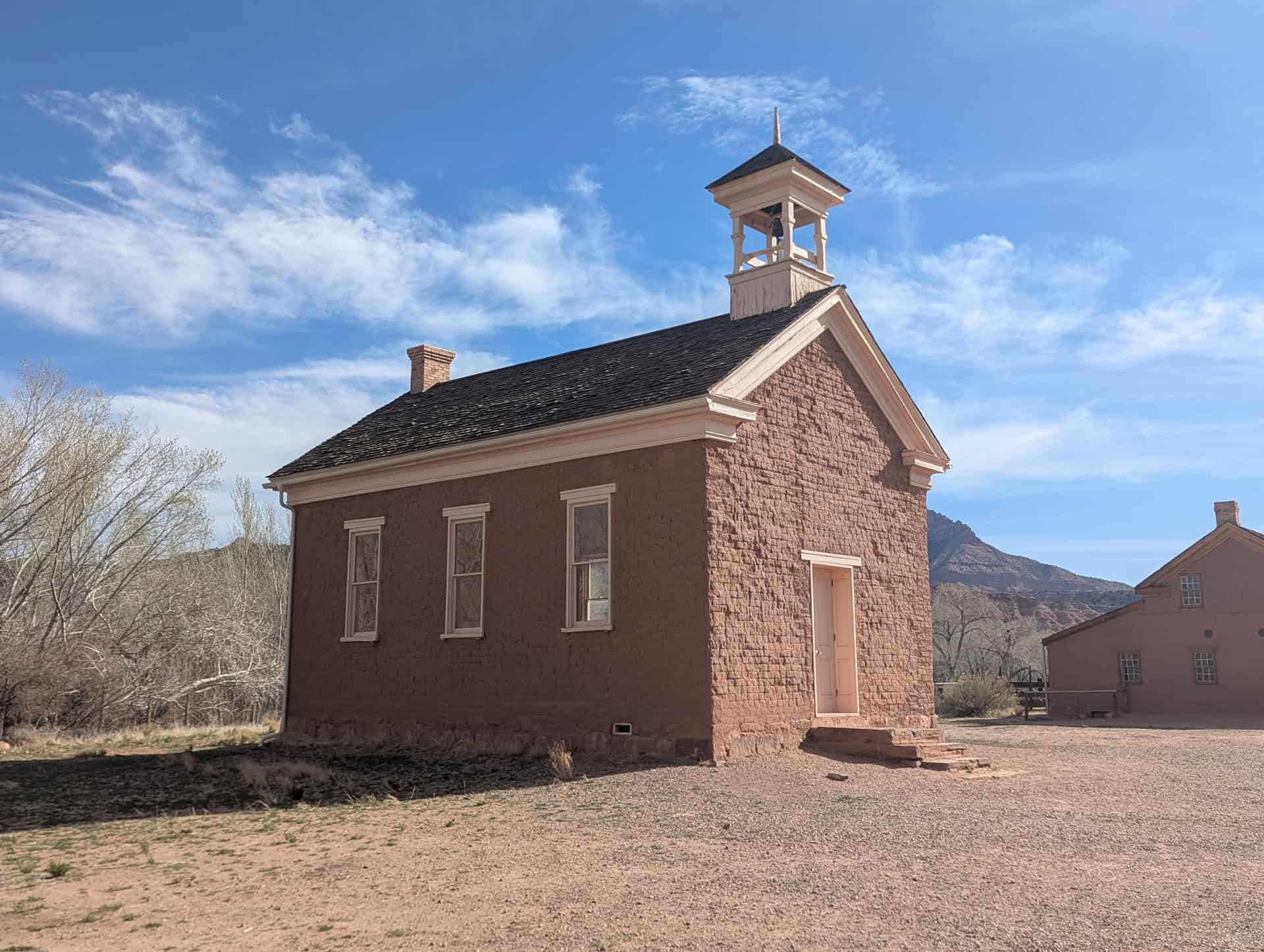
The two-story schoolhouse stands as a testament to the settlers’ remarkable craftsmanship and determination. Its sturdy walls rest on a solid foundation of lava rock quarried from the nearby hillside, while the colored adobe bricks were hand-made from clay dug at the west end of town. Even more impressive, the timber used for the structure was cut on Mount Trumbull, nearly 75 miles away, then hauled across the Arizona Strip and lowered down steep canyon cliffs along the rugged wood road near the cemetery.
Beyond the schoolhouse, the Alonzo Russell Home is the largest remaining structure in Grafton. Dating back to 1862, Alonzo Russell lived here until he died in 1910, after which his son Frank (one of his 23 children!) purchased the home for the grand total of $200 and a cow. Frank and Mary Ellen Ballard Russell moved into the house in 1917 and lived there until they moved to St. George in 1944. They were some of the last residents to leave Grafton.


Directly across the “street” sits the modest home of Louisa Marie Russell, Alonzo’s 4th wife, which he built for her between 1873 and 1879.
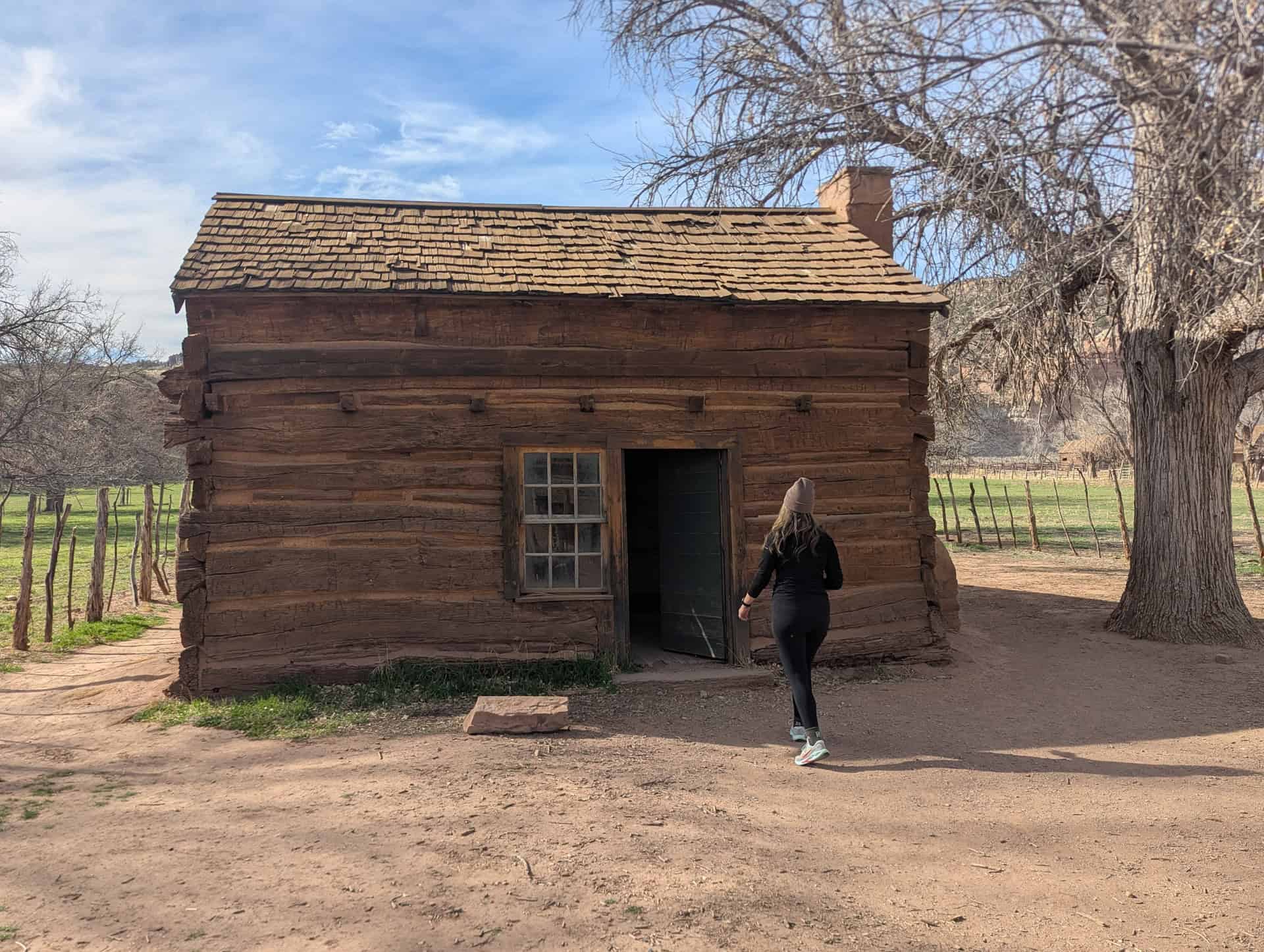
Most of the remaining buildings are open and empty, allowing visitors to wander inside and explore at their own pace. Some interiors are bare, revealing wooden floors, adobe walls, and the simple layouts typical of pioneer homes. Others include informational displays that provide insight into the families who lived here, daily life in the settlement, and the challenges residents faced in this remote valley.
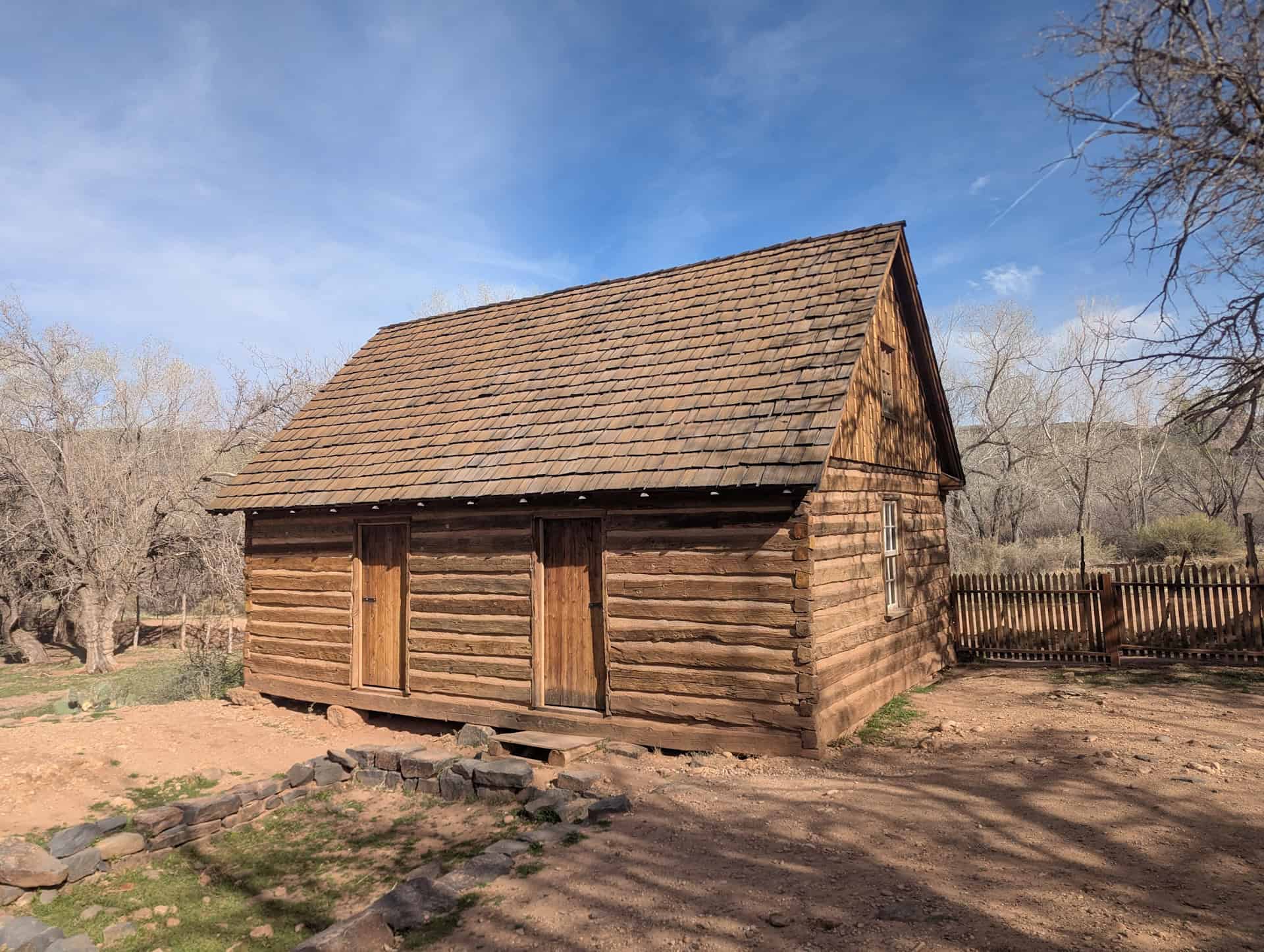
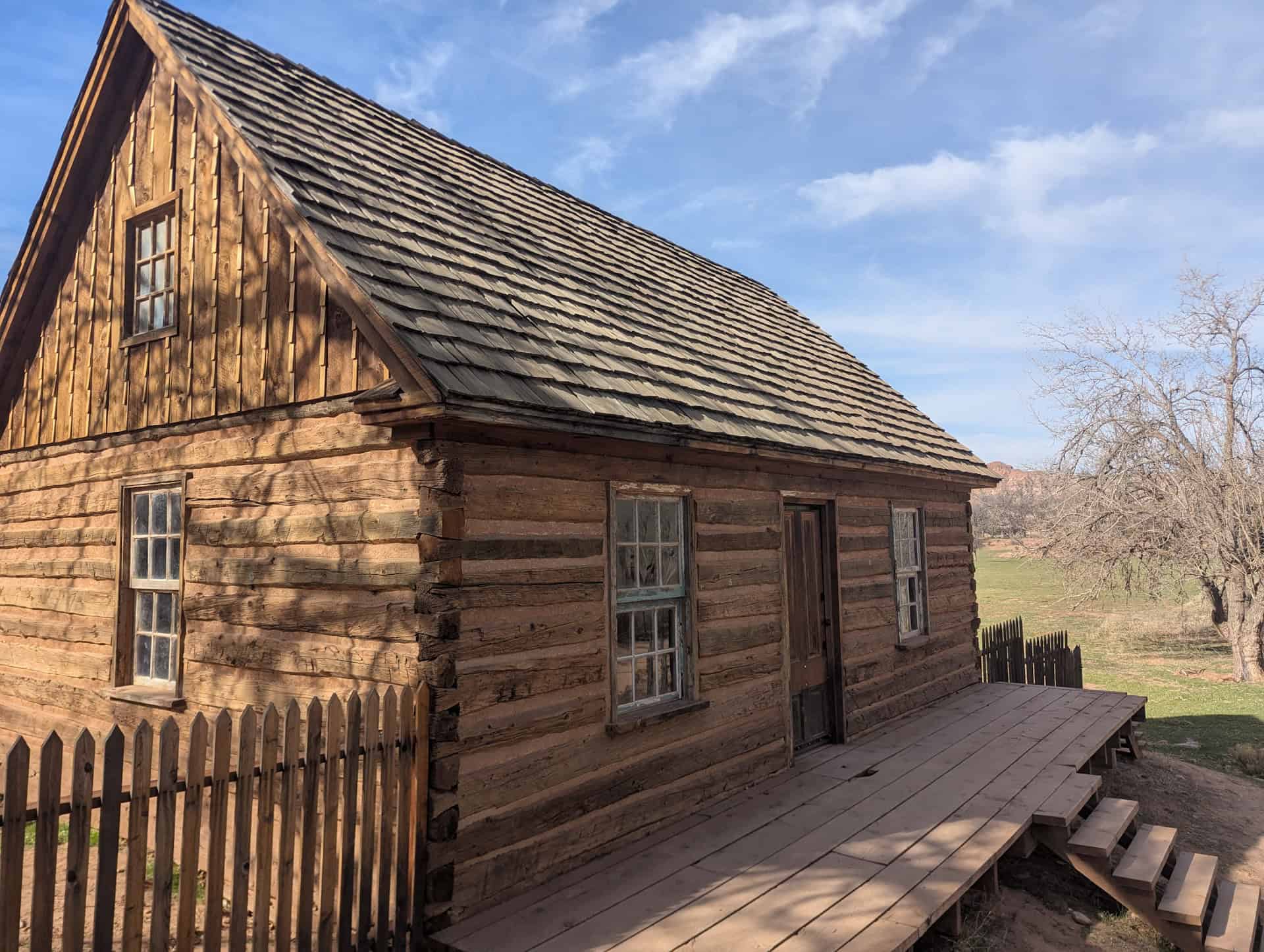


As you walk through the site, small details bring the town’s history to life: old stone walls, rusted farm equipment, and hand-hewn beams scattered throughout the property. The surrounding scenery is equally compelling, with open fields and wide views of the Virgin River Valley framed by red rock cliffs.
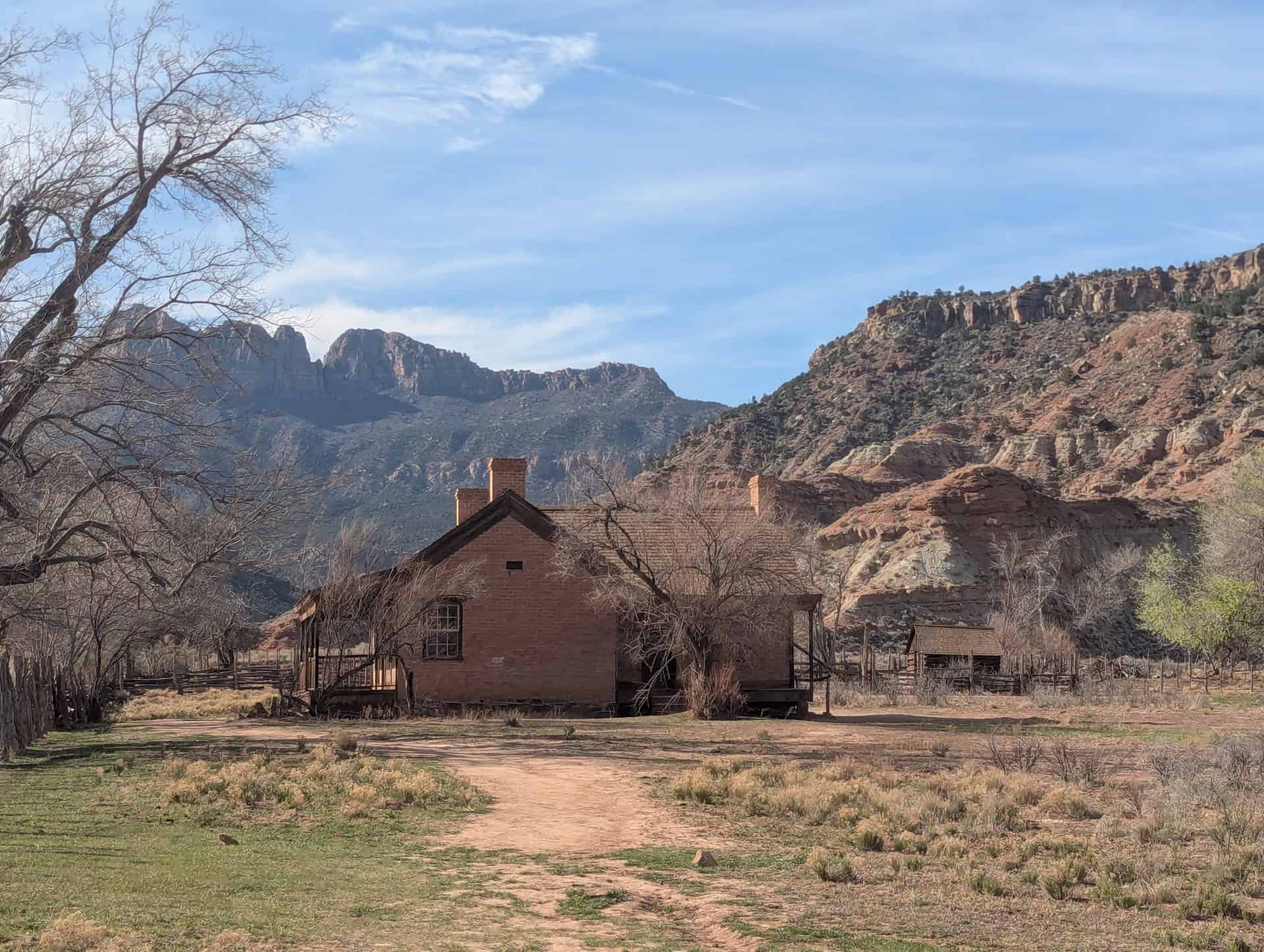


An old tractor resting in a nearby field beside the Russell home slowly rusts away, a quiet tribute to the Mormon settlers who once worked the land here. While Grafton sits on private property, visitors are welcome to explore respectfully, making it a rare opportunity to experience a preserved piece of Utah’s pioneer history up close.
Grafton Cemetery
The Grafton Cemetery is located a short distance from the main cluster of buildings: you’ll pass it on your way to and from the ghost town. The cemetery contains the graves of some of Grafton’s early settlers, including members of the Russell family, whose homes still stand in the town below. Several headstones date back to the late 1800s and mark the hardships faced by the community, including graves of children and entire families, a sombre reminder of the challenges of frontier life.
More than just a burial site, the cemetery represents the human cost of pioneer settlement in southern Utah. It adds important context to the preserved buildings in the ghost town.
How Long Do You Need to Visit Grafton Ghost Town?
Most visitors spend 30 minutes to an hour exploring Grafton. The site is small and easily walkable, but taking time to wander inside buildings, read the historical displays, and photograph the surrounding scenery can extend your visit.
Best Time to Visit Grafton Ghost Town
Spring (March–May): Mild temperatures and blooming desert vegetation make this a pleasant time for exploration. Early spring can be especially beautiful with bright green grasses contrasting with the red cliffs.
Summer (June–August): Days can be hot, with temperatures often exceeding 90°F (32°C). Visit early in the morning or late afternoon to avoid the heat and harsh sunlight.
Fall (September–November): Cooler temperatures and crisp air make fall one of the most comfortable times to visit. Light conditions in the late afternoon also highlight the textures and colors of the buildings and surrounding cliffs.
Winter (December–February): Winters are generally mild, though nights can be cold. Snow is rare but possible. Fewer visitors make for a quiet, almost solitary experience. Be cautious on gravel roads if icy or wet conditions occur.
Tips for Visiting Grafton Ghost Town
Footwear & Safety: Wear sturdy shoes for walking on gravel, dirt paths, and inside old buildings. Some floors are uneven, and watch your step on stairways and threshold boards.
Respect the Site: Many buildings are fragile. Do not remove artifacts or climb on unstable structures. Stay on marked paths when possible.
Photography: Early morning or late afternoon provides the best lighting. Wide-angle shots capture both the historic buildings and the dramatic cliffs in the background.
Weather Preparedness: Bring water and sun protection in summer; layers are recommended in spring, fall, or winter, when temperatures can swing dramatically.
Nearby Stops
There isn’t a ton to see in the nearby vicinity of the Grafton Ghost Town other than, of course, the crown jewel of the area, Zion National Park.
Zion National Park
Zion offers an incredible range of hikes, from gentle riverside walks to steep canyon ascents. While world-famous routes like The Narrows and Angels Landing draw the biggest crowds, some of our favorite trails lie slightly off the main tourist radar yet deliver equally unforgettable views. Routes such as Observation Point, and sections of the West Rim Trail give you wide-open panoramas, quieter stretches of trail, and a stronger sense of Zion’s wild side, all without the shoulder-to-shoulder congestion that can define the park’s most popular routes.


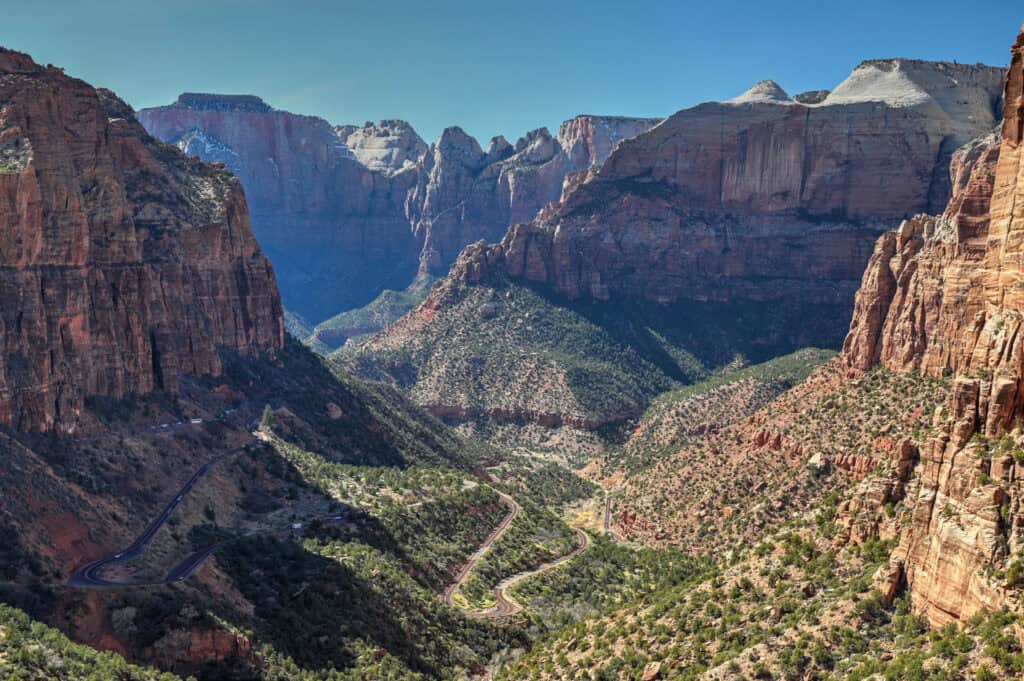
For more information and planning tips, see our detailed guide on visiting Zion National Park.
Grafton Ghost Town – Frequently Asked Questions (FAQ)
Is the Grafton Ghost Town worth it?
Yes, Grafton Ghost Town is absolutely worth visiting, especially if you’re already exploring Zion National Park or driving through southern Utah. It’s one of the best-preserved ghost towns in the state, easy to access, free to visit, and compact enough to explore in under an hour. The combination of historic buildings, scenic red-rock surroundings, and peaceful atmosphere makes it a rewarding stop for history lovers, photographers, and road-trippers alike.
Where is the Grafton Ghost Town?
Grafton Ghost Town is located in southern Utah, just outside the town of Rockville and about 7 miles from Springdale, the main gateway to Zion National Park. It sits in a quiet valley near the Virgin River, accessed via a short drive off Highway 9 (US-9), followed by a gravel road.
How much is the Grafton Ghost Town?
There is no entrance fee to visit Grafton Ghost Town. Parking is free, and the site is open year-round. Visitors are welcome to explore the buildings and grounds at their own pace, as long as they do so respectfully.
How long do you need at the Grafton Ghost Town?
Most visitors spend 30 minutes to one hour at Grafton Ghost Town. That’s enough time to walk through the site, explore the buildings, read the informational signs, and take photos. If you also visit the nearby cemetery or linger for photography, you may want to allow a little extra time.
Is the Grafton Ghost Town really haunted?
Grafton Ghost Town has a reputation for being haunted and is often listed among Utah’s most haunted locations. Stories range from unexplained sounds and shadowy figures to a lingering presence at the cemetery. While there’s no scientific evidence to support these claims, the town’s quiet setting, abandoned buildings, and tragic history certainly add to its eerie reputation. Whether you believe the stories or not, Grafton’s atmosphere makes it an intriguing place to explore.
Can you go inside the buildings at Grafton Ghost Town?
Yes. Most of the remaining buildings are open to the public, and visitors are allowed to walk inside and explore, as long as they are careful and respectful of the historic structures.
Is Grafton Ghost Town suitable for kids?
Yes, Grafton is family-friendly. The site is easy to walk and educational, though parents should supervise children around uneven floors and old structures.
Do you need a 4WD vehicle to visit Grafton Ghost Town?
No. In dry conditions, most standard sedans and SUVs can reach Grafton without issue. The final stretch of road is gravel, so driving slowly is recommended.
Explore More Utah Roadtrip Guides
Continue exploring Utah with these detailed guides:
Best Stops and Attractions Between Vegas and Zion
Best Stops and Attractions Between Bryce and Moab
Best Stops and Attractions Between Moab and Monument Valley
Snow Canyon State Park Guide
Valley of Fire State Park Guide
Photography Gear
If you like our photography, you might be interested in some of the gear we use to shoot our travel and hiking destinations.
Camera Body – Nikon Z 6ii Fx-series Mirrorless Body
Main Lens – NIKON 24-120mm F/4G ED VR AF-S
Zoom Lens – Sigma 745-306 150-600mm f/5-6.3
Polarizing filters – Urth Circular Polarizing (CPL)
Camera Tripod – K&F Concept 64-inch Camera Tripod
Mini-tripod – Lammcou Flexible Camera Tripod
Camera/hiking backpack – Vanguard Alta Rise 48 Backpack
Universal Travel Adapter – VYLEE Universal International Power Travel Plug
Other Travel Essentials
Travel Insurance
SafetyWing is a travel insurance company that offers comprehensive coverage for travellers. Includes Medical Insurance and Travel Insurance. Primarily geared towards long-term travellers, digital nomads, and expats.
e-Sim cards
Airalo is the world’s first and largest eSIM store with eSIM plans for 200+ countries and regions worldwide. With Airalo eSIMs, travellers can get connected the moment they land at their destination and avoid nasty data roaming charges
eSIMS are a sustainable alternative to single-use SIM cards – they are 100% digital, require less energy to produce and be re-used rather than disposed of.
Car Rentals
Discover Cars is our go-to website for car rentals. We almost always find our preferred rate there.
Transfer from Airport
Welcome Pickups is our favourite private transfer service, which you can pre-book at a fixed price. Currently available in 220 cities all over the world (mostly in Europe, but with several major cities in Asia, the Middle East and the US).
Kiwitaxi is another private transfer service – we haven’t tried it yet, but it’s currently available in a few more countries (102 as of 2024).
Hotels and Accommodations (coming soon)
Photography Prints
If you found this blog useful, you can help support our blog by purchasing low-cost digital prints. Printed physical prints are also available for purchase.


—–
Well, that wraps it up! We hope you enjoyed our Utah Travel Guide on the Grafton Ghost Town and that it will prove useful for planning your trip.
—–
You might also be interested in these related pages: