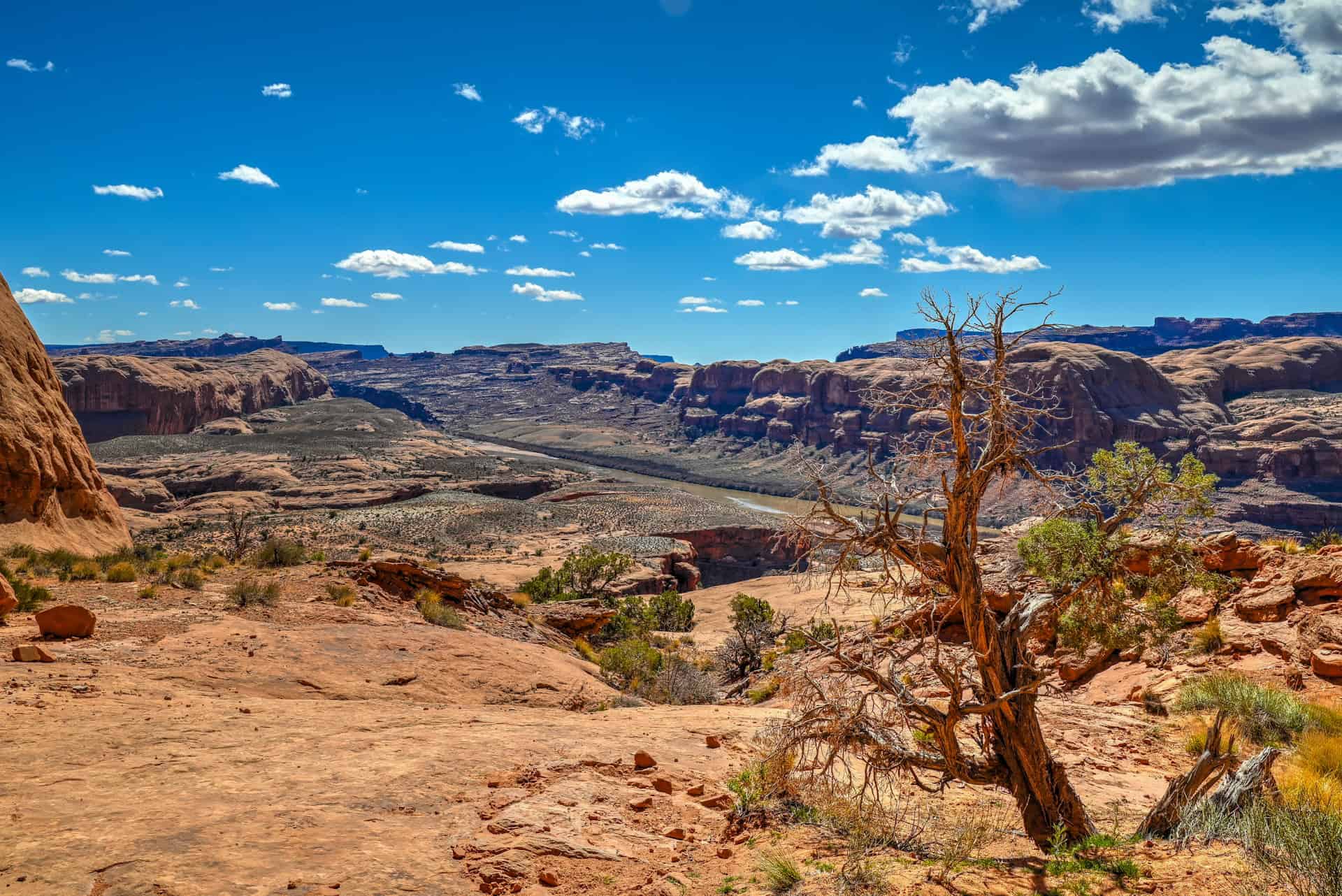
Moab, Utah, is one of the best hiking destinations in the American Southwest. Surrounded by two national parks, a state park, and vast areas of public land managed by the Bureau of Land Management (BLM), the region offers an incredible variety of trails from short walks to iconic arches to panoramic viewpoints overlooking the Colorado River.
This guide highlights the most rewarding hikes around Moab, including trails in Arches National Park, Canyonlands National Park, and nearby desert landscapes. Some hikes lead directly to the region’s famous arches, while others climb to sweeping canyon overlooks or wind through quiet sandstone formations far from the crowds.
Because Moab sits at the center of so many hiking areas, many visitors spend several days exploring the surrounding parks and trails. The hikes listed here represent, in our view, the best combination of scenery, accessibility, and overall experience. They are grouped by location: inside Arches National Park, in the Island in the Sky district of Canyonlands, and on surrounding BLM land near Moab.
Moab’s Best Hiking Trails – At a Glance
Moab is one of the best hiking hubs in the American Southwest. Within a short drive of town, you’ll find trails leading to iconic sandstone arches, sweeping canyon overlooks, and quieter desert landscapes spread across several different areas.
Many visitors focus on Arches National Park, but excellent hikes can also be found in Canyonlands National Park and on nearby BLM land surrounding Moab.
Arches National Park – Home to some of the region’s most famous hikes. Highlights include Delicate Arch, the park’s most iconic trail, Devil’s Garden, which links several arches along a sandstone ridge, and the Windows Section, where short trails lead to some of the park’s most impressive formations.
Canyonlands National Park (Island in the Sky) – Just 40 minutes from Moab, this district offers spectacular canyon viewpoints. Short hikes such as Mesa Arch, Grand View Point, and White Rim Overlook provide sweeping views over the Colorado River and the vast canyon landscape below.
Hikes Outside the National Parks (BLM Land) – Moab is surrounded by public lands managed by the Bureau of Land Management. Trails like Corona Arch, Pinto Arch, and the Stairmaster Trail offer excellent desert scenery without park entrance fees and often with fewer crowds.
In the sections below, we’ll look at these hikes in more detail and explain how they fit into a typical Moab itinerary.


Disclosure: This page (Best Hiking Trails around Moab) may contain product affiliate links. At no additional cost to you, we may receive a commission for purchases made through these links. More details can be found on our disclosure and policies page.
Moab: Location, Map, and How to Get There
Moab is located in eastern Utah, along U.S. Highway 191, near the Colorado River. The town sits at the center of one of the most scenic regions in the American Southwest and serves as the main gateway for visitors exploring Arches National Park, Canyonlands National Park, and several nearby desert hiking areas.
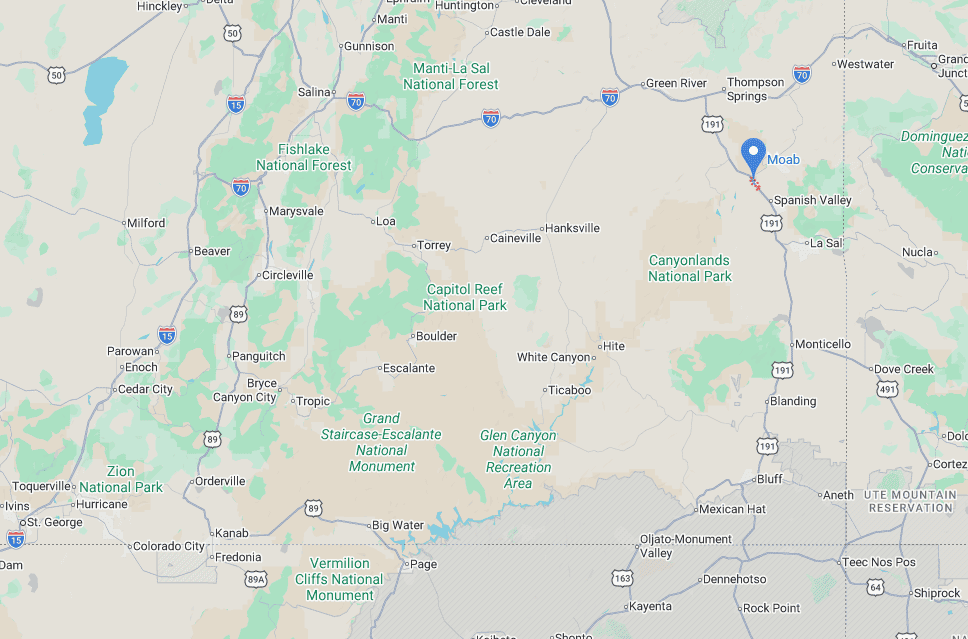
Because Moab lies directly along a major north–south highway, it is relatively easy to reach by car. Most visitors arrive via U.S. Highway 191, which connects Moab with Interstate 70 to the north and with Monument Valley and Arizona destinations to the south.
From Moab, the entrance to Arches National Park is just 5 miles (8 km) north of town, while the Island in the Sky district of Canyonlands National Park can be reached in about 40 minutes via UT-313.
Despite its remote desert setting, Moab fits naturally into many Utah road trip itineraries, especially when combined with destinations such as Capitol Reef, Bryce Canyon, Monument Valley, or Zion National Park.
Driving times to Moab
- Canyonlands National Park (Island in the Sky District): 50 km / 30 mi – about 40 minutes
- Capitol Reef National Park: 230 km / 145 mi – about 2.5 hours
- Zion National Park: 500 km / 310 mi – about 5 hours
- Salt Lake City: 740 km / 460 mi – about 6.5–7 hours
- Las Vegas: 430 km / 270 mi – about 4.5 hours
These times assume clear weather and normal traffic conditions.
If you need to book a rental vehicle for your hiking excursion, we highly recommend using Discover Cars to get the best rates on your rental in Utah, Nevada, and Arizona.
We also highly recommend Airalo (eSIM card) for your connectivity needs when travelling abroad. Airalo is the world’s first and largest eSIM store with eSIM plans for 200+ countries and regions worldwide.
Best Hiking Trails in Arches National Park
1. Delicate Arch
If there’s one hike that defines Arches National Park, it’s Delicate Arch. The trail climbs steadily across open slickrock before reaching Utah’s most iconic freestanding arch, dramatically framed against the La Sal Mountains in the distance. Unlike many arches in the park that can be seen from roadside viewpoints or after a short walk, Delicate Arch must be earned on foot by steadily climbing across open slickrock, making the final reveal feel especially memorable. Standing beneath the arch, with the surrounding desert landscape stretching for miles, is one of the most recognizable experiences in the American Southwest.


Why it’s a great hike:
The combination of a steady climb, open slickrock terrain, and a dramatic final reveal makes this one of the most rewarding hikes in the park. The setting around the arch is wide and open, giving it a sense of scale that’s hard to match elsewhere in Arches.
Location: Mid-park, short detour from the main Arches scenic drive
Difficulty: Moderate (steady elevation gain across exposed slickrock)
Entrance fee: Included with Arches National Park entry
Reservation required: No timed-entry reservation currently required (as of 2026), though parking can fill early
Potential drawback: Crowds can be significant, especially near sunset, when many visitors gather at the arch to watch the changing light.
For detailed trail information, route descriptions, and photos, see our Delicate Arch Hiking Guide.
2. Devil’s Garden Trail
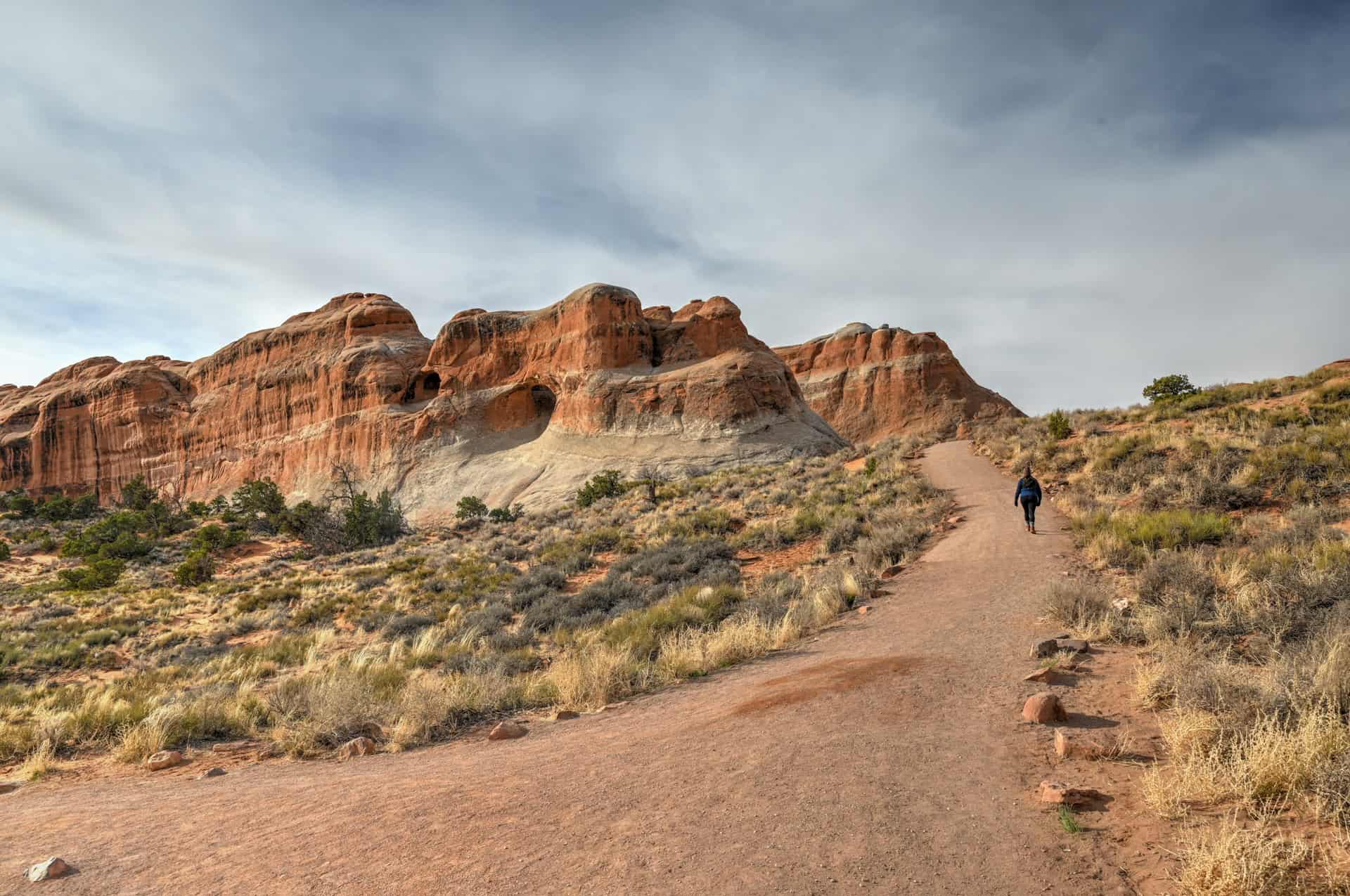
Devil’s Garden is the longest and most varied hike in Arches National Park, linking several arches across a rugged sandstone ridge in the northern part of the park. The trail begins as a relatively easy walk to Landscape Arch, one of the longest natural arches in the world, before continuing across narrow rock fins and sandstone ledges toward more remote formations such as Double O Arch. Because the route passes multiple arches along the way, it offers one of the most diverse hiking experiences in the park.


Why it’s a great hike:
This is one of the few hikes in Arches that can be tailored to your level. The easy first section delivers one of the park’s most impressive arches, while continuing beyond adds more variety, fewer crowds, and a more adventurous feel across slickrock fins and ridges.
Location: End of the Arches Scenic Drive (Devil’s Garden Trailhead)
Difficulty: Easy to Landscape Arch; moderately challenging beyond
Entrance fee: Included with Arches National Park entry
Reservation required: No reservations required for hiking
Potential drawback: The full trail requires some light scrambling and navigation across exposed rock sections, which can feel challenging for less experienced hikers (but might also be very appealing to experienced hikers). The trailhead parking lot also fills quickly during peak hours.
For detailed trail information, route descriptions, and photos, see our Devil’s Garden Hiking Guide.
3. Windows Section & Double Arch
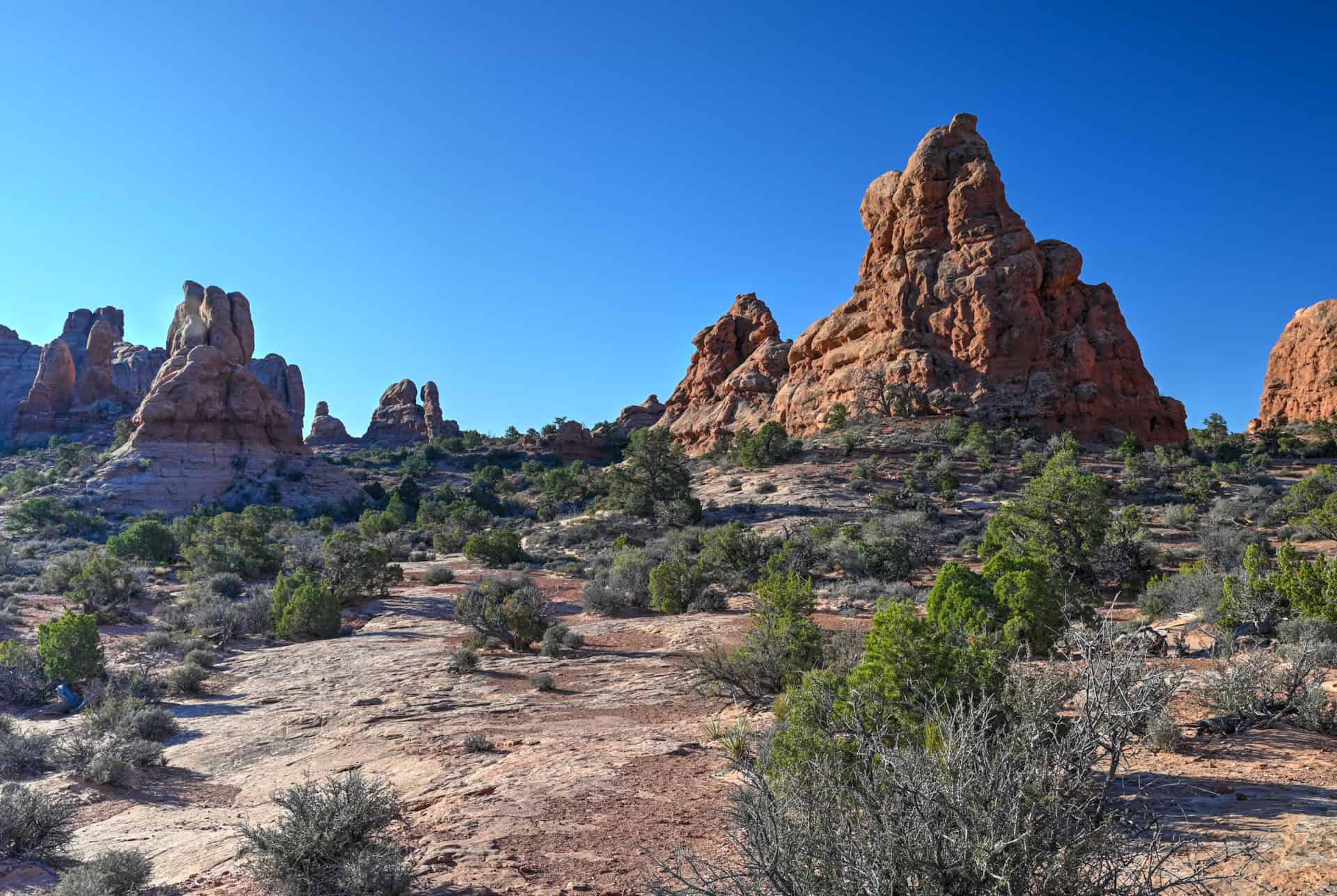
The Windows Section is one of the most accessible and visually impressive areas in Arches National Park, where several large arches are clustered within a short walking distance. A short trail leads to North Window, South Window, and Turret Arch, while nearby Double Arch towers dramatically overhead with two massive spans carved into the same rock formation.
Although the trails are short, the scale of the arches and the open desert setting make this one of the most rewarding stops in the park. Visitors can also follow a short primitive trail loop around the Windows formations for additional viewpoints and a quieter perspective away from the main path.


Why it’s a great hike:
Few places in Arches offer this much variety in such a short distance. You can stand beneath multiple large arches, explore different angles, and still complete the entire area in under an hour, making it one of the most efficient ways to experience the park.
Location: Windows Section, short detour from the main Arches Scenic Drive
Difficulty: Easy (short trails with some steps and uneven terrain)
Entrance fee: Included with Arches National Park entry
Reservation required: No reservations required
Potential drawback: Because of its easy access and proximity to the main park road, this area is one of the busiest stops in Arches, especially between late morning and mid-afternoon.
For more detailed trail descriptions and route options, see our Windows & Double Arch Hiking Guide.
Hiking in Canyonlands National Park (Island in the Sky)
4. Mesa Arch
Mesa Arch is one of the most famous viewpoints in Canyonlands’ Island in the Sky district, and one of the most photographed arches in the American Southwest. A short trail leads to the arch perched directly on the canyon rim, framing sweeping views over the Colorado River canyon and the distant La Sal Mountains.


Why it’s a great hike:
Few hikes deliver such a dramatic viewpoint with so little effort. The arch’s position on the canyon edge creates a natural frame for the landscape, making it a more memorable location than most viewpoints.
Location: Island in the Sky district – near the middle of the scenic drive
Difficulty: Easy (short, mostly flat trail)
Entrance fee: Included with Canyonlands National Park entry
Reservation required: No reservations required
Potential drawback: Because of its popularity as a sunrise photography location, the trail can become very crowded early in the morning.
For more details on visiting this area of the park, see our Mesa Arch Trail Hiking Guide.
5. Grand View Point Trail
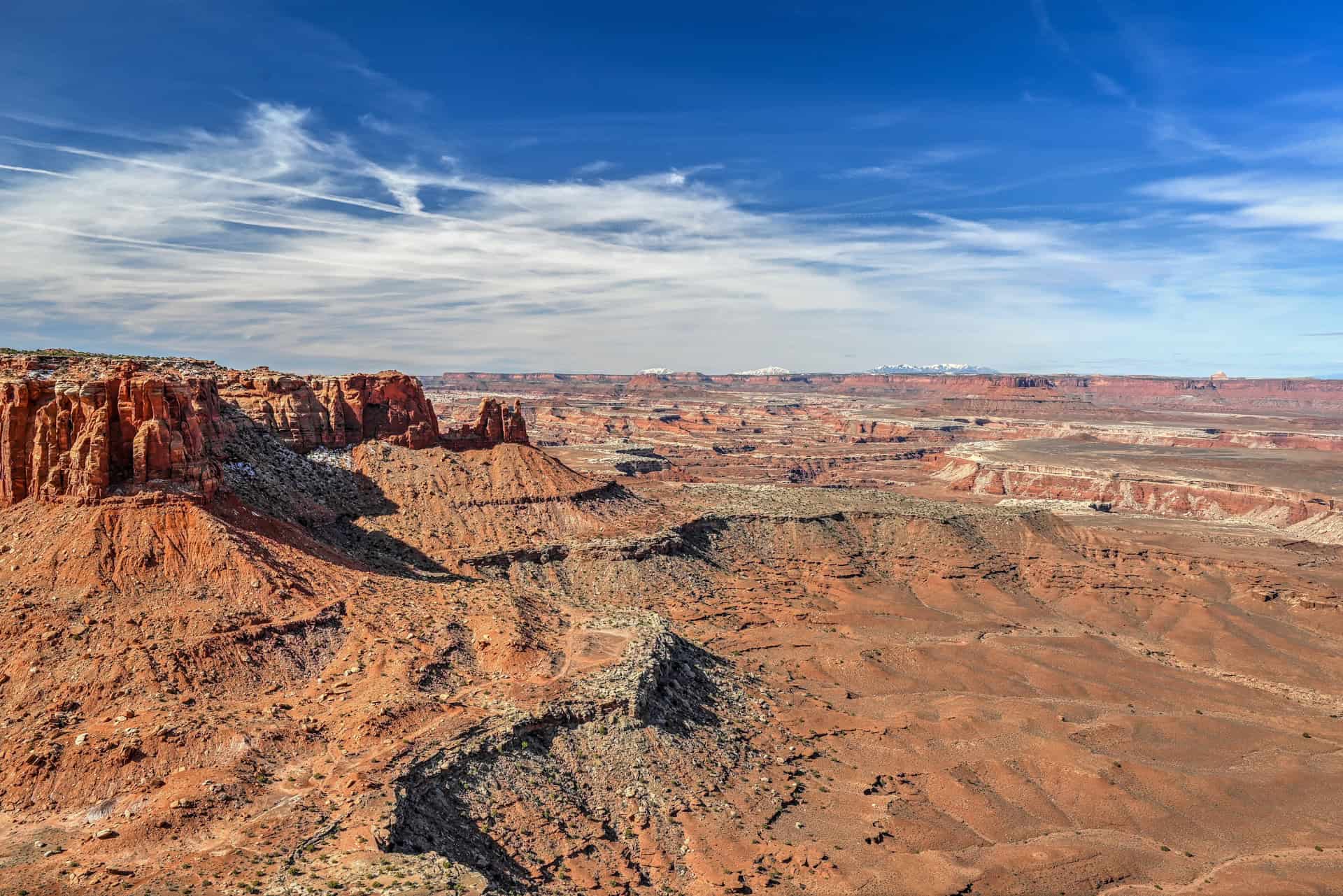
Grand View Point Trail is one of the best hikes in the Island in the Sky district of Canyonlands National Park, following the edge of a narrow mesa with sweeping views across the park’s vast canyon landscape. From the overlook near the trailhead, the scenery already feels immense, but walking farther along the rim reveals even broader perspectives over the Colorado River canyon, the White Rim sandstone bench, and the maze of deep canyons stretching across southeastern Utah.


Why it’s a great hike:
This is one of the few trails in the park where the views are continuous rather than concentrated in one spot. Walking along the rim gives you multiple perspectives into the canyon, making the experience feel more expansive and immersive than your standard Canyonlands roadside viewpoint.
Location: Island in the Sky district – at the end of the scenic drive
Difficulty: Easy (mostly flat)
Entrance fee: Included with Canyonlands National Park entry
Reservation required: No reservations required
Potential drawback: The trail is mostly exposed with little shade, and summer heat can make midday hiking uncomfortable.
For more trail details and pictures, see our Grand View Point Trail Hiking Guide.
6. White Rim Overlook Trail
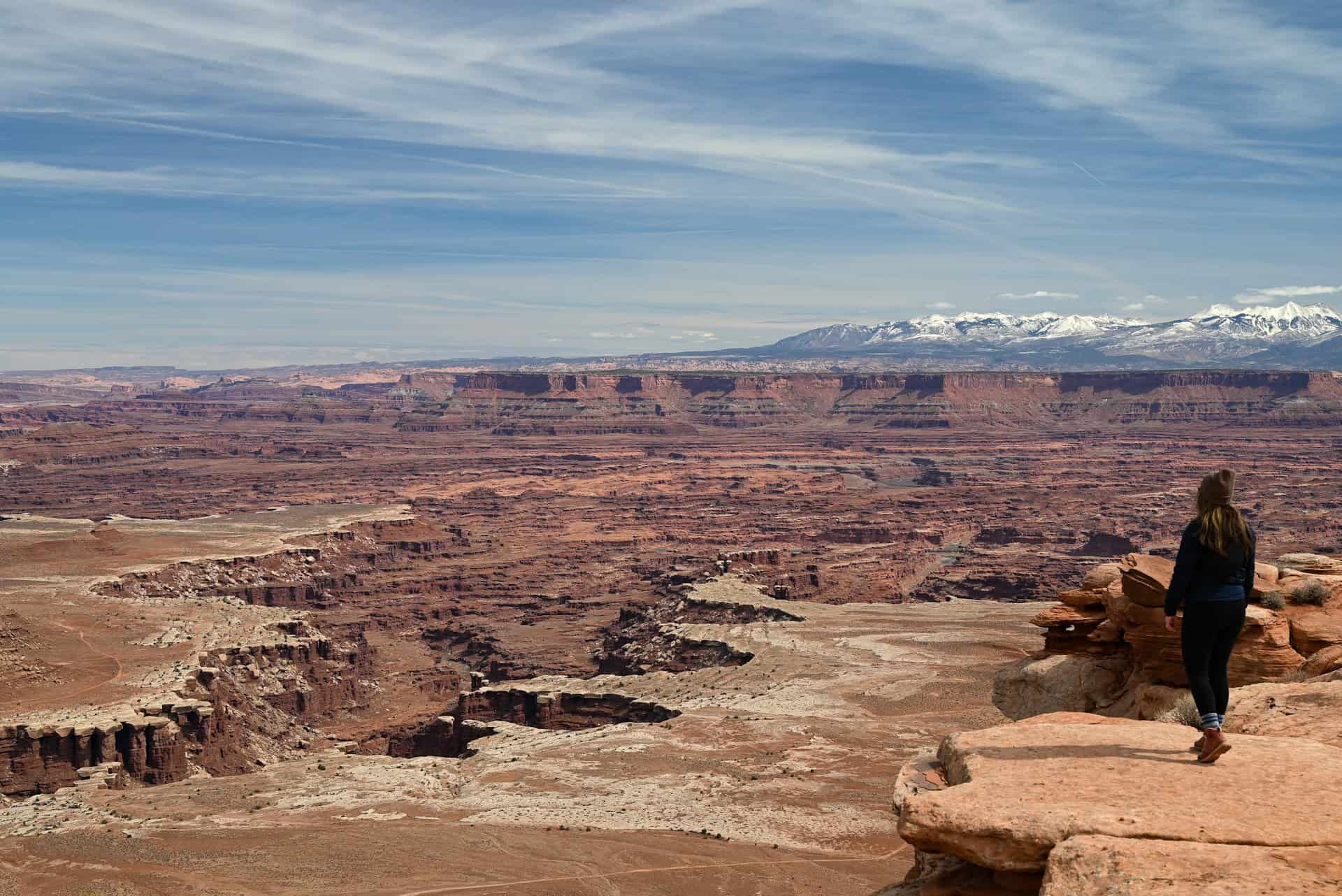
White Rim Overlook offers one of the most dramatic short hikes in the Island in the Sky district of Canyonlands National Park. The trail descends gradually across open slickrock and desert terrain before reaching a spectacular viewpoint above the White Rim sandstone bench and the deep canyon carved by the Colorado River far below.


Why it’s a great hike:
The gradual approach makes the final viewpoint feel more special. Compared to other stops in the park, this trail offers a quieter look into the canyon, with a stronger sense of depth as you look down onto the White Rim and the landscape below.
Location: Island in the Sky district – near the end of the scenic drive
Difficulty: Easy (most flat)
Entrance fee: Included with Canyonlands National Park entry
Reservation required: No reservations required
Potential drawback: There is very little shade along the trail, and the exposed desert terrain can feel extremely hot in summer.
For more details about exploring this area of the park, see our White Rim Trail Hiking Guide.
Hikes Outside the National Parks (BLM Land)
While Arches and Canyonlands attract most visitors to the Moab area, some of the region’s most rewarding hikes lie outside the national parks on public land managed by the Bureau of Land Management (BLM). These areas offer landscapes that feel just as dramatic as those inside the parks, often with fewer crowds and no park entrance fees.
Many of these trails are located along scenic routes near Moab, particularly the Colorado River Scenic Byway (UT-279) west of town. Because they sit outside the national park boundaries, they can be excellent alternatives when park parking lots are full or when you’re looking for a quieter desert hike.
Below are three of the most worthwhile hikes on BLM land near Moab.
7. Corona Arch
Corona Arch is one of the most impressive arches near Moab and one of the best hikes outside the national parks. The trail follows open desert terrain along the Colorado River Scenic Byway (UT-279) before climbing gradually across slickrock and sandstone ledges toward the massive arch. Along the way, hikers cross a short ladder section that adds a bit of fun to the route.
When the trail finally reaches Corona Arch, the scale of the formation becomes immediately apparent. Spanning nearly 140 feet (43 m), it is one of the largest arches in the Moab region and feels every bit as dramatic as many of the arches inside Arches National Park.


Why it’s a great hike:
This is one of the few hikes near Moab that combines a large, freestanding arch with a more engaging route. The mix of terrain, small obstacles like the ladder, and the absence of national park crowds make it feel more relaxed while still delivering a major landmark.
Location: Colorado River Scenic Byway (UT-279), about 20 minutes west of Moab
Difficulty: Easy to moderate (short climbs and slickrock sections)
Entrance fee: Free (BLM land)
Reservation required: No reservations required
Potential drawback: The trail is fully exposed with little shade, and the ladder and cable sections may feel uncomfortable for hikers with a strong fear of heights.
8. Pinto Arch
Pinto Arch is located along the same trail system as Corona Arch on the Colorado River Scenic Byway (UT-279) west of Moab. The hike begins from the same trailhead, and many visitors choose to combine the two arches in a single outing. However, Pinto Arch can also work well as a shorter alternative for those who want to avoid the ladder and cable sections found on the final approach to Corona Arch.
The trail crosses open slickrock and desert terrain before branching toward Pinto Arch, which sits high above the Colorado River corridor. While smaller and less famous than its neighbor, the arch still offers impressive views over the surrounding sandstone cliffs and river valley.


Why it’s a great hike:
Pinto Arch offers a quieter and slightly more elevated perspective than the main trail to Corona Arch, with wide views back toward the Colorado River. It also works well as a shorter option or as an add-on for those wanting a bit more distance without significantly increasing difficulty.
Location: Colorado River Scenic Byway (UT-279), about 20 minutes west of Moab (same trailhead as Corona Arch)
Difficulty: Easy to moderate
Entrance fee: Free (BLM land)
Reservation required: No reservations required
Potential drawback: The arch is smaller and less dramatic than the Corona Arch, so some visitors may prefer continuing the hike to the larger formation.
For more detailed trail descriptions and route options, see our Corona Arch & Pinto Arch Hiking Guide.
9. Stairmaster Trail
The Stairmaster Trail is a short but steep hike located on BLM land just outside Moab, offering expansive views over the town and the surrounding red rock landscape. The route climbs quickly across slickrock and rocky desert terrain, gaining elevation in a series of natural stone “steps” that give the trail its name.
The trail runs roughly parallel to sections of the Moab Rim Trail and Escalator route, which are popular with off-road vehicles and ATVs. As a result, hikers may occasionally see dune buggies and other vehicles navigating the rugged terrain nearby, an interesting contrast that highlights Moab’s reputation as a major off-roading destination. From the upper portions of the trail, the views open up across the Moab valley, the Colorado River corridor, and the distant La Sal Mountains, making the short climb well worth the effort.


Why it’s a great hike:
This is one of the most efficient ways to gain elevation near Moab. The steep, direct climb quickly rewards you with wide views over the valley, making it a great option if you’re looking for a short but physically engaging hike.
Location: BLM land south of Moab near the Moab Rim Trail area
Difficulty: Moderate (short but steep climb across slickrock)
Entrance fee: Free (BLM land)
Reservation required: No reservations required
Potential drawback: The trail is steep and fully exposed to the sun, and the proximity to off-road vehicle routes may detract slightly from the wilderness feel.
For more detailed trail descriptions and route options, see our Stairmaster Hiking Guide.
A Quick Stop at Dead Horse Point State Park
Just 45 minutes from Moab, Dead Horse Point State Park offers one of the most spectacular viewpoints in the entire region. Perched high above a dramatic bend in the Colorado River, the park provides sweeping views across the canyonlands landscape, with layered cliffs and mesas stretching for miles in every direction.
10. Dead Horse Point Rim Trail
While many visitors stop simply for the iconic overlook near the visitor center, several short trails explore the rim of the canyon. The Dead Horse Point Rim Trail connects multiple viewpoints along the edge of the plateau, offering expansive canyon views similar to those found in nearby Canyonlands National Park, but with easier access and typically smaller crowds. Because of its location along the same road that leads to the Island in the Sky district of Canyonlands, Dead Horse Point is easy to combine with other hikes in the area.


Why it’s a great hike:
This is one of the easiest ways to experience canyon views comparable to Canyonlands without committing to a longer hike. The rim trail offers continuous scenery with minimal effort, making it a great option to pair with other stops in the area.
Location: Dead Horse Point State Park, about 45 minutes northwest of Moab
Difficulty: Easy (mostly flat rim trails)
Entrance fee: State park fee required (separate from national park passes)
Reservation required: No reservations required
Potential drawback: The park’s rim trails are mostly flat and scenic rather than adventurous, so hikers looking for more challenging terrain may prefer trails inside Canyonlands or Arches.
For more details on viewpoints and trail options, see our Dead Horse Point State Park Guide.
Hiking Strategy for the Moab Area
Moab offers an unusually high concentration of hiking opportunities within a short driving distance. Because trails are spread across Arches National Park, Canyonlands National Park, and nearby BLM land, a little planning can help you avoid crowds, heat, and unnecessary driving.
Below are a few practical strategies that can help make the most of your time in the Moab area.
If You Only Have One Day
If your time is limited, the simplest strategy is to visit Arches National Park in the morning and Canyonlands in the afternoon.
Arches tends to experience the most congestion, especially at trailheads like Delicate Arch, the Windows Section, and Devil’s Garden, where parking fills quickly mid-morning. Starting the day here improves your chances of finding parking and hiking before the heat builds.
In the afternoon, you can drive to the Island in the Sky district of Canyonlands, where many of the best viewpoints and hikes, such as Mesa Arch, Grand View Point, and White Rim Overlook, are shorter and easier to combine during a single visit.
If You’re Spending Several Days in Moab
With more time, it often works best to visit the national parks early in the day, when temperatures are cooler, and lighting conditions are better for photography.
Many visitors choose to start with Arches in the morning to beat the crowds, while Canyonlands is especially rewarding at sunrise, particularly at Mesa Arch, where the rising sun illuminates the underside of the arch.
Afternoons can then be used for hikes on BLM land near Moab, such as Corona Arch or Stairmaster, which are often easier to access and less crowded than the national parks.
Combine Several Short Hikes in Arches
Many trails in Arches National Park are relatively short, making it easy to combine multiple hikes in a single outing. Visitors often pair Delicate Arch with stops at the Windows Section or explore several arches along the Devil’s Garden Trail during the same visit.
Avoid Midday Hiking in Summer
Moab sits in a high desert environment, and summer temperatures frequently exceed 100°F (38°C). Most trails offer very little shade, and exposed slickrock surfaces can become extremely hot. In summer, the best strategy is usually to hike early in the morning and again in the late afternoon, reserving the hottest part of the day for scenic drives or rest.
Plan One Sunset Hike
Lighting dramatically changes the desert landscape near Moab. Sunset at Delicate Arch is one of the most memorable experiences in the region, when the arch glows deep orange against the evening sky. It’s a popular time to visit, but the setting makes the crowds worthwhile.
Best Months for Hiking around Moab
Hiking around Moab is possible year-round, but conditions can vary dramatically depending on the season. The region sits in a high desert environment, where temperatures fluctuate widely, and most trails offer very little shade. Choosing the right season can make a significant difference in comfort and trail conditions.
Spring (March–May)
Spring is one of the best times to hike around Moab. Temperatures are generally mild, desert wildflowers occasionally bloom, and most trails are accessible.
Because this is also a peak travel season for Arches and Canyonlands National Parks, popular trailheads can become crowded, particularly during spring break and holiday weekends. Starting early in the morning is often the best way to avoid congestion.
Overall, spring offers some of the most comfortable hiking conditions of the year.
Summer (June–August)
Summer brings extremely hot temperatures, with daytime highs frequently exceeding 100°F (38°C). Because most Moab-area trails cross exposed slickrock and desert terrain, heat can become the biggest challenge for hikers.
If visiting during summer, the best strategy is to hike at sunrise or near sunset, when temperatures are cooler, and lighting is more dramatic. Midday is better reserved for scenic drives or indoor breaks in town.
Trails such as Mesa Arch, Delicate Arch, and Corona Arch can still be enjoyable in summer, but early starts are essential.
Fall (September–November)
Fall is widely considered the best overall season for hiking near Moab. Temperatures become more comfortable, summer crowds begin to decrease, and hiking conditions improve across the region.
Early fall can still be warm, but by October and November, the weather is often ideal for longer hikes such as the Devil’s Garden or Grand View Point Trail.
Winter (December–February)
Winter is the quietest season around Moab and can be a surprisingly pleasant time to hike. Daytime temperatures are often cool but manageable, and the parks are significantly less crowded.
Snow occasionally dusts the red rock formations, creating striking scenery. However, icy patches can form on shaded sections of slickrock trails, so proper footwear and caution are recommended.
Quick Summary: Best Time for Hiking Near Moab
For most visitors, spring and fall offer the best overall hiking conditions, with comfortable temperatures and reliable trail access. Summer can still be enjoyable with early starts, while winter provides quieter trails and unique desert scenery.
What Else to Do Around Moab
While hiking is one of the main reasons people visit Moab, the region offers many other activities and scenic experiences beyond the trails. From national park viewpoints to off-road adventures and scenic drives, there are plenty of ways to explore the landscape.
Explore More of Arches National Park


If you’re looking for additional hikes inside the park, see our Best Hiking Trails in Arches National Park guide, which covers several other routes beyond the ones listed here.
For a broader overview of the park, including scenic drives, viewpoints, and planning tips, see our Best Things to Do in Arches National Park guide.
Visit Canyonlands National Park (Island in the Sky)
The Island in the Sky district of Canyonlands National Park sits just 40 minutes from Moab and offers some of the most dramatic canyon viewpoints in Utah. In addition to the hikes mentioned above, the park features scenic overlooks, short walks, and an unforgettable drive along the canyon rim.


For a detailed overview of the area, see our Canyonlands National Park Guide, which explains how to structure a visit and highlights the park’s best viewpoints.
Discover More Activities Around Moab
Moab is also known for its wide range of outdoor activities beyond hiking. Popular options include off-roading on slickrock trails, scenic drives along the Colorado River, river rafting, mountain biking, and even local wineries.



For a complete overview of these experiences, see our Best Things to Do in Moab guide.
Scenic Stops South of Moab
If you’re continuing south toward Monument Valley, several worthwhile stops lie just outside Moab. Highlights include Wilson Arch and the historic Hole N” the Rock roadside attraction.


For more ideas along this route, see our Best Stops Between Moab and Monument Valley guide.
Where to Stay in Moab
Moab offers a wide range of accommodations: from national hotel chains to boutique adventure lodges. Staying in town makes it easy to:
- Enter Arches early for sunrise hikes
- Return midday to escape the heat
- Explore Canyonlands or Dead Horse Point without relocating
- Enjoy restaurants and services in the evening
Below are three well-located, reliable options at different mid-range price points and styles.
La Quinta Inn & Suites by Wyndham Moab
Best for: Comfortable, reliable mid-range stay with strong value
La Quinta offers a familiar, dependable experience with spacious rooms, a large outdoor pool, and complimentary breakfast. It’s located along the main highway entering Moab, about 10 minutes from the Arches entrance.
Why it works well:
- Good value relative to other Moab hotels
- Large parking area (useful for larger vehicles or road trips)
- Easy access in and out of town
This is a solid choice for families, road trippers, or anyone prioritizing comfort and practicality.
Best for: Modern amenities close to Arches
Wingate is one of the newer properties in Moab and is located slightly north of town, near the entrance to Arches. Rooms are modern and well-appointed, and amenities include a pool, fitness center, and free breakfast.
Why it stands out:
- Shorter drive to Arches (ideal for early starts)
- Newer build with a contemporary feel
- Reliable comfort without boutique pricing
If your priority is minimizing drive time into the park, this is one of the most convenient options.
Best for: Outdoor-focused travelers and an adventure vibe
Field Station blends hotel comfort with a gear-friendly, adventure-oriented design. The property includes communal gathering spaces, bike storage, and a laid-back atmosphere that caters to hikers, climbers, and mountain bikers.
Why people love it:
- Clean, minimalist rooms
- Social outdoor areas
- Feels aligned with the Moab adventure culture
It’s ideal if you want something more distinctive than a traditional chain hotel without sacrificing comfort.
A Quick Planning Tip
Moab fills quickly during spring and fall, especially March through May and October, so booking in advance is strongly recommended. Summer availability is often easier, but rates can still be high during peak travel periods.
Moab Hiking – Frequently Asked Questions
What are the best hikes near Moab?
Some of the most rewarding hikes near Moab include Delicate Arch, Devil’s Garden, and the Windows Section in Arches National Park, along with Mesa Arch, Grand View Point, and White Rim Overlook in Canyonlands National Park. Outside the national parks, trails such as Corona Arch and Pinto Arch offer excellent scenery without park entrance fees.
Can you hike in both Arches and Canyonlands in one day?
Yes. Arches National Park is only about 10 minutes from downtown Moab, while the Island in the Sky district of Canyonlands is roughly a 40-minute drive away. Many visitors spend the morning hiking in Arches and the afternoon exploring Canyonlands viewpoints and trails.
Do you need reservations to visit Arches National Park?
As of the 2026 season, Arches National Park no longer requires timed-entry reservations. Visitors can enter the park at any time, though entrance fees still apply, and parking lots at popular trailheads may fill quickly during peak hours.
What is the best time of day to hike near Moab?
Early morning and late afternoon are usually the best times to hike. Temperatures are cooler, lighting is better for photography, and crowds are often smaller. Sunrise at Mesa Arch and sunset at Delicate Arch are especially popular experiences.
Are Moab hikes suitable for beginners?
Yes. Many trails near Moab are relatively short and accessible. Easy hikes include Mesa Arch, the Windows Section, and several rim trails in Canyonlands. More challenging hikes, such as Devil’s Garden or Delicate Arch, require more effort but are still manageable for most hikers with moderate fitness.
Do you need a national park pass to hike near Moab?
Hiking in Arches National Park and Canyonlands National Park requires a park entrance fee or an America the Beautiful pass. Trails on BLM land, such as Corona Arch and Stairmaster, are free to access.
How many days should you spend hiking around Moab?
Most visitors spend 2–3 days exploring the Moab area, which allows time to hike in Arches National Park, visit Canyonlands National Park, and explore nearby BLM trails. Many travelers stay longer because Moab also offers activities such as off-roading, scenic drives, river rafting, and mountain biking.
Is hiking near Moab safe in summer?
Hiking is still possible in summer, but extreme heat can be dangerous. Temperatures often exceed 100°F (38°C), and most trails offer little shade. Starting hikes early in the morning, carrying plenty of water, and avoiding midday hiking are essential safety precautions.
Explore More Utah National & State Park Guides
Continue exploring Utah with these detailed guides:
Zion National Park Guide
Capitol Reef National Park Guide
Goblin Valley State Park Guide
Monument Valley Guide
Bryce Canyon National Park
Photography Gear
If you like our photography, you might be interested in some of the gear we use to shoot our travel and hiking destinations.
Camera Body – Nikon Z 6ii Fx-series Mirrorless Body
Main Lens – NIKON 24-120mm F/4G ED VR AF-S
Zoom Lens – Sigma 745-306 150-600mm f/5-6.3
Polarizing filters – Urth Circular Polarizing (CPL)
Camera Tripod – K&F Concept 64-inch Camera Tripod
Mini-tripod – Lammcou Flexible Camera Tripod
Camera/hiking backpack – Vanguard Alta Rise 48 Backpack
Universal Travel Adapter – VYLEE Universal International Power Travel Plug
Other Travel Essentials
Travel Insurance
SafetyWing is a travel insurance company that offers comprehensive coverage for travellers. Includes Medical Insurance and Travel Insurance. Primarily geared towards long-term travellers, digital nomads, and expats.
e-Sim cards
Airalo is the world’s first and largest eSIM store with eSIM plans for 200+ countries and regions worldwide. With Airalo eSIMs, travellers can get connected the moment they land at their destination and avoid nasty data roaming charges
eSIMS are a sustainable alternative to single-use SIM cards – they are 100% digital, require less energy to produce and be re-used rather than disposed of.
Car Rentals
Discover Cars is our go-to website for car rentals. We almost always find our preferred rate there.
Transfer from Airport
Welcome Pickups is our favourite private transfer service, which you can pre-book at a fixed price. Currently available in 220 cities all over the world (mostly in Europe, but with several major cities in Asia, the Middle East and the US).
Kiwitaxi is another private transfer service – we haven’t tried it yet, but it’s currently available in a few more countries (102 as of 2024).
Hotels and Accommodations (coming soon)
Photography Prints
If you found this blog useful, you can help support our blog by purchasing low-cost digital prints. Printed physical prints are also available for purchase.


—–
Well, that wraps it up! We hope you enjoyed our guide on the Best Hiking Trails around Moab and that it will prove useful for planning your trip.
—–
You might also be interested in these related pages: